Where to Stay in Sumba – If there’s one thing first-time visitors often underestimate about Sumba, it’s how much where you stay in Sumba shapes the entire journey. This isn’t an island where you can book a nice hotel, base yourself in one spot, and casually tick off highlights each day. Sumba doesn’t work like Bali — and that’s precisely why it feels so powerful when you get it right.
Sumba is vast, rugged, and unapologetically slow. Roads wind through dry savannas, remote villages, and dramatic coastlines, often taking far longer than Google Maps suggests. What looks close on a map may take hours in reality. And that means your accommodation isn’t just a place to sleep — it determines which beaches you’ll see at sunrise, which villages you can reach before the heat sets in, and whether chasing waterfalls feels effortless or impossible.
In Sumba, your accommodation isn’t just where you sleep — it decides which version of the island you’ll actually experience.
💡Related reads:
→ Book Sumba Tours
→ Sumba Travel Guide & Tours
→ Best Time to Visit Sumba: Weather, Seasons & Month-by-Month Tips
→ Top Things to Do in Sumba: Beaches, Waterfalls, Villages & Hidden Spots
→ Sumba Itineraries: 2–7 Day Trip Plans for First-Timers & Photographers
→ How to Get to Sumba: Flights, Routes & Practical Travel Tips
Timing Matters More in Sumba Than You Expect
Unlike more compact destinations, Sumba hotels and resorts are deeply tied to geography. Stay in the west, and you’re immersed in traditional villages, megalithic tombs, and jungle-backed waterfalls. Base yourself in the east, and your days unfold among rolling hills, ikat-weaving communities, and wide, open landscapes that feel almost African in scale. Choose the southwest coast, and Sumba reveals a quieter, more refined side — beaches, surf breaks, and some of Indonesia’s most exclusive resorts.
This is why asking “where to stay in Sumba” isn’t a simple accommodation question. It’s a planning decision that shapes how cultural, adventurous, or relaxed your trip becomes.
There is luxury here — world-class resorts, thoughtful boutique lodges, and beautifully designed eco-retreats — but Sumba’s soul remains raw and authentic. Power cuts happen. Distances are real. Comfort often comes wrapped in simplicity rather than polish. Even the most high-end stays are still part of an island where tradition, landscape, and daily life take precedence over convenience. Understanding this balance early helps set expectations and avoid disappointment.

Accommodation in Sumba is also about access. Some of the island’s most memorable beaches are only practical to visit if you stay nearby. The same goes for sunrise viewpoints, traditional villages, and remote waterfalls. A stay that looks perfect on its own can feel frustrating if it’s poorly placed for the experiences you care about most. On the flip side, a thoughtfully chosen base — or a combination of two or three stays — can unlock a deeply immersive journey that feels personal and unrepeatable.
This guide is designed to help you make those decisions with confidence. Rather than listing hotels in isolation, we’ll look at areas first, then explore the types of accommodation that suit each region — from luxury resorts and boutique hotels to local homestays that offer genuine cultural connection. Along the way, we’ll highlight what each area does best, who it’s ideal for, and what kind of traveller will thrive there.
If you’re still getting oriented, it helps to first understand the island as a whole — our Sumba Travel Guide offers a broader overview of regions, seasons, and logistics. And if your accommodation choices are driven by experiences you don’t want to miss, pairing this article with our Things to Do in Sumba guide will make planning far easier.
Think of this not as a hotel directory, but as a lens.
Because in Sumba, choosing where you stay isn’t about star ratings or amenities alone — it’s about deciding how close you want to be to the island’s beaches, villages, landscapes, and living culture.
Understanding Sumba’s Geography Before Booking a Hotel
Before choosing the best areas to stay in Sumba, it helps to forget what you know about island travel elsewhere in Indonesia. Sumba may look modest in size on a map, but in practice it feels vast. Geography here isn’t just a backdrop — it actively shapes how you move, what you see, and how much you experience in a day.
The island is broadly divided into East Sumba, West Sumba, and Southwest Sumba, and each region offers a very different rhythm of travel. Understanding these contrasts early can save you hours on the road — and ensure your accommodation actually supports the kind of trip you want.
West Sumba
By contrast, feels denser and more textured. Villages cluster around fertile valleys, waterfalls hide in lush interiors, and traditional settlements sit surprisingly close to one another. Cultural landmarks such as Ratenggaro, Praijing, and Tarung make this area one of the richest for those interested in Sumba’s heritage. However, the terrain is more rugged, roads can be narrow or winding, and travel times are often underestimated. What looks like a short drive may turn into a half-day excursion.
East Sumba
Defined by openness and scale. Rolling savannas, wide skies, and long stretches of road dominate the landscape. This is where iconic viewpoints like Wairinding and Puru Kambera sit, alongside ikat-weaving villages and the island’s main airport in Waingapu. Accommodation here tends to be simpler, more spread out, and well suited to travellers who enjoy landscapes, photography, and slow, contemplative journeys. The distances between attractions can be significant, but the roads are generally more forgiving.
Southwest Sumba
It occupies a different world entirely. This is the island’s coastal, resort-driven corner — quieter, more refined, and visually dramatic. Clifftop beaches, surf breaks, and secluded bays define the experience here. While distances between points of interest are shorter, access is often controlled, and attractions are fewer but more immersive. Many travellers come here specifically to slow down rather than explore extensively.
The challenge — and opportunity — lies in how these regions connect. Drive times in Sumba are rarely predictable. Road quality varies, livestock crossings are common, and signage is minimal. A 70-kilometre journey can easily take three hours. This is why trying to see East and West Sumba from a single hotel often leads to rushed days and long, tiring drives.
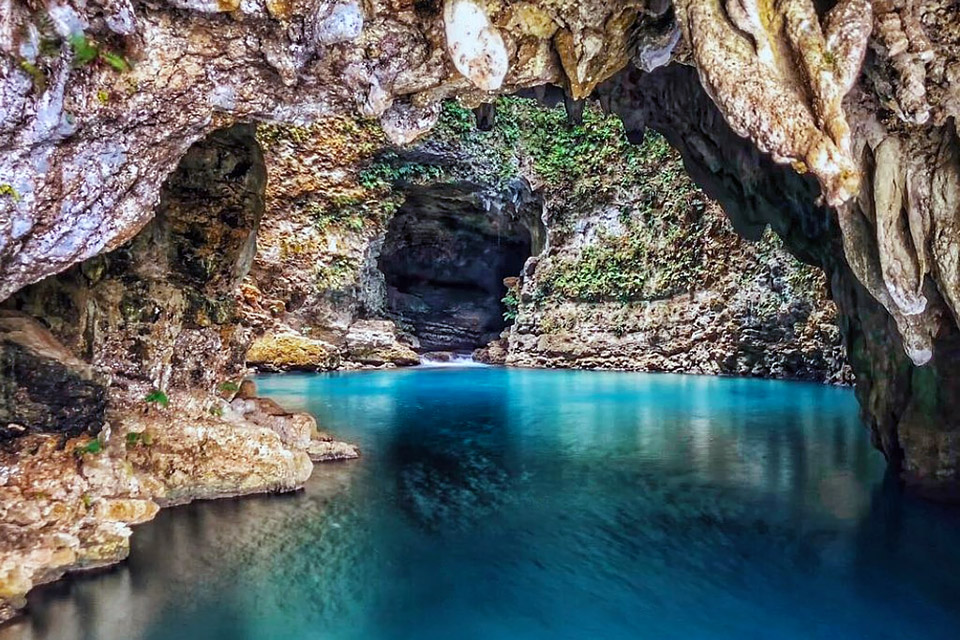
Instead, many seasoned travellers choose to split their stay across two or even three locations. Doing so allows mornings to start close to the landscapes or attractions you want to experience, rather than on the road. Sunrise hills are best enjoyed from nearby stays. Cultural villages reward early visits. Waterfalls are more enjoyable when you’re not racing the clock.
Geography also dictates what kind of attractions are realistically accessible. Beaches tend to cluster along the southwest and southern coastlines. Traditional villages are concentrated in the west. Savannas and weaving communities dominate the east. Understanding this relationship helps align your accommodation with your priorities — whether that’s culture, nature, photography, or simply space and quiet.
💡Related reads:
→ East Sumba Travel Guide [coming soon]
→ West Sumba Travel Guide
💡 Insider’s Insight: Why One Hotel Is Rarely Enough in Sumba
- Distances look short on maps — they aren’t. Travel times often double expectations.
- Sunrise and sunset coasts matter. Where you stay affects light, timing, and daily flow.
- Cultural villages cluster differently than beaches. One base rarely serves both well.
In Sumba, geography rewards flexibility. Understanding it before booking doesn’t just reduce frustration — it opens the door to a smoother, more immersive journey, where each place you stay brings you closer to a different side of the island.
Best Areas to Stay in Sumba
For many travellers, the biggest planning question is deceptively simple: where to stay in Sumba. But because the island is shaped by distance, terrain, and cultural clusters, the answer isn’t a single place — it’s a shortlist that depends on how you want to experience Sumba.
Below is a quick comparison of the best areas to stay in Sumba, designed to give you a clear sense of what each region offers before we explore them in depth later in this guide. Think of this as orientation, not a final decision.
West Sumba (Waikabubak Area)
Best for culture, villages, waterfalls, and first-time visitors who want depth
- Heartland of Sumba’s traditional villages, megalithic tombs, and Marapu heritage.
- Close to cultural landmarks such as Ratenggaro, Praijing, and Tarung.
- Access to the island’s most impressive waterfalls, including Lapopu and Tanggedu.
- Landscapes shift quickly from dry hills to lush valleys.
- Accommodation ranges from simple local guesthouses to thoughtfully designed boutique lodges.
West Sumba feels alive with daily rituals and community life. It’s not the easiest region logistically, but it’s often the most rewarding for travellers who want to understand Sumba beyond its scenery.
East Sumba (Waingapu Area)
Best for landscapes, photography, ikat weaving, and open-road travel
- Wide savannas, rolling hills, and expansive skies define the experience.
- Home to iconic viewpoints like Wairinding Hill and Puru Kambera.
- Strong presence of ikat weaving villages and traditional markets.
- Roads are generally straighter and easier to navigate.
- Accommodation is more functional, with city-style hotels, eco-lodges, and village stays.
East Sumba feels spacious and contemplative. It’s ideal for travellers who enjoy quiet roads, sunrise photography, and watching the land change colour with the seasons.
Southwest Sumba (Nihiwatu Coast)
Best for beaches, surfing, and secluded luxury
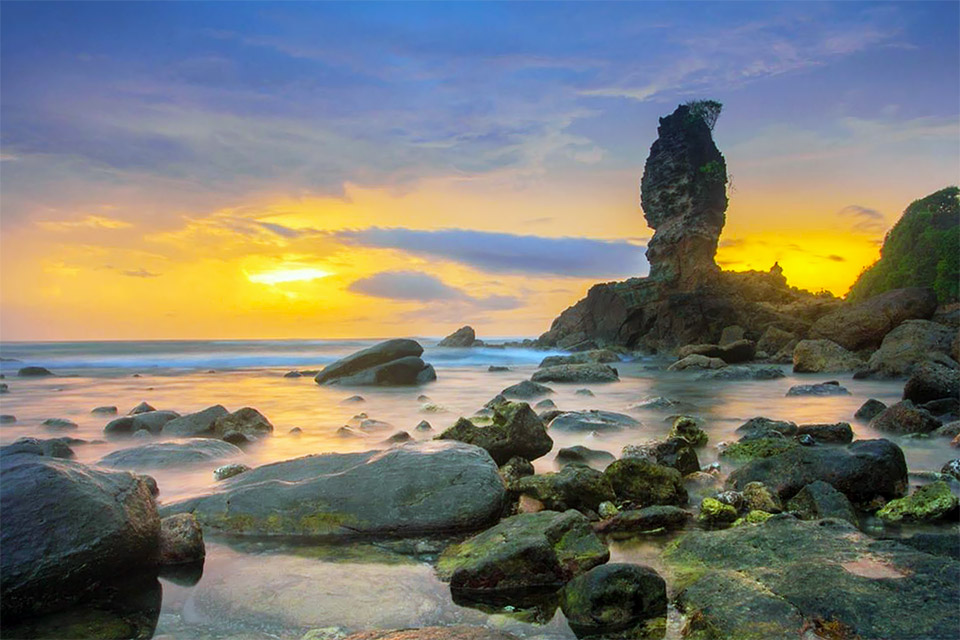
- Dramatic coastline with some of Sumba’s best beaches and surf breaks.
- Strong focus on privacy, nature, and slow living.
- Accommodation is limited but high-end, centred around luxury resorts and private lodges.
- Fewer attractions nearby, but deeper immersion in place.
- Access is more controlled, with some beaches tied to resort stays.
Southwest Sumba offers a refined, minimalist version of the island — less movement, more presence. It suits travellers who value atmosphere and exclusivity over sightseeing.
Rural Village Stays
Best for cultural immersion and slow, local living
- Located within or near traditional villages across the island.
- Simple homestays that prioritise connection over comfort.
- Daily life unfolds around you — farming, weaving, ceremonies.
- Limited facilities, but deeply authentic experiences.
- Best paired with other accommodation types, not used as a sole base.
Village stays offer context that no resort can replicate. They’re not for everyone, but for some, they become the most memorable part of the journey.
💡 Insider’s Picks: Best Area in Sumba Based on Travel Style
- Luxury seekers: Southwest Sumba — privacy, beaches, and world-class resorts.
- Slow travellers: A mix of East Sumba and village stays — space, silence, and rhythm.
- First-time visitors: West Sumba — balanced access to culture, nature, and attractions.
Photographers: East Sumba — open landscapes, dramatic light, and seasonal colour shifts.
Culture-focused travellers: West Sumba or village stays — traditions are lived, not staged.
This overview isn’t about choosing the “best” place overall — it’s about choosing the right place for your version of Sumba. In the sections ahead, we’ll dive deeper into each region, explore accommodation types in detail, and help you decide whether staying in one area or moving between several will serve your journey best.
Staying in West Sumba: Culture, Villages & Waterfalls
If Sumba has a cultural heart, it beats strongest in the west. Staying in West Sumba places you at the crossroads of tradition, landscape, and daily life — where ancestral rituals are not preserved for visitors, but lived quietly alongside them. For many travellers, this is the part of the island that feels most “Sumba”.
West Sumba feels like the cultural backbone of the island — raw, grounded, and deeply connected to tradition.
West Sumba’s appeal lies in its density of meaningful places. Traditional villages, megalithic tombs, fertile valleys, and hidden waterfalls are all woven into a landscape that changes rapidly as you move through it. The terrain is more dramatic than in the east — hills rise sharply, rivers cut deep into the land, and greenery appears almost unexpectedly after long stretches of dry road.
One of the biggest advantages of choosing West Sumba hotels or lodges is proximity to the island’s most important cultural sites. Villages such as Ratenggaro, Tarung, and Praijing are not isolated attractions; they are part of a living network of clans, ceremonies, and ancestral beliefs. Staying nearby allows you to visit early in the morning or late in the afternoon, when light is softer and daily life feels more visible — moments often missed by travellers passing through on rushed day trips.
💡Related reads:
→ Ratenggaro Village Travel Guide
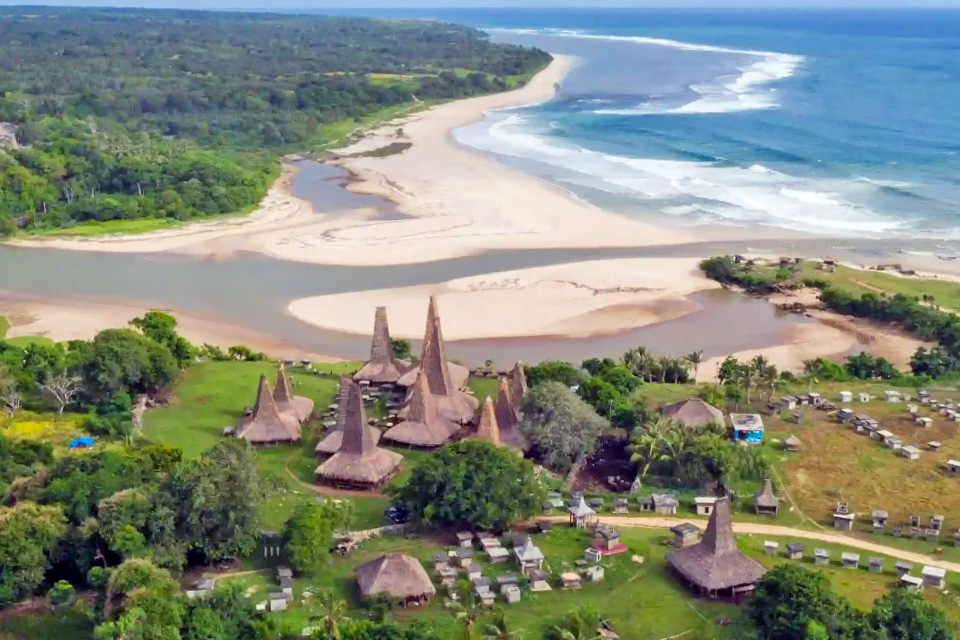
Ratenggaro
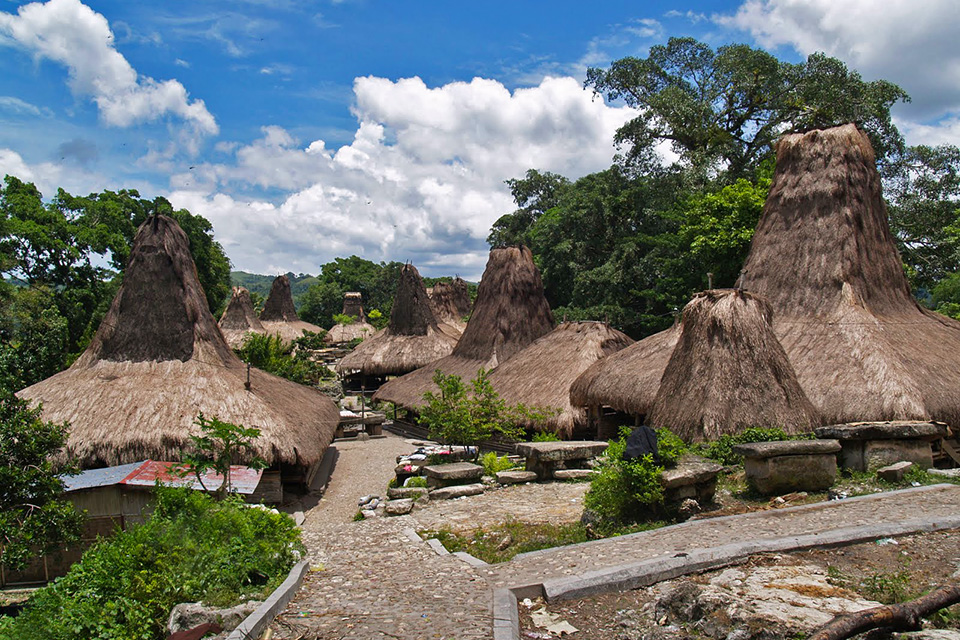
Tarung
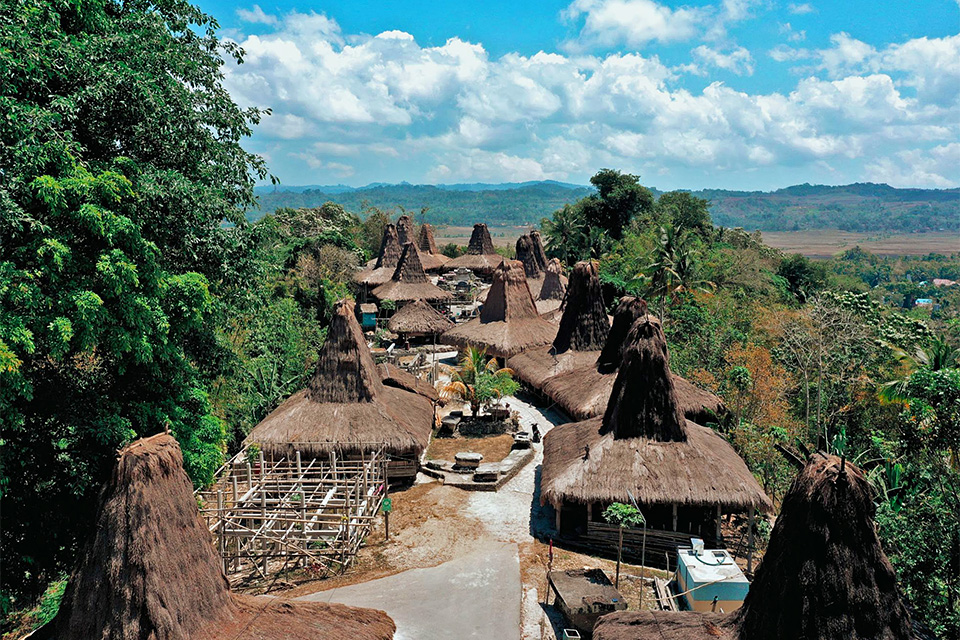
Prai Ijing
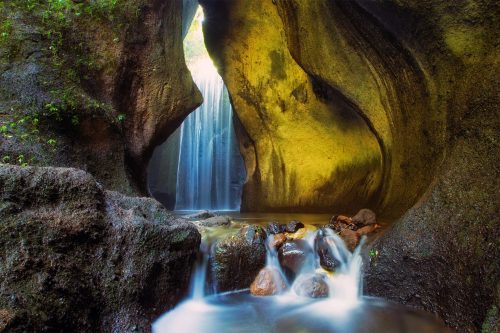
Waterfalls are another reason West Sumba draws travellers deeper into the interior. Lapopu Waterfall, the tallest on the island, and Tanggedu Waterfall, known for its sculpted canyon-like formations, sit within reach of the Waikabubak area. Reaching them still requires effort — trekking, uneven paths, and patience — but staying nearby transforms these visits from logistical challenges into unhurried experiences. After rain, the valleys turn vivid green, and the sound of water becomes a constant presence.
💡Related reads:
→ Lapopu Village Travel Guide [coming soon]
The landscape feel of West Sumba is one of contrast. Dry savannas give way to lush pockets of forest. Buffalo graze near rivers, while traditional houses rise sharply against the sky with their towering thatched roofs. This is not a polished landscape; it’s textured, imperfect, and deeply human. For travellers drawn to places that feel layered rather than curated, West Sumba resonates strongly.
Because of its cultural importance and geographical spread, Sumba accommodation in the west comes in a range of forms, each offering a different level of immersion.

Boutique Lodges
Typically small and thoughtfully designed, they blend modern comfort with local materials and architecture.
Many are located just outside town or near villages, offering quieter nights while remaining well positioned for daily exploration.
These stays often provide local guides, cultural context, and practical advice that can make navigating West Sumba far smoother.
Mid-Range Hotels
Mostly centred around Waikabubak, offer simplicity and convenience.
Rooms tend to be functional rather than atmospheric, but their locations can be strategic — close to markets, transport hubs, and main roads.
For travellers planning full-day excursions to villages and waterfalls, these hotels can work well as practical bases.
Local Guesthouses and Homestays
provide the most direct cultural connection. Comfort levels vary, and amenities are basic, but the trade-off is proximity to daily life. Meals are often shared, stories are exchanged, and mornings begin with the rhythms of village routines.
These stays suit travellers who value experience over polish and are comfortable adapting to local conditions.
Choosing to stay in West Sumba suits a particular kind of traveller. It’s ideal for those visiting Sumba for the first time and wanting a broad introduction to the island’s culture. It’s also well suited to photographers, anthropologically curious travellers, and anyone interested in understanding how landscape and tradition intertwine. However, it’s less suited to those seeking beach-centric holidays or seamless luxury — travel here requires patience and flexibility.
Logistically, West Sumba rewards planning. Roads can be slow, signage minimal, and distances deceptive. But this is also where staying in the right place matters most. Being close to villages means arriving before tour groups. Being near waterfalls allows visits when light and water levels are at their best. And being based in a culturally active area means stumbling upon moments — ceremonies, weaving, communal gatherings — that never make it into itineraries.
💡Related reads:
→ West Sumba Attractions [coming soon]
Staying in West Sumba isn’t about ticking boxes. It’s about proximity — to people, to rituals, to landscapes that still shape daily life. For travellers willing to slow down and lean into the island’s rhythm, it offers some of the most profound experiences Sumba has to give.
Staying in East Sumba: Savannas, Ikat & Open Landscapes
If West Sumba feels intimate and layered, East Sumba feels expansive and unrestrained. This is the side of the island defined by space — wide savannas that roll toward the horizon, long roads cutting through open land, and villages that seem to exist in quiet dialogue with the landscape rather than clustered around it. Choosing East Sumba accommodation is less about being close to everything and more about being immersed in scale, light, and rhythm.
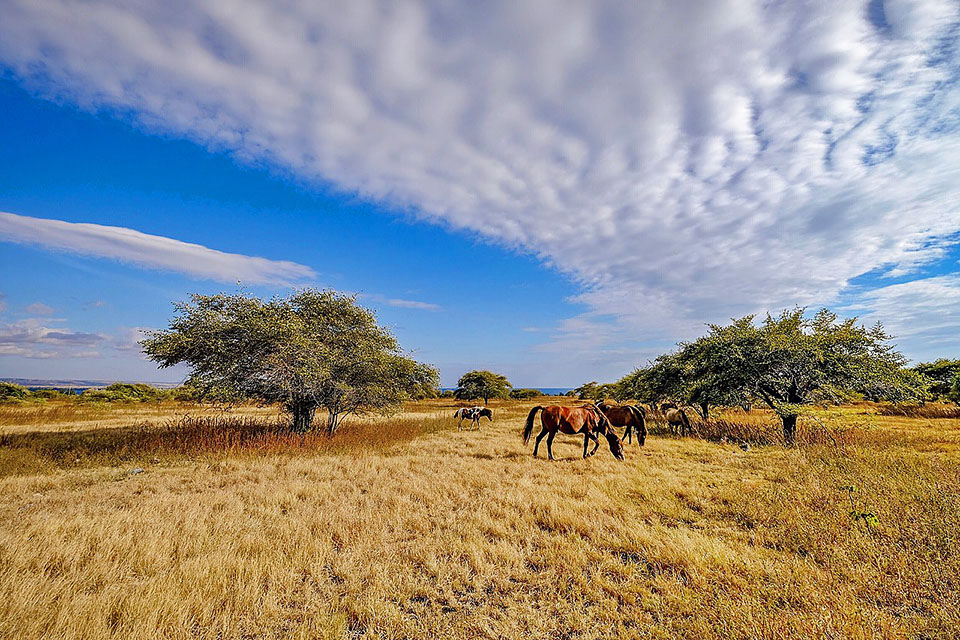
The visual identity of East Sumba is instantly recognisable. During the dry season, the land turns golden and textured, creating some of the most striking scenery in Indonesia. Places like Wairinding Hill and the Puru Kambera savanna reveal landscapes that shift dramatically with the light — soft at sunrise, sculptural by late afternoon. For photographers and travellers who appreciate open horizons, East Sumba delivers moments that feel cinematic without trying to be.
💡Related reads:
→ Warinding Hill Travel Guide [coming soon]
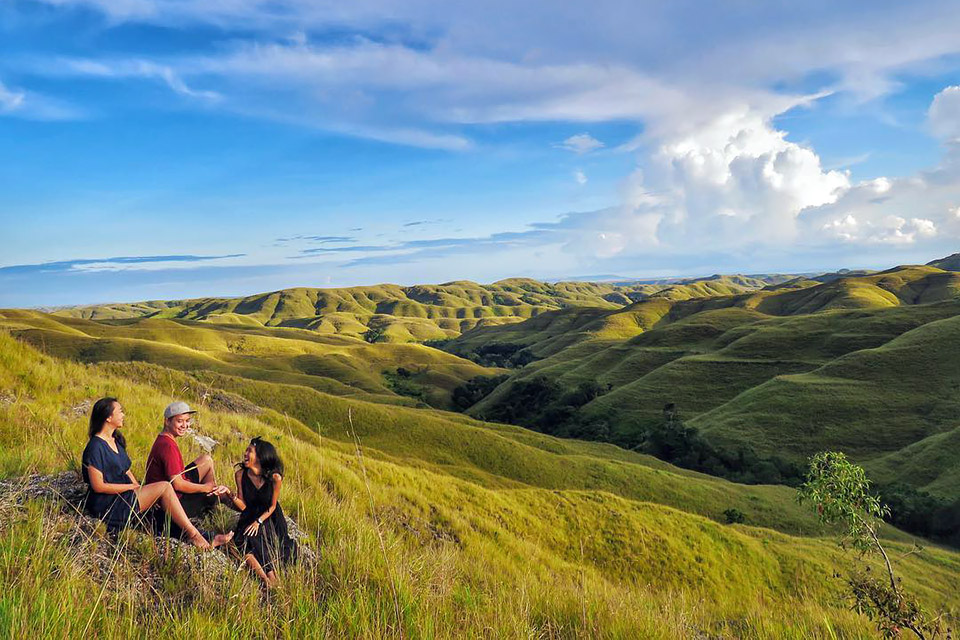
Warinding Hill
Puru Kambera
Beyond the scenery, East Sumba is also the spiritual home of Sumba ikat weaving. Villages across the region preserve weaving traditions that have been passed down through generations, with patterns carrying stories of ancestry, belief, and social status. Staying nearby allows time to observe the weaving process slowly — from dyeing threads with natural pigments to the patient rhythm of the loom. Markets in and around Waingapu provide opportunities to see finished textiles, but the deeper understanding comes from proximity to the villages themselves.
💡Related reads:
→ Sumba Ikat Weaving Guide [coming soon]
Unlike West Sumba or the southwest coast, tourism infrastructure in East Sumba is minimal. This isn’t a region shaped around visitor convenience. Distances are longer, services more spread out, and days unfold at a quieter pace. For some travellers, this is a challenge. For others, it’s exactly the appeal. East Sumba rewards those who value silence, space, and the feeling of moving through land that hasn’t been designed for tourism.
When it comes to Sumba hotels in the east, options tend to fall into three broad categories, each offering a different relationship with the landscape.
City Hotels
Easily found in Waingapu are the most practical choice for many travellers. Located near the airport, markets, and main transport routes, these hotels are functional rather than atmospheric. Rooms are usually simple, but they provide reliable access to food, supplies, and onward travel.
For those using East Sumba as a base for day trips to hills, weaving villages, and savannas, Waingapu offers logistical ease.
Village Homestays
They take you further from infrastructure and closer to daily life. Staying in or near weaving villages offers a front-row seat to routines that begin early and move with the sun. Comfort levels vary, and amenities are basic, but the experience is grounded and personal. Evenings are quiet, nights are dark, and mornings arrive with the sound of animals and conversation rather than traffic.
These stays suit travellers seeking cultural context over convenience.
Eco-Lodges and Rural Retreats
These type of stays occupy the middle ground. Often set in open landscapes or near savannas, they prioritise space, sustainability, and connection to the land. Facilities are modest but thoughtfully designed, and the emphasis is on atmosphere rather than activity.
These lodges appeal to slow travellers who want to absorb East Sumba without rushing between sites.
What unites all accommodation in East Sumba is a sense of openness. Days feel longer here. Roads stretch out. Encounters are unhurried. There is less to “do” in a conventional sense, but more to notice — light shifting across hills, patterns emerging on fabric, conversations unfolding without agenda.
However, staying in East Sumba requires realistic expectations. Services are spread out, and spontaneity can be limited by logistics. Transport planning matters, especially if you intend to explore beyond Waingapu. Many travellers choose to pair East Sumba with another region — spending time here for landscapes and weaving before moving west for villages and waterfalls.
💡Related reads:
→ East Sumba Attractions [coming soon]
💡 Insider’s Tips: What East Sumba Hotels Don’t Tell You
- Power and water can be inconsistent. Even well-reviewed hotels may experience outages — flexibility is essential.
- Transport needs to be planned ahead. Distances are long, and drivers or vehicles aren’t always readily available on short notice.
Food options are limited outside Waingapu. Meals are often tied to your accommodation, especially in rural areas.
Staying in East Sumba isn’t about convenience or variety. It’s about surrendering to space — letting the land, the craft, and the quiet define your days. For travellers who appreciate that kind of openness, it offers a deeply grounding counterpoint to the rest of the island.
Staying in Southwest Sumba: Beaches & Luxury Resorts
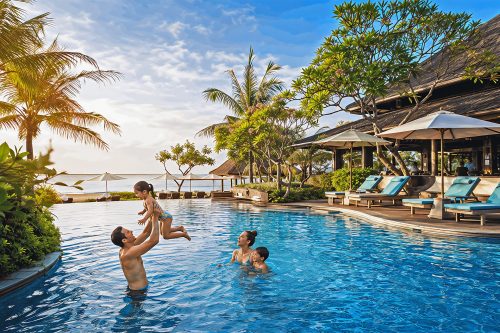
Southwest Sumba is where the island exhales. The roads narrow, the crowds disappear, and the landscape opens onto long stretches of coastline framed by cliffs and rolling hills. This is the side of Sumba most often associated with luxury resorts — not because it’s flashy, but because it offers something increasingly rare: space, silence, and privacy.
Southwest Sumba is where the island whispers instead of speaks — and the silence is part of the luxury.
For travellers searching for Sumba resorts that feel genuinely removed from the world, the southwest coast delivers. Beaches here are wide, often empty, and shaped by strong ocean swells that give the coastline a dramatic, untamed character. Access matters: many of the most beautiful stretches of sand are either remote or managed through resort properties, which limits foot traffic and preserves a sense of seclusion.
💡Related reads:
→ Nihiwatu Beach Travel Guide
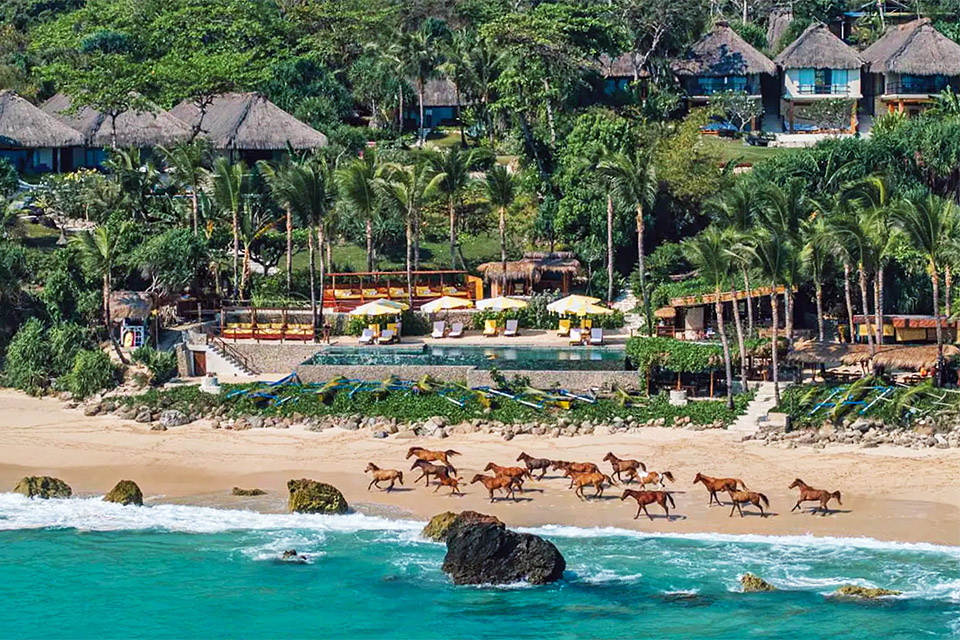
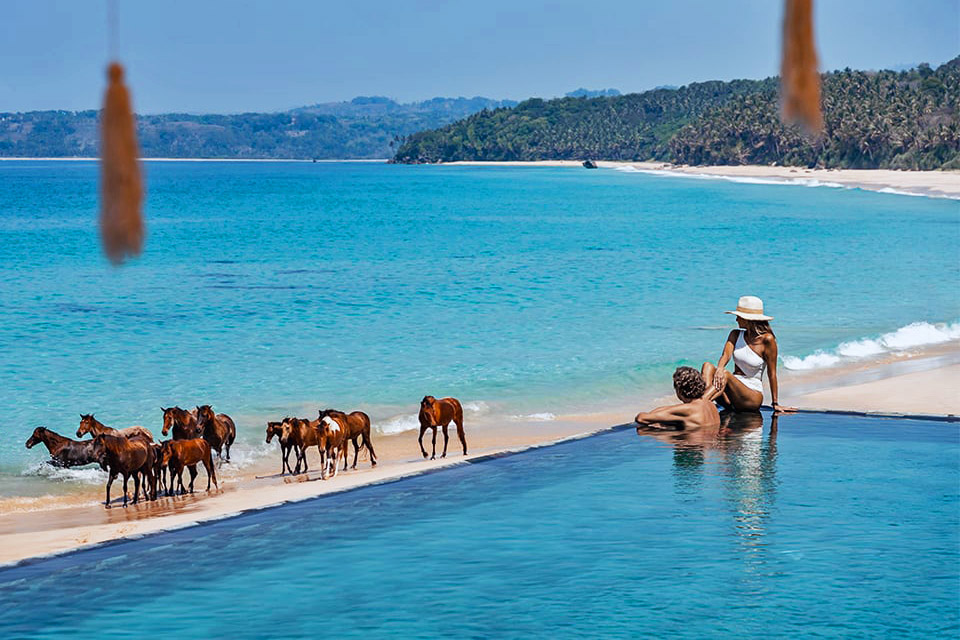
Beach access in Southwest Sumba is less about hopping between multiple coves and more about settling into one place deeply. Days unfold slowly — walking the same shoreline at different tides, watching light shift across the water, and letting the rhythm of the sea define time. Unlike other parts of the island, you’re not here to chase attractions. You’re here to stay still.
The coastline is also known for its surf breaks, which draw experienced surfers from around the world. Waves here are powerful and consistent, shaped by the open Indian Ocean. Surfing in Southwest Sumba is not casual; conditions can be challenging, and access to breaks is often tied to staying at specific resorts. For surfers who prioritise quality over variety, this controlled access ensures uncrowded line-ups and well-managed safety.
Beyond beaches and surf, the defining feature of luxury resorts in Sumba is privacy. Accommodation is typically low-density, with villas or bungalows spaced far apart and integrated into the landscape rather than dominating it. Design leans toward natural materials — wood, stone, thatch — echoing traditional forms without imitating them outright. The result feels rooted rather than imported.
Service levels are high, but intentionally understated. Staff anticipate needs without intruding, and experiences are curated quietly rather than marketed loudly. Cultural encounters, village visits, and nature excursions are often arranged with sensitivity to local rhythms, avoiding the feeling of spectacle. This balance between comfort and restraint is what sets Southwest Sumba apart from more conventional luxury destinations.
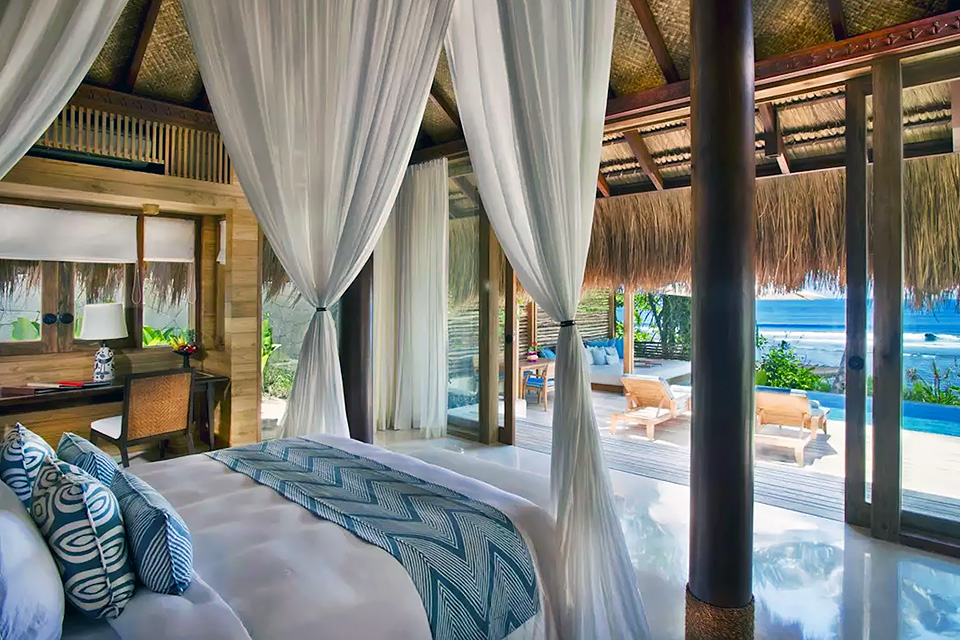
That said, cost expectations should be realistic. Staying in this part of the island comes at a premium, and not only in nightly rates. Dining, activities, and transport are often integrated into resort pricing, reflecting the remoteness and exclusivity of the location. For many travellers, the value lies not in variety but in depth — fewer choices, executed exceptionally well.
It’s also important to understand what Southwest Sumba is not. It’s not a base for extensive island exploration. Distances to cultural villages, waterfalls, and interior landscapes can be significant, making day trips long and tiring. Many travellers who want a fuller picture of the island choose to pair a stay here with time in East or West Sumba, using the southwest coast as a restorative chapter rather than the entire story.
💡Related reads:
→ Sumba Beaches Guide [coming soon]
Who does Southwest Sumba suit best? It’s ideal for couples, honeymooners, surfers, and travellers who value atmosphere over activity. It works well for those who want to disconnect — not just from devices, but from the pressure to constantly move. It’s less suited to travellers seeking budget options, nightlife, or easy access to multiple attractions.
The experience here is about intentional simplicity. Mornings are unstructured. Afternoons stretch long. Evenings arrive quietly, often accompanied by the sound of waves rather than conversation. Luxury in Southwest Sumba isn’t about indulgence in excess; it’s about removal — fewer distractions, fewer decisions, and fewer interruptions.
Staying in Southwest Sumba doesn’t show you everything the island has to offer, and it doesn’t try to. Instead, it offers one side of Sumba in its purest form: coastal, calm, and deeply private. For travellers who understand that distinction, it can be one of the most memorable places to stay on the island.
Boutique Hotels & Eco-Lodges: The Middle Ground
Between the simplicity of local guesthouses and the exclusivity of luxury resorts lies a category of accommodation that many travellers find strikes the perfect balance: Sumba boutique hotels and eco-lodges. These stays don’t try to compete on scale or spectacle. Instead, they focus on design, intention, and connection — to the land, to local communities, and to the slower pace that defines Sumba.
What sets boutique hotels in Sumba apart is their sense of place. Architecture often draws from traditional forms — high-pitched roofs, open communal spaces, natural ventilation — while adapting them for comfort rather than imitation. Materials are local where possible, and buildings are designed to sit quietly within the landscape instead of dominating it. The result feels organic, as though the accommodation belongs where it stands.
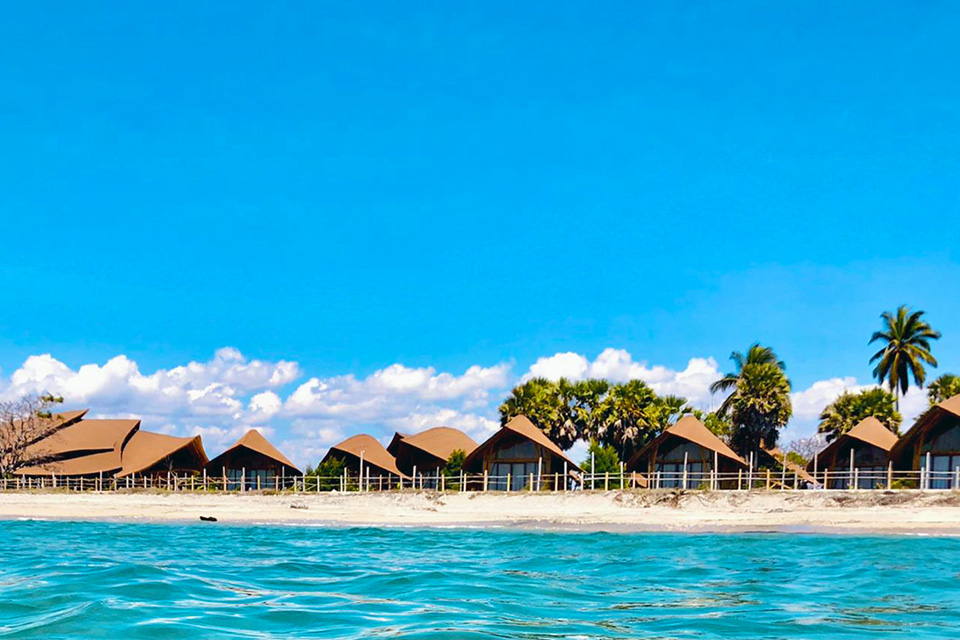
Eco-lodges take this philosophy further by prioritising sustainability as a core principle rather than a marketing label. Solar power, rainwater collection, low-impact construction, and waste reduction are common features, not added extras. In a destination where resources can be limited and infrastructure fragile, these choices matter. They reduce environmental strain while supporting a more resilient model of tourism.
But sustainability in Sumba isn’t only environmental — it’s also cultural. Many boutique stays are deeply embedded in their surrounding communities. Staff are hired locally, supplies are sourced nearby, and cultural knowledge is shared thoughtfully rather than staged. Guests are often introduced to village life through informal interactions rather than formal tours, making experiences feel genuine and unforced.
This community involvement extends to how experiences are shaped. Instead of offering long menus of activities, boutique hotels and eco-lodges tend to focus on local insight. They know which road is best after rain, when to visit a village without intruding, and which waterfall is flowing strongest that week.
For travellers navigating Sumba’s logistical challenges, this guidance can be invaluable.
From a practical standpoint, location flexibility is one of the biggest advantages of boutique stays. Unlike large resorts tied to specific coastlines, these accommodations can be found in both East and West Sumba, often positioned strategically between key attractions. This makes them ideal bases for travellers who want to explore without committing to constant long drives.
In terms of comfort, expectations should be calibrated thoughtfully. Boutique hotels and eco-lodges in Sumba are comfortable, but rarely indulgent. Rooms are often open-air or semi-open, embracing natural airflow rather than air-conditioning. Nights can be quiet and dark, mornings filled with birdsong rather than traffic. For many travellers, this simplicity enhances the experience rather than detracting from it.
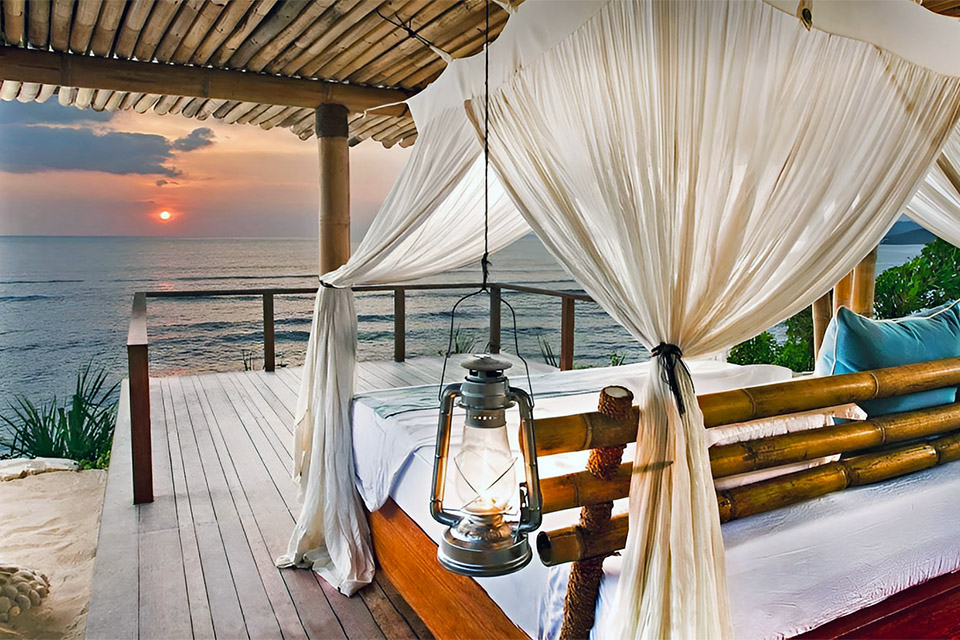
So who do these stays suit best? Boutique hotels and eco-lodges are ideal for travellers seeking depth without extremes. They appeal to couples, solo travellers, and small groups who want comfort without detachment, and authenticity without discomfort. They work particularly well for those planning multi-region itineraries, offering a sense of continuity between different parts of the island.
They’re also well suited to travellers who value conversation over amenities. Hosts often have deep personal connections to Sumba — whether through family, long-term residence, or shared stewardship — and are generous with their knowledge. This human element can transform a stay from simply restful to genuinely memorable.
💡 Insider’s Picks: Why Boutique Stays Often Win in Sumba
Location flexibility: Often closer to villages, hills, or waterfalls than large resorts.
- Cultural connection: Daily interactions feel natural, not programmed.
- Better local guidance: Practical advice that adapts to conditions on the ground.
In a destination as nuanced as Sumba, boutique hotels and eco-lodges offer something rare: comfort that doesn’t isolate you from the island, and sustainability that feels lived rather than advertised. For many travellers, they become the quiet highlight of the journey — the place where Sumba finally begins to feel personal.
Staying with Locals: Homestays & Village Experiences
For travellers seeking the most grounded way to experience the island, Sumba homestays and village-based accommodation offer something no hotel or resort can replicate: daily life from the inside. These stays are not designed to impress. They are designed to include you — quietly, respectfully, and on local terms.
Choosing local accommodation in Sumba means stepping into a rhythm that predates tourism entirely. Roosters replace alarm clocks. Meals follow availability, not menus. Conversations happen slowly, often across language gaps, through gestures, smiles, and shared routines. This is not everyone’s idea of comfort — and that’s precisely the point.
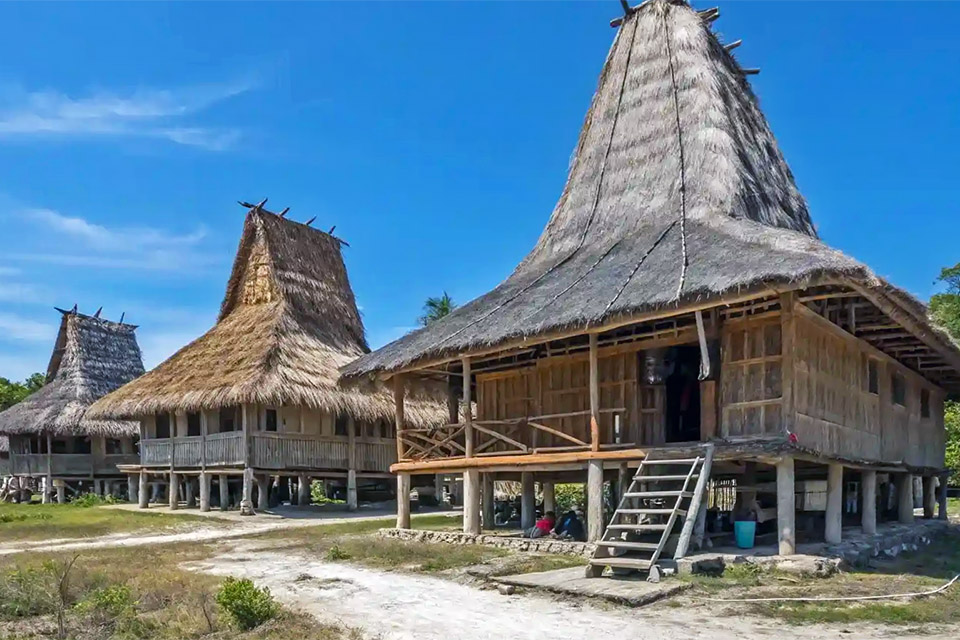
What to Expect: Comfort, Simplicity & Etiquette
Homestays in Sumba vary widely, but most share a baseline of simplicity. Rooms are typically clean but basic, often with thin mattresses, mosquito nets, and shared bathrooms. Hot water may be limited or nonexistent. Electricity, if available, can be intermittent — especially in more remote villages. These are not inconveniences to be “managed,” but realities to be accepted.
Etiquette matters more here than amenities. Guests are usually welcomed warmly, but with an expectation of mutual respect. Modest dress is important, particularly in traditional villages where Marapu beliefs remain central to daily life. Asking permission before photographing people or houses is essential. Small gestures — helping with food preparation, greeting elders properly, showing curiosity without entitlement — go a long way.
This mutual respect creates the foundation for something deeper than a stay: a cultural exchange.
Cultural Exchange That Happens Naturally
Unlike curated cultural experiences, village homestays don’t schedule authenticity — they live it. You may witness ikat weaving in progress, livestock ceremonies being prepared, or evening gatherings where stories are shared around firelight. These moments are not performances; they are daily life unfolding with you present.
Staying in a homestay allows travellers to better understand Marapu culture, which remains deeply embedded in many Sumba communities. You’ll begin to notice how ancestral beliefs influence architecture, land use, and social structure. Houses are not just homes, but symbols of lineage. Fields are not just farmland, but inherited responsibility. This context transforms how you experience nearby attractions and villages.
For many travellers, these stays become the most emotionally resonant part of visiting Sumba — not because they are dramatic, but because they are human.
Supporting the Local Economy in a Direct Way
One of the most meaningful aspects of choosing Sumba homestays is the economic impact. Unlike large-scale accommodation, money spent on village stays goes directly to families and communities. It supports education, household improvements, and the preservation of traditional practices that might otherwise be lost.
Some homestays operate independently, while others are part of small community initiatives designed to share tourism benefits more evenly. In both cases, the exchange feels transparent. You know who you’re supporting, and often how that support is used.
This direct contribution also changes how you’re perceived. Guests are not just visitors passing through, but participants in a shared moment. This often leads to deeper hospitality — invitations to ceremonies, shared meals, or guided walks through surrounding land that no guidebook mentions. An immersive experience at its best.
Who Homestays Are (and Aren’t) For
Homestays are best suited for travellers who value context over convenience. They work well for those with flexible schedules, cultural curiosity, and a willingness to adapt. Photographers, slow travellers, and those interested in anthropology or traditional cultures often find these stays especially rewarding.
They may not be ideal for travellers on tight itineraries, those requiring consistent comfort standards, or anyone expecting hotel-style service. That doesn’t make them better or worse — just different.
Many experienced travellers choose to combine homestays with other accommodation types. A few nights in a village followed by a boutique hotel or resort can create balance, allowing space for both immersion and rest.
A homestay in Sumba isn’t about comfort — it’s about context.
For those willing to listen more than they speak, and observe more than they consume, staying with locals offers a version of Sumba that lingers long after the journey ends. It’s not the easiest way to travel — but it may be the most honest.
💡 Related reads:
→ Sumba Villages Guide · Marapu Culture [coming soon]
How Long to Stay & Whether to Change Hotels
One of the most common planning mistakes first-time visitors make is underestimating how large and slow-moving Sumba really is. Distances on the map may look manageable, but road conditions, terrain, and travel pace turn short lines into long journeys. This is why getting your Sumba itinerary right — especially how long you stay and whether you change hotels — has a direct impact on what you actually experience.
3–4 Days in Sumba: A Focused Taste
If you have three to four days, Sumba works best when approached with restraint. Choose one main region — West Sumba, East Sumba, or Southwest Sumba — and explore deeply rather than trying to “see it all.”
In this timeframe, staying in one hotel usually makes the most sense. Daily travel of two to three hours is realistic, but anything more quickly eats into exploration time. A short stay is ideal for:
- A cultural-focused visit around West Sumba villages and waterfalls.
- A savanna-and-photography loop in East Sumba.
- A beach-centric escape in Southwest Sumba.
Trying to cover multiple regions in under four days often turns Sumba into a checklist rather than a place you experience.
7–10 Days in Sumba: The Sweet Spot
With seven to ten days, Sumba opens up properly. This is where changing hotels becomes not only practical, but recommended. A longer stay allows you to experience the island’s contrasts without rushing — from ritual villages to open savannas to quiet beaches.
In this range, splitting your stay across two or even three areas makes sense. For example:
- 3 nights in West Sumba for villages and waterfalls.
- 2–3 nights in East Sumba for savannas, ikat, and landscapes.
- 2–4 nights in Southwest Sumba to relax, unwind, and enjoy slow living by the sea.
This approach minimizes daily driving while maximizing exposure to Sumba attractions across different regions whist still having enough to unwind..
Who Homestays Are (and Aren’t) For
Homestays are best suited for travellers who value context over convenience. They work well for those with flexible schedules, cultural curiosity, and a willingness to adapt. Photographers, slow travellers, and those interested in anthropology or traditional cultures often find these stays especially rewarding.
They may not be ideal for travellers on tight itineraries, those requiring consistent comfort standards, or anyone expecting hotel-style service. That doesn’t make them better or worse — just different.
Many experienced travellers choose to combine homestays with other accommodation types. A few nights in a village followed by a boutique hotel or resort can create balance, allowing space for both immersion and rest.
When Moving Hotels Makes Sense
Changing hotels in Sumba isn’t about luxury hopping — it’s about geography. You should consider moving when:
- Daily drives exceed 2.5–3 hours each way.
- Sunrise and sunset experiences matter (coast orientation is key).
- You’re combining cultural inland sites with coastal stays.
- Road conditions make return trips exhausting.
Unlike compact destinations, Sumba rewards strategic relocation rather than a single base.
Sample Accommodation Flow
A well-paced Sumba itinerary often follows a natural east–west or west–east flow, aligned with flight arrival points and road logic. Many travellers land in Waingapu (East Sumba), move westward through the interior, and finish along the Southwest coast — or reverse this depending on flights and accommodation availability.
The key is not the exact route, but the principle: stay close to what you want to explore next. This reduces travel fatigue and keeps experiences feeling immersive rather than rushed.
💡 Practical Tip
Sumba isn’t a destination to “optimize” aggressively. Build buffer days. Accept that plans may shift due to weather, ceremonies, or road conditions. The most rewarding journeys here leave room for the unexpected — and your accommodation strategy should reflect that.
Booking Tips: When, Where & What to Expect
Booking accommodation in Sumba isn’t just a logistical step — it’s a decision that shapes comfort, access, and expectations. Unlike mature destinations with predictable standards, Sumba sits at an intersection of raw beauty, limited infrastructure, and fast-growing interest. Understanding how and when to book helps align your expectations with reality, and turns potential friction into part of the experience rather than a frustration.
When to Book: Timing Matters More Than You Think
For most travellers, the best booking window depends on season and accommodation type.
High-end Sumba hotels and resorts, particularly along the Southwest coast, often need to be booked 3–6 months in advance for the dry season (June–September). Inventory is limited, and peak travel months coincide with school holidays and festival periods. Waiting too long often means compromising on location, not just price.
Mid-range hotels, boutique lodges, and eco-stays offer more flexibility, but still benefit from early confirmation, especially if you’re planning to move between regions. Village homestays and local guesthouses can be arranged closer to arrival, but availability fluctuates based on ceremonies, harvest cycles, and family commitments.
Seasonal Pricing: Why Rates Fluctuate Sharply
Seasonal pricing in Sumba is less about demand curves and more about operational reality. During the dry season, accessibility improves, staff availability stabilizes, and logistics become easier — all of which push prices up. In contrast, wet-season rates may drop, but access challenges and service limitations can increase.
Expect:
- Peak season (July–August): Highest prices, strict minimum stays at some resorts.
- Shoulder season (May–June, September): Best balance of price, weather, and availability.
- Low season (November–March): Discounts possible, but with trade-offs in road conditions and service consistency.
Understanding this context helps set realistic expectations when comparing Sumba hotels to accommodation elsewhere in Indonesia.
What “Luxury” Actually Means in Sumba
Luxury in Sumba is different. It’s not about nightlife, shopping, or high-density amenities. Instead, it’s defined by:
- Space and privacy.
- Landscape integration.
- Personal service rather than standardized systems.
- Proximity to nature, not convenience.
Even top-tier resorts may have limited connectivity, weather-dependent access, or minimalist design choices that prioritize setting over opulence. For many travellers, this feels refreshing. For others, it requires a mindset shift.
Expectations vs Reality: A Grounded Perspective
Sumba rewards travellers who arrive informed, not idealistic. Power outages happen. Water pressure fluctuates. Meal options may be fixed rather than à la carte. These aren’t flaws — they’re part of operating in a remote environment where sustainability and scale are still evolving.
The key is alignment: choose accommodation that matches how you travel, not how you usually travel elsewhere.
💡 Insider’s Insight: Reviews Matter More in Sumba Than Elsewhere
- Properties vary widely in management quality, even within the same category.
- Recent reviews reveal seasonal issues (water, access, staff availability).
- Photos often age quickly due to climate and maintenance cycles.
- Honest feedback helps separate charm from compromise.
In Sumba, reviews aren’t about star ratings — they’re about context. Reading them carefully is one of the most practical Sumba travel tips you can follow before committing.
By booking with clarity — not assumptions — you set yourself up for a stay that feels intentional, immersive, and genuinely rewarding.
Who Should Stay Where? A Quick Matching Guide
With Sumba’s vast distances and sharply different regional characters, choosing where to stay in Sumba is often less about hotel style and more about fit. This quick matching guide connects common traveller profiles with the areas and accommodation types that tend to deliver the best overall experience — not just the nicest rooms.
Think of this as a shortcut: a way to narrow decisions before you dive deeper into individual listings.
First-Time Visitors
Best fit: Split stay between West Sumba and Southwest Sumba.
Why: First-time visitors benefit from contrast. West Sumba offers cultural grounding through villages, waterfalls, and daily life, while Southwest Sumba delivers beach access and comfort. This balance helps newcomers understand the island beyond postcard views.
Accommodation style: Boutique lodges or mid-range hotels in West Sumba, followed by a resort or eco-luxury stay in the southwest.
Couples
Best fit: Southwest Sumba or secluded boutique lodges.
Why: Couples often value privacy, atmosphere, and slow pacing. Southwest Sumba’s coastline suits romantic escapes, while inland boutique stays offer intimacy without isolation.
Accommodation style: Design-led resorts, eco-lodges, or small-scale boutique hotels with curated experiences rather than crowds.
Families
Best fit: Southwest Sumba or accessible areas near Waingapu.
Why: Families benefit from easier logistics, reliable transport access, and on-site activities. Beachfront resorts simplify daily planning, while East Sumba’s town-based hotels offer convenience for shorter stays.
Accommodation style: Resorts with spacious layouts or city hotels with family rooms and predictable services.
Photographers
Best fit: East Sumba with short stays in West Sumba.
Why: East Sumba’s savannas, hills, and open landscapes change dramatically with light and season, making it ideal for photographers. Adding West Sumba brings waterfalls and village life into the visual story to enrich the portfolio.
Accommodation style: Eco-lodges, homestays, or small guesthouses close to sunrise and sunset locations.
Surfers
Best fit: Southwest Sumba.
Why: Surf breaks are concentrated along the southwest coast, and daily timing matters. Staying close to the waves allows flexibility with tides, swell, and weather.
Accommodation style: Surf-focused resorts or coastal lodges with direct beach access and local knowledge.
Cultural Travellers
Best fit: West Sumba and village-based stays.
Why: Cultural travellers seek proximity to traditions, ceremonies, and community rhythms. West Sumba’s village clusters and ritual calendar make it the cultural heart of the island.
Accommodation style: Local guesthouses, homestays, or culturally integrated lodges with strong community ties.
💡 The Takeaway
Bhere’s no single “best” place to stay in Sumba — only the best match for how you travel. Align your accommodation with your intent, and Sumba reveals itself in ways no generic itinerary ever could.
Who Should Stay Where? A Quick Matching Guide
Deciding where to stay in Sumba is not a logistical afterthought — it is one of the most important travel choices you will make on the island. More than in most destinations, accommodation in Sumba shapes what you see, how far you go, and how deeply you connect with the place. Roads are long, distances are deceptive, and experiences rarely cluster neatly around a single base. Where you sleep determines which version of Sumba you wake up to.
Some travellers come for the coast and choose Sumba resorts along the southwest shoreline, where silence, surf, and wide horizons define the days. Others arrive seeking culture, and find that staying closer to traditional villages in West Sumba opens doors to rituals, landscapes, and daily rhythms that never appear on curated itineraries. In East Sumba, open savannas and weaving villages reward those willing to trade convenience for space and light. None of these choices are better than the others — they are simply different lenses through which Sumba is revealed.
The most meaningful stays in Sumba are often not the most luxurious, but the most intentional. A well-placed boutique lodge can offer more access than a five-star property in the wrong region. A village homestay may lack polish, yet provide context that no resort experience can replicate. Understanding how accommodation connects to Sumba attractions — beaches, waterfalls, villages, hills, and ceremonies — allows you to plan with clarity instead of compromise.
As you refine your plans, it helps to step back and see accommodation as part of a wider journey. Pair this guide with the broader Sumba Travel Guide to understand regional flow, explore the Things to Do in Sumba to align stays with experiences, consult the Best Time to Visit Sumba to match seasonality with your priorities, and start planning your trip with our carefully crafted Sumba Itineraries. As individual attraction guides come online, they will help you fine-tune location choices even further.
In Sumba, staying well is less about indulgence and more about alignment — with landscape, culture, and pace.
The best place to stay in Sumba isn’t the fanciest — it’s the one that brings you closer to the island you came to see.
FAQ
Where is the best area to stay in Sumba for first-time visitors?
For first-time visitors, West Sumba is often the most balanced choice. Staying near Waikabubak places you close to some of Sumba’s most important attractions, including traditional villages, waterfalls, and cultural sites. The area offers a mix of boutique lodges, mid-range hotels, and local guesthouses, making it easier to experience Sumba’s culture without long daily drives. While East and Southwest Sumba have their own appeal, West Sumba provides a strong introduction to the island’s landscapes and traditions.
Is it better to stay in one hotel or change accommodation while in Sumba?
In most cases, changing hotels in Sumba leads to a better experience. Distances between regions may look short on a map, but travel times can be long due to road conditions. Many travellers choose to split their stay between West Sumba and either East Sumba or Southwest Sumba, depending on their interests. This approach reduces time spent on the road and allows deeper exploration of beaches, villages, or savannas without rushing.
Are luxury resorts in Sumba worth the cost?
Luxury resorts in Sumba offer exceptional privacy, dramatic coastal settings, and personalised service — but they are best suited to travellers seeking seclusion rather than exploration. These resorts are typically located in Southwest Sumba, with limited access to villages and inland attractions. If your goal is cultural immersion or visiting multiple Sumba attractions, combining a luxury resort stay with time in another region often provides better balance.
What types of accommodation are available in Sumba?
Sumba accommodation ranges from high-end resorts and boutique eco-lodges to simple hotels and village homestays. Sumba hotels tend to be smaller and more locally run than those in Bali, while homestays offer direct cultural exchange with Sumbanese families. Infrastructure is improving, but expectations should remain realistic — especially in rural areas where comfort is secondary to experience.
Is staying in a homestay in Sumba comfortable?
Comfort in Sumba homestays is best measured by experience rather than amenities. While rooms are usually basic, guests gain insight into daily village life, local food, and cultural traditions. Homestays are ideal for travellers interested in Sumba culture, Marapu beliefs, and traditional villages, but they may not suit those expecting hotel-style facilities or consistent utilities.
Which area in Sumba is best for beaches?
For beach-focused stays, Southwest Sumba offers the most dramatic coastline, clear water, and reliable surf breaks. Many of the best beaches in Sumba are located here, though access is often tied to resorts or private land. East Sumba also has beautiful beaches, but facilities are limited, and conditions can vary more by season.
Where should photographers stay in Sumba?
Photographers often benefit from staying in multiple regions. East Sumba is ideal for savannas, wild horses, and open landscapes, especially during the dry season. West Sumba offers strong cultural scenes, waterfalls, and village life, while Southwest Sumba provides minimalist coastal compositions. Choosing accommodation close to sunrise and sunset locations significantly improves shooting opportunities.
How many nights should I stay in Sumba?
A meaningful Sumba experience typically requires at least 5 to 7 nights. Shorter stays limit exploration due to travel times between attractions. Travellers with more time — 8 to 10 nights — can comfortably explore multiple regions while maintaining a slow pace, which aligns well with Sumba’s rhythm.
Is Sumba suitable for family travel?
Yes, but with planning. Families travelling to Sumba often prefer boutique hotels or eco-lodges with reliable transport and flexible meal options. Luxury resorts can also work well for families seeking privacy and space. Homestays may suit older children who are curious and adaptable but are less practical for very young travellers.
What should I expect from hotels in Sumba compared to Bali?
Sumba hotels focus more on location and atmosphere than polish. Service is warm but informal, amenities may be limited, and power or water interruptions can occur outside resort areas. This is part of the destination’s character. Travellers who approach Sumba with flexibility often find the experience more rewarding than those expecting Bali-style convenience.
When is the best time to book accommodation in Sumba?
Booking early is recommended for the dry season (May–October), especially for boutique hotels and resorts with limited rooms. During the wet season, availability improves and prices may drop, but some remote accommodations reduce operations. Aligning your booking with your itinerary and seasonal priorities ensures the best experience.
Can I explore Sumba without staying at a resort?
Absolutely. Many of Sumba’s most meaningful experiences — traditional villages, markets, waterfalls, and savannas — are best accessed from local hotels or guesthouses. Resorts offer comfort and exclusivity, but they are not essential for exploring Sumba’s cultural and natural attractions.