The question almost always arrives before the decision.
Is ATV riding in Ubud safe?
It’s typed late at night, often after scrolling through a stream of dramatic videos—ATVs splashing through thick mud, riders screaming as they slide downhill, engines roaring through jungle tunnels. The clips are thrilling, chaotic, and cropped to heighten adrenaline. For many first-time visitors, especially ATV beginners in Bali, those images plant a quiet doubt: Is this an adventure … or a risk I’m not prepared for?
That hesitation is natural. Adventure, when seen only through highlight reels, can look reckless. But what social media rarely shows is everything surrounding those few seconds of drama—the structure, the guides, the safety controls, and the intentional pacing that define real ATV riding in Ubud.
In reality, most ATV tours in Ubud are designed not for daredevils, but for first-timers.
Why People Ask: “Is ATV Riding in Ubud Safe?”
The majority of riders are beginners: couples on holiday, families with older children, solo travelers curious to try something new. They are not professional riders, and the tours are built around that fact. Routes are pre-tested daily. Speeds are regulated. Groups move together, not freely. You are never encouraged to “push it.” In fact, the opposite is true—guides consistently remind riders that comfort matters more than speed.
This is where perception and reality begin to separate.
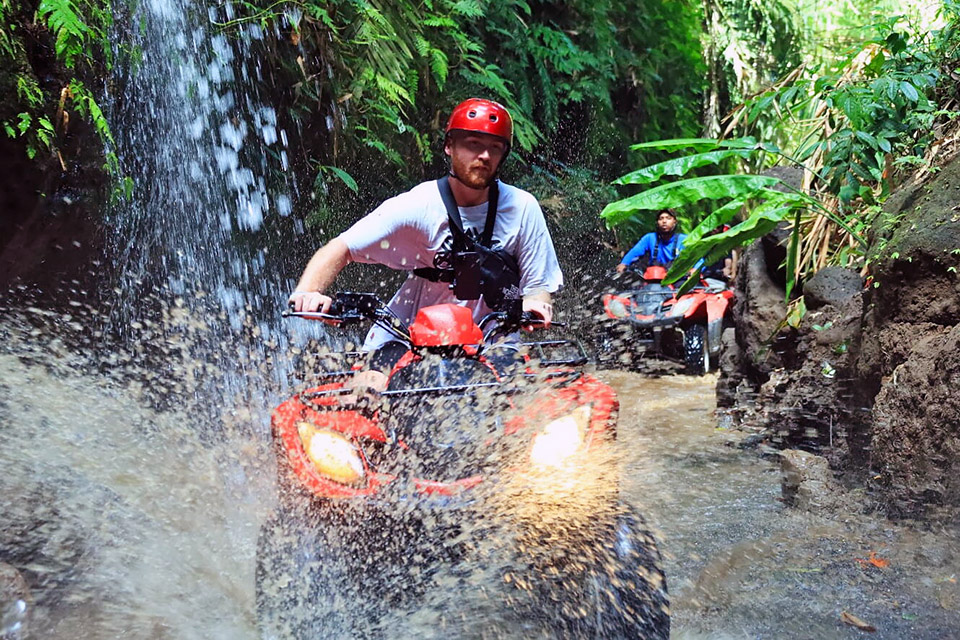
ATV riding looks dangerous because mud flies, engines growl, and the terrain feels raw. But when that experience is structured, it becomes predictable and controlled. Tracks are chosen specifically to challenge balance without introducing exposure. Jungle paths curve gently rather than drop sharply. Water crossings are shallow and supervised. Before the ride even begins, there is a practice session—an unglamorous but essential moment where beginners learn how the ATV responds, how to brake, how to turn, how to stop safely.
Another critical distinction lies in the difference between guided tours and unguided riding. In places where ATVs are rented without oversight, risk rises quickly. In Ubud, however, reputable operators do not simply hand over keys. Every ride is guided. The pace is set by the lead guide. A support guide closes the group. If someone feels nervous, the route adjusts. If weather changes, the ride slows or stops.
So when people ask, “Is ATV riding in Ubud safe?” they are often responding to an image—not the experience itself.
The truth is quieter, steadier, and far less chaotic than it appears online. For beginners, Ubud’s ATV tours are not about proving bravery. They are about discovering that adventure, when designed well, can feel surprisingly reassuring.
👉 Related Reads:
→ Adventure Activities in Ubud – ATV, Rafting & Cycling
→ Ubud and Central Bali Travel Guide – Culture, Nature & Highlands
→ Best Rafting Rivers Near Ubud – Ayung vs. Telaga Waja
Terrain & Track Design — Why Ubud Is Beginner-Friendly
The moment you arrive at an ATV base in Ubud, the tone is set quietly—but deliberately. There is no rush, no bravado, no pressure to perform. This is where much of the anxiety around ATV Ubud safety begins to dissolve, replaced by something far more grounding: process.
Arrival is unhurried. You check in, meet the team, and get a sense of the environment. ATVs are lined up neatly, already inspected. Helmets and boots are sized carefully, not handed out casually. For quad bike Ubud for beginners, this moment matters—it signals that what follows is managed, not improvised.
Next comes the safety briefing, and this is not a formality. Guides explain the controls slowly and clearly: throttle, brakes, balance, posture. They demonstrate hand positions and body movement, especially for uneven terrain. You are shown how to stop—not just how to go. Rules are explained with reasons, not commands. Speed limits are stated. Passing is prohibited. Distance between riders is emphasized. Questions are encouraged.
Then comes the part most people underestimate: the practice lap.
Before anyone enters the jungle, every rider completes a short test loop on flat ground. This is where beginners discover how responsive—or forgiving—the ATV actually is. You practice accelerating gently. You brake. You turn. Guides observe closely, offering adjustments. If someone feels uncertain, they practice again. There is no penalty for caution. This single step is one of the biggest reasons ATV riding in Ubud remains accessible to first-timers.
Only after the group is comfortable does the ride begin.
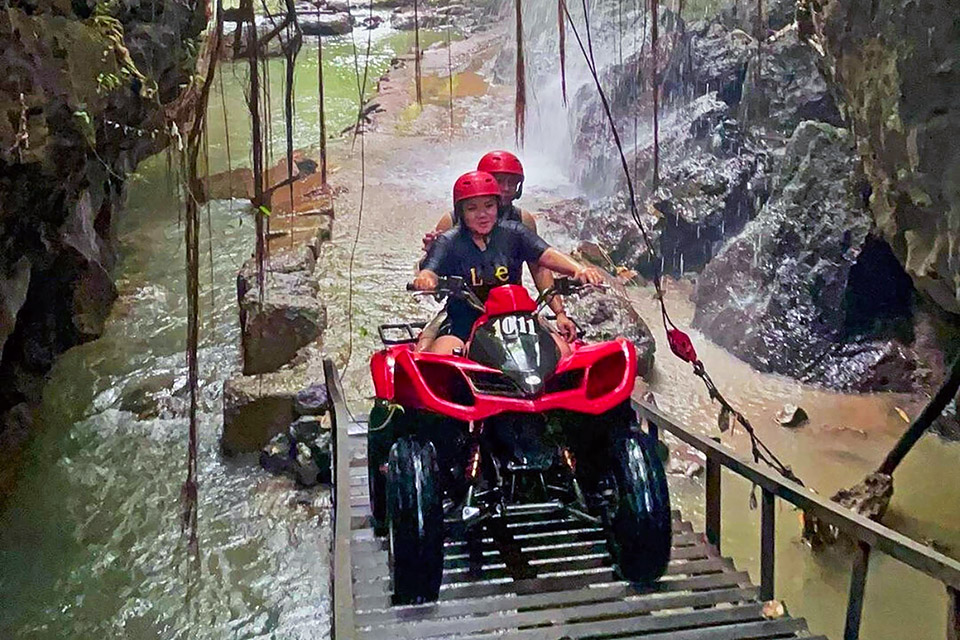
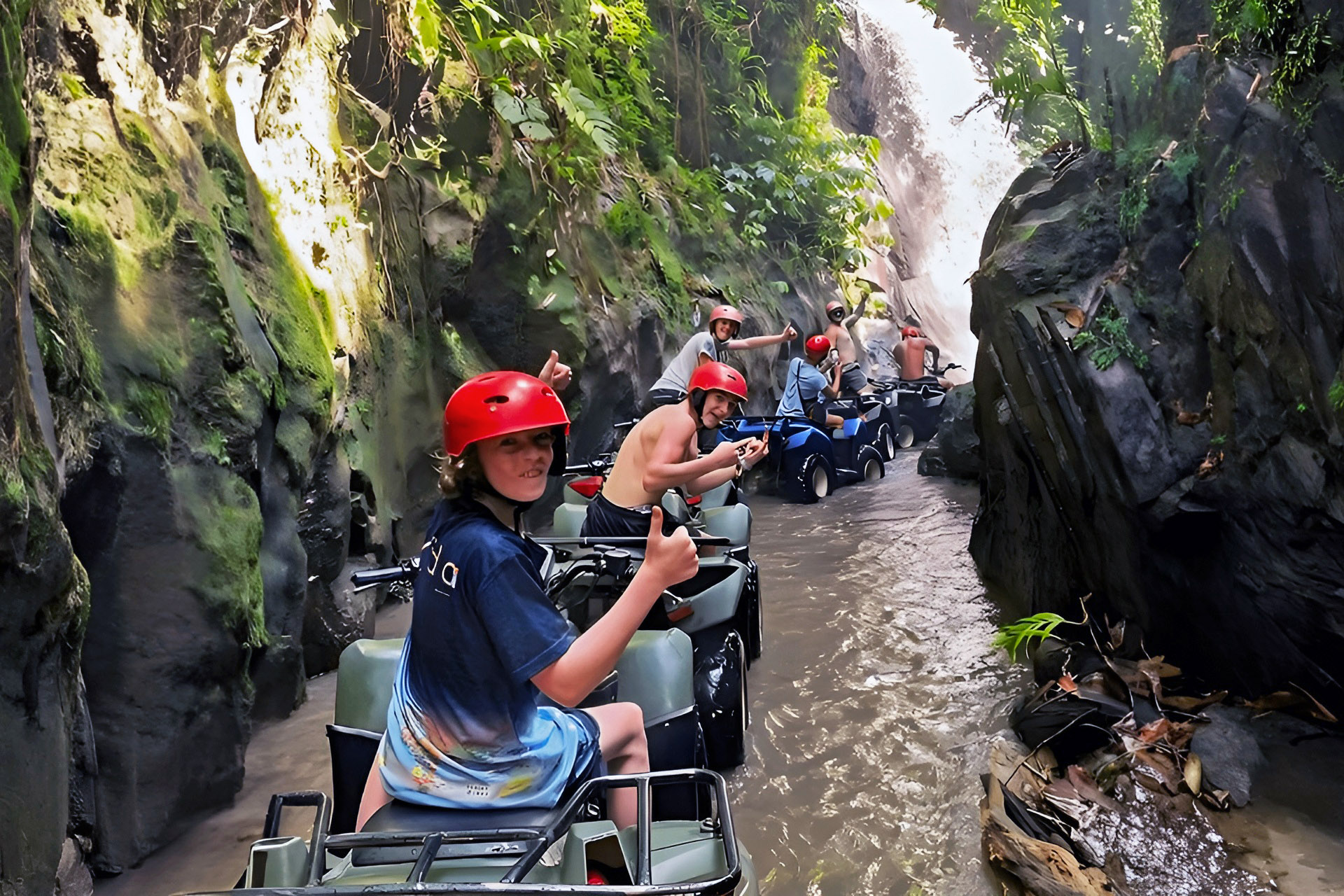
The guided ride formation is intentional. A lead guide sets the pace. Riders follow in a single line. A second guide stays at the back, ensuring no one is left behind. You are never riding alone. You are never guessing which path to take. The route unfolds in front of you, chosen moment by moment by someone who knows the terrain intimately.
Speed is controlled, not suggested. If the lead guide slows, everyone slows. If the trail narrows, the group tightens. On muddy sections, guides often signal to ease off the throttle. There is no competitive riding. No sudden challenges. No surprises.
Communication remains constant. Guides use hand signals for slowing down, stopping, and hazards ahead. Many tours also use simple radio communication between lead and rear guides, adjusting pace if someone needs more space or time. If you raise your hand, the group stops. If you need help, it arrives immediately.
This is the part that rarely makes it into viral videos: you are never “set loose.”
You are guided from start to finish. Terrain is selected based on conditions that day—weather, visibility, group skill level. If rain has made a section too slick, it’s avoided. If a rider looks tense, the pace shifts. The experience adapts to the group, not the other way around.
Understanding this structure is key to understanding why quad bike Ubud for beginners works so well. What looks wild from the outside is, on the ground, carefully choreographed. The freedom you feel comes not from risk—but from knowing someone else is watching the path ahead.
Terrain & Track Design — Why Ubud Is Beginner-Friendly
One of the most overlooked truths about ATV riding in Ubud is this: the land itself is part of the safety system.
Ubud’s ATV routes are not improvised jungle trails or risky mountain paths carved for thrill alone. They are purpose-built tracks, shaped over years of daily use, adjusted with the seasons, and designed to balance adventure with control. This is a crucial distinction—especially for those asking, is ATV riding in Ubud safe for beginners?
First, let’s talk about the terrain.
Ubud sits in Bali’s central highlands, where the landscape rolls rather than drops. The jungle here is dense, green, and layered—but it is not vertical. Trails weave through coconut groves, bamboo corridors, riverbanks, and rice fields. There are slopes, yes, but no exposed cliffs. The feeling is immersive, not precarious. You are surrounded by nature, not suspended above it.
This matters because jungle paths are not cliff edges. On Ubud ATV tracks, turns are wide, visibility is clear, and drops—if any—are shallow and buffered by vegetation. Routes are chosen to keep riders grounded, both physically and mentally. Beginners don’t need to manage fear of height while learning throttle control. That single difference dramatically lowers risk.
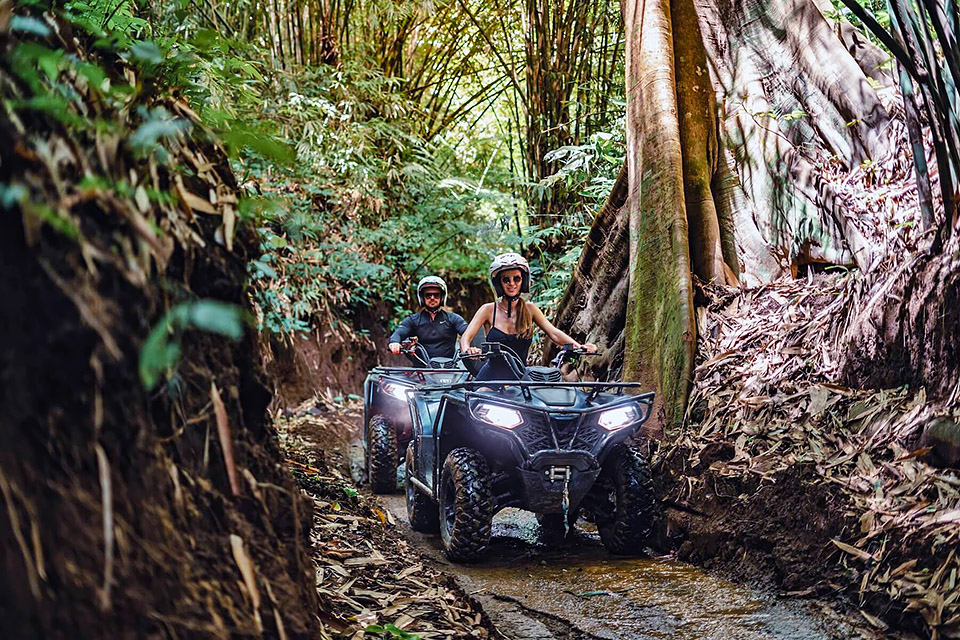
Then there’s the mud—often misunderstood.
Mud in Ubud is not about speed. It’s about traction and texture. Tracks include muddy sections intentionally, but these are designed to slow riders down, not send them flying. The soil in this region is volcanic and clay-rich, providing natural grip even when wet. Tires dig in rather than slide out. You feel resistance, not loss of control. For beginners, this creates a forgiving learning environment where balance develops naturally.
Contrast this with some coastal or cliff-based ATV routes elsewhere in Bali.
Those routes often prioritize views over terrain stability. Sandy soil offers less traction. Narrow ridgelines demand precision before confidence has time to build. While thrilling for experienced riders, these environments can amplify nerves for first-timers. Ubud, by contrast, removes unnecessary variables. You focus on riding, not surviving the scenery.
Another key factor is route maturity.
Ubud’s ATV tracks are used daily. Guides know every root, rut, and rise. Sections are inspected each morning. Problem areas are rerouted when conditions change. Over time, trails evolve—not toward danger, but toward flow. This is not exploration. It is refinement.
💡 Insider’s Insight: Why Ubud ATV Tracks Are Safer for Beginners
- Central highland soil provides better traction than sand or rock.
- No exposed drops or cliff-edge riding.
Mature routes are tested, adjusted, and maintained daily.
When people imagine ATV riding, they often picture risk shaped by chaos. In Ubud, it’s the opposite. The land has been read carefully, shaped gently, and respected deeply. And in that respect lies the reason beginners feel steady here—not because danger is absent, but because it has been thoughtfully designed out.
Safety Standards & Operators — What Actually Protects You
When people ask whether ATV tours in Ubud are safe, the most important answer isn’t found in the jungle—it’s found behind the scenes.
Safety in Ubud doesn’t rely on luck or bravado. It is built into a system of licensed operators, standardized equipment, routine maintenance, and structured responsibility. This is what separates a controlled adventure from a risky ride, and why ATV riding in Ubud has become accessible even for first-timers.
Let’s begin with the operators themselves.
Reputable ATV tour providers in Ubud are locally licensed and regulated, operating under tourism and safety frameworks that have matured over years. These are not pop-up experiences. Many operators work in partnership with travel companies, insurance providers, and village authorities. Their routes, staff, and procedures are reviewed not just for excitement, but for consistency. A guide who leads you today likely led another group down the same track yesterday—and will do so again tomorrow. Familiarity breeds safety.
Then there’s the protective gear, which is far more than symbolic.
Helmets are mandatory and properly fitted before the ride begins. Boots—often rubber or reinforced trail boots—are provided to protect ankles from heat, mud, and impact. Gloves are available on request. This gear is not optional flair; it’s part of ATV Bali safety standards that prioritize stability, grip, and reaction time. Beginners often underestimate how much confidence proper equipment provides until they feel it working with them.
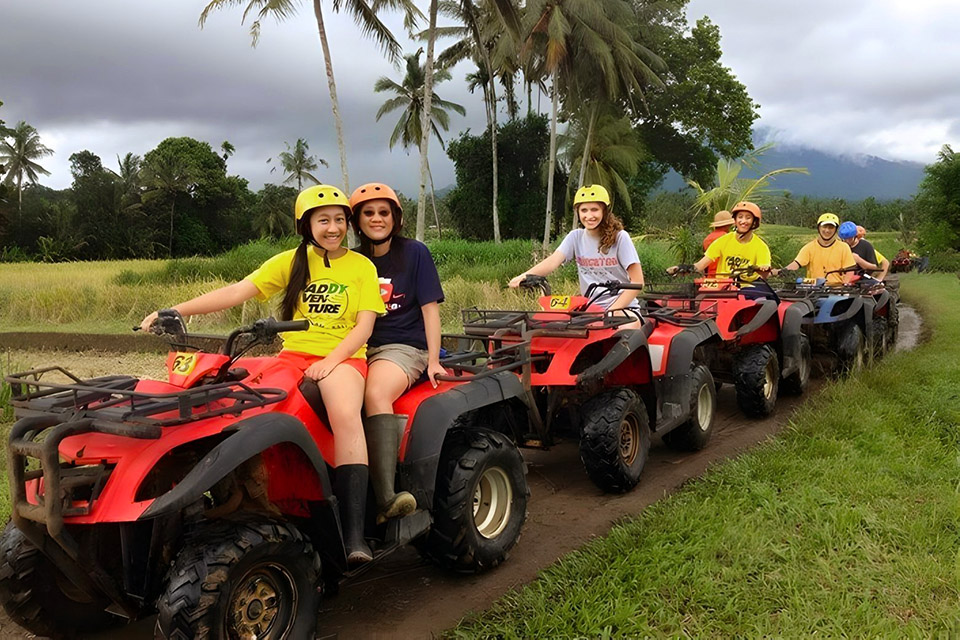
ATVs used on Ubud tracks follow regular inspection schedules. Brakes, throttles, steering, tires, and suspension are checked daily. Bikes that don’t pass inspection don’t go out—simple as that. Because tracks are used frequently, operators know exactly how machines respond to terrain changes. Maintenance isn’t reactive; it’s preventative. This consistency dramatically reduces mechanical surprises, which are one of the biggest risks in unguided riding elsewhere.
Now, about insurance—without the fine print.
Most licensed ATV tours in Ubud include basic ride insurance as part of the package. This typically covers the activity itself and immediate medical response if needed. While it’s not a substitute for personal travel insurance, it adds a layer of reassurance that the operator takes responsibility for your safety, not just your enjoyment. Importantly, this insurance only applies when rules are followed—another reason guided structure matters.
What truly protects you, however, is how all of this works together.
Licensed operators enforce pace limits. Equipment supports control. Maintenance prevents failure. Insurance reinforces accountability. And guides stand at the center of it all, making real-time decisions to keep conditions appropriate for the group.
This is why booking through established experiences—such as the Adventure in Ubud – ATV, Rafting & Cycling Combi—matters. These tours curate operators who meet safety expectations, coordinate logistics, and remove guesswork. You’re not just booking an activity; you’re stepping into a system designed to protect you while letting the adventure unfold naturally.
In Ubud, safety isn’t the absence of excitement. It’s the foundation that allows excitement to exist without fear.
What Beginners Should Expect
For most first-timers, the biggest hurdle to ATV riding in Ubud isn’t the terrain—it’s the unknown.
Questions arrive quietly, often unspoken: Do I need experience? Will I hold everyone back? What if I panic? These are natural concerns, especially for travelers new to adventure activities in Bali. The reassuring truth is that ATV tours in Ubud are designed with beginners in mind, both physically and mentally.
Let’s start with the most common question:
Do I Need Experience?
No. None at all. Many riders on Ubud ATV tours have never touched a quad bike before arriving. That’s why every ride begins with a safety briefing and a practice lap. You’re shown how to accelerate, brake, turn, and stop—slowly, deliberately, and with a guide watching. No one moves forward until the group is comfortable. This structure is what makes ATV beginners Bali experiences approachable rather than intimidating.
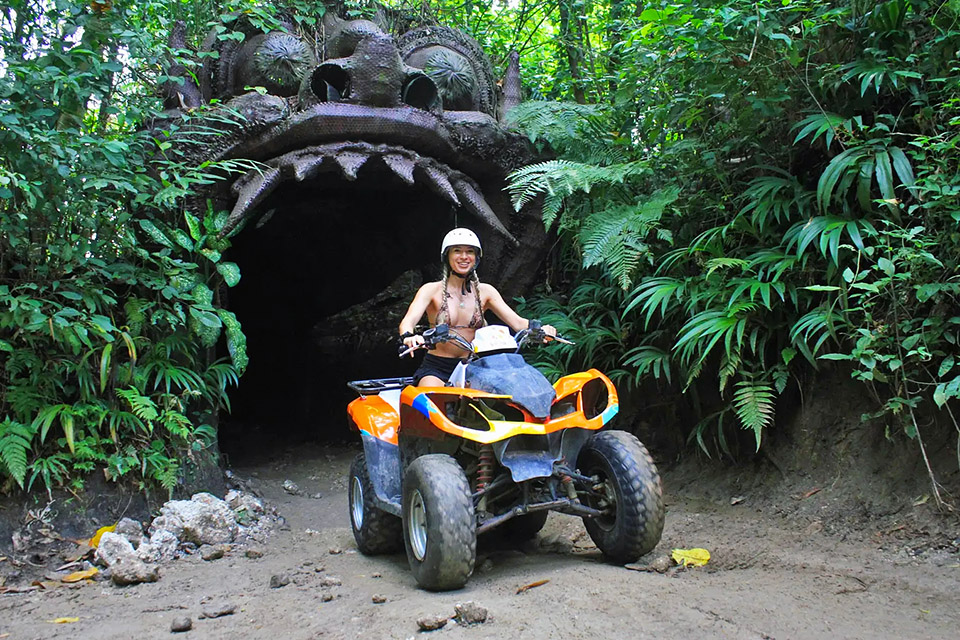
Is It Physically Exhausting?
Moderately active, but not draining. Riding an ATV uses your core, arms, and legs, especially on muddy sections where balance matters. However, you’re seated most of the time, and the bike does the heavy lifting. Think of it as light-to-moderate activity rather than a workout.
Most people finish pleasantly tired, not overwhelmed—energized rather than depleted.
Can I Go Slow?
Absolutely.
This is one of the most misunderstood aspects of quad biking in Ubud. Speed is controlled by the guide, not peer pressure. If you prefer to ride cautiously, that pace is respected. Groups are often arranged by comfort level, and guides adjust spacing so no one feels rushed.
Your ride does not become more “successful” by being faster—it becomes better by being controlled.
Solo vs Tandem: What’s Right for You?
Solo riding gives you full control of the bike and is ideal for confident beginners who want independence. Tandem riding—where you share a quad with a partner or guide—is perfect if you’re nervous, smaller in stature, or simply want reassurance. Many first-timers choose tandem on their first ride and switch to solo later, once confidence builds.
💡 Insider’s Tips: ATV Beginner Tips That Actually Matter
- Choose tandem if nervous — confidence often grows faster when you can focus on the experience, not the controls.
Let faster riders go first — there’s no prize for keeping up; comfort always wins.
- Ride your comfort, not the group’s ego — the best ATV experience is the one you finish smiling.
Mentally, expect a shift.
The first few minutes may feel tense—hands gripping tighter than necessary, senses on high alert. Then something changes. Your breathing slows. Your movements sync with the trail. Mud becomes playful instead of threatening. This transition is common, and it’s why so many beginners finish their ride wondering why they ever doubted themselves.
With the right structure, Ubud quad bike tips aren’t about bravery—they’re about trust. Trust in the guide, the track, the equipment, and your own ability to adapt. In Ubud, ATV riding doesn’t ask you to be fearless. It teaches you that fear often fades once the journey begins.
Common Risks — And How They’re Mitigated
No adventure is completely without risk—and pretending otherwise would do more harm than good. What matters is how those risks are understood, managed, and reduced. In Ubud, ATV riding is not built on adrenaline-first thinking. It’s built on structure, terrain awareness, and guide control. When travelers ask “Is ATV riding in Ubud safe?”, this is where the real answer lives.
Let’s talk honestly about the most common risks—and why they rarely become problems.
1. Slipping in Mud
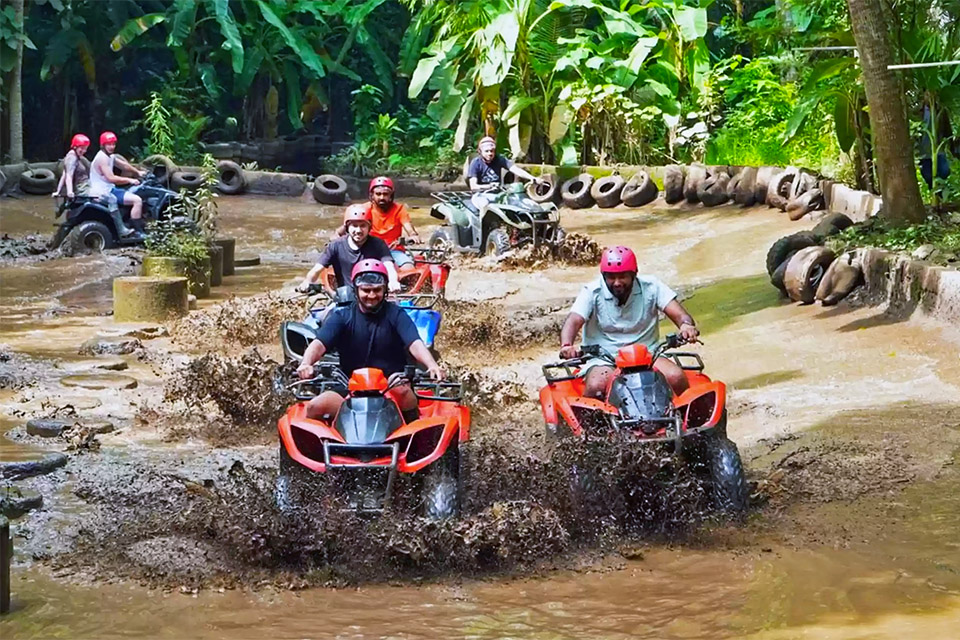
Mud is part of the experience. It looks dramatic on social media, but in reality, muddy sections on Ubud ATV tracks are designed for low-speed traction, not sudden acceleration. The bikes use wide tires with deep treads, and guides instruct riders to ease through muddy zones without sharp turns or bursts of speed. Slips can happen, especially if someone over-corrects—but they are usually minor and slow, more like a wobble than a fall.
How It’s Mitigated:
Speed limits are enforced in muddy sections. Guides often demonstrate the correct technique before you enter, and spacing is increased so each rider moves at their own rhythm.
2. Minor Bumps or Jolts
ATV tracks include uneven ground—roots, shallow ruts, small rises. These are part of what makes the ride engaging. For beginners, the concern is usually about losing control or being thrown off balance. In practice, the bikes are stable, and the pace is intentionally kept moderate for mixed-ability groups.
How It’s Mitigated:
Routes are chosen daily based on group experience. Beginner-heavy groups avoid aggressive sections. Helmets and boots absorb impact, and guides constantly monitor posture and hand position.
3. Fatigue
Mental focus matters more than strength. For first-time riders, concentration can be tiring, especially during the first half of the ride. Fatigue can lead to stiffness or slower reaction times if not managed.
How It’s Mitigated:
Tours include natural pauses—photo stops, regrouping points, shaded breaks. Guides watch for signs of tension and encourage relaxed riding. You are never rushed to “push through.”
4. Weather-Related Changes
Rain can raise concern, particularly in Bali’s wet season. Importantly, rain does not automatically mean unsafe conditions—but heavy or continuous rainfall changes the approach.
How It’s Mitigated:
Routes are adjusted based on weather. Steeper or slick sections are removed from the itinerary. In rare cases, tours are delayed or rescheduled. Safety decisions are made conservatively, not commercially.
The key takeaway is this: risk in Ubud ATV tours is managed, not ignored.
Speed is controlled. Terrain is chosen deliberately. Guides lead from experience, not bravado. You’re not asked to “test your limits”—you’re guided to explore within them.
That’s why, for most beginners, ATV riding in Ubud feels far less dangerous than expected. The risks are real, yes—but they are anticipated, minimized, and handled with calm professionalism. And that difference changes everything.
What to Wear & Bring for Safety
ATV riding in Ubud isn’t a fashion moment—it’s a functional experience. What you wear can quietly determine how confident, comfortable, and safe you feel on the track. Beginners often worry about looking prepared; seasoned guides care only that you are prepared. The good news? You don’t need special gear—just the right mindset and a few smart choices.
Closed Shoes
Your feet are closest to the moving parts of the ATV and the ground beneath it. Closed shoes protect against heat from the engine, flying gravel, mud splash, and accidental foot slips when stopping or balancing. Lightweight trainers or hiking shoes are ideal. Flip-flops, sandals, or slip-ons are never suitable and will usually be refused by operators—for good reason.
Long Shorts or Leggings
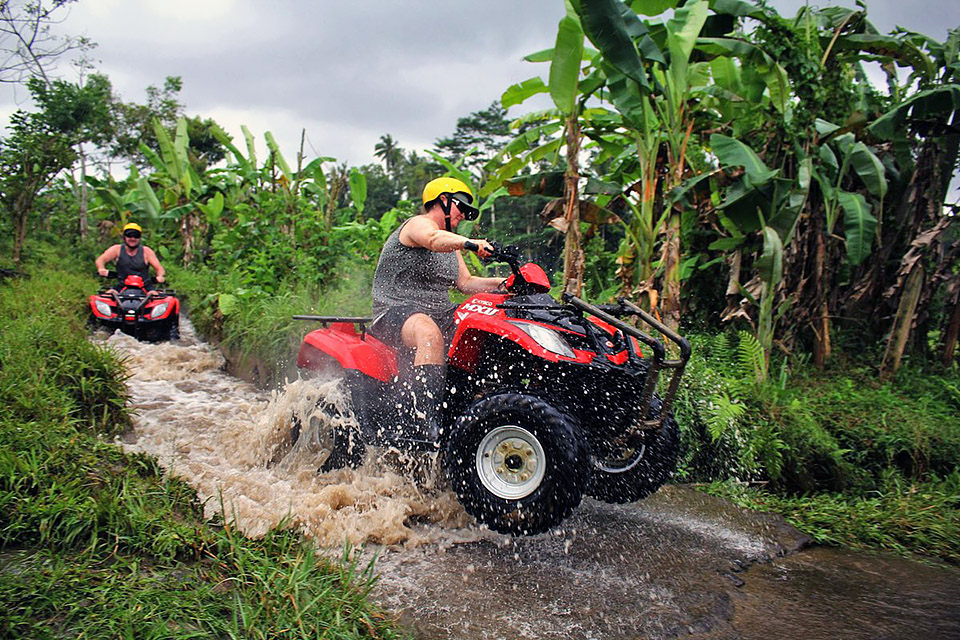
Bare skin meets mud, branches, and engine heat faster than you expect. Long shorts, leggings, or light trekking pants protect your legs from minor scrapes and keep mud from sticking directly to skin. They also help you grip the seat more confidently, especially on uneven terrain.
A Change of Clothes
Even on a dry day, expect splashes. Mud is part of the experience, not an accident. A fresh set of clothes makes the transition back to lunch, sightseeing, or temple visits far more comfortable—and respectful.
No Loose Items
Scarves, dangling jewelry, unsecured cameras, or phones in open pockets are liabilities. Loose items can fall, snag, or distract you mid-ride. If you bring a phone, secure it in a zipped pocket or waterproof pouch. Most tours provide lockers or safe storage at the base camp.
Minimal Extras, Maximum Focus
ATV riding rewards presence. The less you’re managing—bags, accessories, adjustments—the more relaxed and responsive you’ll feel on the track.
💡 Insider’s Picks: Beginner-Friendly ATV Gear Choices
- Light hiking shoes or old trainers with grip.
- Quick-dry leggings or athletic shorts with length.
- Small waterproof pouch for essentials.
- A simple change of clothes, not a full bag.
When dressed right, beginners ride calmer, react faster, and enjoy the experience more fully. Safety, here, starts long before the engine turns on—it starts with what you choose to wear.
Weather, Seasons & When Not to Ride
In Ubud, weather is not an obstacle to adventure—it’s part of the rhythm. Understanding how seasons affect ATV riding helps beginners replace uncertainty with confidence and choose the right moment for their ride.
Dry Season (April–October): Predictable & Beginner-Friendly
During the dry months, ATV tours in Ubud feel controlled and balanced. Trails are firm, visibility is clear, and mud sections are shallow and manageable. This is often the most comfortable season for first-time riders, especially those who want steady traction and minimal surprises. Speeds remain moderate, and guides can confidently maintain consistent pacing across the group.
Rainy Season (November–March): Dynamic, Not Dangerous
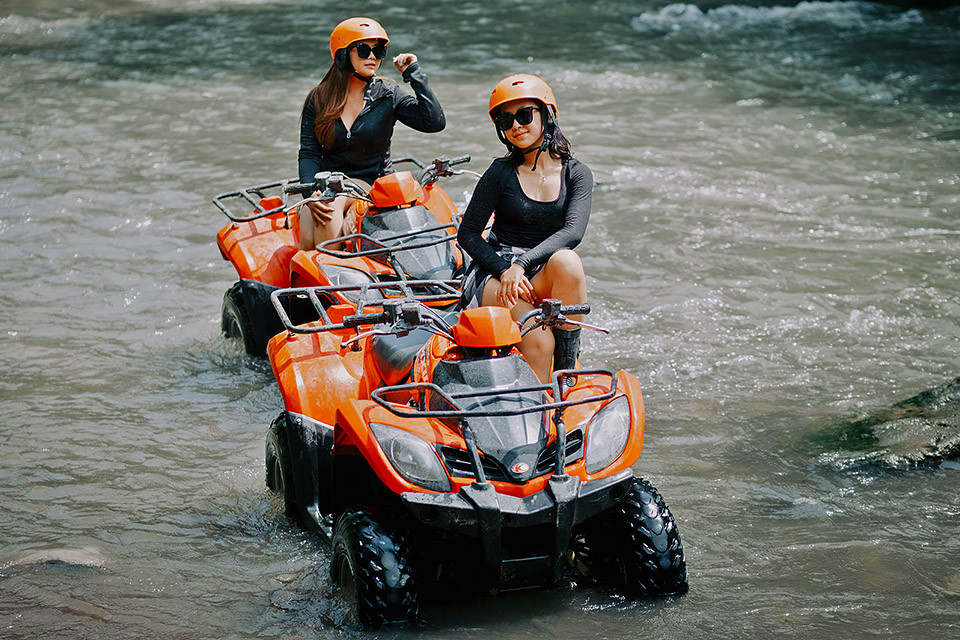
Here’s where perception often drifts from reality. Light rain does not automatically make ATV riding in Ubud unsafe. In fact, many riders enjoy the rainy season because the jungle feels alive—greener, cooler, and more immersive. Purpose-built ATV tracks in Ubud are designed with drainage, grip zones, and alternative lines specifically for wet conditions. Guides adjust routes, spacing, and speed accordingly.
What changes in rain isn’t safety—it’s style. Rides become slower, more technical, and more playful, with an emphasis on control rather than speed.
When Tours Are Postponed — A Good Sign, Not a Red Flag
Responsible operators follow strict weather thresholds. Tours may be postponed or rescheduled in cases of:
- Heavy, sustained rainfall causing river swelling.
- Thunderstorms with low visibility.
- Track saturation that exceeds safe traction levels.
This is not a failure of planning—it’s proof of ATV Ubud safety standards in action. When a tour pauses, it means your well-being is being prioritized over schedules or profit.
The Smart Beginner’s Mindset
If you’re nervous about rain, communicate it. Guides can:
- Place you closer to the front (more controlled pace).
- Adjust terrain difficulty.
- Recommend tandem riding or rescheduling.
Weather in Ubud is a variable—but never a gamble.
Whether under blue skies or misty clouds, safe ATV riding comes down to judgment, experience, and respect for conditions. And in Ubud, those decisions are never left to chance.
Who Should Skip ATV Riding
Adventure in Ubud is about alignment—not proving something to yourself, and certainly not pushing through discomfort for the sake of a checklist. While ATV riding in Ubud is safe for most beginners, there are moments when not riding is the wiser, more respectful choice—for your body and for the experience itself.
Who Should Consider Skipping ATV Riding
If you fall into any of the following categories, it’s best to pause and explore gentler alternatives:
- Recent injuries or surgeries involving the back, neck, shoulders, wrists, or knees. Even with speed control, ATVs require core stability and responsive balance.
- Certain medical conditions, including serious heart conditions, uncontrolled blood pressure, or conditions affecting balance and coordination.
- Late-stage pregnancy, where vibration and posture may cause discomfort or risk.
- Severe anxiety around motorized activities, especially if panic overrides the ability to listen to instructions calmly.
Skipping ATV riding is not missing out—it’s choosing the experience that serves you best.
What to Do Instead — Adventure Without Impact
Ubud offers equally rich ways to connect with its landscapes without the physical intensity of quad biking:
- Cycling Tours in Ubud
Downhill and village cycling routes offer movement without strain. You glide through rice terraces, temple lanes, and rural hamlets at a pace that invites conversation and observation. - River Rafting (Gentler Sections)
Not all rafting in Ubud is about adrenaline. The Ayung River’s calmer stretches are ideal for beginners, families, and travelers who want jungle immersion without impact. - Nature & Cultural Walks
Guided walks through villages, river valleys, and sacred sites provide depth, storytelling, and connection—often missed at higher speeds.
Why Transparency Builds Better Travel
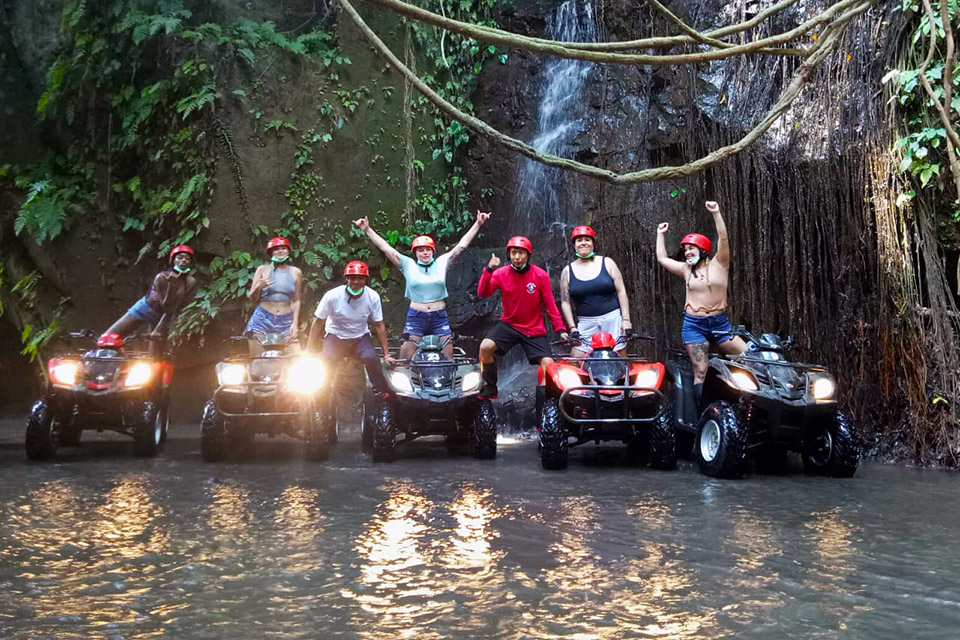
Responsible adventure isn’t about selling everyone the same thrill. It’s about guiding each traveler toward the experience that fits their body, mindset, and intention. When operators clearly say who should skip an activity, it’s a sign of integrity—and a reminder that in Ubud, adventure adapts to you, not the other way around.
Confidence Comes from Structure
By the time travelers finish asking “Is ATV riding in Ubud safe?”, what they’re really asking is something deeper: Will I be looked after while I step slightly outside my comfort zone? In Ubud, the answer is yes—because adventure here is not built on chaos or bravado. It is built on structure.
ATV riding in Ubud is often mistaken for thrill-seeking. The images online—mud flying, engines roaring, laughter caught mid-splash—can suggest recklessness. But the lived reality on the ground tells a different story. What makes ATV tours in Ubud approachable, especially for beginners, is not the absence of challenge, but the presence of systems: trained guides, controlled routes, tested terrain, and a pace that adapts to the slowest rider, not the fastest.
This is guided exploration, not free-range risk. Every curve of the track, every muddy patch, every bamboo tunnel has been ridden thousands of times before—observed, adjusted, and refined for safety. Confidence grows not because riders are fearless, but because the environment allows them to feel supported. You don’t conquer the jungle here; you move through it with permission and care.
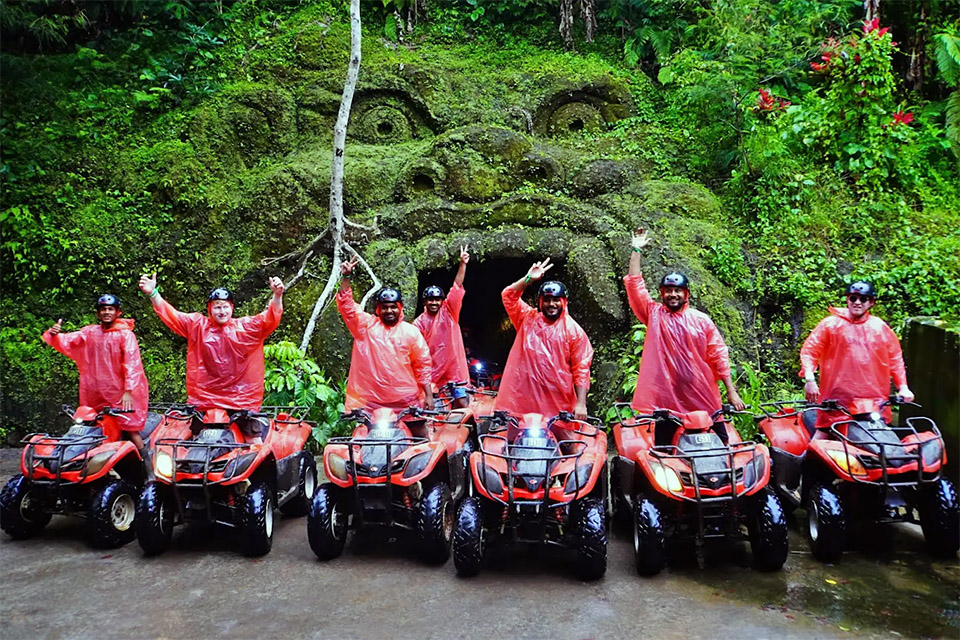
For first-time riders, this structure is what transforms hesitation into enjoyment. The hands relax on the handlebars. The shoulders drop. The mind stops bracing and starts noticing—the smell of wet earth, the cool shade of banana leaves, the laughter echoing from riders ahead. Adventure becomes immersive rather than intimidating.
That is the quiet truth behind ATV riding in Ubud: safety doesn’t dilute the experience—it deepens it. When risk is managed, curiosity takes over. When guidance is clear, freedom follows.
In Ubud, safety isn’t the opposite of adventure — it’s what allows adventure to happen.
If you’re ready to experience ATV riding as it’s meant to be—structured, respectful, and confidence-building—consider exploring it as part of a thoughtfully designed journey.
✅ Explore guided ATV adventures as part of Adventure in Ubud – ATV, Rafting & Cycling Combi, and discover how Bali’s wild side opens up when you’re guided by those who know the land.
FAQ
Is ATV riding in Ubud safe for beginners?
Yes, ATV riding in Ubud is safe for beginners when done through licensed, guided tours. Beginner-friendly ATV tours in Ubud are designed with controlled speeds, purpose-built jungle tracks, and professional guides who lead the ride from start to finish. You are never riding alone or expected to handle difficult terrain without instruction. Most first-time riders complete their tour comfortably, even without prior ATV or motorbike experience.
Do I need prior experience to ride an ATV in Ubud?
No experience is required. ATV tours in Ubud are specifically built for first-timers, including travelers who have never ridden a quad bike before. Before the ride begins, guides provide a full safety briefing and a practice session so beginners can get used to braking, steering, and throttle control. You are encouraged to ride at your own pace throughout the tour.
Are ATV tours in Ubud dangerous?
ATV tours may look intense in photos or videos, but in reality, guided ATV tours in Ubud are not dangerous when safety rules are followed. Risks are minimized through speed limits, controlled routes, spacing between riders, and real-time guide supervision. The most common issues are minor—such as light splashes of mud or temporary fatigue—not serious accidents.
What safety equipment is provided on ATV tours in Ubud?
Reputable operators provide helmets, boots, and protective gear as part of the ATV tour package. Helmets are mandatory, and boots help protect ankles and improve grip on muddy tracks. The ATVs themselves are regularly maintained and checked daily. This equipment, combined with guide supervision, forms the core of ATV Ubud safety standards.
Can I go slow on an ATV tour in Ubud?
Absolutely. One of the most important things beginners should know is that you can ride as slowly as you need. Guides adjust the group’s pace to the slowest rider and will often let faster riders go ahead so beginners don’t feel pressured. ATV riding in Ubud is about guided exploration, not racing.
Is ATV riding in Ubud safe during the rainy season?
Yes, ATV riding in Ubud during the rainy season can still be safe, provided conditions are suitable. Light rain is common and often makes the ride more scenic and fun. However, responsible operators may shorten routes or postpone tours during heavy rain for safety reasons. This is a positive sign—it shows that safety comes before schedules.
What should I wear for ATV riding in Ubud?
For safety and comfort, wear closed-toe shoes, long shorts or leggings, and clothes you don’t mind getting muddy. Avoid loose items such as scarves or dangling accessories. Bringing a change of clothes is highly recommended. Wearing the right gear significantly improves ATV safety for beginners in Bali.
Can children or older travelers ride ATVs in Ubud?
Many ATV tours in Ubud allow teens and older travelers, depending on age limits and physical condition. Younger riders usually join as passengers in tandem ATVs with an adult or guide. Older travelers who are generally fit and comfortable with light physical activity often enjoy the experience. Always check specific age and health requirements before booking.
What are the most common risks of ATV riding in Ubud?
The most common risks are slipping in mud, small bumps, or arm fatigue, especially for first-time riders. These risks are managed through low speeds, guide spacing, and terrain design. Serious injuries are rare on guided ATV tours in Ubud, particularly when riders follow instructions and ride within their comfort level.
Who should not do ATV riding in Ubud?
ATV riding may not be suitable for travelers with serious back problems, recent surgeries, or certain medical conditions, as well as those who are uncomfortable with uneven terrain. If ATV riding isn’t the right fit, Ubud offers excellent alternatives such as cycling tours, gentle river rafting, or countryside walks, which still deliver adventure without physical strain.
Is it better to book an ATV tour or ride independently?
You should always choose a guided ATV tour in Ubud, not independent riding. Guided tours include safety equipment, professional supervision, controlled routes, and insurance coverage. Unguided riding lacks these protections and is not recommended. For beginners, guided ATV tours are the safest and most enjoyable option.