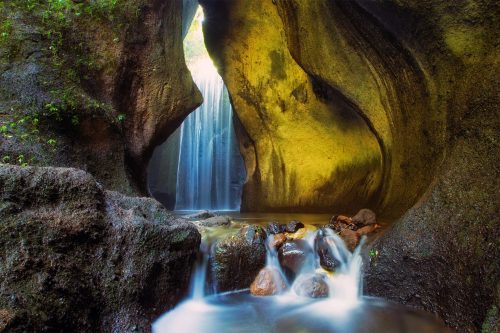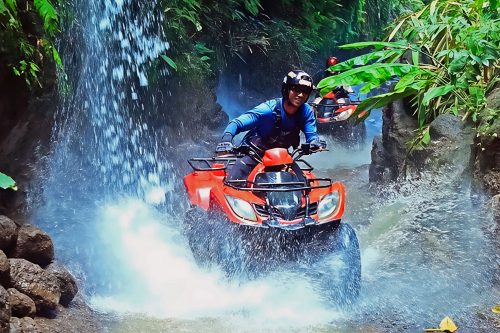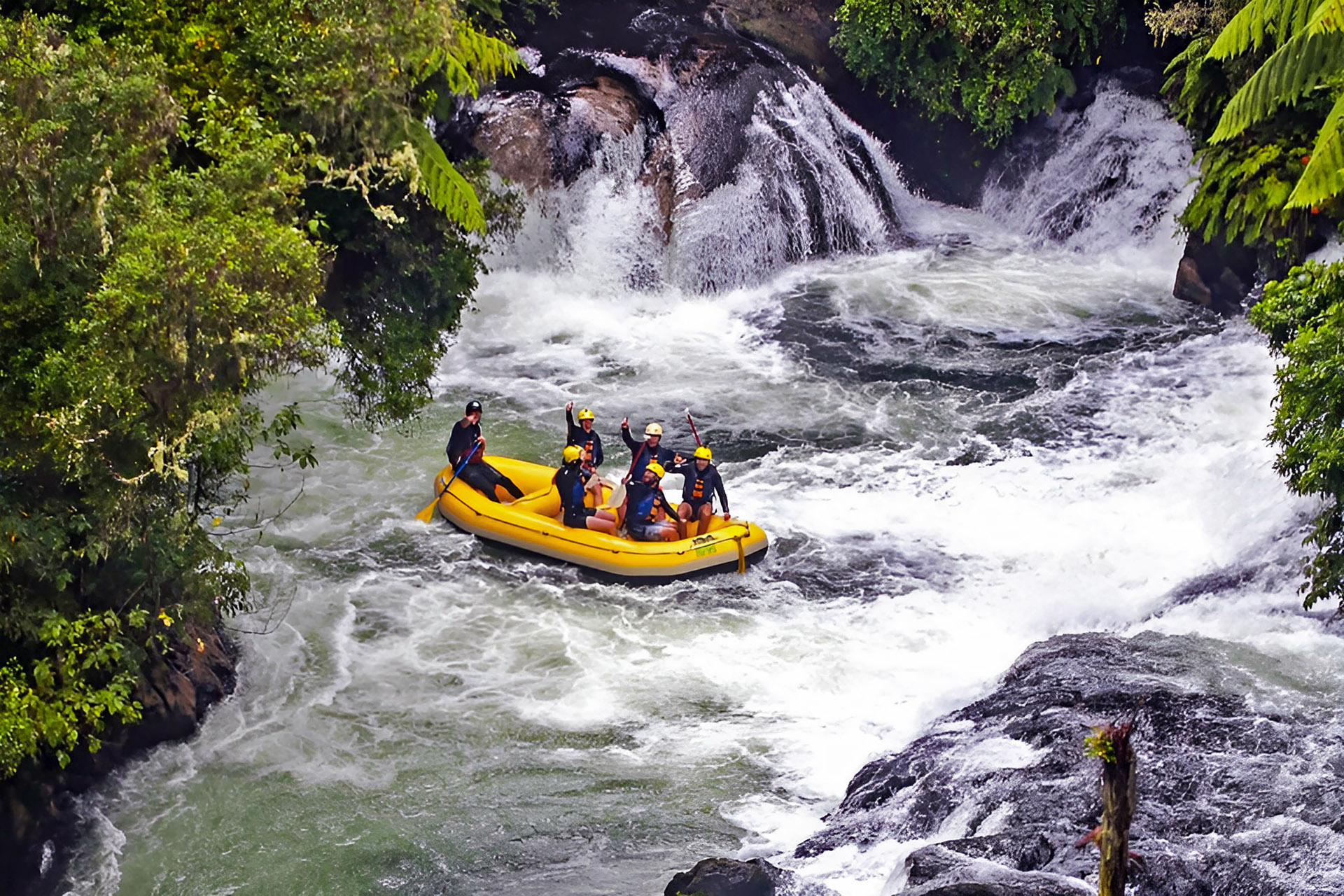
There are many ways to experience Bali’s highlands, but few are as immersive — or as effortless — as rafting. When travelers search for rafting in Ubud or white water rafting near Ubud, they are often looking for excitement. What they discover instead is something more layered: a journey shaped by geography, accessibility, and a pace that welcomes both first-timers and seasoned explorers.
Ubud sits in a rare position on the island. It is surrounded by river systems fed not by distant plains, but by Bali’s volcanic spine. Rainfall that gathers in the highlands filters down through ancient forests, carving channels that are lively without being chaotic. These volcano-fed rivers create ideal rafting conditions — consistent flow, oxygen-rich water, and natural contours that generate rapids without extreme danger. It’s why rafting near Ubud feels dynamic yet approachable, even for those who have never held a paddle before.
Rafting near Ubud feels dynamic yet approachable, even for those who have never held a paddle before.
Why Rafting Is One of the Best Adventures Near Ubud
Accessibility plays an equally important role. Unlike remote rafting destinations that require hours of travel, Ubud places you within easy reach of multiple rivers. Most rafting trips begin with a morning pickup and reach the put-in point in under an hour. By midday, you’re drying off, sharing lunch, and still have the afternoon free. This ease is part of what makes rafting so appealing here: adventure without disruption.
For first-time rafters, Ubud’s rivers are forgiving teachers. The rapids come in waves rather than walls, allowing guides to introduce techniques gradually. You learn how to paddle, how to read the water, how to trust the raft — all while surrounded by jungle, cliffs, and carved stone walls that quietly steal your attention away from nerves. It’s adventure without pressure, excitement without intimidation.
Repeat visitors find something different. Rafting becomes a way to see Bali from an angle they may have missed before. The river reveals villages tucked below road level, shrines hidden beneath banyan trees, and waterfalls that never appear on itineraries. Even those who have rafted elsewhere often note that rafting in Ubud feels less commercial, more rooted — an experience shaped by the land rather than imposed on it.
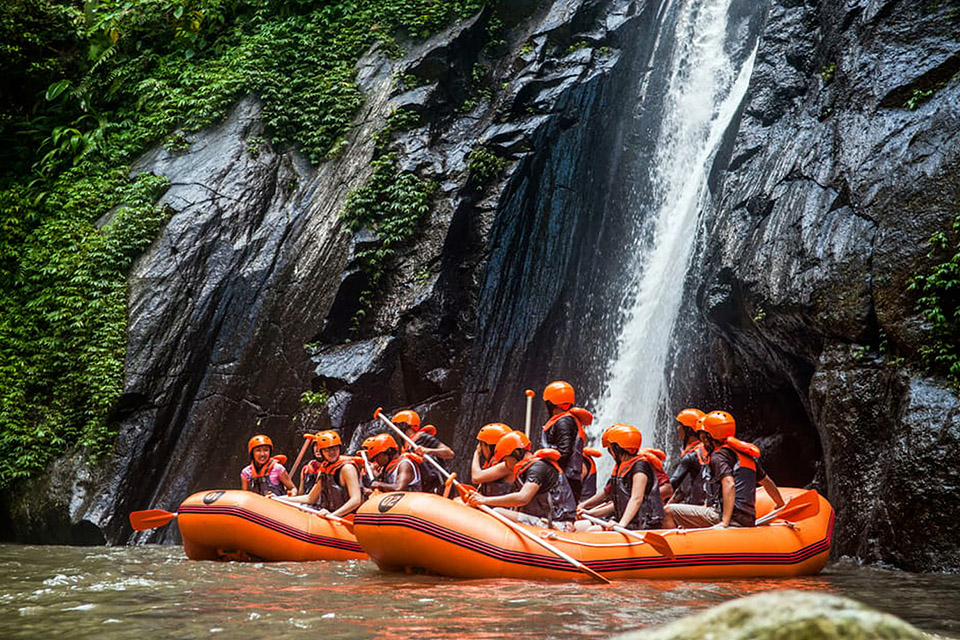
Flexibility is another reason rafting stands out. Most operators offer half-day adventures that fit seamlessly into a longer itinerary, making it easy to combine rafting with temples, cycling, or village exploration. Full-day options, often including longer river stretches or combined activities, allow travelers to linger — to slow down, swim, and absorb the environment between rapids.
Ultimately, white water rafting near Ubud works because it respects balance. It doesn’t demand that you be fearless or fit or experienced. It simply asks that you show up, listen to the river, and let Bali carry you forward — one bend at a time.
👉 Related Reads:
→ Is ATV Riding in Ubud Safe? What Beginners Should Know
→ Adventure Activities in Ubud – ATV, Rafting & Cycling
→ Ubud and Central Bali Travel Guide – Culture, Nature & Highlands
Meet the Rivers – Ayung & Telaga Waja at a Glance
Before choosing between the best rafting rivers near Ubud, it helps to meet them as they are — not as rankings or recommendations, but as personalities. Ayung and Telaga Waja are often spoken of in the same breath, yet they feel entirely different once you step onto the riverbank. This section isn’t here to decide for you. It’s here to introduce the two journeys waiting just beyond Ubud’s hills.
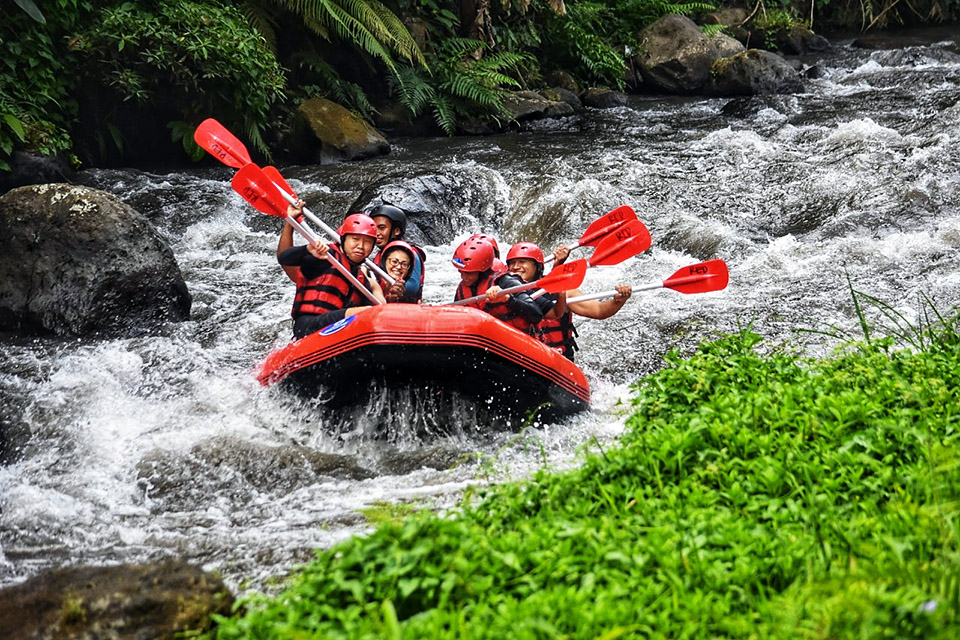
The Ayung River flows closest to Ubud, both geographically and emotionally. It winds through dense jungle corridors, stone-carved gorges, and quiet stretches where the forest seems to lean inward. Rafting here feels intimate. The river is playful rather than forceful, offering steady Class II–III rapids that keep the experience engaging without overwhelming beginners. It’s the river most associated with rafting in Ubud — accessible, scenic, and well-suited for first-timers, families, and travelers who value atmosphere as much as adrenaline.
The Telaga Waja River, by contrast, begins its journey higher up the island, on the slopes of Mount Agung. By the time it reaches its rafting sections, the river has gathered speed and purpose. The water runs clearer and faster, carving a path through wide valleys and dramatic drops. Telaga Waja rafting is more expansive in scale — longer runs, stronger rapids, and a sense of momentum that carries you forward with fewer pauses. It’s often chosen by those who want a more physically engaging experience or who have rafted before and are ready for something livelier.
Both rivers are easily reachable from Ubud, though Telaga Waja requires a longer drive into East Bali. That extra distance is part of its appeal for some — a feeling of going deeper, higher, further. Ayung, on the other hand, fits seamlessly into a half-day plan, making it ideal for travelers who want adventure without committing a full day.
To help visualize the differences, here’s a quick comparison snapshot (design placeholder):
- Location
Ayung: Central Bali, near Ubud
Telaga Waja: East Bali
- Travel Time from Ubud
Ayung: ~30–45 minutes
Telaga Waja: ~1.5–2 hours
- Rapids Class
Ayung: Class II–III
Telaga Waja: Class III–IV
- Best For
Ayung: Beginners, families, scenic rafting
Telaga Waja: Thrill-seekers, active travelers
Scenery Type
Ayung: Jungle gorges, carvings, waterfalls
Telaga Waja: Open valleys, mountain views, long drops
Think of this not as a choice between “easy” and “extreme,” but between moods. One river whispers through the jungle. The other moves with mountain urgency. In the sections ahead, we’ll step into each more deeply — letting the details guide you toward the river that matches how you want to feel, not just how hard you want to paddle.
Ayung River Rafting – The Soulful Jungle Run
There is a reason Ayung River rafting is so often the first adventure people choose in Ubud — and why many return to it even after trying wilder waters elsewhere. The Ayung doesn’t demand courage. It invites presence.
Your journey usually begins with a short drive from Ubud, the road slipping quickly from cafés and galleries into thick greenery. By the time you arrive, the air has cooled. The sound of traffic has dissolved into birdsong and running water. You step down a series of stone stairs, and with every step, the modern world feels further away. This is not rafting as an interruption. This is rafting as continuation.
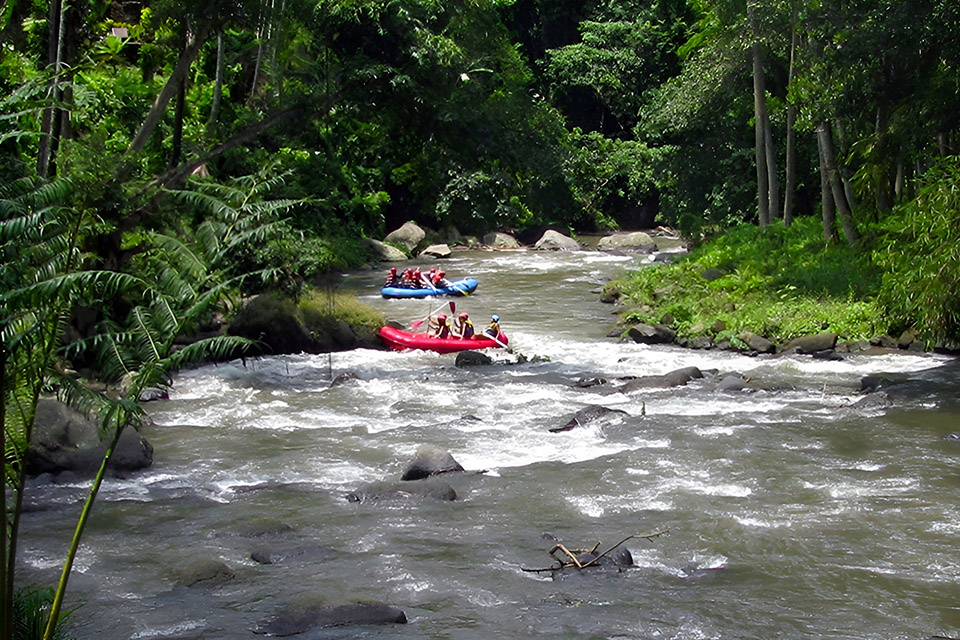
Once on the river, the Ayung reveals its character almost immediately. High jungle walls rise on both sides, draped in vines and moss, filtering sunlight into soft, shifting patterns. The water moves with a gentle confidence — not lazy, but never rushed. The rapids come in steady rhythm, Class II–III, enough to raise your heartbeat without tightening your shoulders. You paddle, laugh, float, repeat. The flow is continuous, allowing beginners to settle into the movement without long stretches of anticipation or fatigue.
What makes rafting in Ubud for beginners especially welcoming on the Ayung is this balance. There are no sudden surprises, no aggressive drops. Guides read the river like a familiar story, steering the raft with calm assurance, pointing out rocks, roots, and eddies as naturally as landmarks on a village road. Families with teenagers ride comfortably here. First-timers find their confidence building not through force, but through rhythm.
Then there are the carvings.
Along certain stretches of the Ayung River, the jungle walls give way to long stone reliefs carved directly into the cliff face. Figures from Balinese mythology — gods, guardians, dancers — emerge from the rock, weathered yet watchful. You glide past them at water level, close enough to trace the lines with your eyes. It’s a moment that surprises many rafters, not because it is dramatic, but because it feels intimate. Culture here is not presented on a stage. It exists where it has always been, beside the river.
Between rapids, the Ayung opens into calm pools where the raft drifts quietly. Waterfalls spill down narrow channels, and the guide may slow the pace, letting the moment breathe. These pauses are as much a part of the experience as the paddling. They remind you that this is not about conquering water, but moving with it.
One of the Ayung’s greatest strengths is its accessibility. As the closest rafting river to Ubud, it fits easily into a half-day plan. You can raft in the morning and still have the afternoon free — for a massage, a café visit, or a slow walk through town. For travelers with limited time, this makes Ayung River rafting not just enjoyable, but practical. For families, it reduces fatigue. For first-timers, it removes pressure.
Safety, too, feels woven into the experience rather than imposed upon it. The river has been rafted daily for years, its routes well understood. Entry and exit points are established, equipment is standardized, and guides are deeply familiar with both the water and the people riding it. This maturity shows — not in rigid rules, but in quiet confidence.
💡 Insider’s Insight – Why Ayung Is Ubud’s Most Loved River
- The closest rafting river to Ubud, with minimal travel time, it is actually in Ubud.
- Balanced Class II–III rapids that feel exciting but approachable.
Ideal for first-time rafters, families, and those seeking scenery over intensity.
Ayung rafting also offers something harder to define: a sense of cultural immersion without explanation. You pass shrines tucked into the greenery. You hear distant temple bells carried on the air. Farmers wave from the riverbanks. Life here is not paused for tourism; tourism flows through life.
By the time you reach the take-out point, wet and smiling, there’s often a quiet surprise: you don’t feel drained. You feel gently awakened. Ayung River rafting doesn’t leave you breathless; it leaves you grounded. It’s the kind of adventure that feels less like a highlight and more like a memory that settles in slowly — the sound of water, the shade of jungle, the steady pull of the river carrying you forward, exactly as fast as you need to go.
Ayung River vs Telaga Waja Rafting — At a Glance
Aspect |
Ayung River Rafting |
Telaga Waja Rafting |
|---|---|---|
Location
|
Just outside Ubud, central Bali
|
East Bali, near Mount Agung
|
Travel Time from Ubud
|
~20–30 minutes
|
~1.5–2 hours
|
River Length
|
Medium (approx. 10–12 km)
|
Long (approx. 14–16 km)
|
Rapids Class
|
Class II–III (gentle to moderate)
|
Class III–IV (more powerful)
|
Best For
|
First-time rafters, families, couples
|
Thrill-seekers, active groups
|
Scenery Style
|
Jungle gorges, waterfalls, stone carvings
|
Open valleys, rice fields, volcanic foothills
|
Physical Demand
|
Moderate, steady paddling
|
Higher energy, longer endurance
|
Water Flow Character
|
Continuous, smooth, rhythmic
|
Faster, sharper drops, dynamic
|
Seasonal Consistency
|
Very stable year-round
|
Stronger variation with rainfall
|
Cultural Elements
|
Temple carvings, sacred river atmosphere
|
Rural villages, mountain landscapes
|
Time Commitment
|
Ideal for half-day adventures
|
Often a full-day experience
|
Overall Feel
|
Scenic, soulful, immersive
|
Dramatic, adventurous, exhilarating
|
Telaga Waja Rafting – Power, Distance & Drama
If the Ayung feels like a conversation, Telaga Waja rafting feels like a declaration.
The morning begins earlier here. Pickup from Ubud often happens while the sky is still pale, the streets quiet, the air cool enough to raise goosebumps. As the car climbs eastward, the landscape changes. Rice fields give way to open valleys, and then to the foothills of Mount Agung, Bali’s most revered volcano. The presence of the mountain is unmistakable — not always visible, but always felt. The air sharpens. The road narrows. Adventure announces itself before the river does.
By the time you arrive at the put-in point, Telaga Waja already sounds alive.
This river does not ease you in gently. It moves with intent, fed by mountain springs and rainfall from higher elevations. The water is clearer, colder, and faster than what most expect from rafting in Bali, and that contrast is part of its allure. When you step into the raft, the current tugs immediately, as if impatient to get going.
Telaga Waja doesn’t whisper — it roars, then laughs.
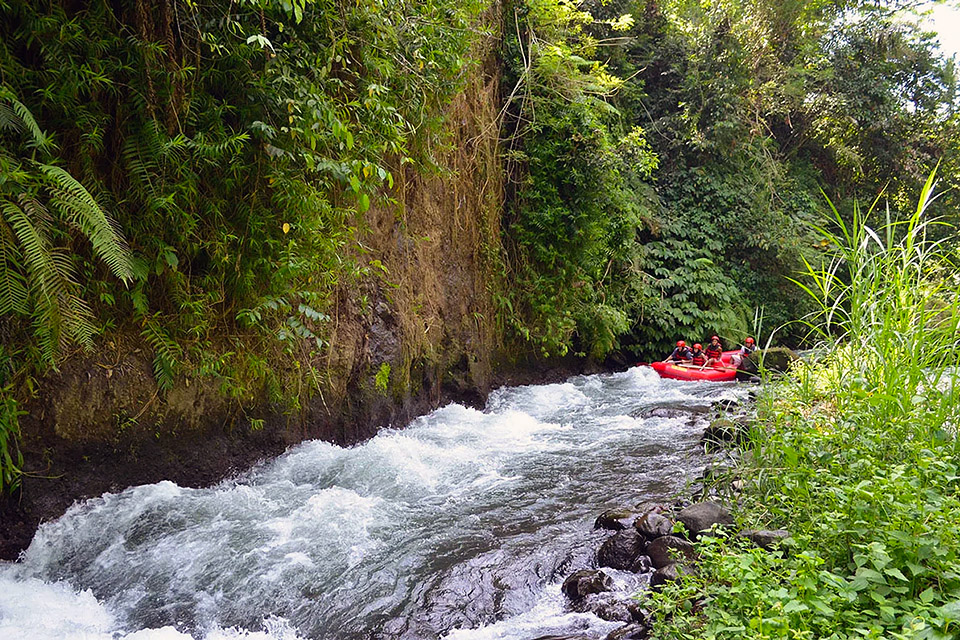
From the first stretch, the pace is unmistakably quicker. Rapids arrive in closer succession, sharper in shape, with more pronounced drops that lift the raft and set it down again in a burst of spray. This is adrenaline rafting Bali is known for — not chaotic, but undeniably energetic. The river demands attention, teamwork, and presence. Paddles dig deeper. Commands come faster. Laughter rises louder.
What truly sets Telaga Waja apart, however, is its distance.
Unlike many rafting routes that feel over just as you’ve found your rhythm, Telaga Waja stretches on. The run is longer — often close to two hours on the water, depending on conditions — and that length changes the experience entirely. You don’t just ride the river; you journey with it. Muscles warm, then settle. Fear transforms into confidence. What began as intensity becomes flow.
The scenery mirrors this sense of scale. Steep riverbanks frame the water, sometimes narrowing dramatically, then opening into wide valleys where Mount Agung looms in the background. Bamboo forests lean over the river. Stone walls channel the current into fast chutes. In places, the river drops over small dams — controlled but thrilling plunges that produce cheers every single time, no matter how many times guides have seen them.
This is why Telaga Waja rafting is often recommended for thrill-seekers and more adventurous travelers. Not because it is reckless, but because it is unapologetically physical. You paddle more. You brace more. You feel the river’s strength through your arms and core. For many, this is the kind of exhaustion that feels earned — the satisfying fatigue that comes with having fully participated.
Yet even here, drama is balanced with beauty.
Between the faster sections, Telaga Waja offers moments of calm that feel expansive rather than intimate. The river widens, the current smooths, and you have time to look up. To see the mountain. To notice the color of the water shifting with depth. These pauses don’t soften the experience; they sharpen it. They give contrast, allowing the next rapid to feel even more alive.
Safety remains a constant undercurrent, though it rarely interrupts the sense of freedom. Guides are highly experienced, often positioned strategically to anticipate stronger flows. Instructions are clear and concise, and the river itself, despite its energy, follows predictable lines. This structure allows Telaga Waja to be powerful without being punishing — demanding, but not unforgiving.
For travelers staying in Ubud, the longer drive is part of the commitment. Telaga Waja is not a casual add-on; it’s a deliberate choice. A full-day adventure rather than a quick escape. But for those willing to start early and ride farther, the reward is depth. You return not just wet, but changed in posture, in breath, in mood.
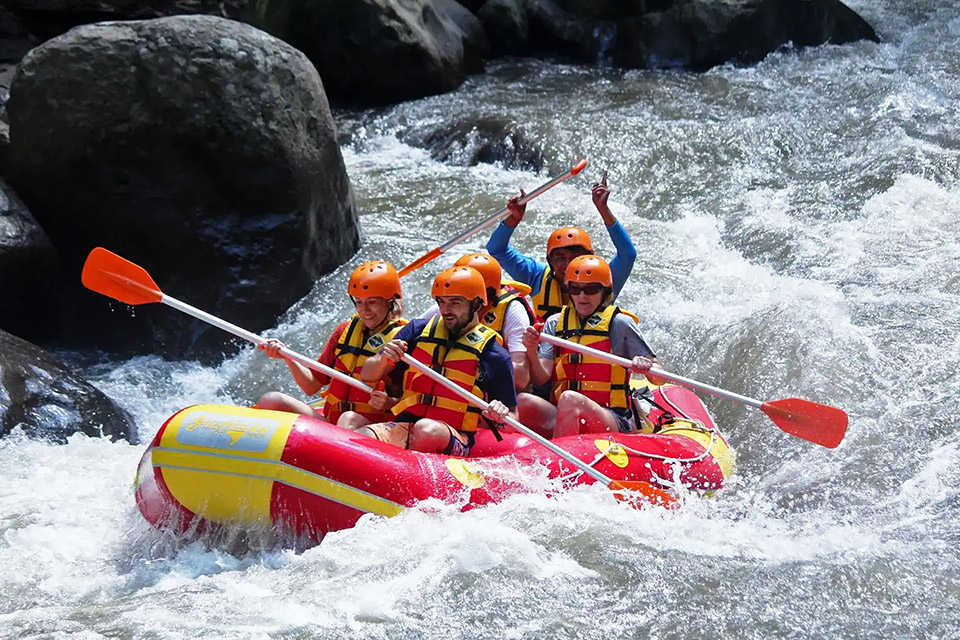
Telaga Waja is also less about cultural layering and more about elemental experience. Temples still appear along the banks, offerings still sit quietly near the water, but the river itself takes center stage. It is about movement, momentum, and scale. About feeling small in a way that is energizing, not diminishing.
By the time you reach the final stretch, muscles tired and clothes soaked, something subtle has happened. The river that once demanded your full attention now feels like a partner. You read its signals. You anticipate its turns. The roar that greeted you at the beginning softens into a rhythm you’ve learned to trust.
This is the quiet triumph of Telaga Waja rafting. It doesn’t just deliver excitement; it carries you through it. From anticipation to exertion to exhilaration, the river gives you space to meet your own edge — and then ride comfortably beside it, all the way to the end.
Family-Friendly vs Adventure-Seeker
Which River Fits Your Travel Style?
Travel Type |
Ayung River Rafting (Family-Friendly) |
Telaga Waja Rafting (Adventure-Seeker) |
|---|---|---|
Best Suited For
|
Families with kids, first-time rafters, relaxed travelers
|
Thrill-seekers, active groups, repeat rafters
|
Minimum Age (Typical)
|
~7–8 years old (operator dependent)
|
~12–13 years old (operator dependent)
|
Rapids Intensity
|
Gentle to moderate (Class II–III)
|
Stronger, faster (Class III–IV)
|
Overall Pace
|
Steady and forgiving
|
Fast, dynamic, physically engaging
|
Physical Effort Needed
|
Moderate, manageable for most
|
Higher stamina and grip strength needed
|
Fear Factor
|
Low — confidence-building
|
Medium to high — adrenaline-driven
|
Safety Margin
|
Very high, ideal for beginners
|
High, but requires comfort with water movement
|
Scenery Appeal
|
Jungle canyons, waterfalls, cultural carvings
|
Open valleys, dramatic drops, mountain backdrop
|
Cultural Experience
|
Strong spiritual & artistic elements
|
Strong nature & landscape focus
|
Travel Time from Ubud
|
Short (20–30 minutes)
|
Long (1.5–2 hours)
|
Total Time Commitment
|
Easy half-day activity
|
Often a full-day adventure
|
Best Time of Day
|
Morning for calm flow & fewer crowds
|
Late morning to midday for peak energy
|
Seasonal Flexibility
|
Excellent year-round
|
Best in dry season or controlled rainy days
|
Emotional Outcome
|
Relaxed, joyful, confidence-boosting
|
Energized, accomplished, exhilarated
|
If You’re Unsure …
|
This is the safer first choice
|
Choose only if you actively want intensity
|
The best river isn’t the wildest — it’s the one that lets you enjoy the journey together.
Quick Decision Guide
👉 Choose Ayung River rafting if your priority is safety, scenery, and shared enjoyment — especially with children or first-time rafters.
👉 Choose Telaga Waja rafting if your priority is challenge, endurance, and adrenaline — and you’re happy committing a full day.
Ayung vs Telaga Waja – Which Rafting River Is Right for You?
Choosing between Ayung River rafting and Telaga Waja rafting isn’t about finding the “better” river. It’s about finding the river that fits you. Both offer unforgettable journeys through Bali’s landscapes, yet they speak to different rhythms of travel, comfort levels, and expectations. When you frame rafting as a personal experience rather than a box to tick, the decision becomes surprisingly clear.
For families with kids, especially those with younger or first-time paddlers, Ayung is usually the gentler introduction. The rapids are playful rather than forceful, the jungle scenery keeps attention engaged, and the overall pace allows for moments of rest and reassurance. The shorter travel time from Ubud also matters when traveling with children — less time in the car, more time enjoying the river. Ayung River rafting feels inclusive, shared, and easy to enjoy together.
For first-time rafters, confidence often matters more than courage. Ayung again tends to feel more approachable. Its Class II–III rapids provide enough excitement to feel like a real adventure without tipping into overwhelm. Guides spend more time explaining technique, encouraging relaxed paddling, and allowing guests to settle into the experience. Telaga Waja is not off-limits for beginners, but it asks for a higher level of readiness — physical and mental.
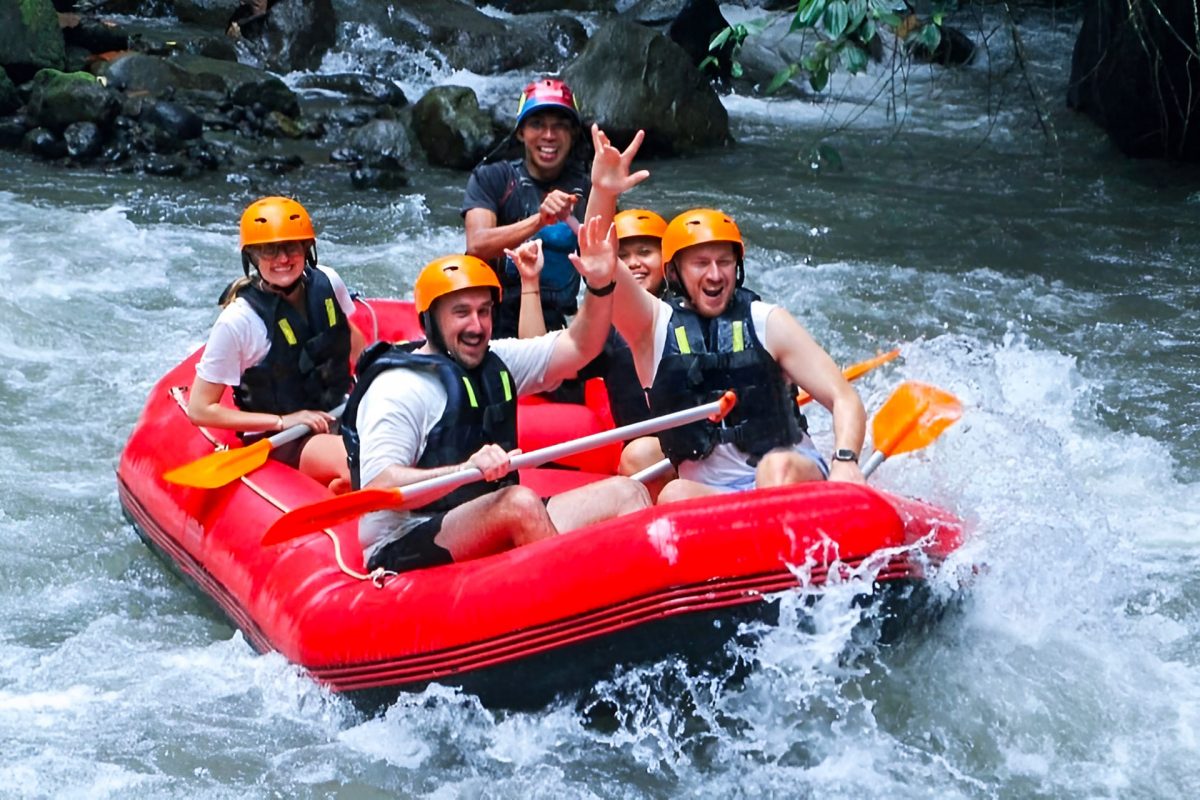
For groups of friends, Telaga Waja often wins the vote. The longer distance, faster pace, and dramatic drops give everyone something to talk about long after the raft is back on land. It rewards teamwork and amplifies group energy. That said, mixed-ability groups may find Ayung more universally enjoyable, allowing everyone to participate comfortably without anyone feeling left behind.
For couples, the choice depends on the story you want to tell together. Ayung offers intimacy: drifting through carved stone walls, exchanging smiles between rapids, sharing quiet moments beneath overhanging palms. It pairs beautifully with a relaxed afternoon in Ubud. Telaga Waja, on the other hand, creates a shared challenge. Paddling hard, laughing through drops, and finishing the run with tired arms can feel bonding in a different way — like earning a memory together rather than simply enjoying one.
For travelers with limited time, Ayung is the clear choice. Its proximity to Ubud makes it ideal for half-day adventures that still leave room for lunch, spa time, or cultural visits. Telaga Waja is a fuller commitment — a longer drive, a longer paddle, and a longer recovery. If rafting is one highlight among many, Ayung fits more seamlessly. If rafting is the day, Telaga Waja rises to the occasion.
💡 Insider’s Picks – Choosing Your Best Rafting River Near Ubud
- Ayung = scenic + accessible, ideal for families, first-timers, and relaxed schedules.
Telaga Waja = adrenaline + distance, perfect for thrill-seekers and active groups.
Time, comfort & confidence matter more than speed when choosing your river.
In the end, both rivers deliver what rafting near Ubud does best: immersion. One carries you gently through culture and jungle; the other pulls you forward with power and momentum. Neither is a compromise. They are simply different invitations — and the right one is the one that matches how you want to feel when the river finally lets you go.
Safety, Seasons & What Actually Matters
When people search “is rafting Ubud safe?” or “rafting safety Bali,” what they’re really asking is not about risk — it’s about trust. Trust in the river, trust in the guides, and trust that the experience is designed for enjoyment, not exposure. In Ubud and Central Bali, rafting has matured into one of the island’s most regulated and professionally run adventure activities, precisely because the rivers are powerful and respected.
Certified guides are the backbone of rafting safety in Bali. Reputable operators on both the Ayung River and Telaga Waja employ guides who are trained in swift-water rescue, first aid, and river navigation. But more importantly, they are trained in reading people. Guides know when a guest is nervous, when a group is pushing too hard, and when to slow the pace. This human awareness is what keeps rafting near Ubud accessible for beginners while still rewarding for experienced paddlers.
Seasonal water levels are often misunderstood. Bali has a clear dry season and rainy season, but this does not translate directly into “safe” and “unsafe.” During the dry season, water levels are lower and more predictable, making conditions ideal for families and first-time rafters. In the rainy season, the rivers grow stronger and more dynamic — which can actually improve the rafting experience for confident participants. The river changes, and the operation adapts with it.
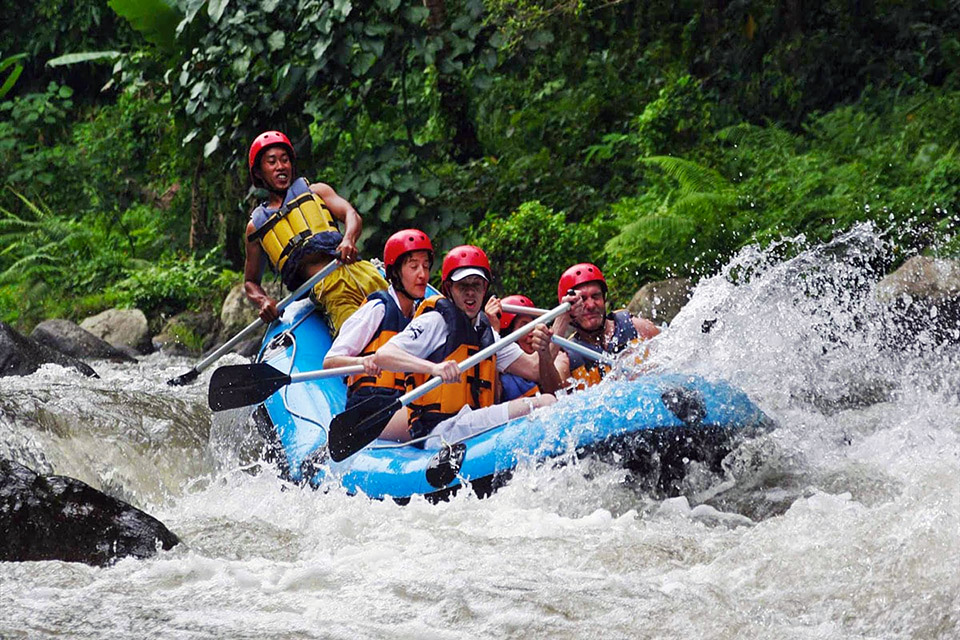
Rainy season does not automatically mean unsafe rafting.
Light to moderate rain is normal in Bali and often short-lived. Rivers are monitored daily, sometimes hourly. If conditions exceed safety thresholds — such as sudden upstream rainfall causing rapid surges — tours are postponed or rerouted. This is not a disruption; it’s a reassurance. Cancellations and delays are signs of responsibility, not inconvenience.
A key detail many travelers overlook is when tours are postponed. Ethical operators will delay or cancel rafting when visibility drops, debris increases, or current speed becomes unpredictable. No guest is ever forced onto the river. In fact, if a company is willing to say “not today,” it’s a strong indicator that your safety matters more than their schedule.
Ultimately, rafting in Ubud is safe because it is managed, seasonal because it is alive, and memorable because it is respected. The rivers are not conquered; they are partnered with. And when safety protocols, seasonal awareness, and experienced guidance come together, rafting becomes what it should be — not a test of courage, but a confident journey through Bali’s moving landscape.
How Rafting Fits into a Ubud Adventure Day
One of the quiet advantages of rafting near Ubud is how naturally it fits into a broader day of exploration. Rafting here is not an all-consuming expedition that demands recovery time and isolation; it’s a flowing chapter that leaves space for contrast. You move with the river in the morning, and by afternoon, you are free to shift gears — from water to land, from movement to meaning.
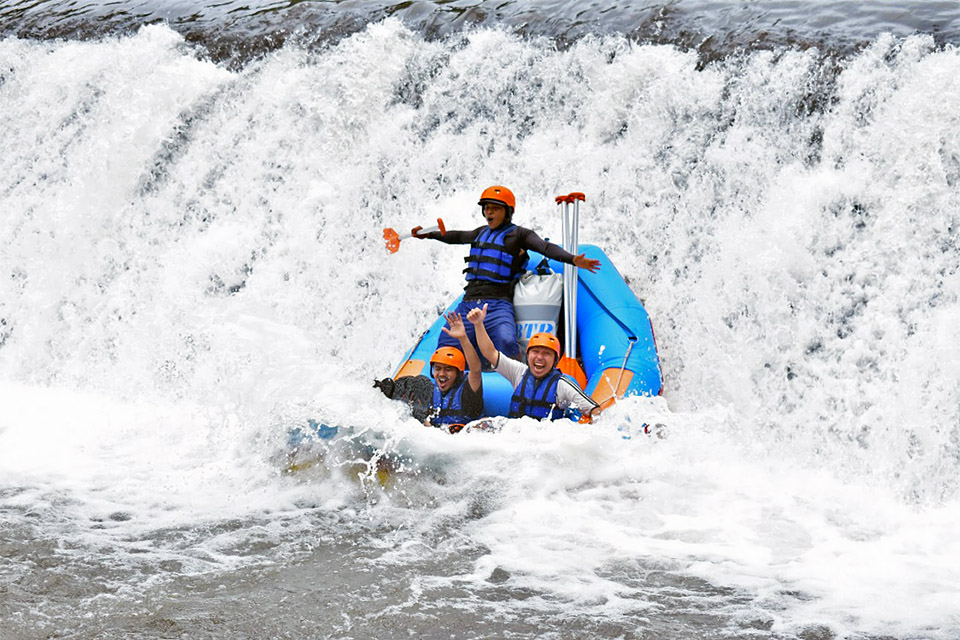
Rafting + Waterfall is the most intuitive pairing. After hours of paddling through jungle corridors and volcanic stone, the body is already tuned to water. Visiting a nearby waterfall — whether a dramatic cascade or a gentle jungle pool — becomes a continuation rather than a change of scene. The muscles are warm, the senses open. This combination works especially well with Ayung River rafting, where shorter travel times leave room for a relaxed waterfall visit without rushing the day.
For those who prefer rhythm over rest, rafting + cycling creates a beautifully balanced adventure arc. Rafting engages the upper body and sharpens focus; cycling through villages and rice fields softens the pace and invites observation. Downhill cycling routes near Ubud are designed to be accessible, allowing you to glide past temples, farms, and morning offerings after the energy of the river has settled. It’s an ideal combination for travelers who want activity without exhaustion.
Then there is rafting + a cultural stop, often underestimated but deeply rewarding. After the physicality of white water rafting near Ubud, visiting a temple, a heritage site, or a traditional village reframes the experience.
The contrast matters.
Water awakens the senses; culture gives them direction. Many travelers find that a short cultural pause after rafting helps them process the day, turning adrenaline into appreciation.
What makes these combinations work is proximity. Ubud sits at the intersection of rivers, valleys, and living culture. You don’t spend the day in transit — you spend it transitioning. For travelers who are comparing land-based thrills, it’s also helpful to explore how different adventures align in one itinerary. If you’re considering adding wheels to your day, the mini guide “Is ATV Riding in Ubud Safe? What Beginners Should Know” offers clarity on how ATV experiences compare in pacing and structure.
In Ubud, rafting is rarely the whole story. It’s the pulse that carries you into the day — leaving space for waterfalls to cool you, bicycles to slow you, and culture to anchor you back to the land.
Let the River Choose with You
In the end, rafting near Ubud is less about conquering water and more about listening to it. Rivers in Bali do not demand that you prove something; they invite you to feel something. When you step into a raft, paddle resting lightly in your hands, the river begins to set the pace — not fast or slow, but right.
This is where the choice between Ayung River rafting and Telaga Waja rafting becomes personal rather than practical. Ayung flows with a steady, reassuring rhythm. It carries you through carved stone walls and emerald jungle, teaching balance through continuity. You learn how to read water, how to trust movement without force. It’s the river that welcomes first-timers and rewards those who return with deeper awareness.
Telaga Waja, by contrast, sharpens the senses. Its longer stretches and livelier drops ask for commitment and presence. You paddle with intention, laugh louder, grip tighter — and discover courage not as bravado, but as focus. The river moves faster, but it also gives more space to release energy, to let momentum carry what words cannot.
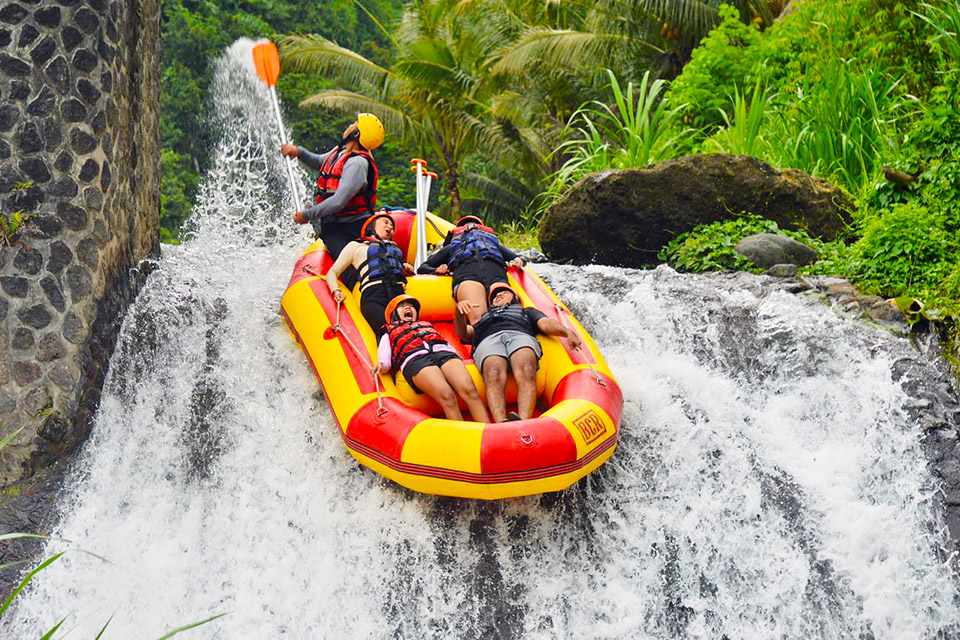
Neither river is better. They are simply different expressions of the same island. One speaks in layers, the other in exclamation points. Together, they reflect Bali’s understanding that growth comes in more than one form.
What matters most is not which river you choose, but why you choose it. Are you seeking grounding, or release? Connection, or challenge? A quiet communion with the landscape, or a story you’ll retell with shining eyes? When you answer honestly, the right river tends to reveal itself.
Some rivers teach you balance. Others teach you courage. Bali offers both.
For travelers who move with intention, guided rafting becomes part of a larger conversation with Ubud — one that blends nature, culture, and movement into a single, thoughtful journey. Here, adventure doesn’t rush you forward. It carries you, exactly as you are, toward what you’re ready to meet next.
✅ Both Ayung and Telaga Waja offer safe, guided rafting near Ubud.
Choosing the right one simply ensures your adventure feels natural, not forced.
FAQ
Is rafting near Ubud safe for beginners?
Yes — rafting near Ubud is considered safe for beginners when done with licensed operators. Both Ayung River rafting and Telaga Waja rafting are guided experiences led by trained professionals who manage pace, safety briefings, and river conditions. Beginners are never sent out alone, and guides adjust routes based on water levels and group comfort. For first-timers, Ayung River is usually the recommended choice due to its balanced rapids and calmer flow.
Which rafting river near Ubud is better for first-time rafters?
For most first-time rafters, Ayung River rafting is the better option. It features Class II–III rapids, lush jungle scenery, and a steady rhythm that builds confidence without overwhelming intensity. Telaga Waja rafting is better suited for travelers who actively want stronger rapids and a longer, more physical adventure.
Can children go white water rafting in Ubud?
Yes, children can go white water rafting in Ubud, depending on age and river choice.
- Ayung River is generally suitable for children aged 7–8 and above (operator dependent).
- Telaga Waja River usually has a higher minimum age (around 12–13).
All children must wear proper safety gear and be accompanied by adults. Families looking for a safe and enjoyable experience usually choose Ayung River rafting.
Do I need swimming experience to go rafting in Ubud?
No swimming experience is required for rafting in Ubud. Participants wear life jackets at all times, and guides are trained in water rescue techniques. While basic water comfort is helpful, rafting is more about team paddling and balance than swimming ability.
Is rafting in Ubud safe during the rainy season?
Yes — rafting in Ubud is safe during the rainy season when operators follow safety protocols. Rainy season often increases water flow, making rafting more exciting, but tours are adjusted accordingly.
Importantly, reputable operators cancel or reroute trips if river conditions become unsafe — which is a sign of responsible management, not risk.
How physically demanding is rafting near Ubud?
Rafting near Ubud is moderately physical, but manageable for most travelers.
- Ayung River rafting requires light paddling and basic coordination.
- Telaga Waja rafting is more demanding, with longer distances and stronger rapids.
You don’t need high fitness levels, but a basic level of mobility and stamina helps you enjoy the experience more comfortably.
How long does a rafting trip from Ubud take?
Most rafting tours from Ubud take half a day, including transfers.
- Ayung River rafting: ~4–5 hours total.
- Telaga Waja rafting: ~6–8 hours total (longer travel + rafting time).
This makes rafting easy to combine with other Ubud activities like waterfalls, cycling, or cultural stops.
What should I wear for rafting in Ubud?
For rafting in Ubud, wear:
- Quick-dry clothing or swimwear.
- Secure water shoes or sandals with straps.
- Sunscreen (reef-safe if possible).
Avoid loose items. Helmets, life jackets, and paddles are provided by operators.
Are rafting tours in Ubud suitable for couples or groups?
Yes — rafting in Ubud works very well for couples, friends, and small groups.
- Couples often enjoy Ayung River for its scenic and relaxed pace.
- Groups of friends often prefer Telaga Waja for its shared adrenaline and challenge.
Rafting is a social experience that naturally builds connection through teamwork.
What’s included in a guided rafting tour near Ubud?
Most guided rafting tours near Ubud include:
- Hotel pickup and return
- Safety briefing and equipment.
- Professional river guide.
- Shower facilities and towels.
- Lunch after rafting.
Choosing a guided experience removes logistical stress and ensures safety throughout the journey.
Can rafting be combined with other adventure activities in Ubud?
Yes — rafting is commonly combined with:
- Waterfall visits.
- Cycling tours.
- ATV riding (for experienced travelers).
Many travelers choose curated adventure combinations to experience more of Ubud in one day without rushing.
The question isn’t whether rafting near Ubud is safe — it’s whether you choose the river that fits you.
For most travelers, guided rafting near Ubud is safe, well-managed, and deeply rewarding — especially when matched thoughtfully to your comfort level, time, and travel style.