There’s a moment, somewhere between the rolling savannas and traditional villages, when Sumba stops feeling like just another Indonesian island and starts feeling like a place that rewires the way you travel. This guide is your window into its landscapes, cultures, and slow-travel rhythm — the kind of journey shaped by connection rather than checklists. If you’re looking for things to do in Sumba that go beyond the usual, you’re in the right place.
💡Related reads:
→ Book Sumba Tours
→ Sumba Travel Guide & Tours
→ Best Time to Visit Sumba: Weather, Seasons & Month-by-Month Tips
→ Where to Stay in Sumba: Best Areas, Resorts, Boutique Hotels & Local Homestays
→ Sumba Itineraries: 2–7 Day Trip Plans for First-Timers & Photographers
→ How to Get to Sumba: Flights, Routes & Practical Travel Tips
Why Sumba Deserves a Spot on Your Bucket List
If you’ve ever found yourself flicking through one too many Bali posts and wondering where all the quiet corners of Indonesia have gone, Sumba feels like a secret whispered in the right direction. It’s the kind of island you hear about from that one mate who’s always off-grid somewhere—someone who comes home with sunburnt shoulders, a stash of unbelievable photos, and a certain calm in their voice that makes you think, Alright, what’s this place about?
Most travellers arrive expecting “something different,” but Sumba isn’t different in the quirky, novelty sense. It’s different in the unfiltered sense. A place where landscapes stretch on without competing billboards, where life still beats to the rhythm of tradition, and where the most unforgettable things to do in Sumba aren’t packaged or polished—they’re simply lived.
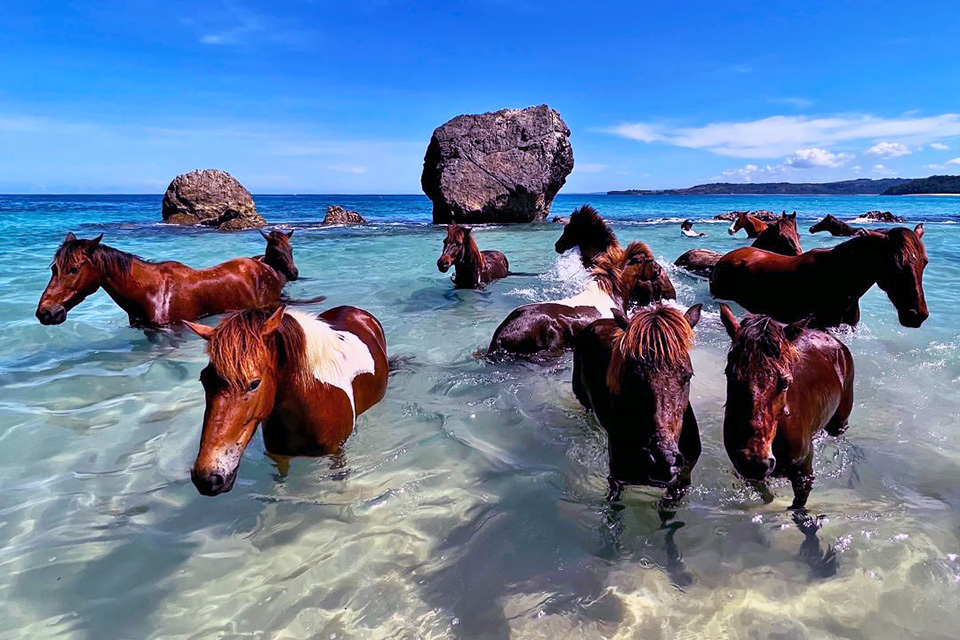
What makes Sumba stand out among Indonesia’s many islands is the way nature and culture sit side by side without one overshadowing the other. One moment you’re winding through rolling savannas that look more like the Australian outback than a tropical island. The next, you’re staring at the kind of beaches that make your brain glitch for a second—massive cliffs, wide-open white sand, sunlight bouncing off turquoise water with a confidence you only see in truly untouched coastlines. These aren’t busy, resort-heavy stretches. Most of the time, it’s just you, the waves, and maybe a stray horse wandering through the frame like it owns the place. And honestly, it kind of does.
But Sumba’s magic runs deeper than scenery. Spend a day walking through one of its traditional villages and you’ll feel it—an energy shaped by centuries-old beliefs, towering thatched houses, and communities that still live close to the land. The Sumbanese people carry themselves with a quiet pride, rooted in the Marapu tradition, where ancestors and nature are treated like living companions. It’s not put on for visitors. It’s simply how things have always been.
That authenticity is why so many travellers say Sumba feels like stepping into Indonesia decades ago—but I think that undersells it. It’s not about being “behind” or “undeveloped.” It’s about being unrushed. Sumba doesn’t try to compete with your expectations; it invites you to soften them. You don’t come here to tick off attractions on a tight schedule. You come to breathe, wander, listen, and let the island reveal itself slowly.
This isn’t the place for a frantic itinerary or a quick weekend dash. Sumba rewards travellers who turn their phones on airplane mode just a little more often than usual. Those who take the long way around. Those who appreciate the silence between moments as much as the moments themselves.
If you’re someone who values raw nature, real culture, and places that still feel wonderfully wild, Sumba earns its spot on your bucket list the moment you lay eyes on it.
Over the next sections, this Sumba travel guide will take you through the island’s best places to visit—from hidden waterfalls and windswept hills to sacred villages and blindingly blue lakes. Not the over-polished version, but the real one. Whether you’re planning a trip or just daydreaming for now, you might want to keep our other Sumba guides handy (we’ll link them for you as we go). This island has a way of pulling you in—slowly, steadily, and completely.
Quick Guide: Best Things to Do in Sumba at a Glance
Before we dive deeper into the stories, landscapes, and cultural layers of the island, here’s a quick look at the best things to do in Sumba—just to help you map out the rhythm of your trip. Think of this as the “mate who’s been there” version of a cheat sheet, pointing you toward the experiences that truly shape a Sumba journey. These aren’t attractions in the theme-park sense; they’re the island’s heartbeat, scattered across villages, cliffs, hills, and dusty roads that seem to stretch forever.
🏡 Explore Traditional Villages
Wander through time in places like Ratenggaro, Praijing, and Tarung—villages where tall, peaked thatched roofs cut striking silhouettes against the sky, and everyday life still flows to the pulse of generations-old Marapu customs.
🐎 Witness the Pasola Festival
If you’re here during February or March, the Pasola is unlike anything you’ll see elsewhere—horsemen charging across open fields, spears raised, the air thick with adrenaline and tradition. It’s raw, sacred, and unforgettable.
🧵 Observe the Art of Ikat Weaving
Take a moment to sit with weavers in East Sumba and watch intricate ikat textiles come to life—thread by thread, dye by dye, story by story. It’s slow craft at its finest.
⛰️ Discover Ancient Megalithic Tombs
Scattered across the island, these stone structures aren’t just relics—they’re part of a living relationship with ancestors that still shapes daily rituals and community life.
🌊 Surf or Ride Horses Along the Coast
For surfers, Sumba offers world-class swells roll through the southwest, while horseback rides across empty beaches feel like stepping into a film set no one else has discovered yet.
🏖 Relax on Sumba’s Quiet, Untouched Beaches
From the dreamy mangroves of Walakiri to the dramatic cliffs of Mandorak and Bwanna, the coastline here feels like it’s been left for travellers who appreciate wild beauty without the crowds.
💧 Swim in Waikuri Lake
A saltwater lagoon so clear and turquoise it almost doesn’t look real—perfect for a refreshing dip after hours of exploring.
🌿 Chase Waterfalls Hidden in the Hills
Think tall, misty cascades like Lapopu and canyon-like blue pools such as Tanggedu, reached by short hikes through green, sweeping landscapes.
🌾 Wander Across Rolling Hills and Golden Savannas
Sunrise at Sumba savannas like Wairinding or golden-hour light over Puru Kambera will convince you that Sumba is just as much about its open spaces as its coastal corners.
🚙 Take a Road Trip Through Sumba’s Ever-Changing Terrain
Rent a bike or join a local guide and head off—past remote villages, endless savannas, wild horses, and patches of lush green valleys that pop up when you least expect them.
🍴 Try Sumbanese Food and Visit Local Markets
Fresh grilled fish, earthy coconut-based dishes, tropical fruit stalls, and markets buzzing with colour—Sumba’s culinary scene is humble but honest, and it hits differently after a long day on the road.
These highlights set the tone for what’s ahead. If something on this list sparks your curiosity—and it will—we’ll break it down in the next sections so you can plan your trip with more confidence and a deeper understanding of the island’s soul.
💡For more resource to plan your Sumba experience, check our Sumba Travel Guide & Turs
Explore Sumba’s Traditional Villages
If there’s one thing that lodges itself into your memory long after you’ve left Sumba, it’s the villages. They’re not “attractions” in the packaged tourism sense—no ticket counters, no curated performances—but living, breathing communities that sit at the heart of Sumba culture. You don’t just see them; you feel them, like you’ve stepped into a story that’s been unfolding for centuries, long before visitors ever wandered through with cameras and backpacks.
These villages are among the most meaningful Sumba points of interest, not because they’re staged but because they’re entirely unfiltered. They’re snapshots of an island that has held tight to its identity while the world around it keeps speeding up. And if you’re chasing authenticity rather than convenience, Sumba traditional villages might just be the highlight of your entire trip.
What Makes Sumba Villages Unique
The first thing that hits you is the architecture. You’ll see it from the road before you even walk in—towering thatched roofs rising above the landscape like spears pointing to the sky. They’re called uma mbatangu, or “houses with high roofs,” and they’re not just aesthetic choices. These dramatic peaks serve as symbolic ladders toward ancestral spirits, a reminder that the living world and the spiritual world sit side by side here.
Step inside a village courtyard and you’ll notice something else: everything is arranged in a way that feels intentional, almost ritualistic. Houses face each other across a central yard dotted with ancient megalithic tombs, each stone laid by hand and carrying the weight of clan history. These aren’t relics of a distant past. They’re part of everyday life, a quiet acknowledgement of Marapu—the island’s animistic belief system where ancestors guide the living and every element of nature holds meaning.
What makes these villages so compelling isn’t just their appearance but the way life moves inside them. Kids playing in the shade of towering roofs, elders weaving or preparing betel nut, the smell of woodsmoke curling into the air—it all happens with a kind of natural rhythm that makes you slow your pace without even trying.
If you’re looking for Sumba attractions that help you understand the island on a deeper level, start here. The villages are the gateway.
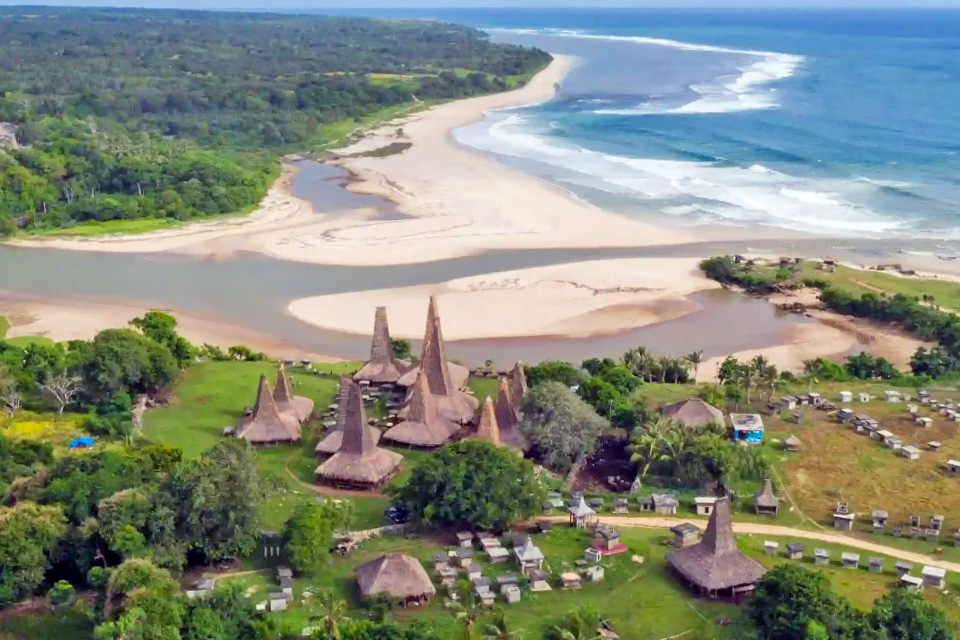
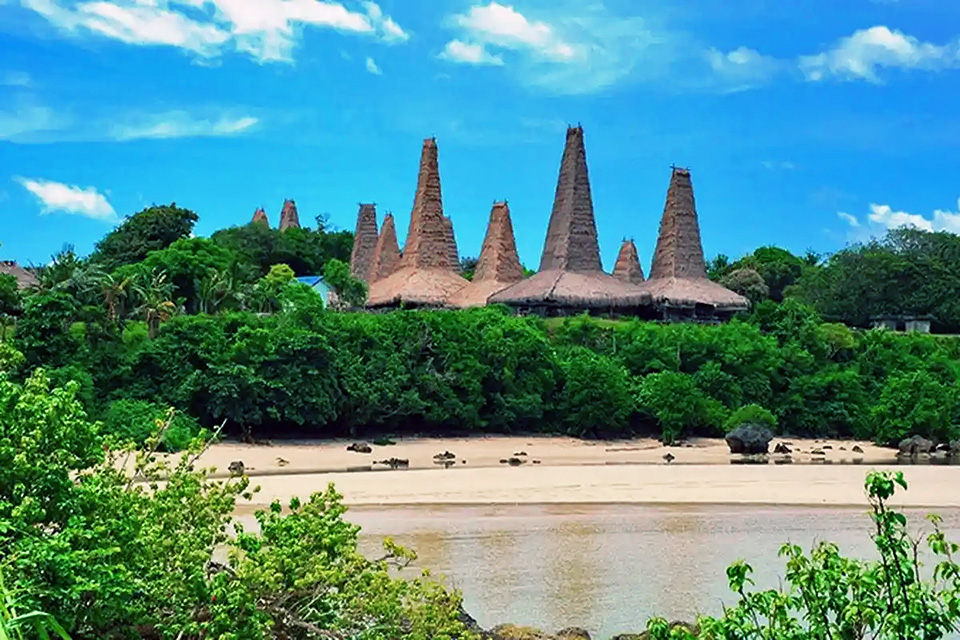
Ratenggaro is often the first name you’ll hear when people talk about traditional villages in Southwest Sumba, and for good reason. The place feels cinematic. Perched near a rugged stretch of coastline, the village sits close enough to the ocean that you can hear the waves throwing themselves against the cliffs below. It’s one of those surreal moments where cultural heritage and raw nature collide in one frame.
Walking through Ratenggaro, you’ll see some of Sumba’s tallest traditional roofs, standing like sentinels watching over the land. Right beside them are megalithic tombs that date back hundreds of years, each one tied to the stories of the Ratenggaro clans. There’s a gravity to them—a quiet reminder of how deeply rooted identity is here.
But it’s the setting that often takes travellers by surprise. Villages are rarely oceanfront, yet Ratenggaro stands boldly against the coastline, its high roofs catching the wind. If you wander down the hill, you’ll come across a sweeping beach that feels wild and untamed, often with traditional wooden boats resting on the sand. Sunset here? Unforgettable.
Praijing Village — The Most Photogenic Panorama in Sumba
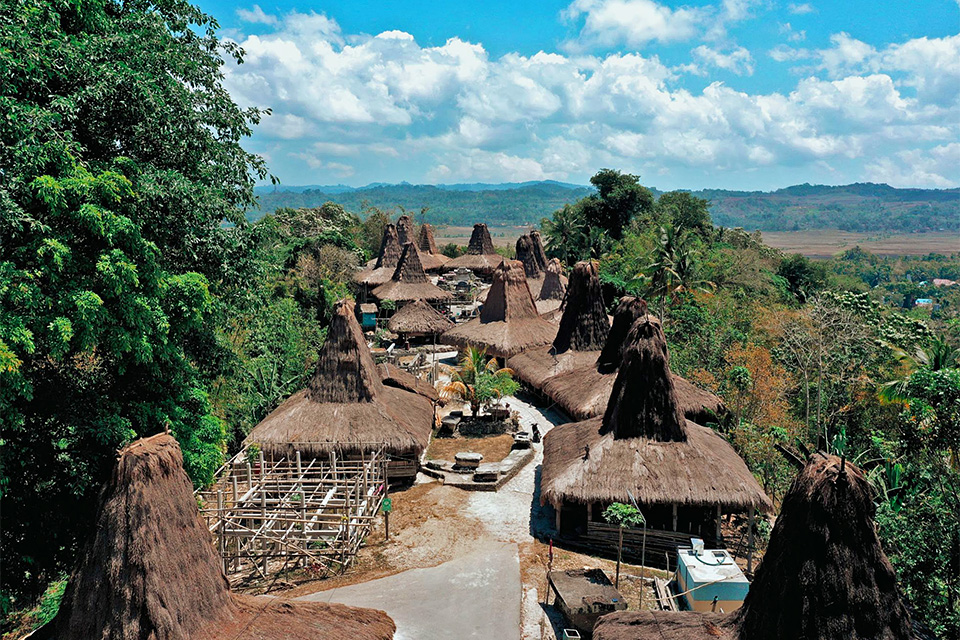
Praijing is where everything you imagine about Sumba’s landscapes seems to fall neatly into place. Set on a gentle hill above West Sumba’s green valleys, the village forms a perfect circle of high-roofed houses that almost look like they were arranged by a set designer who knew exactly what makes people stop and stare.
From the viewing platforms just above the village, you get one of the most panoramic views on the island—rolling hills stretching into the horizon, fields of green and gold depending on the season, and rooftops rising like spires out of a mythic world. It’s no wonder photographers love this place. But even if you’re not someone who travels with a camera glued to your hand, Praijing has a certain stillness that stays with you.
Inside the village, the pace is slow and grounded. Dogs wander lazily between houses. Smoke rises from cooking fires. Women sit weaving under the eaves, their looms clicking in steady rhythm. For many travellers, Praijing isn’t just another stop; it becomes one of the most memorable Sumba attractions because it offers a view into everyday life without feeling intruding or staged.
Tarung Village — The Cultural Heart of West Sumba
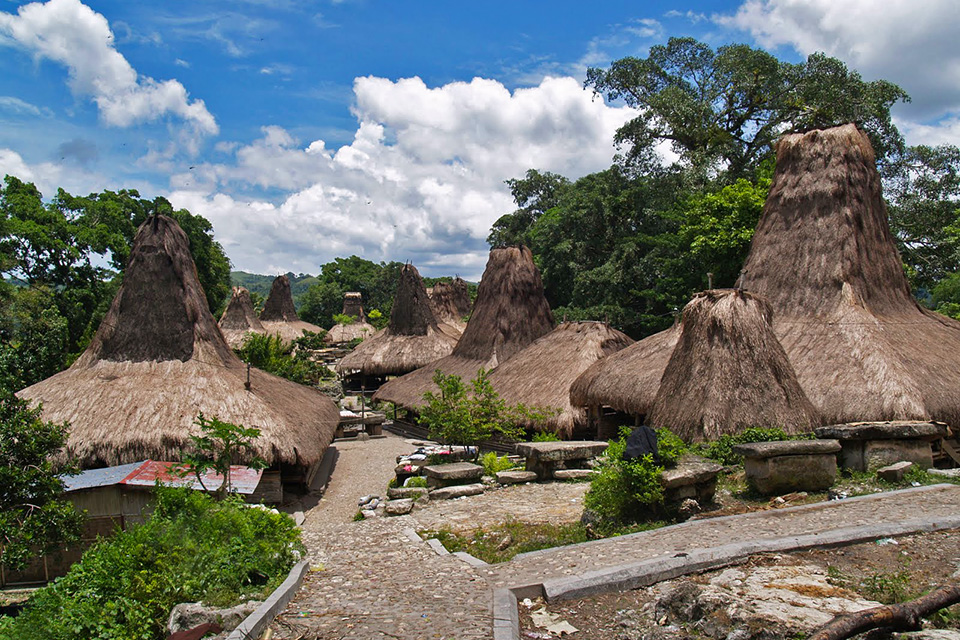
Tarung sits right beside Waikabubak, but it feels worlds apart. As one of the most important traditional villages in West Sumba, Tarung is considered a cultural and spiritual centre—a place where rituals, ceremonies, and ancestral practices are still very much alive.
The houses here form a tight cluster of high, wooden structures with sharp, soaring roofs. Beneath them, the courtyards are lined with ancient tombs carved with intricate patterns. Locals speak proudly about Tarung’s role in maintaining the Marapu traditions, and if you spend even a little time here, you’ll understand why the village is considered sacred.
Despite a fire that swept through a portion of Tarung years ago, the community rebuilt with remarkable dedication, restoring the houses not just for tourism but for identity. Walking through Tarung feels like leafing through a living chapter of Sumba history—one held together by resilience, memory, and ritual.
If you’re tracing the cultural backbone of Sumba traditional villages, this is where the pulse beats strongest.
💡 Insider's Insight: How to Visit Respectfully
Visiting these villages is a privilege, not an entitlement, and locals often appreciate travellers who arrive with patience and mindfulness. Here are a few gentle guidelines, shared from what many travellers learn along the way:
- Take your time.
Don’t rush through. Walk slowly. Let the village set the pace. - Ask before taking photos.
Especially around houses, tombs, or people. A quick, friendly gesture or smile goes a long way. - Dress modestly.
You don’t need to be covered head to toe, but aim for respectful and comfortable clothing.
- Avoid stepping on megalithic tombs.
Many are sacred, even if they look like stone benches or platforms. - Support local artisans.
If you’re offered woven textiles or handmade crafts, it’s not a pushy sale—it’s often a genuine livelihood. - Follow your guide’s cues.
Local guides understand etiquette better than any signboard ever could.
Wandering through Ratenggaro, Praijing, Tarung, and other Sumba traditional villages is one of the most meaningful things you can do on the island. These aren’t just Sumba attractions—they’re windows into a world shaped by ancestors, ritual, landscape, and identity. And once you’ve spent time inside one of these communities, the rest of the island starts to make a whole lot more sense.
We’ll include internal links to individual village guides later.
Witness the Pasola Festival: Sumba’s Most Iconic Tradition
In Sumba, culture isn’t performed for visitors — it’s lived openly, proudly, and every day.
Every island has its defining moment—the experience that makes travellers pause mid-sentence when they try to describe it. In Sumba, that moment is the Pasola Festival. It’s not just another traditional ceremony; it’s a raw, heart-thumping, absolutely unfiltered expression of Sumba culture. Even if you’d read about it before arriving, nothing quite prepares you for seeing it unfold in real life.
At first glance, Pasola looks like a clash between ritual and adrenaline. Dozens of horsemen—barefoot, lean, and impossibly balanced—gallop across an open field, spears in hand, weaving in and out of each other with a speed and confidence that borders on chaos. Dust kicks up around them. The sound of hooves echoes through the valley. And all around you, the crowd leans in, completely absorbed. It feels ancient, theatrical, dangerous, and sacred all at once.
But Pasola isn’t just about spectacle. To understand what you’re watching, you need to know that this isn’t a performance for visitors. It’s a centuries-old tradition connected to Sumba’s Marapu belief system—one of the island’s most meaningful spiritual practices.

What the Pasola Festival Actually Is
At its core, Pasola is a ritual of gratitude and balance. The event marks the arrival of the nyale, or sea worms, which appear along the shores of Southwest Sumba once a year. According to Marapu belief, their arrival signals the new harvest season—a moment when communities ask for blessings, prosperity, and protection.
The Pasola Festival acts as a ceremonial offering. The mock battle between horsemen symbolizes the relationship between humans, spirits, and the land. In the past, the spilling of blood on the earth was believed to help fertilize the soil for the growing season. While the modern festival isn’t meant to be violent, the symbolism remains: courage, respect, and the acknowledgment of natural cycles.
When you stand in the field and watch the riders charge toward each other, weaving their spears through patterns passed down for generations, you get the sense that you’re witnessing a living bridge between past and present—a tradition that has survived because it still holds meaning.
When and Where Pasola Takes Place
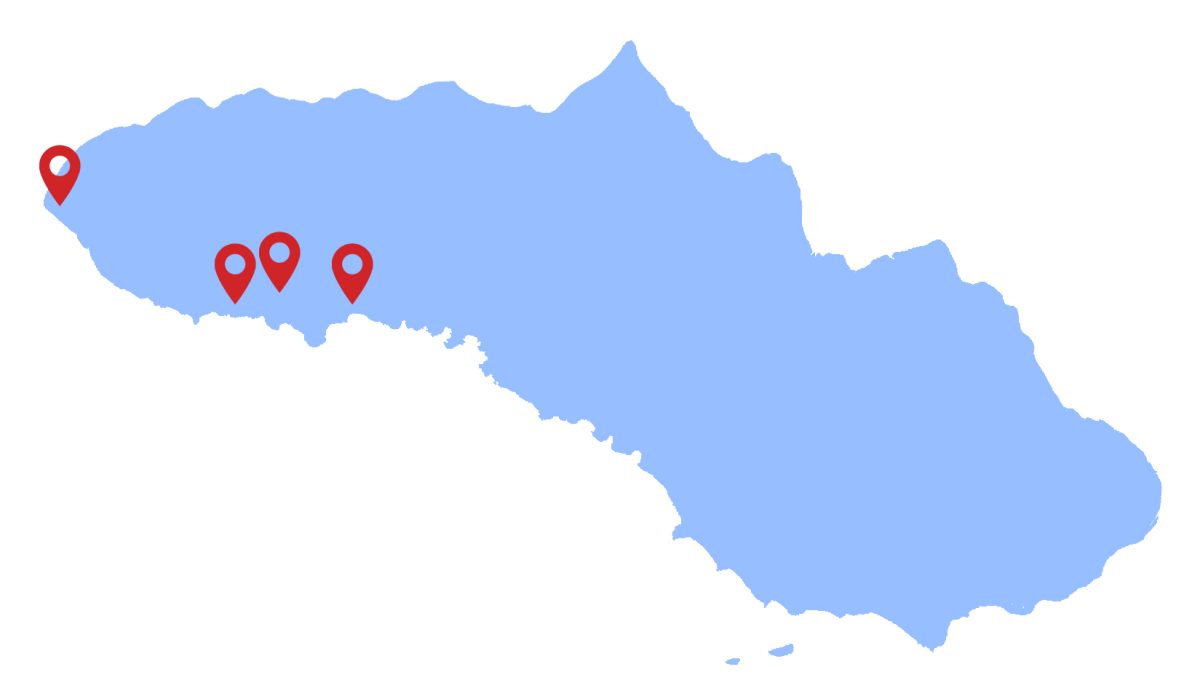
This is where things get interesting. The Pasola Festival doesn’t run on a fixed date. Instead, it’s determined by local priests (rato) who read natural signs and the timing of the nyale appearance. But generally, it happens between February and March, and it rotates between several key locations in West Sumba and Southwest Sumba.
Some of the main Pasola fields include:
- Wanokaka
- Lamboya
- Gaura
- Kodi
If you’re lucky enough to be on the island during this window, you’ll likely hear whispers about Pasola days in advance—locals talking in markets, guides listening for updates, drivers casually mentioning the schedule as though discussing the tides.
It’s one of those rare events where the entire region seems to collectively hold its breath, waiting for the signal.
The Cultural Significance Behind the Chaos
To an outsider, Pasola might look like a wild display of strength and bravery. And, yes—it absolutely is that. But underneath the dust and the adrenaline sits something far deeper.
The festival ties directly to the Marapu belief system, which emphasizes harmony between people, ancestors, spirits, and nature. The horsemen aren’t simply “performers.” Many are selected from families with long lineage ties to the ceremony. Their participation is an honour and a responsibility—not something taken lightly.
Locals will tell you that Pasola isn’t about winning or losing. It’s about fulfilling a ritual that keeps the community in balance. It’s a reminder that the strength of the harvest depends not just on rain or soil, but on unity, courage, and communal intention.
You may not understand every detail while standing there in the crowd, but you’ll feel it—the weight, the emotion, the sense that this isn’t a show for outsiders. You’re witnessing a sacred conversation between Sumbanese people and their ancestors, carried out through hooves, speed, and earth.
💡 Insider's Insight: How to Experience Pasola Respectfully
As unforgettable as Pasola is, it’s important to remember that this is a sacred Sumba traditional ceremony, not a tourist attraction. Locals welcome visitors, but they also expect respect. Here are a few gentle guidelines based on what travellers—and locals—often share:
- Dress modestly.
Shorts and shirts are fine—you’re in the tropics—but avoid anything too revealing. This is a spiritual ceremony with deep meaning. - Stay calm, even if things get intense.
The atmosphere can be electrifying, especially when the riders start to pick up speed. Let yourself absorb the energy, but remember this is not a sport—it’s ritual. - Follow local instructions.
Whether you’re traveling independently or with a guide, listen closely. Locals know where it’s safe to stand and when the field might shift.
- Keep a respectful distance.
It might feel tempting to move closer for a perfect angle, but Pasola fields can shift quickly. The horses move fast, the riders don’t hold back, and you don’t want to be that person who gets in the way of a thousand-year-old tradition. - Ask before taking close-up photos.
Wide shots of the field are generally fine. But if you want portraits of riders or elders, gesture politely or ask your guide to request permission. Most people appreciate the respect.
Witnessing the Pasola Festival is one of those experiences that stays with you long after you’ve left Sumba. Not because it’s dramatic—though it is—but because it gives you a glimpse into a world where tradition, spirituality, community, and land all converge in one breathtaking moment.
If you’re planning your trip between February and March, keep your plans flexible and your ears open. Pasola doesn’t follow a modern timetable. It follows the rhythm of Sumba itself.
Learn About Ikat Weaving From the Masters
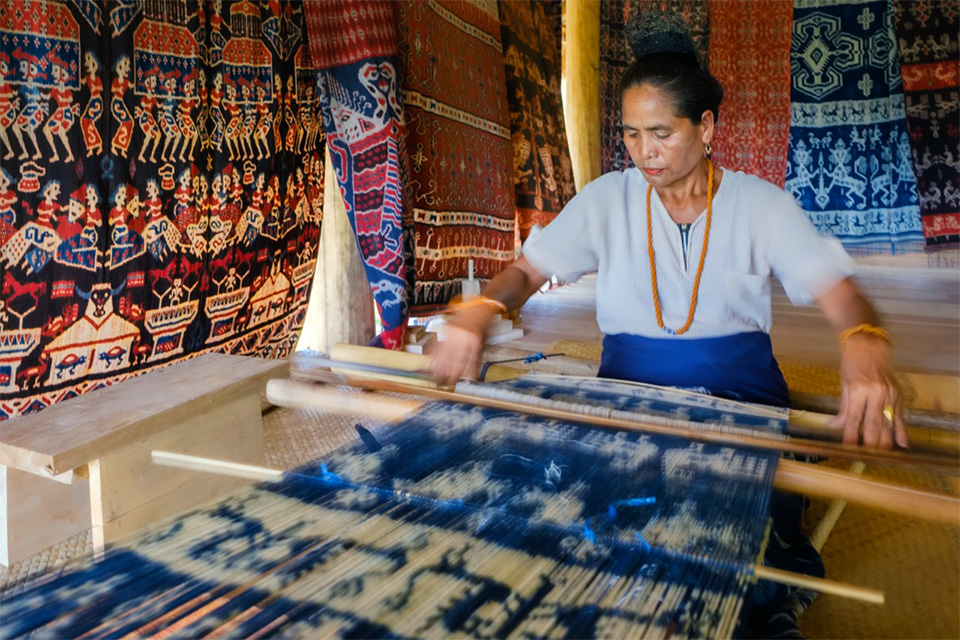
There are some places where craft is just a souvenir. And then there’s Sumba—where textiles are living memory, where patterns are prayers, and where every strand of thread carries a piece of someone’s identity. If you’ve ever browsed a Sumba ikat in a gallery somewhere and wondered why it feels different, heavier, more charged… it’s because these cloths aren’t simply woven; they’re performed. And the stage is usually a quiet village veranda in East Sumba, where a woman sits cross-legged with the patience of generations, pulling colour and meaning through cotton like a storyteller threading a tale.
Sumba ikat has earned a reputation as one of Indonesia’s most treasured textile traditions—not because it’s fashionable, but because it refuses to be ordinary. The motifs are bold: horses mid-gallop, ancestral figures with outstretched arms, plants that echo myths about the origins of life. The colours are earthy and unmistakably local—deep indigo, rust red from morinda roots, and the pale browns of hand-spun cotton. Nothing is rushed. Nothing is outsourced. And nothing is created just to “look pretty.” Every pattern marks a clan, a story or a blessing, making Sumbanese textiles a form of identity you can hold.
The Slow Art: How Sumba Weaving Actually Happens
Most travellers walk into an ikat workshop thinking they’ll see something like a loom demonstration. Instead, they find a process that’s closer to ritual than craft. The women here don’t weave because it’s a job—they weave because it’s woven into who they are.
Here’s the rhythm behind every Sumba ikat:
It’s slow. It’s meditative. And it’s worth every moment you spend watching.
1. Harvesting & preparing the cotton
Women pick cotton by hand, rolling and softening it before spinning it into thread. There’s something grounding about watching this—like time has willingly stepped aside.
2. Designing the motifs
Patterns are mapped through a resist-dye technique. The threads are bound tightly with palm leaves or plastic strips, based on the shapes the weaver wants to create. This is where motifs—horses, ancestor figures, trees of life—are born.
3. Dyeing with natural pigments
Sumba weaving is synonymous with natural dyeing. Indigo vats bubble in clay pots, morinda roots simmer for reds, and a mix of local plants creates browns and yellows. The threads go through multiple rounds of dyeing and drying, sometimes for weeks.
4. Setting the backstrap loom
The weaver sits on the ground, using her body as tension. There’s no machinery, no shortcuts—just muscle memory, steady breath, and the subtle rhythm of decades of practice.
5. Weaving the cloth
Row by row, the story emerges. Horses gain legs, ancestors gain form, and what was once a loose idea becomes something you can feel in your hands.
It’s slow. It’s meditative. And it’s worth every moment you spend watching.
Where to Learn, Watch, and Buy Ikat Ethically
Most travellers associate Sumba ikat with East Sumba—and for good reason. Villages around Pau, Rende, Prailiu, and Lambanapu are known for producing some of the most intricate and spiritually loaded textiles on the island. Workshops here often welcome visitors, not with tourist-y demonstrations, but with the kind of quiet confidence that comes from doing something important.
If you want to buy a textile—and honestly, holding one feels like bringing a little bit of Sumba home—choose places where:
- You meet the weavers directly.
- The dyes are natural (they’ll show you the plants).
- The price reflects months of labour, not minutes.
- The proceeds stay in the village.
- You’re encouraged to ask questions, not rushed into buying.
Avoid market stalls selling unusually cheap ikat. Fast, factory-pattern cloth is common in some towns, and while it’s pretty, it’s not the real thing—and it doesn’t support the people who keep Sumba’s weaving heritage alive.
If you’re truly curious, plan a visit to one or two weaving villages and spend time observing. Many travellers say it’s one of the most memorable cultural encounters on the island—something that shifts Sumba from “beautiful place” to “deeply human experience.”
Read our: Ikat Weaving Guide
Explore Sumba’s Megalithic Tombs & Marapu Heritage
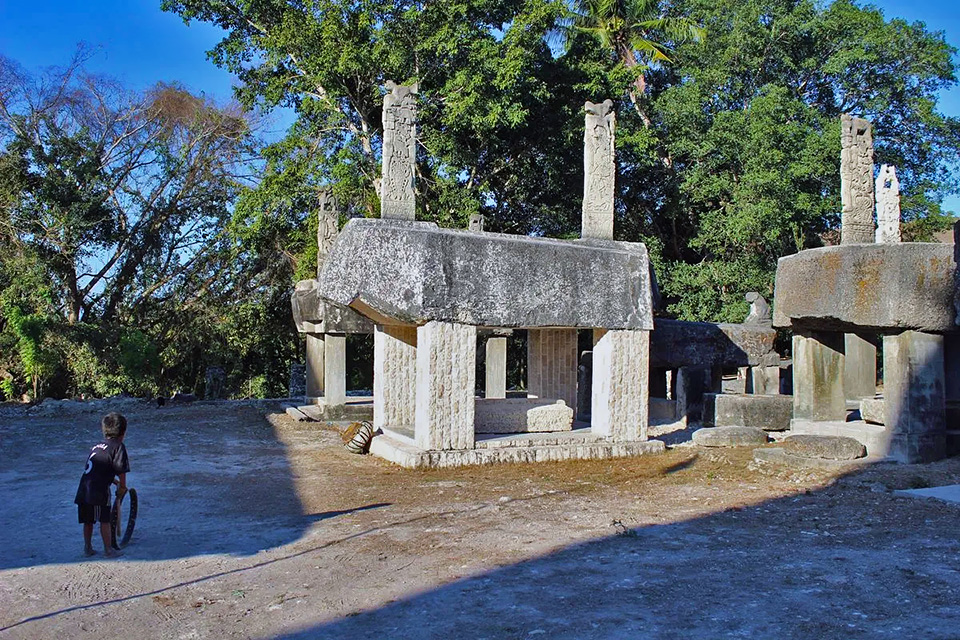
Long before you even see them, you feel them. The megalithic tombs of Sumba have this quiet gravity—these huge stone slabs rising from village squares or grassy hillsides, as if someone pressed pause on time and left the monuments exactly where ancient hands placed them centuries ago. If you’ve travelled around Indonesia, you’ll know that history often hides behind temple walls or museum glass. But in Sumba, it sits right in the open air, woven seamlessly into daily life. Kids play beside stone tombs. Women dry grains on their surfaces. Roosters strut across them like they’re claiming old kingdoms.
This living relationship with the past is what makes Sumba’s megalithic tombs so unique. They’re not relics; they’re family. Each one belongs to a clan, each carving tells a story, and each tomb still plays a role in ceremonies today. This isn’t a culture frozen in time—it’s a culture that carries its traditions forward while letting you, the traveller, stand quietly at the edge and witness the weight of it.
A Tradition Older Than Memory
To understand the tombs, you have to understand Marapu, the indigenous belief system of Sumba. Marapu is about balance—between the living and the ancestors, between humans and nature, between what is seen and what is not. The megalithic tombs are a bridge in that balance. They’re not just graves; they’re homes for ancestral spirits, guardians of the clan, protectors of prosperity and harmony.
Some tombs are simple and unadorned. Others are carved with horses, buffalo horns, geometric motifs, and ancestral figures—each symbol chosen with intention. When you walk past them, you can tell which families were wealthy, which clans were powerful, and which lineages held status through generations. It’s written in stone—literally.
How the Tombs Are Built
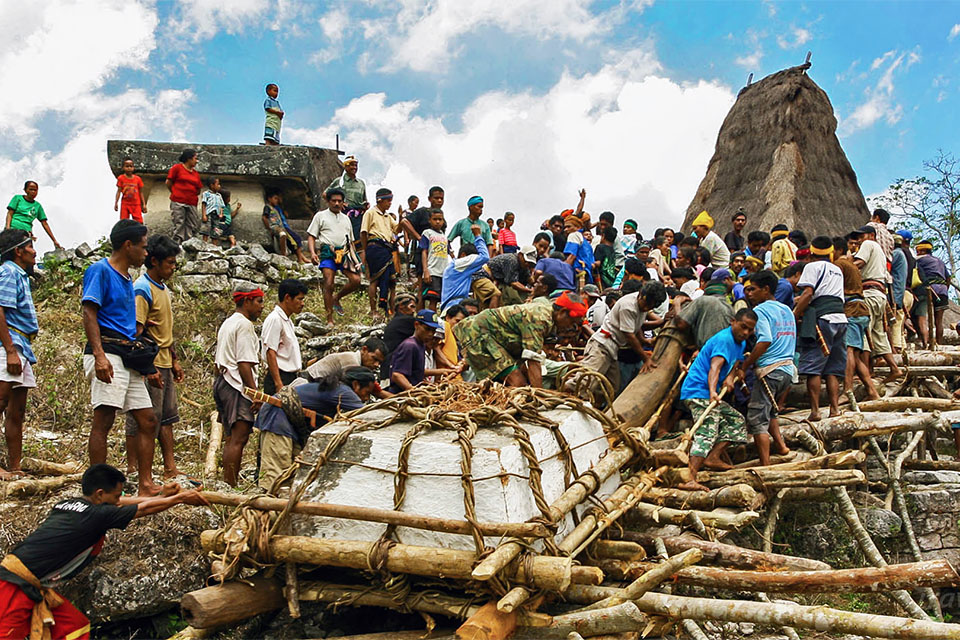
Watching or hearing about the construction of a traditional tomb is like learning the blueprint for a small miracle. These slabs can weigh several tonnes, and in some villages, the tradition of lifting and moving them manually still survives.
The process goes something like this:
1. Choosing the stone
A clan selects the right boulder from a quarry—usually limestone—and seeks the blessing of Marapu elders.
3. Moving the slab
Traditionally, dozens—sometimes hundreds—of villagers drag the stone using ropes, chanting and singing to keep rhythm. It’s not just a task; it’s a communal statement of respect.
2. Carving the motifs
Artisans begin engraving symbols that represent the family’s identity: horses for nobility, buffalo for wealth, spirals for life’s journey.
4. Placing the tomb on a raised platform
The final resting place is often in the centre of the village, beneath the tall peaked roofs of clan houses. Some tombs remain empty until a passing ceremony is needed. Others already shelter the spirits of generations.
It’s physical labour, but it’s also spiritual choreography—every step guided by rituals that honour ancestry.
Villages Where You Can See the Tombs Up Close
You don’t need to go far to find megalithic tombs; they’re everywhere in Sumba. But a few villages are especially known for their preserved sites and cultural depth:
- Ratenggaro (Southwest Sumba) – A cinematic blend of traditional peaked houses and ancient tombs overlooking the sea. Some slabs here are said to be centuries old.
- Rende (East Sumba) – A noble village known for its ornate tombs and aristocratic lineage.
- Tarung & Waitabar (West Sumba) – Cultural centres where tombs and traditional houses form one interconnected spiritual space.
- Parai Maata & Anakalang (Central Sumba) – Home to some of the island’s largest tomb clusters, including exceptionally tall carved stones.
In each place, the tombs aren’t cordoned off or hidden behind ropes—they stand where life happens.
Understanding Their Place in Sumbanese Life
For outsiders, the tombs might seem like archaeological wonders. But for Sumbanese families, they’re reminders of who they belong to and where they come from. During rituals, people place offerings on or beside them. During discussions about crops, weddings, or disputes, elders sit near them. The tombs are witnesses to life, death, and everything that fits in between.
To visit these sites is to see how strong the past still pulses through Sumba’s present. It’s one of the reasons travellers come to the island expecting “beautiful landscapes” and leave talking about something else entirely—something harder to name, but impossible to forget.
Relax on Sumba’s Pristine Beaches
If you’ve spent time in Bali, Lombok, or the Gilis, you already know Indonesia has no shortage of beautiful beaches. But Sumba beaches hit differently. They’re quieter. Wider. Wilder. They feel less like a place you visit and more like a place you stumble into—half expecting a film crew to emerge from behind the dunes because the whole scene looks too perfect to be real.
This is coastal life without cafés, daybeds, or thumping beach bars. You won’t find polished boardwalks or curated “sunset corners.” What you get instead are long stretches of untouched coastline, cliffs that drop dramatically into electric-blue waves, and that delicious sense of having an entire beach to yourself. When people talk about the best beaches in Sumba, they’re not ranking facilities—they’re sharing the places where the island breathes at its most natural pace.
Here, the sea is a backdrop to slow travel, not a backdrop to tourism. It’s where Sumba’s raw landscapes meet the soothing roll of the Indian Ocean, creating one of the island’s most compelling attractions for travellers who love beauty without the buzz.
Walakiri Beach — Where Mangroves Dance at Sunset
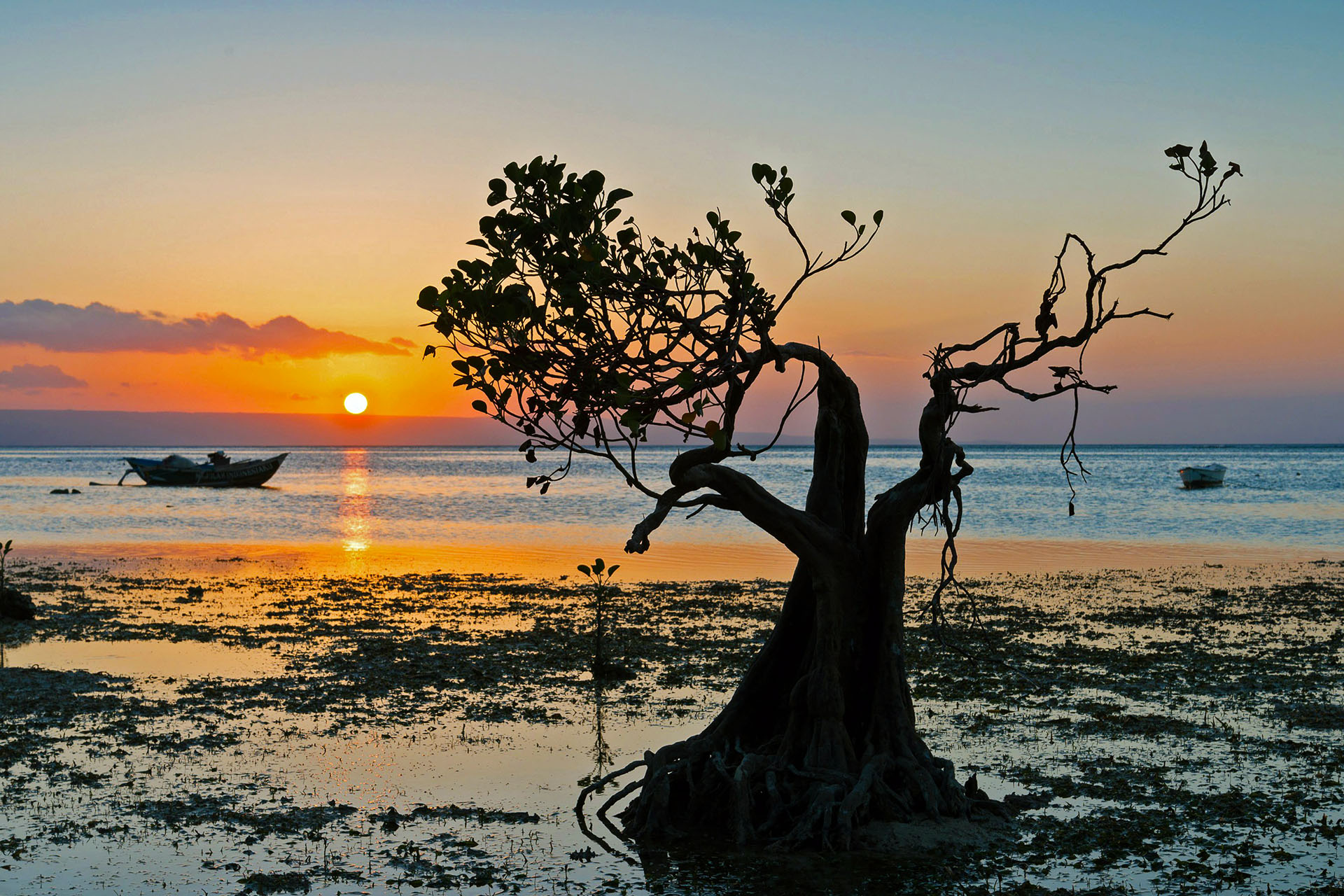
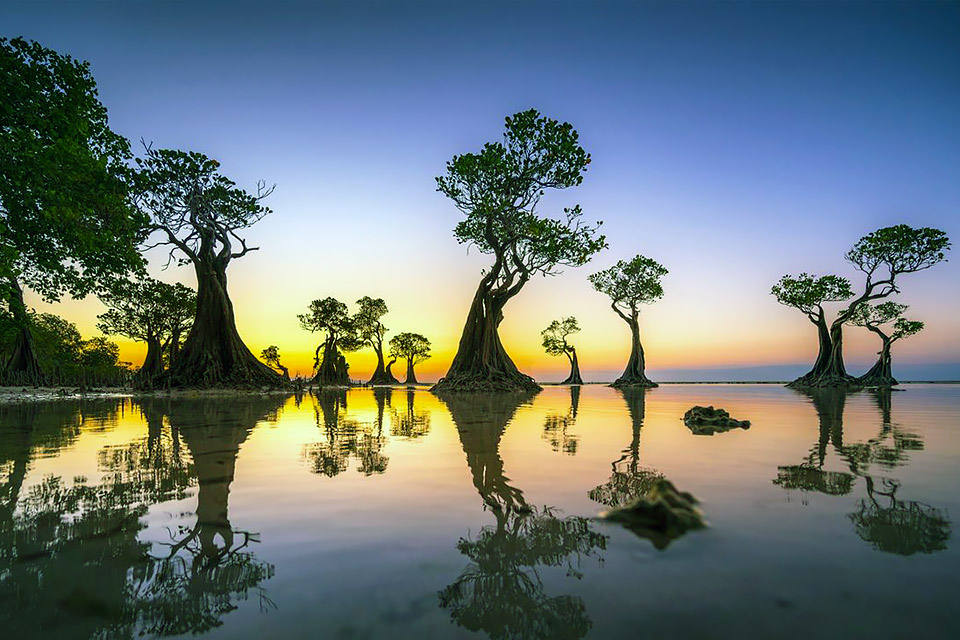
If there’s one beach that sneaks into travel feeds and quietly steals the show, it’s Walakiri Beach in East Sumba. At first glance, it looks like a serene, slightly muddy, low-tide stretch fringed by calm water. But wait for golden hour, when the tide recedes just enough to reveal the beach’s tiny stars: the twisted, miniature mangrove trees that stand knee-deep in glassy tidal pools.
They’re affectionately known as the “dancing mangroves,” and once you see them, the name makes perfect sense. Their branches curl and bend like silhouettes frozen mid-movement, and photographers—casual or professional—absolutely lose their minds here. Sunset at Walakiri is slow, cinematic, and full of magic. The colours shift from pastel pink to tangerine orange, and the mangroves reflect perfectly in shallow water, giving you that dreamy, double-exposure effect without ever touching Photoshop.
It’s not a beach for swimming; it’s a beach for mood. For quiet afternoons. For that gentle moment where you realise your phone has barely any signal but somehow you’ve never felt more connected to a place.
Walakiri Beach
Mandorak Beach
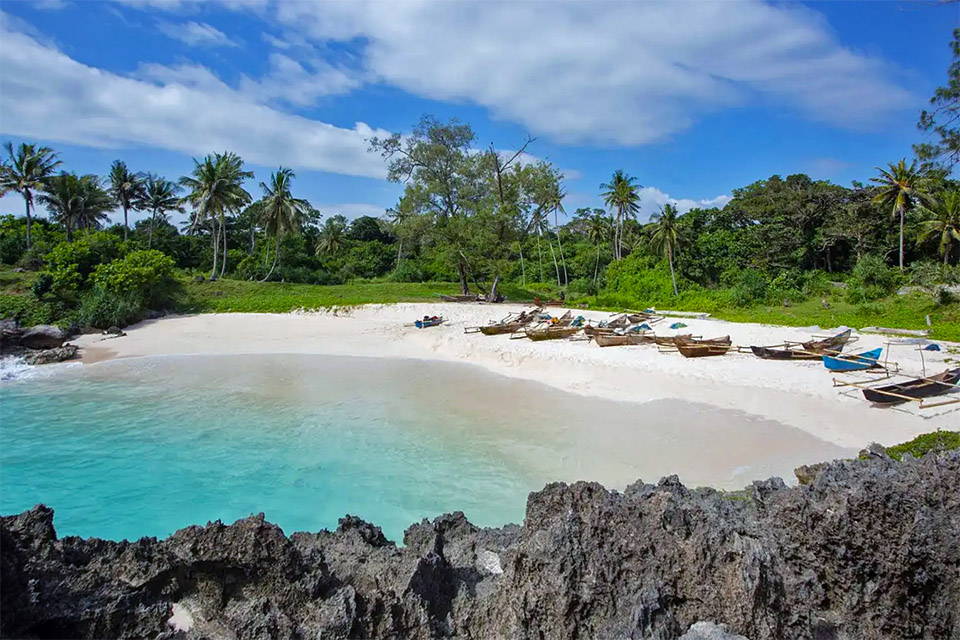
On the opposite side of the island, Southwest Sumba hides one of its most dramatic gems: Mandorak Beach. Imagine a small, perfectly carved cove, flanked by rugged cliffs on either side that look like they were sculpted by a very dramatic artist with a chisel and a flair for theatrics. The water here is outrageous—turquoise so bright it feels almost cheeky.
Waves crash against the cliff walls, sending mist into the air, and the whole place feels like nature showing off. On calmer days, you can dip into the shallows, but even when the sea is too rough for swimming, Mandorak is still one of the most impressive Sumba attractions you can visit. Walk up either cliff and you’ll get those big, sweeping ocean views Sumba does so well.
Despite how stunning it is, you’ll often find only a handful of travellers here—and sometimes none at all.
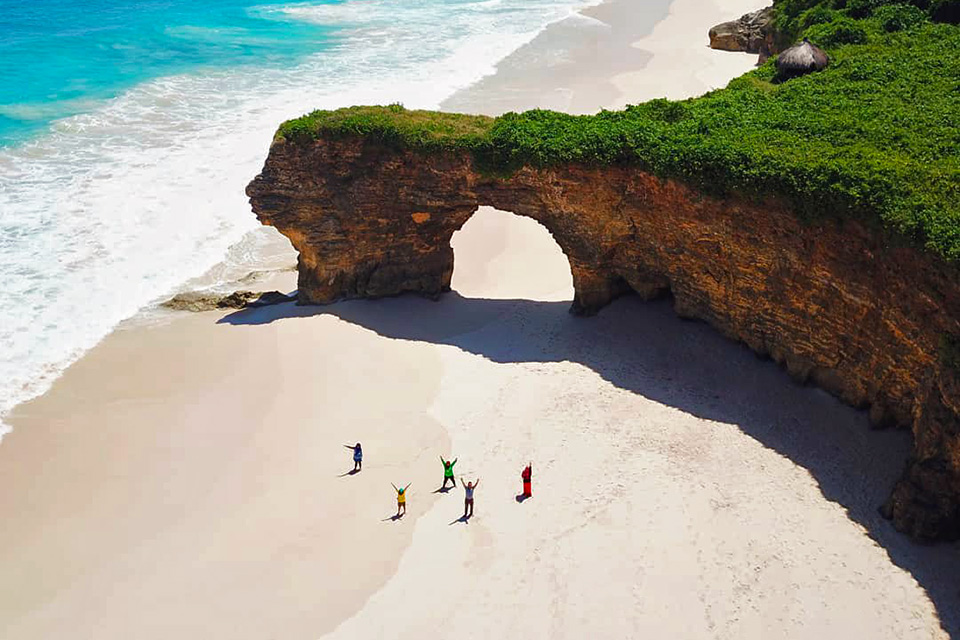
If Mandorak is Sumba’s pocket-sized showstopper, then Mbawana Beach is its grand canvas. This place gives you scale—huge, dramatic, humbling scale. A long stretch of powdery sand runs beneath towering limestone cliffs, creating a coastline that looks like it was lifted straight out of a nature documentary.
Right in the centre sits Mbawana’s most recognisable feature: a massive stone arch carved by the sea. It’s one of the island’s most photographed natural formations, but photos barely capture how impressive it is when you’re standing right beneath it, listening to waves roll through like nature’s own echo chamber.
The path down to the beach is steep, dusty, and a little sweaty, but the reward? A shoreline so vast and empty that you feel like you’ve reached the edge of the world.

On the luxury end of the spectrum, there’s Nihiwatu Beach, often associated with the world-famous Nihi Sumba resort. And look, even if high-end resorts aren’t your travel style, the beach itself is undeniably stunning—long, golden, and bordered by waves that draw surfers from around the globe.
Here’s the catch: access is limited. Most of the beachfront is essentially reserved for resort guests, so if you’re not staying at Nihi, you might not be able to explore freely. Still, it’s worth knowing about, especially if you’re planning a splurge or looking into how surfing culture developed on the island.
Why Sumba’s Beaches Stay So Unspoiled
A lot of people ask why the coastline here feels so untouched. The simple answer is that tourism in Sumba is still slow, local communities maintain a lot of autonomy, and development hasn’t rushed in to fill every picturesque corner. There’s a conscious effort—both culturally and practically—to keep things small, sustainable, and respectful.
When you step onto a Sumba beach, you’re not entering a commercial zone. You’re stepping into the island’s natural rhythm.
💡 Insider's Tips: Access, Difficulty & What to Expect on the Trails
Because these beaches are raw and remote, a little travel mindfulness goes a long way:
- No warungs or bars in the beach, bring water.
- Avoid climbing fragile rock for photos.
- Leave no rubbish behind (there are rarely bins).
- Respect the environment, especially near mangroves and cliff edges.
- If locals are present, including kids or families, always ask before taking photos.
Sumba’s coastline is one of its greatest treasures. Some beaches wow you with drama, some with quiet charm, and some with that rare feeling of discovering a place before the world rushes in. However you experience them, they tend to imprint themselves on your memory in a way that few other places do.
Sumba feels like the Indonesia you’ve always imagined — wide horizons, quiet roads, and landscapes untouched by time.
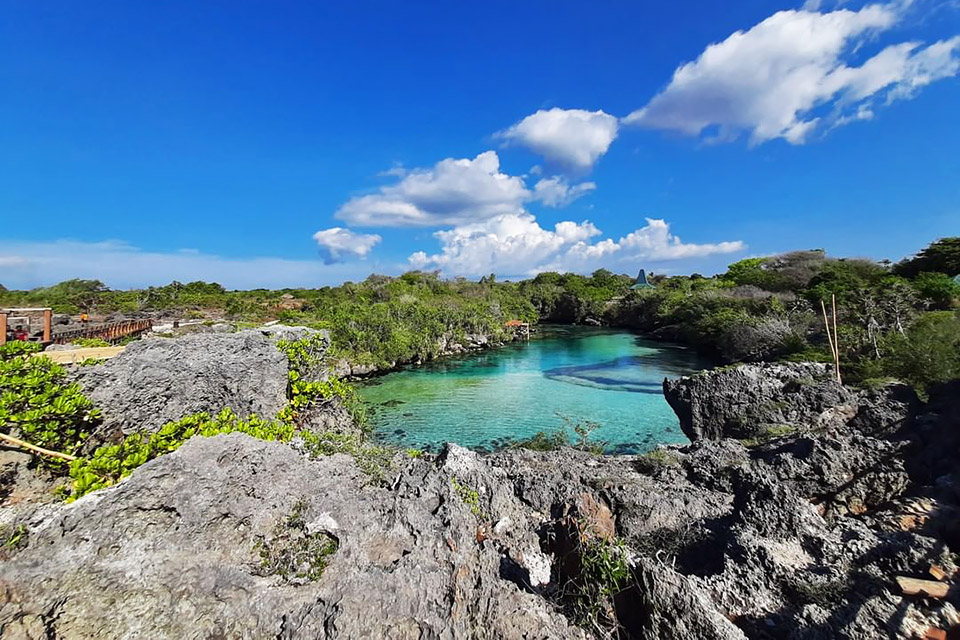
Some places look good in photos, and some places look better in person. Waikuri Lake—Sumba’s brilliant, turquoise saltwater lagoon—manages to be both. Tucked into the rugged coastline of Southwest Sumba, it’s one of those natural attractions that makes you pause mid-journey and say, “Okay … this is unreal.”
From above, Waikuri looks like a hidden bowl of liquid gemstone. The water glows in shades of blue you didn’t know existed—electric near the edges, crystalline at the centre, and almost neon when the sun hits it just right. Unlike the coastline just a few metres away, which crashes dramatically into the cliffs, Weekuri is calm, warm, and unbelievably clear. It’s one of the most beloved Sumba natural attractions, and for good reason: you can float here for hours without another soul drifting past.
 Learn more about Waikuri Lagoon

Why Waikuri Lake Is So Famous
Part of the magic is its origin. Waikuri isn’t a freshwater lake fed by rivers—it’s a saltwater lagoon, filled by the ocean through hidden cracks in the coral walls. The result? Water that’s clearer than most swimming pools, but with the buoyancy and warmth of the sea. Locals love bringing families here, travellers adore the peaceful vibe, and photographers… well, they basically lose the plot.
Sunlight bounces off the white sandy bottom, making everything shimmer. If you’re travelling through Sumba’s west, Weekuri becomes one of the essential Sumba points of interest simply because nothing else on the island feels quite like it.
Swimming, Floating & Finding Your Quiet Corner
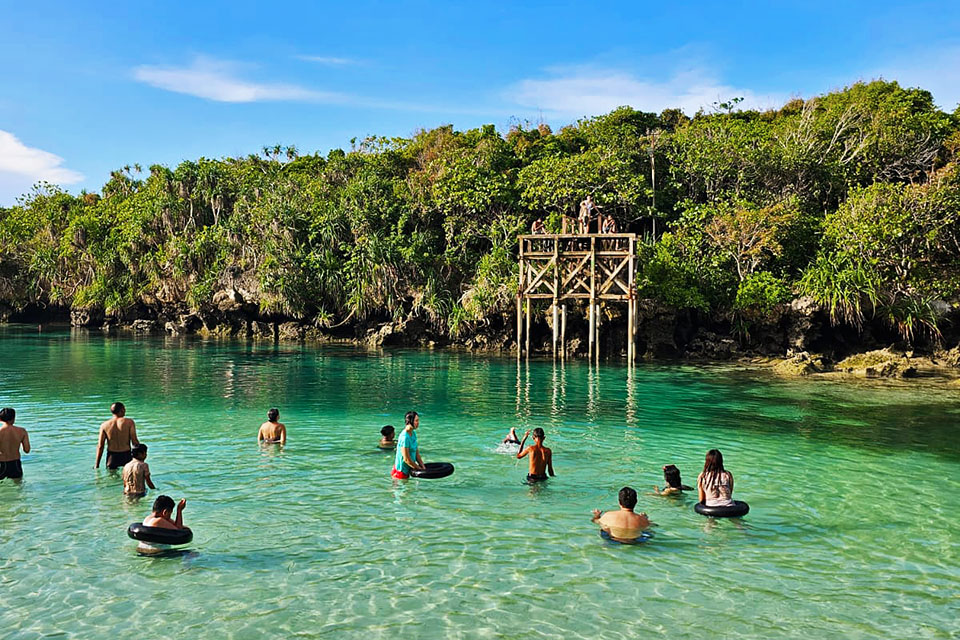
The best thing to do here is simple: get in the water. It’s shallow around the edges, perfect for floating or slow swimming, and deeper pockets in the middle give snorkellers something to play with—even though there’s not a lot of reef life, the sensation of floating in such clear water is enough on its own.
Look around the edges and you’ll find little nooks carved naturally into the rocks, perfect for resting, sunbathing, or tucking your bag while you swim. There’s also a wooden viewpoint above the lagoon where you can soak up the full sweep of colours—one of the most photogenic angles you’ll get all day.
Best Time to Visit Waikuri Lake
If you want the full Waikuri glow-up, aim for late morning to early afternoon. That’s when the sun is high enough to penetrate the water and turn the lagoon into its most vibrant shade of blue. Sunrise and sunset are quieter and softer, offering pastel tones and cooler water, but the midday light is what makes the colours pop on camera.
Do bring water, sunscreen, and sandals—the rocks can get hot, and facilities are basic. But really, that’s part of Waikuri’s charm. It’s untouched without being inaccessible, stunning without being crowded, and peaceful without trying too hard.
There’s a reason travellers keep talking about Waikuri long after they’ve left Sumba. It’s the sort of place that reminds you how good it feels to just float, breathe, and let the landscape speak for itself.
Chase Sumba’s Waterfalls: Lapopu, Tanggedu & More
For all its rolling savannas and wide-open coastlines, Sumba also hides pockets of lush, green paradise—the kind of places you reach only after bouncing along a dirt road or following a footpath that winds through villages and ridges. These are the Sumba waterfalls, some well-known, some still whispered about by travellers who prefer to keep their discoveries quiet.
Chasing waterfalls in Sumba isn’t about ticking boxes; it’s about stepping into cool, shaded worlds that feel completely separate from the island’s dry, golden landscapes. One minute you’re looking at grasslands that stretch endlessly into the horizon, and the next you’re standing beside turquoise pools, surrounded by ferns and limestone cliffs. It’s the kind of shift that makes you realise how dramatically the island transforms when water decides to carve its way through it.
Below are the two waterfalls most travellers fall in love with—each one different in mood, colour, and character.
If Sumba were to nominate a waterfall as its icon, it would be Lapopu Waterfall. Tucked inside Manupeu Tanah Daru National Park, Lapopu isn’t just the tallest waterfall on the island—it’s one of the most visually unique in Indonesia.
You don’t just get one drop. You get several: a multi-tiered cascade tumbling over stepped limestone cliffs, creating frothy white water that widens and narrows as it flows downward. It’s almost theatrical—the kind of waterfall that looks like it was designed by someone with an eye for symmetry.
The final pool at the bottom is wide and calm, perfect for cooling off after the drive in. The water is cool but not freezing, the kind that wakes you up gently. Around you, the forest hums—birds, cicadas, the distant rush of water from the upper levels you can’t see but can definitely hear.
The walk in from the parking area is short and relatively easy, though the path can get muddy after rain. A wooden bridge sometimes appears in photos; sometimes it’s out of commission depending on the season. Either way, it adds a bit of adventure, but nothing too difficult for most travellers.
If you’re searching for things to do in Sumba that balance nature with accessibility, Lapopu hits the sweet spot.
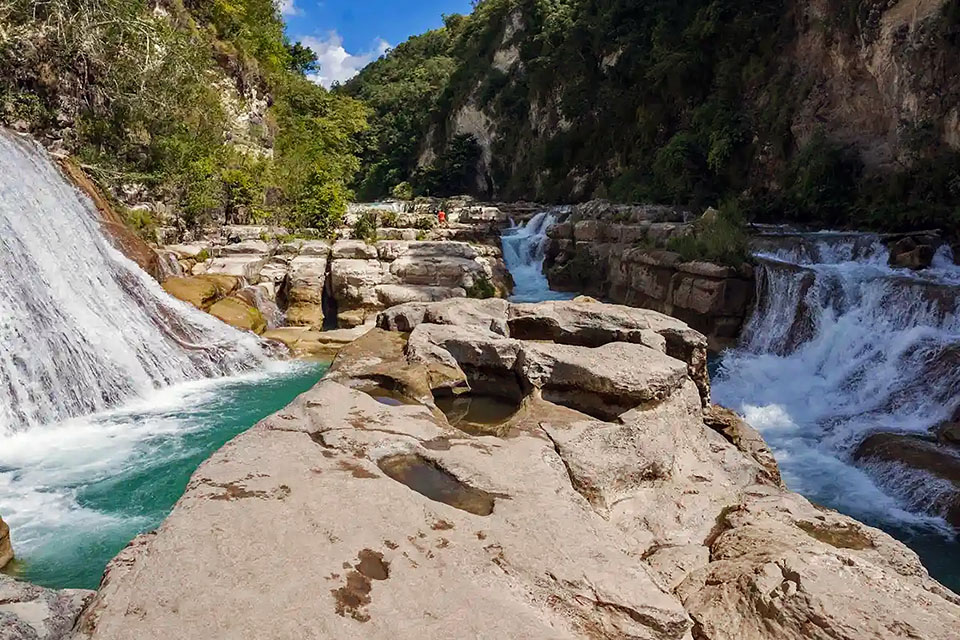

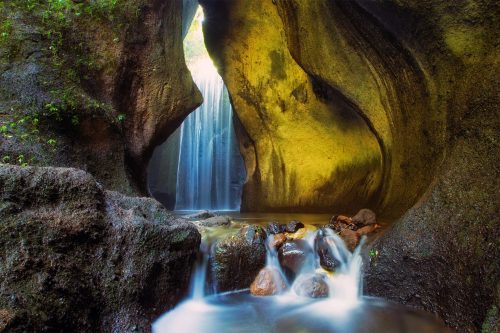
If Lapopu is dramatic and vertical, Tanggedu Waterfall is horizontal, winding, and wonderfully strange—in all the best ways. Often called the “Grand Canyon of East Sumba” (a bold but strangely fitting nickname), this waterfall carves its way through a narrow limestone gorge, creating smooth, curved formations that look almost handmade.
The water here is bright, milky turquoise—especially gorgeous under midday sun. Instead of one big drop, Tanggedu flows in layers, slipping over stone ridges and pooling in shallow basins that invite you to dip your feet or slide in for a swim.
The walk to Tanggedu is longer and hotter than Lapopu’s—roughly 30 to 40 minutes from where the road ends. You’ll trek across open savanna, cross a small river, and navigate a few uneven slopes. It’s not difficult, but it does feel like an adventure, and you’ll want water, a hat, and decent shoes.
Because it’s a canyon-style waterfall, it’s easy to hop between pools and explore different corners of the gorge. Some sections are great for swimming, especially where the water deepens. Just always keep an eye on the current and avoid the edges after rain—the limestone can get slippery.
Tanggedu is one of the best examples of how unexpectedly diverse Sumba’s landscapes can be. It feels wild, sculptural, and slightly surreal.
💡 Insider's Insight: Before You Go
Sumba’s waterfalls come with a bit of “choose your own adventure” energy:
Lapopu Waterfall
- Difficulty: Easy to moderate.
- Trail length: Short walk (10–15 minutes).
- Best for: Families, first-time visitors, easy swims.
- Facilities: Basic parking, small warungs sometimes appear in peak season.
Tanggedu Waterfall
- Difficulty: Moderate.
- Trail length: 30–40 minutes.
- Best for: Travellers who enjoy walking in open landscapes.
- Facilities: None at the trailhead; bring everything you need.
Other hidden waterfalls dot the island—locals sometimes mention names like Waimarang or Matayangu—but these often require local guides and deeper exploration. If you’re up for it, the reward is stepping into places most travellers never see.
💡 Insider's Tips: Safety & Travel Tips for Sumba Waterfalls
Waterfalls here are natural and unregulated, which is part of their charm but also something to respect.
- Bring water and snacks—there are rarely vendors.
- Wear proper footwear; limestone can be slippery.
- Avoid visiting right after heavy rain; currents and trails can change quickly.
- Respect local requests, especially if passing through village land.
- Don’t climb cliff edges or take unnecessary risks for photos.
- Pack out everything you bring in—no bins in most locations.
Chasing waterfalls in Sumba isn’t about ticking off destinations; it’s about letting the landscapes surprise you. One minute you’ll be sweating through open savanna, the next you’re standing ankle-deep in cool, turquoise water, wondering how the island hides so many pockets of paradise.
Enjoy Sumba’s Rolling Hills & Photogenic Savannas
If there is one thing that separates Sumba from most other islands in Indonesia, it’s the dramatic openness of its landscape. Instead of dense rainforest or volcanic peaks, Sumba greets you with golden grasslands, blue-layered hills, and vast savannas that seem to stretch endlessly toward the horizon. These rolling plains have become icons of the Sumba landscape—not only for cinematic photoshoots but also as places where visitors can slow down, breathe deeply, and feel the raw character of the island beneath their feet.
Here, space is a luxury, and Sumba delivers it in abundance. Whether you’re chasing sunrise light that melts into the ridges or the late-afternoon glow that transforms the hills into warm, copper-toned waves, Sumba’s highlands and savannas provide some of the most unforgettable Sumba viewpoints in all of Eastern Indonesia.
Wairinding Hill – A Sunrise and Sunset Favorite
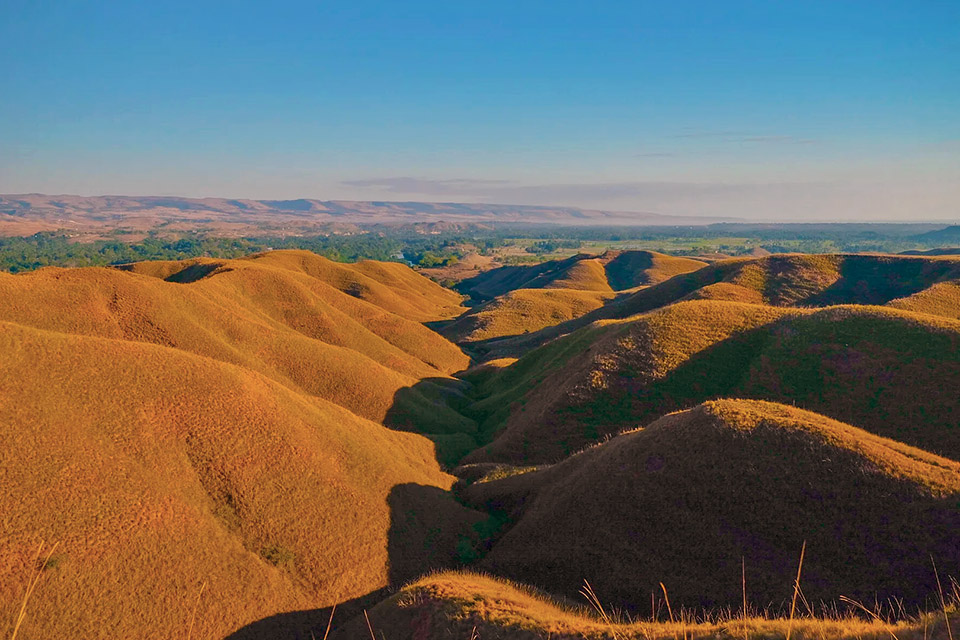
Wairinding Hill might be the most photographed hillscape on the island, and for good reason: it is breathtaking in every possible season and lighting condition. The moment you arrive, you’ll see why travelers call it “the hill of endless folds.” The terrain looks like a sea of rolling dunes—soft, smooth, and almost surreal.
Sunrise
Early morning is incredibly peaceful. The hills are cool, misty, and brushed with pastel shades of blue and lavender. The wind is gentle, local herders often pass through with their horses, and the atmosphere feels almost dreamlike.
Sunset
Golden hour brings a different mood. The hills ignite with warm orange light, making this one of the best places in Sumba to capture dramatic silhouettes or wide panoramic shots. Photographers often consider sunset at Wairinding one of the top Sumba viewpoints.
Green vs. Dry Season:
During the rainy months, Wairinding turns lush and emerald-green—completely changing its personality. In dry months, the hills fade into golden-brown waves, giving that iconic “savanna” look most people associate with Sumba.
Whether you prefer the edit-friendly dryness or the softer tones of the green season, Wairinding remains a guaranteed highlight for landscape lovers.
Wairinding Hill
Puru Kambera
Puru Kambera – Sumba’s Iconic Savanna With Wild Horses
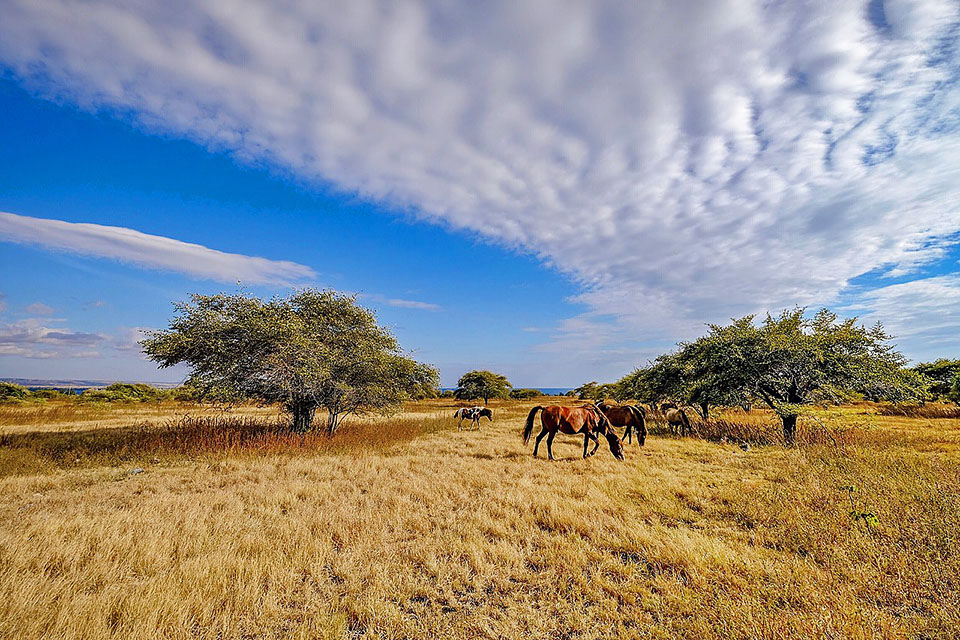
If Wairinding is the poster child for Sumba’s hills, Puru Kambera is its savanna superstar. This area is famous for its wild horses, which freely roam the dry plains like a living postcard from another era. Watching them move across the landscape—sometimes in small groups, sometimes sprinting across the horizon—is one of the most authentic Sumba moments you can experience.
The savanna stretches outward in wide open fields, dotted with low shrubs and shaped by the island’s winds. Travelers come here for:
- Wildlife photography.
- Drone footage of the savanna lines.
- Close-up horse encounters (from a respectful distance).
- Soft afternoon lighting, which enhances the vastness of the scenery.
Due to the openness of the area, midday can be very hot, so late afternoon visits are ideal. Just before sunset, the savanna glows in warm orange hues and the wild horses become even more striking against the backdrop.
💡 Insider's Insight: How the Season Shapes the Scenery
The transformation between dry and green seasons dramatically alters the look of the hills and plains. Both seasons offer something different, and neither is “better”—it simply depends on the aesthetic you prefer.
Dry Season (May–October):
The grasslands turn golden, giving Sumba its signature savanna look. The contrast between golden plains and blue skies is stunning—perfect for photographers.
Green Season (November–April):
Hills and savannas become lush and almost neon-green after the rains. The landscape feels more alive, softer, and almost pastoral. Access may be trickier in some regions due to mud, but the visuals are incredible.
Surf World-Class Waves or Ride Horses Across the Island
Sumba’s raw, untamed nature isn’t just stunning to look at—it’s a playground for travelers who want to feel the island’s energy through adventure. Two activities capture this spirit perfectly: surfing in Sumba’s powerful southwest swells and horseback riding across beaches, savannas, and traditional villages. Whether you’re an adrenaline-seeker or someone who prefers slow travel connected to the land, Sumba offers outdoor experiences that feel refreshing, soulful, and distinctly different from the rest of Indonesia.
The savanna stretches outward in wide open fields, dotted with low shrubs and shaped by the island’s winds. Travelers come here for:
- Wildlife photography.
- Drone footage of the savanna lines.
- Close-up horse encounters (from a respectful distance).
- Soft afternoon lighting, which enhances the vastness of the scenery.
Due to the openness of the area, midday can be very hot, so late afternoon visits are ideal. Just before sunset, the savanna glows in warm orange hues and the wild horses become even more striking against the backdrop.
Surfing in Sumba – Wild, World-Class, and Crowd-Free
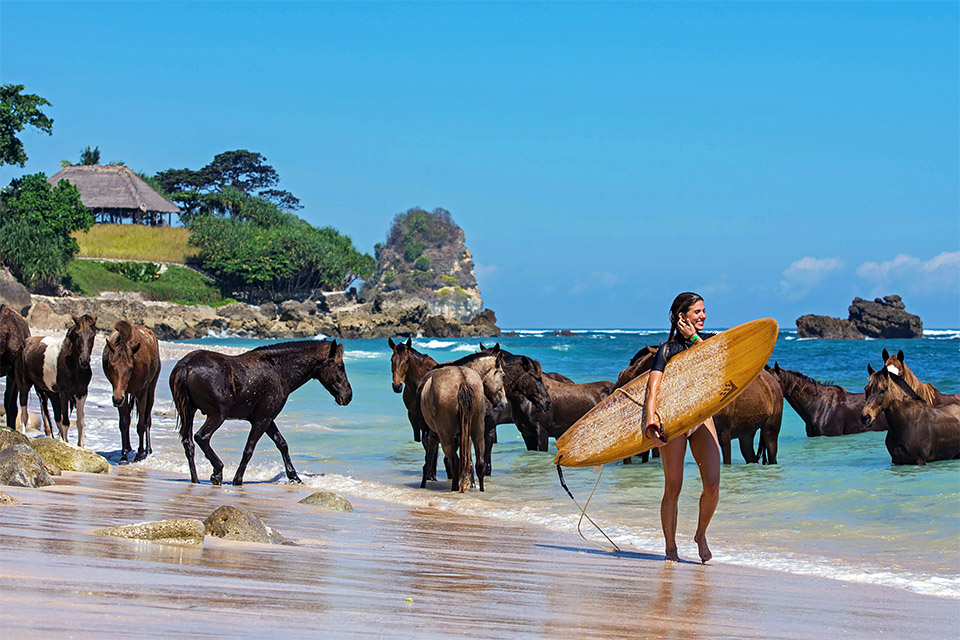
Sumba surfing has long been a well-kept secret among surf purists. While Bali, Lombok, and Mentawai have become global surf destinations with well-mapped breaks, Sumba remains low-key—its coastlines rugged, remote, and only lightly developed. This translates into something rare in modern surf travel: world-class waves with almost no crowd.
Southwest Sumba: The Heart of the Swell
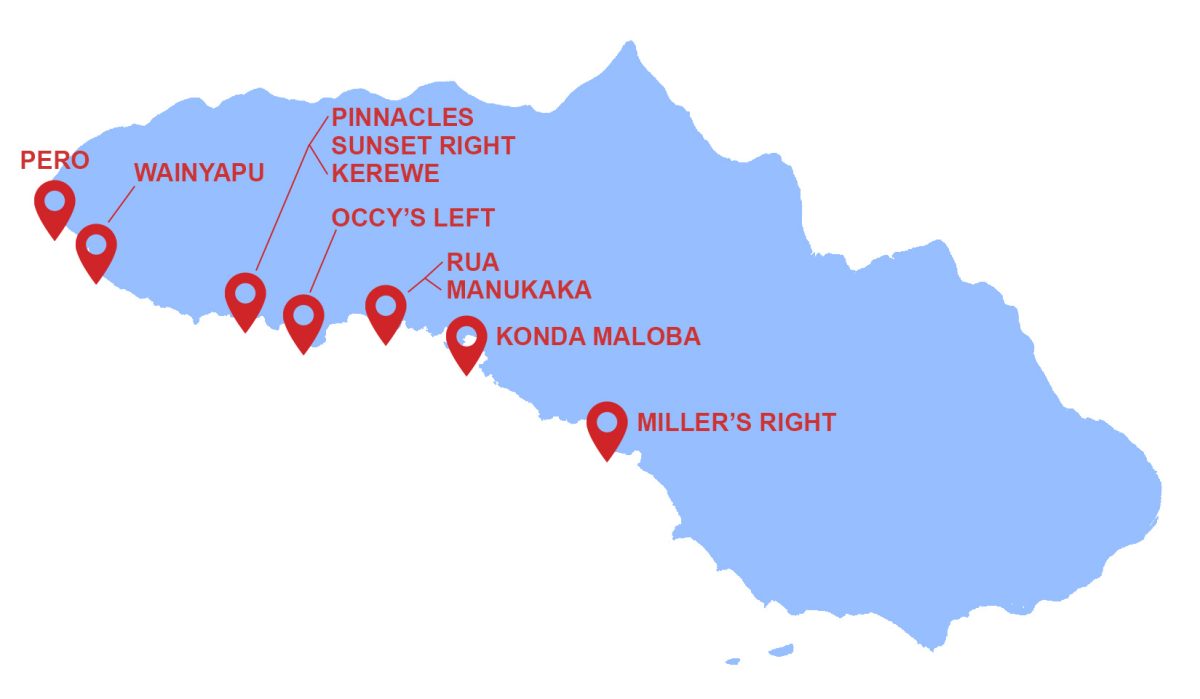
The island’s best surf spots cluster along the southwestern coastline, where powerful Indian Ocean swells collide with steep reef platforms. Wave quality is especially good during the dry season, when consistent offshore winds shape long, barreling lines.
Surf characteristics in this region typically include:
- Hollow reef breaks for advanced and upper intermediate surfers.
- Long left-handers and high-performance rights, depending on the section of coastline.
- Clear, deep-blue water with excellent visibility.
- Minimal crowding, with sessions often shared by only a handful of surfers.
Several areas are known for delivering heavy, world-class surf, though many breaks remain intentionally unnamed to preserve their natural state and keep pressure low. Travelers should come prepared for reefy conditions, tidal sensitivity, and powerful swells—this is not a learner-friendly surf destination.
When to Surf Sumba
- Best Season: May to October.
- Wave Type: Consistent, fast, often hollow.
- Ideal for: Advanced surfers seeking uncrowded, challenging waves.
Those who prefer a gentler approach may find smaller shoulder seasons (April or November) more forgiving.
Surf Schools & Local Operators
While Sumba doesn’t offer the dense lineup of surf schools you’d find in Bali, a handful of professional operators provide:
- Board rentals.
- Guided surf trips.
- Local break knowledge.
- Reef and safety briefings.
We will provide operator recommendations on linked surf guide pages (to keep this section clean and brand-neutral).
Horseback Riding in Sumba – A Signature Island Experience
If surfing reflects Sumba’s wild coastline, then horseback riding embodies its cultural rhythm. Horses have long been intertwined with the island’s identity—from traditional Pasola ceremonies to daily rural life—and today they offer one of the most memorable ways to explore the island’s landscapes.
Riding on the Beach
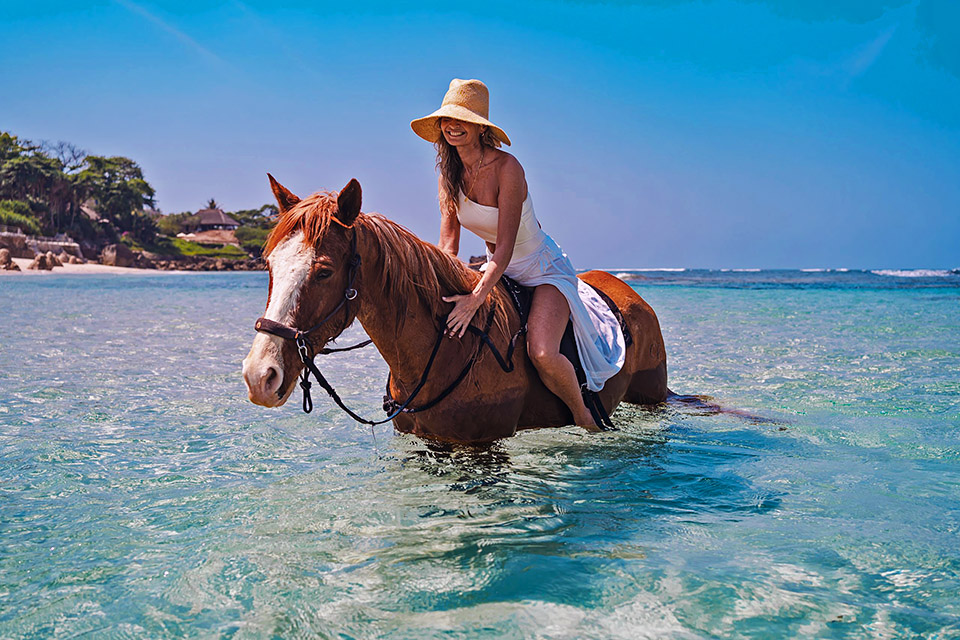
Many travelers dream of galloping across a wide, empty shoreline—and Sumba is one of the few places where this is still possible. Popular beach-riding experiences often include:
- Sunset rides along long, isolated stretches of sand.
- Gentle-paced walks suitable for beginners.
- Scenic trotting routes along coves framed by cliffs.
- Opportunities for photos with horses in the surf.
Some beaches, particularly in the southwest and the more exclusive resort zones, offer ideal conditions with firm, compact sand and dramatic backdrops.
Riding Through Savannas & Local Villages
Beyond the coast, horseback riding can also take you into Sumba’s interior:
- Wide savannas where wild horses roam.
- Rolling hills that open into panoramic viewpoints.
- Traditional villages with stone tombs and peaked houses.
- Rivers and streams that add variety to the routes.
These rides are usually led by trained local horsemen who understand both the terrain and the horses’ temperaments, ensuring a safe yet exhilarating experience.
Best Horseback & Outdoor Operators
Across Sumba, you’ll find a small but growing range of outdoor operators who offer:
- Professional horse guides.
- Well-trained local horses familiar with both beach and savanna terrain.
- Safety equipment and briefings.
- Customizable private rides.
- Surf guiding, board hire, and transport for surf missions.
Unlike more commercial destinations, Sumba’s outdoor operators prioritize small-group, personalized experiences. Many partner directly with local villages, which ensures both cultural respect and a meaningful economic impact.
We will list recommended operators on the upcoming Surfing in Sumba and Horseback Riding Sumba dedicated pages for a cleaner SEO structure and supplement this guide with internal links.
Take a Sumba Road Trip Through Diverse Landscapes
The slower you travel in Sumba, the more the island reveals — one encounter, one smile, one trail at a time.
A Sumba road trip isn’t just a way to get from Point A to Point B—it’s the experience that ties the entire island together. This is where the landscapes unfold in slow motion, and where you truly feel the scale, the solitude, and the soul of Sumba. Whether you’re weaving through grassland valleys, hugging dramatic coastal cliffs, or passing villages where children wave as you approach, a long drive in Sumba becomes one of the most unexpectedly memorable parts of the journey.
What to Expect on Sumba’s Roads
Driving in Sumba is a lot like stepping back in time. The main trans-island road is paved and generally smooth, but many routes that lead to waterfalls, beaches, and villages require navigating:
- Narrow roads.
- Broken asphalt.
- Gravel sections.
- Short river crossings or muddy patches during rainy season.
Traffic is light, and you’ll go long stretches without seeing another vehicle—unless you count the occasional horse, goat, or a cluster of buffalo crossing casually like they own the place. This slow, scenic rhythm becomes part of the charm, but it also reinforces one thing: distances in Sumba always feel longer than the map suggests.
East vs West Sumba: Two Different Worlds
A road trip through Sumba doubles as a lesson in geography and culture.
East Sumba feels vast, dry, and cinematic—defined by gold-toned savannas, wide skies, and quiet villages with towering traditional houses. Long straight roads cut across open plains, making you feel like you’re driving into the horizon. This side of the island is also the cultural heartland for ikat weaving and Marapu heritage.
West Sumba, in contrast, feels softer and more dramatic—shifting between rolling hills, forest pockets, and a rugged coastline carved by wind and waves. Expect more curves, more elevation changes, and a greener landscape, especially during wet season. Waterfalls, beaches, and lakes are closer to each other in the west, which makes it great for a more compact itinerary.
Travelers who road trip the entire island often say it feels like driving through two different countries stitched together by a single ribbon of asphalt.
💡 Insider's Tips: How Many Days to Allocate
To truly enjoy the experience without rushing, most travelers find these durations ideal:
- 3–4 days for West Sumba highlights.
- 6–8 days for a full island road trip with a balanced pace.
- 3–4 days for East Sumba’s cultural landscapes.
- 10+ days for those who want to dive deeper into villages, beaches, and trekking routes.
If your schedule is tight, a west-only or east-only circuit still delivers plenty of “wow” moments.
Rent a Car or Hire a Driver/Guide?
This is one of the most common Sumba travel tips, and the answer depends on your comfort level.
Rent a car if you:
- Enjoy adventurous, independent travel.
- Are comfortable with uneven road conditions.
- Don’t mind navigating without constant signage.
- Want maximum flexibility with stops.
Hire a driver/guide if you:
- Prefer a smoother, stress-free trip.
- Plan to visit remote villages or waterfalls.
- Want help communicating with local communities.
- Travel during rainy season, when road conditions shift.
- Want local knowledge on culture, etiquette, and hidden spots.
Most visitors end up choosing a driver/guide because it opens up far more experiences—especially cultural interactions that would be difficult to access on your own.
A Sumba road trip is both a journey and a bridge between landscapes, traditions, and people. It’s the thread that binds this entire travel guide together, creating context for every beach, village, hill, and waterfall you’ll explore next.
Try Local Cuisine & Visit Traditional Markets
One of the quiet joys of traveling through Sumba is discovering how much the island’s food reflects its landscapes—simple, elemental, and shaped by what the land and sea naturally provide. Sumba food doesn’t try to overwhelm you with spice or complex sauces like other parts of Indonesia. Instead, it leans into freshness, smokiness, and hearty, home-style comfort, the kind you find around village kitchens, beachside grills, and morning markets buzzing with activity.
Sumba’s cuisine is simple but soulful — shaped by the land, the sea, and a deep tradition of sharing.
Signature Sumbanese Dishes
If you love seafood, Sumba feels like a gift. Ikan Bakar, the island’s grilled fish, is a staple almost everywhere. Villages near the coast serve it with nothing more than salt, lime, and a fierce little sambal that tastes like it was made five minutes ago. There’s also a local variation of woku-style dishes, fragrant with lemongrass and basil, though milder compared to its North Sulawesi cousin.
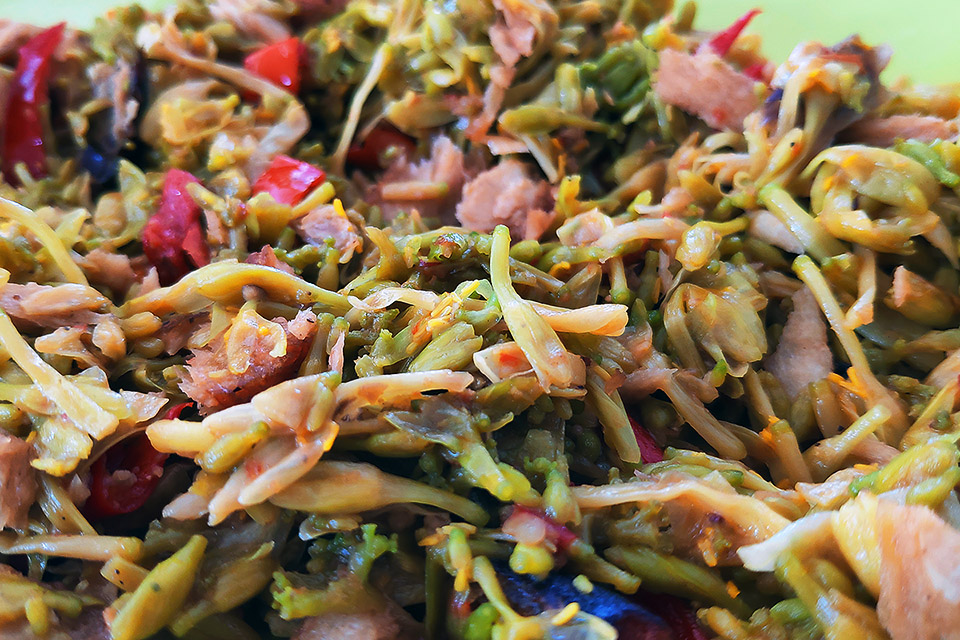
You’ll also see the influence of traditional Marapu-era diets—simple staples made from the land. Cassava, for example, shows up everywhere: as boiled slices with coconut, as crunchy fried chips, or as sweet, chewy cakes sold by the piece at markets. In some homes, you might also try Kawawo, a savory cassava-and-coconut mix that pairs beautifully with grilled fish or vegetables.
Local Markets Worth Visiting
If you want to understand Sumba’s flavors beyond the plate, head to its traditional markets. They’re not curated for tourists, which is exactly why they’re worth visiting.
Waingapu Market (East Sumba)
It is the island’s busiest market—rows of tropical fruits stacked like pyramids, vendors slicing fresh betel leaves, women carrying bundles of vegetables straight from the hills. You might stumble upon woven baskets, handmade knives, or ikat cloth laid casually on mats as if it isn’t a work of art.
Waikabubak Market (West Sumba)
Mornings are the best time to visit. The atmosphere is raw and lively: fresh fish still glistening from the morning catch, bunches of wild herbs you won’t find in supermarkets, and snacks wrapped neatly in banana leaves. Try the sweet sticky rice cakes, or the cassava fritters that locals eat on the go.
💡 Insider's Picks: How Many Days to Allocate
If you’re browsing without a plan, here’s a quick guide:
- Cassava-based snacks in every form.
- Fresh tropical fruits—mango, soursop, snake fruit, papaya.
- Local honey, often harvested from forest bees.
- Grilled seafood (snapper, grouper, or whatever’s caught that day).
- Banana-leaf-wrapped sweets, especially those with coconut.
Sampling Sumba local cuisine isn’t just about eating—it’s a way of experiencing everyday life, meeting locals, and tasting the island’s generosity. It’s one of the most grounded, authentic things to do in Sumba, and a surprisingly vivid thread in the broader tapestry of this Sumba travel guide.
Best Time to Visit Sumba
If you’re wondering when to visit Sumba, the short answer is: it depends on the kind of island you want to meet. Sumba changes dramatically throughout the year—its landscapes, colours, and even cultural rhythms shift with the seasons. Understanding these changes helps you plan a trip that matches your expectations, whether you’re chasing golden savannas, full-flowing waterfalls, or the chance to immerse yourself in one of Indonesia’s most unique cultural festivals.
The Dry Season (May–October): Golden Savannas & Clear Skies
The Sumba dry season is the most popular time to visit, especially for photographers, surfers, and anyone who prefers stable, sunny weather. Days are warm, nights are breezy, and the skies stay a crisp, uninterrupted blue. The best time overall.
This is when:
- The hills of Sumba transform into golden-brown savannas.
- Beaches look extra photogenic under bright sunlight.
- Roads (even the rough ones) are easiest to navigate.
- Sunsets hit their fiery-red peak.
- Swells are more reliable for surfing in the southwest.
It’s also a great season for long road trips, horseback riding, and outdoor adventures where you don’t want to worry about sudden downpours.
The Wet Season (November–April): Green Hills & Powerful Waterfalls
Visiting during the Sumba travel seasons that fall within the wet months can be a completely different—but equally rewarding—experience. Rain typically comes in short, heavy bursts, often followed by sunshine, rather than all-day storms.
During this time:
- Waterfalls like Lapopu and Tanggedu are at their most dramatic.
- East and Central Sumba’s hills turn vivid green.
- Rivers fill up and landscapes look fresh and lush.
- Fewer tourists mean quieter attractions.
The trade-off? Some roads become muddy or slippery, especially those leading to remote beaches or villages. But with a good driver or guide, the wet season still feels comfortable and uniquely beautiful.
💡 Insider's Tip: Pasola Festival Timing
If witnessing the Pasola Festival is high on your list, aim for February or March, when the event takes place across different West Sumba locations. This period overlaps with the rainy season, but the cultural significance and electrifying atmosphere make it worth the occasional drizzle.
So, When Should You Go?
If you love sun, beaches, and easier logistics—May to October is your sweet spot. If you prefer lush scenery, powerful waterfalls, and don’t mind a bit of rain—November to April offers a more atmospheric version of Sumba.
Either way, the island rewards you with something memorable. Like everything else in Sumba, the beauty of the seasons lies in their contrast.
How to Get Around Sumba
Getting around Sumba is part of the adventure—sometimes smooth, sometimes bumpy, but always memorable. Unlike Bali or Java, where transportation options are endless, Sumba transportation is simpler and more grounded in local rhythms. That’s precisely what makes exploring the island feel so raw and rewarding.
Car + Driver: The Most Reliable Way to Explore
For most travelers, the easiest and most comfortable option is hiring a car with a local driver or guide. The roads across the island vary wildly—paved highways suddenly narrow into gravel tracks, bridges occasionally turn into creek crossings, and signage isn’t always clear. A local driver not only knows the terrain, but also the etiquette: which villages require permission to enter, when ceremonies are happening, where to avoid during heavy rain, and which side roads actually lead to hidden beaches or waterfalls.
This option gives you:
- Flexibility.
- Safety.
- Cultural interpretation.
- Access to remote attractions.
- Stress-free navigation.
Motorbike:
Only for Skilled, Weather-Ready Riders
Motorbikes are available in major towns like Waingapu and Tambolaka, and they’re the most economical way to travel. But they’re best suited for experienced riders who are comfortable with rough or slippery terrain, especially during rainy season. If you choose this route, always carry water, a basic toolkit, and a charged phone.
Renting a Car:
For Independent, Confident Drivers
If you enjoy driving in unfamiliar conditions and have experience with off-road terrain, renting a car can be an incredible experience. It offers total freedom—stop for every scenic viewpoint, detour down a random trail, linger at villages or beaches as long as you want. But it also comes with responsibilities: expect potholes, occasional livestock blocking the way, and long stretches without fuel stations. A solid SUV is recommended.
Public Transport:
Limited but Culturally Interesting
Public transportation exists in the form of bemos (minivans) and occasional intercity buses, but they mostly connect main towns and run on local schedules—meaning departure times can be flexible, to put it politely. They’re not ideal for sightseeing but offer a tiny glimpse into everyday Sumbanese life.
💡 Insider's Tips: Essential Sumba Travel Tips for Getting Around
- Fuel stations can be far apart—fill up early.
- Offline maps are essential; signal drops often.
- Speed is rarely the goal; embrace slow travel.
- Travel times are longer than they appear on the map.
Getting around Sumba may not be as effortless as other destinations, but that’s exactly why it feels special. You earn every viewpoint, every village, every waterfall—and the journey between them becomes part of the story.
Suggested Sumba Itinerary
Planning a Sumba itinerary can feel overwhelming at first—not because the island is complicated, but because there’s so much open space and so many different landscapes packed into one destination. The key is to take it slow. Sumba rewards travelers who don’t mind long drives, unexpected detours, and lingering in places that don’t look like much on the map but end up becoming the highlight of the trip.
Below is a flexible 4–7 day plan that blends culture, nature, and a few of the most iconic things to do in Sumba. Consider it a starting point you can stretch or reshape depending on your pace.
4-Day Highlights Itinerary (West + Central Focus)
Day 1: Tambolaka → Waikuri Lake → Mandorak Beach
Arrive in Southwest Sumba and hit the ground slow. Start with a float in Waikuri Lake, then enjoy the cliffs and turquoise water of Mandorak Beach. Sunset tends to be dramatic here.
Day 2: Ratenggaro Village → Mbawana Beach
Start your cultural immersion at Ratenggaro, where traditional houses stand tall against an open ocean backdrop. Continue to Mbawana Beach, one of the island’s most cinematic coastlines.
Day 3: Lapopu Waterfall → Waikabubak Megaliths
Drive inland to Lapopu Waterfall, the tallest and one of the most beautiful in Sumba. On the way back, explore Waikabubak’s megalithic tombs.
Day 4: Wairinding Hill → Waingapu
Cross the island, stopping at Wairinding Hill for sweeping savanna views. End the trip with a slow evening in Waingapu.
6-Day Balanced Itinerary (East + West Sumba)
Day 1–2: West Sumba Highlights
Waikuri, Mandorak, Ratenggaro, and Bawana—the essentials of the western coastline.
Day 3: Lapopu Waterfall + Road Trip East
Spend the morning at Lapopu before crossing into East Sumba’s wide savannas.
Day 4: Prai Ijing or Tarung Village → Waingapu Market
Dive deeper into Sumbanese culture with a visit to Prai Ijing or Tarung. End the day exploring the local market in Waingapu.
Day 5: Tanggedu Waterfall → Puru Kambera Savanna
Trek to the canyon-like Tanggedu Waterfall, then enjoy golden-hour light at Puru Kambera, where horses roam freely.
Day 6: Walakiri Beach Sunset
Slow morning in Waingapu, then wrap up the trip with a glowing sunset at Walakiri Beach—everyone’s favourite farewell to Sumba.
7-Day Deep Dive Itinerary (Cultural + Nature Mix)
Days 1–3: West Sumba
Take your time with Waikuri, Mandorak, Ratenggaro, and Mbawana. Add in small stops at coastal villages, or surf breaks if you’re into it.
Day 4: Waterfall Day
Visit Lapopu, then explore lesser-known river spots depending on the season.
Days 5–6: East Sumba Culture & Landscapes
Weaving villages (ikat), Tarung / Prai Ijing, and a long, scenic loop through the savannas. Visit Tanggedu and Puru Kambera, then unwind in Waingapu.
Day 7: Free Day + Walakiri Sunset
A relaxed finale—perfect for markets, coffee shops, and photography before ending with Walakiri’s dancing mangroves.
This itinerary balances long drives with genuine moments of stillness—the kind that Sumba offers generously when you let it. Whether you’re staying four days or a full week, you’ll never feel like you’ve “seen it all,” and that’s the magic of this island.
Your Gateway to Exploring Sumba Deeply
Come with curiosity, travel with respect — and Sumba rewards you with stories you’ll carry for life.
Sumba isn’t the kind of island you simply “visit”—it’s a destination you feel, a place where landscapes stay raw, culture remains proudly intact, and every journey invites you deeper into a version of Indonesia that few get to experience. Whether you came searching for waterfalls hidden in tropical valleys, iconic savannah hills, sacred megalithic villages, or pristine beaches that look untouched by time, Sumba offers an ever-expanding list of things to do that grow more rewarding the longer you stay.
From the dramatic cliffs of West Sumba to the quiet pastoral beauty of East Sumba, each region offers its own set of Sumba attractions worth exploring at a slow, thoughtful pace. You’ll find that some of the island’s richest experiences come not from “big moments,” but from the simple encounters—sharing a warm smile with locals, wandering a traditional market, tasting home-cooked dishes, or watching the sky turn gold over a quiet lagoon. Sumba reveals itself layer by layer, especially to travelers who appreciate culture, nature, and meaningful travel.
As you plan your adventure, consider using this guide as your starting point—and continue discovering more through our in-depth articles. Explore our destination pages for individual waterfalls, beaches, cultural villages, and travel tips to help you navigate the island with confidence and respect. Whether you’re preparing a 4-day getaway or a week-long exploration, you’ll find resources that make your trip smoother, richer, and easier to customise.
Your journey into Sumba doesn’t end here—browse our related guides, uncover hidden gems, and let your next chapter of exploration begin.
💡Related reads:
→ Book Sumba Tours
→ Sumba Travel Guide & Tours
→ Best Time to Visit Sumba: Weather, Seasons & Month-by-Month Tips
→ Where to Stay in Sumba: Best Areas, Resorts, Boutique Hotels & Local Homestays
→ Sumba Itineraries: 2–7 Day Trip Plans for First-Timers & Photographers
→ How to Get to Sumba: Flights, Routes & Practical Travel Tips
FAQ
Bali Weekend Escapes for Perth Travelers.
1. Is Sumba worth visiting for first-timers?
Yes — especially if you’re looking for a raw, slow-travel version of Indonesia. Sumba isn’t polished like Bali, and that’s exactly its charm. Expect wide open savannas, cliff-lined beaches with barely a soul around, waterfalls hidden inside canyons, and villages where daily life still follows ancestral traditions. It’s the kind of island where the journey itself feels like part of the adventure. If you enjoy authenticity, vast landscapes, culture, and quiet spaces, Sumba is absolutely worth the trip.
2. How many days do you need in Sumba?
Most travelers find 4–7 days ideal.
- 4 days lets you see West Sumba’s highlights: beaches, Weekuri Lake, and traditional villages.
- 6–7 days gives you enough time to continue to East Sumba for Waingapu, the ikat weaving villages, savannas, and Tanggedu/Laputi waterfalls.
Anything less than 3 days feels rushed because the island is large and driving distances are long.p>
3. What’s the best time to visit Sumba?
Sumba is beautiful year-round, but the dry season (May–October) is the easiest and most reliable for travel — blue skies, calm sea, golden savannas, and optimal road conditions. The wet season (Nov–Apr) brings greener landscapes and fewer tourists, but also heavier rains.
If you want to see the Pasola Festival, aim for February–March, but exact dates vary by village and lunar cycles.
4. Is Sumba safe for tourists?
You can enjoy Bali year-round, but:
- May–September offers the best weather.
- April & October deliver great value and fewer crowds.
- Wet season (Nov–Mar) still works well for spa days, culture, and food trips.
For weekend escapes, shoulder months are ideal—more availability, better rates, and still great weather.
5. How do you get around Sumba?
Public transport is minimal, so most visitors choose:
- Hiring a private driver/guide — easiest for first-timers, best for long distances.
- Renting a car — only if you’re confident with rural driving and unpaved roads.
- Renting a motorbike — possible in town areas but not recommended for the entire island.
Expect long but scenic drives. What looks “close on the map” may still take 1–2 hours.
6. Are Sumba’s roads really that challenging?
Yes and no. Main highways are fine — sealed, wide, and easy. But many routes to beaches, waterfalls, and villages involve dirt tracks, potholes, or steep downhill paths. Conditions vary by season.
Most visitors are surprised by how remote attractions truly are, so don’t rush your schedule.
7. What should I wear when visiting Sumba villages?
Sumba is culturally conservative, especially in traditional Marapu villages. Wear:
- Shoulders and knees covered.
- Light, breathable clothing
- Proper footwear (paths can be rocky).
Ask before entering homes or taking photos of people, tombs, rituals, and sacred objects.
A friendly “boleh foto?” goes a long way.
8. Can you swim at beaches in Sumba?
You can — but conditions vary dramatically. Many beaches are stunning but not always ideal for swimming due to currents, reefs, and waves. Safe swimming is found at:
- Waikuri Lake (lagoon).
- Walakiri Beach (shallow at high tide).
- Some sheltered bays in East Sumba.
Always check the conditions and avoid swimming alone at remote beaches.
9. Is Sumba suitable for families?
Yes, especially if your family enjoys nature and exploring. But do note:
- Distances are long.
- Attractions often require walking/trekking.
- Facilities are basic outside resorts.
Families usually enjoy Weekuri Lake, Walakiri Beach, Wairinding Hill, village visits, and gentle horse riding more than long waterfall treks.
10. What kind of accommodation can you expect in Sumba?
Options vary widely:
- Luxury eco-resorts near private beaches.
- Boutique stays with local architecture.
- Simple guesthouses and homestays in towns.
You won’t find the density of accommodations you see in Bali, but the quality is improving year by year. Book early in peak season.
11. Is Sumba expensive?
Not necessarily. Local transport and food are affordable, and entrance fees are usually donation-based.
Costs rise when:
- Booking private drivers.
- Staying in premium beachfront eco-lodges.
- Shopping for high-quality ikat textiles.
But Sumba can absolutely be done on a mid-range or even backpacker budget.
12. What should I bring to Sumba?
Essentials include:
- Trekking shoes.
- Reef-safe sunscreen
- Hat, sunglasses, light clothing.
- Waterproof bag.
- Power bank.
- Cash (ATMs aren’t everywhere).
- Snacks for long drives.
And optionally: sarong, sandals, quick-dry towel, and a small medical kit.
13. Do you need a guide in Sumba?
Not always — but it enhances the trip tremendously. A guide helps interpret village customs, navigate remote roads, time the tides, and reach hidden trailheads. For waterfall treks and megalithic villages, a local guide is often required anyway.
14. Can you visit Sumba without joining a tour?
Absolutely. Many travelers explore Sumba independently with a rented car or private driver. A structured tour is optional, not mandatory — though it can help if you want to maximize your short time.
15. Is Sumba better than Flores or Lombok?
They’re different experiences.
- Sumba = culture, wide landscapes, empty beaches, ancient traditions.
- Flores = volcanoes, Komodo dragons, island-hopping.
- Lombok = beaches, waterfalls, easier logistics.
If you’re craving remoteness and authenticity, Sumba stands out.