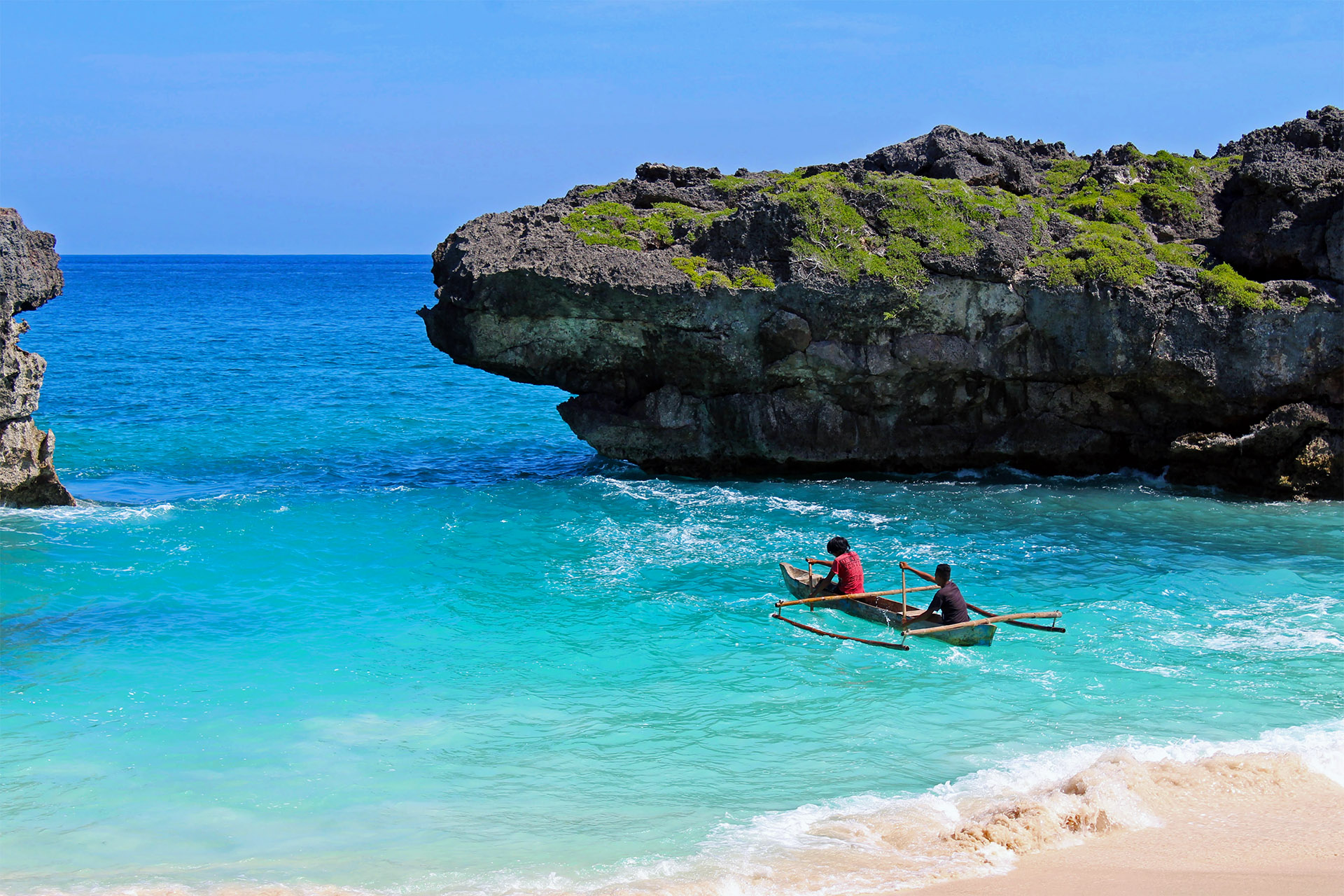
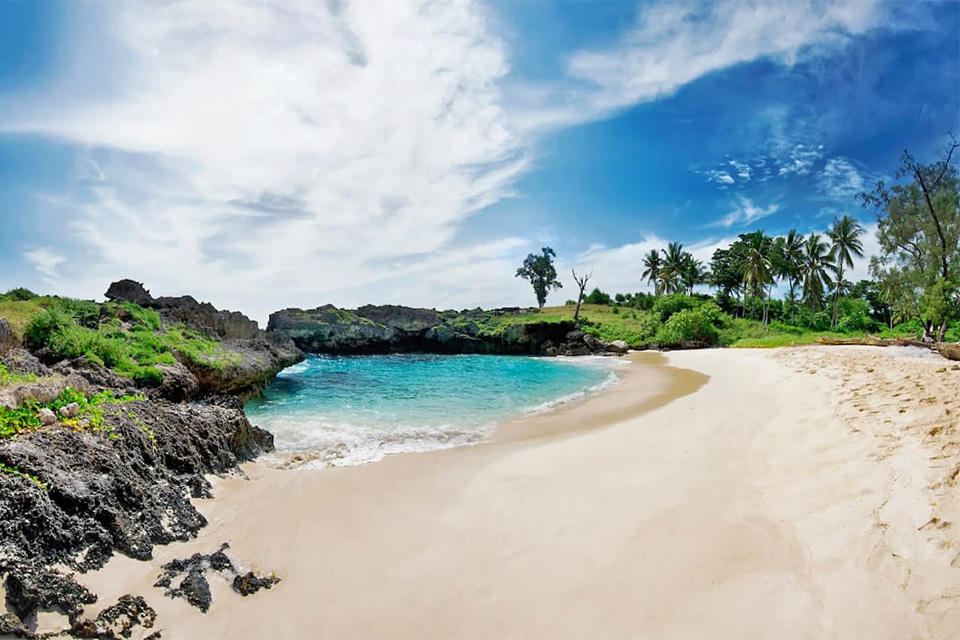
Tucked between towering limestone cliffs on the southwest coast of Sumba, Mandorak Beach offers a striking coastal experience unlike typical tropical beaches. This narrow, naturally framed cove channels the full force of the ocean into a compact, dramatic setting—where waves surge inward and every moment feels intensified. It’s not a place for swimming or long stays, but for pausing, observing, and feeling the raw beauty of Sumba’s untamed coastline.
👉 Discover how to visit, when to go, and how it fits into a seamless West Sumba journey in our full guide.
 Insider's Insight: Quick Facts About Mandorak Beach
 Insider's Insight: Quick Facts About Mandorak Beach
- A hidden cove in West Sumba, framed by steep limestone cliffs.
- Known for its dramatic, compact landscape and strong ocean movement.
- Not suitable for swimming due to powerful and unpredictable waves.
- Located approximately 1.5–2 hours from Tambolaka Airport.
- Commonly visited together with Ratenggaro Village and Weekuri Lagoon.
- Ideal as a short scenic stop (20–45 minutes) within a coastal route.
- Best visited in the morning or late afternoon for optimal light.
- Minimal facilities — visitors should bring water and essentials.
💡Related reads:
What Makes Mandorak Beach Special
There are beaches that invite you to relax… and then there are places like Mandorak Beach that ask you to pause and take it in. Hidden between towering limestone cliffs, Mandorak is not a wide, open shoreline. It is a narrow, dramatic cove, where the ocean is framed, focused, and intensified.
It doesn’t stretch out — it draws you in.
A Beach Shaped by Contrast
What makes Mandorak unforgettable is not its size, but its composition.
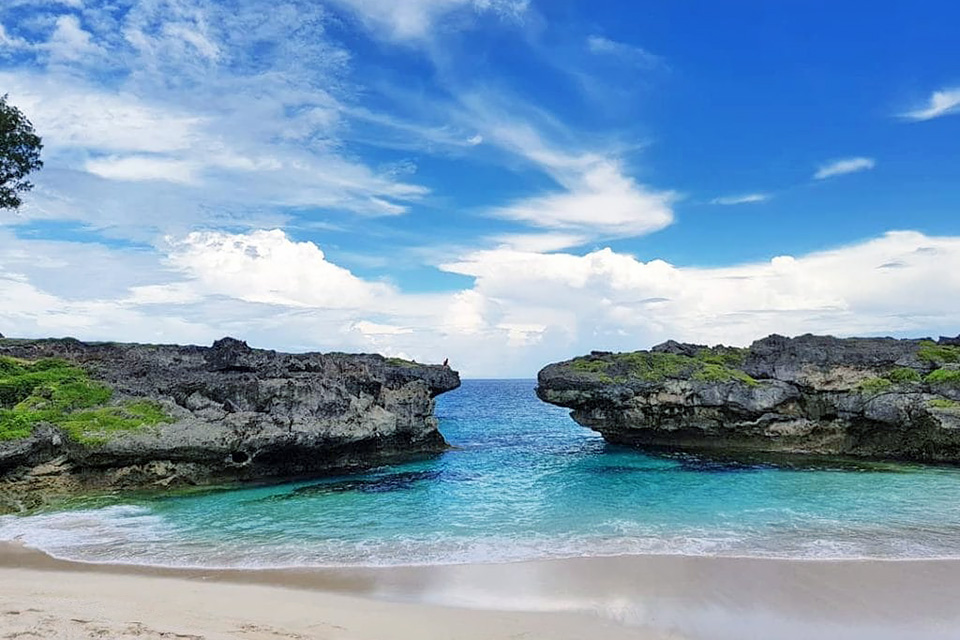
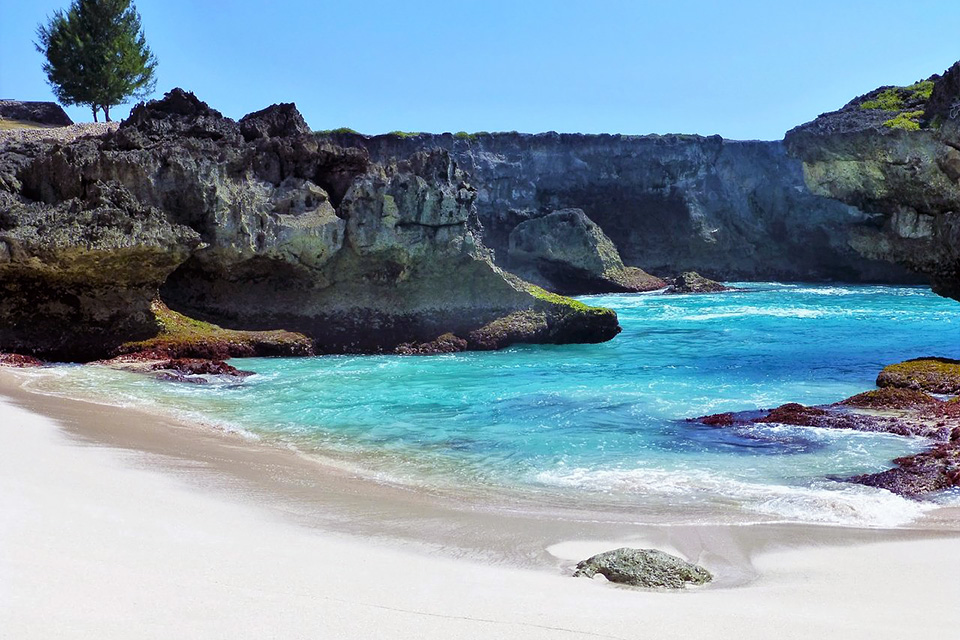
- Steep rock cliffs rise on both sides, forming a natural gateway to the ocean.
- The ocean funnels inward, creating a sense of movement and power.
- Waves roll in with energy, breaking against the shore with rhythmic force.
The result is a landscape that feels almost cinematic — as if the nature deliberately framed this small stretch of white-sand coastline for impact.
Not a Swimming Beach — And That’s the Point
Unlike the calm Waikuri Lagoon, Mandorak is not about getting in the water. It’s about standing at the edge of it.
- Watching the waves approach.
- Feeling the wind move through the cliffs.
- Observing the constant motion of the sea.
Mandorak is not where you float — it’s where you feel the ocean.
A Moment Between Experiences
Because of its intensity, Mandorak is often experienced as a pause between contrasts:
- After the cultural stillness of Ratenggaro Village.
- Before the calm immersion of Weekuri Lagoon.
It becomes a moment that resets your senses — short, striking, and memorable.
A Moment Between Experiences
Because of its intensity, Mandorak is often experienced as a pause between contrasts:
- After the cultural stillness of Ratenggaro Village.
- Before the calm immersion of Waikuri Lagoon.
It becomes a moment that resets your senses — short, striking, and memorable.
Insider's Insight: What Makes Mandorak a Must-Visit Attraction
- Mandorak is one of the most photogenic coastal spots in West Sumba.
- The beach is small but visually – and literally too – powerful.
- Its narrow cove creates a naturally framed composition.
- Best experienced slowly — even a short visit can feel complete.
Some places impress you with scale. Mandorak does it with intensity.
Where Is Mandorak Beach Located?
Tucked quietly along the southwestern coastline, Mandorak Beach is not a place you simply pass by — it’s a place you arrive at, almost unexpectedly.
Located in West Sumba, the beach sits within a remote coastal stretch not far from Tambolaka, the island’s main western gateway. From Tambolaka, the journey takes approximately 1.5 to 2 hours by car, depending on road conditions and the pace of travel.
The road doesn’t lead you directly to Mandorak — it gradually reveals it.
The Journey Through West Sumba
Getting to Mandorak is part of the experience. As you leave Tambolaka, the landscape begins to open:- rolling savanna hills stretching toward the horizon,
- scattered villages and grazing livestock,
- narrow roads that wind toward the coast.
A Hidden Coastal Cluster
Mandorak is rarely visited on its own. Its location places it within one of the most rewarding West Sumba routes, often explored together with:
- Ratenggaro Village — a living cultural village just a short drive away.
- Weekuri Lagoon — a calm saltwater lagoon nearby.
Together, these three create a coastal cluster of contrasts:
- Culture at Ratenggaro.
- Energy at Mandorak.
- Stillness at Weekuri.
Each stop feels different — yet they belong to the same stretch of coast.

Why Its Location Matters
Mandorak’s setting between cliffs is not just visually striking — it defines how the place is experienced.
- The narrow opening intensifies the movement of the ocean.
- The cliffs create a sense of enclosure and focus.
- The beach feels hidden, even when you’re standing in it.
This is not a beach you stumble upon. It’s one you seek out — and remember.
Insiders’ Picks: On Getting to Mandorak Beach
- Visit Mandorak between Ratenggaro and Weekuri for a natural route flow.
- Allow extra time — roads can be uneven in sections.
- Combine the visit with Weekuri Lagoon for a contrast in water experience.
- A local driver helps ensure smooth navigation and timing.
Mandorak may not appear prominently on maps — but once you’ve seen it, it becomes one of those places that defines the journey.
What to Expect When You Visit
Arriving at Mandorak Beach is a shift in energy.
There’s no gradual build-up.
One moment you’re walking along a quiet path … the next, the landscape opens — and the ocean reveals itself, framed tightly between towering cliffs.
It’s not expansive — it’s concentrated.
The Landscape
Mandorak is defined by its natural framing.
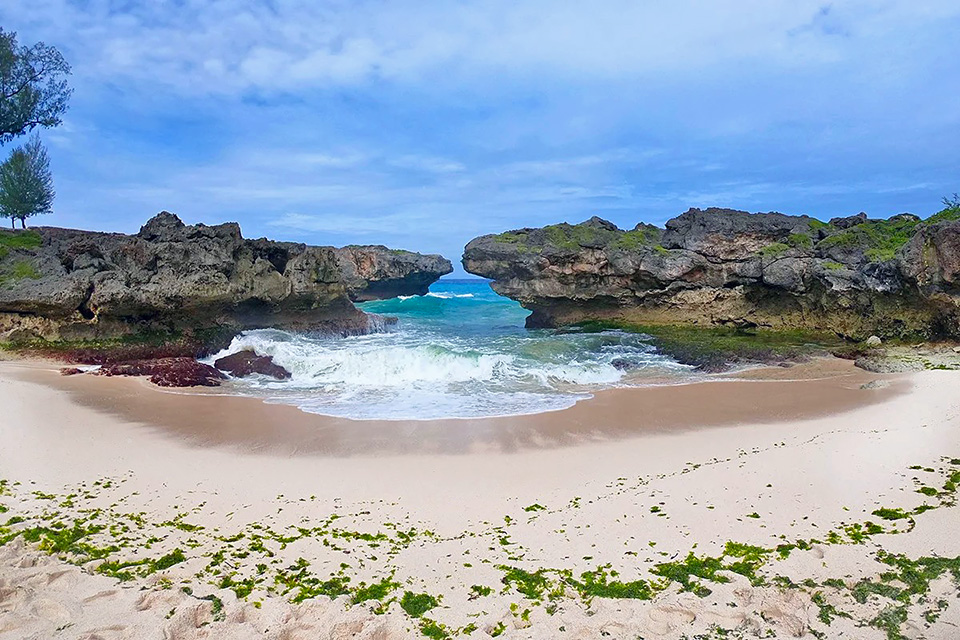
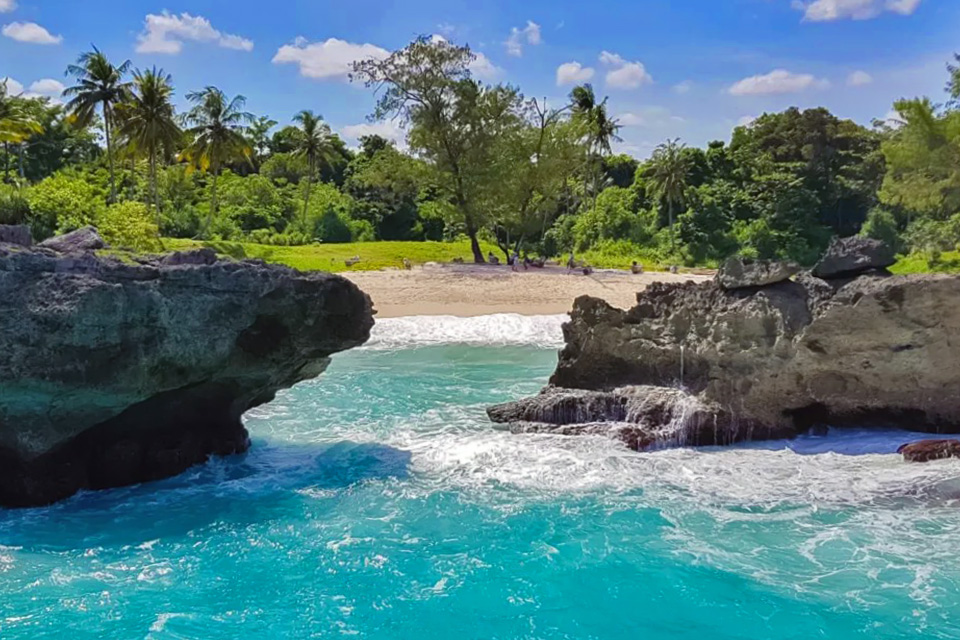
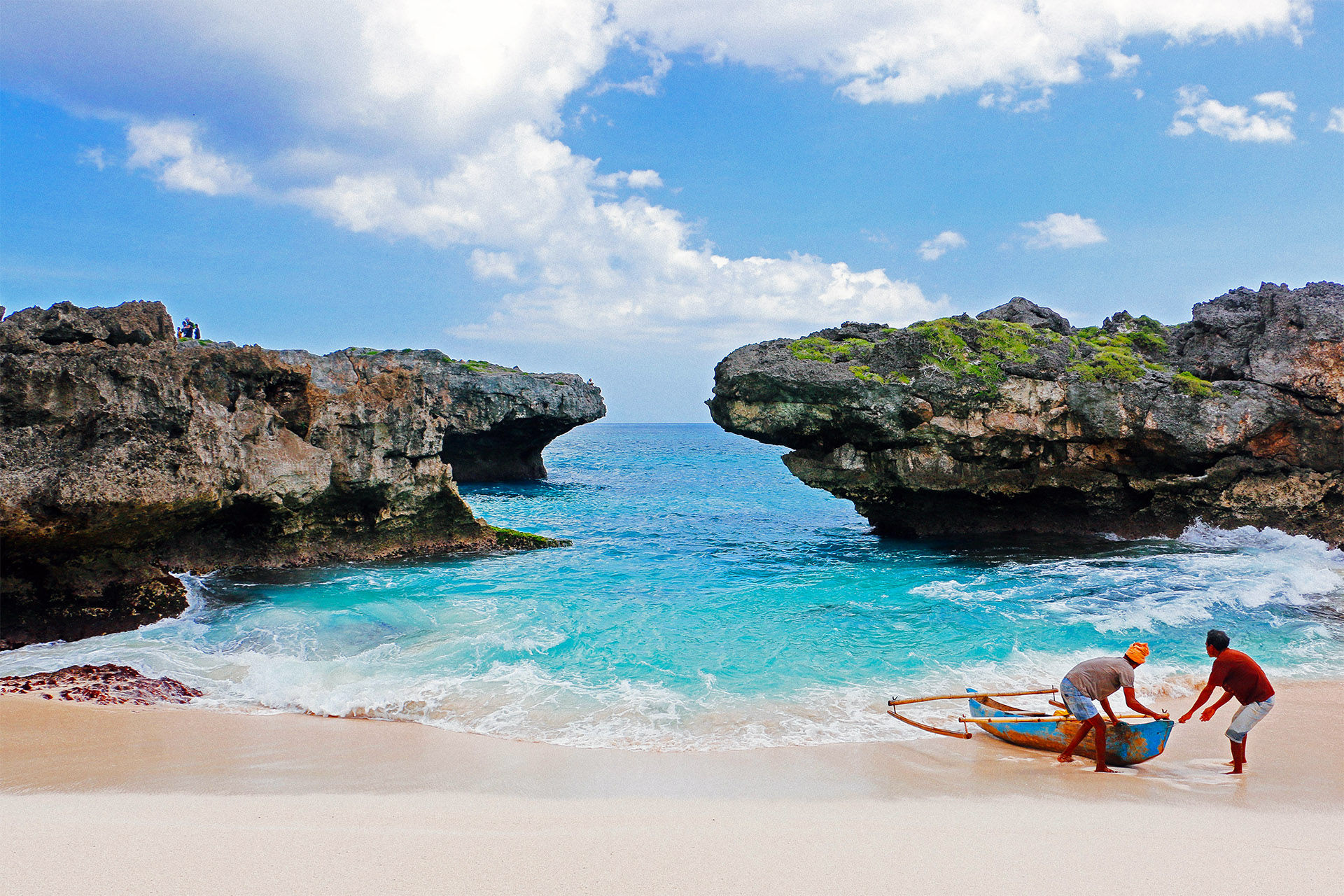
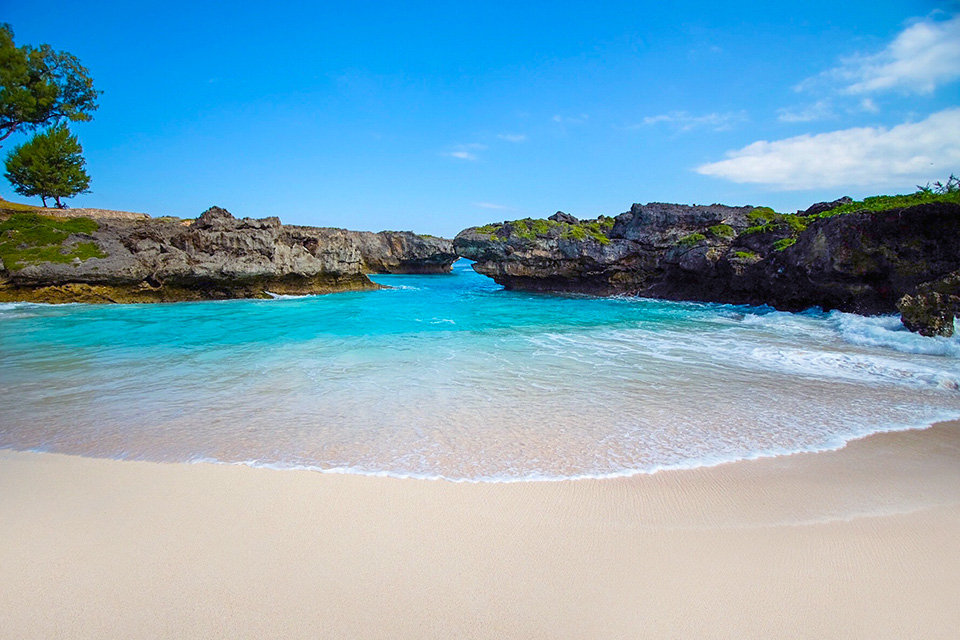
- Two steep limestone cliffs rise on either side of the beach, the left and the right hand sides.
- A narrow opening in between leads the eye directly toward the ocean.
- The shoreline is compact — almost enclosed.
This creates a setting that feels intentional, looks like someone created it that way, almost sculpted.
You’re not looking across a wide horizon.
You’re looking through a natural corridor toward the sea.
The cliffs don’t block the view — they focus it.
The Ocean Experience
Here, the ocean behaves differently.
Because of the narrow cove:
- Waves funnel inward with more force.
- The water is constantly in motion.
- Sound of crashing waves echoes between the cliffs.
This is not a place for swimming or floating.
It’s a place to:
- stand at the edge.
- watch the rhythm of the waves.
- feel the wind and spray.
At Mandorak, you don’t enter the ocean — you witness it.
The Atmosphere
Mandorak carries a different mood compared to other stops in West Sumba.
- Raw, untamed, and slightly dramatic.
- Quiet — often with very few visitors.
- Minimal development, allowing the landscape to remain dominant.
It’s a place that doesn’t ask you to stay long — but it leaves a strong impression.
A Short but Powerful Stop
Because of its size and intensity, most visits to Mandorak are brief.
- Typical visit duration: 20 to 45 minutes.
- Enough time to:
- take in the view,
- walk along the cove,
- capture the unique composition.
And that’s part of its charm.
Mandorak doesn’t need hours — it delivers its impact in moments.
Insiders’ Tips: On Visiting Mandorak Beach Sumba
- Wear comfortable shoes — access paths can be sharp and uneven.
- Bring water — facilities are limited.
- Take time to observe, not just photograph.
- Be cautious near the water — waves can be strong and unpredictable.
- Best enjoyed as a pause between Ratenggaro and Waikuri.
Some places are about what you do. Mandorak is about what you feel.
From here, we move into timing — because light and tide can subtly change how Mandorak is experienced.
Best Time to Visit Mandorak Beach
At Mandorak Beach, timing shapes not only how the place looks — but how it feels. Because this is a landscape defined by light, shadow, and the movement of the sea, even small changes in time can create a completely different experience.
The cliffs stay the same — but the mood changes with the light.
Time of Day
Mandorak can be visited throughout the day, but certain hours bring out its character more clearly.
Morning
(8:00 – 10:30 AM)
This is when the cove feels most balanced.
- Soft light illuminates the texture of the cliffs.
- The ocean appears clearer, with more visible color contrast.
- The atmosphere is calm, before the heat builds.
In the morning, Mandorak feels open — even within its narrow frame.
Midday
(11:00 AM – 2:30 PM)
The sun sits high, and the contrast becomes stronger.
- Light can be harsh and direct, reducing depth in photos.
- The heat intensifies, especially within the enclosed cove.
- Shadows shorten, flattening the visual composition.
This is often the least comfortable time to linger — but still manageable as a short stop.
Late Afternoon
(4:00 PM onward)
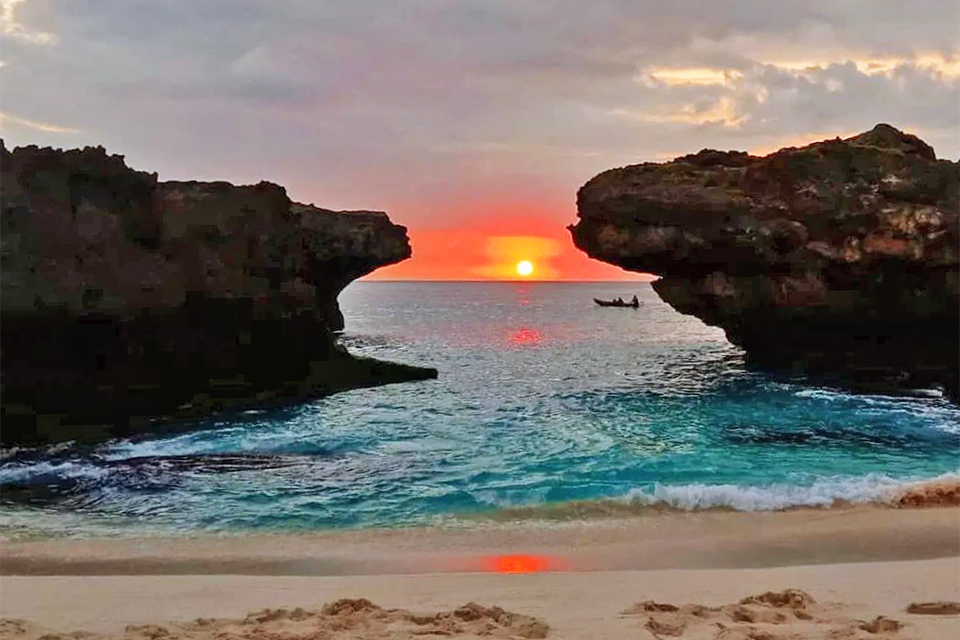
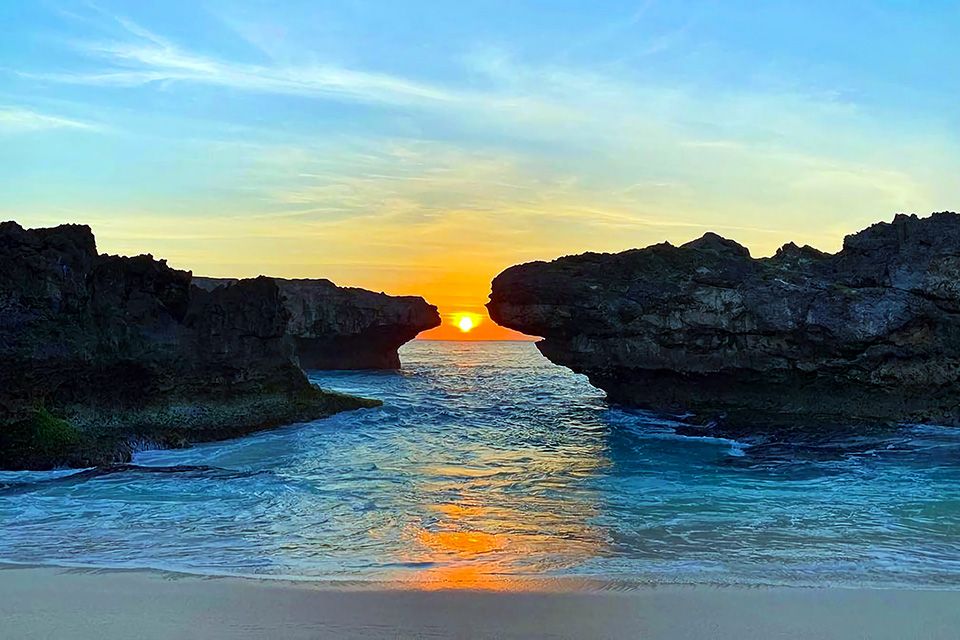
This is when Mandorak becomes more atmospheric.
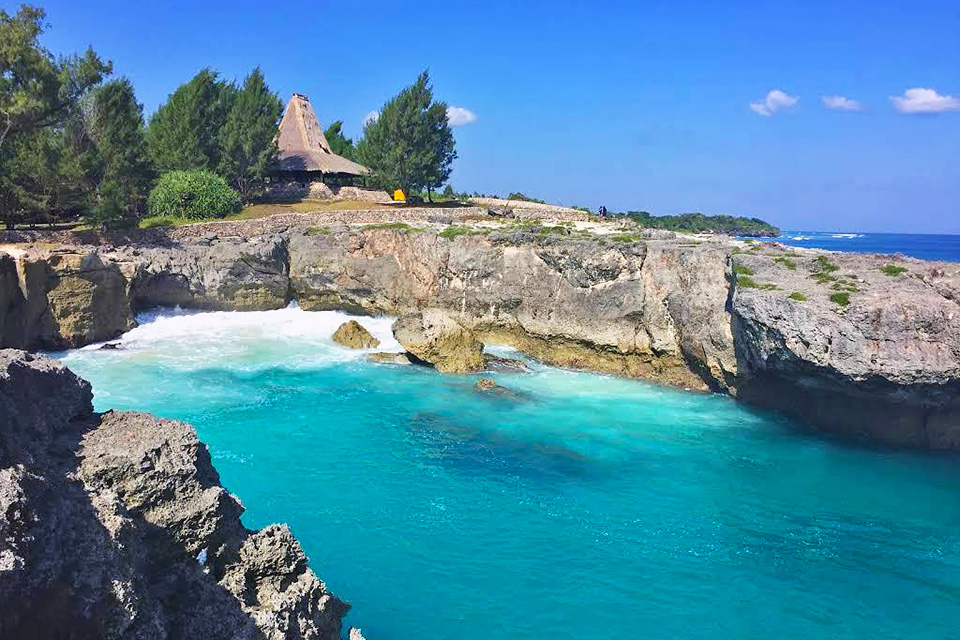
- Warm golden light enhances the colors of rock and sea.
- Shadows stretch along the cliffs, adding depth.
- The ocean often appears more dramatic under softer light.
In the afternoon, Mandorak feels more cinematic — quieter, deeper, more intense.
Ocean Conditions & Awareness
Unlike calm lagoons such as Weekuri Lagoon, Mandorak is directly exposed to the open ocean.
- Waves can be strong and unpredictable.
- Water conditions change throughout the day.
- Swimming is generally not recommended.
Timing your visit is less about tides — and more about light, safety, and comfort.
Seasonality
Mandorak can be visited year-round, but the surrounding landscape shifts with the seasons.
Dry Season (April – October)
- Clear skies and strong light.
- Golden savanna landscapes surrounding the coast.
- More defined contrasts between rock, sea, and sky.
Wet Season (November – March)
- Greener surroundings and softer tones.
- Occasional cloud cover, creating more diffused light.
- A slightly more moody, atmospheric feel.
In every season, Mandorak remains dramatic — the difference is in its tone.
Insiders’ Insight: Making Your Time at Mandorak Beach
- Morning offers clearer visibility and softer heat.
- Late afternoon and sunset time provides the most dramatic lighting.
- Midday is best kept as a short stop.
- Combine with Ratenggaro Village earlier in the day, then continue to Weekuri Lagoon
- Always watch your steps and stay aware of wave conditions near the shore.
Mandorak doesn’t ask for perfect timing — but it rewards those who arrive with awareness.
Next, we move into practical preparation — how to visit safely and comfortably.
Travel Tips
Visiting Mandorak Beach is simple in concept — but the experience becomes much better when you arrive prepared. This is a raw coastal location, with minimal development and strong natural elements. A little awareness ensures your visit is safe, comfortable, and enjoyable.
Mandorak is easy to visit — but best experienced with respect for its conditions.
Safety Around the Ocean
The most important thing to understand:
 Mandorak is not a swimming beach
- Waves can be strong and sudden, especially within the narrow cove. Swimming can be dangerous.
- The current is intense and can pull inward due to the shape of the coastline.
- Rocks near the water can be slippery and uneven.
It’s best to:
- stay at a safe distance from the water’s edge.
- enjoy the ocean visually rather than physically.
This is a place to observe the ocean, not enter it.
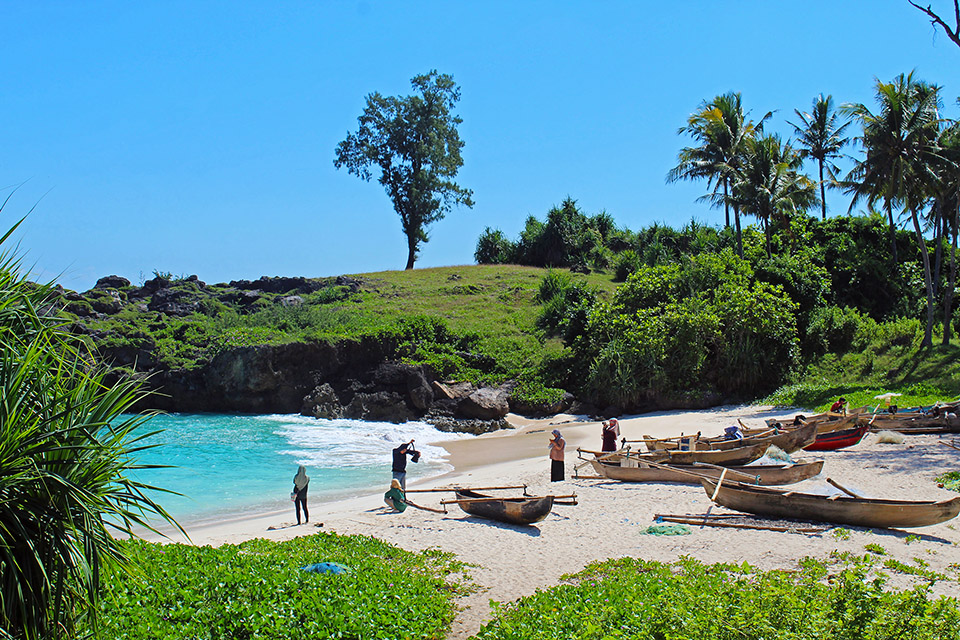
What to Wear
The terrain around Mandorak is natural and uneven.
- Wear comfortable shoes or sandals with grip.
- Light, breathable clothing is ideal due to the heat.
- A hat or sunglasses can help, especially during midday.
If you plan to explore slightly around the cliffs, stable footwear makes a difference.
What to Bring
Facilities are very limited, so it’s best to come prepared.
- Drinking water.
- Sun protection (hat, sunscreen).
- Camera or phone — the landscape is highly photogenic.
Avoid carrying unnecessary items, as you’ll likely be moving in and out within a short time.
Insiders’ Tips: Making the Best Out of Your Visit
 Insiders’ Tips: Making the Best Out of Your Visit
- Visit between Ratenggaro Village and Waikuri Lagoon for a natural flow.
- Keep a safe distance from waves — they can surge unexpectedly.
- Bring essentials — facilities are minimal,
- Take a moment to pause and observe, not just photograph.
- Have a local driver for better routing and timing.
Mandorak rewards those who arrive prepared — and present.
Be Mindful of the Environment
Mandorak remains largely untouched — and that’s part of its appeal.
- Do not leave any trash behind.
- Avoid climbing fragile rock areas unnecessarily.
- Respect the natural setting.
The beauty of Mandorak lies in how little it has changed.
Managing Your Time
Mandorak is best experienced as a short but intentional stop. Brief but should not be skipped
- Ideal visit duration: 20–45 minutes.
- Enough time to:
- Take in the landscape.
- Observe the ocean.
- Capture the unique framing of the cove.
This helps maintain the rhythm of your day, especially when combined with nearby locations.
How Mandorak Beach Fits Into a Sumba Itinerary
In a well-paced West Sumba journey, Mandorak Beach is not a destination you build a day around — it’s a moment that gives the day contrast and rhythm.
It’s the point where the journey sharpens — before it softens again.
The West Sumba Coastal Flow
Mandorak sits naturally between two of West Sumba’s most defining experiences:
- Ratenggaro Village — where culture and tradition take center stage.
- Waikuri Lagoon — where calm water and stillness invite you to slow down.
This creates a seamless progression:
From heritage … to movement … to stillness — all within a single stretch of coast.
Where It Fits in the Day
Mandorak is best visited as a mid-journey pause.
A natural sequence often looks like:
- Morning: explore Ratenggaro Village.
- Late morning: stop at Mandorak Beach.
- Midday / early afternoon: unwind at Weekuri Lagoon.
This flow works because:
- You begin with observation and cultural context.
- Move into a visually striking, energetic landscape.
- End with a place designed for rest and reflection.
How Long to Spend
Mandorak is intentionally brief — and that’s what makes it effective within the itinerary.
- Recommended duration: approximately 20–45 minutes, brief yet meaningful.
- Enough time to:
- Take in the view.
- Walk along the cove.
- Experience the atmosphere.
Spending longer is possible, but not necessary.
Why It Matters in the Journey
Without Mandorak, the West Sumba route still works — but it loses a key layer of contrast. At Mandorak you feel:
- the force of the ocean.
- the scale of the coastline.
- the raw, untamed side of the island.
It bridges the experience between culture and calm — adding energy to the overall flow.
Mandorak is not about staying longer — it’s about arriving at the right moment.
💡Insiders’ Insight: The Essence of Mandorak Beach
- Position Mandorak between Ratenggaro and Weekuri for the best experience flow.
- Keep the visit short but intentional.
- Avoid rushing — even a brief stop benefits from presence. It doesn’t take long anyway.
- Ideal as part of West Sumba coastal route.
Mandorak doesn’t compete for time — it defines the rhythm of the journey.
Next, we guide readers through travel approach and independence considerations.
Can You Visit Mandorak Beach Independently?
Yes — you can visit Mandorak Beach independently.
But like many places in Sumba, getting there is not just about reaching a destination — it’s about navigating distance, terrain, and timing in a way that keeps the day flowing smoothly.
It’s accessible — but not always straightforward.
What Makes Independent Visits Challenging
Mandorak sits in a remote coastal area of West Sumba, where infrastructure remains minimal. This preserves its raw beauty — but also means travelers need to be prepared.
1. Navigation & Access
- Signage can be limited or inconsistent.
- Some access roads branch off without clear markers.
- GPS is helpful, but may not reflect real-time conditions.
You know where you’re going — but not the best way to get there.
2. Road Conditions
- Expect a mix of paved roads and uneven rural tracks.
- Certain sections near the coast can be narrow or rough.
- Travel times can vary depending on conditions.
Distances on the map often feel shorter than the actual journey.
3. Remote Setting
- No structured facilities or support nearby.
- Limited options if plans need to change.
- The area remains largely untouched by tourism infrastructure.
What Travelers Often Underestimate
Independent visits can feel more rushed than expected when key factors are overlooked.
👉 Travel Timing
Even short distances can take longer due to terrain and road quality.
👉 Route Planning
Mandorak is rarely visited alone — it’s best combined with Ratenggaro Village and Weekuri Lagoon.
Planning the correct sequence helps avoid backtracking and unnecessary fatigue.
Is It Worth Visiting Independently?
If you:
- are comfortable driving in remote areas,
- prefer flexibility and self-paced travel,
- are prepared for changing conditions,
— then yes, it can be a rewarding experience
However, many travelers find that traveling with a local driver or guide offers clear advantages:
- Smoother navigation.
- Better timing between locations,
- A more relaxed, uninterrupted day.
Independent travel in Sumba is possible — but the experience depends on how smoothly the journey unfolds.
Insiders’ Tips: Getting to Mandorak Beach
- Start early to allow buffer time for the journey.
- Download offline maps before heading out.
- If possible, travel with a local guide for cultural context.
- Combine Ratenggaro with Mandorak Beach and Waikuri Lagoon.
- Keep expectations flexible — part of the experience is the unpredictability.
Independent travel in Sumba is possible — but the difference lies in how smoothly the day unfolds.
Next, we move into the conversion layer — helping readers understand why many choose a structured journey.
Why Many Travelers Visit Mandorak Beach With a Structured Tour
A stop at Mandorak Beach may feel simple on its own — but in reality, it sits within a carefully balanced West Sumba coastal journey.
Mandorak is not just about where you go — it’s about how the day is designed around it.
What the Experience Involves
Visiting Mandorak is rarely a standalone trip. Most travelers combine it with nearby highlights such as:
This means your day includes:
- Long transfers from Tambolaka area (often takes 1.5–2 hours each way).
- Coordinating multiple stops across different terrains.
- Timing each visit for the best light and comfort.
Each part is manageable — but together, they require thoughtful planning.
Why Many Travelers Choose a Structured Journey
Because of these moving parts, many travelers prefer a planned West Sumba route — not just for convenience, but for a smoother overall experience.
A structured journey helps you:
- Avoid inefficient routing and unnecessary backtracking.
- Move seamlessly between culture, coastline, and lagoon experiences.
- Travel with local insight, understanding not just where to go, but when.
The difference isn’t in the destinations — it’s in how effortlessly they connect.
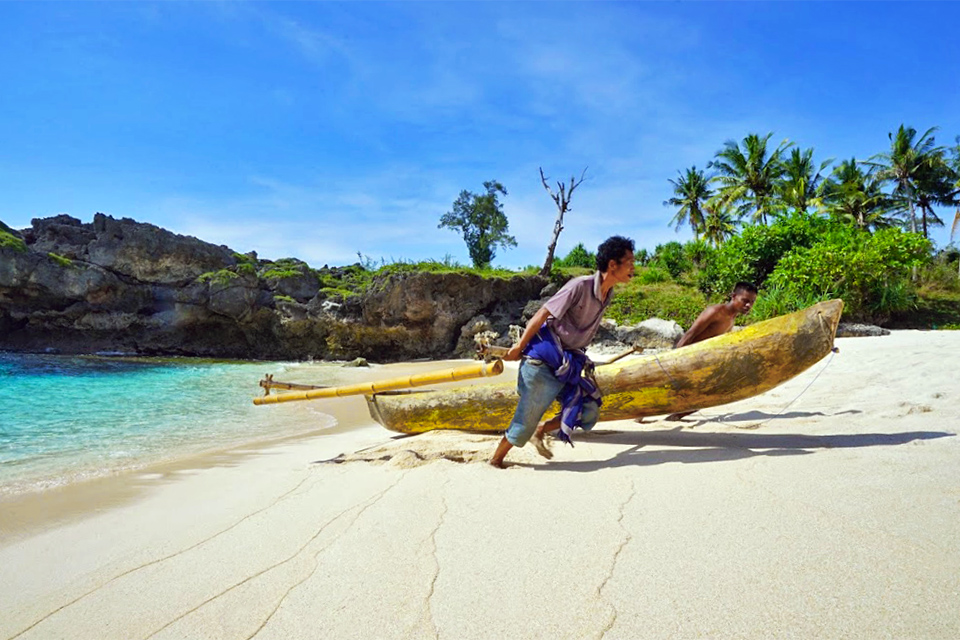
Mandorak as Part of a Designed Flow
When included in a well-designed itinerary, Mandorak becomes more than a quick photo stop.
It becomes a transition point in the journey:
- From the cultural depth of Ratenggaro Village.
- Through the raw coastal energy of Mandorak.
- Into the calm waters of Waikuri Lagoon.
This creates a natural rhythm:
- Observe.
- Feel.
- Unwind.
See It in Context
If you’re looking to experience Mandorak without worrying about logistics, this is exactly how we design our routes.
👉 See how Mandorak Beach fits into our 3 Days West Sumba Tour — where each stop flows naturally into the next.
Insiders’ Insight: Better Experienced in Structured Tour
- A visit to Mandorak Beach works best when timed between other key stops.
- A structured route ensures you experience the coast with balance, not rush.
- Local drivers help manage road conditions, timing, and pacing.
- The goal is simple: less planning stress, more presence in the moment.
In Sumba, the best journeys don’t feel busy — they feel naturally connected.
A Moment of Raw Coastline
At first glance, Mandorak Beach may seem simple.
A small stretch of sand.
Cliffs on either side.
The ocean moving endlessly ahead.
But what stays with you is not its size — it’s the intensity of the moment.
What Mandorak Represents
In a journey across Sumba, Mandorak becomes something distinct.
- A place where the island feels raw and unfiltered.
- Where the ocean is not distant, but present and powerful.
- Where the landscape doesn’t open — it frames your attention.
It strips the experience down to its essentials:
- Rock.
- Water.
- Movement.
A Different Kind of Pause
Mandorak is not where you linger for hours.
It’s where you stop — briefly — and everything sharpens.
- The sound of waves becomes louder.
- The wind feels stronger.
- The space around you feels more defined.
And then, just as quickly, the moment passes — and the journey continues.
It’s not a place you stay — it’s a place you remember.
More Than a Photo Stop
It’s easy to see Mandorak as a quick stop for photos.
But if you allow yourself even a few extra moments, it becomes something else:
- a pause between experiences,
- a shift in perspective,
- a reminder of the island’s raw natural force.
Mandorak doesn’t ask for your time — it asks for your attention.
And sometimes, that’s all it needs.
Why It Matters in Your Journey
When combined with the cultural depth of Ratenggaro Village and the calm immersion of Weekuri Lagoon, Mandorak completes the experience.
It adds contrast.
It adds energy.
It reminds you that Sumba is not just quiet and reflective — it is also wild, dynamic, and alive.
FAQ - Mandorak Beach
Here are the most frequently asked questions about visiting Mandorak Beach Sumba — designed to help you plan your visit with clarity, safety, and the right expectations.
What is Mandorak Beach known for?
Mandorak Beach is known for its dramatic coastal setting — a narrow cove framed by steep limestone cliffs.
Unlike wide, open beaches, Mandorak offers:
- a naturally enclosed shoreline.
- powerful waves funneled between cliffs.
- a visually striking, almost cinematic landscape.
It’s not expansive — it’s intense.
Is Mandorak Beach worth visiting?
Yes — especially as part of a West Sumba coastal journey.
While it may not be a place to spend hours, Mandorak is:
- one of the most photogenic coastal spots in Sumba.
- a strong contrast to calm locations like Waikuri Lagoon.
- a unique stop that adds energy and variety to your itinerary.
Where is Mandorak Beach located?
Mandorak Beach is located in West Sumba, approximately:
- 1.5 to 2 hours drive from Tambolaka Airport.
It is commonly visited together with:
Can you swim at Mandorak Beach?
Generally, no — swimming is not recommended.
- Waves can be strong and unpredictable.
- The narrow cove intensifies ocean movement.
- Rocks near the shore can be slippery.
Mandorak is best experienced from the shore, observing the ocean rather than entering it.
How long should you spend at Mandorak Beach?
Most visitors spend 20 to 45 minutes at Mandorak.
This is enough time to:
- enjoy the view,
- walk along the cove,
- take photos.
It’s designed as a short but impactful stop within a larger route.
When is the best time to visit Mandorak Beach?
- Morning (8–10:30 AM) → softer light, cooler conditions.
- Late afternoon (after 4 PM) → warmer tones, more dramatic atmosphere.
Midday can be hot and less comfortable, especially within the enclosed cove.
Is Mandorak Beach suitable for families?
Yes, but with caution.
- Children should be closely supervised, especially near the water.
- The terrain can be uneven in some areas.
- Swimming is not advised.
It’s suitable as a short scenic stop, rather than a play-oriented beach.
Are there facilities at Mandorak Beach?
Facilities are very limited.
- No formal restaurants or developed amenities.
- Minimal infrastructure.
- Visitors should bring their own water and essentials.
Can you visit Mandorak Beach independently?
Yes, independent visits are possible.
However, consider:
- limited signage,
- variable road conditions,
- remote location.
Many travelers prefer visiting with a local driver or guide for:
- easier navigation,
- better route planning,
- smoother overall experience.
How does Mandorak Beach fit into a Sumba itinerary?
Mandorak is typically visited as part of a West Sumba coastal route, often between:
It acts as a transition point in the journey:
- from cultural exploration,
- to raw coastal energy,
- to calm lagoon experience.
Why do many travelers visit Mandorak as part of a tour?
Because visiting Mandorak often involves:
- long travel distances from Tambolaka,
- coordination with nearby highlights,
- timing for the best experience.
A structured itinerary helps:
- avoid inefficient routing,
- improve pacing,
- create a smoother and more connected journey.
What makes Mandorak different from other beaches in Sumba?
Mandorak stands out because of its:
- narrow, cliff-framed cove,
- strong, concentrated ocean movement,
- compact yet visually powerful setting.
It offers a different experience compared to:
- calm lagoons like Waikuri Lagoon,
- open savanna landscapes in other parts of the island.
If you’re planning your West Sumba journey, Mandorak Beach offers something brief but unforgettable — a moment where the island’s raw coastal energy comes fully into focus.