The morning begins higher than you expect.
You leave Ubud while the town is still half-asleep, climbing gently into the highlands where the air thins and cools. The temperature drops just enough to wake your skin. Helmets click into place. A bike leans toward you, quiet and unassuming, as if it already knows the road ahead. There is no engine noise, no rush—only the soft scrape of tires on asphalt and the distant call of birds greeting the sun.
This is how cycling through rice terraces is meant to start: not with speed, but with space.
Riding Into the Green
As the ride begins, the roads narrow and the world opens. Morning mist drifts between trees, lifting slowly to reveal slopes carved with intention. Your first glimpse of the rice terraces arrives not all at once, but in layers—green upon green, folded into the hills like careful handwriting. Water glints between paddies, moving calmly, deliberately, following pathways laid down generations ago.
In Ubud, the road doesn’t lead somewhere — it unfolds.
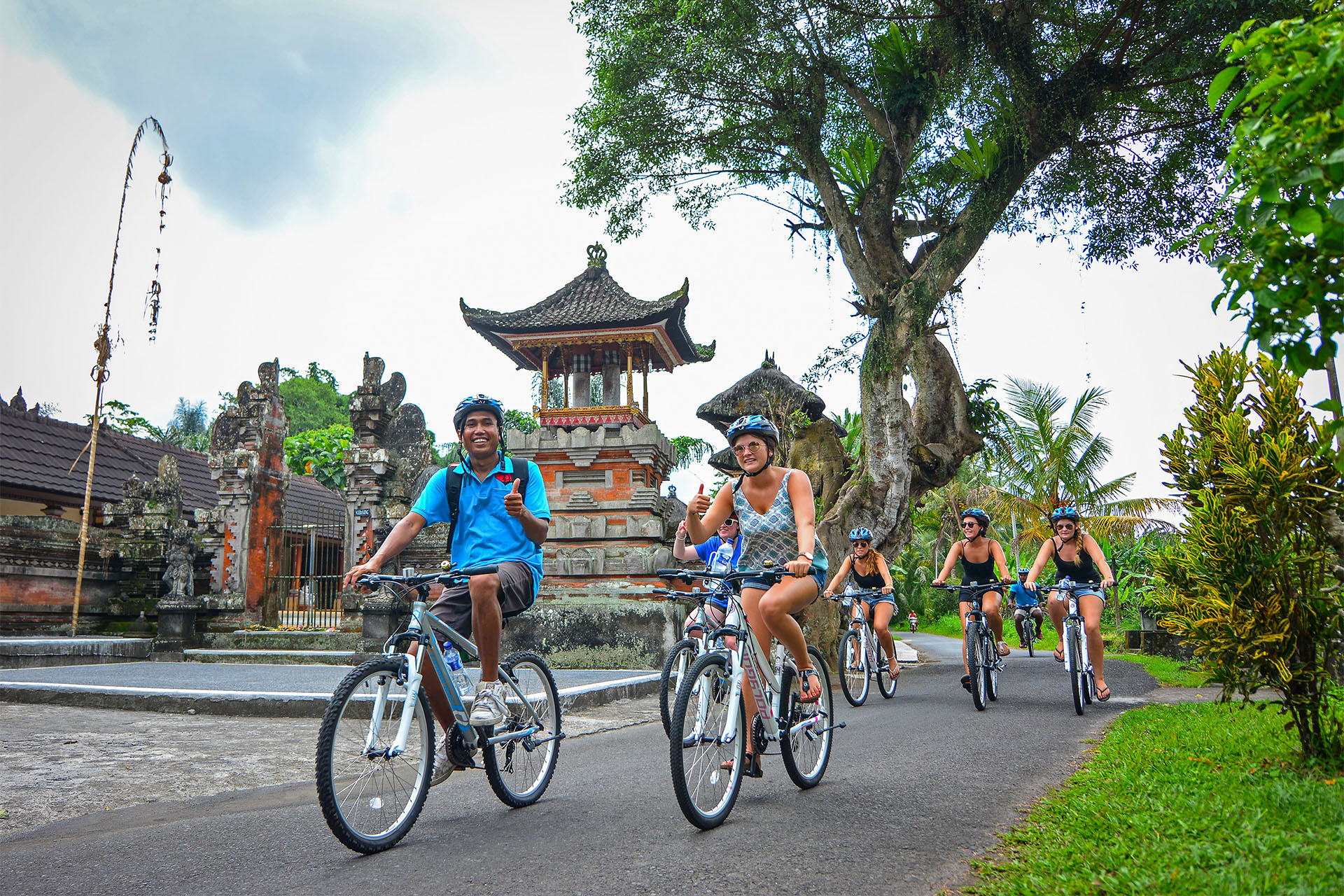
Here, cycling is not about covering distance. It’s about entering a rhythm. Each pedal stroke carries you past small shrines warmed by incense, past farmers already knee-deep in their fields, past village gates that mark not attractions, but lives in motion. You are not riding over Bali. You are moving through it—slow enough to notice, quiet enough to be welcomed.
The cool mountain air gives way to softer warmth as the route descends. Roads curve gently, guiding you deeper into the countryside where time feels less measured. This is the Ubud that rarely appears on postcards, yet lingers longest in memory.
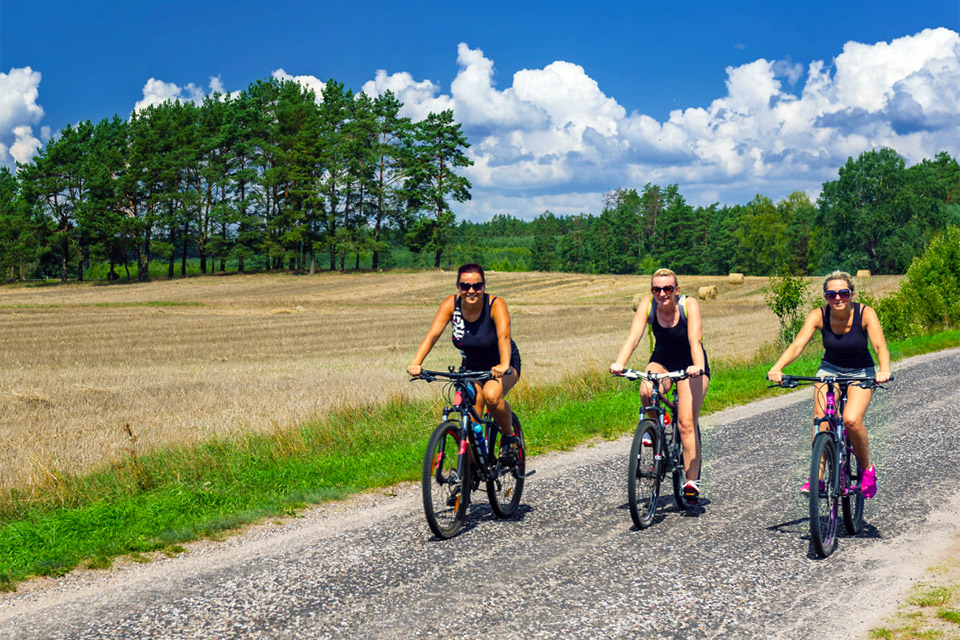
As part of the wider landscape of experiences found in the Ubud & Central Bali Travel Guide, cycling offers something rare: presence. And among the many Adventure Activities in Ubud, it is perhaps the most human-scale—an invitation to see, feel, and move with the land, one unfolding road at a time.
👉 Related Reads:
→ Is ATV Riding in Ubud Safe? What Beginners Should Know
→ Best Rafting Rivers Near Ubud – Ayung vs. Telaga Waja
Why Cycling Through Rice Terraces Is Ubud’s Most Human-Scale Adventure
There are many ways to explore Ubud. Some chase adrenaline. Some chase landmarks. But cycling through rice terraces belongs to a quieter category—one that values proportion, pace, and presence.
It works because it matches the land.
The rice terraces that define Ubud are shaped by Subak, Bali’s centuries-old irrigation system. Water flows not quickly, but intentionally—divided, redirected, shared. It moves according to agreement, not force. A bicycle follows the same logic. You don’t rush through the landscape; you move with it. Pedaling becomes a conversation with gravity, with curves, with the gentle rise and fall of the terrain.
This is why an Ubud cycling tour feels instinctively right. The rhythm of the ride mirrors the rhythm of the fields. Slow climbs encourage patience. Easy descents invite you to look up. You begin to notice how water channels sparkle between paddies, how farmers pause to adjust a gate, how bamboo leaves flicker in the breeze. These are not details meant to be seen from behind glass.
There are no engines here. No vibration competing for your attention. No urgency to overtake or arrive. Cycling removes barriers—between you and the road, between you and the village life unfolding alongside it. You hear greetings as you pass. You smell wet earth and morning fires. You feel the temperature shift as shade replaces sun. This sensory clarity is impossible to replicate from a car, and even walking cannot carry you far enough into the layered countryside in a single morning.
Bikes reveal what speed hides.
A small shrine tucked beside a field. A line of ducks crossing the road under the watch of a barefoot farmer. Children cycling home from school, unbothered by the quiet procession of visitors who, for once, are moving at the same pace they are. These moments are not staged, and they are not rare—you simply need to be slow enough to notice.
This is why cycling through rice terraces resonates so deeply with travelers who aren’t seeking thrills. It offers activity without exhaustion, immersion without intimidation. You’re moving, but never pushed. Engaged, but never overwhelmed. The body works gently, the mind softens, and the landscape does the rest.
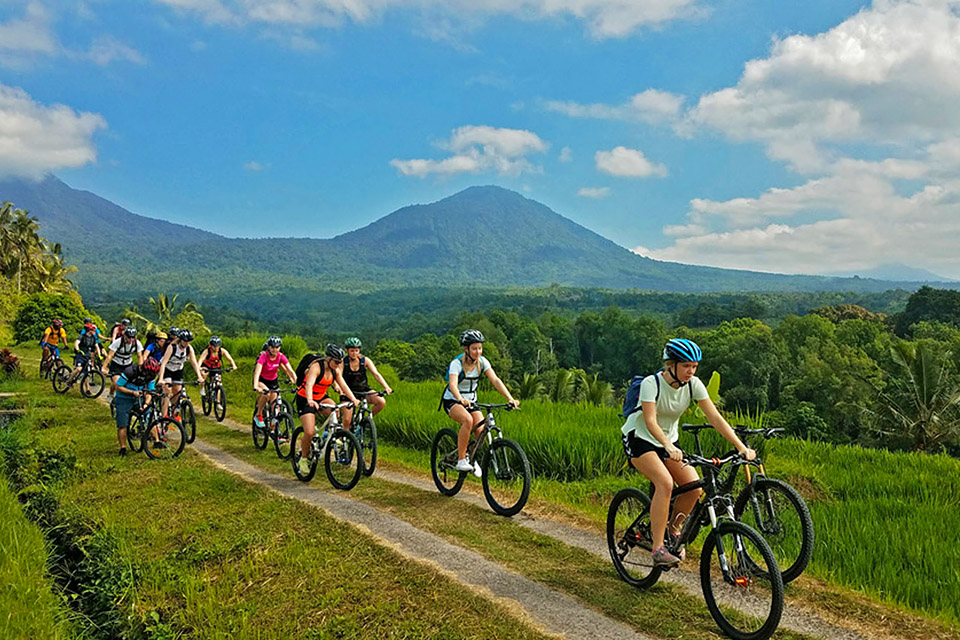
For many, this becomes the most unexpectedly meaningful adventure in Ubud. Not because it impresses, but because it fits. It respects the scale of human movement in a place where life still unfolds on footpaths, farm tracks, and village roads.
In a region known for dramatic experiences, cycling holds its ground precisely by being calm. It is an invitation to travel not faster or farther—but more honestly.
How Ubud Cycling Tours Actually Work
For many travelers, the idea of cycling through rice terraces sounds poetic—until a practical worry slips in: Isn’t Ubud hilly? Do I need to be fit? What if I can’t keep up?
This is where understanding how bike tours in Ubud, Bali actually work changes everything.
Most Ubud cycling tours begin not with pedaling, but with a gentle hotel pickup. Early in the morning, while the air is still cool and the roads are quiet, you’re driven north into the highlands—often toward Kintamani or Payangan. This shift in altitude is intentional. You start above Ubud, letting gravity do most of the work as you ride back down through villages, farmland, and terraces.
From the first push of the pedals, the experience feels different from what many imagine cycling to be. The route is downhill-biased, designed to flow rather than challenge. There are moments of light pedaling to keep momentum, but steep climbs are deliberately avoided. Effort is optional; enjoyment is not.
Before the ride begins, your guide adjusts the bike to your height, checks brakes and gears, and explains what to expect. There’s no pressure to perform. No race to win. Just a shared understanding of the route, the hand signals, and the rhythm of the group. Riders are spaced comfortably apart, and stops are frequent—not because anyone is tired, but because the scenery keeps asking for attention.
A support vehicle follows the group throughout the journey. This quiet presence changes everything. If someone feels unsure, needs a break, or simply wants to rest for a stretch, they can hop in without hesitation. Water, light snacks, and first aid travel with you, unseen but always available.
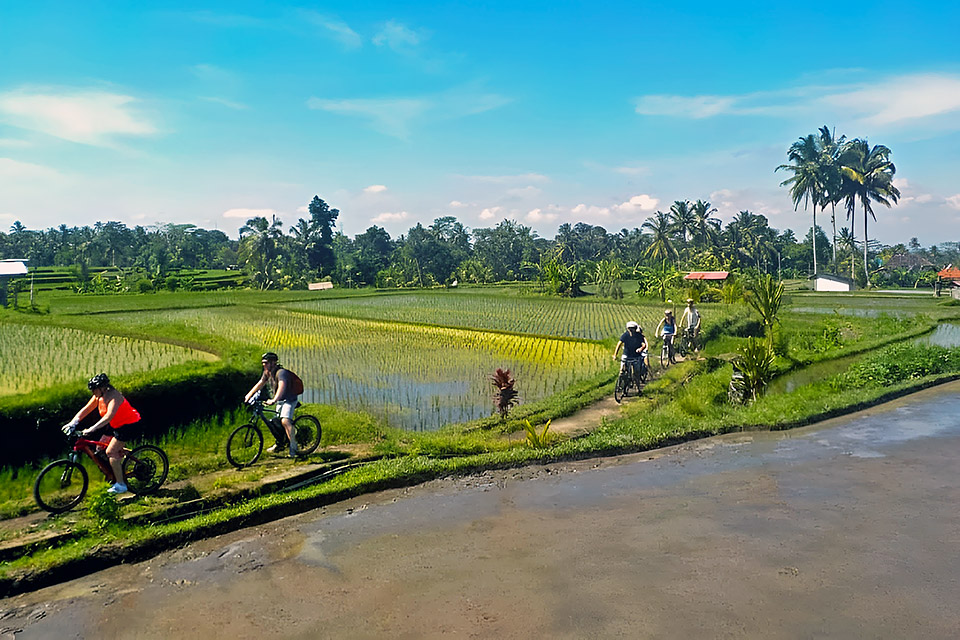
This structure is precisely why cycling in Ubud is so beginner-friendly. You are never left alone to navigate unfamiliar roads or traffic. Guides control the pace, manage crossings, and choose village routes that prioritize safety and serenity. Uphill sections, when they appear, are short and gentle—often optional.
The result is a cycling experience that feels surprisingly effortless. You’re moving through landscapes that look cinematic, yet your body never feels overworked. Instead of focusing on breathing or burning legs, your attention stays outward—on the terraces, the temples, the daily life unfolding along the roadside.
💡 Insider’s Insight – Why Ubud Cycling Feels Effortless
- Routes are carefully planned to be gravity-assisted.
A backup support vehicle is always nearby.
- Guides manage pace, terrain, and rest stops seamlessly.
Understanding this structure turns hesitation into confidence. An Ubud cycling tour isn’t about endurance or athleticism—it’s about access. By removing physical strain, the journey opens space for observation, curiosity, and quiet joy.
In Ubud, cycling doesn’t test you. It carries you.
The Landscapes You Ride Through – From Highlands to Rice Fields
One of the quiet surprises of cycling Ubud rice terraces is how seamlessly the landscape changes beneath your wheels. There is no dramatic announcement, no signpost declaring a new chapter. The scenery simply evolves, like a story told in layers rather than scenes.
The ride often begins in the cool highlands, where mist lingers between trees and the morning air carries a faint scent of damp earth. Forest corridors wrap around the road, shaded by tall bamboo and banyan trees whose roots seem to grip time itself. Here, the soundscape is hushed—tires rolling softly over pavement, leaves stirring overhead, the distant rush of water hidden somewhere below.
As you descend, the forest begins to open. Light filters through the canopy, and the land starts to breathe outward. This is where Bali countryside cycling reveals its first reward: glimpses of the Subak irrigation system at work. Narrow channels of water appear beside the road, clear and purposeful, flowing with quiet certainty from one field to the next. You hear it before you fully see it—the gentle murmur of water slipping over stone, a sound that becomes a constant companion for much of the journey.
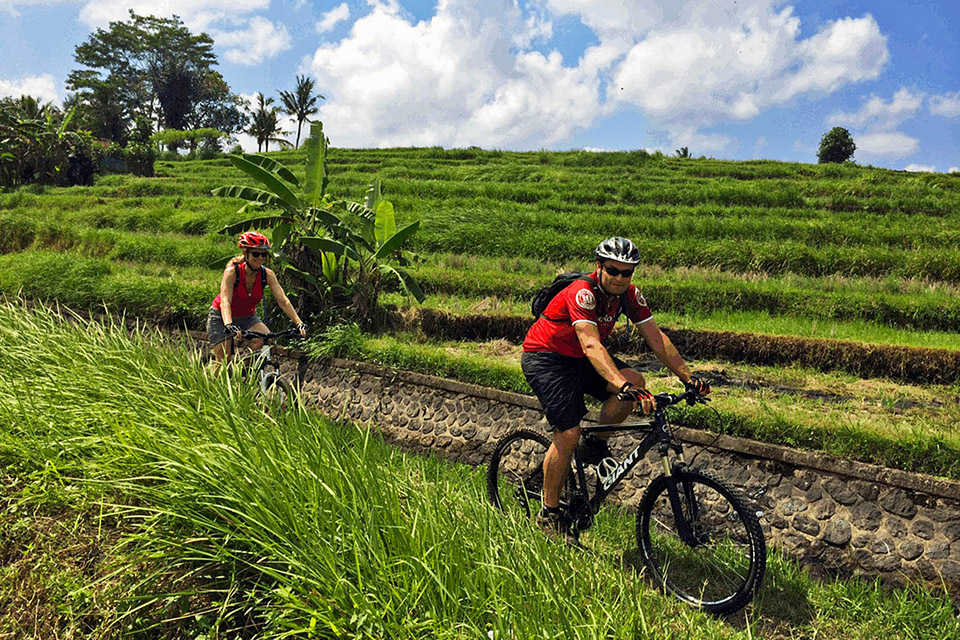
Soon, the rice terraces arrive not as a single grand view, but as a succession of moments. A bend in the road reveals a layered hillside, each terrace catching the light differently. Young rice shoots glow a bright, electric green; older paddies deepen into richer tones. Farmers stand ankle-deep in mud, their movements unhurried, their presence as natural as the land itself. You pass close enough to exchange nods, sometimes smiles, and often the simple greeting of a rooster announcing your arrival long before you appear.
The road narrows, becoming more intimate. You cross bamboo bridges that feel less like infrastructure and more like invitations—gentle transitions between one village and the next. Beneath them, rivers thread through the valley, their banks lined with ferns and smooth stones. The air cools again here, carrying the scent of water and wet leaves.
Shrines appear along the roadside, small and unassuming. Fresh offerings rest on woven palm-leaf trays, and the faint aroma of incense drifts across your path. Temple bells chime softly in the distance, not as a call, but as a reminder: life here moves by rhythm, not by schedule.
What makes this ride special is not just what you see, but how close you are to it all. There is no glass between you and the landscape. No engine noise competing with birdsong. You hear the clink of tools from a field, the splash of water redirected by a farmer’s hand, the low murmur of conversation carried across terraces.
Cycling through Ubud’s landscapes feels less like traveling through scenery and more like being gently folded into it. Each turn reveals another layer of Bali’s living countryside, and with every kilometer, the distance between observer and place quietly disappears.
Village Life on Two Wheels – Culture Along the Route
As the road dips lower and the terraces give way to clusters of homes, the ride begins to feel less like a journey through landscape and more like a passage through everyday life. This is where an Ubud cycling tour quietly earns its depth—not by spectacle, but by proximity.
You don’t arrive in villages here; you drift into them.
The transition is subtle. A paved road narrows, stone walls rise gently on either side, and suddenly you are riding between family compounds rather than fields. Gates carved with protective symbols stand open, inviting the morning air—and passing cyclists—to flow through.
Children are often the first to notice you. They wave from doorways or call out cheerful greetings as they walk to school, uniforms crisp, backpacks bouncing. Elders sit on low benches near their homes, resting in the shade, observing the day rather than rushing into it. There is no performance in these moments, no sense of being watched as a visitor. You are simply passing through, and that difference matters.
Small temples appear at crossroads and village edges, placed with intention rather than decoration. Their location is no accident. Villages in this part of Bali grew where water, land, and community intersect—near irrigation channels, fertile soil, and shared spiritual spaces. The Subak system doesn’t just feed rice fields; it shapes settlement, rhythm, and cooperation. Cycling through these villages makes that relationship visible in a way no explanation ever could.
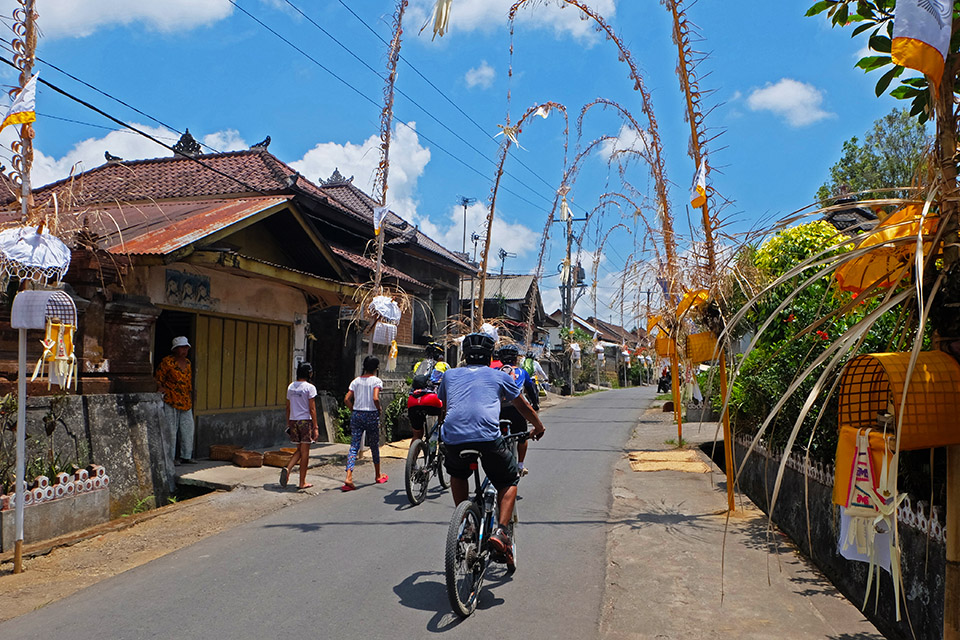
The pace of a bicycle allows for what faster travel misses.
You notice offerings freshly laid at shrine steps, their colors still vivid. You hear the soft thud of a broom sweeping stone, the murmur of conversation drifting from behind compound walls. The smell of coffee, brewed strong and early, mingles with incense and damp earth.
This is where cycling becomes an act of respectful observation. You are quiet enough not to intrude, slow enough to notice, present enough to understand that these villages are not attractions—they are homes. Guides often signal when to slow down, not for safety, but for courtesy. A slight reduction in speed becomes a gesture of awareness, a way of saying: I see you, and I honor this space.
Stopping, when it happens, feels natural rather than staged. A shaded corner near a temple courtyard. A small shop selling snacks and cold drinks. A bench beneath a frangipani tree where the road briefly pauses before continuing on.
💡 Insider’s Picks – Village Stops Worth Slowing Down For
- Morning markets, where baskets of produce arrive before the sun climbs high, and the air hums with quiet trade.
Temple courtyards, especially in the early hours, when ceremonies prepare rather than perform.
- Family warungs, modest and unassuming, offering sweet tea, simple snacks, and a glimpse into traditional daily routines.
By the time you pedal away from the villages, something subtle has shifted. You haven’t just seen rural Bali—you’ve moved within it. On two wheels, culture isn’t explained. It’s encountered, gently, at human speed.
Rice Terraces Explained – What You’re Actually Seeing
When you cycle through rice terraces in Ubud, it’s easy to think of them as a backdrop—beautiful, rhythmic, endlessly photographed. But on a cycling through rice terraces route, especially at this slow, human pace, the fields begin to speak differently. What you’re seeing is not decoration. It is a living system, one that has shaped Bali’s landscape, villages, and philosophy for more than a thousand years.
The stepped geometry of the Ubud rice fields exists for one reason: water. More specifically, shared water. At the heart of it all is the Subak system, an ancient irrigation network governed not by individual ownership, but by cooperation. Water flows from highland springs and volcanic lakes, guided through bamboo channels and stone weirs, dividing and rejoining as it feeds terrace after terrace. No single farmer controls it. Everyone depends on it.

This is why cycling is such a powerful way to understand the terraces. From the saddle, you see how channels cut across paths, how small gates regulate flow, how shrines sit beside water junctions. The system reveals itself not as engineering alone, but as a conversation between people, land, and belief.
These fields aren’t scenery — they’re systems of belief.
Rice farming here follows a communal rhythm rather than an individual schedule. Planting and harvesting are coordinated across entire valleys, not because it’s efficient in a modern sense, but because balance matters more than speed. When everyone plants at the same time, pests are reduced naturally. When water is shared evenly, conflict fades before it begins. This harmony is not accidental—it’s intentional, spiritual, and deeply practical.
As you cycle, you may notice the terraces shifting color depending on the season. This is one of the most common questions riders ask, and one of the most revealing.
- Bright green fields signal young rice plants, fresh and full of life. This stage often follows planting season, when the terraces glow almost unnaturally vibrant.
- Deeper green with taller stalks marks the growing phase, when farmers tend the fields daily, adjusting water levels and reinforcing terrace walls.
- Golden yellow announces harvest time. The fields dry slightly, and the rice heads bow under their own weight, ready to be cut by hand.
- Brown or reflective terraces, sometimes mistaken as “empty,” are actually resting or newly flooded, preparing for the next cycle.
None of these phases is better than the other. Each one is necessary. Cycling through them allows you to see continuity rather than contrast—how one stage flows naturally into the next, just like the water that feeds them.
Guides often pause at certain points, not to lecture, but to let the view explain itself. From a small rise in the path, you can trace water from source to field, from shrine to channel, from human decision to natural outcome. It becomes clear that the terraces are not just agricultural tools; they are expressions of a worldview where harmony is maintained through shared responsibility.
For those who want to explore this deeper, the story continues beyond the bike route.
✅ For those who want to explore this deeper, the story continues beyond the bike route. → The Subak Story – Bali’s Water Harmony [available soon]
By the time you pedal on, the terraces feel less like something you passed through and more like something you briefly belonged to. On two wheels, understanding doesn’t come from information alone—it comes from movement, perspective, and time spent within the system itself.
Who Cycling in Ubud Is Perfect For
Cycling in Ubud isn’t about conquering distance or chasing speed. It’s about belonging to the pace of the land, even if only for a morning. Because of that, it attracts a very particular kind of traveler—one who values presence over performance. Understanding who this experience fits best helps set the right expectations, and ultimately, leads to a far richer ride.
For families with teens, Ubud cycling tours strike a rare balance. Teenagers are old enough to ride independently, curious enough to engage, and energetic enough to enjoy the movement. The downhill nature of most routes keeps the experience accessible, while village interactions and changing landscapes prevent boredom. Unlike museums or long drives, cycling invites participation. Teens don’t just observe Bali—they move through it.
Couples often find this to be one of Ubud’s most quietly intimate experiences. Riding side by side through rice terraces and village lanes creates shared moments without the pressure of constant conversation. There are pauses built into the journey—at temple gates, scenic bends, small warungs—where connection happens naturally. It’s active, but not exhausting; immersive, without being overwhelming. For couples seeking something meaningful rather than flashy, cycling offers space to be together without distraction.
Solo travelers often discover that cycling is one of the easiest ways to feel connected without feeling exposed. You’re part of a small group, guided and supported, yet free to ride in your own quiet bubble. Conversations emerge organically, but silence is equally welcome. For solo guests who want cultural immersion without the awkwardness of structured social activities, cycling through Ubud’s countryside feels both grounding and liberating.
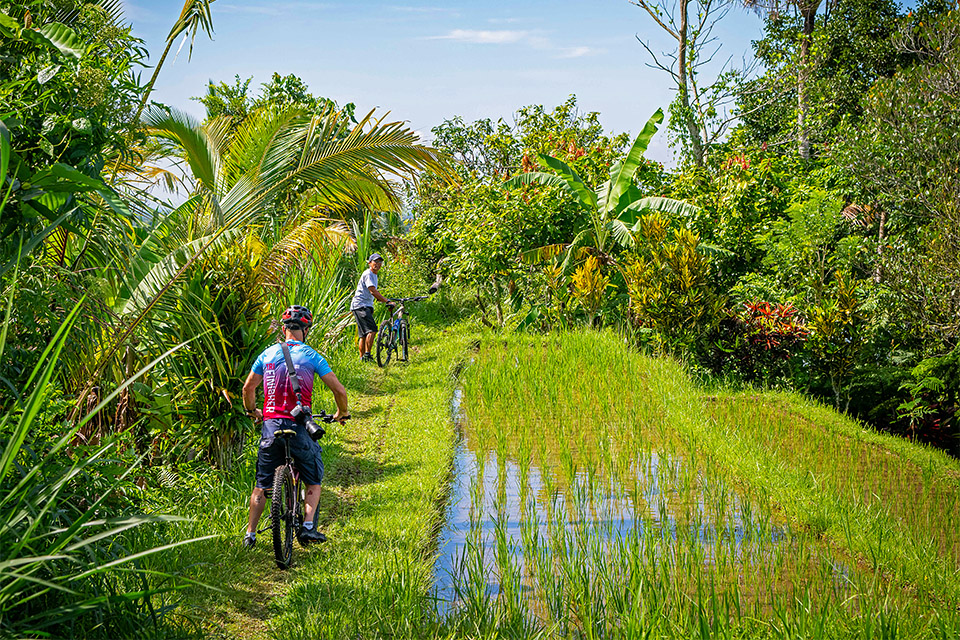
Perhaps the most underestimated group is active seniors. Many riders in their 50s, 60s, and beyond find Ubud cycling not only manageable, but deeply rewarding. The routes favor gentle descents, the bikes are well-maintained, and guides adjust pacing intuitively. As long as participants are comfortable riding a bicycle and have general mobility, age itself is rarely a limitation. In fact, many older riders appreciate the slower tempo and interpretive storytelling even more.
That said, cycling in Ubud is not for everyone—and honesty matters here.
It’s not suitable for very young children who lack the coordination, size, or attention needed for shared rural roads, even quiet ones. While some tours offer child seats, the true essence of the ride is lost when safety becomes the sole focus.
It’s also not ideal for travelers seeking high-speed thrills. There are no adrenaline spikes, no competitive elements, no rush. If your idea of adventure involves heart-pounding intensity, other experiences
Cycling Routes Around Ubud – What to Expect
One of the quiet joys of cycling in Ubud is that no two routes ever feel the same. The landscape shifts gently, almost without announcement—from misty highlands to worked fields, from forest corridors to village lanes—each change unfolding at bicycle speed. Rather than a single “best” path, Ubud offers a family of routes, each with its own mood, rhythm, and reward.
Volcano-to-village routes often begin in the cooler highlands north of Ubud, sometimes near Kintamani or the Payangan ridge. The air here carries a faint mountain sharpness, especially in the early morning, and the road tilts just enough to make pedaling feel optional. As you roll downhill, the scenery softens: pine forests give way to mixed plantations, coffee shrubs appear beneath taller trees, and small farming compounds begin to line the road. These routes are less about dramatic views and more about transition—watching how Bali’s highlands gently feed life into the lowlands.
Riverside descents add a different texture to the journey. As routes dip toward valleys, the temperature drops slightly, and the air grows heavier with moisture.
Ferns and vines thicken, birdsong replaces village sounds, and the path curves with the river’s movement. These sections often feel the most secluded, even though you’re never truly far from a village.
The descent is gentle, the ride steady, and the experience immersive—water, stone, and greenery shaping every turn.
Then there are the rice terrace backroads, the heart of most Ubud cycling tours. These narrow lanes snake between layered paddies, following the logic of water rather than the logic of vehicles. Here, cycling slows naturally. You pass farmers ankle-deep in green shoots, bamboo huts shaded by banana leaves, and irrigation channels murmuring alongside the path. The road surface may change—from smooth concrete to compacted earth—but the pace remains forgiving. This is where cycling through rice terraces feels less like an activity and more like an invitation to witness daily life as it unfolds.
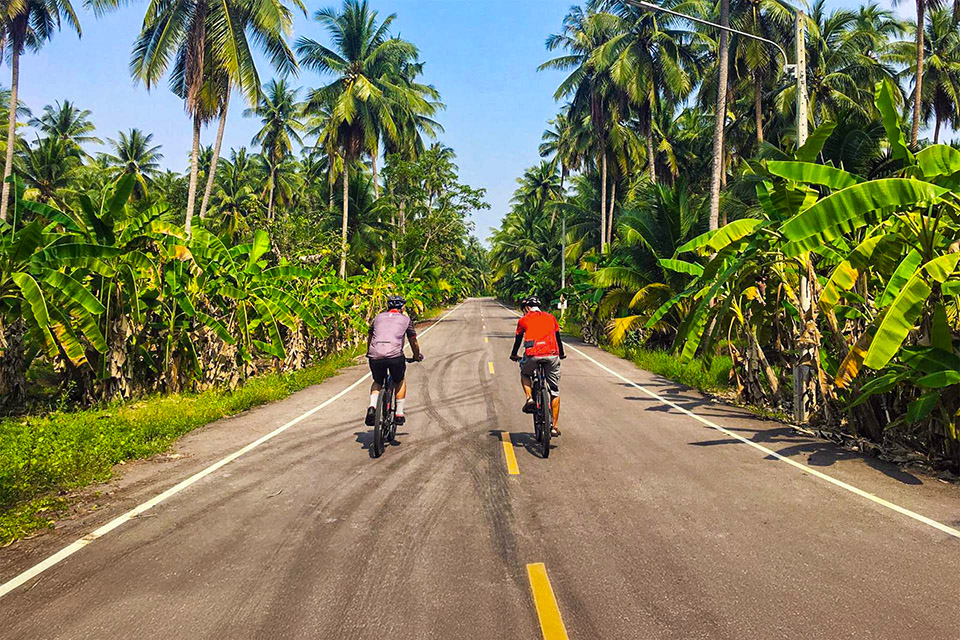
What ties all these routes together is their intentional design. They avoid main roads, favor quiet connectors, and prioritize safety without sacrificing authenticity. Guides read the terrain in real time, adjusting pace and stops based on weather, group energy, and village activity.
💡 Insider’s Tips – Choosing the Right Cycling Route in Ubud
- Start early for cooler air, softer light, and quieter village roads.
- Dry season rides offer firmer paths and clearer views of the rice terraces.
Avoid midday heat, when humidity rises and the landscape feels more demanding than it needs to be.
In Ubud, the route doesn’t test your strength—it rewards your attention.
What to Wear, Bring & Know Before You Ride
Cycling through rice terraces in Ubud is not about dressing for performance—it’s about preparing just enough to stay comfortable, present, and free to enjoy the ride. The terrain is forgiving, the pace unhurried, but a little foresight makes the experience feel effortless rather than distracting.
Closed shoes are the one non-negotiable. They don’t need to be technical cycling shoes; simple sneakers with good grip are more than enough. Paths may pass through damp sections near irrigation channels or shaded forest corridors, and secure footing helps you feel steady when stopping to look, photograph, or step off the bike. Sandals or flip-flops, while tempting in Bali, quickly become impractical once the road turns narrow or uneven.
Light layers matter more than people expect. Early starts in the highlands can feel cool, especially as mist lingers between trees. A breathable long-sleeve top or thin jacket keeps the chill away during the first descent and can be tied around your waist as the day warms. Underneath, lightweight, quick-drying clothing works best—nothing restrictive, nothing heavy. Comfort here isn’t about athletic gear; it’s about ease of movement and airflow.
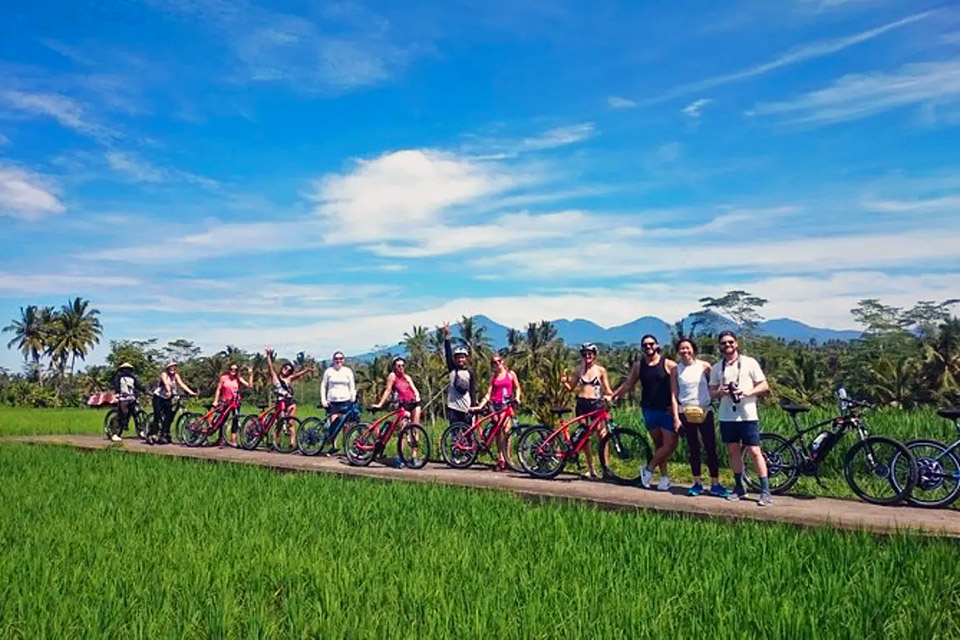
Sunscreen is essential, even on cloudy mornings. Cycling through open rice fields means long stretches without shade, and the reflected light off water-filled paddies can be surprisingly strong. Applying sunscreen before the ride—and reapplying during longer stops—keeps the experience enjoyable rather than exhausting.
A camera or phone is worth bringing, not for constant use, but for the moments that quietly ask to be remembered: a farmer pausing to wave, the geometry of terraces catching the morning light, a small temple framed by banana leaves. A simple crossbody pouch or backpack keeps your hands free while riding.
Reassurance matters, too. Helmets are always provided, fitted properly before the ride begins. Bikes are regularly maintained, checked for brakes, gears, and tires each morning. Guides carry basic tools and coordinate with a support vehicle, so mechanical worries never become your concern.
What to know before you ride is simple: this is not a test of endurance. It’s a shared journey through living landscapes. Dress lightly, pack thoughtfully, and let the road unfold at its own pace.
Combining Cycling with Other Ubud Adventures
Cycling through rice terraces often feels complete on its own—quiet, grounding, and deeply human in scale. Yet one of its quiet strengths is how naturally it pairs with other Ubud adventures. Because cycling tours are typically downhill-focused and unhurried, they leave space in both body and mind to continue exploring. The day doesn’t end with the ride; it opens.
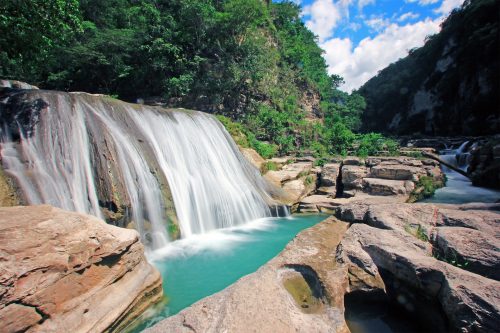
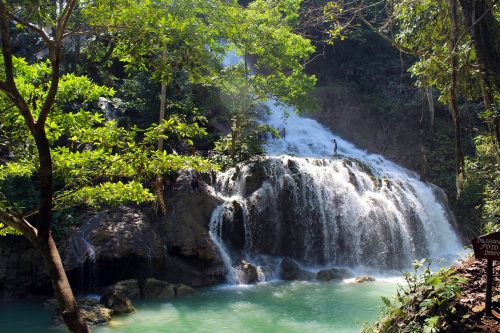
Cycling + Waterfalls is the most intuitive pairing. After rolling through villages and fields, stepping into the cool embrace of a jungle waterfall feels like a natural continuation rather than a contrast. The rhythm shifts from motion to stillness. Waterfalls near Ubud, tucked into shaded valleys, offer a moment to cool tired legs and let the senses reset. The transition—from sunlit paths to misty pools—adds texture to the day without adding strain.
Cycling + Rafting creates a beautiful balance of calm and flow. Cycling introduces you to the land slowly, reading its contours, its people, its patterns of water and rice. Rafting then carries you through that same landscape from below, along rivers that feed the fields you’ve just passed. The contrast is not about adrenaline; it’s about perspective. One moves you through villages, the other through valleys, both guided by water. Together, they tell a fuller story of Ubud’s terrain.
Cycling + Temple Visit adds cultural depth to physical movement. Ending—or beginning—the ride with a temple stop transforms the journey from sightseeing into understanding. Temples along cycling routes are not monuments set apart; they are woven into daily life. Visiting them after cycling feels respectful, almost earned, as if arriving slowly allows the place to meet you halfway. A sarong, a moment of stillness, and the sound of bells replace the whir of tires.
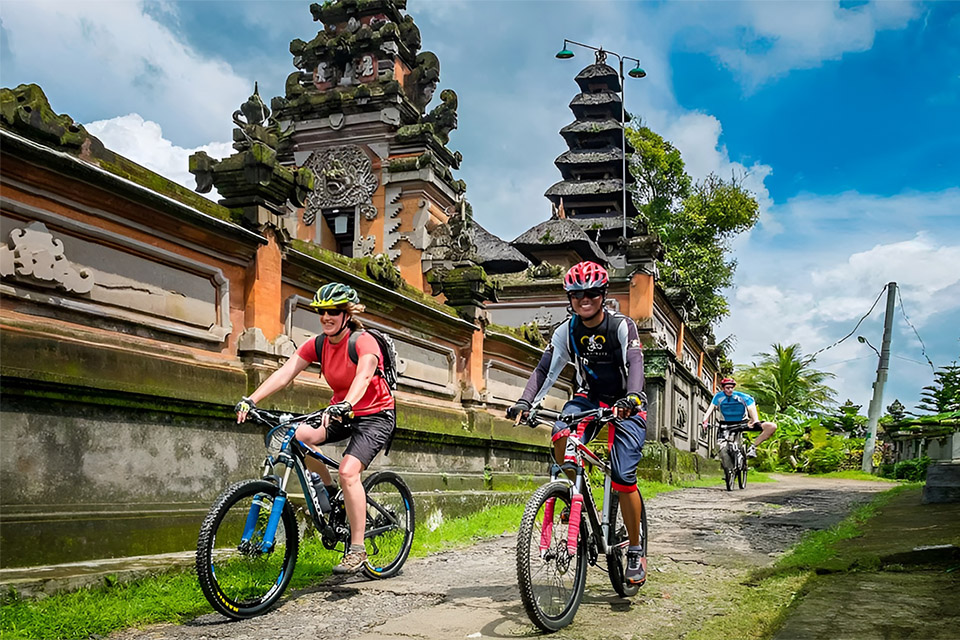
What makes these combinations work is pacing. None of them demand urgency. They are designed to be experienced, not conquered—especially when arranged as part of a thoughtfully curated day through Adventure in Ubud – ATV, Rafting & Cycling Combo, where logistics, timing, and flow are handled with care.
💡 Insider’s Finds – Best Slow-Adventure Combos in Ubud
- Morning cycling + midday waterfall for cool water and fewer crowds.
Cycling first, rafting later to save energy and enjoy the river fully.
- Short temple stop after cycling when the body is open and the mind quiet.
In Ubud, adventures don’t compete for your attention. When paired thoughtfully, they deepen one another—each revealing a different layer of the same living landscape.
Sustainable Cycling – Why Bikes Belong in Bali
Cycling feels at home in Bali for a simple reason: it moves at the same pace as the land itself. Long before tourism arrived, life in the Ubud highlands unfolded on foot, by bicycle, and along narrow paths shaped by water and rice. Riding through the countryside today is not an imported activity layered onto the landscape—it is a continuation of how people have always moved within it. That is why eco cycling in Bali makes sense, not just environmentally, but culturally.
From a sustainability perspective, cycling is among the lowest-impact ways to explore Ubud. There are no engines, no exhaust, no need to widen roads or disturb fields. A bicycle leaves no trace on rice terrace paths designed for farmers and irrigation access, not vehicles. As part of eco cycling Bali experiences, movement becomes lighter—less noise, less intrusion, more room for listening. You hear water flowing through Subak channels, conversations drifting from family courtyards, the rhythm of daily life continuing uninterrupted.
Cycling also supports villages in ways that mass tourism often cannot. Routes pass through real communities, not staged attractions. Small contributions—stopping at a family-run warung, greeting farmers, pausing near a village shrine—circulate value locally without overwhelming it.
Unlike bus-based sightseeing, cycling disperses visitors gently across space and time, reducing pressure on any single point. The journey itself becomes the benefit, not just the destination.
Respectful tourism begins with awareness. Cycling encourages that awareness naturally. When you move slowly, eye-level with the land, you become more attentive to where you are and how you behave. You wait at narrow paths. You yield to ceremonies. You follow guides who understand which routes are shared, which areas are sacred, and when it’s best to pass quietly. This mindfulness is at the heart of Responsible Travel in Bali’s Highlands, where sustainability is measured not by slogans, but by daily choices.
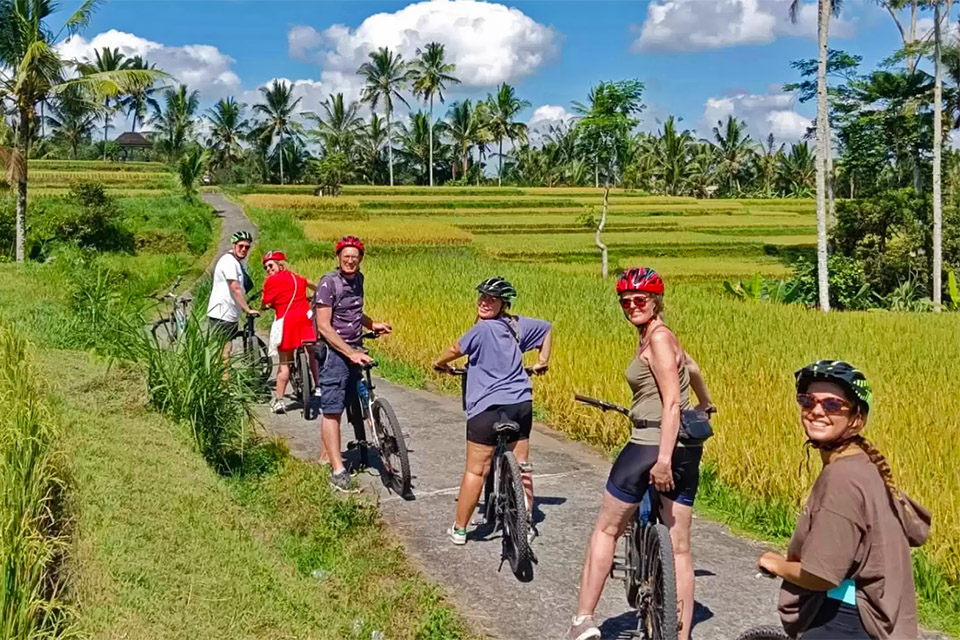
In a place shaped by balance—between water and earth, people and nature—bicycles belong. They remind us that travel doesn’t have to dominate a landscape to experience it. Sometimes, the most responsible way forward is simply to ride gently, and let Bali unfold at its own pace.
Let the Land Set the Pace
Cycling through Ubud is not about how far you go, how fast you ride, or how many landmarks you collect. It is about learning to listen—to the land, to the people, to the quiet intelligence of a place that has never needed to hurry. On two wheels, you don’t conquer distance; you surrender to rhythm. The road doesn’t challenge you. It guides you.
This is why cycling through rice terraces lingers in memory long after the journey ends. Long after muscles forget the gentle effort, the senses remember: the cool air brushing your arms at dawn, the soft hum of tires over stone paths, the way sunlight shifts across terraces as clouds drift overhead. You remember slowing down instinctively—not because you were told to, but because the landscape asked you to. Cars rush past moments. Bicycles dwell inside them.
What makes a Ubud cycling tour stay with travelers is its intimacy. You are close enough to see how water feeds fields, how villages cluster around temples, how daily life continues whether you pass through or not. You become a warmly welcomed guest, not a spectacle. The experience leaves no need to prove anything—only to absorb, to notice, to feel quietly grateful for access to something living and ongoing.
In a world that often frames adventure as domination—steeper, faster, harder—cycling in Ubud offers a gentler truth. Adventure can also be about alignment. About matching your breath to the slope of the land, your speed to the pace of farmers walking home, your presence to the balance Bali has refined for centuries. This is movement as meditation, effort without aggression, discovery without disruption.

And perhaps that is why it stays. Because when you leave Ubud, something subtle travels with you: a recalibrated sense of pace. A reminder that beauty doesn’t demand urgency. That meaning often reveals itself only when you slow enough to notice.
You don’t cycle through Ubud — Ubud cycles through you.
If this kind of journey calls to you—one rooted in landscape, culture, and quiet connection—you can explore cycling experiences as part of curated Ubud adventures with HalloBALI, thoughtfully designed to honor both the road and the stories it carries.
FAQ
Is cycling through rice terraces in Ubud suitable for beginners?
Yes—most Ubud cycling tours are designed specifically for beginners and casual riders. Routes typically start in the highlands and follow a downhill or flat trajectory, meaning minimal pedaling effort. With a guide leading the way and a support vehicle nearby, cycling through rice terraces becomes a relaxed journey rather than a physical challenge. If you can ride a bicycle comfortably on a quiet road, you’ll feel at ease on a Ubud cycling tour.
Do I need to be fit to join a Ubud cycling tour?
No high fitness level is required. Cycling through rice terraces in Ubud is about pace and presence, not endurance. The ride is gentle, with frequent stops to enjoy scenery, village life, and cultural explanations. Many participants describe it as light activity rather than exercise—ideal for travelers who want to stay active without strain.
Where do Ubud cycling tours usually start and end?
Most bike tours in Ubud begin in cooler highland areas such as Kintamani or Payangan, then descend gradually through countryside villages, rice fields, and river valleys. Hotel pickup from Ubud is typically included, and tours usually end back in or near Ubud, often with lunch at a local restaurant.
What will I see when cycling through rice terraces in Ubud?
You’ll ride through a constantly changing landscape: layered rice terraces fed by the Subak irrigation system, bamboo bridges, jungle corridors, village temples, and small farms. Along the way, you’ll pass locals tending fields, children walking to school, and shrines decorated with daily offerings—details that define Bali’s living culture.
Is cycling in Ubud safe?
Yes. Reputable Ubud cycling tours prioritize safety with well-maintained bikes, helmets, licensed guides, and low-traffic routes. Most roads are quiet village lanes rather than busy highways. Guides manage the pace, watch traffic crossings, and choose routes suitable for all participants. Cycling is one of the safest adventure activities in Ubud when done with experienced operators.
What should I wear for a cycling tour in Ubud?
Wear comfortable clothing suitable for warm weather, closed-toe shoes, and light layers for cooler highland starts. Sunscreen and sunglasses are recommended. Helmets are provided, and you don’t need specialized cycling gear—this is a scenic ride, not a race.
Can families join a cycling through rice terraces tour?
Yes, cycling tours are popular with families traveling with teenagers. The calm pace, cultural exposure, and frequent stops make it engaging without being overwhelming. Very young children may not be suitable, but teens often find the experience memorable and grounding.
When is the best time to go cycling in Ubud?
Morning is ideal. Early starts offer cooler temperatures, softer light, and quieter village roads. Dry season (April–October) provides clearer paths, but cycling through rice terraces is possible year-round. During the green season, landscapes are especially vibrant after light rains.
How long does a typical Ubud cycling tour take?
Most cycling tours last 3–5 hours, including transfers, the ride itself, cultural stops, and often lunch. This makes it perfect as a half-day activity, leaving time to combine cycling with waterfalls, temples, or other Ubud adventures.
Can cycling be combined with other activities in Ubud?
Absolutely. Many travelers pair cycling with waterfall visits, river rafting, or temple tours. Cycling works especially well as a morning activity, followed by a more adventurous or cultural experience in the afternoon. Combo tours are an efficient and immersive way to explore Ubud.
Why choose a guided cycling tour instead of riding independently?
Guided cycling tours unlock routes you wouldn’t easily find on your own—hidden village roads, safe downhill paths, and culturally significant stops. Guides provide context about rice terraces, Subak irrigation, and village life, turning a simple bike ride into a meaningful journey through Bali’s living landscape.
Is cycling through rice terraces environmentally responsible?
Yes. Cycling is one of the most eco-friendly ways to explore Ubud, producing no emissions while supporting local villages, guides, and family-run warungs. When done responsibly—staying on paths and respecting communities—it aligns closely with Bali’s values of harmony between people, land, and nature.
Should I book my Ubud cycling tour in advance?
Booking in advance is recommended, especially during high season. It ensures availability, smooth logistics, and access to the best routes and guides. Many travelers choose to book cycling as part of a curated adventure experience, combining comfort, safety, and local insight.