
Surfing Bali for Sydney Surfers – It’s still dark when the alarm goes off. You roll out of bed in the Inner West or down near the coast, pull on a hoodie, and check the swell on your phone with one half-open eye. Bondi, Maroubra, maybe Cronulla if you’re willing to make the drive. The wind’s light, the swell’s there — but it’s winter. The wetsuit zip bites into your neck, your hands sting on the paddle out, and the sun only just peeks over the horizon as you duck-dive the first set.
You love it. Of course you do. You’re a Sydney surfer.
But somewhere between the third duck-dive and that first frozen duck-feet moment, the thought creeps in again: Bali.
For Sydney surfers, Bali isn’t an overseas trip — it’s a seasonal migration.
Why Sydney Surfers Keep Looking North
Fast-forward a few weeks. You’re stepping off a plane in Denpasar. No wetsuit. Just boardshorts, thongs, and that wall of warm, humid air carrying the smell of frangipani and jet fuel. Your board bag rolls onto the tarmac, intact. A local driver’s already waiting. By the time your mates back home are pulling on 4/3s, you’re checking the tide chart over a Bintang, lining up tomorrow morning’s session.
This is why surfing Bali from Sydney isn’t a novelty — it’s a ritual.
For Sydney surfers, Bali has become the most accessible “serious surf” destination in the world. Not the most exotic. Not the most extreme. Just the one that works. A six-ish hour flight turns cold dawn patrols into warm-water reefs. NSW winter lines up perfectly with Bali’s prime swell season. And the consistency — that’s the real addiction. When the Indian Ocean turns on, Bali doesn’t tease. It delivers.
But the pull goes deeper than wave quality alone.
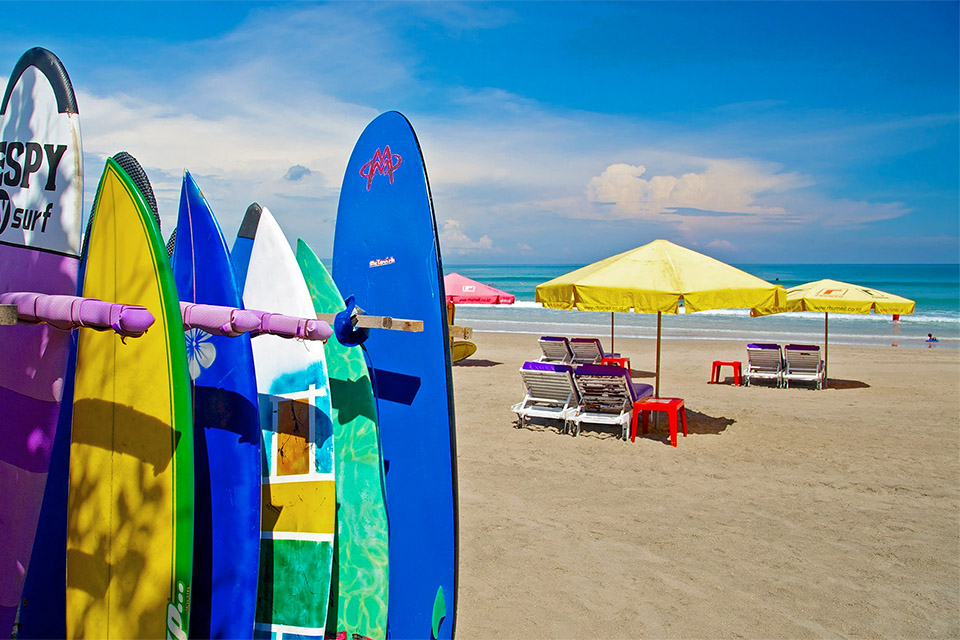
A Bali surf trip from Sydney is as much about lifestyle as it is about surfing. It’s about surfing in boardshorts, then eating properly afterwards. It’s about waves in the morning, a massage by lunch, and still having energy to paddle out again in the afternoon if the tide’s right. It’s about structure without pressure — days shaped by swell, wind, and tide rather than alarm clocks and traffic.
There’s also familiarity. Australian accents in the lineup. Cafés that understand flat whites. Villas designed around surf routines. Bali has grown alongside generations of Australian surfers, especially those from NSW, and the infrastructure shows it. Boards travel easily. Drivers know exactly where you’re headed when you say “Uluwatu” or “Keramas.” Nothing feels experimental.
And that’s exactly why planning matters.
Because when you strip away the romance, a great surf trip still lives or dies on logistics: timing, location, swell windows, accommodation, and how easily you can move between them. Get it right, and Bali feels effortless. Get it wrong, and you’ll spend perfect swell days stuck in traffic, sleeping too far from the reef, or recovering from a flight that didn’t need to be that painful.
This guide is built for Sydney surfers who want to do it properly — not just chase waves, but maximise time in the water, reduce friction, and turn a Bali surf trip into what it’s meant to be: smooth, repeatable, and deeply satisfying.
 Related reads:
Where Sydney Travellers Go in Bali: Top Picks Loved by New South Wales Visitors
Best Bali Family Holidays for Sydney Parents: Resorts, Activities & Stress-Free Tips
Book Bali tours in Sydney:
Bali Travel Agency in Sydney Trusted Experts for Your Bali Holidays
The Bali–Sydney Surf Connection
On paper, the connection between Sydney and Bali looks simple enough: direct flights, similar time zones, boards flying in and out year-round. But talk to anyone who’s spent real time surfing here and you’ll hear the same thing — the bond runs much deeper than logistics.
This is Bali–Sydney surf culture, built over decades, not timetables.
Long before Instagram clips and surf forecasts on your phone, NSW surfers were already pointing north. In the 1970s and 80s, Bali was spoken about in hushed tones in Sydney shaping bays and beach car parks. It was the land of long lefts, shallow reefs, and warm water — a place you went to commit. Early Australian surf pioneers mapped the coast, named the breaks, and slowly stitched Bali into Australia’s wider surf story.
By the time budget airlines and board bag allowances made travel easier, the path was already worn in. For generations of Australians surfing Bali, especially those from NSW, a Bali trip became a rite of passage — almost a finishing school for surfers raised on beach breaks and cold mornings.
What’s fascinating is how naturally the cultures aligned.
The unspoken rules in a Bali lineup feel strangely familiar to Sydney surfers. Wait your turn. Respect the rotation. Don’t snake. Don’t burn locals. Paddle wide, not through the take-off zone. These aren’t just “surf rules” — they’re habits Sydney surfers grow up with. Drop a Bondi or Maroubra regular into a Uluwatu lineup and, after the nerves settle, the rhythm makes sense.
The accents change — the surf rhythm doesn’t.
That rhythm is why Sydney surfers often say they feel at home in Bali lineups — even when the waves are heavier and the consequences sharper. There’s an ease to how sessions unfold. Fewer words, more understanding. A nod instead of a lecture. A shared awareness of sets, tides, and who’s next.
Australian accents carry through the lineup, sure, but they’re layered into something broader now. Balinese locals, long-term expats, travelling Aussies — the mix is part of the culture. For Sydney surfers, it doesn’t feel like arriving somewhere foreign; it feels like plugging into an ecosystem that already understands you.
And Bali didn’t just adapt to Australian surfers — it evolved with them.
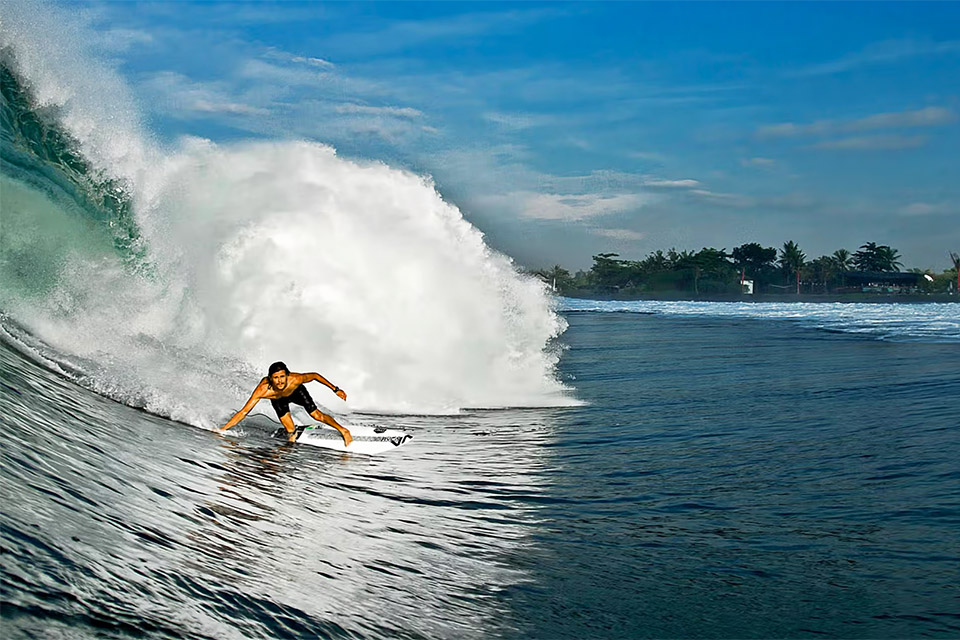
Cafés open early for dawn patrol finishes. Board racks sit outside villas as standard. Drivers know exactly how to time drop-offs with tides. Surf schools, board rentals, and repair shops operate on the same rhythms Sydney surfers are used to — only warmer, looser, and more forgiving.
This is why Bali became the natural extension of Australia’s surf coast. It wasn’t forced. It wasn’t marketed into existence. It grew organically through shared values: consistency over novelty, respect over ego, and the idea that surfing isn’t something you squeeze into life — it shapes it.
For Sydney surfers, Bali isn’t a wildcard destination. It’s a known quantity with endless depth. A place where you can push yourself on serious waves or settle into mellow routines without ever feeling out of place. The flight might mark the start of the trip, but the connection was forged long before take-off.
And once you’ve felt that familiarity — that sense of belonging in warm water — it’s almost impossible not to keep looking north.
Getting There – Surf Travel Logistics from Sydney to Bali
For Sydney surfers, getting to Bali is half the reason it keeps calling you back. No marathon layovers. No body-clock punishment. Just a straight shot north and you’re trading neoprene for boardshorts before your mates back home have finished their morning coffee.
That ease is what makes Sydney to Bali surf travel feel less like an overseas mission and more like a seasonal routine.
Direct Flights: Timing It Right
Sydney–Denpasar direct flights usually clock in around 6 to 6.5 hours, depending on winds and routing. Multiple daily options mean you can plan your arrival around tides, rest, or that first-session temptation.
Early morning departures from Sydney often land mid-day in Bali — hot, busy, and not ideal for charging straight into a reef break. Evening flights, on the other hand, get you in late, straight to the villa, and ready for a clear-headed dawn patrol the next day. Seasoned surfers almost always choose the latter.
Airlines servicing the route regularly include full-service and low-cost carriers, each with different baggage quirks. Which one you pick matters far more when you’re travelling with boards.
Board Carriage: Where Trips are Won or Lost
This is where Bali surf trip logistics can quietly make or break the experience.
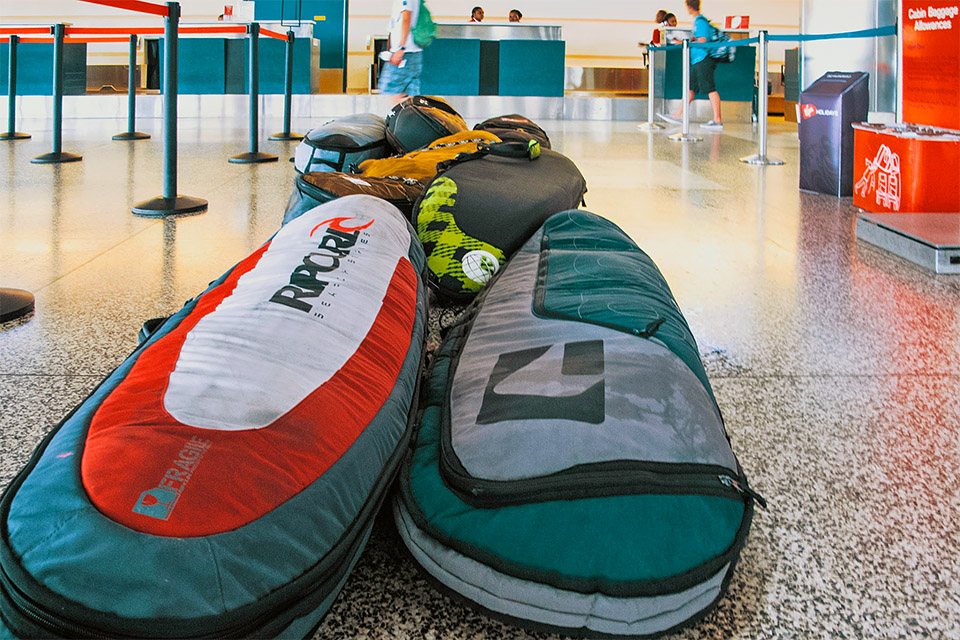
Not all airlines treat surfboards equally. Some bundle boards into standard baggage allowances (gold), while others charge per board, per leg, per kilo (less gold). Limits on length, weight, and number of boards can change — and they do change — often without much warning.
Savvy Sydney surfers plan this before they book flights, not after.
General rule of thumb:
- One board bag, packed smartly, beats multiple loose bags.
- Weight limits matter more than length.
- Staff discretion at check-in is very real.

Arrival Reality:
Denpasar With Boards
Ngurah Rai Airport is efficient, but it’s still Bali. After a long flight, board bags come out last, customs queues can bottleneck, and the heat hits instantly. This is not the moment you want to be negotiating transport or wondering whether your driver can actually fit a 7’6” coffin bag.
Once outside, the chaos fades quickly — if you’ve organised transfers properly.
Surf zones like Canggu, Uluwatu, Padang Padang, or Keramas are anywhere from 45 minutes to 1.5 hours away, depending on traffic and timing. A surf-aware driver makes a huge difference: straps, roof racks, tide knowledge, and knowing which shortcuts to avoid at peak hours.
Arrival Day:
Surf or Sleep?
This is where experience beats enthusiasm.
Yes, the waves will be there. No, you don’t need to surf immediately.
Most Sydney surfers who’ve done this a few times now choose:
- Arrival day: hydrate, eat well, light stretch, early night
- Day one: dawn session, clear head, proper paddle-out decisions
That one choice often defines the whole trip.
💡 Insider’s Tips – Flying with Boards from Sydney
- Best airlines for surfboards: Choose carriers with inclusive sports baggage or generous weight limits.
- Packing mistakes to avoid: No fins attached, rail protection is non-negotiable, don’t overpack wetsuits you won’t use.
Arrival-day strategy: Rest first, surf better tomorrow — Bali rewards patience.
Why Logistics Matter More than You Think
This is exactly where many Sydney surfers start leaning on a Bali travel agency in Sydney — not for hand-holding, but for precision. Coordinated flights, board-friendly airlines, surf-zone transfers, and accommodation that actually suits surf schedules remove friction you don’t notice until it’s gone.
When everything lines up — flight timing, boards, drivers, tides — Bali doesn’t just feel close.
It feels effortless.
And that’s when the trip shifts from “overseas surf mission” to what Sydney surfers really want: pure time in the water, minus the admin.
When Sydney Surfers Should Go – Bali Surf Seasons Explained
Ask any Sydney surfer when to book Bali and you’ll usually hear the same answer: “When it’s cold at home.” That instinct isn’t wrong — but there’s more nuance behind why the timing works so well, and understanding Bali surf seasons is what separates a good trip from a genuinely great one.
At its core, Bali runs on two main surf seasons, shaped by monsoon winds rather than temperature. And for surfers coming from NSW, the alignment is almost unfairly perfect.
Sydney winter is Bali’s surf invitation.
Dry Season (May to October): the Classic Sydney Escape
This is the window most Sydney surfers dream about — and for good reason.
During the dry season, trade winds blow from the east, grooming Bali’s west coast reefs into long, clean, mechanical lines. Think Uluwatu, Padang Padang, Bingin, Impossibles, Canggu reefs, and further north toward Medewi. Swell consistency ramps up as Indian Ocean pulses march in, often in the shoulder-to-head-high range with regular bigger days mixed in.
Now layer Sydney on top of that.
Winter in NSW means cold mornings, shorter days, and heavier wetsuits. Those same months are when Bali is at its most reliable. It’s no coincidence that Sydney lineups thin out just as Bali fills up with familiar faces.
Flights fill with board bags for a reason.
Wet Season (November to April): the Underrated Flip Side
When the monsoon shifts, the surf doesn’t disappear — it simply relocates.
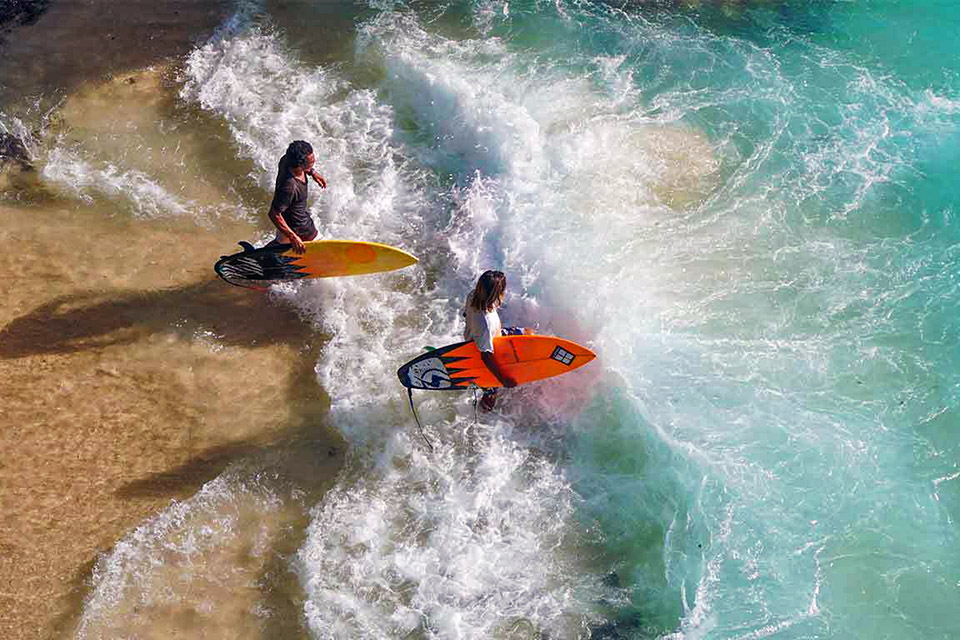
During the wet season, winds swing around and favour Bali’s east coast. Breaks like Keramas, Sanur reefs, and Nusa Dua come alive with clean, punchy conditions, often with fewer crowds than the west coast peak months.
Swell can be just as powerful, and water temperatures stay deliciously warm.
For Sydney surfers who can travel outside school holiday chaos — or who prefer less crowded lineups — this season can be gold. The trade-off is occasional rain and humidity, but sessions often happen under glassy skies between showers.
Crowds, Calendars, and School Holidays
Crowds in Bali aren’t random — they’re predictable.
Australian school holidays, especially June–July and September, bring a surge of NSW families, surfers, and mixed groups. Peak swell plus peak travel equals busy lineups, especially at the marquee breaks. That doesn’t mean you shouldn’t go — it just means choosing the right break, tide, and time of day becomes essential.
Savvy Sydney surfers often:
Travel just before or after school holiday windows.
- Surf early and late, avoiding mid-morning peak crowds.
Base themselves slightly away from headline breaks.
Matching Seasons to Your Surf Style
- Chasing classic reef perfection?
Dry season, west coast. - Want fewer crowds and punchy waves?
Wet season, east coast.
- First Bali trip from Sydney?
Dry season is more forgiving. - Repeat traveller?
Shoulder seasons deliver balance.
The real magic is how seamlessly Bali slots into a Sydney surfer’s yearly rhythm. When the Southern Ocean cools down NSW, the Indian Ocean warms up Indonesia. When daylight shortens at home, Bali gives you long, glowing evenings and predictable dawn patrols.
That’s why timing isn’t just about waves — it’s about energy, mood, and how you want the trip to feel.
Get the season right, and Bali stops being a gamble.
It becomes a certainty.
The Iconic Breaks Sydney Surfers Dream About
Every Sydney surfer who books a Bali ticket has a mental shortlist. Names you’ve heard since you were grommets. Waves you’ve watched on grainy edits, then HD clips, then endless reels — always telling yourself, one day. These aren’t just surf spots. They’re reference points, measuring sticks, and, for many Australians, the waves that redefine what “good surf” actually means.
Here’s how the most talked-about Bali surf breaks stack up — through a Sydney surfer’s lens.

Uluwatu – The Benchmark
Skill level: Intermediate to advanced
Wave personality: Long, powerful, multi-section reef
Crowd reality: Busy, but organised
Best swell direction: S–SW
Uluwatu isn’t just a wave — it’s a proving ground. The first time you paddle out through the cave and see lines stacking across Racetracks, you understand why it’s held in such high regard. For Sydney surfers used to beach breaks like Bondi or Maroubra, the consistency is almost surreal.
What makes Uluwatu special isn’t just size; it’s structure. Sections link, speed builds naturally, and good positioning is rewarded. Crowds are heavy year-round, but the rotation is surprisingly fair if you know how to read it. Respect goes a long way here.

Bingin – Beauty with Teeth
Skill level: Solid intermediate to advanced
Wave personality: Picture-perfect, mechanical left
Crowd reality: Tight take-off zone
Best swell direction: S–SW
Bingin might be the most photographed wave in Bali — and with good reason. It’s absurdly consistent, almost machine-like when the swell hits right. For Sydney surfers, it’s often the first reef wave that feels “understandable” yet still humbling.
The challenge isn’t the wave itself; it’s the take-off. The zone is small, the reef is shallow, and mistakes are visible to everyone watching from the cliff. Surf smart, wait your turn, and Bingin can deliver session after session of clean, controlled rides.
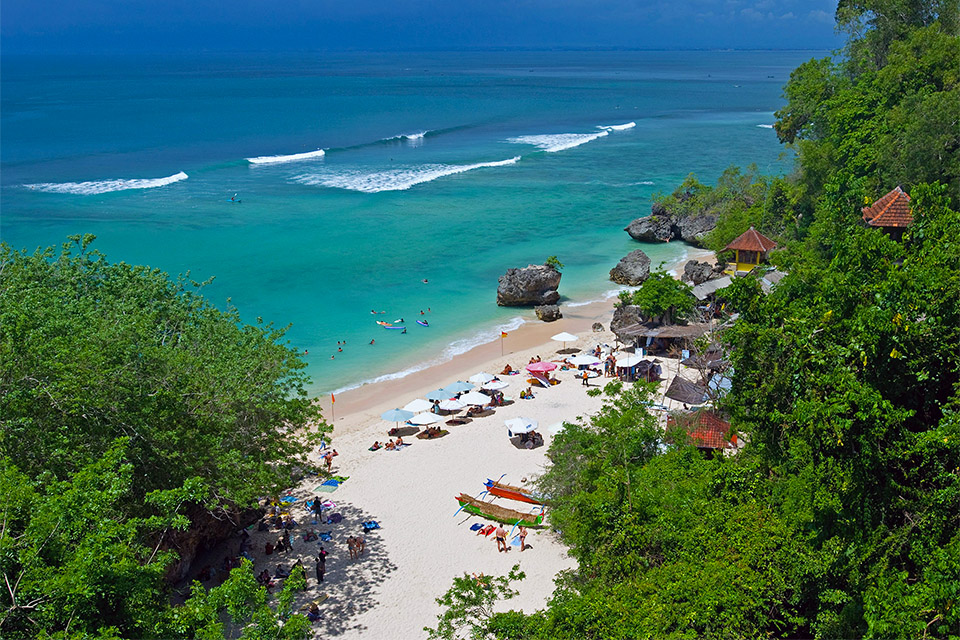
Padang Padang – The Step-Up Test
Skill level: Advanced only
Wave personality: Thick, hollow, fast
Crowd reality: Selective, intense
Best swell direction: SW
Padang Padang is where Sydney surfers come to answer a question: Am I ready?
On small days, it’s playful and deceptively inviting. On solid swell, it transforms into a heavy, consequence-laden barrel that demands commitment. This is not a wave for “having a look.” It’s for surfers who’ve done their homework — physically and mentally.
Boards get shorter, rail lines get cleaner, and hesitation gets punished. When it all lines up, though, Padang delivers the kind of ride that replays in your head for years.
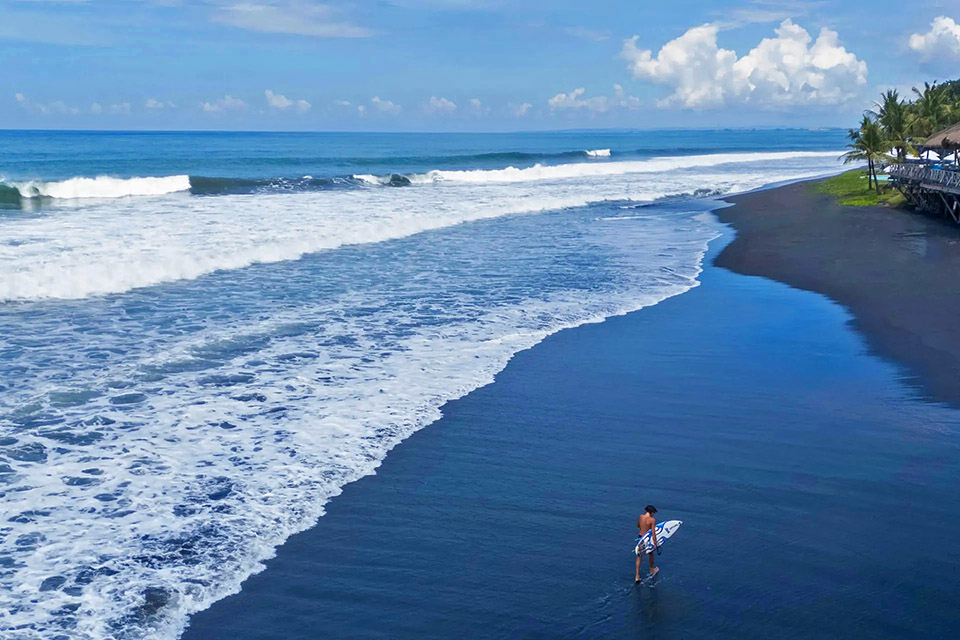
Keramas – Power for the East Coast Crew
Skill level: Intermediate to advanced
Wave personality: Fast, punchy, performance-driven
Crowd reality: Busy on good days
Best swell direction: S–SE
When the wet season hits, Keramas becomes the east coast jewel. For Sydney surfers who thrive on punchy take-offs and vertical sections, it feels immediately familiar — like a supercharged point-meets-beach-break hybrid.
Keramas rewards fitness and fast reactions. It’s less about drawing long lines and more about timing and commitment. Morning sessions are best before onshores creep in, and the crowd can stack quickly once it’s firing.
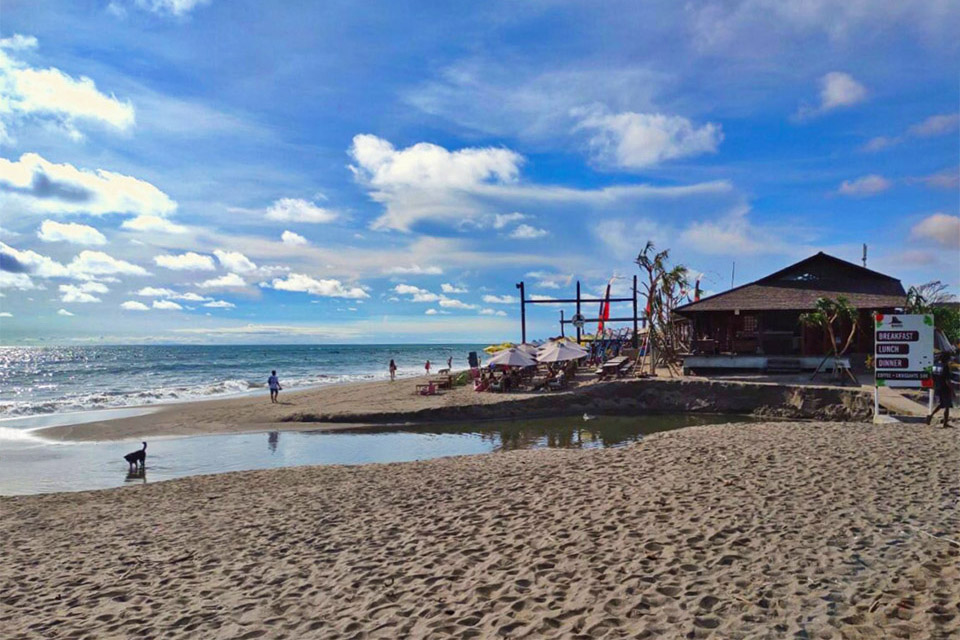
Canggu Reefs – The Everyday Favourite
Skill level: Beginner to intermediate + advanced pockets
Wave personality: Playful, forgiving, variable
Crowd reality: Busy, especially mid-morning
Best swell direction: W–SW
For Sydney surfers settling into Bali life, Canggu’s reefs often become home base. They’re not as dramatic as Uluwatu or Padang, but they’re consistent, accessible, and fun — the kind of waves you can surf every day without burning out.
On the right tide, spots like Batu Bolong reefs or Echo Beach corners offer long, cruisy walls. It’s also where many mid-level surfers build confidence before stepping up to heavier breaks.
💡 Insider’s Picks – Best Bali Breaks for Sydney Surfers
- Closest “Bondi-style” vibe: Canggu reefs (social, busy, playful).
Best for step-ups: Padang Padang.
Best for mid-level surfers: Bingin (on smaller days), Canggu reefs.
What ties these breaks together isn’t just quality — it’s consistency. Sydney surfers don’t fly six hours for maybes. They go north for reliability, rhythm, and waves that reward commitment.
Once you’ve surfed even one of these properly, the mental map changes. Beach breaks back home feel different. Standards shift. And Bali stops being a trip you talk about — it becomes part of how you define your surfing.
Canggu, Uluwatu & Beyond – Where Sydney Surfers Actually Base Themselves
Every Sydney surfer learns this lesson sooner or later: waves don’t care where you sleep — but your energy does. In Bali, choosing the right base can mean the difference between effortless dawn patrols and long, frustrating drives through traffic while perfect sets roll through without you.
Choose your base wrong, and even perfect waves feel hard work.
When it comes to where to stay on a Bali surf trip, Sydney surfers tend to cluster in a few key zones — not because they’re trendy, but because they align with surf rhythms, access, and recovery.
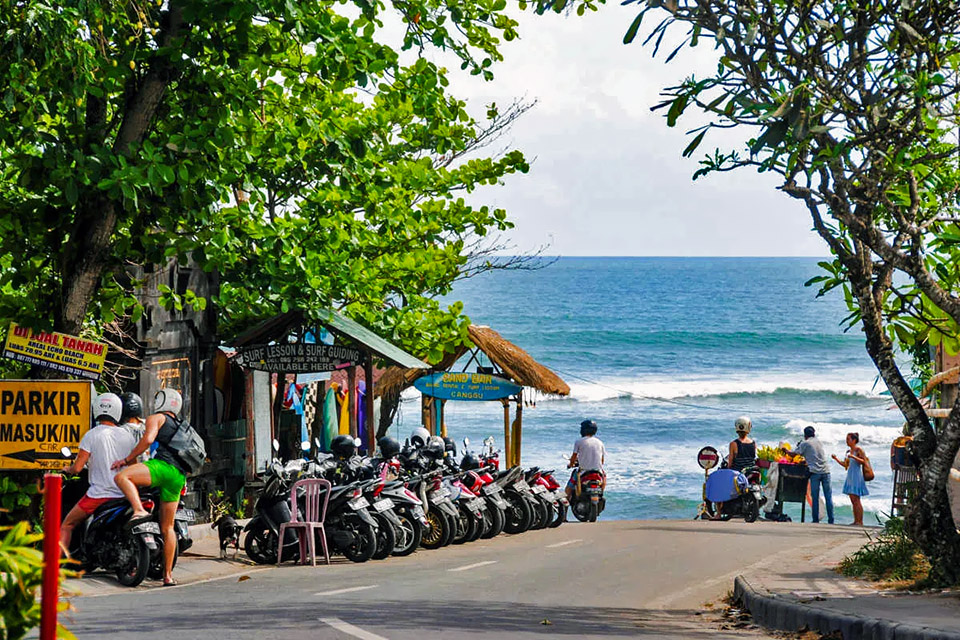
Canggu – The Tropical Northern Beaches
For many NSW surfers, Canggu feels instantly familiar. Swap Pittwater for rice fields, and you’ve got the vibe. It’s social without being frantic, surf-focused without being hardcore, and flexible enough to suit short trips or long stays.
Canggu works because everything is close. Reefs like Echo Beach, Batu Bolong corners, and nearby sandbars are minutes away. Cafés open early, recovery options are everywhere, and the surf community is active but approachable. It’s where Sydney surfers often base themselves when they want daily sessions without overthinking conditions.
Canggu also suits mixed groups — surfers travelling with partners, friends, or kids who want cafés, gyms, and comfort between sessions. You can surf twice a day, work remotely in between, and still feel like you’re on holiday.
Why Sydney surfers choose Canggu:
- Multiple reefs within short rides.
- Easy routines: surf → eat → recover → repeat.
- Social lineups that mirror Sydney beach culture.
Uluwatu – Cliff Culture & Commitment
Uluwatu is different. More focused. Less forgiving.
This is where Sydney surfers base themselves when the trip is about surfing first. Clifftop warungs, scooter rides with boards, and daily decisions dictated by swell direction and tide charts. You don’t come here by accident.
Staying in Uluwatu means being close to world-class waves — Padang Padang, Bingin, Impossibles, and of course Uluwatu itself. It also means accepting a slower pace on land in exchange for precision in the water. There’s less nightlife, fewer distractions, and more early nights.
For surfers chasing progression, this environment sharpens habits. You paddle out more deliberately. You watch sets longer. You respect the reef — because you have to.
Why Sydney surfers choose Uluwatu:
- Immediate access to heavy, consistent waves.
- Surf-first daily structure.
- A culture built around tides, not trends.

Beyond the Usual – East Bali & the Serious Stuff
Then there’s the next layer — the surfers who’ve done Bali enough times to want something quieter, heavier, or more specific.
East Bali zones like Keramas and beyond attract advanced Sydney surfers during the wet season. These bases are less about lifestyle and more about opportunity. Early mornings, targeted sessions, and minimal distractions. You go here knowing exactly what you want.
These areas suit:
- Surfers chasing fewer crowds.
- Wet-season travellers.
- Short, high-intensity surf missions.
They’re not for everyone — and that’s the point.
Choosing Your Base with Intention
The biggest mistake Sydney surfers make isn’t wave selection — it’s base selection. Staying too far from the breaks you want to surf drains energy, blurs timing, and turns simple sessions into logistics puzzles.
The best trips feel smooth because everything lines up: accommodation, access, tides, recovery, and headspace. That’s why experienced surfers plan their base first, then build everything else around it.
In Bali, proximity isn’t luxury.
It’s performance.
Surfboards, Scooters & Safety – What Sydney Surfers Need to Know
Bali rewards preparation — and punishes assumption. For Sydney surfers used to forgiving sand bottoms and wide take-off zones, the shift to reefs, traffic, and tropical pace can catch you out fast if you carry NSW habits over without adjustment.
This is where good surfing Bali travel advice stops being optional and starts being essential.
Reef Awareness: It’s not Bondi
The single biggest adjustment for Sydney surfers is the bottom. Bali’s best waves break over reef, not sand, and the difference isn’t just physical — it’s psychological.
Reefs demand commitment. There’s no half-paddling, no last-second step-off without consequence. Take-offs are more critical, wipeouts are more expensive, and tide awareness matters in ways it rarely does back home.
That doesn’t mean Bali is dangerous by default — it means it’s honest. Respect the reef, surf within your limits, and you’ll be fine. Ignore it, and the learning curve gets steep very quickly.
Key adjustments Sydney surfers need to make:
Watch at least one full set cycle before paddling out.
Know the safe channels — and use them.
Choose tides that give you margin while you adapt.

Scooters vs Drivers: Freedom or False Economy?
Scooters are everywhere, and yes, they look convenient. But for Sydney surfers travelling with boards, fatigue, and unfamiliar roads, scooters are also where many trips go sideways.
Traffic patterns are chaotic, road conditions change daily, and injuries don’t care how confident you feel after two rides. Add board racks, wet roads, or post-surf fatigue and the risk multiplies.
Many experienced surfers now split the difference:
- Drivers for airport transfers and longer surf missions.
Scooters only once settled, rested, and confident.
For heavier boards or longer distances, a surf-savvy driver is often cheaper, safer, and far less stressful than replacing skin and holiday time.
Board Hire vs Bringing Your Own
This is one of the most personal decisions in Bali surf travel.
Bringing boards from Sydney makes sense if:
- You ride specific dims you trust.
- You’re targeting heavier or critical waves.
- You want zero adjustment time.
Hiring locally works well if:
- You’re travelling light.
- You’re unsure of conditions.
- You want to try something new.
Bali has excellent board rentals and repair shops, especially around Canggu and Uluwatu. But don’t assume every rental board is reef-ready — inspect rails, fins, and plugs carefully.
💡 Insider’s Insight – Common Mistakes Sydney Surfers Make
Overestimating reef comfort: Confidence doesn’t replace experience.
- Underestimating travel time: Ten kilometres can take an hour.
Chasing waves instead of conditions: Wind, tide, and crowd matter more than size.
The surfers who get the most out of Bali aren’t the bravest — they’re the most deliberate. They pace themselves, choose conditions wisely, and treat safety as part of performance, not a limitation.
Because in Bali, the goal isn’t just to surf great waves.
It’s to surf them again tomorrow.
Surf + Lifestyle – Why Bali Hits Different Than a NSW Road Trip
Every Sydney surfer knows the NSW road trip routine. Early alarms. Servo coffee. A few hours in the car chasing rumours of swell. You surf hard, grab a pie, then drive home stiff, salty, and half-broken — straight back into real life on Monday.
Bali isn’t like that.
Yes, it’s a surf trip. But it’s also a full reset — and that’s why the Bali surf lifestyle hits differently to anything you can string together along the NSW coast.
In Bali, surfing doesn’t end when you leave the water.
Recovery is Part of the Routine
In Bali, recovery isn’t something you try to do — it’s built into the day. You paddle out early, surf until your arms give out, and then the island takes over.
Breakfast isn’t a rushed affair. It’s proper food, made for people who’ve just burned energy. Smoothies, eggs, good coffee. After that? A massage that costs less than parking near Bondi. Tight shoulders loosen. Lower backs unlock. You’re not just ready for tomorrow — you’re ready for the afternoon session if the tide plays ball.
Sleep comes easily too. No cold nights, no noise, no alarms needed beyond sunrise. The body resets faster when it’s warm, fed, and not stressed.

Cost vs Sydney Surf Missions
This is the part many Sydney surfers don’t admit out loud: Bali often makes more financial sense than staying home.
A few nights chasing waves up or down the NSW coast quickly adds up — fuel, accommodation, food, parking, coffees, repairs. In Bali, the daily spend stretches further. You get better food, better recovery, and better access to waves for the same — sometimes less — outlay.
That value compounds over a week or two. More sessions. Fewer injuries. Less fatigue. More consistency.
The Community Factor
Surfing Bali also plugs you into a unique travelling community. Aussies from Sydney, the Gold Coast, Margaret River — all chasing the same rhythms. Conversations start easily. Swell charts get compared. Tips are shared. Someone always knows where it’s cleaner, quieter, or turning on next.
It’s familiar without being stale. Social without being forced.
You might surf with strangers in the morning and share a beer with them that night. The barriers that exist back home — schedules, stress, status — dissolve quickly when everyone’s day is shaped by the same tide chart.
Surf Travel as Lifestyle, not Escape
That’s the key difference.
A NSW road trip is an escape from life. A surf travel Bali experience feels more like a better version of it. Days slow down without losing purpose. Surfing becomes the spine of the routine, not a break from it.
You come home fitter, calmer, and clearer — not burnt out.
That’s why Sydney surfers don’t just visit Bali.
They build it into their year.
Because once you’ve tasted a surf trip where waves, recovery, and community all work together, it’s hard to go back to squeezing sessions between meetings and traffic lights.
Planning a Bali Surf Trip from Sydney
Every Sydney surfer has done it at least once: overplanning the joy right out of a surf trip. Too many tabs open. Too many “what ifs.” The stoke quietly draining away under logistics spreadsheets and group chat debates.
The trick to planning a Bali surf trip isn’t doing more — it’s doing just enough to let the waves take over once you land.
Start with Swell Windows, not Calendar Dates
Good Bali trips aren’t planned around annual leave alone. They’re built around likely swell windows, then shaped to fit work and life as best as possible.
For Sydney surfers, this usually means:
- Dry season trips aligned with consistent Indian Ocean swell.
- Flexible return dates where possible.
- Accepting that perfection isn’t guaranteed — consistency is.
You’re not trying to time one magic day. You’re stacking odds over a week or two so at least a few sessions line up properly.
Sleep Closer than You Think You Need To
Nothing kills stoke faster than commuting while waves fire.
Staying close to target breaks matters more than villa aesthetics. Extra minutes in bed can mean the difference between calm conditions and wind-affected slop. It also means you surf when you should, not when traffic allows.
Experienced surfers build accommodation around:
- Walkability or short rides to the break.
- Quiet nights for early starts.
- Easy access to food and recovery.
This is where first-time visitors often misjudge Bali. Distances look short. Travel times aren’t.

The Unsung Heroes: Drivers, Boats, Dawn Missions
Local drivers are more than transport — they’re time managers. They know when roads clog, which shortcuts still work, and how to align pick-ups with tides rather than clocks.
For certain breaks, boat access opens doors land-based surfers never reach. Dawn missions become smoother when someone else handles logistics and you focus on boards, wax, and mindset.
And yes, dawn still matters. Early sessions are cleaner, quieter, and safer — especially for Sydney surfers adjusting to reefs.
💡 Insider’s Insight – How Sydney Surfers Actually Book
- Solo trips: Shorter, more flexible, often centred on one zone.
- Group trips: Longer stays, villa-focused, logistics-heavy.
- Sweet spot: 7–12 nights balances swell exposure and fatigue.
- Upgrade moment: When time is limited and stakes are high.
This is where many surfers quietly shift gears. When work schedules tighten or group dynamics complicate things, the DIY approach starts to feel like friction rather than freedom. That’s when booking Bali tours in Sydney through surf-aware planners becomes less about convenience and more about protecting stoke.
Because the best surf trips don’t feel “planned” once they begin.
They feel inevitable.
You paddle out at the right time, in the right place, with energy to spare — and everything else fades into the background.
That’s not overplanning.
That’s planning done right.
Why Sydney Surfers Use Bali-Based Travel Experts
Every Sydney surfer knows the feeling. You’ve booked the flights, packed the boards, landed on time — and somehow, the swell misses you by a day. Or the wind turns onshore just as you arrive at the break everyone’s been hyping. You did everything right… except the part that actually mattered.
Miss the swell window and you didn’t take a holiday — you took a flight.
This is why more experienced surfers are quietly shifting how they plan. A Bali surf trip isn’t just about getting there — it’s about being in the right place at the right time. And that’s where local expertise changes everything.
Surf Trips Live and Die on Timing
Unlike general holidays, surf travel has moving parts that don’t care about your itinerary. Swell direction, period, wind shifts, tides, crowd patterns — these aren’t static variables you can lock in months ahead and forget.
Google can tell you what a break is. It can’t tell you:
Which reef will actually handle tomorrow’s swell best.
- When traffic will kill a dawn mission.
Whether today’s “offshore” really means clean.
Local knowledge turns forecasts into decisions.
Positioning Beats Perfection
One of the biggest mistakes Sydney surfers make is chasing the “best” wave on paper instead of positioning themselves for options. Bali-based planners don’t sell single breaks — they plan zones.
If the wind hits Uluwatu wrong, you pivot. If the tide kills one reef, you slide to another. If crowds explode at sunrise, there’s a second plan ready by mid-morning.
That flexibility is what saves trips — and it only comes from people who watch conditions unfold every day, not just on surf apps.
Why Local Insight Beats DIY Planning
When you work with a Bali travel agency in Sydney, you’re not outsourcing stoke — you’re protecting it. Flights, accommodation, drivers, and surf access are aligned around surf logic, not generic travel templates.
The result?
- Fewer wasted days.
- Less guesswork.
- More sessions in good conditions.
You don’t arrive hoping things line up. You arrive ready.
Online Booking, Local Execution
Modern surf travel blends the best of both worlds. You book Bali tours online, but the execution happens on the ground. Real people. Real drivers. Real-time adjustments when conditions change — which they always do.
For Sydney surfers with limited leave or group commitments, this approach isn’t indulgent — it’s efficient. You’re maximising every sunrise, every tide window, every ounce of energy you’ve travelled with.
Because Bali will always have waves.
The question is whether you’re there when they count.
And that’s why seasoned surfers don’t leave it to chance anymore.
From NSW Breaks to Bali Reefs
Every Sydney surfer knows the rhythm at home. The early alarm. The check of the cams. The drive in half-light, coffee cooling in the cup holder. Some mornings reward you. Some mornings don’t. That uncertainty is part of what shapes surfers on the NSW coast — patience, persistence, and a deep appreciation for when everything finally lines up.
Bali doesn’t replace that rhythm. It extends it.
What begins as a Bali surf trip from Sydney often turns into something more familiar than expected. The rituals return quickly: early starts, quiet anticipation, wax on deck, eyes on the horizon. But here, the warmth wraps around you. The waves arrive with more consistency. The days flow with less friction. Surfing isn’t squeezed between work and weather — it becomes the spine of the day.
That’s why surfers keep coming back. Not because Bali is exotic, but because it feels strangely functional for a surfing life. You surf. You recover. You eat well. You sleep deeply. Then you do it again. The repetition isn’t boring — it’s grounding.

Over time, many Sydney surfers stop counting trips and start marking seasons. Dry season becomes a familiar invitation. Favourite warungs replace favourite cafés. Faces in the lineup turn into nods of recognition. Bali stops feeling like an escape and starts feeling like a second coastline — one that rewards preparation, respect, and timing.
Sydney teaches you to love surfing. Bali teaches you to live around it.
The difference between a good trip and a great one is rarely the swell itself. It’s how well everything else supports it — logistics, positioning, recovery, and local insight. When those elements align, surfing becomes less of a chase and more of a flow.
If you’re ready to plan smarter, surf more, and make every session count, it might be time to rethink how you approach your next trip north. Work with Sydney-focused Bali experts who understand both coastlines — and book Bali tours online that are built around the way surfers actually travel.
Because the best trips don’t feel rushed.
They feel inevitable.
Related reads:
Where Sydney Travellers Go in Bali: Top Picks Loved by New South Wales Visitors
Best Bali Family Holidays for Sydney Parents: Resorts, Activities & Stress-Free Tips
Sydney to Bali: The Ultimate Flight & Holiday Planning Guide for 2026
Book Bali tours in Sydney:
Bali Travel Agency in Sydney Trusted Experts for Your Bali Holidays
FAQ
Is Bali really suitable for Sydney surfers of all levels?
Yes — but where and when matters. Bali has everything from playful reef waves that feel familiar to Bondi or the Northern Beaches, to world-class, heavy breaks that demand respect. Sydney surfers transitioning from beach breaks usually start around Canggu or softer reef setups before stepping up to places like Uluwatu or Padang Padang. Choosing the right base and swell window makes the experience rewarding rather than overwhelming.
How long should a Bali surf trip from Sydney be?
Most Sydney surfers find 7–10 days is the sweet spot. It allows time to adjust, sync with swell patterns, rest between sessions, and avoid the feeling of rushing. Shorter trips can work if logistics are tight and conditions align — but longer stays almost always deliver better value and more consistent surf.
When is the best time to surf Bali from Australia?
The peak window for Australians is May to September, when Sydney winter lines up perfectly with Bali’s dry season and west coast swells. That said, the wet season (November–March) still offers quality waves on the east coast, fewer crowds, and warmer water. The “best” time depends on your flexibility, crowd tolerance, and preferred breaks.
Should I bring my surfboard from Sydney or hire in Bali?
It depends on your setup and expectations. Many Sydney surfers bring their own boards for familiarity, especially step-ups or specialty shapes. Bali also has excellent board rentals and custom shapers for those wanting to travel lighter. Airline board policies, transfer logistics, and accommodation storage all factor into the decision — and planning them early avoids unnecessary stress.
Is Bali safe for surfers used to NSW beaches?
Yes, with awareness. The biggest adjustment for Sydney surfers is reef interaction. Bali’s waves are more predictable but less forgiving than sand-bottom breaks. Understanding tides, entry points, and reef depth is essential. This is where local knowledge — or experienced guidance — makes a meaningful difference to both safety and confidence.
Where do Sydney surfers usually stay in Bali?
Canggu is the most popular base thanks to accessibility, variety of breaks, and lifestyle balance. Uluwatu appeals to surfers who prioritise wave quality and don’t mind a quieter, more surf-focused environment. Advanced surfers sometimes base themselves in East Bali to chase powerful, less crowded waves. The right location can save hours of travel and energy every day.
Do I need a Bali travel agency in Sydney to plan a surf trip?
You don’t need one — but many surfers choose to use a Bali travel agency serving Sydney to avoid wasted days, mistimed swells, and poor accommodation choices. Surf trips are sensitive to timing and positioning, and expert planning often turns an average trip into a memorable one, especially for first-timers or group travel.
Can I book Bali surf trips and tours online from Sydney?
Yes. Many Sydney surfers now book Bali tours online through specialists who understand both Australian travel habits and on-the-ground Bali conditions. This approach combines convenience with local insight — ensuring logistics support the surf, not the other way around.
What’s the biggest mistake Sydney surfers make in Bali?
Chasing reputation instead of conditions. The best session isn’t always at the most famous break — it’s the one that suits the tide, swell direction, and your ability on the day. Smart planning prioritises flow over ego.