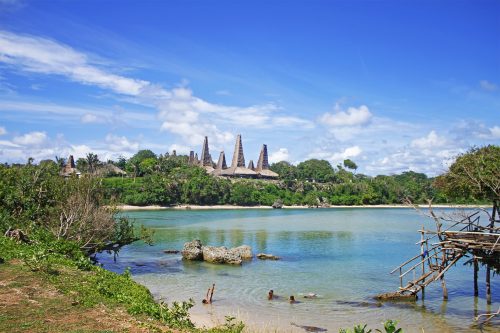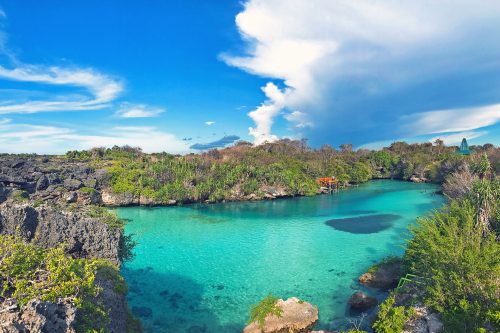
This side of the island is shaped less by open silence and more by flow — of rivers cutting through limestone, of waterfalls spilling into jungle basins, of tides pulling back from lagoons, of coastal roads that bend and reveal one shoreline after another. A West Sumba tour doesn’t unfold as a single moment or viewpoint. It unfolds as a sequence. You arrive, you follow the water, and somewhere along the way the island opens itself to you.
For many travellers, this is where the emotional connection to Sumba begins.
If East Sumba teaches you to breathe, West Sumba teaches you to move.
Unlike East Sumba’s wide savannas and long horizons, West Sumba feels layered and intimate. Villages cluster closer together. Landscapes change more quickly. You might spend the morning walking through a traditional settlement where stone tombs still anchor daily life, then drive less than an hour to stand beneath a thundering waterfall, and finish the day barefoot on a quiet beach watching the sun slide into the Indian Ocean. The distances are shorter, but the transitions are richer.
💡Related reads:

Where Water Shapes the Journey
This density is not accidental — it’s geographical. West Sumba catches more water, more consistently. Rain feeds rivers. Rivers feed waterfalls. Waterfalls shape valleys. Valleys support villages. Villages sit close to the coast. The result is a region where nature, culture, and access intersect, making West Sumba one of the most versatile places to explore in any Sumba travel guide.
And that versatility is exactly why West Sumba often becomes a traveller’s first real encounter with the island.
Here, beaches are not isolated luxury enclaves; they are part of daily movement. Fishermen pass by in the morning. Children play near the shore after school. Inland, waterfalls are not just scenic stops — they are seasonal lifelines, meeting points, places where stories circulate. Traditional villages are not preserved for display; they are lived in, shaped by ritual calendars and family ties that continue regardless of who is visiting.
This creates a layered experience that feels both immersive and approachable. You don’t have to “understand” Sumba before West Sumba welcomes you in. You simply follow the routes that already exist — from coast to river, from river to village, from village back to sea.
West Sumba doesn’t ask you to slow down — it invites you to follow the water.
That invitation matters. For first-time visitors, West Sumba provides rhythm without pressure. You can move each day without rushing, experience variety without long transfers, and still feel grounded rather than overwhelmed. The beaches offer release. The waterfalls offer drama. The villages offer context. None of them compete — they layer.
This is also why West Sumba works across different travel styles. Couples find romance not in isolation but in contrast: jungle mornings, coastal evenings. Families find flexibility: short drives, natural breaks, places to pause. Culture-focused travellers find meaning embedded in movement rather than staged moments. Even photographers discover that West Sumba’s strength lies not in one iconic frame, but in how light, water, and human life overlap throughout the day.
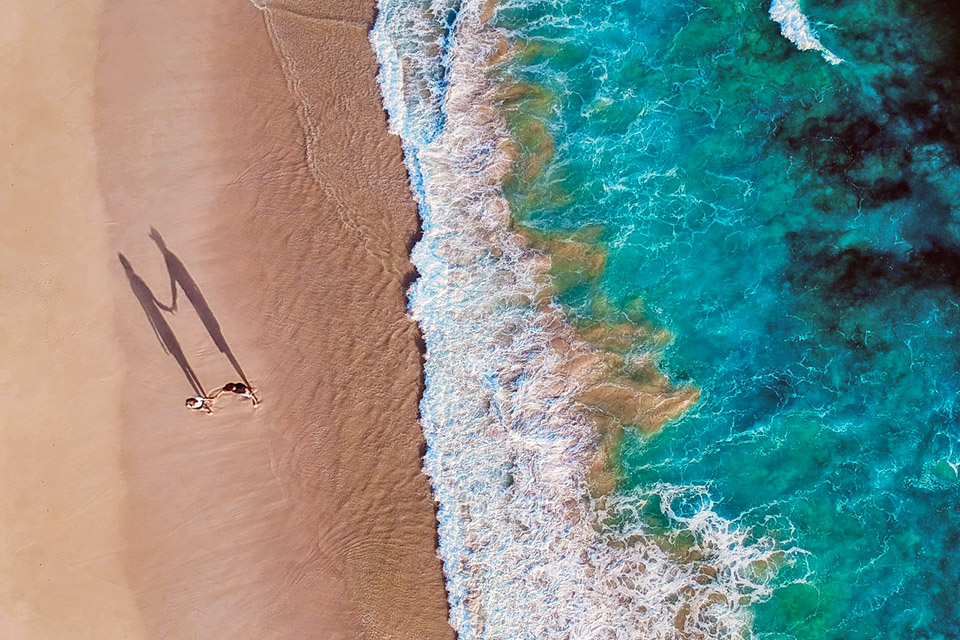
Most importantly, West Sumba doesn’t feel like a checklist destination. It feels like a journey with continuity. Each stop informs the next. Each road has a reason. Each landscape transition tells you something about how people live here — and why.
As you explore this guide, you’ll see how West Sumba tours are built not around individual attractions
West Sumba Is the Most Visited and Versatile Region
There’s a reason most West Sumba itineraries begin here — and it has very little to do with hype.
West Sumba sits at a rare crossroads where geography, culture, and access align. For travellers trying to understand Sumba in limited time, this region offers the highest concentration of experiences with the lowest logistical friction. Not because it’s simplified — but because the island’s natural systems overlap more tightly here.
The first advantage is distance. In West Sumba, attractions cluster within genuinely drivable ranges. Traditional villages, waterfalls, beaches, and viewpoints are often separated by minutes rather than hours. That doesn’t mean days feel rushed — it means they feel full without being exhausting. You can start a morning in a hilltop village, cool off beneath a waterfall by midday, and reach the coast before sunset without crossing half the island.
This density allows West Sumba to deliver something rare in remote destinations: variety without compromise.
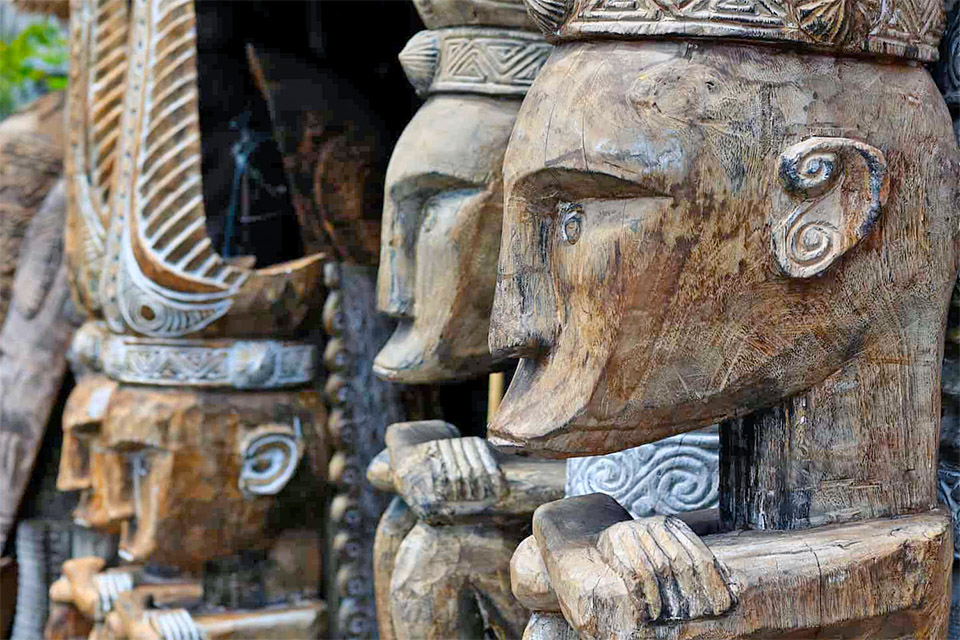
Culturally, West Sumba is rich and visible. Villages remain active centers of daily life, ceremonies still follow ancestral calendars, and megalithic traditions aren’t hidden behind fences or museums. At the same time, nature asserts itself loudly here — rivers cut deep valleys, waterfalls surge after rain, and the coastline shifts between lagoons, cliffs, and open beaches. The result is a region where culture and landscape are experienced together, not in separate chapters.
That balance is what makes West Sumba work for both short and long stays.
For travellers with only a few days, West Sumba offers a meaningful introduction without forcing hard choices. You don’t have to pick between “culture” or “nature” or “beach.” You get all three, naturally woven into the route. For longer stays, the same region reveals layers: quieter villages beyond the main routes, lesser-known swimming holes, coastal stretches that reward patience rather than speed.
Just as importantly, West Sumba plays well with others.
Paired with East Sumba, it creates contrast. East Sumba’s openness, savannas, and silence feel even more expansive after West Sumba’s density. Paired with Southwest Sumba, it creates progression — from rivers and waterfalls to raw coastline and surf, from villages to retreat-like beaches. In both cases, West Sumba acts as the anchoring chapter, the place where travellers find their rhythm before shifting gears.
This versatility also explains why so many things to do in West Sumba appear again and again in Sumba travel planning. It’s not repetition — it’s reliability. Roads are generally more forgiving. Accommodation options span from simple guesthouses to boutique lodges. Weather patterns support a wider range of activities across seasons. When plans need to adapt — because of rain, ceremonies, or simple fatigue — West Sumba gives you room to adjust without losing substance.
 Insider’s Insight — West Sumba Feels “Easier” Without Being Shallow
 Insider’s Insight — West Sumba Feels “Easier” Without Being Shallow
- Shorter drives between highlights mean days flow naturally, not rigidly.
Water-based experiences (waterfalls, beaches, lagoons) make itineraries flexible across seasons.
More accommodation choice allows pacing to match comfort and budget.
“Easier” in West Sumba doesn’t mean diluted. It means forgiving. It means the island meets you where you are — whether you arrive curious, cautious, or already half in love with the idea of Sumba.
And that’s why, for so many travellers, West Sumba isn’t just the starting point. It’s the place where Sumba first makes sense — and starts to stay with you.
West Sumba’s Natural Icons: Beaches, Lagoons & Waterfalls
West Sumba is shaped by water in all its moods. Not just as scenery, but as rhythm. Roads curve toward it. Villages form around it. Days quietly organize themselves by when water is calm, when it rushes, and when it retreats.
This is why West Sumba attractions rarely feel like isolated highlights. Beaches, lagoons, and waterfalls aren’t separate categories here — they’re chapters of the same story, connected by gravity, tide, and terrain. To understand things to do in West Sumba, you don’t start with a checklist. You start by following the water.
Coastal Beaches & Coves: Swimming vs Scenery Logic
West Sumba’s coastline isn’t one long stretch of postcard sand. It’s broken, varied, and surprisingly intentional. Some beaches invite you in. Others ask you to step back and simply look.
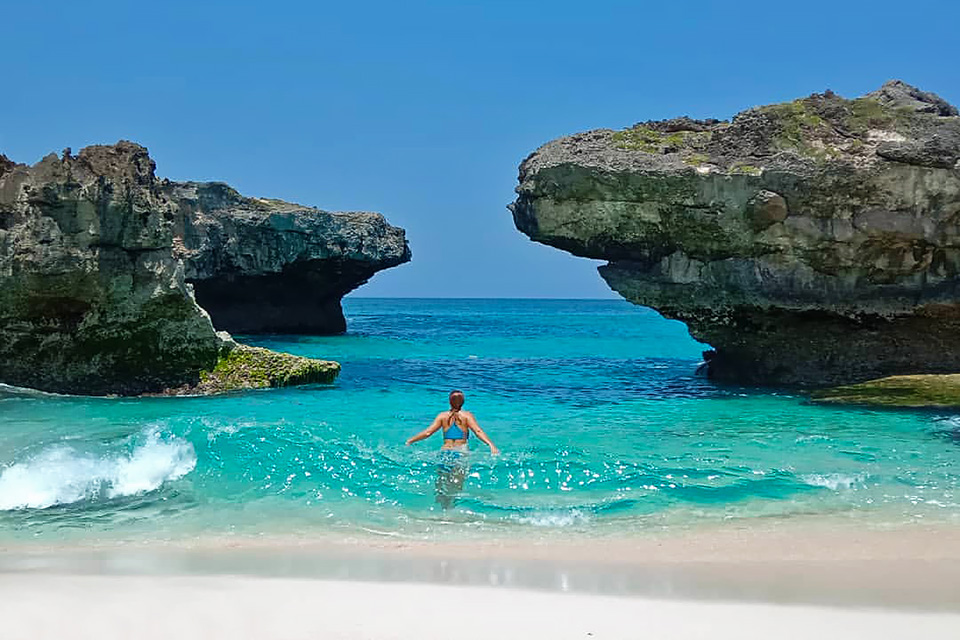
This is where first-time visitors often recalibrate expectations.
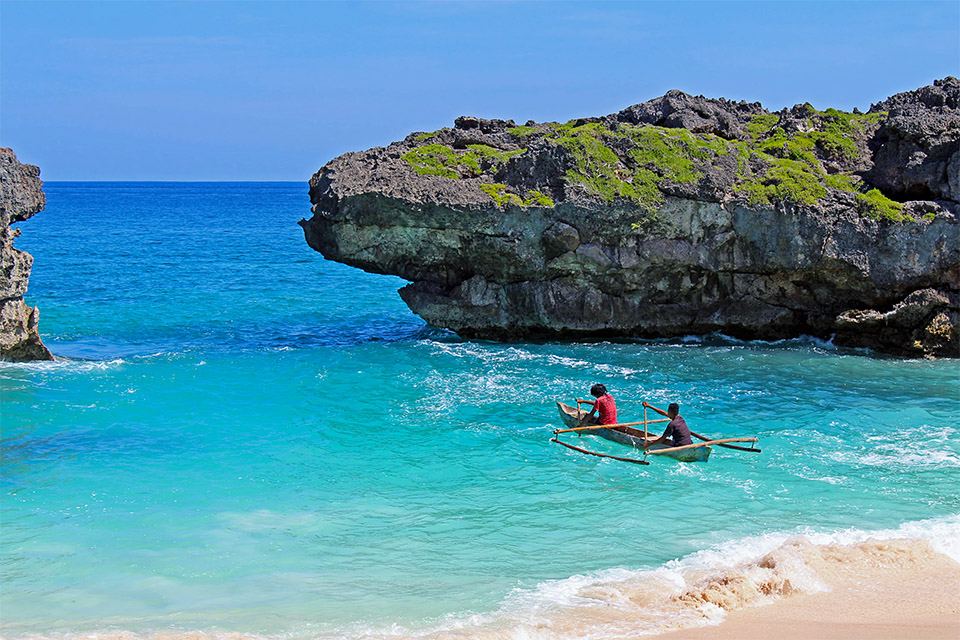
Certain coves are swimming beaches — protected, gently sloping, and calmer during the right tides. These are the places where locals bathe, kids play, and afternoons stretch without urgency. The sand may not always be powder-white, but the water is usable, approachable, and human-scaled.
Then there are scenic beaches. Dramatic headlands. Wind-swept shores. Long arcs of sand where waves don’t negotiate. These beaches aren’t designed for floating — they’re designed for perspective. You walk them. You photograph them. You sit above them and let the sound do the talking.
Understanding this distinction matters. West Sumba rewards travellers who don’t expect every beach to behave the same way. When you choose the right beach for the right moment — a swim after a village visit, a sunset stop after a long drive — the coast stops being “a sight” and starts becoming part of the day’s pacing.
This logic also makes West Sumba forgiving. If the sea is rough on one side of a headland, another cove may still be calm. If clouds roll in, cliffs and coastlines often look better, not worse. The water adjusts — and so do the days.
Lagoons & Tidal Pools: When Timing Matters More Than Distance
Lagoons are where West Sumba becomes quietly technical.
They don’t announce themselves with volume or scale. Instead, they reward travellers who understand timing. Tide charts matter. Light matters. Even the previous night’s rain can change the color, depth, and accessibility of a lagoon by morning.
At low tide, some lagoons reveal shallow pools and sandy paths, perfect for wading and reflection photography. At higher tide, those same spaces fill, becoming mirror-like basins where sky and land blur together. Miss the timing, and you might see very little. Get it right, and the lagoon becomes the emotional pause of the day.
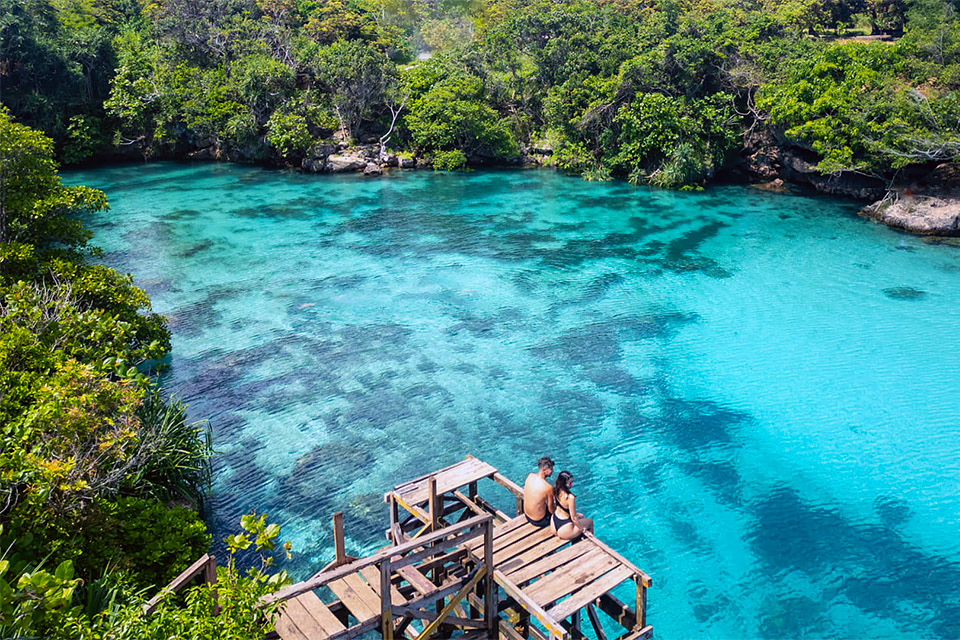
This is also where itineraries often break — or shine.
Because lagoons are sensitive to conditions, they don’t work well as rigid, pre-timed stops. They work best as adaptive moments. If a waterfall is crowded or the road runs long, a lagoon becomes a substitute — slower, quieter, and often more memorable. If light breaks through after a cloudy morning, lagoons absorb it beautifully.
For many travellers, these moments become the most remembered, precisely because they weren’t planned with precision. They were chosen with awareness.
Waterfalls: Lapopu, Tanggedu & the Language of Seasons
If beaches set the mood and lagoons set the pace, waterfalls provide West Sumba’s punctuation.
Two names surface again and again when people talk about West Sumba attractions: Lapopu Waterfall and Tanggedu Waterfall. Not because they’re the only waterfalls — but because they express the region’s extremes.
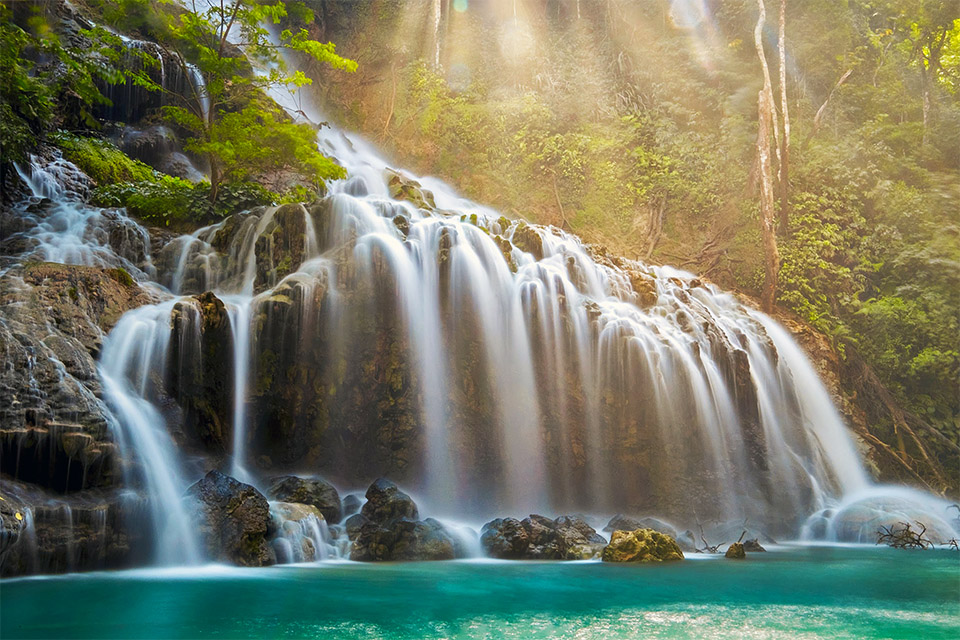
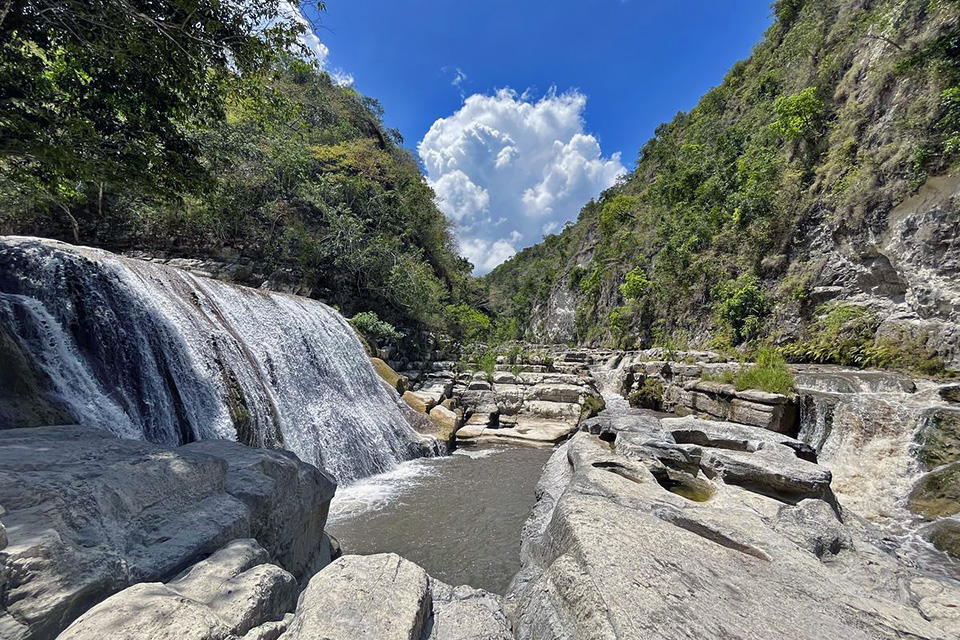
Lapopu is broad, powerful, and seasonal in its drama. During wetter months, it roars across multiple tiers, filling the surrounding forest with sound. In drier periods, it becomes gentler, more sculptural, revealing rock formations and allowing closer access. The experience shifts, but it never disappears.
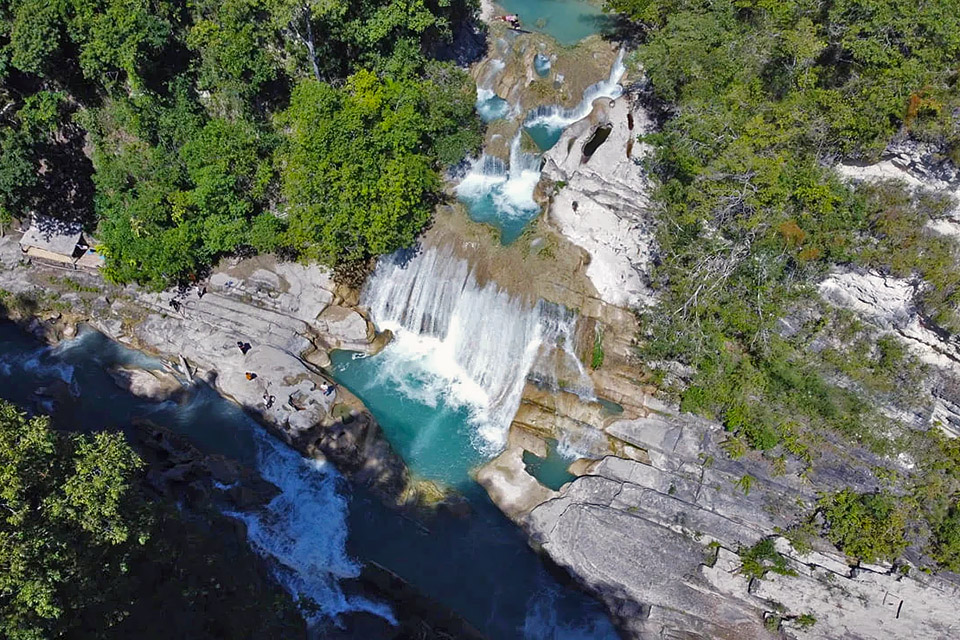
Tanggedu, by contrast, is defined by shape. A narrow canyon. Cool, turquoise water. Vertical walls that amplify scale and silence at the same time. It feels less like a “waterfall visit” and more like stepping into a geological corridor — one where sound echoes and time slows down.
Seasonality is the unspoken guide here.
During the rainy season, waterfalls are louder, wider, and sometimes inaccessible without caution. Trails can be slippery. Water levels rise quickly. But the reward is rawness — movement you can feel in your chest.
In the dry season, access improves. Swimming becomes safer. Colors deepen into blues and greens. The trade-off is volume — less power, more clarity. Neither is better. They’re simply different languages from the same place.
Understanding this helps travellers set expectations. Waterfalls in West Sumba aren’t static attractions. They’re conversations between rain, rock, and time.
Why Water Defines West Sumba’s Rhythm
What ties beaches, lagoons, and waterfalls together isn’t just proximity. It’s flowing.
In West Sumba, days often begin inland — villages, hills, and forest roads. As heat builds, routes naturally descend toward water. Midday swims. Afternoon shade. Late light reflecting off surfaces rather than baking above them. Evenings often return to the coast, where sunsets slow everything down without instruction.
This rhythm is why West Sumba works so well for mixed itineraries.
You don’t have to force contrast. It’s already there. A cultural visit feels deeper when followed by water. A long drive feels justified when it ends at a beach. Even fatigue is softened by immersion — literal and emotional.
This is also why many travellers describe West Sumba as their first emotional connection to the island. Water is familiar. Universal. It gives entry points into a landscape that might otherwise feel overwhelming in its traditions and scale.

In West Sumba, every road seems to end at water — falling, flowing, or waiting.
Once you notice this pattern, itineraries stop feeling random. Routes make sense. Days breathe. And West Sumba reveals itself not as a list of sights, but as a system — one where water quietly leads, and everything else follows.
For a deeper breakdown of individual sites and routes, continue to the West Sumba Attractions hub or explore how these landscapes connect along the coast in our Sumba Beaches Guide.
Villages, Rituals & Daily Life Along the Way
In West Sumba, villages are not stops on a route — they are the route.
This distinction matters. A West Sumba itinerary that treats villages as museums will always feel thin. A journey that understands them as living, breathing spaces — places where people cook, mourn, celebrate, and negotiate daily life — begins to earn trust. And trust is what unlocks the deeper layers of Sumba cultural tours.
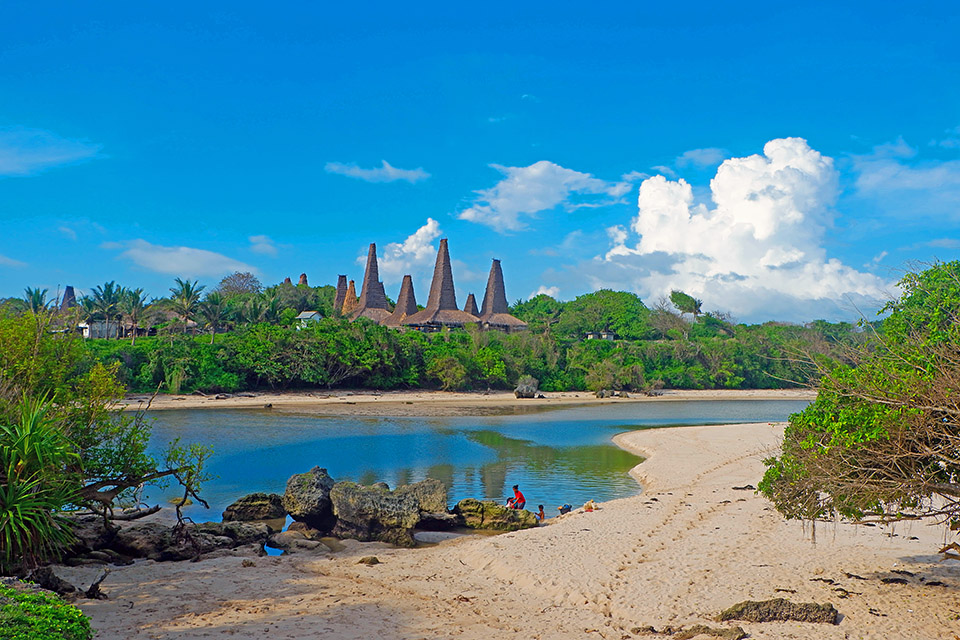
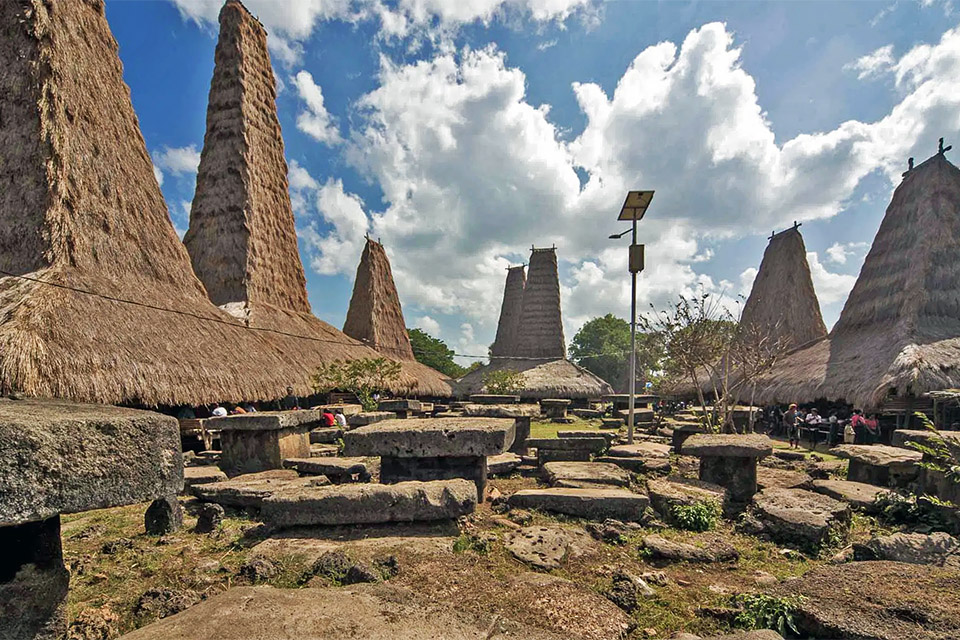
Traditional villages here are not preserved behind ropes or visiting hours. Houses are lived in. Courtyards are shared. Tombs are part of everyday geography. When you walk into a village like Ratenggaro Village, Praijing Village, or Tarung Village, you are entering someone’s present — not their past.
That’s why pace and posture matter more than information.
Traditional Villages as Lived Spaces, Not Displays
West Sumba’s villages are often clustered on hilltops or gentle ridges, oriented around ancestral tombs and central yards. These layouts aren’t aesthetic choices; they reflect social structure, lineage, and belief. Houses face inward. Community faces itself first.
Visitors often notice the scale — tall thatched roofs, heavy stone graves — but the quieter details are where meaning lives. A woman weaving under shade. Children playing between tombs. A man repairing a roof beam not as restoration, but maintenance. Life continuing, unannounced.
This is why lingering works better than asking.
Instead of moving quickly from house to house, the most respectful approach is to arrive slowly, stand back, and allow interaction to happen naturally. Often, a greeting becomes a conversation. A conversation becomes an invitation. And an invitation — even a small one — changes the entire experience.
Villages in West Sumba don’t perform culture. They practice it as part of their daily life.
Marapu Belief Expressions in Daily Life
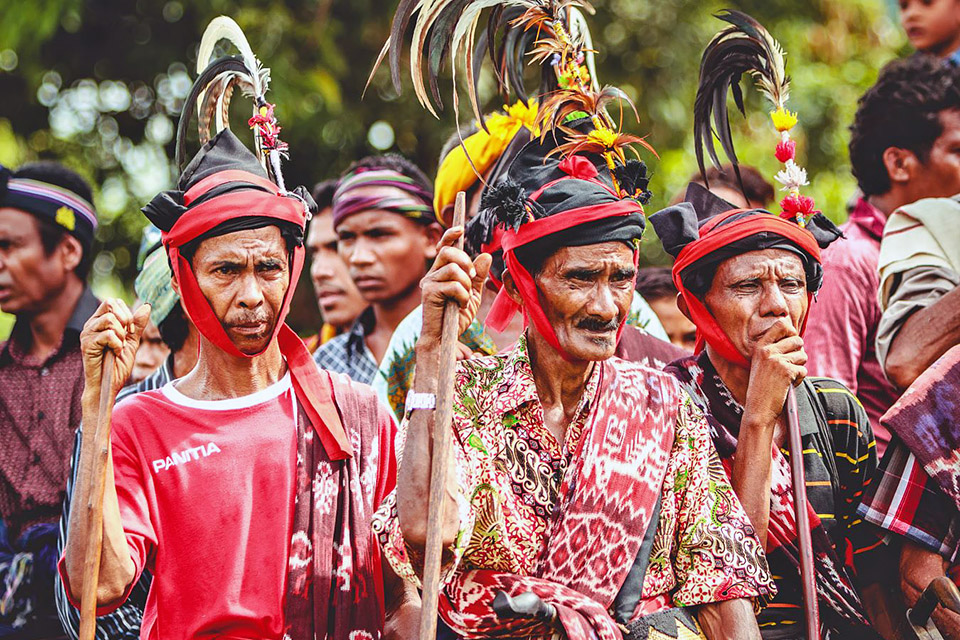
Much of what you witness in West Sumba is shaped by Marapu — the ancestral belief system that still quietly guides ritual life across the region. But Marapu is not always visible as a ceremony. More often, it appears as a pattern.
Offerings placed without explanation. Tombs positioned at the heart of villages. Certain days feel “closed” without signage. Decisions are delayed because elders must be consulted.
For travellers, this can feel invisible unless you know to look for it, or have insider’s contact.
Unlike scheduled religious events elsewhere, Marapu expressions often emerge when conditions align — after harvests, before major family milestones, or when ancestral obligations call. This fluidity is why rigid itineraries struggle here. Cultural life doesn’t adapt to visitors; visitors adapt to it. Luck instead of planned.
Understanding this doesn’t require deep study. It requires acceptance. If something is happening, you may be welcomed. If nothing is happening, that absence is still part of the rhythm.
When Ceremonies Intersect With Travel Days
One of the most misunderstood aspects of Sumba cultural tours is ceremony timing.
This can feel disruptive to travellers expecting predictability. But for those open to it, ceremonies often become the most powerful memories of the journey.
You might arrive planning a village visit and find a funeral procession underway. Roads slow. Attention shifts. Music, chanting, and movement take over the day. You don’t “visit” anymore — you witness.
The key is framing. Instead of asking, “Is this delaying us?”, ask, “What am I being allowed to see?”
Guides play a critical role here, not as translators of language, but of context. Knowing when to step closer, when to step back, and when to leave entirely is what separates respectful presence from intrusion.

Observing Without Interrupting
The most meaningful cultural moments in West Sumba often happen when travellers stop trying to document everything.
Photography is powerful — but it is not neutral. Cameras change rooms. They alter behavior. In ceremonial contexts, they can cross lines quickly, even when intentions are good.
Observation, on the other hand, costs nothing.
Sitting quietly at the edge of a courtyard. Watching a ritual unfold without raising a lens. Accepting that some moments are meant to be carried, not captured. These choices build mutual respect, even if no words are exchanged.
In West Sumba, dignity is currency. Spend it carefully.
💡 Insider’s Tips — Visiting West Sumba Villages Respectfully
Ask before entering homes
A pause and a question — through your guide or a gesture — goes further than confidence.
- Dress cues near ceremonial spaces
Covered shoulders and modest clothing signal awareness, not formality.
- When photo should stop
During prayers, mourning, or moments of emotional intensity, lower the camera first — always.
Villages are not side attractions in a West Sumba itinerary. They are the connective tissue — the places where landscape, belief, and daily life meet without explanation.
Approach them with patience, humility, and restraint, and West Sumba offers something rare: not performance, not spectacle, but presence.
West Sumba Itineraries: Routes That Actually Work
A West Sumba itinerary only works when it accepts one core truth: this region rewards flow, not ambition.
Distances may look short on a map, but time in West Sumba is shaped by road conditions, light, tides, village rhythms, and weather. Trying to “see everything” usually means arriving everywhere late, rushed, or exhausted. The itineraries below are designed around routes that make sense — routes that let landscapes unfold naturally, instead of forcing them into a checklist.
This is also why most West Sumba tours are built as journeys, not loops.
In East Sumba, the road is the story. Sunrise happens before you arrive anywhere. Horses cross highways without warning. Light changes the same hill three times in a morning. If you plan this region like a checklist, you’ll spend more time chasing pins on a map than absorbing what makes the place powerful.
Below is how East Sumba itineraries actually work in practice — based on time, energy, and flow.
2–3 Days in West Sumba: Waterfall + Village Sampler
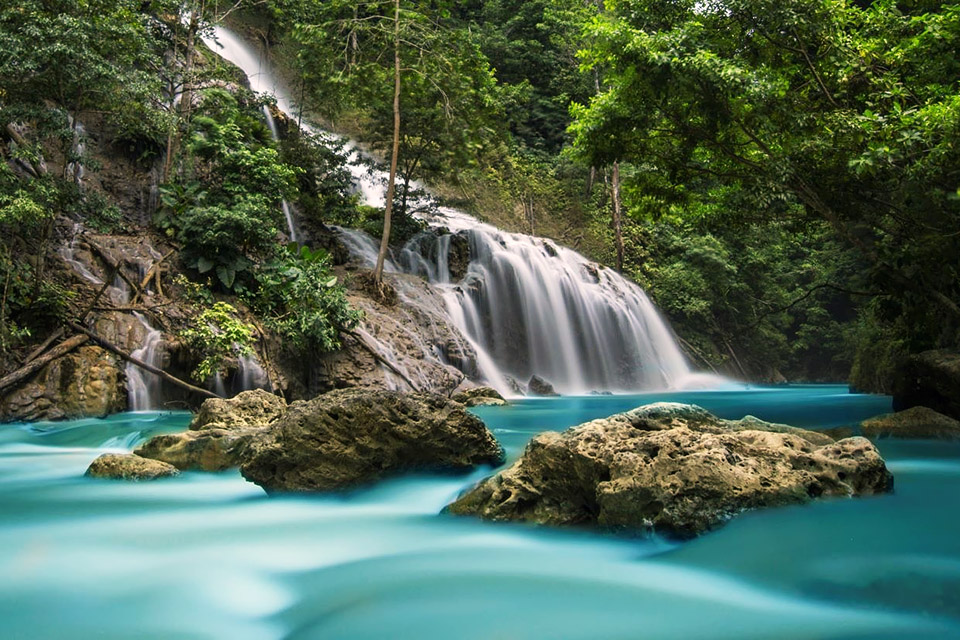
This is the minimum window where West Sumba begins to make sense.
A 2–3 day route works best when you accept its limits and lean into contrast rather than coverage. The logic here is simple: pair one cultural axis with one water-based anchor.
Most routes begin near Waikabubak, which allows access to traditional villages in the morning — when light is softer and activity is present — followed by a single, unhurried nature highlight in the afternoon.
A typical flow might look like:
- Day 1: Arrival → hilltop village visit → sunset near the coast or countryside.
- Day 2: Early departure → one major waterfall or lagoon → slow return.
- Optional Day 3: Secondary village or beach, depending on tides and energy.
The key decision is restraint. Choose Lapopu or Tanggedu, not both. Choose a village cluster, not three separate stops. This keeps driving time reasonable and allows moments to breathe.
Who this works for:
- Short-stay travellers.
- First-timers testing Sumba before a longer return.
- Extensions from Bali with limited days.
What this route doesn’t try to do is cross regions. It stays honest, grounded, and achievable — which is exactly why it works.
4–5 Days in West Sumba: Beaches, Lagoons & Inland Flow
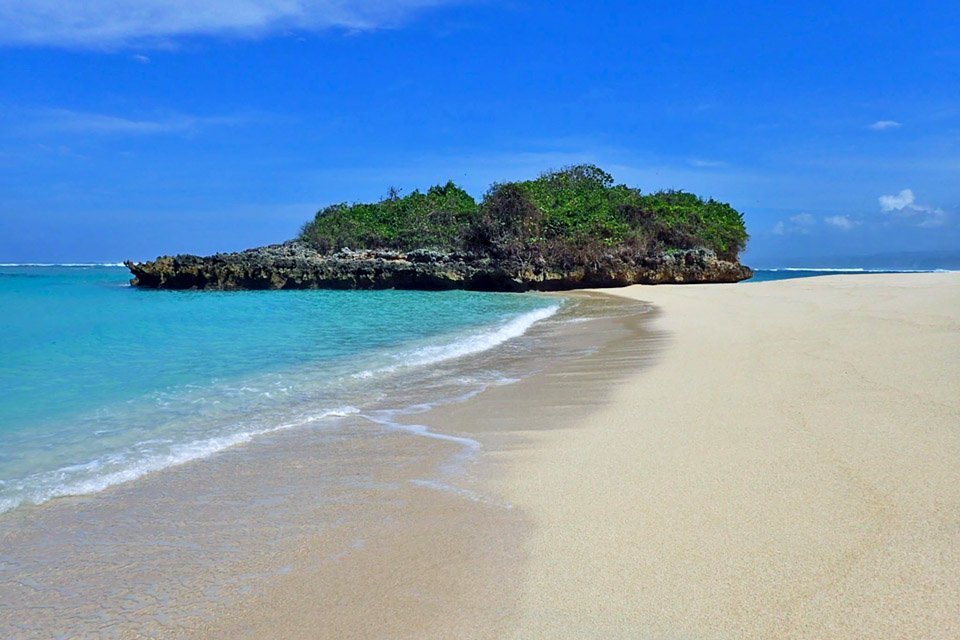
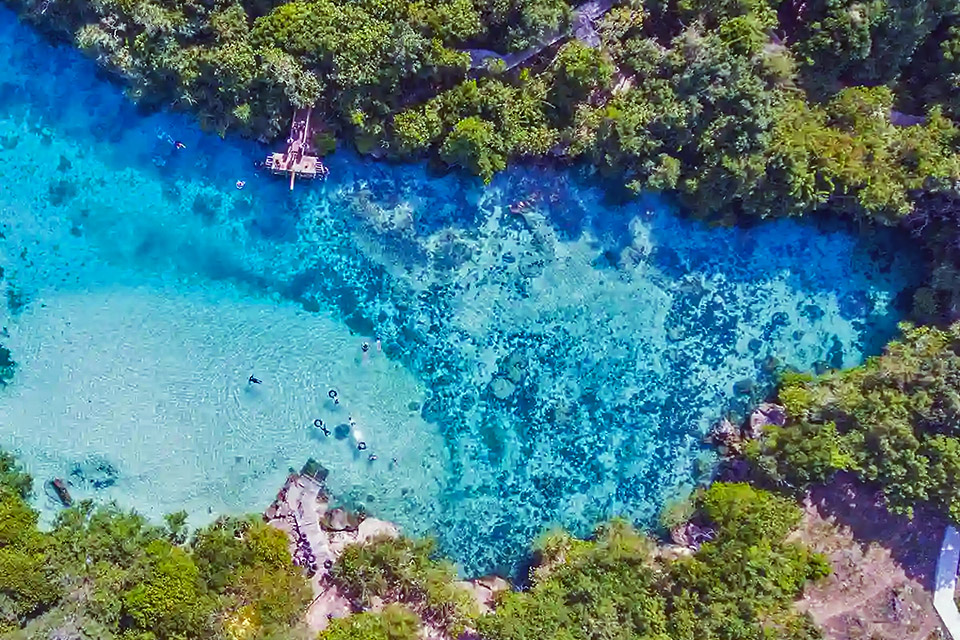
This is where West Sumba starts to shine.
With 4–5 days, you can layer villages → waterfalls → coast in a way that feels organic instead of rushed. The route logic here usually arcs outward: inland culture first, water second, coast last.
Why this order matters:
- Cultural visits benefit from fresh mornings and local presence.
- Waterfalls are best mid-journey, when legs are warm but energy remains.
- Beaches and lagoons reward unstructured time — something you only have once the “must-sees” are behind you.
A well-paced 4–5 day West Sumba itinerary often looks like:
- Days 1–2: Inland villages + one major waterfall.
- Day 3: Transition day toward the coast, with scenic stops.
Days 4–5: Beaches, lagoons, tidal pools, slow afternoons.
This route allows you to experience West Sumba’s defining contrast: dense cultural spaces followed by open coastal release. It’s also the most popular structure for West Sumba tours, because it balances emotional depth with physical comfort.
Who this works for:
- Couples.
- Culture-first travellers who still want beaches.
- Visitors seeking variety without exhaustion.
This is also the sweet spot for travellers who want West Sumba to stand on its own — not just as a prelude to East or Southwest Sumba.
6–7 Days in West Sumba: West as a Base + Slow Layering
Seven days changes the question entirely.
Instead of asking, “What can I fit in?”, the itinerary becomes, “Where do I want to stay longer?” West Sumba works exceptionally well as a base region, allowing slow layering rather than constant movement.
With this timeframe, itineraries often include:
- Multiple nights in one inland area.
- Repeated coastal access at different tides.
- Buffer days for ceremonies, weather, or rest.
- Optional side routes instead of fixed daily plans.
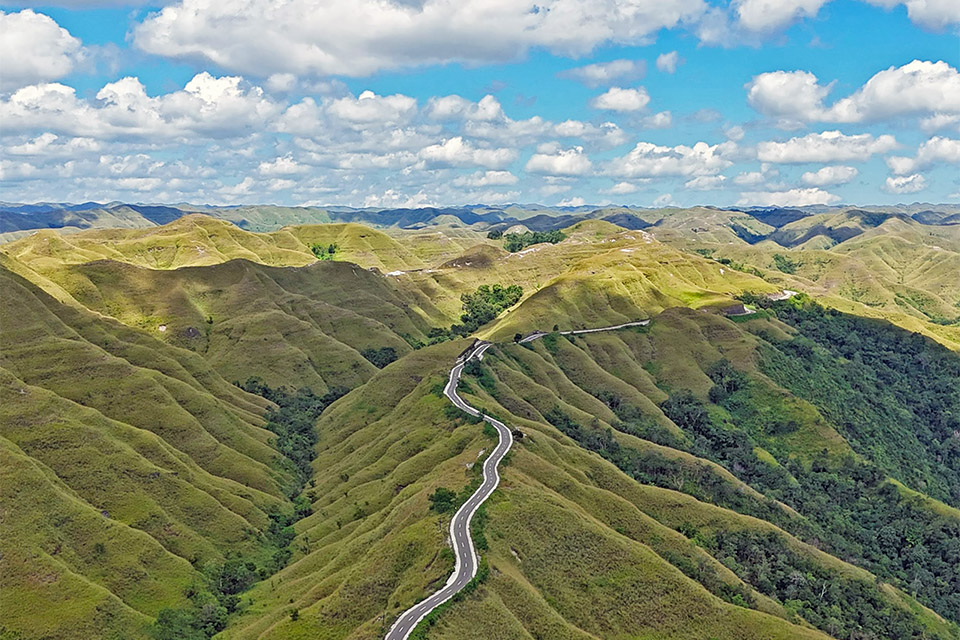
This approach mirrors how locals experience the land — revisiting the same places under different light, rather than chasing novelty. Waterfalls change mood by hour. Lagoons transform with tides. Villages feel different on market days than quiet afternoons.
For photographers, families, and slow travellers, this is where West Sumba becomes immersive rather than impressive.
Who this works for:
- Photographers and filmmakers.
- Repeat Indonesia travellers.
- Anyone prioritising depth over distance.
At this pace, West Sumba stops feeling like a region and starts feeling like a rhythm.
Why Route Logic Beats Attraction Lists
The biggest mistake in planning a West Sumba tour is building an itinerary around named places instead of movement. Attraction lists ignore:
- Road conditions and fatigue.
- Light quality and timing.
- Tide-dependent experiences.
- Cultural unpredictability.
Route logic, on the other hand, respects how the land actually works. It clusters experiences that belong together, spaces driving realistically, and leaves room for the unexpected — which is often where West Sumba is most generous.
A waterfall seen late and rushed is just water.
A lagoon visited at the wrong tide is just a pond.
A village entered without time is just a photo stop.
But when routes are designed with intention, West Sumba reveals itself without effort.
West Sumba rewards flow — not ambition.
If you want to see how these routes translate into complete journeys, explore the 3–5 Day Sumba Itinerary or browse our West Sumba Tours for private, route-based experiences built around these exact principles.
Who West Sumba Tours Are Best For and Who They’re Not
A West Sumba tour is often described as the most “approachable” way to experience the island — but that doesn’t mean it’s for everyone. West Sumba rewards a certain mindset, and when expectations align, it becomes one of the most satisfying regions in Sumba to explore. When they don’t, even beautiful places can feel demanding.
This section is about honest self-qualification. If West Sumba is right for you, you’ll know it by the end.
First-Time Sumba Visitors
West Sumba is, quite simply, the easiest first chapter.
For travellers new to Sumba, this region offers the best balance between accessibility and depth. Attractions are clustered within workable driving distances, accommodation options are more varied, and the learning curve is gentler than in East or remote Southwest Sumba.
A well-designed West Sumba tour introduces:
- Traditional villages without cultural overload.
- Waterfalls that are dramatic yet reachable.
- Beaches and lagoons that don’t require extreme logistics.
Most importantly, West Sumba allows first-timers to understand Sumba before committing to its more demanding regions. You learn how distances feel, how days unfold, and how culture intersects with daily life — all without feeling constantly behind schedule.
If you’re visiting Sumba for the first time and want con
Families & Mixed-Interest Groups
West Sumba works exceptionally well for groups where not everyone wants the same thing.
In families or mixed-interest groups, there’s usually a tension between activity levels, attention spans, and comfort needs. West Sumba’s variety solves this quietly. One day can include a short village visit, another a waterfall swim, another a beach afternoon — without long, punishing drives in between.
Why it works:
- Flexible: stops can be shortened or extended.
- Natural breaks: swimming, shade, open space.
- Visual variety keeps children and adults engaged.
A private West Sumba tour also allows days to end early when needed, something that matters more with families than most itineraries admit. You’re not chasing the next highlight — you’re letting the day land gently.
Beach Lovers Who Still Want Culture
Not everyone comes to Sumba for rituals and ancestral stories — and that’s okay.
West Sumba tour is ideal for travellers who are drawn to beaches, lagoons, and water, but do not want a purely coastal holiday, beach hopping only. Here, culture appears naturally along the way rather than as the sole focus. Villages are part of the landscape, not an academic exercise.
This suits travellers who:
- Want swimming days balanced with meaning.
- Prefer experiential culture over explanations.
- Value the atmosphere as much as attractions.
You can spend a morning at a waterfall, an afternoon at a lagoon, and still pass through a village where daily life is unfolding — without feeling like you’re switching identities as a traveller.
Who May Struggle in West Sumba
West Sumba is versatile, but it’s not universal.
Speed travellers often struggle here. If your instinct is to maximise stops per day, West Sumba will feel slow, even frustrating. Roads, light, and timing simply don’t cooperate with rushed ambition.
Luxury-only seekers may also feel mismatched. While there are comfortable and even high-end stays nearby, West Sumba’s magic isn’t polished. It’s wet paths, village dogs, uneven roads, and changing plans. If “luxury” means predictability and insulation from context, this may not be the right region.
West Sumba asks for engagement, not efficiency.
💡 Insider’s Picks — Best West Sumba Tour Style for First-Time Visitors
If this is your first time and you’re ready to book Sumba tours, this style consistently delivers the best experience:
Private driver-guide
Removes navigation stress and unlocks local timing knowledge.
- Flexible daily endings
Allows you to stop when the day feels complete — not when the plan says so.
- Waterfall + beach balance
Keeps days varied without exhaustion.
This approach doesn’t try to “do” West Sumba. It lets West Sumba happen.
In the end, a West Sumba tour is best for travellers who value flow over force, variety over volume, and experience over accomplishment. If that sounds like you, this region won’t just meet expectations — it will quietly reset them.
Getting There & Getting Around West Sumba
If West Sumba feels approachable once you’re there, it’s because the region quietly solves one of Sumba’s biggest challenges: logistics. Understanding how to arrive — and how to move once you’ve landed — removes most of the friction people associate with planning a West Sumba itinerary.
This is where expectations matter more than maps.
Flying into Tambolaka Airport: Why It Makes Sense
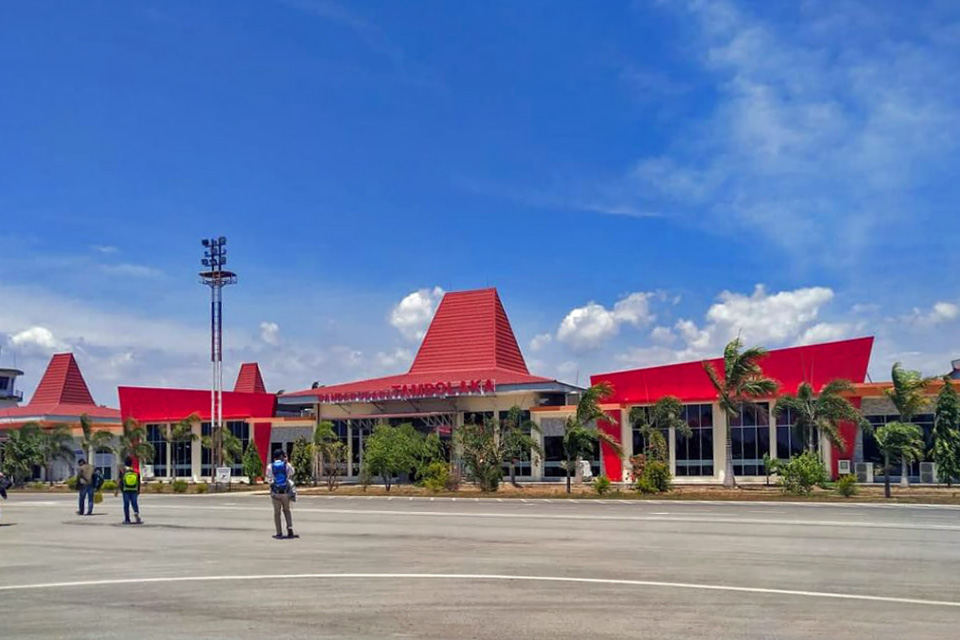
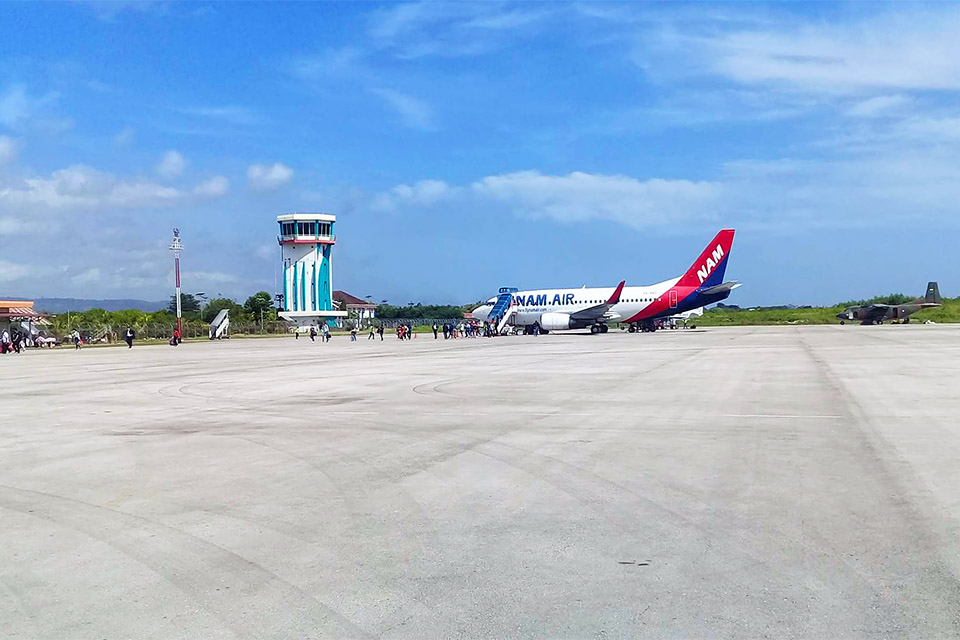
For West Sumba, Tambolaka Airport (TMC) is the natural entry point. It sits on the western side of the island and places you closer to the highest concentration of villages, waterfalls, and beaches.
From a planning perspective, Tambolaka offers:
- Shorter first-day transfer times.
- More efficient routing for 2–5 day itineraries.
- Less pressure on arrival days.
Most travellers underestimate how important that last point is. In Sumba, arrival day sets the tone. Landing at Tambolaka allows you to still visit a village, catch a waterfall, or reach a sunset coast without feeling rushed or depleted.
If you want a deeper breakdown of flight routes and airport logic, this is covered in detail here → How to Get to Sumba
Transfer Times: What “Close” Actually Means in West Sumba
Distances in West Sumba are manageable — but they are not fast. Typical transfer times:
- Tambolaka Airport → Waikabubak: 45–60 minutes.
- Tambolaka Airport → Lapopu Waterfall: 1.5–2 hours.
- Waikabubak → Coastal beaches or lagoons: 1.5–3 hours depending on route.
- Village clusters (Tarung, Praijing, nearby areas): often within 30–60 minutes of each other.
What matters is not just distance, but road texture. Narrow sections, livestock crossings, village traffic, and weather all shape real travel time. This is why West Sumba days tend to feel full even when the map looks simple.
A good West Sumba itinerary builds in margins — not because things go wrong, but because the island moves at its own pace.
Road Conditions & Timing Reality
Road quality in West Sumba ranges from smooth asphalt to patched concrete to rough rural stretches — sometimes within the same hour. During the dry season, travel is generally predictable. In the wet season, water crossings and mud can slow things significantly.
A few realities worth knowing:
- Night driving is strongly discouraged (limited lighting, animals on roads).
- Rain doesn’t stop travel, but it changes the timing.
- “One more stop” often costs more daylight than expected.
This is why most experienced planners work backward from sunset rather than forward from breakfast. Light, not clock time, defines success in Sumba — especially in West Sumba, where water and coastlines are most alive at the edges of the day.
Why Most West Sumba Tours Assume Private Transport
On paper, West Sumba can be self-driven. In practice, most travellers quickly understand why tours assume private transport.
Private transport offers:
- Route flexibility when conditions change.
- Knowledge about ceremonies, access, and timing.
- The ability to stop between attractions.
Public transport is limited, informal, and unreliable for itinerary-based travel. Ride-hailing apps don’t operate here in any practical sense. Hiring a car without a local driver often creates more cognitive load than freedom.
This is why nearly every well-functioning Sumba travel guide quietly assumes a driver-guide model — not as a luxury, but as infrastructure.
If you’re weighing this decision, this page breaks it down clearly → Sumba Private Tour
How Logistics Shape the Experience
In West Sumba, how you move determines how you feel.
Efficient logistics mean:
- Arriving at waterfalls before crowds.
- Reaching beaches when tides are right.
- Entering villages when daily life is visible.
Poor logistics mean:
- Watching landscapes through windows.
- Arriving after moments have passed.
- Feeling rushed in places that resist speed.
Getting to West Sumba is straightforward. Getting around it well is what turns a trip into a journey. Once that piece clicks, West Sumba stops feeling remote — and starts feeling intentional.
Best Time to Visit West Sumba - Water, Weather & Access
If you’re planning the best time to visit West Sumba, forget the usual question of “high season vs low season.” Here, timing is less about crowds or prices and more about how water behaves. Waterfalls, lagoons, rivers, and seas don’t just decorate the journey — they dictate access, rhythm, and even mood.
That’s why any good Sumba travel guide treats seasons not as calendars, but as changing personalities of the same landscape.
Dry Season (May–October): Clear Access, Calmer Water
The dry season is the most predictable time to explore West Sumba, especially for first-time visitors. Roads are reliable, skies are blue, and days unfold with minimal disruption.
What shines in the dry season:
- Beaches & coves: Calm seas, clearer water, better swimming conditions.
- Lagoon visits: Easier access and safer footing.
- Village travel: Roads between inland and coast remain consistent.
What changes:
- Without rain, waterfalls like Lapopu Waterfall and Tanggedu Waterfall may have reduced water flow by late dry season.
- Landscapes turn more golden than green.
For travellers prioritising comfort, reliable driving days, and beach time, this is often the ideal window. Photographers get crisp light and contrast — though the drama is quieter than in wetter months.
Wet Season (November–April): Drama, Power & Patience
The wet season transforms West Sumba into something more elemental. Rain doesn’t arrive as a drizzle — it arrives with intention.
What comes alive:
- Waterfalls surge with force and volume.
- Rivers carve new textures into valleys.
- Forests deepen in colour and density.
For visual impact alone, this is when West Sumba is at its most dramatic. The sound of water becomes constant. Mist clings to cliffs. Even familiar routes feel newly shaped.
What to plan around:
- Some roads are slow or temporarily inaccessible.
- Beach are less predictable for swimming.
- Lagoon visits depend heavily on tide and rainfall.
This season rewards flexibility. Fixed schedules struggle, but adaptable West Sumba itineraries flourish — especially when guided by locals who understand daily conditions.
Lagoon Timing: Why Tides Matter More Than Seasons
Lagoons in West Sumba don’t follow the calendar — they follow the moon. Regardless of season:
- Low tide reveals pools, sandbars, and walkable edges.
- High tide can turn lagoons into deep, reflective mirrors.
Planning lagoon visits without checking tide charts is one of the most common mistakes travellers make. The same lagoon can feel like two entirely different places depending on the hour.
Good itineraries don’t just note where to go — they plan when to arrive.
Photography vs Comfort: Choosing Your Trade-Off
Every season in West Sumba asks you to choose what you value more.
Dry season:
- Easier movement.
- Cleaner logistics.
- Softer visual drama.
Wet season:
- Powerful landscapes.
- Fewer visitors.
- Higher logistical demands.
Photographers often accept wet-season unpredictability for the reward of water-filled frames. Families and first-timers usually prefer the dry season’s smoother flow.
Neither is better — they are simply different expressions of the same place.
So, When Is the Best Time to Visit West Sumba?
The honest answer: When your priorities align with the water.
- If you want beaches, lagoons, and easy pacing → dry season.
- If you prefer waterfalls, atmosphere, and raw nature → wet season.
And if you want both? Shoulder months — where water still moves, but roads remain cooperative — often deliver the best balance.
In West Sumba, timing doesn’t change the plan — it changes the water.
Once you understand that, planning stops being stressful — and starts feeling intuitive.
Why West Sumba Tours Work Best as Private Journeys
West Sumba looks straightforward on a map. Beaches hug the coast, waterfalls sit inland, villages cluster between them. It tempts travellers to believe they can simply connect the dots on their own. In reality, this is exactly where most first-time plans start to unravel.
This is why, more often than not, the most rewarding way to experience the region is to book Sumba tours designed as private journeys — not because West Sumba is difficult, but because it is layered.
Multi-Stop Days Only Work With Control
A typical day in a West Sumba itinerary isn’t a single highlight. It’s a sequence:
- A village visit while people are home.
- A waterfall before crowds or changing light.
- A beach timed for tide and swimming conditions.
- A return drive before dark.
Trying to stitch this together independently often means choosing one and sacrificing the rest. Public transport doesn’t run on attraction logic, and self-driving demands constant recalculation.
A Sumba private tour allows the day to unfold as intended — not rushed, not overextended, but balanced. The vehicle waits. The route adapts. The rhythm stays intact.
Timing Matters More Than Distance
In West Sumba, arriving at the right time matters more than arriving quickly.
- Lagoons change completely with tides.
- Ceremonies begin when the community is ready, not when your watch says so.
- Waterfalls look and sound different depending on rainfall and hour.
Private journeys are built around these realities. Drivers and guides adjust departure times, reorder stops, or linger longer when the moment is right. That flexibility simply doesn’t exist when travel is pieced together from separate bookings.
Cost Clarity Beats Piecemeal Planning
At first glance, independent travel can seem cheaper. In practice, costs in West Sumba add up quietly:
- Transfers booked last-minute.
- Fuel for long inland drives.
- Entry fees paid without context.
- Missed visits due to poor timing.
When you book Sumba tours online as a private experience, costs are clear from the beginning. Transport, time, local access, and guiding are integrated into one structure. There are no surprise trade-offs mid-journey — just decisions made with full visibility.
For many travellers, the value isn’t in luxury, but in certainty.
Flexibility When Conditions Shift
Roads change. The weather moves in. Ceremonies appear unexpectedly. West Sumba doesn’t announce these things in advance.
Private tours are built for this uncertainty. Routes shift. Days are reordered. A waterfall replaces a beach, or vice versa, without stress or scrambling. This adaptability is what keeps the journey enjoyable rather than exhausting.
It’s not about control — it’s about resilience.
Why This Matters Emotionally, Not Just Logistically
West Sumba isn’t a place you rush through. Its impact comes from flow: water leading you, villages opening slowly, landscapes revealing themselves in sequence.
Private journeys protect that flow.
They allow you to arrive calm instead of calculating. To notice details instead of watching the clock. To end days where they make sense, not where transport forces you to stop.
That’s why travellers who choose private tours often say the same thing afterward:
“It felt effortless — and that’s what made it powerful.”
If West Sumba speaks to you as more than a checklist —
if you want the freedom to follow water, light, and moment —
this is exactly how the region is meant to be experienced.
→ Book West Sumba as a Private Tour
How West Sumba Fits Into a Bigger Sumba Journey
West Sumba rarely exists on its own. Even when it’s the emotional highlight of a trip, it often works best as part of a longer Sumba itinerary — one that balances contrast, pace, and geography. Understanding where West Sumba sits in the wider journey is what turns a good trip into a cohesive one.
This is where planning stops being about “what to see” and starts becoming about how the island unfolds.
West Sumba First vs East Sumba First: There’s No Wrong Choice — Only Different Rhythms
Most travellers instinctively start in West Sumba, and for good reason.
West-first logic works well when:
- You want early emotional engagement (waterfalls, beaches, villages).
- It’s your first time on the island.
- You prefer shorter drives at the start while adjusting to Sumba’s pace.
West Sumba eases you in. Attractions are closer together, landscapes change quickly, and experiences feel immediate. It builds confidence — and curiosity — for what comes next.
East-first logic, on the other hand, suits travellers who:
- Arrive with patience already in place.
- Are especially drawn to photography or savannas.
- Want space, light, and openness first.
Starting in the east means beginning with silence, distance, and restraint — then letting West Sumba’s density feel like a reward rather than a demand.
Neither approach is better. They simply tell different stories.
Pairing Density With Openness: Why Contrast Is the Point
What makes Sumba powerful isn’t any single region — it’s the contrast between them.
- West Sumba offers layers: water, villages, movement, variation.
- East Sumba offers space: hills, wind, horizons, light.
Too much density without openness can feel overwhelming.
Too much openness without grounding can feel abstract.
Together, they create balance.
This is why many experienced planners treat West Sumba as the anchor of a journey — the place where experiences stack — and East Sumba as the counterweight, where everything stretches out and breathes.
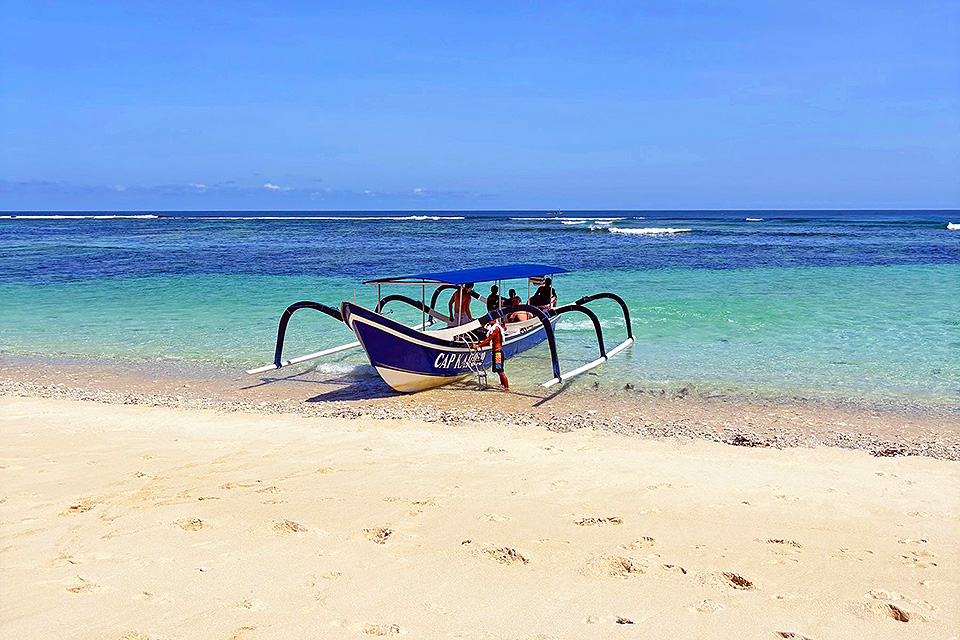
Sample Multi-Region Journey Arcs
To make this practical, here are a few journey arcs that work especially well:
4–5 Days Total
- West Sumba only.
- Ideal for first-timers or short stays.
- Focus on waterfalls, villages, and the coast.
6–7 Days Total
- West → East.
- Begin with density, end with openness.
- Strong balance of culture, water, and landscape.
8–10 Days Total
- East → West → Southwest.
- Space first, flow second, rest last.
- Ideal for photographers, slow travellers, or repeat visitors.
Each arc respects geography instead of fighting it. Drives feel purposeful. Days end naturally. Energy builds instead of draining.
Why This Matters for Experience, Not Just Logistics
When regions are stitched together without intention, Sumba can feel fragmented — long drives, rushed mornings, missed moments.
When regions are sequenced, something else happens.
You begin to notice how:
- Water gives way to land.
- Curiosity gives way to understanding.
- Movement gives way to stillness.
West Sumba, in this context, becomes more than a destination. It becomes a connector — emotionally and geographically — within the broader Sumba travel guide logic.
Continue the Journey
If you’re shaping a longer route and want to see how West Sumba connects naturally with the rest of the island:
→ Explore the Sumba Itinerary Guide
→ Discover the contrast with East Sumba Tours
Because in Sumba, where you go next matters —
but when you go there matters even more.
Follow the Water
In West Sumba, water is never just a highlight.
It is the thread that ties everything together — waterfalls cutting through forested valleys, lagoons filling and emptying with the moon, beaches that stretch into quiet horizons, rivers that dictate where villages rise and roads bend. If you try to “visit” West Sumba without noticing the water, the region can feel like a collection of beautiful stops. But when you begin to follow the water instead, something shifts.
Water becomes your guide.
A well-designed West Sumba tour doesn’t simply schedule waterfalls or lagoons as attractions. It builds around them. It times departures to light. It checks tides before confirming routes. It understands that a waterfall in the morning is different from a waterfall in the afternoon — not because the location changed, but because the energy did.
This is why so many travellers leave West Sumba remembering not just what they saw, but how it flowed.
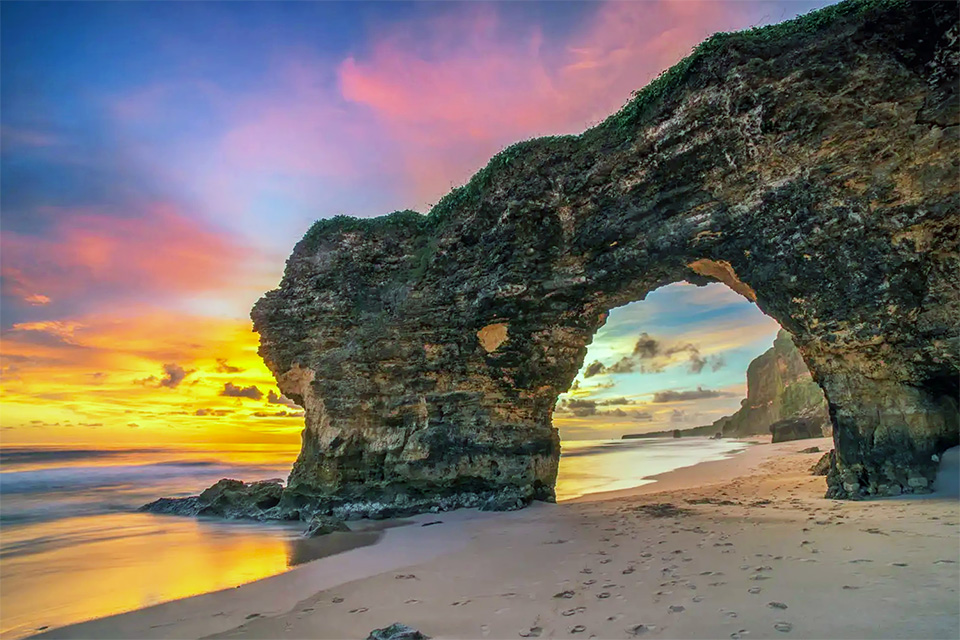
Water as Movement, Not Spectacle
In West Sumba, water moves — and so do you.
You wake early for a waterfall before the heat builds. You reach a lagoon as the tide recedes. You linger at a beach until the wind shifts. The journey is shaped by timing, not ticking boxes.
Unlike regions defined by a single landmark, West Sumba asks you to move between contrasts:
- Inland villages to open coast.
- Dense greenery to exposed cliffs.
- Quiet courtyards to crashing waves.
Water connects each of these transitions. It is both destination and direction.
Why West Sumba Becomes the Anchor Memory
Book our 3-days West Sumba tour →
Travellers often speak about East Sumba’s vastness — the space, the silence, the breath. But when they look back on the journey, West Sumba frequently becomes the anchor memory.
Not because it is louder.
Not because it is easier.
But because it is layered.
In West Sumba, you don’t just pass through landscapes — you enter them. You walk down to waterfalls. You step into lagoons. You sit in village courtyards where water determines daily life. You feel movement in your body as much as you see it in your surroundings.
That embodied quality stays with people.
It’s why many who book Sumba tours return speaking about flow rather than places. They remember the rhythm of days — how mornings began in cool valleys and ended in salt air. They remember transitions more than timestamps.
West Sumba is rarely the loudest part of a Sumba journey. But it is often the most kinetic — the part that teaches you how the island wants to be experienced.
Experience, Don’t Consume
There is a difference between consuming a destination and entering it.
Consuming West Sumba looks like:
- Counting waterfalls.
- Racing between beaches.
- Measuring days by how much you covered.
Experiencing West Sumba looks like:
- Waiting for the right tide.
- Letting a village visit unfold without hurry.
- Accepting that one well-timed stop is worth more than three rushed ones.
This is why private journeys matter here. A thoughtful West Sumba tour protects space. It allows for detours, pauses, and reordered days when conditions shift. It doesn’t trap you inside a rigid plan — it moves with the water.
And that flexibility is what transforms a trip into something lived rather than consumed.
If East Sumba teaches you to breathe, West Sumba teaches you to move.
Together, they complete the island. But if you begin in West Sumba, you begin with motion — with rivers, tides, and transitions guiding your steps.
If you’re ready to follow the water — not chase attractions — the journey is waiting.
Continue your path:
Because in West Sumba, the map is secondary.
The water already knows the way.
FAQ
Is a West Sumba tour worth it?
Yes — especially if you want a balanced introduction to Sumba. A West Sumba tour combines waterfalls, beaches, lagoons, and traditional villages within workable driving distances. Unlike East Sumba’s wide-open savannas, West Sumba offers layered experiences in shorter routes. For first-time visitors or travellers with limited days, West Sumba delivers cultural depth and natural beauty without overwhelming logistics.
How many days do I need for a West Sumba itinerary?
Most travellers need 3–5 days for a meaningful West Sumba itinerary.
- 2–3 days: Waterfall + village sampler.
- 4–5 days: Full balance of waterfalls, beaches, lagoons, and culture.
- 6–7 days: Slower layering with coastal and inland depth.
Trying to compress too many West Sumba attractions into fewer days usually leads to rushed travel and long driving hours.
What are the main highlights included in a West Sumba tour?
A well-designed West Sumba tour usually includes:
- Lapopu Waterfall.
- Tanggedu Waterfall.
- Weekuri Lagoon.
- Mandorak Beach and surrounding coves.
- Traditional villages such as Tarung or Praijing.
- Scenic inland drives and countryside stops.
Rather than stacking attractions, strong itineraries group stops based on route logic, tide timing, and daylight.
Is West Sumba suitable for first-time Sumba visitors?
Yes — West Sumba is often the best starting point. Attractions are closer together, road conditions are generally manageable, and accommodation options are more varied. For travellers unsure whether to book Sumba tours in East or West regions first, West Sumba typically offers a smoother entry experience.
Do I need a private tour for West Sumba?
In most cases, yes. West Sumba tours work best as a Sumba private tour because:
- Public transport is extremely limited.
- Attractions are spread out and not clearly signposted.
- Tide timing affects lagoon visits.
- Village access requires local coordination.
A private driver-guide ensures flexibility, timing control, and cultural sensitivity — all of which significantly improve the experience.
Can I self-drive in West Sumba?
Technically yes, but it is not recommended for most visitors. Road conditions vary, signage is minimal, and distances feel longer than expected. Fuel stations are limited outside main towns. Many travellers who initially plan self-drive later choose to book Sumba tours for efficiency and peace of mind.
What is the best time to visit West Sumba?
The best time to visit West Sumba depends on priorities:
- Dry season (May–October): Easier road access, calmer seas, reliable beach conditions.
- Wet season (November–March): Stronger waterfalls, greener landscapes, dramatic skies.
Lagoon visits depend more on tide timing than season. A good West Sumba itinerary always considers daily tide charts.
Are West Sumba tours family-friendly?
Yes, especially for families comfortable with moderate driving times. West Sumba’s mix of beaches, waterfalls, and villages keeps days varied. However, very young children may find longer inland drives tiring. A private tour allows early finishes and flexible pacing, which helps significantly.
How much does a West Sumba tour cost?
Pricing varies depending on:
- Number of days.
- Vehicle type.
- Accommodation level.
- Guide inclusion.
- Seasonal factors.
Booking a structured West Sumba tour often provides clearer cost visibility than arranging separate transfers, drivers, and local access independently.
Is West Sumba more beautiful than East Sumba?
They are different rather than comparable.
West Sumba is defined by water — waterfalls, lagoons, and coastal contrasts.
East Sumba is defined by space — savannas, hills, and open horizons.
Many travellers include both regions in a longer Sumba itinerary for balance.
When should I book West Sumba tours?
During peak dry season (June–September), it’s advisable to book Sumba tours several weeks in advance, especially for private driver-guides and preferred accommodation. Wet season travel is more flexible but still benefits from early planning due to limited room inventory.
Who should book a West Sumba tour — and who might not enjoy it?
West Sumba tours are ideal for:
- First-time Sumba visitors.
- Couples and small groups.
- Beach lovers who still want cultural context.
- Travellers seeking variety without extreme remoteness.
They may not suit:
- Ultra-fast checklist travellers.
- Luxury-only travellers expecting resort. infrastructure at every stop
- Visitors with only 1–2 days total.
How do I book West Sumba tours properly?
The most reliable approach is booking a route-based private tour that aligns with realistic driving times and tide schedules. Instead of choosing attractions individually, choose a structured West Sumba itinerary designed around flow.