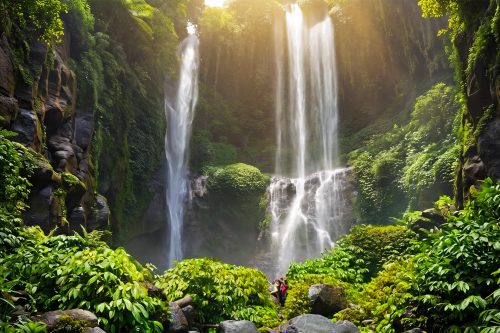
Tibumana Waterfall Guide – There are waterfalls in Bali that demand attention—thundering walls of whitewater, mist rising like smoke, crowds gathered with cameras ready. And then there is Tibumana Waterfall, a place that does the exact opposite. Hidden among Ubud’s quiet eastern fringe, wrapped in palm forests and ribbons of vines, Tibumana feels like a secret you’re meant to stumble upon, not one that shouts for your arrival.
The path leading in already sets the tone: rice fields dipping into ravines, birdsong echoing softly between coconut trunks, the kind of stillness that makes you slow down without trying. And when you finally meet the waterfall itself—its single curtain dropping into a calm basin—it strikes you how gentle a waterfall can be. No roar. No spectacle. Just a soft fall that could lull you into the moment.
Some waterfalls wake you up. Tibumana helps you breathe again.
The Gentle Fall Between the Palms
For travelers exploring the jungle trails and nature escapes featured in our Waterfalls Near Ubud guide, Tibumana is the quiet pause between adventures—a true Ubud jungle pool where you can swim, float, or simply sit on warm rocks with your feet in the shallows.
And for anyone shaping their journey around the heart of Bali, it’s a natural chapter in the broader story of the region—one you’ll find woven into our Ubud & Central Bali Travel Guide, where culture, nature, and slow travel come together.
If you come early enough, before the day’s soft light turns bright, Tibumana feels almost untouched. You hear nothing but the fall itself. You feel the air shift cooler as you step close. And for a moment, it’s just you, the jungle, and the sound of water meeting water.
Best Time to Visit Tibumana Waterfall
Visiting Tibumana Waterfall isn’t just about arriving—it’s about arriving at the right moment. Because this gentle curtain of water shifts its entire personality throughout the day. Light, flow, shadows, and crowds each reshape the scene, turning Tibumana from a dreamy jungle pool to a glowing stage or a quiet sanctuary depending on when you approach.
Morning — Soft Light & Almost-Silence
If you can reach Tibumana between 7:00 and 9:00 am, you’ll find its truest form. The air is cool, the forest still waking, and the basin often empty. Sunlight at this hour filters through the canopy as diffused silver, giving the waterfall a soft, velvety glow—perfect for slow swims and unobstructed photos. This is when Tibumana feels like an Ubud hidden waterfall, still untouched by the day.
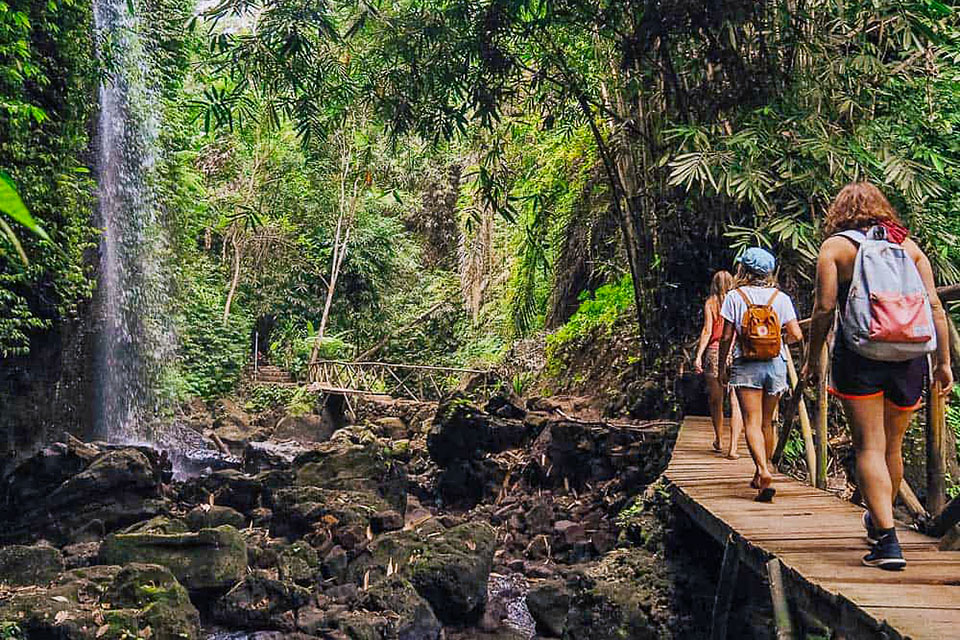
Arrive early enough and you may hear nothing but your footsteps on the wooden walkway and the quiet hush of water ahead. Many travelers who come at dawn end up staying longer than planned—not to chase a shot, but because the calm feels so rare.
Midday — Beams Over the Curtain
Around late morning to early afternoon, the sun climbs high enough to throw direct beams across the fall. This is when Tibumana’s water sparkles and the pool glows turquoise, especially on clear dry-season days. The scene becomes brighter, almost cinematic, with shadows dancing over the cliff walls.
This is also the busiest time of day. Expect more swimmers, more photography sessions, and more energy overall. If you’re hoping for a livelier atmosphere or sunlit portraits, midday brings the warmest light—and the highest foot traffic.
Late Afternoon — Golden Rim Before the Dip
By 3:30 pm onward, the sun begins to slip behind the palms. The jungle cools again, and the waterfall’s edge turns gold for a brief window—like someone lining its frame with light. This is one of the most romantic times to visit, especially for couples or travelers who want to watch the day slow down.
Crowds thin after 4:00 pm, making late afternoon a sweet compromise between beauty and peace: warm tones, softer noise, and space to enjoy the basin without rush.
💡 Insider’s Tips — Timing Your Tibumana Swim
- Best hours for photos: 7:30–9:00 am for soft misty tones; 11:00–1:00 pm for golden beams.
- Avoid post-heavy-rain surges: Wait at least 24 hours after major downpours; the flow can become too strong for safe swimming.
- Weekdays > weekends: Local visitors increase on Saturdays and Sundays—go midweek for the quietest pool.
- Bring a sarong: If you plan to stop at nearby temples (a common route pairing), having one makes entry smoother and more respectful.
Dry Season vs Wet Season
Dry Season
May–September is when Tibumana shines for swimmers. The water is clearer, calmer, and more predictable. The pool stays shallow enough for comfortable dips, and the surrounding paths are at their safest. If your priority is swimming in the iconic Ubud jungle pool, this is the window you want.
Wet Season
October–April brings stronger flow, cooler water, and denser greenery. The waterfall becomes fuller and more dramatic—great for photos, but certain days may require caution. After heavy rain, staff may restrict swimming or temporarily close access due to surges or falling debris risks. Always check conditions onsite.
The Walk In — Jungle Path, Bamboo Bridges & First Impressions
The journey to Tibumana Waterfall begins long before the water comes into view. It starts on a palm-lined village road—quiet, sun-dappled, and slow in that unmistakable Ubud way. Small shrines sit at the bends. Roosters call from behind woven fences. And the air grows cooler the closer you drive toward the forest edge.
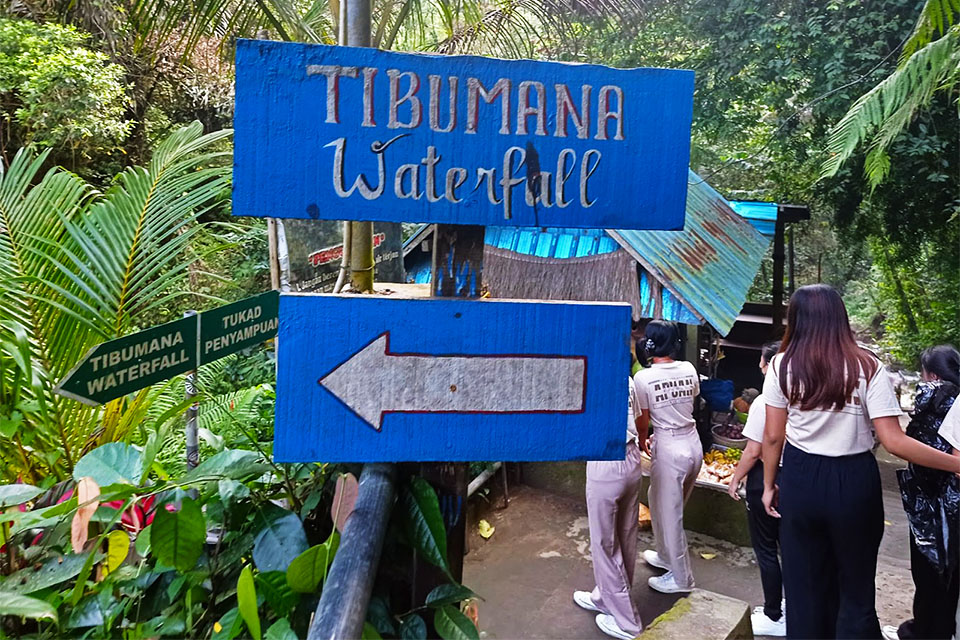
Soon, a modest ticket hut appears, sitting under the shade like a gentle gatekeeper. There’s nothing grand about it, nothing imposing; instead, it feels like the beginning of a story whispered rather than announced. This simplicity is part of Tibumana’s charm: it never tries to impress you too soon.
Once past the entrance, the path folds into a shady forest trail. The temperature drops instantly. Ferns lean over the walkway. Moss drapes the stone steps like soft green cloth. For many travelers, this is the moment they realize Tibumana isn’t just a waterfall—it’s a passage into a quieter side of Ubud’s hidden waterfalls, where the forest becomes a companion rather than a backdrop.
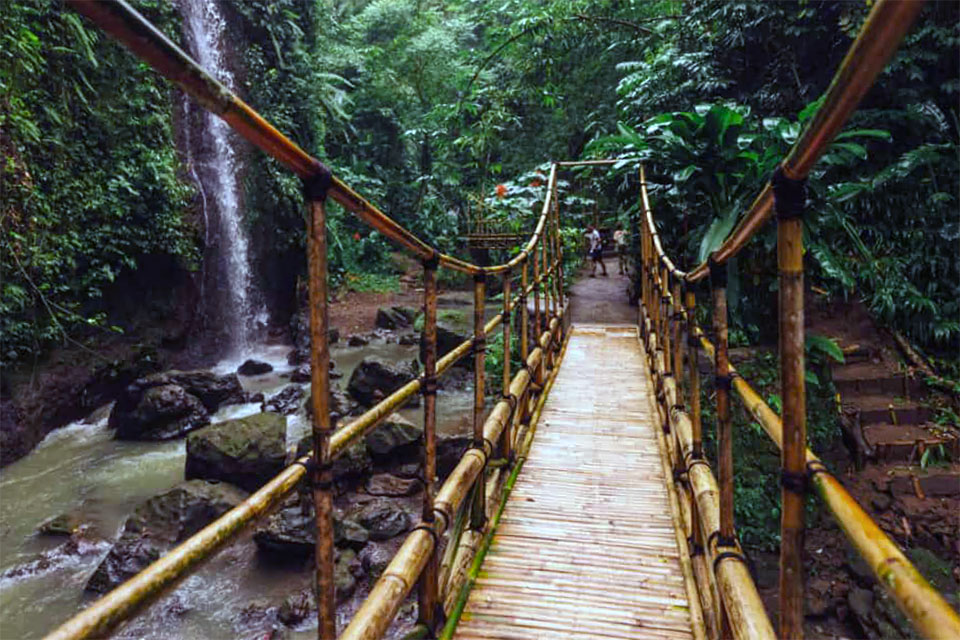
A wooden walkway leads you deeper, and then the first bamboo bridge appears—its slats warm under your feet, its rails tied with natural cord. Below, a calm stream moves in glints of brown and silver, carrying fallen leaves downstream. You cross once, then again, each time feeling the canopy knit itself tighter overhead. Every few steps, the sound of water grows louder, a low hum turning into a steady heartbeat.
On some mornings, mist rests lightly on the river, drifting between the roots like breath. On others, the sunlight flickers through the trees, landing on the path in shifting shapes. No matter the season, the approach to Tibumana carries that slow, anticipatory magic that makes the final reveal more rewarding.
As the jungle deepens, the waterfall’s voice becomes impossible to miss—full, layered, echoing off unseen stone walls. The trail opens into a wide clearing, and suddenly, you see it:
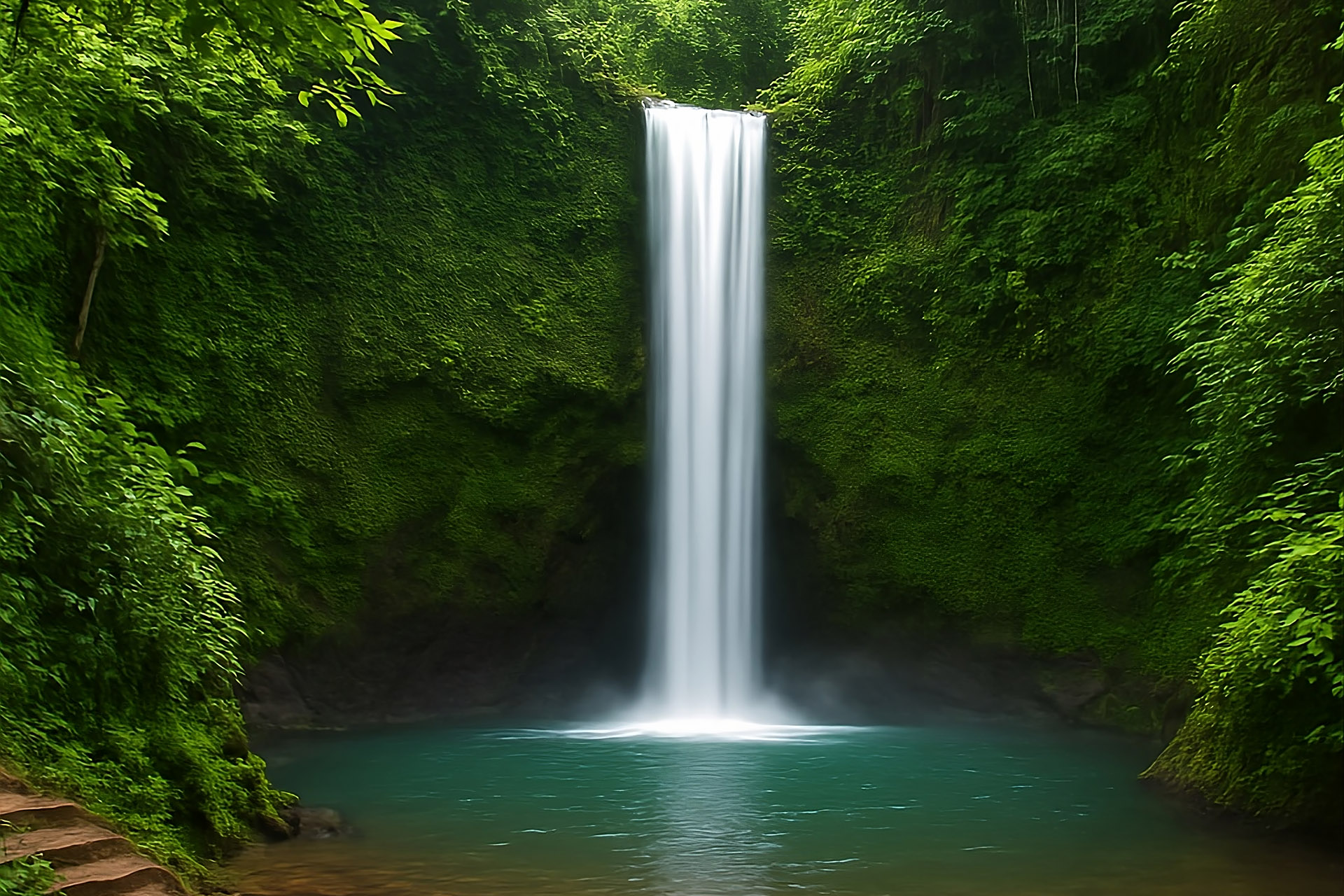
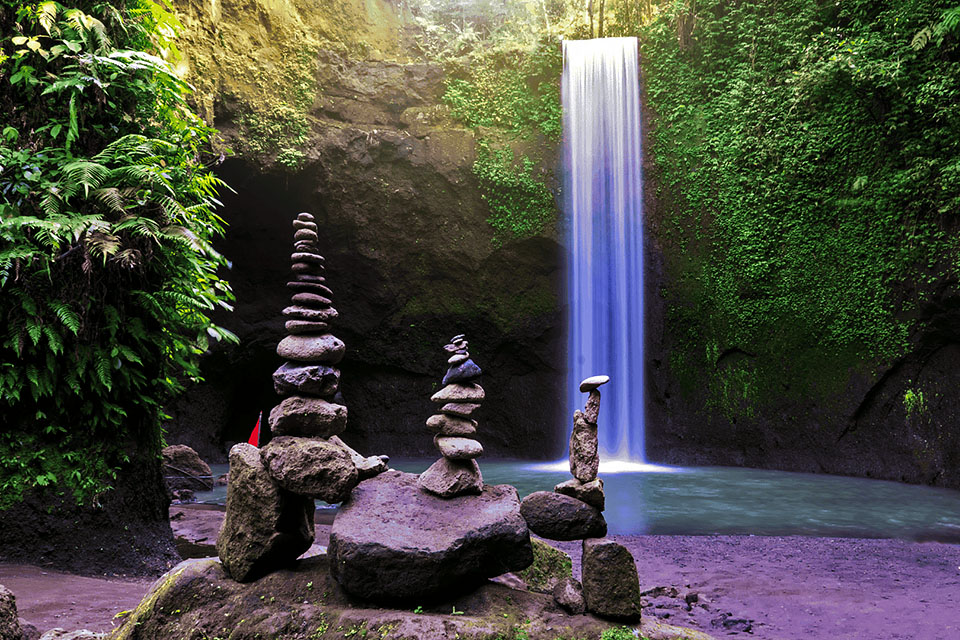
A tall, narrow curtain of water dropping into a perfect pool.
Symmetrical. Serene. Wrapped in cliffs and trees.
The Tibumana jungle pool in its quiet perfection.
Travelers often pause here without realizing it. Something about the scene pulls you to stand still—the color of the water, the hush of the air, the gentle mist carried by the fall. It feels like walking into a space the jungle has kept safe for a long time.
From this clearing, you can sit on the boulders, wander to the pool’s edge, or continue along the trail that eventually connects with other hidden corners of the valley, including the path that links toward Goa Rang Reng (anchor)—another waterfall mini within this same lush corridor of Central Bali.
The entire approach, from ticket hut to first reveal, lasts only 7–10 minutes. And yet, it’s long enough to slow your breathing, reset your senses, and make stepping into Tibumana feel like entering a sanctuary carved from the forest itself.
The Pool Experience — Swimming in Bali’s Jungle Calm
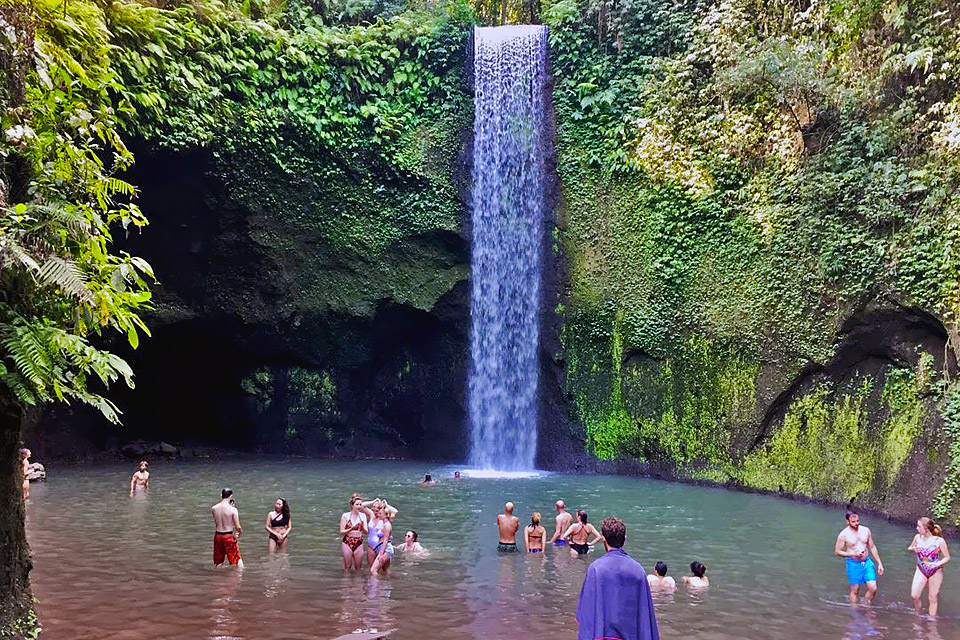
Stepping into the clearing, Tibumana feels immediately different from other Bali waterfalls. Where some falls roar and churn, this one whispers—a soft, steady curtain pouring into a round, sheltered pool. The cliffs curve inward, forming a natural amphitheatre of stone and vines. Light slides in from above in narrow beams. And the water itself, touched by forest shadows, glows a muted turquoise, like a secret kept gently.
The Pool: Calm Edges, Deeper Middle
The Tibumana waterfall pool is one of the safest and most inviting swimming spots among Ubud’s hidden waterfalls. The edges are shallow enough for you to wade slowly, letting your feet adjust to the coolness before drifting farther in. The rock and sandy bottom here feels surprisingly soft—no sudden drop-offs, no jagged surprises.
Move toward the center, and the depth increases. This deeper middle is where the water gathers its strength, swirling in slow, circular motions. It’s not intimidating, but you feel the pull: gentle enough for confident swimmers, cautionary enough for everyone to respect the fall’s natural rhythm.
The temperature stays cool year-round, refreshed by constant flow from upland streams. On warm days, stepping into the water feels like slipping into clarity—cold at first, then soothing, then addictive.
Safety & Seasonal Sensibility
Safety at Tibumana Waterfall is straightforward:
Dry season (May–Sept) offers the calmest conditions, ideal for long swims, floating sessions, and relaxed photography. Water clarity is highest, and visibility lets you see the darker stone beneath your feet.
Wet season brings stronger flow. The pool is still safe on most days, but guides and locals may limit how close swimmers can get to the falling water. After heavy rain, avoid approaching the base—water volume can spike quickly.
The waterfall is monitored daily, and the path is usually closed temporarily if rain conditions make it unsafe. Listen to the attendants—they know the forest’s moods.
Rock Platforms & Natural Seating
Along the sides of the pool are several rock shelves where visitors naturally settle:
- Warm rocks for drying off.
- Flat boulders for leaving your bag.
- Ledges shaded by vines for those who simply want to sit and watch the curtain fall
These spots make Tibumana perfect for slower travelers—families, couples, contemplative wanderers—anyone who prefers jungle calm over adrenaline rush.
Photography — Symmetry, Stillness & the Quiet Hours
A small temple sits just upriver, reminding travelers that Tibumana is more than a swimming spot. It is a sacred waterway, a place used for quiet rituals and purifications by locals. The energy around the pool is peaceful because visitors treat it as such.
Keep voices soft.
Do not climb the cliff walls.
Respect any roped-off areas, especially after rain.
Cultural Connection — The Water, the Temple, the Respect
A small temple sits just upriver, reminding travelers that Tibumana is more than a swimming spot. It is a sacred waterway, a place used for quiet rituals and purifications by locals. The energy around the pool is peaceful because visitors treat it as such.
Keep voices soft.
Do not climb the cliff walls.
Respect any roped-off areas, especially after rain.
The calm you feel at Tibumana exists because generations have cared for this place. Let your visit be part of that care.
💡 Insider’s Tips: How to Capture Tibumana’s Perfect Curtain Drop
- Center-frame vantage point from 6–8 meters back.
- Stand further behind the crowd zone to highlight Tibumana’s natural symmetry.
- Gentle mist and clean vertical lines at 7–8 AM.
- Waterproof case + non-slip footwear for riverbank angles.
The Waterfall Experience — Swim, Explore, Photograph
Stepping into Tibumana begins not just at the waterfall itself, but at the small, welcoming entrance area where village life and gentle jungle energy meet. It’s simple, honest, and wonderfully local—exactly what you’d expect from one of Ubud’s most beloved hidden waterfalls.
Entrance Fee — Small Contribution, Big Experience
Tibumana’s entrance fee is modest, typically ranging from IDR 10,000–20,000 per person. It’s collected by friendly locals who maintain the path, bridges, cleanliness, and safety checks throughout the day. Your contribution helps keep the jungle pristine and the waterfall open year-round.
If you arrive with HalloBALI’s Nature & Waterfalls Tour, this fee is already included—no queue, no small change needed, no fumbling at the gate. Just a smooth transition into nature.
Opening Hours — When the Jungle Opens Its Arms
Tibumana Waterfall generally opens from 7:00 AM to 5:00 PM, with the final entry often around 4:00 PM for safety and visibility reasons. Early morning is the most magical: quieter paths, cool air, and the waterfall moving at its most delicate rhythm. Afternoons remain lovely, warm, and photogenic, but can be busier.
Arrive outside peak weekend hours for a calmer, slower descent through the trees.
If you arrive with HalloBALI’s Nature & Waterfalls Tour, this fee is already included—no queue, no small change needed, no fumbling at the gate. Just a smooth transition into nature.
Facilities — Thoughtful, Simple, and Helpful
Despite its natural feel, Tibumana offers reliable facilities that make the visit easy and comfortable:
- Changing Rooms: Clean, functional huts near the ticket area for slipping into swimwear.
- Parking Area: Ample space for scooters and cars, with attendants helping guide vehicles during busy hours.
- Warungs (Local Stalls): At the entrance sit small family-run warungs selling drinks, fresh coconuts, instant noodles, chips, and sometimes local sweets.
- Toilets: Basic facilities, usually maintained daily by locals.
The walk from the parking area to the waterfall begins here—slow, shaded, and lovely.
Drone Policy — Enjoy the View with Respect
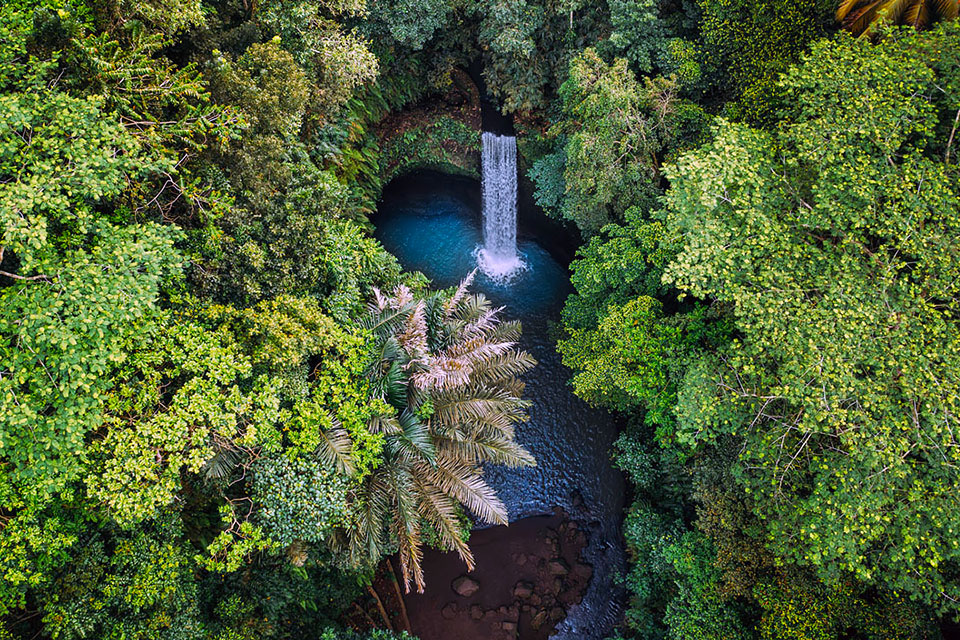
Drone use may be restricted depending on temple activity, visitor volume, or current regulations. Even when drones are allowed, operators must avoid flying too close to swimmers or the waterfall basin. Sound travels differently in the canyon—keep noise minimal, distance respectful, and privacy intact.
When in doubt, ask the entrance attendants. They will give the latest guidance.
 Quick Tip: Travel the Easy Way
If you prefer not to navigate fees, timing, or logistics on your own, join HalloBALI’s Nature & Waterfalls Tour. You’ll skip queues, travel comfortably, receive expert guidance, and enjoy Tibumana at the time of day when it shines at its best.
Sacred Surroundings — Caves, Temples & Hidden Corners
There is a softness to Tibumana that goes beyond the waterfall’s gentle curtain of water. It is something older, quieter, threaded through the land like a whispered blessing. Here, deep in this shaded ravine, nature and spirituality interlace in ways that shape the everyday rhythm of the villagers who protect the area. Tibumana isn’t just a beautiful Ubud jungle pool—it is part of a living sacred landscape.
The Cave — A Mouth of Mystery
Just to the right of the waterfall, depending on the season and water flow, there is a small cave often referenced in local stories. Some days it stands open, its dark entrance framing echoes and dripping moss; other days it is partially closed by higher water levels or weather-related safety checks.
It is not a cave meant for exploring deeply—rather, it is a symbol, a quiet reminder of how many layers remain hidden beneath the surface of Bali’s jungle.
Locals say the cave once connected to ancient pathways used by hermits and priests, though whether this is myth, memory, or a bit of both remains part of Tibumana’s charm. When open, visitors can step near the entrance, feel the cool breath of stone, and sense the deep-time presence carved into the cliff.
Villagers and the Sacred Trust of the Land
The people of Apuan, the village that manages Tibumana, treat this land as heritage, not commodity. They clean the trails each morning, monitor water conditions, repair bamboo bridges, and maintain shrines—all as part of their custodial role. The entrance fee supports these efforts, which is why the area remains one of the most peaceful and well-kept waterfalls near Ubud.
Visitors often comment that Tibumana feels different—gentler, more meditative, somehow more “held.”
That feeling is intentional. It is cultural. It is spiritual.
Respecting signs, keeping noise low, and honoring sacred zones ensures the space retains its authenticity for future generations.
Shrines Tucked into the Rock Walls
If you look carefully along the path and the cliffside that frames the pool, you will see small shrines—some simple stone altars, others adorned with yellow-and-white fabric. These shrines mark places where villagers honor their ancestors, nature spirits, or the protective energies of the ravine.
They are not ornamental. They are lived.
Daily offerings—fresh flowers, rice, incense—appear in the morning light. These offerings help maintain harmony between people, land, and the unseen realm. This is part of why Tibumana feels so calming: the area is not only maintained physically but spiritually.
As you walk the edges of the pool or pause along the rock walls, step gently and stay respectful of these sacred markers. They are the heartbeat of the jungle.
A Water Temple Watching Over the Forest
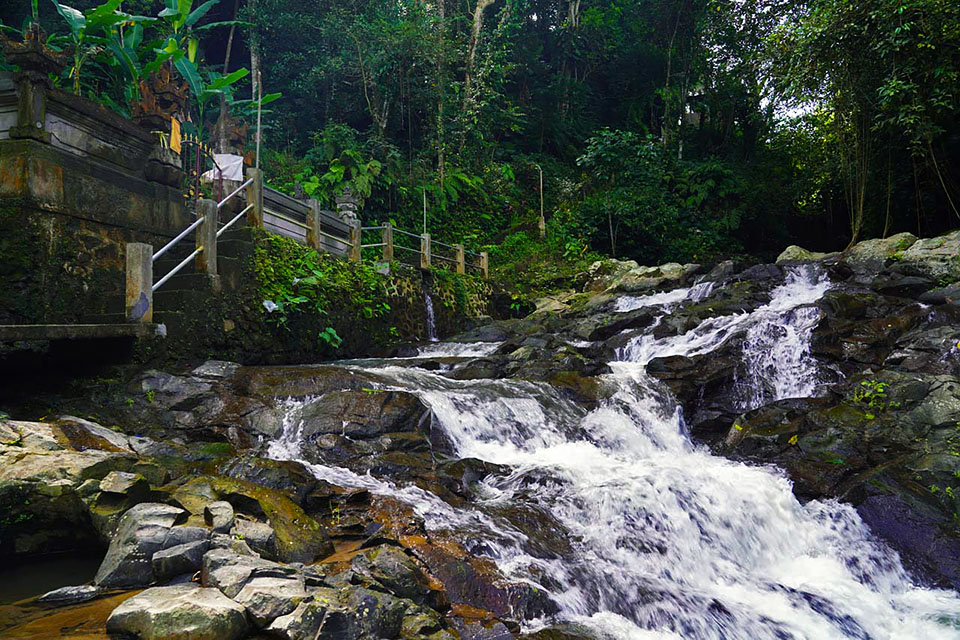
Near the entrance, before you walk down toward the waterfall, sits a small water temple where local villagers hold occasional ceremonies. Melukat (cleansing rituals) sometimes take place here, especially during auspicious days tied to the Balinese calendar. These rituals are intimate and should be observed from a respectful distance.
For travelers who want to understand Ubud’s hidden waterfalls beyond their beauty, recognizing this temple’s presence is essential. It reminds you that Tibumana is not just scenery—it is a site of prayer, gratitude, and continuity.
Villagers and the Sacred Trust of the Land
The people of Apuan, the village that manages Tibumana, treat this land as heritage, not commodity. They clean the trails each morning, monitor water conditions, repair bamboo bridges, and maintain shrines—all as part of their custodial role. The entrance fee supports these efforts, which is why the area remains one of the most peaceful and well-kept waterfalls near Ubud.
Visitors often comment that Tibumana feels different—gentler, more meditative, somehow more “held.”
That feeling is intentional. It is cultural. It is spiritual.
Respecting signs, keeping noise low, and honoring sacred zones ensures the space retains its authenticity for future generations.
Quiet Corners & Slow Discoveries
Wander the periphery of the pool and you’ll find pockets of solitude: mossy stones warmed by filtered light, tiny trickling side-streams, and tree roots intertwined like clasped hands. These corners invite you to slow down, breathe deeper, and observe the finer textures of the jungle—the way sunlight pulses through leaves, or how the waterfall’s mist folds into the air.
Here, the forest feels timeless.
Walk softly—Tibumana’s quiet corners carry stories older than the forest itself.
In these places, the waterfall becomes more than a destination. It becomes a teacher—nudging you to move slower, notice more, and honor the land that holds you.
Combine Tibumana with Nearby Highlights
Tibumana may feel like the kind of place you linger in for hours—breathing with the waterfall, drifting in the jungle pool, letting the world soften around you—but it also sits at the heart of one of Bali’s most rewarding mini-circuits. Within a short radius of this gentle cascade lie some of Ubud’s most meaningful nature and culture spots, each offering a distinct rhythm and story.
Combining Tibumana with nearby highlights transforms your day into a flowing journey through caves, canyons, forests, and traditional villages. It becomes less of a checklist and more of a pilgrimage through Bali’s quieter soul.
Below are curated routes that pair perfectly with Tibumana’s calm.
Tibumana + Goa Rang Reng — Waterfalls & Blessings
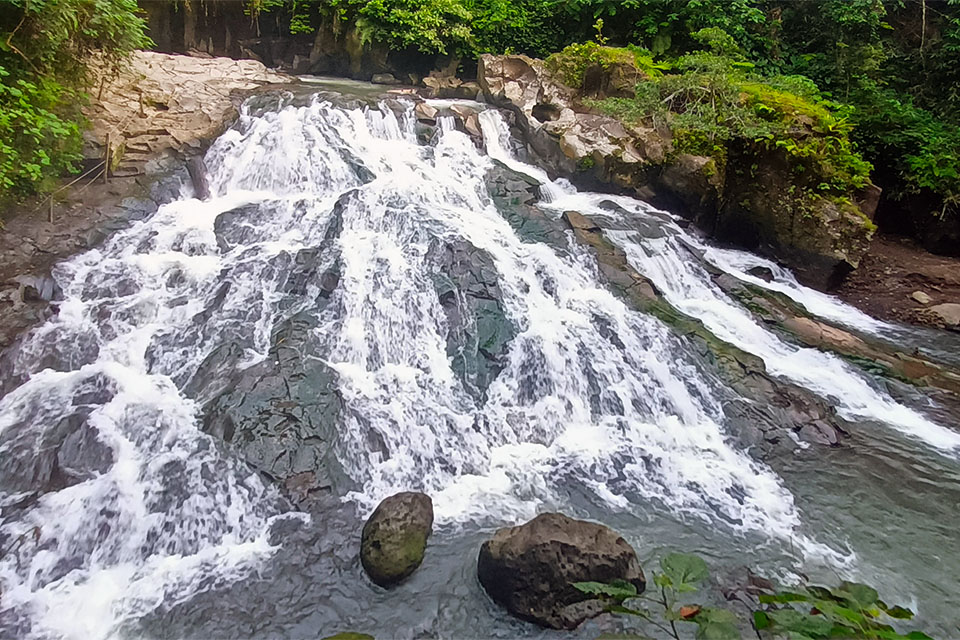
Just a short drive away, Goa Rang Reng offers a stark contrast to Tibumana’s vertical curtain. Here, the water spreads into a wide, sloping cascade that spills over the rocks like flowing silk. Locals come for purification rituals, guided by priests; travelers come for the raw beauty and the canyon-like surroundings.
Together, these two waterfalls create a powerful pairing:
- Tibumana for calmness, symmetry, and a peaceful swim.
- Goa Rang Reng for spirituality, adventure, and a deeper dive into Balinese water rituals.
The route is ideal for travelers who love mixing nature with meaning.

Tibumana + Tegenungan — The Classic Loop
For those wanting both quiet and grandeur, the combination of Tibumana + Tegenungan Waterfall creates a full spectrum experience. Start your morning in Tibumana’s peaceful jungle pool, then continue to the power and drama of Tegenungan, one of Bali’s most famous waterfalls.
This loop gives you:
- A soft beginning.
- A powerful ending.
- A day shaped by the shifting moods of water.
👉 Related Read →
Waterfalls Near Ubud – Jungle Escapes & Swimming Spots
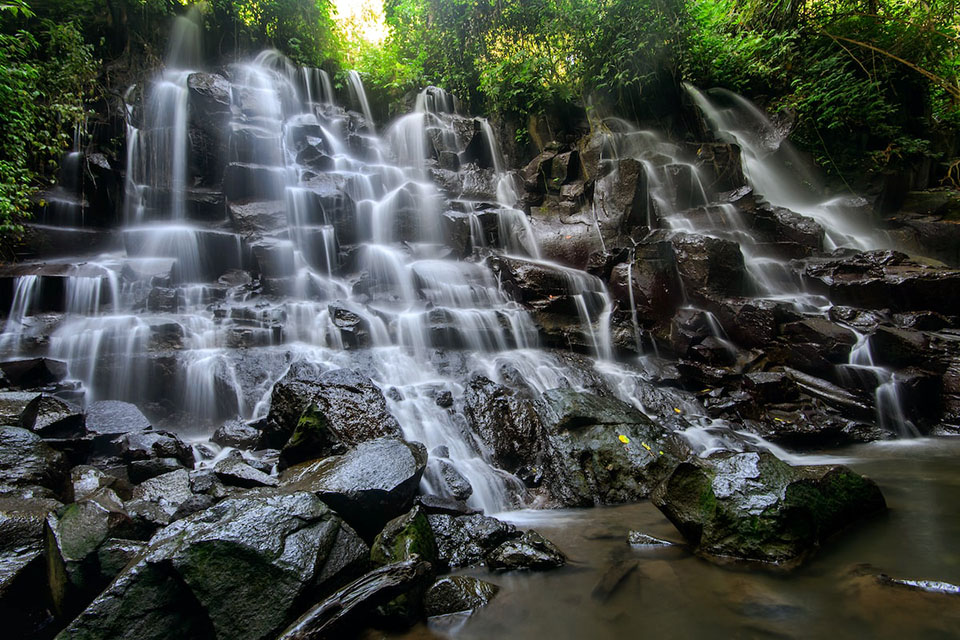
Tibumana + Kanto Lampo — Contrast & Playfulness
If Tibumana is serene, Kanto Lampo Waterfall is playful. Its iconic rock staircase and multi-tiered splash zones create a lively space where sunlight dances on wet stone. It’s social, energetic, perfect for photography—and beautifully different from Tibumana’s soft charm.
Visiting both gives you the best of Ubud’s waterfall personalities: the contemplative and the joyful, the stillness and the splash.
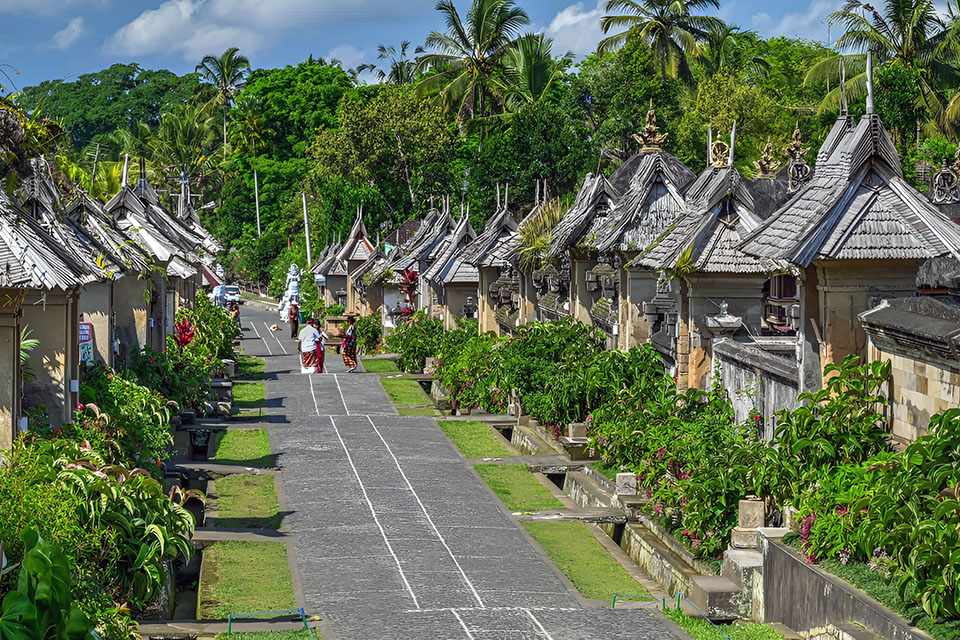
Tibumana + Penglipuran Village — Culture Between the Trees
A short detour takes you to Penglipuran, one of Bali’s cleanest and most traditional villages. Bamboo forests surround it, and the community layout follows ancient architectural harmony. Walking its stone path after swimming at Tibumana feels like stepping from nature into heritage, where time slows in an entirely different way.
For culture seekers, this pairing is unmatched.
💡 Insider’s Picks: The Calm Traveler’s Waterfall Circuit
- Start at Tibumana before 9 AM for the most peaceful swim.
- Head to Goa Rang Reng for a spiritual cleanse or canyon exploration.
- Add Kanto Lampo midday for energetic photography.
- Or choose the culture route: Penglipuran Village + Tibumana for a balanced, quiet-day circuit.
- End with Tegenungan for dramatic golden-hour views.
Responsible Travel at Tibumana
Places like Tibumana survive—and stay beautiful—because the people who visit choose to treat them gently. The waterfall may feel wild and untouched, but it lives within a village-managed forest, cared for through daily offerings, temple rituals, and community stewardship. When you enter this jungle pool, you are stepping into a space that the locals consider both natural and sacred.
Responsible travel here is not a rulebook; it’s a way of honoring the calm that Tibumana freely gives.
Start with the simplest act: carry out everything you bring in. Even small bits of plastic, fruit peels, or bottle caps can disrupt the delicate jungle ecosystem. Waste management in rural Bali is still evolving, and every traveler who packs out their trash helps protect the river that feeds this waterfall.
Just as important: never use soap, shampoo, or chemical products in the water, even if they claim to be biodegradable. The pool is fed by a living river system that flows into rice fields, villages, and sacred sites downstream. Keeping it clean is an act of respect for the communities who depend on that water every day.
Stay on the designated trails, especially near the cliffs and forest edges. The pathways may feel sturdy, but the surrounding slopes are made of volcanic soil that erodes easily. Stepping off the trail can damage roots, disrupt small shrines, and loosen the earth around the pools.
And always be mindful of local rituals. You may see villagers making offerings at the shrines tucked into the cliffs, or a priest performing small ceremonies. In these moments, keep voices low, avoid blocking access, and never climb onto altar stones. These are living traditions, not tourist attractions.
Tibumana rewards those who move slowly, softly, with intention. Treat the waterfall with care, and it remains the serene jungle sanctuary travelers dream of.
Care for the pool, and the pool gives its calm back to you.
Let the Curtain Fall Around You
There are waterfalls in Bali that shout for your attention — dramatic cascades, echoing ravines, cliffs sharpened by centuries of fast water. And then there is Tibumana, a place that doesn’t need to raise its voice at all.
Here, the magic lies in gentleness — in the simple line of water slipping down a moss-darkened wall, in the hush of trees leaning over the pool, in the soft light that filters down like the closing act of a day well lived. You feel it the moment you arrive: the sense that this is a space designed not for spectacle, but for balance.
Tibumana is the rare kind of beauty that never overwhelms. It steadies you. It reminds you that nature at its simplest can still be nature at its most complete.
Stand close enough to the water and you’ll notice how the sound isn’t a roar, but a constant, steady exhale — the earth breathing, the forest settling, the pool humming its old lullaby. Even the walls around it seem to fold in gently, the way curtains fall softly around a performer at the end of a show. Except here, you are the one stepping quietly into the spotlight of an ancient, natural stage.
There’s no pressure to swim. No crowds pushing forward for a photo. No rush to tick off another bucket-list stop.
Just the rhythm of falling water, birds stitching sound between branches, the perfume of leaves warming under morning sun, and the unmistakable feeling that you’ve been allowed into a place that holds itself apart from the world.
And when you leave, the calm follows you back up the trail — in your breath, in the loosened corners of your shoulders, in the way the forest light still flickers in your mind like a lantern you weren’t aware you needed. If you’re dreaming of a day in Bali that feels soft, grounded, and beautifully human, let Tibumana be your anchor. Let it remind you that not every journey needs to be loud to be unforgettable.
Let the curtain fall around you.
Let Bali show you its gentlest edge.
✅ Book HalloBALI’s Nature & Waterfalls Tour — If you’d like to experience it with ease — guided, unhurried, and with hidden stories revealed along the way — you can trust.
👉 Related Product → Nature & Waterfalls Tour by HalloBALI
👉 Related Read → Ubud & Central Bali Travel Guide
FAQ
1. Where is Tibumana Waterfall located?
Tibumana Waterfall is located in Apuan Village, Bangli, about 25–30 minutes from central Ubud. The drive takes you through palm-lined backroads and quiet local villages, making it one of the closest and most peaceful waterfall escapes near Ubud. Most travelers visit Tibumana as part of a half-day waterfall circuit including Goa Rang Reng, Kanto Lampo, or Penglipuran Village.
2. How long is the walk to Tibumana Waterfall?
The walk to Tibumana takes 10–15 minutes on a well-maintained jungle trail. You’ll pass a shaded forest path, bamboo bridges, and a small stream crossing before reaching the main clearing. The trail is beginner-friendly with gentle slopes, making it suitable for families, casual hikers, and anyone seeking a soft, scenic approach.
3. Is Tibumana Waterfall good for swimming?
Yes — Tibumana is one of the best waterfalls in Bali for a calm swim. The natural pool has a shallow, gentle edge and a deeper middle section. Water clarity is usually good in the dry season and slightly stronger during wet season flows. Always keep a respectful distance from the main drop, especially after rain, as currents can become unpredictable.
4. What is the best time to visit Tibumana Waterfall?
For soft light and minimal crowds, the best time to visit Tibumana is early morning (7–9 AM). Midday offers bright beams over the water, perfect for photos, while late afternoon brings a warm golden glow. Visit on a weekday for an even quieter experience. Avoid visiting right after heavy rain when water volume can surge.
5. How much is the entrance fee to Tibumana Waterfall?
The entrance fee for Tibumana is usually IDR 20,000 per person. Tickets are purchased at the small hut near the parking area. Fees are used by the local community to maintain the trail, facilities, and sacred surroundings. Additional small costs may apply for parking or optional donations at nearby shrines.
6. Are there facilities at Tibumana Waterfall?
Yes. Tibumana offers changing rooms, toilets, small warungs, and a shaded rest area at the entrance. The waterfall itself remains natural with minimal development, allowing the jungle setting to stay peaceful. Facilities are basic but well-maintained by the village community.
7. Can I fly a drone at Tibumana Waterfall?
Drone use at Tibumana is generally restricted due to safety, noise, and the presence of nearby sacred spaces. Some areas prohibit drone flights entirely, while others require local approval. Always check with the village staff at the entrance. If drones are allowed on the day, fly respectfully — no hovering above visitors, swimmers, or temple areas.
8. Is Tibumana safe to visit during the wet season?
Tibumana is open year-round, but during the wet season (Dec–Mar), water flow becomes stronger and the pool may deepen. While the waterfall looks more dramatic, avoid visiting immediately after a heavy downpour and listen to any safety instructions from local staff. Trails can also be more slippery, so wear non-slip footwear.
9. What should I wear or bring to Tibumana Waterfall?
Wear comfortable walking shoes, and bring swimwear, a quick-dry towel, water, and a waterproof case. If you plan to visit nearby temples, carry a sarong (or rent one at the entrance). In the morning, the mist around the waterfall can be cool — a light cover-up can help if you’re sensitive to temperature.
10. Can Tibumana be combined with other attractions nearby?
Absolutely. Tibumana is often paired with nearby highlights such as Goa Rang Reng, Kanto Lampo Waterfall, Penglipuran Village, or the Tegenungan loop. These combinations create some of the best nature-focused day trips from Ubud. Many travelers prefer joining a guided Nature & Waterfalls Tour for convenience, timing, and local insights.