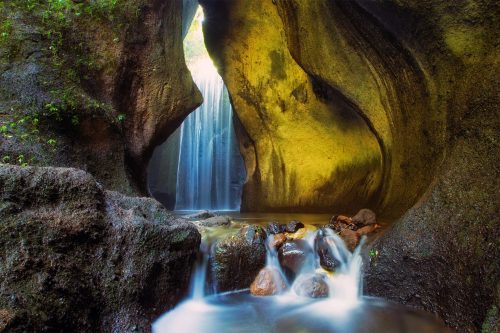
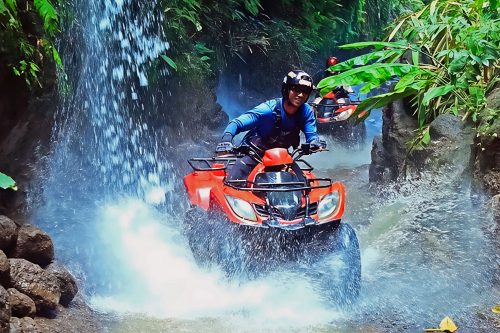
Waterfalls Near Ubud – There’s a pulse that runs beneath the calm of Ubud — a rhythm not heard in the sound of traffic or temple bells, but in the steady breath of falling water. Beyond the rice fields and art galleries, the heart of Bali’s central highlands is alive with rivers carving their way through jungle and stone, tumbling into secret basins where time feels ancient and untouched. This is where the island exhales — through its waterfalls.
To wander into the highlands north and east of Ubud is to follow these rivers back to their source, tracing the living veins of Bali’s landscape. Here, every path seems to end in mist, every sound builds toward a rush of movement. The air cools, the earth darkens, and the scent of wet leaves replaces the fragrance of frangipani. Water becomes both guide and destination — drawing travelers to places where the island’s spirit still moves unhurried and pure.
In Balinese belief, water (tirtha) is not merely physical; it is sacred — a source of cleansing, fertility, and balance. It connects the gods who dwell in mountain springs with the farmers who tend the rice fields and the communities who pray at temple altars. Every cascade, from the thunderous roar of Tegenungan to the quiet veil of Tibumana, holds meaning. Visiting these waterfalls near Ubud isn’t just about chasing beauty — it’s about witnessing the island’s heartbeat made visible.
Where the Island Flows Wild
Follow the rivers of Ubud, and you’ll find where Bali still dreams — in the rhythm of falling water.
Some falls reveal themselves boldly, roaring through gorges and glinting in sunlight. Tegenungan, for instance, stands proud and dramatic, a favorite among locals and day-trippers alike. Others, like Tukad Cepung, hide within stone cathedrals, where sunbeams slice through mist like divine brushstrokes. Between these extremes lie dozens more — Kanto Lampo’s playful rock steps, Goa Rang Reng’s sacred cascades, Tibumana’s meditative calm — each one a verse in Bali’s ongoing conversation between land and sky.
This Ubud Waterfall Guide is more than a checklist of scenic stops. It’s an invitation to move slower, listen closer, and understand the island’s relationship with nature — and with you. Whether you’re standing beneath the cool spray of a jungle curtain or sitting quietly by a hidden pool, you are part of that rhythm too.
For travelers staying in Ubud, exploring the Ubud Waterfall Loop is among the most rewarding day journeys you can take. Within 30 kilometers of town lies an entire world of rivers, valleys, and sanctuaries — each offering a different mood. Some are for adventure, some for meditation, and some, like Beji Griya or Goa Rang Reng, for those seeking a deeper connection to Bali’s spiritual traditions. The journey may begin on the paved roads of Ubud, but it quickly dissolves into paths of moss and memory.
So lace your shoes, bring your sense of wonder, and follow the sound of falling water. In the highlands north of Ubud, you’ll find not only waterfalls but stories — of devotion, resilience, and nature’s endless renewal.
💡 Related Article: Ultimate Ubud Travel Guide
💡 Related Product: Ubud Nature & Waterfalls Tour
Signature Falls – Ubud’s Timeless Classics
Some waterfalls earn their fame not by being hidden, but by being unforgettable. Around Ubud, a few cascades have become icons of the island — places where nature’s power and Bali’s spirituality meet in effortless harmony. Tegenungan, Tibumana, Kanto Lampo, and Goa Rang Reng form what might be called the “Four Pillars” of Ubud’s waterfall circuit: each distinct in shape and spirit, yet all bound by the same flowing lifeblood.
These are not merely photo stops — they are living landscapes. Each waterfall reveals a different facet of Bali’s connection to water: from raw energy and sacred purity to playful calm and ceremonial devotion. For travelers seeking the best waterfalls near Ubud, this quartet captures the island’s essence in motion.
Tegenungan Waterfall – The Roar of the River

These waterfalls remind us that even the most photographed places still hold quiet corners for those who linger.
Only a short drive south of Ubud (about 20 minutes), Tegenungan Waterfall sits in the lush Petanu River valley, a natural amphitheater where sound and mist embrace. It’s one of the few Bali jungle waterfalls that remains accessible year-round, with a paved pathway leading down to its thundering curtain of white water.
At first glance, Tegenungan might seem too famous, too photographed. But arrive early — before 8 a.m. — and you’ll see another side. The air is soft with morning mist, birds call from the canopy, and the roar of the river fills the valley like a heartbeat. This is when the falls are most alive, unhurried by the day’s visitors.
The water tumbles powerfully, especially after seasonal rains (December to March), feeding natural pools ideal for wading or simply cooling your feet. From the upper platform, the view opens like a stage curtain: a single majestic drop, framed by emerald cliffs and the rising sun.
For the Balinese, the Petanu River is sacred, carrying centuries of stories through Ubud’s soul. Tegenungan’s power mirrors that reverence — an everyday temple of motion where you don’t need to pray to feel blessed.
💡 Related Article: Tegenungan Waterfall Guide – Best Time to Visit & What to Expect
Tibumana Waterfall – The Curtain of Calm

Where Tegenungan roars, Tibumana Waterfall whispers. East of Ubud, near Bangli, lies a different kind of beauty — soft, symmetrical, meditative. A short jungle walk leads to a single column of water falling gracefully into a circular pool, like a silk ribbon unfurling through green light.
This is one of the few Ubud waterfalls tied closely to local temple rituals. The nearby Pura Dalem Pengibul considers the site sacred, and ceremonies often take place at the hidden shrine behind the cascade. When you step into the pool, it feels as if the whole forest is exhaling — serene, protective, timeless.
Tibumana’s gentle flow makes it ideal for swimming, and the calmness of its surroundings gives it a near-spiritual quality. Come early or during weekdays for a truly private experience; by late morning, the falls often draw a handful of mindful travelers seeking peace more than spectacle.
Visiting Tibumana is a reminder that Bali jungle waterfalls are more than natural beauty — they are invitations to pause, to breathe, and to let go of everything unnecessary.
💡 Related Article: Tibumana Waterfall – Swimming in Bali’s Jungle Pool
Kanto Lampo Waterfall – Nature’s Staircase

If waterfalls could smile, Kanto Lampo would be the cheerful one. Located just outside Gianyar, about 20 minutes from Ubud, it’s among the most photogenic waterfalls near Ubud, with water cascading playfully down a series of black volcanic rocks.
Unlike the vertical drops of Tegenungan or Tibumana, Kanto Lampo spreads like a fan — dozens of mini-streams tumbling over natural steps that shimmer in the light. Visitors often climb partway up, finding perches where the water splashes around them. The combination of accessibility, safety, and beauty makes Kanto Lampo a favorite for families and social media explorers alike.
Yet beyond its friendly vibe lies something older. Locals will tell you the waterfall was not always visible — it emerged suddenly after a landslide years ago, revealing an ancient spring long hidden by stone. Some say it was uncovered by divine will, returning to bless the land once more.
Come in the afternoon when the sunlight strikes the spray, and the rocks glisten like polished obsidian. It’s easy to understand why this place feels joyous — the island’s exuberant side made visible.
Goa Rang Reng Waterfall – Where Ritual Meets Wild

Just a short drive from Tibumana lies Goa Rang Reng, one of the most spiritually charged Bali jungle waterfalls. This site sits where sacred water rituals meet raw nature — a series of gentle cascades flowing beside a temple cave adorned with moss and offerings.
Unlike most waterfalls that invite you to swim, Goa Rang Reng asks for quiet respect. The locals often come here for melukat, a traditional Balinese purification ceremony. Water flows down sloping rocks rather than falling vertically, allowing visitors to climb safely and bathe in its cleansing streams.
The atmosphere is thick with reverence — incense smoke, chanting, and the sound of water merging into a single prayer. Even if you don’t participate in the ritual, simply standing by the pool and watching devotees perform their blessings offers a profound glimpse into how deeply water is woven into Balinese life.
Adventure and spirituality coexist here. A narrow path continues deeper into the forest toward Goa Kelep, a hidden cave where river and temple merge into the earth. For those who walk slowly and listen, Goa Rang Reng becomes not just a stop on a map, but a journey into the island’s sacred silence.
Insider’s Tips: How to See the Classics Differently
- 🌅 Arrive early or near sunset to avoid crowds and catch golden light filtering through the trees.
- 🕉️ Combine Tibumana + Goa Rang Reng for a meaningful half-day of natural beauty and spiritual immersion.
- 🌧️ Tegenungan is best after rain for full volume — but wear non-slip shoes on the stone steps.
- 🧣 Bring a sarong, as several waterfalls are temple-adjacent and may host local ceremonies.
Each of these timeless waterfalls reflects a balance — between popularity and peace, adventure and reverence, nature and nurture. They remind us that visiting responsibly is part of the journey: contributing small donations at local gates, dressing modestly near temples, and treading lightly on paths that generations of villagers have tended.
The reward? A deeper kind of encounter — one that transcends the photo and lingers like the echo of falling water.
💡 Related Product: Ubud Nature & Waterfalls Tour
Hidden Treasures – Off the Map and Into the Green
There are waterfalls you visit — and then there are waterfalls you find. The difference lies in the silence between footsteps, the scent of wet earth, and the way light filters through the canopy when the world narrows to a single sound: water meeting stone. Around Ubud, beyond the well-trodden paths, lie cascades that few maps mark clearly and even fewer crowds reach. They’re the hidden arteries of Bali’s heart — wild, intimate, and alive with ancient whispers.
Here, discovery isn’t only about direction; it’s about attention. To reach these hidden waterfalls near Ubud, travelers follow local paths through bamboo groves and terraced valleys, crossing small bridges or motorbike trails known only to village guides. The reward is solitude, the kind that hums softly between bird calls and rushing water.
These are the Bali jungle waterfalls for the soul-seekers — places where you float instead of pose, listen instead of scroll, and understand what Balinese people mean when they call water tirta, the essence of life.
The best waterfalls near Ubud aren’t found by signs — they’re found by listening to the jungle.
Suwat Waterfall – Nature’s Hidden Chamber


Tucked inside a tranquil pocket of Gianyar, Suwat Waterfall feels like stumbling into a secret sanctuary sculpted by time. The trail begins through a lush rice village, leading into dense jungle wrapped in vines and birdsong. As you descend, the sound of falling water echoes softly through the canyon — a slow, rhythmic invitation.
The first sight is breathtaking: a slender stream of water drops into a dark pool framed by a natural cave. Moss and roots hang from the cliff’s edge, and the filtered sunlight dances through the mist like liquid glass. This is a place to float — literally. Locals have fashioned small bamboo rafts that let you drift gently under the falls, perfect for quiet moments or cinematic photos that look straight out of a dream.
Suwat’s serenity is its strength. Even on weekends, it rarely feels busy. The surrounding cave walls act like an amphitheater, amplifying every ripple and whisper. The atmosphere borders on meditative — part fairytale, part prayer.
💧 Quick Tip: Bring swimwear and a waterproof bag; phones and cameras often get misted here. Early morning light gives the water its most luminous emerald hue.
Beji Griya Waterfall – Purification in Motion


While many come to Bali seeking beauty, others come for renewal — and few places embody that better than Beji Griya Waterfall. Hidden within a spiritual complex near Punggul village, this is not just a natural wonder but a sacred purification site, where local priests conduct melukat rituals to cleanse body and spirit.
Here, the waterfall doesn’t simply fall — it blesses. The site weaves together myth and devotion: the name Beji Griya means “house of sacred spring,” and each corner of the rock-carved canyon holds symbolic carvings of protective deities and guardians.
Visitors can participate in the purification process, guided by temple priests. Offerings of flowers and rice are prepared, prayers are spoken, and the cool water cascades over bowed heads in a rhythm as old as the island itself.
Beyond its spiritual gravity, Beji Griya also stuns visually — natural stone walls wrapped in moss, water veils glowing gold in afternoon light, and a serene pool where the jungle’s reflection seems to meditate with you.
💧 Quick Tip: Purification here is donation-based. Visitors are encouraged to dress respectfully (sarong required) and move mindfully through the temple grounds.
Secret Waterfall Blahbatuh – A Whispering Multi-Tiered Haven
Just east of Gianyar lies Secret Waterfall, often known by locals as the “hidden tiers of Blahbatuh.” It lives up to its name — no major signs, no ticket booth, just a narrow trail through banana trees and small family farms. The walk itself is half the magic: chickens scurry by, the air thick with the scent of earth and river stones.
When you finally hear it, it’s not one waterfall but several. Water cascades down in layers, each step forming its own pool, inviting exploration from one level to the next. Some locals use these pools for daily bathing or quiet contemplation, giving the place a lived-in authenticity that feels worlds away from tourist trails.
The rocks here are warm with volcanic texture, and the vegetation so dense it hums. You can sit in the shallows and watch butterflies flutter between shafts of sunlight breaking through the trees — a living postcard of Bali jungle interior.
 Quick Tip: Bring non-slip sandals and patience. The paths are rustic but rewarding. The best time to visit is mid-morning, when the light catches every droplet in the air.

Secret Waterfall Blahbatuh

Aan Secret Waterfall
Aan Secret Waterfall – Canyon of the Ancients
Deep within the Klungkung highlands, Aan Secret Waterfall remains one of Bali’s least-known but most dramatic discoveries. Its descent cuts through a volcanic canyon whose stone walls rise like black cathedrals, carved by centuries of flowing water. The approach is adventurous — a mix of dirt tracks, local paths, and occasional 4WD terrain — but what awaits feels primeval.
The waterfall itself is not massive in volume, but the setting makes it monumental. Layered basalt rock forms abstract patterns, as if nature itself painted murals in obsidian and jade. Mist drifts lazily between the walls, and the air vibrates with the echo of water striking stone.
Aan’s untouched beauty is precisely what makes it precious. Few travelers make it here, and those who do often find themselves speechless. It’s a reminder that Bali hidden waterfalls aren’t only for swimming or selfies — they’re sacred encounters with time, geology, and grace.
💧 Quick Tip: Access by 4WD is recommended, especially during wet months. The final path requires sure footing — and a taste for true exploration.
Insider’s Picks: Hidden Waterfalls for the Soul-Seeker
- 🌿 Suwat Waterfall: Bring swimwear and a waterproof bag — floating on the bamboo raft in the cave is unforgettable.
- 🙏 Beji Griya Waterfall: Join a guided melukat purification led by temple priests. Donations sustain local rituals and conservation.
 Aan Secret Waterfall: Best reached by 4WD especially in wet season; the volcanic canyon remains blissfully under the radar.
- Support the locals: Buy snacks or coconut water from small warungs along your route — your rupiah flows back into the village.
 Aan Secret Waterfall: Best reached by 4WD especially in wet season; the volcanic canyon remains blissfully under the radar.
 Support the locals: Buy snacks or coconut water from small warungs along your route — your rupiah flows back into the village.
Every splash, every echo, every drift of mist here feels personal — like the jungle whispering, You found me.
These lesser-known cascades form the island’s secret rhythm — a quieter heartbeat beyond the noise of famous sites. They are where the Ubud waterfall experience turns from sightseeing into something more sacred and sensory.
💡 Related Article: Hidden Waterfalls Around Ubud – Off the Beaten Track
Sacred Cascades – Where Water Meets Myth

Everywhere you travel in the highlands of Bali, water doesn’t just flow — it speaks. It murmurs through roots, shimmers across stones, and echoes through temple corridors carved into jungle cliffs. To the Balinese, this element is not simply nature’s gift — it is the physical form of divinity. Every drop carries memory, and every river traces a story of creation, destruction, and renewal.
Around Ubud, these stories gather in sacred waterfalls — places where myth and geology merge, where you don’t just see nature but feel its pulse through your skin. They are more than waterfalls; they are living prayers.
Here, waterfalls aren’t destinations — they are prayers carved in motion.
This is where Bali’s spiritual geography becomes visible — where the Petanu River flows like a spine through time, connecting mountain springs to temple altars, from the gods of Kintamani to the rice terraces of Ubud and beyond.
The following sacred cascades — Tukad Cepung, Ulu Petanu, Goa Raja, and Bayad — form a journey not only through Bali’s landscapes but through its living faith.
Tukad Cepung Waterfall – Light from the Heavens
If Bali’s temples embody prayer in stone, Tukad Cepung Waterfall is prayer in light. Hidden within a narrow canyon near Bangli, this waterfall has become one of the island’s most ethereal sights — a place where sunlight descends like divine presence into a natural cathedral.
If Bali’s temples embody prayer in stone, Tukad Cepung Waterfall is prayer in light. Hidden within a narrow canyon near Bangli, this waterfall has become one of the island’s most ethereal sights — a place where sunlight descends like divine presence into a natural cathedral.

The trail winds through a quiet forest, past bamboo groves and shallow streams, until the rock walls begin to rise around you. Then, the sound — a low, steady hum that vibrates in your chest. Turn the corner, and the canyon opens like revelation: beams of sunlight pour through a circular gap above, striking the water and illuminating the mist. The falls themselves are modest in height, but the atmosphere is transcendent.
Photographers chase that perfect moment when the light cuts diagonally through the chamber, yet what stays longer than the photo is the feeling — that hush between sound and stillness. Locals say Tukad Cepung’s light symbolizes rebirth, the moment the soul steps from darkness into divine clarity.
It’s no wonder many Balinese come here to meditate or perform melukat, the cleansing ritual. The combination of light, water, and silence is believed to purify not only the body but the mind, preparing one to begin anew.
💧 Quick Tip: Arrive between 9 and 10 AM for the best light beams. Avoid weekends if you can — the magic feels strongest when shared only with the sound of the falls.
Ulu Petanu Waterfall – The River’s First Whisper


Few travelers realize that the Petanu River, one of Bali’s most sacred waterways, has its mythic beginning here — at Ulu Petanu, deep within the ancient heart of the island. The name Ulu means “source” or “head,” and according to legend, this is where Bali’s first civilization took root.
The Petanu is more than a river; it is a myth of creation and atonement. The story tells of a great war between King Mayadenawa — a ruler who defied the gods — and Lord Indra. When Mayadenawa was struck down, his blood seeped into the earth and cursed the river to run red for centuries. The Petanu thus became both the river of life and repentance — a channel where divine forgiveness flowed.
Today, Ulu Petanu Waterfall sits quietly within dense jungle northeast of Ubud, rarely visited by tourists. It’s a place of reverence, not spectacle. The water tumbles over dark volcanic stone, surrounded by ancient banyan trees that seem to watch in silence. Locals come to make offerings, laying flowers and rice on the riverbank to honor the ancestors and the spirit of Dewa Petanu.
To stand here is to sense the continuity of time — a living reminder that Bali sacred rivers are not relics of myth, but enduring veins of spiritual life. The air feels charged, not with electricity but with memory.
💧 Quick Tip: Visit with a local guide or temple custodian; this is a place for quiet respect. Keep your voice low, avoid stepping into temple-linked pools, and if you’re invited to observe a ritual, treat it as a blessing.
Goa Raja Waterfall – Where the Earth Breathes
Just a short distance from Tukad Cepung lies Goa Raja Waterfall, an equally mystical site but far less known. Translating to “King’s Cave,” this sacred spot is said to be connected to Pura Goa Raja, one of Bali’s ancient temples dedicated to the underworld deities and the life-giving powers of water.
The path here feels almost otherworldly — a short descent into a canyon that seems to inhale cool air as you walk. Small shrines appear among the roots, where villagers leave offerings to the spirits of the land. At the base, water gushes from beneath a rocky overhang, forming natural purification pools where Balinese worshippers come to perform their cleansing rites.
In the afternoon, shafts of sunlight slip between the vines, giving the entire scene an otherworldly glow. You’ll see locals walking slowly through the water, heads bowed, holding offerings woven from banana leaves. It’s not a tourist show — it’s life continuing in rhythm with the island’s faith.
Goa Raja is a place where the boundaries between sacred and natural vanish. The temple and waterfall exist as one — the divine in the living landscape.
💧 Quick Tip: Modest clothing is expected here; sarongs are available for rent. Be cautious during rainy season, as water levels can rise quickly near the cave entrance.
Bayad Waterfall – Where Silence Speaks

West of Ubud, in the quiet village of Bayad, lies a lesser-known treasure: Bayad Waterfall, part of a larger complex of ancient meditation caves and jungle temples that date back centuries.
The walk to the falls is meditative — narrow jungle paths lined with medicinal plants, ferns, and the occasional carving marking a hermit’s former dwelling. Monks once used these caves for isolation and reflection, their chants carried by the same wind that rustles the leaves today.
The waterfall itself is gentle — a curtain of water cascading over mossy rock — but the energy is profound. It’s said the monks believed this waterfall embodied Brahma’s breath, the power of transformation. Even now, if you sit long enough beside it, you feel an almost tangible sense of peace settling around you, like mist.
Bayad reminds us that not every sacred site in Bali is marked by grandeur; some are made of whispers, stillness, and soft echoes of prayers lost to time.
💧 Quick Tip: Bayad pairs beautifully with a visit to Gunung Kawi Sebatu Temple, just a short drive away. Bring incense or flowers if you wish to make a small offering — the local caretakers appreciate gestures of respect.
Insider’s Insight: Walking Bali’s Sacred Rivers
- Petanu River: Believed to be the river of creation and atonement — connecting myth to modern rituals, the past and the present.
- Melukat Rituals: Visitors may join short cleansing ceremonies (melukat) at select waterfalls such as Beji Griya or Goa Raja.
 Petanu River: Believed to be the river of creation and atonement — connecting myth to modern rituals, the past and the present.
 Melukat Rituals: Visitors may join short cleansing ceremonies (melukat) at select waterfalls such as Beji Griya or Goa Raja.
- 🤫 Respect the Sacred: Keep voices low and movements mindful near temple-linked waterfalls — these are living sanctuaries.
- 🪷 Meaningful Day Trip: Combine Tukad Cepung, Goa Raja, and Penglipuran Village for a spiritually rich highlands circuit.
Each of these sacred waterfalls tells a different chapter in Bali’s eternal dialogue between water and worship. To walk among them is to trace the spiritual geography of the island, where rivers map the unseen — guiding prayers, carrying blessings, and reminding all who visit that here, the divine flows in liquid form.
The Balinese say that rivers never forget — they remember every offering, every purification, every song sung to the gods. And as you stand beside one of these sacred cascades near Ubud, you might just feel them remembering you, too.
💡 Related Article: Ulu Petanu – The Sacred River’s Beginning
💡 Related Product: Ubud Nature & Waterfalls Tour
Flowing with Culture – Water, Rice & Ritual
If you follow the rivers that tumble down from Bali’s central highlands, you’ll eventually meet the heart of its civilization — the rice terraces. These shimmering green steps are not just agricultural marvels; they are living extensions of the same water that flows from the island’s jungle waterfalls. In Ubud, to chase waterfalls is to trace the veins of Bali itself — rivers that carry stories, prayers, and prosperity downstream.
Water in Bali is never just physical. It’s sacred — a medium of life, cleansing, and connection between humans, gods, and nature. The Balinese call this harmony Tri Hita Karana: three causes of well-being — parahyangan (spiritual harmony with the divine), pawongan (social harmony among people), and palemahan (balance with the environment). Every drop that falls from Ubud’s cliffs nourishes this circle of balance, flowing from the misty jungles to the paddies of Tegallalang and beyond.
The Living Network of Subak

In Bali, water isn’t just nature — it’s a covenant between gods, people, and the land.
The famed Subak irrigation system — now recognized by UNESCO — is the physical and spiritual network that channels these sacred waters. It’s not just an engineering feat, but a form of worship: every waterway is blessed, every flow regulated through community consensus and ritual.
Visit the rice terraces near Ubud, and you’ll often see small shrines standing at the edge of the fields, draped in yellow cloth. These are bedugul, water temples dedicated to Dewi Danu, the goddess of lakes and fertility. Before the water ever reaches the fields, it passes through a temple gate — a symbolic act that transforms natural flow into divine blessing.
And where does this water begin? Many of the waterfalls around Ubud — from Tukad Cepung’s cave chambers to Ulu Petanu’s sacred spring — are sources that feed these irrigation systems. What looks like wild nature is, in truth, part of a continuous cycle of devotion and sustenance.
Rituals of Flow – Cleansing and Renewal

Throughout Ubud’s villages, waterfalls are woven into the rhythm of ritual life. Many locals perform melukat, a purification ceremony that involves bathing in holy water to cleanse the body and spirit. Sacred waterfalls like Beji Griya or Goa Raja host these rituals regularly, guided by local priests who chant ancient mantras while participants stand under cool, flowing water — a moment of silence, surrender, and renewal.
Visitors are often welcome to join, provided they approach with respect. It’s one of the most profound ways to experience Ubud’s connection between water and spirituality. You’re not just seeing a waterfall — you’re participating in a flow that has shaped Balinese identity for over a thousand years.
Flowing Forward – Eco-Stewardship and Community
The continued purity of these jungle waterfalls depends on the same communal spirit that built the Subak. In many villages near Ubud, local groups now manage access, collect small entrance donations, and maintain the natural paths. Supporting these initiatives — by visiting responsibly, minimizing waste, and respecting local customs — helps keep the ecosystem and traditions alive.
It’s also a reminder that every traveler plays a role in the ongoing story of these rivers. The sound of a waterfall is timeless, but its survival is not guaranteed. As tourism grows, the challenge lies in maintaining the balance that the Balinese have honored for centuries: the balance between enjoyment and reverence, between human presence and nature’s right to flow freely.
Exploring waterfalls near Ubud is not just a scenic detour; it’s a spiritual and cultural education. From the Bali jungle waterfalls that feed the rice terraces to the Ubud waterfall sanctuaries that host sacred rituals, each cascade adds a verse to the island’s water symphony. In every shimmer and splash, the philosophy of Tri Hita Karana reveals itself — a lesson that harmony is something you flow with, not conquer.
💡 Related Article: The Subak Story – Bali’s Water Harmony
Planning Your Ubud Waterfall Day
If you’ve ever dreamed of tracing Bali’s veins — following its rivers from misty jungle headwaters to the soft pulse of its rice terraces — there’s no better base than Ubud. Its central location makes it the perfect starting point for a day among waterfalls, where every route feels like a pilgrimage between nature’s hidden shrines. Whether you’re chasing light through canyons or soaking in quiet pools beneath ferns, a day spent among the waterfalls near Ubud can flow as peacefully or as adventurously as you wish.
This isn’t just sightseeing — it’s an immersion in the island’s living rhythm. But to truly enjoy it, you need to plan your flow wisely.
Choosing Your Flow: The Loops from Ubud
The South Loop – Classic & Accessible
Ideal for first-timers, this route runs close to central Ubud and showcases some of Bali’s most iconic waterfalls: (1) Tegenungan, (2) Blangsinga, (3) Goa Rang Reng, and (4) Kanto Lampo. It’s a visual feast of roaring drops and lush ravines, perfect for photography and a quick swim. Early morning offers softer light and fewer crowds; by mid-morning, it transforms into a lively mix of laughter, splashes, and camera clicks.
The East Loop – Spiritual & Scenic
Drive east toward Bangli to find the gentler, more spiritual side of Bali’s jungle waterfalls: (1) Tibumana, (2) Suwat, (3) Beji Griya, and (4) Tukad Cepung. This route feels more meditative — temples line the paths, and locals perform melukat rituals in the sacred pools. It’s ideal for travelers who want to blend nature with culture, perhaps ending with a quiet lunch in a rural warung before heading back to Ubud.
The North Loop – Hidden & Wild
Adventurers should follow the upper river courses north toward (1) Bayad, (2) Ulu Petanu, (3) Leke Leke, and (4) Manuaba. The drive takes you through unspoiled jungle and hillside temples where few tourists venture. Trails can be steeper and narrower, but the reward is solitude — waterfalls framed by mossy cliffs and birdsong instead of crowds.
Timing, Transport & Essentials
The best time to visit waterfalls in Bali is early morning (7–9 AM) or late afternoon (4–6 PM) when the light is golden and the air cool. Water flow peaks after rain, but paths can be slippery — balance the beauty of strong cascades with safety and local advice.
For transport, you have three main options:
- Scooter: great for independent travelers comfortable with Bali’s roads.
- Car hire with driver: convenient for groups or those who prefer to relax between stops.
- Guided tour: the easiest way to experience multiple sites with context, local insight, and safety — the HalloBALI Nature & Waterfalls Tour curates this perfectly, balancing adventure with culture.
Pack light but smart:
- Non-slip shoes or sturdy sandals
- Swimwear and towel
- Reusable water bottle
- Waterproof bag for your phone or camera
- A small offering or cash for local donations
💧 Quick Tip: some waterfalls are part of temple grounds — always wear a sarong or modest clothing when entering sacred areas, and never climb or shout near shrines.
Insider’s Tips: Making the Most of Your Waterfall Day
- Start your day at lesser-known waterfalls, then end at Tegenungan for a golden-hour glow.
- Bring small offerings or donations for temple-linked sites — a simple gesture goes a long way.
- Always check water levels during the rainy season; what’s calm in the morning may roar by noon.
Combine your route with a local lunch stop or coffee plantation visit to make the journey flow naturally.
If you’re taking a guided tour, choose one that works with village communities — your visit helps sustain local caretakers and clean-up programs.
The rhythm of a waterfall day isn’t about how many you see — it’s about how deeply you listen to the sound of each one.
Whether you follow the classic southern loop, the spiritual east, or the secretive north, you’ll find that every waterfall around Ubud has its own pulse and story. Each one whispers something ancient — about time, reverence, and the way nature and culture coexist in perfect balance.
When you’re ready to dive in, let the experts handle the flow — Join the Nature & Waterfalls Tour by HalloBALI, where discovery, serenity, and sustainability fall perfectly into place.
Sustainable Splash – Travel with Care
Bali’s waterfalls are among the island’s most powerful symbols — not only of beauty but also of fragility. The same rivers that feed the rice fields and temples can just as easily be overwhelmed by careless tourism. As more travelers venture to explore waterfalls near Ubud, it becomes essential to flow with awareness — to move gently, tread lightly, and remember that these places are living ecosystems, not open playgrounds.
Overtourism has already left ripples across some sites. Plastic waste caught in vines, paths eroded by overuse, and ritual pools disrupted by noise — these are not the memories we wish to leave behind. To experience the Bali jungle waterfalls the right way is to be part of their protection. It starts with simple, mindful acts.
Flow Mindfully: Simple Eco Actions
- Skip the soap. Never use shampoo, body wash, or chemical products in waterfall pools — these sacred waters feed rivers that sustain villages downstream.
- Carry reusable bottles. Fresh water refill stations are easy to find around Ubud; single-use plastics never belong in the jungle.
- Stay on marked paths. Trails near the cliffs and riversides can be fragile — stick to local walkways to prevent erosion and keep yourself safe.
- Respect local customs. Some waterfalls double as temple grounds; keep your voice low, dress modestly, and avoid swimming where rituals are in progress.
- Support community stalls. Buy your coconut or coffee from the warung by the trail — it helps sustain families who keep these places clean and open.
When everyone takes small steps, nature takes a deep breath.
HalloBALI’s Way: Sustainable Travel that Flows Both Ways
Every drop we leave clean keeps Bali’s spirit flowing.
At HalloBALI, we believe every journey should give back as much as it takes. Our Nature & Waterfalls Tour works with eco-certified operators and community groups that manage access, maintain trails, and lead clean-up efforts. Each small-group tour is designed to reduce vehicle emissions, distribute visitation across lesser-known sites, and provide fair income to local guides and farmers who act as the keepers of Bali’s sacred water.
Responsible travel isn’t about restriction — it’s about connection. When you travel this way, waterfalls stop being mere attractions; they become part of a shared story of care, respect, and renewal.
💡 Related Article: Responsible Travel in Bali’s Highlands
Every Fall Has a Story
There’s something timeless about standing before a waterfall — the sound, the mist, the pulse of water meeting earth. In the jungles near Ubud, that feeling becomes more than a moment of beauty; it’s a glimpse into the island’s soul. Each cascade carries not just cool mountain water, but the spirit of Bali itself — playful, peaceful, and profoundly sacred.
The waterfalls near Ubud are not just destinations on a map. They’re living stories. Tegenungan thunders with energy, where sunlight catches the spray like fire. Tibumana whispers calm, a curtain of water falling in quiet devotion. Kanto Lampo dances joyfully over rocks like laughter in motion. Goa Rang Reng hums with reverence, where temple chants meet the rush of nature.
Venture deeper, and the rhythm changes. Suwat hides in bamboo groves, its cave-pool glowing in morning light. Beji Griya blesses those who come in humility. Tukad Cepung opens a shaft of heaven through stone — a place where time and sound seem to stand still. And at Ulu Petanu, where myth says Bali’s first river began, you can almost hear the ancestors speaking through the flow.
Each fall reveals a different mood of the island — from sacred stillness to untamed wild. To travel through them is to feel the full spectrum of Bali’s character, its harmony of nature, culture, and spirit.
Follow the rivers of Ubud, and you’ll find where Bali still dreams — in the rhythm of falling water.
As you wander the Bali jungle waterfalls, let the journey slow you down. Feel the cool air settle on your skin, breathe in the scent of damp earth and frangipani, and listen — not just to the sound of water, but to what the island whispers back. Some travelers come for photos, some for the plunge, others for the peace that comes when everything else fades but the rush of the falls. However you arrive, Bali meets you exactly where you are.
HalloBALI’s Nature & Waterfalls Tour was designed for travelers who want to go beyond the surface — to flow through the landscape with care and curiosity. Every itinerary is built to balance exploration and preservation, connecting you with guides who know the stories behind every stream. It’s more than a sightseeing trip; it’s a way to travel with the island, not just through it.
Because here in Bali’s heartlands, water isn’t just a view. It’s a teacher, a mirror, a prayer in motion. When you follow the rivers north of Ubud, you’re not just chasing waterfalls — you’re rediscovering what it means to feel alive, free, and quietly in tune with the island that has always known how to flow.
🌿 Join HalloBALI’s Nature & Waterfalls Tour — your journey through Ubud’s jungle waterfalls awaits.
💡 Related Article: Ubud & Central Highlands Travel Guide
💡 Related Product: Explore All Ubud & Central Highlands Tours