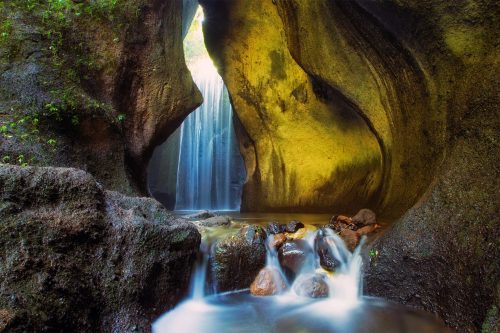
Best Day Trips from Ubud – Some destinations draw you in slowly. Ubud embraces you all at once — with the scent of frangipani, the sound of gamelan echoing across rice fields, and the sight of mist lifting gently over the Ayung Valley. Nestled in Bali’s central highlands, Ubud isn’t just the island’s cultural capital; it’s the ideal basecamp for exploring the most authentic corners of Bali — where temples whisper legends, waterfalls hide in emerald folds, and craftsmen still shape beauty by hand.
One Day, Infinite Possibilities
From here, the island unfolds in every direction. A short morning drive north brings you to Tegallalang’s iconic rice terraces, shimmering in the early light, and the sacred waters of Tirta Empul Temple, where pilgrims still come to purify body and spirit. Travel higher into the Bali highlands, and you’ll find crisp mountain air, serene lakes, and sleepy hamlets surrounded by coffee groves. To the east, the gentle roads lead to Sidemen Valley, a pastoral paradise that feels like Ubud decades ago — quiet, timeless, and breathtakingly green.
Even the south calls with contrast: artisan villages like Celuk, Mas, and Batuan, where silver, wood, and paint become art, each piece infused with devotion. And for those who crave the rhythm of nature, Tibumana and Tegenungan waterfalls lie close enough to dip your toes in before lunch back in town. These are not distant journeys; they are the best day trips from Ubud — each one revealing a new dimension of Bali’s soul.
Ubud’s magic doesn’t end in its rice fields — it begins there and spreads to every mountain, temple, and hidden valley you can reach before sunset.
It’s this accessibility, this incredible variety within arm’s reach, that makes Ubud the traveler’s dream base. Whether your passion lies in culture, nature, or quiet discovery, the landscapes surrounding Ubud turn every day into a different kind of adventure.
That’s where HalloBALI comes in. Our carefully designed Ubud tours Bali are more than checklists — they’re curated experiences meant to connect travelers with the island’s rhythm. From temple trails and rice terrace walks to mountain sunrises and artisan encounters, each route is designed for ease, comfort, and meaning — so you can experience Bali’s best in a single, seamless day.
Before you dive into the many routes and themes ahead, you may want to first explore the Ultimate Ubud Travel Guide — your full compass to staying, dining, and finding your flow here. Then, when you’re ready to step beyond the town’s green borders, start with one of HalloBALI’s favorites — the Ubud Private Day Tour – Culture & Temples Edition — and let the day unfold like only Bali can.
Cultural Journeys: Temples & Traditions Near Ubud
If there is one thread that weaves all of Bali together, it is faith — quiet, graceful, and ever-present. From the smallest roadside shrines to grand temples set deep in the forest, spirituality flows through everyday life here. Around Ubud, that rhythm feels especially alive. The air hums with incense and chants, offerings bloom at every doorstep, and temple bells mark the hours in a way that feels both ancient and eternal.
Some travelers come to Bali looking for beauty. Others find meaning. Around Ubud, the two are inseparable.
For those who wish to explore Bali’s sacred side without venturing too far, a handful of extraordinary temples sit within easy reach of town — each a story carved in stone, water, and devotion. Together, they form the perfect circuit for a single, unforgettable day trip from Ubud.
Tirta Empul Temple – Where the Island Purifies Itself
About 30 minutes northeast of Ubud, the village of Tampaksiring is home to one of Bali’s most revered water temples — Tirta Empul, founded in 962 AD. Its name means “holy spring,” and the waters that bubble up from the earth here are believed to possess purifying powers.
Every morning, locals and pilgrims line up for the melukat, a traditional cleansing ritual performed beneath 11 stone spouts that channel sacred spring water into a rectangular pool. Visitors are welcome to join, provided they do so respectfully — wrapped in a sarong, guided by temple keepers, and with an open heart rather than a camera lens.
The experience is deeply moving. The cool water, the rhythmic sound of prayer, the scent of flowers and sandalwood — together they create a kind of peace that words can’t quite reach. It’s more than a ritual; it’s a reminder of what Bali’s spirituality truly means: renewal, balance, and gratitude.

Tirta Empul Temple

Gunung Kawi Temple
Tirta Empul Temple – Where the Island Purifies Itself
Not far from Tirta Empul lies another wonder of Bali’s spiritual past — Gunung Kawi, an 11th-century sanctuary unlike any other. To reach it, visitors descend hundreds of stone steps that wind through rice terraces and bamboo groves until the valley opens like a revelation.
Many travelers say it feels like stepping back into the island’s earliest heartbeat — when art, nature, and faith were still one and the same.
There, carved directly into towering cliffs, stand ten monumental candi — shrine façades dedicated to ancient kings and queens of the Warmadewa dynasty. Their scale is humbling, their craftsmanship awe-inspiring. The sound of the river below and the cool mist rising from the valley lend the place a deep stillness — as if the mountain itself were breathing prayers.
Gunung Kawi invites quiet reflection. It’s easy to linger here, watching the interplay of shadow and light on ancient stone.
Goa Gajah – The Elephant Cave and the Layers of Belief
Closer to central Ubud, another temple reveals a different side of Bali’s spirituality. Goa Gajah, or the Elephant Cave, dates back to the 11th century and stands as a living testament to the island’s layered faith — a blend of Hindu and Buddhist influences that shaped Bali’s identity long before modern times.
Visitors enter through a menacing stone mouth carved into a hillside, its expression both fierce and fascinating. Inside, the dim-lit cave holds fragments of ancient statues and altars dedicated to Shiva. Outside, moss-covered fountains and bathing pools evoke a tranquil balance between earth and water.


Despite its proximity to Ubud and popularity with travelers, Goa Gajah retains a palpable aura of mystery — an invitation to look beyond the surface and sense the harmony that unites all beliefs here.
Hidden Sanctuaries Worth the Detour
Beyond the famous trio, several smaller temples near Ubud reward those who wander just a little further. Pura Mengening, not far from Tirta Empul, is a quiet retreat wrapped in forest and water — a favorite among locals seeking solitude. Pura Puseh Batuan, meanwhile, showcases exquisite stone carvings and timeless architecture in one of Bali’s oldest villages.
These sites may lack crowds or grandeur, but their beauty lies in intimacy — in the sound of water trickling through moss, the sight of priests preparing offerings, and the feeling that you’ve stepped into a living prayer.
A Day of Temples, A Journey Within
All of these sacred places can easily fit into a single Ubud tour — a day that begins with the first light at Tirta Empul, winds through Gunung Kawi’s serene valley, pauses for lunch overlooking rice terraces, and ends with a quiet visit to Goa Gajah before returning to town.
This is not just sightseeing; it’s a slow conversation with Bali’s soul. Every step offers a glimpse into how deeply faith is woven into daily life here — not as ritual obligation, but as a natural act of gratitude. For many travelers, it becomes one of the most meaningful experiences of their journey, a day that lingers long after they’ve left Ubud’s green hills behind.
Insider’s Tips – The Art of Visiting a Balinese Temple
To make the most of your Ubud tours Bali that include temple visits, move gently and observe first. Always wear a sarong and sash (available for rent or loan at major temples), remove your shoes before entering inner sanctums, and never point your feet toward shrines.
Morning visits are best — the air is cooler, and ceremonies often unfold then.
If you wish to join a purification ritual at Tirta Empul, bring a change of clothes and follow local guidance on the proper order of fountains.
Remember, temples are not tourist attractions first — they are sacred spaces. Enter them with quiet curiosity and leave with a deeper respect for the island that welcomes you.
Explore more in our Bali Temple Etiquette – Do’s and Don’ts for Visitors
Or book the seamless Sacred Springs & Temples Day Tour — a curated route combining Tirta Empul, Gunung Kawi, and Goa Gajah with local insights and comfort.
Suggested Itinerary: One-Day Temple Circuit from Ubud
A soulful journey through Bali’s sacred heart.
- 07:00 – Depart from Ubud
Begin your morning drive through quiet countryside as the first light filters through the palms. The road north winds past rice terraces and small village temples — a perfect prelude to the day’s spiritual rhythm. - 07:45 – Tirta Empul Temple (Tampaksiring)
Arrive early to witness morning rituals before the crowds. Participate in a melukat purification or simply observe from the outer courtyard as locals gather in prayer. - 09:30 – Gunung Kawi Temple
Continue a short drive to Gunung Kawi. Descend into the lush valley carved with ancient royal shrines. Take time to linger — the serenity here rewards those who walk slowly. - 12:00 – Lunch with a View
Pause at a nearby café overlooking the Tegallalang rice terraces or the green gorge near Sebatu. Sample Balinese dishes — crispy duck or nasi campur — and let the midday sun pass gently. - 13:30 – Goa Gajah (Elephant Cave)
On the return leg toward Ubud, stop at Goa Gajah. Explore its mystical cave entrance, lotus ponds, and tranquil courtyards. It’s a compact but powerful stop to end your spiritual circuit. - 15:00 – Optional Detour: Pura Puseh Batuan
If time allows, visit this historic village temple south of Ubud for its intricate carvings and relaxed local atmosphere. - 16:30 – Return to Ubud
Arrive back in town before sunset — just in time for an evening stroll through Ubud’s art markets or a quiet dinner by the river.
This classic route forms the heart of our Sacred Springs & Temples Day Tour — a HalloBALI-curated journey blending spirituality, scenery, and story for travelers seeking meaning beyond the surface.
Nature Escapes: Rice Terraces, Waterfalls & Highlands Air
Leave the sound of temple bells behind, and within minutes the road north of Ubud begins to rise — slowly, gently, like a breath. Coconut groves give way to jungle, the air cools, and the scent of wet earth and roasted coffee drifts through open windows. This is where the Bali highlands tours truly begin — journeys that reveal the island’s natural rhythm, one curve of the road at a time.
The higher you climb from Ubud, the more the island breathes — in mist, in terraces, in time.
Here, the land itself feels alive. Rice terraces ripple across hillsides like green waves, rivers tumble through ravines, and waterfalls appear as if conjured by the forest. Every bend in the landscape tells a story of balance — between man and nature, work and worship, time and timelessness.
Tegallalang Rice Terraces – The Classic View That Still Captivates
Barely a 20-minute drive north of Ubud, Tegallalang remains the island’s most iconic rice terrace scene. The view is instantly recognizable — a cascade of emerald-green steps sculpted into the hillside, glinting in the morning sun.

While Tegallalang has become a favorite for early risers and photographers, it still holds quiet moments if you arrive before 8 a.m. Wander along narrow paths, meet farmers tending the fields, or pause for a coconut under the palms. The terraces are part of Bali’s ancient subak system, an ingenious network of irrigation canals dating back to the 9th century — a living heritage recognized by UNESCO as a symbol of harmony between humans, gods, and nature.
This eco-cultural balance defines much of what makes Ubud special. The same water that nourishes these terraces also sustains the villages and temples downstream, connecting communities in an unbroken cycle of cooperation and gratitude.
For travelers who wish to linger longer, small cafés and warungs along the ridge serve breakfast with breathtaking views — proof that some of Bali’s most peaceful experiences still happen before the world wakes up.
Tibumana & Tegenungan Waterfalls – Chasing the Island’s Pulse
Drive east from Ubud, and the soundscape changes — from rustling palms to the rush of water. Within half an hour, you can reach two of Bali’s most accessible and rewarding waterfalls: Tibumana and Tegenungan.

Tibumana, hidden in the lush Bangli countryside, is the gentler of the two. A short walk through dense jungle leads to a wide curtain of water cascading into a natural pool. It’s perfect for a refreshing dip or simply sitting at the edge, watching the light dance on the surface.

Tegenungan, closer to town, is larger and more dramatic — a powerful sheet of water plunging into a rocky canyon. Though more popular, its surrounding viewpoints offer spectacular angles, especially when the late afternoon sun turns the spray into a golden mist.
Both spots make perfect half-day additions to an Ubud tour, pairing easily with temple visits or nearby villages. They remind travelers that Bali’s beauty isn’t confined to beaches — it flows freely through the island’s heartlands, just waiting to be found.
Jatiluwih Rice Terraces – The Highlands’ Endless Horizon
If Tegallalang is the postcard, Jatiluwih is the panorama. Set high in the central highlands of Tabanan, about 90 minutes from Ubud, this UNESCO World Heritage Site stretches as far as the eye can see — a seemingly endless quilt of green paddies cascading down the slopes of Mount Batukaru.
The journey there is half the reward. As the road climbs, the air turns crisp and cool, and coffee plantations dot the hillsides. Farmers wave from the fields, and clouds roll low over the valley, softening every color into watercolor hues.
In Jatiluwih, there are no crowds, only space — space to walk along narrow ridges, to hear the soft rustle of rice stalks, to feel the rhythm of the island slow to its most natural pace. Many travelers describe it as “the Bali they imagined before arriving.”

For a deeper connection, join one of HalloBALI’s Central Highlands Eco & Heritage Tours, which combine scenic drives with guided walks explaining the subak philosophy — Tri Hita Karana, the balance between people, nature, and the divine. It’s not just sightseeing; it’s understanding why this landscape has sustained generations, body and spirit alike.
A Journey Written in Green
From Ubud to Tegallalang, from Tibumana to Jatiluwih, each route invites you to experience the island through its most honest expression — the land itself. There’s no rush here, no need to chase checklists. The reward is in the quiet moments: a farmer’s smile, the cool spray of a hidden waterfall, the hum of the countryside as dusk settles.
For many travelers, these are the days that stay — simple, sensory, grounding. The kind of days that remind you why Ubud sits at the heart of Bali: not only geographically, but spiritually.
Insider’s Picks – Scenic Stops Most Travelers Miss
Beyond the famous views, the central highlands hide their own quiet miracles — perfect additions to your Bali highlands tours if you crave something more offbeat:
Tukad Cepung Waterfall (Bangli) – Among the most popular hidden gems. A beam of sunlight pierces the narrow canyon here each morning, turning the waterfall into a natural cathedral of light.
Sangeh Monkey Forest (Badung) – Older and less commercial than Ubud’s version, this nutmeg forest feels almost enchanted, its mossy statues watched by hundreds of long-tailed macaques.
Penatahan Hot Springs (Tabanan) – Tucked beside a river beneath bamboo groves, these natural thermal pools offer the perfect end to a highlands journey — a hidden spa gifted by the earth itself.
Each of these stops reveals another rhythm of the island — slower, quieter, but deeply felt. Combine one or two with a visit to Jatiluwih for a day of discovery that feels entirely your own.
Dive deeper in Bali Rice Terraces – Tegallalang vs. Jatiluwih
Or book the Central Highlands Eco & Heritage Tour — HalloBALI’s curated route through rice fields, waterfalls, and coffee-scented mountain roads.
Suggested Itinerary: Nature Circuits from Ubud
Two ways to breathe in Bali’s green soul.
Half-Day Escape – Rice Terraces & Waterfalls
- 07:30 – Depart from Ubud
Ease out of town before the traffic hums. The early light on the paddies sets a tranquil tone for the day. - 08:00 – Tegallalang Rice Terraces
Walk the ridges as farmers start their morning routines. Pause for coffee or coconut at one of the ridge cafés. - 09:30 – Tibumana Waterfall
Drive east through quiet villages to this jungle-framed cascade. A short trail leads to the pool — perfect for a dip. - 11:00 – Tegenungan Waterfall (optional)
A stronger flow and lively viewpoint if you prefer more drama before heading back. - 12:30 – Return to Ubud
Arrive in time for lunch overlooking the rice fields or a midday spa session — proof that the best of Bali can fit into one easy morning.
Full-Day Journey – The Central Highlands Loop
- 08:00 – Depart from Ubud
Head northwest toward Tabanan. The road climbs gently through fruit stalls and coffee farms. - 09:30 – Sangeh Monkey Forest (optional stop)
Stretch your legs among centuries-old nutmeg trees watched over by playful macaques. - 10:30 – Jatiluwih Rice Terraces (UNESCO)
Walk the scenic trails or cycle the gentle paths through this vast sea of green. Meet local farmers and learn about the subak heritage that sustains it all. - 13:00 – Lunch at a Highlands Warung
Enjoy a farm-to-table Balinese meal overlooking Mount Batukaru’s slopes. - 14:30 – Penatahan Hot Springs (optional detour)
Soak in natural thermal pools beside the river before descending back toward Ubud. - 17:00 – Return to Ubud
Arrive relaxed, sun-kissed, and deeply connected to the land that feeds Bali’s spirit.
Prefer not to navigate on your own? The curated Central Highlands Eco & Heritage Tour by HalloBALI weaves these highlights into a seamless day — with comfort, context, and stories only locals know.
Adventure Routes: Volcano Views & Sunrise Journeys
When most of Ubud is still asleep, the island’s horizon begins to glow. Somewhere in the dark north, a slow line of flashlights snakes up a mountain ridge — hikers tracing their path toward one of Bali’s most awe-inspiring dawns. This is Mount Batur, and for many travelers, it’s the defining adventure among all day trips from Ubud.
Before the Sun Rises
Your journey begins around 2:00–2:30 a.m., when a driver collects you from your villa or guesthouse in Ubud. The drive north takes about 1.5 hours, winding through quiet villages and misty valleys before reaching the Mount Batur base camp in the Kintamani region. From there, local guides — often from the very communities surrounding the volcano — lead you up through rocky trails and black lava slopes under a canopy of stars.
It’s a steady, energizing climb, lasting around two hours. The air cools, the silence sharpens, and then — just as your heartbeat syncs with the rhythm of the mountain — the sky changes color.
Watching dawn spill over Batur’s rim feels less like sightseeing and more like witnessing Bali awaken.
As the first light spills across Lake Batur, the horizon reveals a painter’s palette of orange, pink, and violet. To the east, Mount Agung and even Lombok’s Rinjani stand in quiet silhouette. And as the island below stirs to life, you sip a simple breakfast — often eggs boiled in volcanic steam — feeling that rare sense of both peace and triumph.


Kintamani Plateau: Where Sky Meets Earth
After the descent, the Kintamani Plateau invites a slower rhythm. Sitting at 1,400 meters above sea level, it’s a world apart from Ubud’s lush calm — all open skies, cool breezes, and sweeping lake views. Cafés cling to the crater rim, serving strong Balinese coffee and fresh mountain dishes with a view of the caldera.
Most Ubud tours in Bali that feature Mount Batur include a leisurely brunch here, letting you trade your hiking boots for comfort and take in the views from the warmth of a warung balcony. The contrast between the morning’s exertion and the plateau’s serenity is part of what makes this circuit unforgettable — a full sensory immersion into the island’s natural rhythms.
Beyond the Volcano
A short drive from the plateau leads to Toya Bungkah hot springs, where warm mineral pools bubble beside the lake. The views from the water — steam rising against the backdrop of the crater walls — are as restorative as the soak itself.
Along the way, you can also stop at Kintamani coffee plantations, where beans grow in volcanic soil that gives Bali’s brew its signature richness. Tastings here often include everything from traditional kopi Bali to rare single-origin roasts. It’s the ideal way to wind down a day that began before sunrise — caffeine in hand, surrounded by highland quiet.


Adventure Within Reach
What makes Mount Batur so appealing isn’t just the experience itself, but its accessibility from Ubud. The roads are good, the routes well-established, and local guides deeply knowledgeable. Whether you’re chasing that sunrise selfie or simply seeking a deeper communion with Bali’s landscape, this day trip balances adrenaline with awe.
Most visitors return to Ubud by noon — ready for a massage, brunch, or an afternoon nap surrounded by rice field views. Few other destinations allow such a profound mountain experience within such an easy reach.
Insider’s Insight: The Softer Side of Kintamani
- Most travelers head straight back to Ubud after their Mount Batur trek — buMost travelers head straight back to Ubud after their Mount Batur trek — but the softer side of Kintamani is what locals love most.
- Stop by a community breakfast farm where you can try fresh goat cheese, honey, and organic fruit straight from the garden.
- Visit Belok Sidan viewpoint, a quiet ridge where the full sweep of Batur and Agung fills your lens without the crowds.
- And for coffee lovers, Penelokan Village offers scenic tastings where mist drifts through arabica groves.
Here, adventure meets authenticity — a reminder that the best day trips from Ubud are not just about what you climb, but how you slow down after the summit.
💡 Related Article: Mount Batur Sunrise Trek Guide
💡 Related Product: Mount Batur Sunrise & Lake Batur Hot Springs Tour
Artisan Villages: Bali’s Creative Soul Beyond Ubud
If Ubud is the artistic heart of Bali, the pulse that keeps it alive beats in the surrounding villages. Each one tells a different story — not just through the art it produces, but through the lives of the people who shape it. For centuries, creativity here hasn’t been a profession; it’s been a way of being.
In Bali, art isn’t made for galleries — it’s made for gods, for daily life, for the joy of creation.
These artisan villages near Ubud form a living circuit — easily woven into a day trip from Ubud or paired with nearby temple routes. Together, they paint a portrait of Bali’s enduring artistry: humble, heartfelt, and still very much alive.
Celuk – The Village of Silver and Soul

Just 15 minutes south of Ubud, Celuk shimmers in the morning sun. Along its narrow streets, silver workshops open their doors to reveal meticulous hands shaping molten threads into jewelry that tells quiet stories — of tradition, protection, and beauty.
Celuk’s silversmiths descend from generations of artisans who once made offerings and temple ornaments; today, they blend those same techniques into modern designs sought by collectors worldwide.
Travelers can stop for a hands-on silver workshop, where you craft a small pendant or ring guided by a master silversmith. It’s not just a souvenir — it’s a spark of connection between visitor and maker, between travel and creation.
Mas – Wood Carving with a Heartbeat
Further along the same route, the air thickens with the scent of sandalwood and mahogany. This is Mas, the legendary village of wood carvers. Each sculpture — whether a traditional Garuda, a meditative Buddha, or a contemporary figure — is infused with spiritual meaning.
In Bali, wood carving isn’t simply decorative; it’s devotional. Every stroke is a prayer, every finished work a bridge between the human and the divine.
Visitors can watch master carvers at work in open-air studios, their tools tapping rhythmically like a heartbeat of faith. Many Ubud tours in Bali include Mas for precisely this reason — it embodies how the island’s spiritual and artistic lives intertwine.

Mas - Wood-Carving Village

Batuan - Painting Village
Batuan – Canvas of Everyday Life
Ten minutes away lies Batuan, a village where painting remains a communal act. Here, entire families contribute to intricate compositions that blend myth, folklore, and scenes of Balinese life — from temple ceremonies to daily chores.
The famed Batuan style emerged in the 1930s, but it continues to evolve, reflecting the village’s collective consciousness.
Visit a home gallery, and you’ll likely find three generations at work — grandfather outlining, father shading, child adding color. Batuan also hides one of Bali’s architectural gems: Pura Puseh Batuan, a centuries-old temple rich with stone carvings that mirror the very art styles the village preserves.
Tegenungan – Craft & Coffee Revival
As the road bends back toward Ubud, Tegenungan offers a refreshing finish — a blend of creativity and comfort. Known first for its waterfall, the area has evolved into a community hub for local artisans and roasters. Here, you can wander through small galleries, watch soap and candle makers at work, or enjoy a cup of single-origin coffee overlooking the lush Petanu River valley.
For travelers who prefer a gentle, sensory day trip from Ubud, this is the perfect spot to pause — to let the hum of creativity settle into calm.
Meeting the Makers, Respecting the Roots
These villages are more than stops on a map; they’re the living legacy of Bali’s creative soul.
To explore them meaningfully means to approach with curiosity and respect: buy directly from artists, ask about the process, and avoid mass-produced imitations that don’t honor the craft.
HalloBALI’s Ubud Arts & Culture Full-Day Tour connects travelers with genuine artisans, small family studios, and creative spaces where artistry thrives away from the tourist flow. You’ll leave not just with beautiful pieces, but with the stories — and faces — behind them.
Insider’s Picks: Craft Your Day – Ubud Art Villages Worth a Detour
If you want a half-day creative loop that balances art, connection, and scenery, try this 3-village circuit:
Celuk (Silver & Goldsmithing) – Start early to join a workshop before it gets busy.
Mas (Wood Carving & Sculpture) – Visit I Wayan Arya’s family atelier for a personal demonstration.
Tegenungan (Craft & Coffee) – End with locally roasted beans and waterfall views.
This route captures the essence of Ubud tours in Bali — slow travel infused with artistry, conversation, and a touch of wonder.
💡 Related Article: The Artisan Villages Around Ubud
💡 Related Product: Ubud Arts & Culture Full-Day Tour
Countryside Charm: Sidemen Valley & East Bali from Ubud
There’s a place east of Ubud where time seems to pause. The road narrows, the air grows softer, and the rice terraces unfold like green silk between distant hills. This is Sidemen Valley — a world apart, a glimpse of what Ubud might have felt like half a century ago.
If Ubud is where Bali dreams are born, Sidemen is where they go to rest.
Nestled beneath the watchful gaze of Mount Agung, Sidemen is the countryside as the Balinese know it — not a postcard, but a living, breathing rhythm of farming, weaving, and quiet devotion. It’s one of the most tranquil and culturally intact corners of the island, and among the most rewarding day trips from Ubud for travelers seeking Bali’s softer, slower side.
A Valley Where Life Moves in Balance

The drive from Ubud takes about 1.5 hours, winding through Gianyar and Rendang villages, with stops that naturally invite curiosity: bamboo craft workshops, coffee plantations, and roadside markets overflowing with fruit and spices. As the road descends into Sidemen, the first view of the valley is unforgettable — terraces that ripple like waves, dotted with shrines and traditional thatched-roof compounds.
Here, every sound seems measured: roosters, rustling palms, distant gamelan from a temple ceremony. The stillness isn’t empty — it’s sacred.
Sidemen isn’t about must-see attractions. It’s about wandering through what’s left of authentic rural Bali, where farmers smile from the fields and children wave from behind frangipani hedges.
Craft, Coffee, and Community
A visit to Rendang Village offers a glimpse into local life at its most grounded.
Families here have preserved the art of bamboo weaving, crafting baskets and offerings with techniques passed down through generations. You can stop to watch the process — or better yet, try it yourself under the patient guidance of a local artisan.
A few minutes farther, Sidemen’s small coffee farms provide another layer to the valley’s charm. Many welcome visitors for short tastings, pairing home-roasted beans with warm banana fritters and stories about the land. The coffee here grows on mountain slopes nourished by volcanic soil — the same soil that feeds Bali’s rice terraces and gardens.
For lunch, nothing beats a simple warung terrace overlooking the valley floor. Picture wooden tables beneath palm leaves, a plate of freshly grilled fish, and Mount Agung emerging like a silent guardian in the distance.
Bali Highlands Tours at Their Purest

In many ways, Sidemen captures the essence of Bali highlands tours — elevation, tranquility, and a deep connection between people and landscape. Unlike the cooler mountain circuits of Jatiluwih or Bedugul, Sidemen feels warmer, more intimate, wrapped in the rhythm of daily life.
You can spend the afternoon exploring narrow paths between rice paddies, visiting Pura Bukit Tegeh for panoramic views, or simply sitting riverside with your feet in the water.
HalloBALI’s Sidemen Valley Scenic Day Tour builds a day around exactly this: scenic drives, guided countryside walks, and meaningful encounters with the valley’s artisans and farmers — designed for travelers who want to see, but also feel, the island.
Beyond Sidemen: A Longer East Bali Circuit

Tirta Gangga Water Palace

Tukad Unda Dam

Karangasem Royal Palace
If your curiosity stretches beyond the valley, continue eastward into Karangasem Regency, where history and beauty converge. The Tukad Unda Dam offers cinematic photo angles with Mount Agung in the backdrop, while Tirta Gangga Water Palace invites a serene stroll among lotus ponds and stone statues.
For those with time to spare, the grand Puri Agung Karangasem Palace in Amlapura adds cultural depth, connecting Sidemen’s rural charm to the regal past of East Bali. These routes form a full-day journey that blends nature, artistry, and history — a gentle evolution from Ubud’s energy to the island’s timeless east.
Insider’s Tips: Explore Sidemen Without a Rush
Sidemen rewards patience. Here’s how to make the most of it:
Go early, stay late. Depart Ubud around 8 a.m. and linger until after lunch — the valley glows in soft light before dusk.
Hire a local driver familiar with backroads. The scenic route via Rendang and Iseh offers sweeping vistas and fewer cars.
- Hike to the summit of Mount Agung. For a once in a lifetime experience.
Pack sandals for short walks. Many rice paths and riversides are best explored barefoot or lightly.
Lunch with a view. Try Warung Maha Neka or Wapa di Ume Sidemen for the best terrace panoramas.
Consider an overnight stay. A homestay or eco-lodge in Sidemen transforms a day trip into a soul-soothing retreat.
Sidemen teaches you what travel in Bali once was — and what it still can be when you move gently, listen closely, and let the valley set the pace.
💡 Related Article: Sidemen – Bali’s Hidden Valley of Peace
💡 Related Product: Sidemen Valley Scenic Day Tour
Your Day, Your Bali Story
Every traveler comes to Ubud with an image in mind — emerald rice terraces, flowing rivers, soft gamelan echoing at dusk. But it’s when you start exploring beyond its center that the island truly unfolds. Ubud sits in the very heart of Bali, and from here, every road leads to discovery. Within an hour or two, you can touch the ancient stones of royal temples, trek volcanic ridges above the clouds, weave through artist villages, or listen to waterfalls whisper through the jungle.
Each journey begins and ends in Ubud — yet no two feel the same.
Through these day trips from Ubud, you don’t just see more of Bali; you begin to understand how its soul flows seamlessly between nature, art, and devotion. The sacred springs of Tirta Empul, the sweeping terraces of Jatiluwih, the silent dawn over Mount Batur, and the unhurried charm of Sidemen Valley — together they form a mosaic of the island’s living culture.
And that’s the quiet magic of staying here: Ubud makes Bali feel infinite.
You can spend weeks in Ubud and still wake up to new beginnings — one day trip at a time.
Your Journey, Curated with Care
Whether your heart leans toward temples or treks, art or adventure, HalloBALI helps you transform a single day into a meaningful story. Each itinerary is designed not just for sightseeing, but for connection — with the island, its people, and the spirit that animates both.
You can choose from expertly guided routes like:
- Ubud Private Day Tour – Culture & Temples Edition for those who seek Bali’s sacred past.
- Central Highlands Eco & Heritage Tour to embrace the island’s green heart.
- Mount Batur Sunrise & Lake Batur Hot Springs Tour for adventure seekers chasing first light.
- Ubud Arts & Culture Full-Day Tour to meet the island’s creative soul.
- Sidemen Valley Scenic Day Tour for travelers who crave tranquility and timeless views.
Each one departs from Ubud — and each one brings you home a little changed.
From the Heart of Bali, for Every Kind of Explorer
Cultural, natural, spiritual, artistic — Ubud connects them all. And that connection is what makes it the perfect basecamp for your Bali story. You might spend your mornings in misty mountains, your afternoons in temple courtyards, your evenings listening to crickets by the river — yet somehow, every path leads back to that same feeling of belonging.
Because in Ubud, you don’t just visit Bali.
You become part of it.
💡 Ubud & Central Highland Tours: Explore All HalloBALI Ubud Day Tours
💡 Ubud & Central Highland Travel Guide: Ubud & Central Highlands Travel Guide