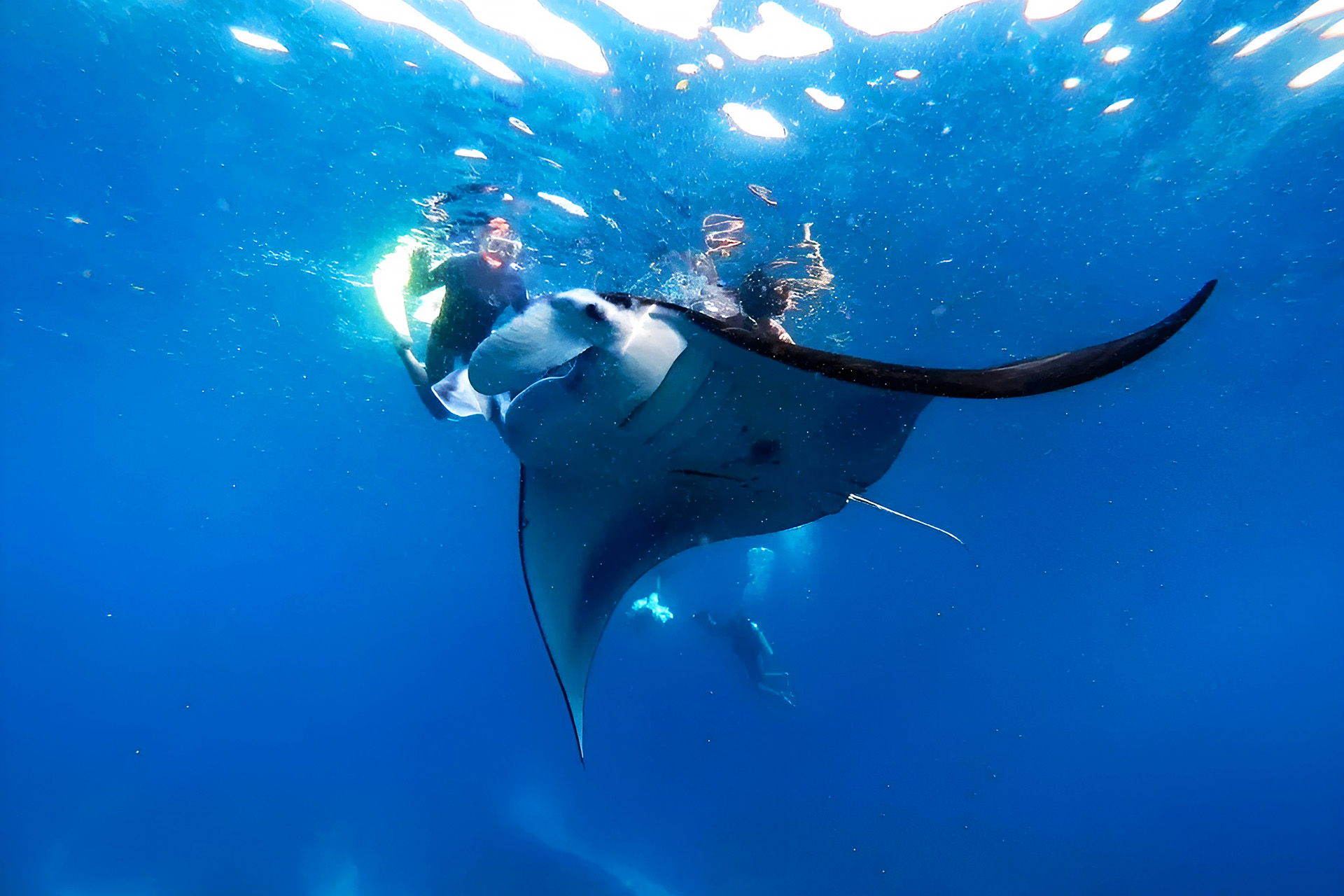
Swim with Manta Rays in Nusa Penida – The first moment you slip into the water off Nusa Penida’s southern coast, your senses sharpen. The ocean feels vast, the surface behind you already a world away. Heartbeats quicken as shadows move gracefully beneath the waves. Then — almost suddenly — it appears. A manta ray, its wingspan stretching wider than a car, glides effortlessly just a few meters below.
A First Encounter
with the Giants
Your first instinct might be a mix of awe and alarm. After all, these creatures are massive, and their size alone can be intimidating. Yet, within seconds, the fear dissolves. The manta does not rush, does not threaten — it simply glides, looping in slow, ballet-like motions through the blue. Its eyes seem curious, watching but never menacing, as though inviting you to share its underwater stage.
Manta rays are gentle giants — more curious about you than you should ever be afraid of them.
This is the paradox of swimming with manta rays: the nerves before meeting them are real, but once you’re face-to-face, awe eclipses everything else. The experience is overwhelmingly safe when approached with the right guidance. Professional operators in Nusa Penida know the ocean, understand the manta’s behavior, and ensure you stay within your comfort zone. That reassurance gives space for something magical to happen — for nerves to transform into reverence.
As you float, carried by the ocean’s rhythm, the manta loops back around, effortlessly drawing a figure eight in the water. You realize it’s not danger you’re meeting here, but grace.
Understanding Manta Rays
Before diving deeper into the experience, it helps to understand what makes manta rays such extraordinary — and surprisingly safe — creatures. At first glance, their sheer scale is enough to take your breath away. The reef mantas of Nusa Penida can span up to 5–7 meters across, their wings sweeping through the ocean in graceful arcs. Seen from below, they look like underwater aircrafts, cruising effortlessly through the currents. It’s no wonder that first-timers often mistake them for something far more intimidating.
Yet here’s the reassuring truth: manta rays have no stingers, no sharp teeth, and no instinct to attack. They are filter feeders, drifting through the ocean with mouths wide open to scoop up their favorite meal — plankton.
Instead of predators, they are gentle grazers of the sea, entirely harmless to humans.
This feeding behavior explains why they’re often seen looping and swooping in calm, mesmerizing patterns. At cleaning stations like Manta Point, they hover serenely while small reef fish nibble away parasites, creating the perfect opportunity for divers and snorkelers to observe them without disruption. They are neither territorial nor aggressive; their focus is entirely on the simple rhythms of feeding and being cleaned.

What many people discover is that manta rays are not just safe to be around — they’re also curious. They may glide closer to swimmers, circling back as if to investigate. This curiosity is never threatening; it feels almost like being acknowledged by a fellow traveler of the sea.
If there’s any fear, it doesn’t come from the manta’s nature, but from our own perception of their size. Once you let go of that initial rush of adrenaline, you’ll see what divers and marine enthusiasts already know: swimming with manta rays in Bali is one of the safest, most awe-inspiring wildlife encounters you can have.
Where the Risks Truly Lie
When people first ask whether it’s safe to swim with manta rays, the assumption is that these giants themselves are the danger. But the truth is quite the opposite: mantas are harmless, gentle, and endlessly graceful. The real safety concerns lie not with the animals, but with the environment around them.
The seas surrounding Nusa Penida are powerful. The island sits in the path of oceanic currents that funnel through the deep Lombok Strait.
At sites like Manta Point or Manta Bay, these currents can shift quickly — one moment calm, the next tugging you further out. This is why going with an experienced guide is not optional, but essential. Local captains and guides know when and where it’s safe to enter, keeping a constant watch on both swimmers and sea conditions.
Another factor to consider is boat traffic. Both Manta Bay and Manta Point are popular stops on snorkeling and diving trips. At peak hours, several boats may be anchored in the same area, with groups of snorkelers entering the water. Awareness is critical: it’s easy to become so mesmerized by a gliding manta that you lose track of where boats are positioned. A guide ensures that your group stays together and well clear of any hazards.
Personal limits also matter. The experience is open to almost anyone, but comfort in the water makes a huge difference. If you’re not a strong swimmer, it’s wise to use a life jacket or flotation device so you can focus on enjoying the mantas rather than battling fatigue. And while snorkeling doesn’t demand the endurance of diving, it still requires confidence in open water.
Insider’s Insight: Safe vs. Unsafe Behaviors in the Water
Safe: Keep 3–4 meters’ distance, float calmly, follow guide’s instructions, wear a life jacket if unsure.
Unsafe: Touching or chasing mantas, swimming off alone, ignoring boat traffic, panicking in currents.
Finally, respect is non-negotiable. Mantas are approachable because they do not perceive humans as a threat. But when swimmers try to touch, chase, or block their path, it not only endangers the manta’s natural behavior — it also creates unnecessary risk. Keeping distance, floating calmly, and allowing the mantas to set the pace is the safest and most rewarding way to interact.
In short: mantas are not the risk. The ocean is. And by preparing properly — with the right guidance, awareness, and respect — your encounter will be both safe and unforgettable.
Guided Tours & How They Keep You Safe
If the ocean is the true variable, then your guide is the anchor that keeps the experience both safe and memorable. Swimming with manta rays in Nusa Penida is not a solo adventure — it’s one best entrusted to the hands of those who know the island’s waters intimately.
Local guides have grown up with these seas. They know which days Manta Bay will be calm, when Manta Point’s swells are manageable, and when currents may make conditions unsafe.
More importantly, they understand the behavior of the manta rays themselves: how to approach the water without scattering them, and where to position snorkelers so everyone has the best chance to see these giants glide past.
When booking, you’ll find both group tours and private tours. Group tours are more affordable and allow you to share the excitement with fellow travelers, but they can be busier in the water. Private tours, while pricier, offer more flexibility, personalized attention, and often a calmer pace — which can be especially reassuring for families or less confident swimmers. Both, however, should always come with professional guidance.
Insider’s Tips: Questions to Ask Before Booking a Manta Ray Tour
- What is the guide-to-guest ratio?
- Is safety gear (life jackets, fins, snorkels) provided and well-maintained?
- Does the operator have insurance and proper permits?
- – How do they handle emergencies or sudden weather changes?
A reputable operator will provide the essentials: life jackets, fins, and snorkel gear included in the package. Many also offer rash guards or wetsuits for extra comfort. These aren’t just conveniences — they’re part of what keeps you safe and at ease in the water. And behind the scenes, the best operators also maintain emergency readiness, with trained crew, first-aid kits, and clear safety protocols.
Choosing the right operator makes all the difference. Look for tours that emphasize safety as much as sightings.
While manta rays will often show themselves, your well-being depends on experienced crews, properly maintained equipment, and respect for both the ocean and its wildlife. When you entrust your day to a guide, you’re not just buying a snorkeling trip — you’re choosing peace of mind.
What It Actually Feels Like
The first thing you notice isn’t the manta ray itself — it’s your heartbeat. The water feels cooler as you slide in from the boat, mask fogging slightly as your breath quickens. Then, out of the blue haze below, a shape begins to form.
At first, it’s easy to mistake it for something intimidating: a massive, dark shadow, wings stretching wide. And then it glides closer. Grace replaces any sense of threat. The manta doesn’t rush. It doesn’t dart. Instead, it moves like a bird carried by the wind, each wingbeat slow and fluid. You realize this giant is not here to harm you, but to share its world with you.
The nerves that clenched your stomach begin to loosen. Fear gives way to awe. You float in silence, listening only to the rhythm of your bubbles, as the manta curves effortlessly through shafts of sunlight. Its mouth opens wide to filter plankton — a feeding ballet that is completely harmless to you.
For many, it’s humbling. You arrive expecting adrenaline, but what you feel instead is reverence. Some describe it as meditative: being so close to something so large, yet so gentle, strips away the noise of the outside world. You’re left only with the truth of the moment — that the ocean is vast, its creatures magnificent, and you are lucky enough to witness it.
Even the most anxious snorkelers often emerge smiling, nerves forgotten, replaced by an almost childlike sense of wonder. What seemed intimidating above the surface becomes a gift once you’re in the water.
The only thing dangerous about swimming with manta rays is how unforgettable it becomes.
Practical Safety Checklist
After the awe and wonder, it helps to ground the experience with a few simple, practical reminders. While manta rays themselves pose no danger, the environment demands respect — and a little preparation ensures your encounter is as safe as it is unforgettable.
Packing essentials start on land. Reef-safe sunscreen protects both your skin and the marine ecosystem. A rash guard or lightweight swim shirt shields you from both sunburn and the occasional brush against salt or gear. A GoPro (with a floating strap — mantas aren’t the only things that disappear into the deep) lets you capture the moment without distraction. Don’t forget a refillable water bottle — hydration is often overlooked but makes a difference under the tropical sun.
Physical preparation is equally important. You don’t need to be an athlete to snorkel with mantas, but basic swimming comfort goes a long way. If you’re not confident, use the life jacket provided and stay close to your guide. Listen carefully to their instructions before entering the water, and pace yourself once you’re in. The calmer you are, the more the mantas will glide naturally around you.
Insider’s Tips: Top 5 Safety Must-Dos for Your Manta Snorkel
- Wear reef-safe sunscreen and a rash guard.
- Always use provided safety gear (life jacket, fins, snorkel).
- Stay within sight of your guide at all times.
- Keep 3–4 meters distance from mantas — no touching, no chasing.
- Stay calm, float, and let the giants come to you.
Respecting the wildlife is the final, and perhaps most important, piece. Never try to touch or chase a manta — these giants are wild and deserve space. Keep a respectful 3–4 meters of distance, move slowly, and let them choose the approach. Often, they’re curious enough to circle back on their own, giving you that magical, unforced encounter.
Safe, Humbling, and Unforgettable
The question lingers for many before they take the plunge: is it safe to swim with manta rays in Nusa Penida? The truth is reassuring. The mantas themselves are harmless — gentle plankton eaters who glide with curiosity rather than menace. The real challenges come from the ocean: currents, waves, and the simple fact that you’re in nature’s domain. Yet with experienced guides, proper equipment, and a few mindful choices, these risks melt away into confidence.
And then, the moment itself. You climb back onto the boat, water dripping from your hair, the sun warming your shoulders. Your heartbeat slows, but your mind is racing, replaying the wide, graceful wings that passed just meters away. There’s a humility in the experience — being near something so immense, yet so peaceful, leaves you both exhilarated and grounded. It’s the kind of memory that doesn’t fade when the tan does.
If you’ve been hesitating, know this: the ocean rewards those who trust, prepare, and respect it. Snorkeling with manta rays here isn’t just safe — it’s one of the most extraordinary things you can do in Bali.
To ask if it’s safe is natural — to realize it’s extraordinary is inevitable.
For those ready to step beyond fear into wonder, HalloBALI curates safe, responsible manta ray snorkeling tours. With local guides, small groups, and a focus on care, you’ll have everything you need to turn a question mark into an exclamation point.

Snorkeling with Manta Rays in Nusa Penida – Swim Among Gentle Giants of the Ocean
Swim alongside gentle manta rays in Nusa Penida on this all-inclusive day tour from Bali. Starting with a fast boat from Sanur, you’ll snorkel at the island’s top sites: Manta Bay, Crystal Bay, Gamat Bay, and Wall Point. With professional guides, high-quality gear, and a freshly prepared lunch, everything is arranged for your comfort and safety. Whether it’s your first snorkeling trip or a seasoned adventure, this is Bali’s ultimate marine experience—thrilling, breathtaking, and unforgettable.
FAQ
Is it safe to swim with manta rays in Nusa Penida?
Yes. Manta rays are gentle plankton-eaters with no stingers or aggression. The real risks come from ocean currents and boat traffic, which is why joining a guided tour ensures safety.
Do manta rays ever attack humans?
No. Unlike stingrays, mantas have no venomous barb. They are curious but harmless, gliding peacefully through the water.
What is the best place to see manta rays in Nusa Penida?
The most popular site is Manta Bay, but mantas can also be spotted at Crystal Bay and Manta Point. Local guides know the best times and spots.
Do I need to be a strong swimmer to snorkel with mantas?
Not necessarily. Many tours provide life jackets and floatation devices. Basic swimming comfort helps, but guides ensure even beginners can enjoy the experience safely.
What is the best time of year to swim with manta rays in Bali?
Manta rays are present year-round in Nusa Penida, but calmer seas between April and October offer the best snorkeling conditions.
What should I bring for a manta snorkeling tour?
Essentials include reef-safe sunscreen, rash guard, reusable water bottle, and an action camera with a strap. Tours provide snorkel gear and safety equipment.
Can I touch a manta ray?
No. Touching disrupts their protective skin coating and stresses the animals. Always keep a respectful 3–4 meters distance.