Nungnung Waterfall Bali: 500 steps down, a 50-metre wall of water, and one of the highlands’ quietest big reveals.
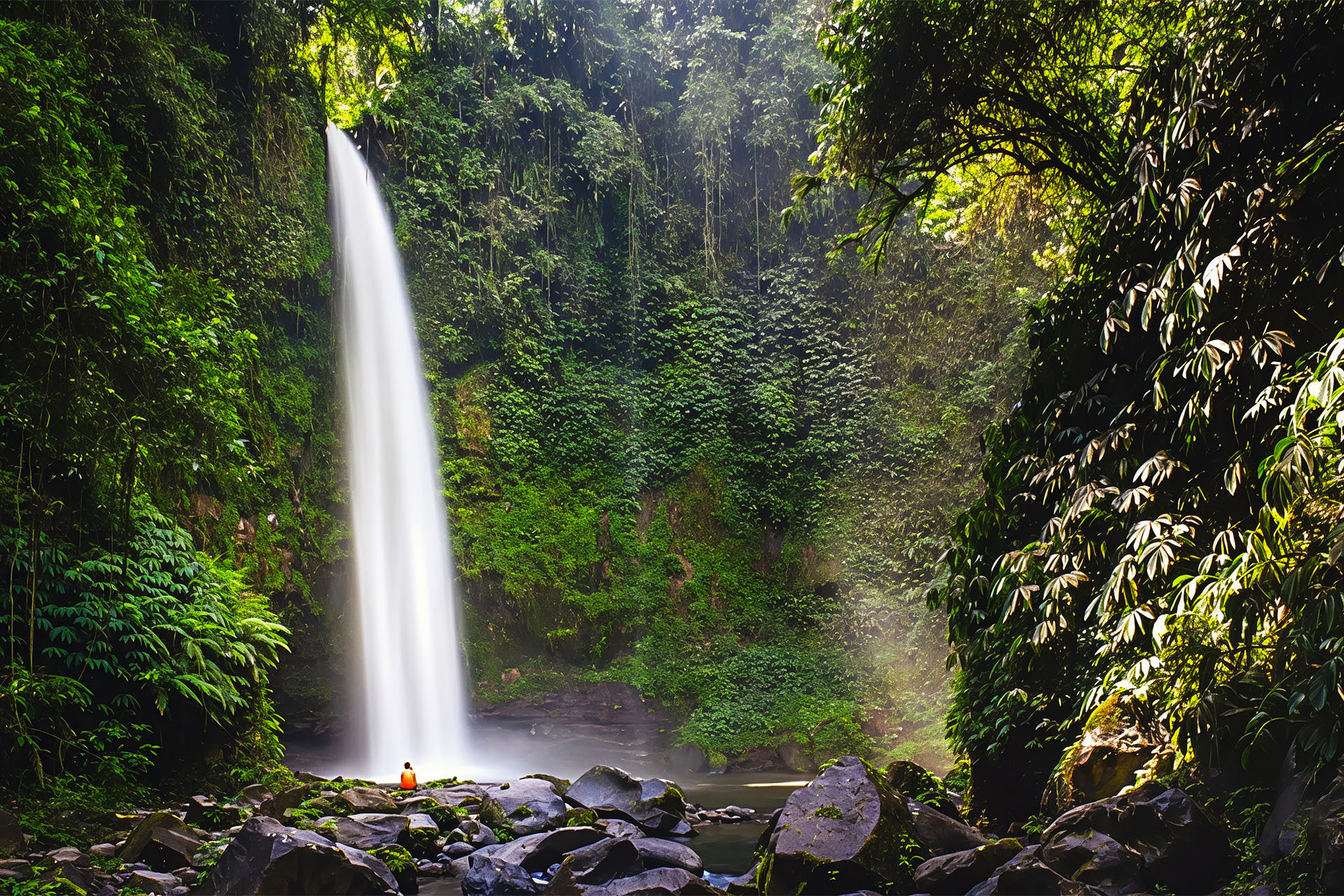
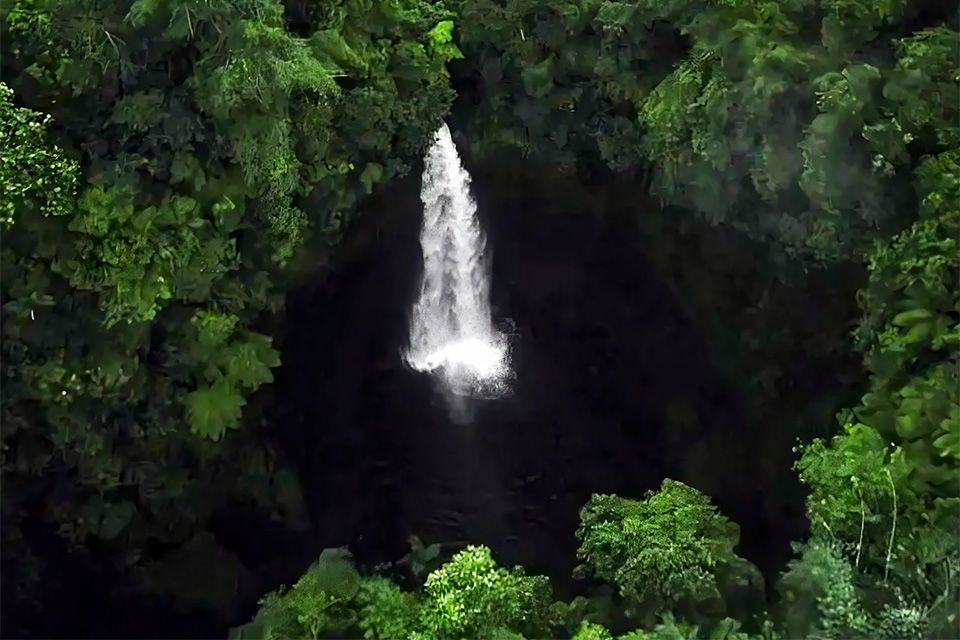
The sound arrives before the waterfall does. Somewhere around the three-hundredth step down, while your thighs start questioning the wisdom of this whole excursion, a low rumble begins to vibrate through the humid air — not quite thunder, not quite traffic, but carrying the same physical weight. Round the final bend in the staircase and the rumble becomes a roar, the air turns to a fine cold mist against your skin, and there it is: Nungnung Waterfall, a 50-metre curtain of white water dropping into a jade-green pool inside a jungle amphitheatre.


💡Related reads:
Tucked into the highlands of Badung Regency, about ninety minutes north of Ubud, Nungnung doesn’t pull the crowds that gather at Tegenungan or the queues that snake through Tegalalang’s rice terraces nearby. The reason is right there at the entrance: roughly 500 steep concrete steps down to the water, and the same 500 steps — considerably less fun — back up.
For travellers willing to make that trade, Nungnung delivers one of the more physically immersive waterfall experiences on the island. This guide covers everything you’ll need before you go: how to get there, what it costs, when to visit, what to pack, and how to make that return climb feel like part of the story rather than the price of admission.
What Is Nungnung Waterfall?
Nungnung takes its name from the village that surrounds it — Desa Plaga, in the Petang district, a quiet farming community of clove trees, coffee plants and rice terraces cut into the slopes of Bali’s central highlands. Locals refer to the site simply as Air Terjun Nungnung, and treat it with the same quiet respect given to most water sources on the island, where rivers and springs carry both practical and spiritual significance.
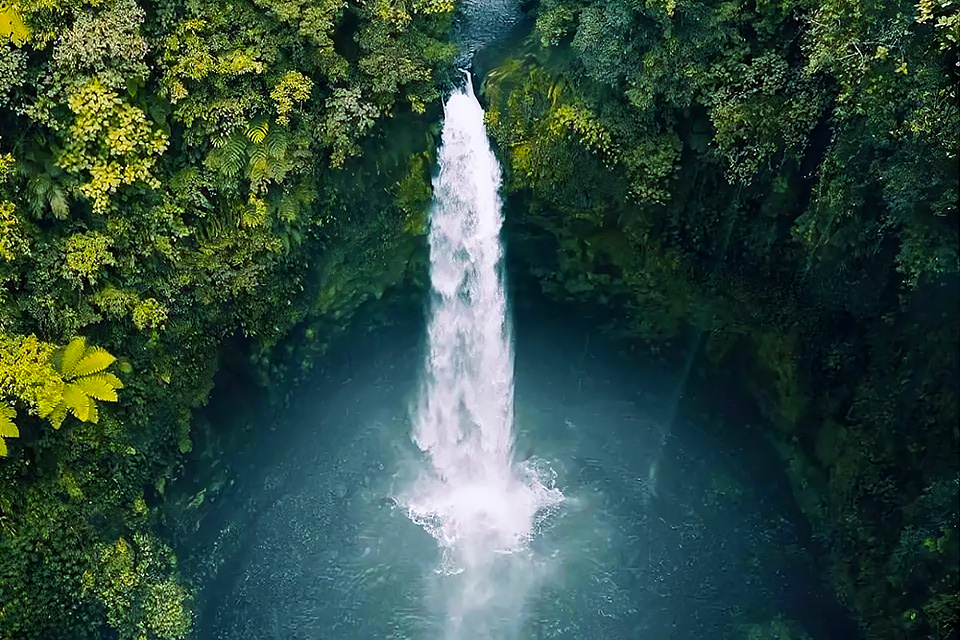
What sets Nungnung apart from Bali’s better-known waterfalls is scale. The water drops in a single, largely unbroken sheet of roughly 50 metres — tall enough that it’s commonly cited as one of the highest waterfalls on Bali, and certainly one of the most voluminous. Unlike the seasonal trickles around Munduk that thin out by August, Nungnung is fed by a permanent highland catchment and keeps running with real force even through the dry months between April and October.
The site sits at around 900 metres above sea level, which means the air here is noticeably cooler and drier than down on the coast — worth knowing if you’ve packed only beach clothes for the drive up. The setting is classic Bali highland jungle: tree ferns and wild ginger crowding the canyon walls, strangler figs gripping the rock face, and a constant chorus of insects and birds that gets swallowed entirely by the waterfall’s roar in the final stretch of the descent.
Long before you see Nungnung, you feel it — a fine, cold mist drifting up the staircase and settling on your arms, as if the waterfall is breathing on you from somewhere below.
For a quick mental picture: take the swimming-hole atmosphere of Tegenungan, remove most of the crowd, add 500 steps of cardio in each direction, and turn the volume up considerably. That’s Nungnung — a waterfall that asks something of its visitors before it rewards them.
Where Is Nungnung Waterfall Located?
Nungnung Waterfall sits in Desa Plaga, in the Petang district of northern Badung Regency — roughly midway between Ubud and the lakeside town of Bedugul, which makes it a natural stopover if you’re driving between the two highland areas.
Address: Jalan Nungnung, Plaga, Petang, Badung Regency, Bali 80353. There’s no useful street number here — search “Nungnung Waterfall” on Google Maps and the navigation will route you directly to the car park at the top of the staircase, which is the only practical access point.
OPTION |
APPROX. COST |
NOTES |
|---|---|---|
Scooter rental
|
~30 km
|
1 – 1.25 hours
|
Canggu
|
~45 km
|
~1.5 hours
|
Seminyak / Kuta
|
~45 km
|
~1.5 hours
|
Denpasar
|
~50 km
|
~1.5 hours
|
Bedugul / Lake Beratan
|
~20 km
|
40 – 50 minutes
|
Of all the popular bases, Ubud puts you closest — and the drive itself, climbing steadily through Petang’s rice terraces and clove plantations, is part of the appeal rather than a detour from it.
How to Get to Nungnung Waterfall
There’s no public transport to Nungnung — no bemo route comes anywhere close — so the choice comes down to three options: a self-driven scooter, a hired car with driver, or a private tour that bundles the waterfall with other highland stops.
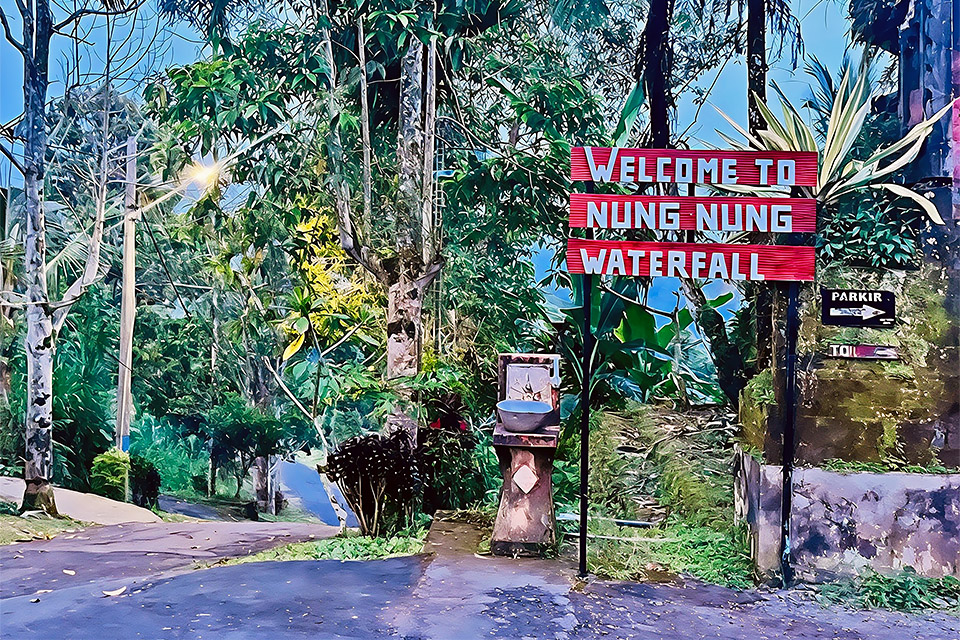
From Ubud, the route heads west out of town to Jalan Ngurah Rai, then north for roughly 30 minutes through a string of villages and rice fields until you reach the town of Petang. From there, signed turns lead north for another 15 minutes through increasingly steep, increasingly green country until the road ends at the Nungnung car park.
From Canggu, Seminyak or Kuta, the route runs north past Mengwi and Sangeh before joining that same Ngurah Rai corridor toward Petang — roughly 90 minutes door to door depending on traffic.
OPTION |
APPROX. COST |
NOTES |
|---|---|---|
Scooter rental
|
IDR 50,000–80,000 / day
|
Cheapest and most flexible; the final stretch has steep, winding sections.
|
Car with driver
|
IDR 500,000–700,000 / day
|
Most comfortable; driver waits at the car park during your visit.
|
Private tour
|
IDR 700,000–900,000 / person
|
Bundles Nungnung with other highland stops, often includes lunch.
|
 Insider's Tips — Getting There
 Insider's Tips — Getting There
- Tukad Bangkung Bridge is your landmark — once crossed, head north, Nungnung is close.
- Don’t trust the scooter route Google Maps sometimes suggests near the end; it can lead onto narrow farm tracks. Stick to the signed road even on two wheels.
- Fuel up before Petang — petrol stations thin out fast once you’re climbing into the highlands.
- Book a driver the evening before if you’re not riding yourself. Highland roads aren’t where you want a last-minute scramble for transport.
If you’d rather hand off the logistics entirely, a private driver booked through HalloBALI can combine Nungnung with a tailored highland day trip, timed to get you there before the crowds.
Entrance Fees & Opening Hours
Nungnung is inexpensive by any measure, and the fee structure has stayed largely unchanged for years.
ITEM |
COST |
|---|---|
Entrance fee (foreign visitors)
|
IDR 20,000 per person
|
Entrance fee (Indonesian visitors)
|
IDR 10,000 per person
|
Motorbike parking
|
IDR 2,000–5,000
|
Car parking
|
IDR 5,000–10,000
|
Opening hours
|
8:00 AM – 4:00 PM (informal — no gates)
|
Tickets are sold from a small booth at the car park, cash only — bring small Rupiah notes, since change for larger bills isn’t always available. Because there’s no gate physically controlling access, early arrivals sometimes find no one at the booth yet. If that’s the case, simply pay on your way back up, or look for the attendant stationed near the top of the staircase.
The Experience: Descending to Nungnung Waterfall
From the car park, the first stretch is deceptively gentle — a paved path running past a row of warungs selling nasi goreng, mie goreng, fresh coconuts and instant coffee, the kind of low-key roadside stalls that make a perfect post-hike reward. About 150 metres along, the path tips downward and the real staircase begins.
The descent runs to roughly 500 steps, broken into two long flights separated by a flatter section where you can catch your breath and take in your first proper view down the canyon. The steps themselves are concrete, uneven in places, and — especially after rain — slick enough to demand your full attention rather than your phone screen. Bamboo handrails appear on the steeper sections, and locals selling drinks and snacks are stationed at a couple of points along the way, a small but welcome sign of life on what can otherwise feel like a solo descent into the jungle.
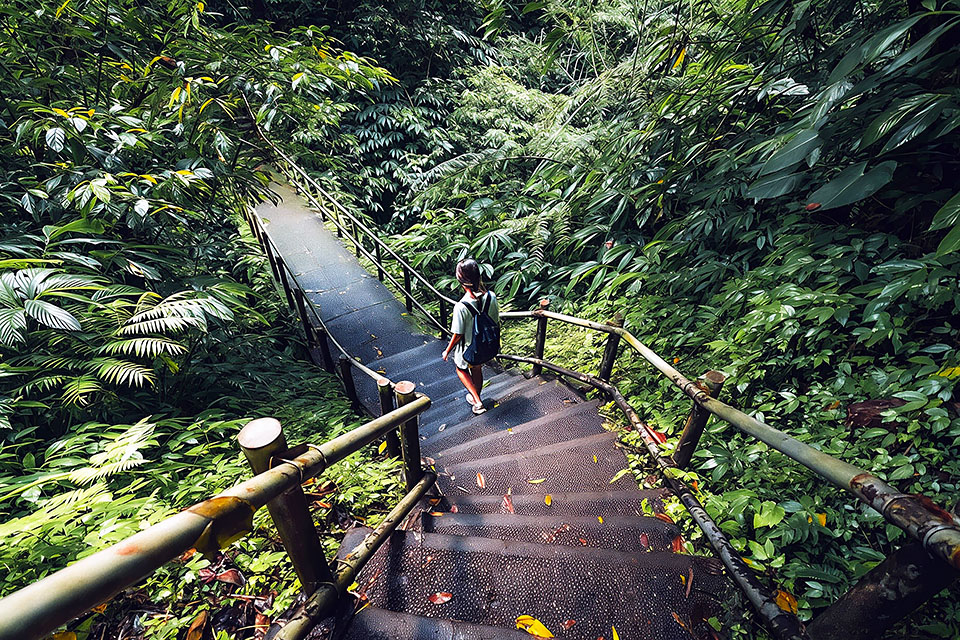
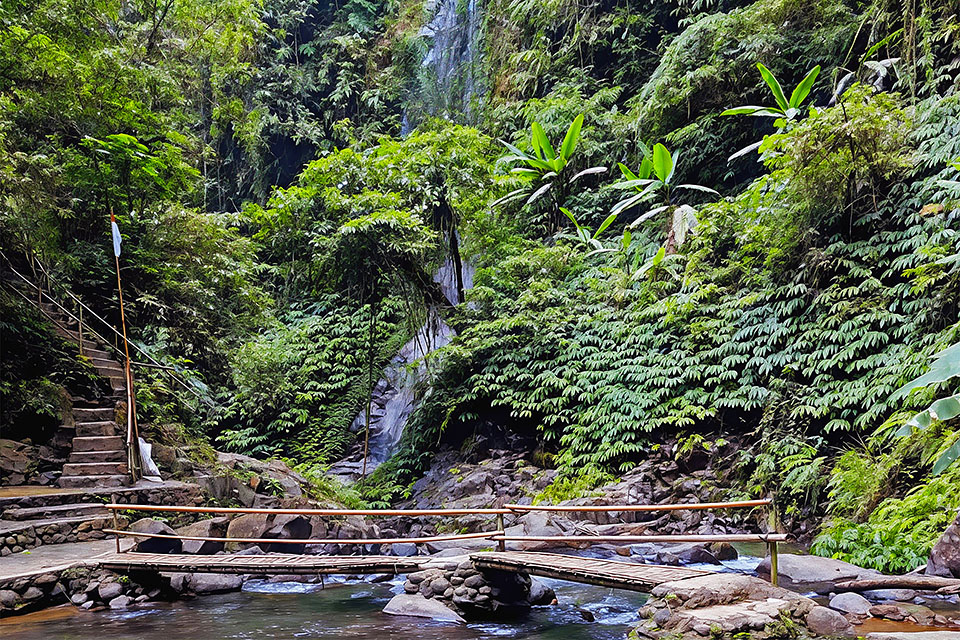
Roughly 15 to 20 minutes after leaving the car park, the staircase delivers you into a wide, green amphitheatre walled in by sheer cliffs dripping with vines and moss. Nungnung itself sits at the far end: a broad sheet of water, roughly 50 metres tall, hitting a churning pool with enough force to throw spray well beyond the water’s edge. Stand anywhere within about 20 metres of the base and you’ll feel it — a constant fine rain, cool against skin that’s just spent twenty minutes working up a sweat.
The pool at the base is swimmable, and on a quiet morning it’s genuinely one of the better swims in Bali’s highlands — clear, cold (expect somewhere around 18–20°C), and big enough that you can put real distance between yourself and the main cascade if the full force of the spray is more than you bargained for. There are no lifeguards and no marked safe zones, so stay well back from directly beneath the falling water, where both the current and the force of impact are stronger than they look from the bank.
Then comes the part most guides mention only in passing, and which deserves more honesty than that: the climb back up. What took 15 to 20 minutes coming down will take 35 to 45 minutes going up, longer if you’re stopping to catch your breath — and you will be. The humidity that felt pleasant on the way down turns the return into genuine exercise, and by the final flight, those roadside warungs at the top start to look less like a snack stop and more like a finish line.
The return climb is where Nungnung quietly humbles its visitors. What felt like a brisk fifteen-minute walk downhill becomes, in reverse, a forty-five-minute negotiation with your own legs.
Pace yourself, take the breaks the drink-sellers have conveniently positioned for you, and treat the whole thing as part of the experience rather than an inconvenience tacked onto the end of it. Most visitors agree, somewhere around step 480, that the coconut waiting at the top has never sounded better.
Best Time to Visit Nungnung Waterfall
Time of day matters more at Nungnung than almost anywhere else on a Bali waterfall list. Arrive between 7:00 and 9:00 AM and you’ll likely have long stretches of the staircase — and sometimes the pool itself — entirely to yourself. The light at this hour filters through the canyon in soft, diffused shafts, ideal both for photography and for swimming without an audience. By late morning, tour groups and day-trippers from Ubud start to arrive, and by early afternoon the car park can fill with scooters and the pool with swimmers.
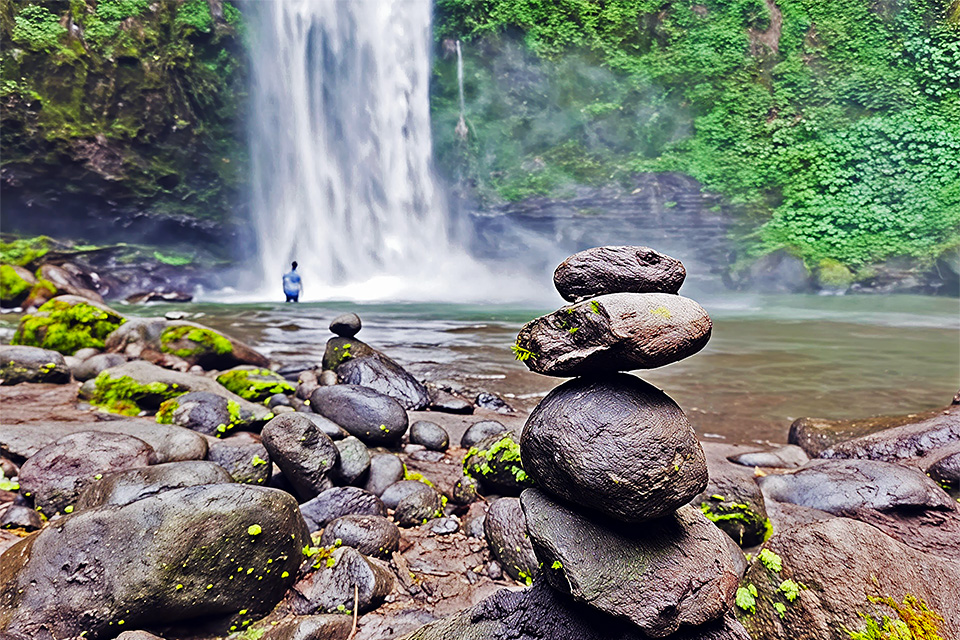
Season is a secondary consideration, but worth factoring in. Bali’s dry season, roughly April to October, brings firmer footing on the staircase and clearer water in the pool, though the waterfall’s flow stays strong enough that “dry season trickle” simply isn’t a phrase that applies here.
The wet season, November to March, brings a more dramatic, higher-volume waterfall — genuinely spectacular — at the cost of slippery steps and a higher chance of rain interrupting your visit. Either way, Nungnung runs year-round; this isn’t a waterfall you need to chase before it disappears.
Insider's Tips — Best Time to Visit
- 7 AM arrivals get the staircase, the pool, and the photos to themselves.
- Weekday mornings are quieter than weekends by a wide margin — locals tend to visit on Sundays and public holidays.
- Rainy season visitors should add 10–15 minutes to the climb for caution on wet steps.
- Bring a dry bag regardless of season — the spray zone is wetter than it looks from a distance.
What to Bring
Nungnung rewards a bit of preparation, mostly because the round trip is more physical than the average Bali waterfall stop. Pack light, but pack deliberately:
- Sturdy, closed-toe shoes with grip — flip-flops on wet concrete steps are a genuinely bad idea.
- Swimwear, worn under your clothes to save time at the bottom (there are no changing rooms).
- A quick-dry towel, useful for the climb back up as much as for swimming.
- A dry bag or waterproof phone pouch for the spray zone near the falls.
- Cash in small Rupiah denominations for the entrance fee and parking.
- A light jacket or long sleeves for the drive — the highlands run noticeably cooler than the coast.
- Water — at least 500ml per person, more if you’re visiting midday.
- Insect repellent, particularly if you’re lingering near the pool at dawn or dusk.
One thing you won’t need: a guide. The path is a single staircase with nowhere to go but down, and locals occasionally offering “guide services” at the car park are best politely declined.
Photography Guide
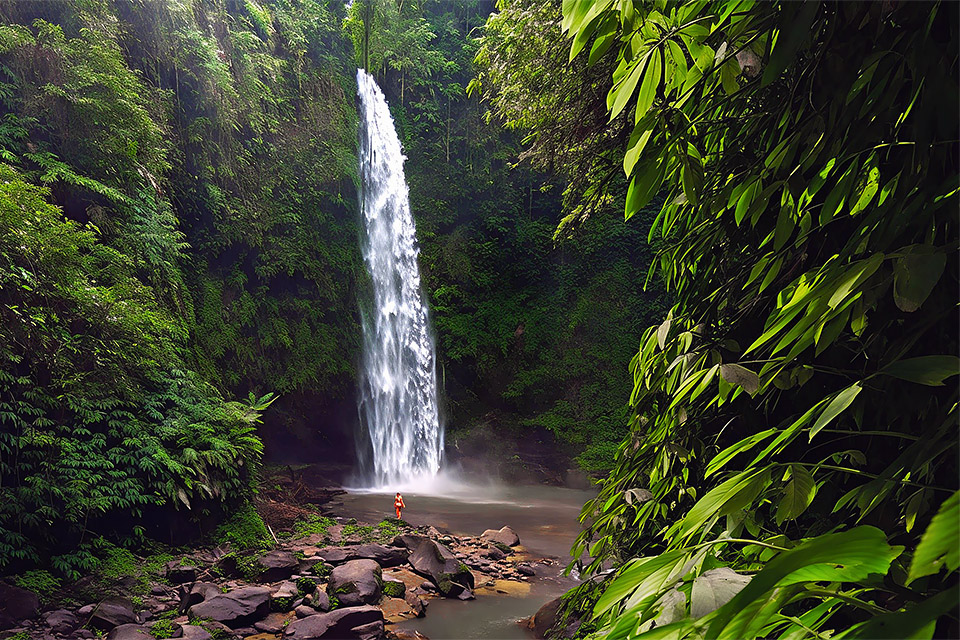
Nungnung’s scale makes it one of the more rewarding waterfalls in Bali to photograph, but the spray that makes it feel so powerful in person is the same spray that will fog a lens within seconds if you’re not careful.
The classic shot is taken from the rocks on the eastern side of the pool, where you can fit the full 50-metre drop into frame without the canyon walls cutting it off. Arrive before 9 AM and the light comes in low and angled through gaps in the canopy, picking out the spray as a soft haze rather than the flat glare you’ll get by midday.
Most photos of Nungnung are taken from the same dry rock on the eastern bank. Wade in a little further than feels comfortable, and the waterfall looks like a different place entirely.
For something different, step into the shallower edges of the pool with a waterproof camera or housing and shoot upward, toward the top of the falls — a perspective most visitors never bother to try, since it means getting wet before deciding whether you actually want to swim.
Drones are commonly flown here and the canyon setting makes for genuinely striking aerial footage, but use tripod or low-wind mode only — the downdraft from the waterfall creates turbulence that can catch an inexperienced pilot off guard close to the falls. Keep a respectful distance from other visitors, and expect the spray zone to coat your drone in fine mist within minutes of flying near the cascade.
Nearby Attractions & A Highland Day Itinerary
Nungnung’s location — almost exactly between Ubud and Bedugul — makes it easy to fold into a longer highland day rather than treat it as a standalone trip.
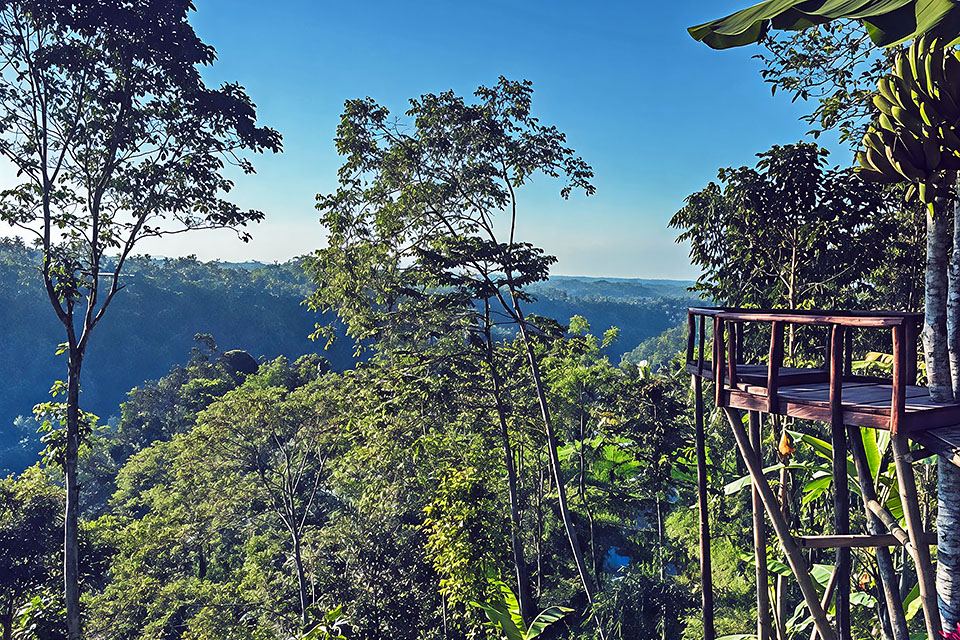
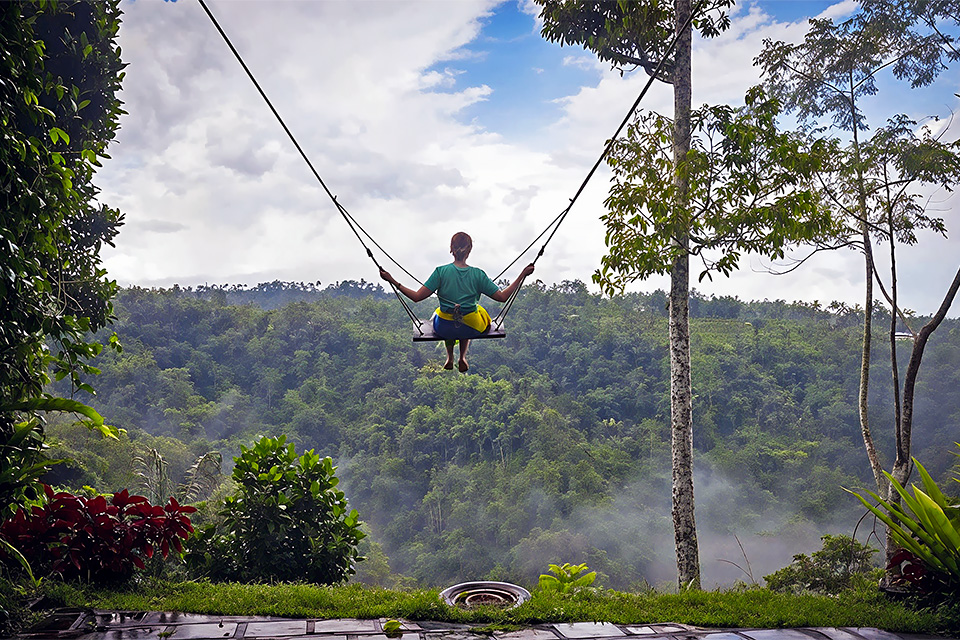
Right at the entrance road, before you even reach the staircase, a jungle swing park takes advantage of the canyon views for the kind of dramatic photo that circulates endlessly on social media. It’s worth a stop on the way in if that’s your thing — ideally before the climb rather than after, when your legs will have other priorities.
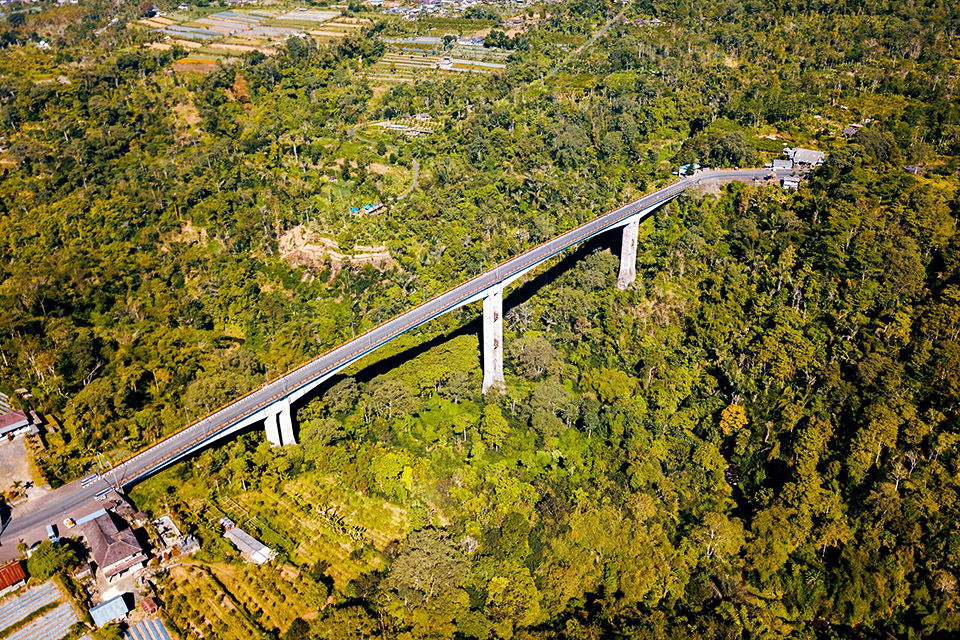
On the drive up from Ubud, you’ll cross Tukad Bangkung Bridge, one of the highest bridges in Southeast Asia, spanning a deep river valley with views back across rice terraces toward the coast. It’s an easy, free stop — most drivers will happily pull over for five minutes if you ask.
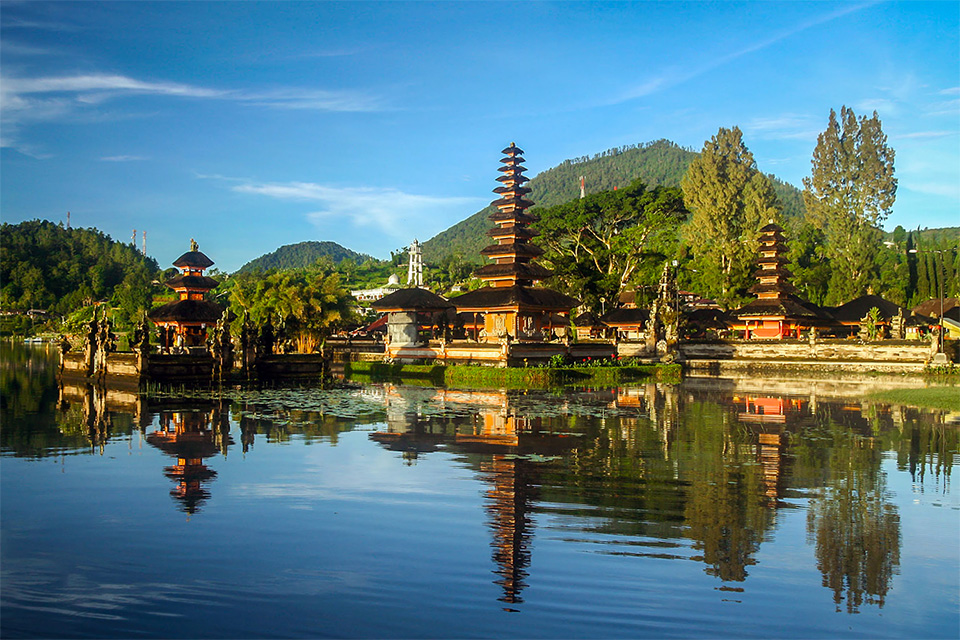
Further north, the lakeside town of Bedugul sits around 20km away and makes a natural lunch stop, with the striking lakeside temple of Ulun Danu Beratan as its centrepiece — a very different kind of Bali landscape from Nungnung’s jungle canyon, all still water and cool mountain air. If you have time for one more stop, the sweeping terraces of Jatiluwih lie within reach to the west and round out a day that touches jungle, lake and rice country in a single loop.
Insider's Itinerary — A Full Highland Day
- 7:00 AM — Arrive at Nungnung for the staircase and a swim before the crowds.
- 9:30 AM — Stop at Tukad Bangkung Bridge on the drive north.
- 11:00 AM — Lunch and a temple visit at Ulun Danu Beratan, Bedugul.
- 1:30 PM — Optional detour to Jatiluwih rice terraces before heading back south.
If you’d rather spread the highlands across two easier outings, two lesser-known cascades — Taman Sari and Goa Rang Reng — sit within a similar radius and pair well with Nungnung for travellers chasing a “three waterfalls” day. See our guide to Bali’s best waterfalls for how they compare.
How Nungnung Compares to Other Bali Waterfalls
If you’re trying to decide whether Nungnung deserves a spot on a shorter Bali itinerary, it helps to see it next to the waterfalls most visitors already have on their list.
WATERFALL |
HEIGHT |
EFFORT |
CROWD LEVEL |
ENTRANCE FEE |
SWIMMABLE |
|---|---|---|---|---|---|
~50m
|
High (~500 steps each way)
|
Low–Moderate
|
IDR 20,000
|
Yes
| |
~12m
|
Low (short paved path)
|
High
|
IDR 20,000
|
Yes
| |
~10–15m
|
Moderate (steps + jungle path)
|
Moderate
|
IDR 20,000
|
Yes
| |
~15m
|
Low–Moderate
|
Moderate
|
IDR 15,000
|
Yes
|
Tegenungan remains the easiest option for travellers short on time or mobility, and the crowds reflect that. Banyumala offers a similar jungle-canyon feel with a gentler approach. Nungnung sits at the far end of the spectrum — the highest, the most physically demanding, and, as a direct result, the quietest of the four once you’re past the car park.
Safety & Responsible Travel
Nungnung is safe for the vast majority of visitors, but a few realities are worth knowing before you go.
The staircase is the main consideration. Concrete steps, uneven in places and often damp from spray or rain, account for most minor injuries here — almost always from rushing rather than from the terrain itself. Take the descent at a measured pace, use the handrails where they exist, and budget real time for the return climb rather than treating it as an afterthought.
At the pool, there are no lifeguards and no marked boundaries. The water beneath the main cascade carries far more force than it appears to from the bank, and swimmers should stay well clear of the direct impact zone. Children can swim in the calmer edges of the pool with close supervision, but the staircase itself — steep, slippery, with no railings in places — isn’t well suited to toddlers, strollers, or anyone with significant mobility concerns.
The staircase doesn’t ask for athleticism so much as patience — the people who struggle most at Nungnung are usually the ones in a hurry.
On the responsible travel side, Nungnung remains relatively undeveloped compared to Bali’s more commercial waterfalls, and that’s worth protecting. Carry out anything you bring in, including snack wrappers and bottles — there are no bins at the bottom of the staircase. The site holds local spiritual significance, so swimwear is fine in the pool itself, but cover up again for the walk back through the village area at the top.
Plan Your Visit NOW!
Nungnung isn’t a waterfall you stumble into on the way to somewhere else — the drive alone ensures that. It’s a destination you choose, knowing it will cost you close to an hour of stairs before you’ve even seen the water, and another, harder hour to get back to where you started.
What you get in return is a waterfall that feels genuinely earned: a 50-metre wall of water in a canyon that swallows sound, a pool cold enough to shock the heat out of you, and — on a weekday morning — the rare experience of having one of Bali’s most powerful natural sights almost entirely to yourself. Pair it with Tukad Bangkung Bridge and a slow lunch in Bedugul, and you’ve got a highland day that feels like a different island from the beach clubs of Canggu or the crowded paths of Tegalalang. For more ways to fill that day, see our highland day trip ideas from Ubud.
Bring good shoes, bring patience for the climb, and bring a sense of humour for the moment your legs start complaining around step 400. Go in the morning. Take the stairs slowly. The waterfall has been there for a very long time, and it will still be roaring long after your legs have recovered.
💡Related reads:
FAQ
How tall is Nungnung Waterfall?
Nungnung drops approximately 50 metres in a single sheet, making it one of the tallest — and most voluminous — waterfalls in Bali.
How much does it cost to visit Nungnung Waterfall?
Entrance is IDR 20,000 per person for foreign visitors (IDR 10,000 for Indonesian visitors), plus a small parking fee of IDR 2,000–10,000 depending on your vehicle. Bring cash — there’s no card payment option at the booth.
How many steps are there at Nungnung Waterfall?
Around 500 steps in total, split into two main flights with a flatter section in between. The descent takes roughly 15–20 minutes; the return climb takes most visitors 35–45 minutes.
Is it safe to swim at Nungnung Waterfall?
The pool is swimmable and popular with visitors, but there are no lifeguards and no marked safe zones. Stay well back from the direct impact of the falling water, where the current is far stronger than it appears from the bank.
How far is Nungnung Waterfall from Ubud?
Around 30km, roughly a 1 to 1.25 hour drive depending on traffic and where in Ubud you’re starting from.
Do I need a guide to visit Nungnung Waterfall?
No. The route is a single staircase with no junctions, and a guide adds nothing to the experience. Politely decline anyone offering guide services at the car park.
What should I wear to Nungnung Waterfall?
Closed-toe shoes with grip for the staircase, and swimwear underneath your clothes if you plan to swim — there are no changing facilities at the bottom. A light layer for the drive is useful, since the highlands run cooler than the coast.
Is Nungnung Waterfall suitable for families with children?
Older children who can manage steep stairs confidently will likely enjoy it, and the pool’s calmer edges are fine for supervised swimming. For toddlers, strollers, or anyone unsteady on uneven concrete, the 500-step staircase makes Nungnung a harder sell than gentler options like Tegenungan or Tibumana.
Is Nungnung Waterfall worth visiting?
If you’re comfortable with roughly an hour of stairs in total and want a waterfall experience without the crowds of Tegenungan, yes — Nungnung’s scale and relative quiet make the effort worthwhile for most travellers. If mobility is a concern or you’re short on time, Tegenungan or Tibumana are easier alternatives that still deliver a satisfying swim.