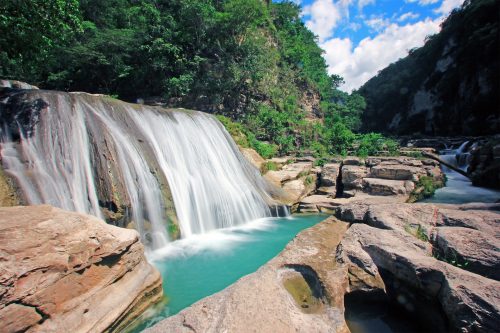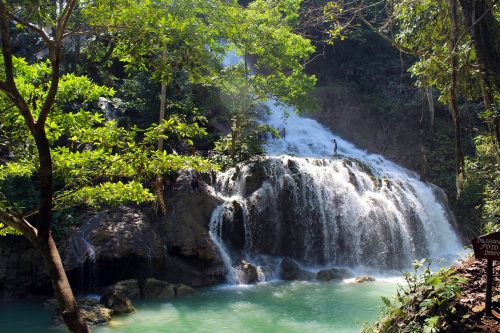
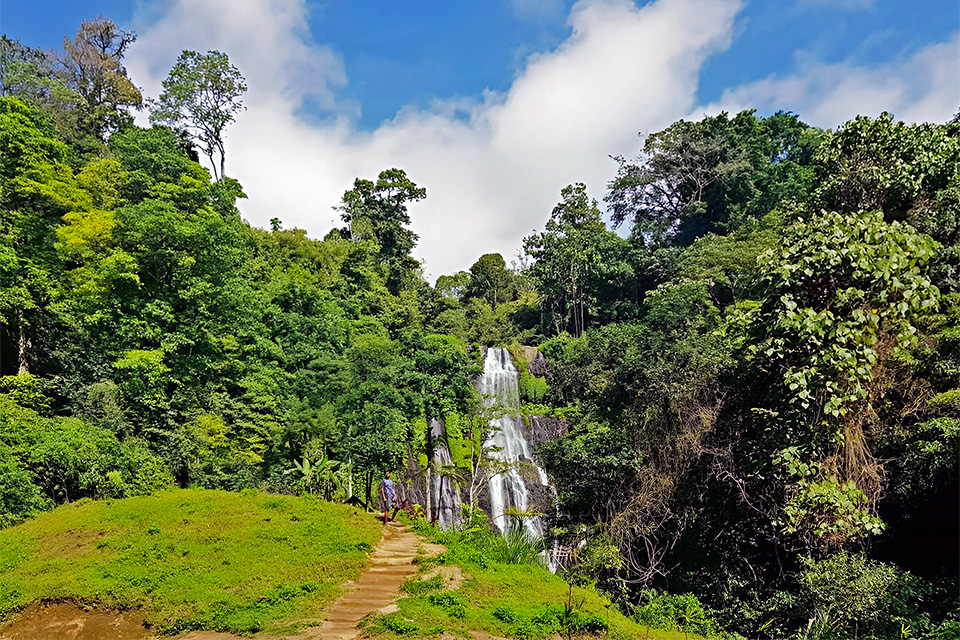
Guide to Banyumala Twon Waterfall – There is a waterfall in northern Bali that most tourists never find. Tucked inside a dense rainforest in the Wanagiri highlands, not too far away from Bali’s most iconic hillside resort of Bedugul, framed by a natural amphitheatre of mossy volcanic rock, Banyumala Twin Waterfalls rank among the most breathtaking — and most rewarding — natural experiences the island has to offer.
What makes Banyumala genuinely special is not just the beauty — it’s the whole experience. The trek through bamboo and jungle. The sound of the falls growing louder as you descend. The cool mist on your face when you finally arrive. The pool, swimmable, clear, and achingly refreshing. And through it all, a level of solitude that is increasingly rare in Bali’s tourist landscape.
This guide gives you everything you need to make that effort pay off completely.
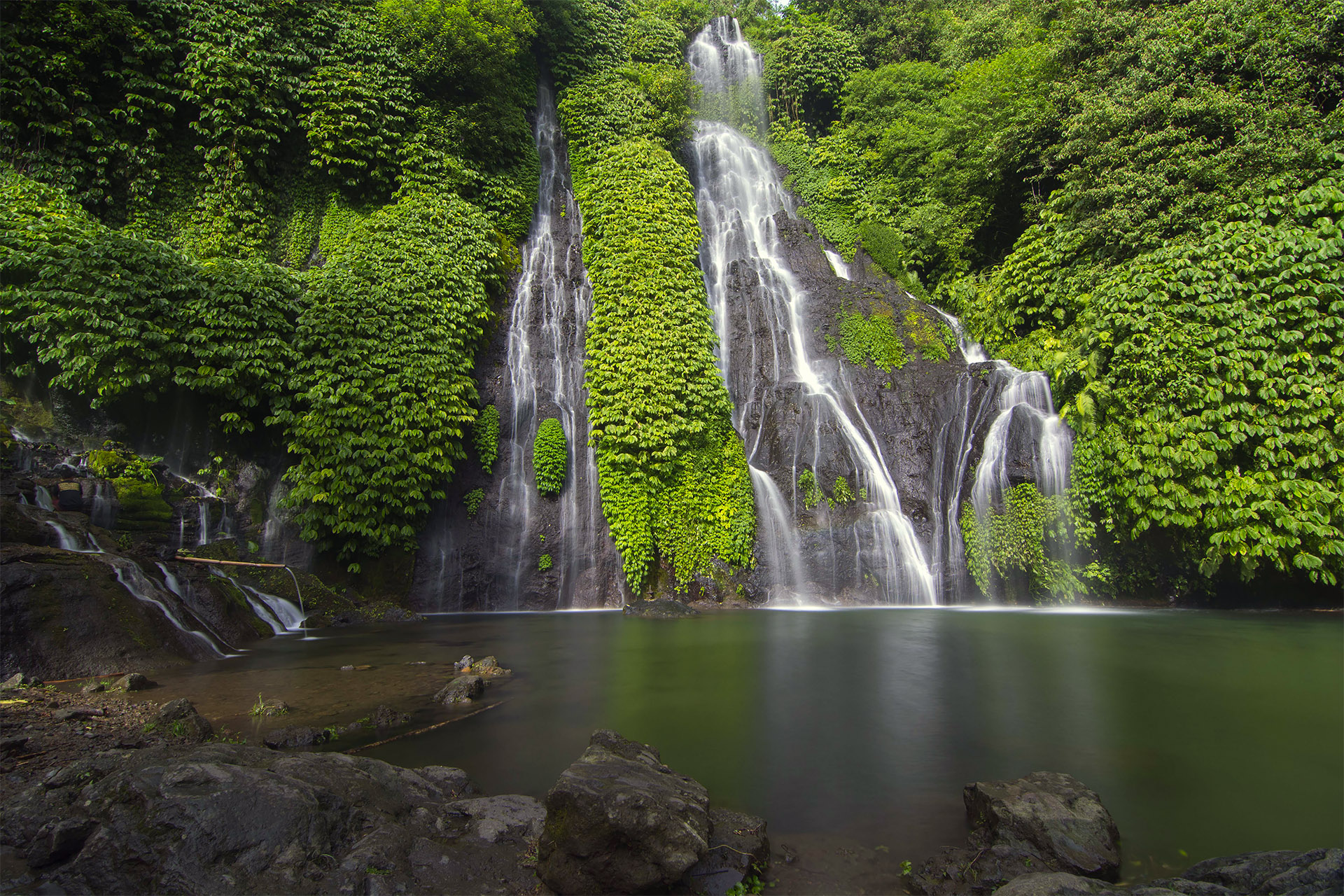
Two streams of crystalline water plunge side by side into a single glittering pool, the kind of scene that stops you mid-step and makes you reach for your camera before you’ve even fully registered what you’re looking at.


What Are Banyumala Twin Waterfalls?
Banyumala Twin Waterfalls – locally known as Air Terjun Banyumala – are a pair of adjacent waterfalls located in Wanagiri Village, Buleleng Regency, in the highlands of northern Bali. The falls sit at approximately 900 metres above sea level, nestled in forest just below the crater rim of Lake Tamblingan — one of Bali’s most sacred highland lakes.
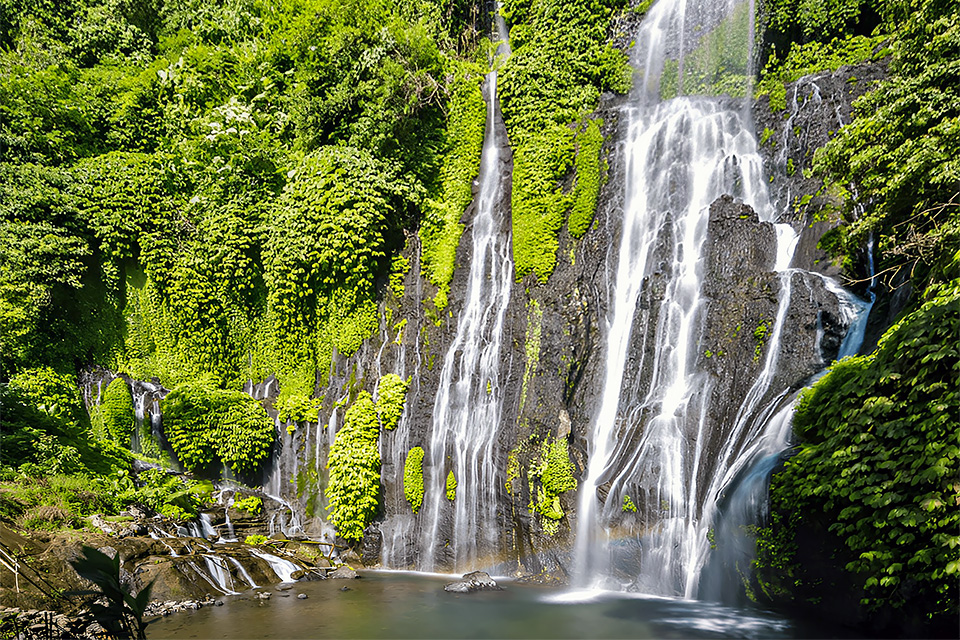
Each fall drops approximately 25–30 metres, and the two streams merge into a single, extraordinarily clear pool at the base. The surrounding rock faces are draped in green moss and tropical ferns, and the jungle canopy forms a near-complete ceiling overhead, filtering the light into shafts of green-gold that shift throughout the day.
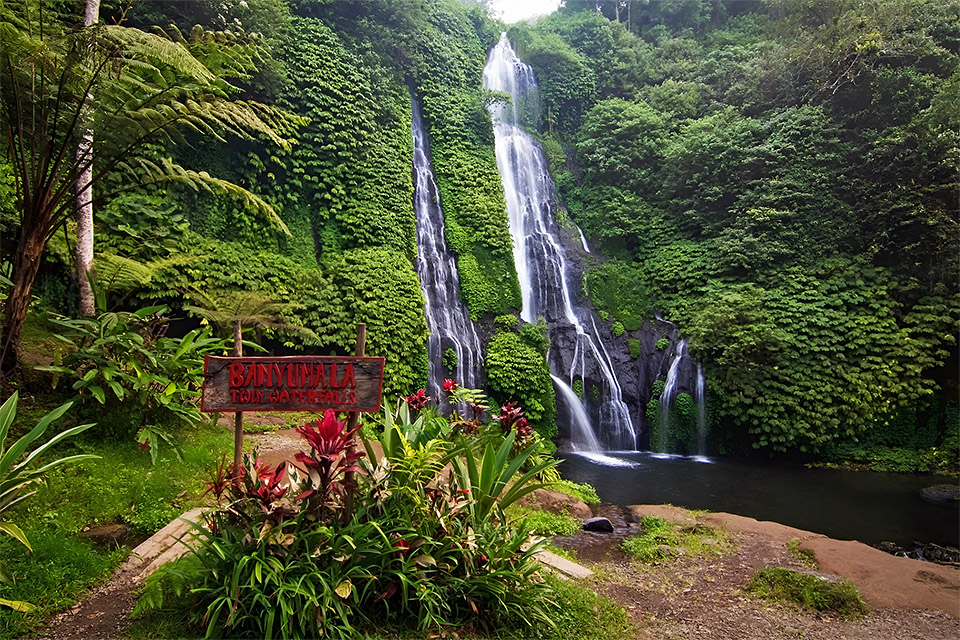
The name “Banyumala” derives from Balinese and roughly translates to “garland of water” — a poetic description that becomes completely understandable the moment you stand at the water’s edge and take it in. Unlike Bali’s most famous waterfalls — Tegenungan, Gitgit, Sekumpul — Banyumala remains relatively under the radar. Word has spread through travel photography and social media, and visitor numbers are growing. All the more reason to go sooner rather than later.
Location
Address: Near Jl. Munduk-Wanagiri, Wanagiri Village, Sukasada District, Buleleng Regency, North Bali
GPS: -8.2413, 115.1006 — search “Banyumala Waterfall” on Google Maps, it is well marked.
FROM |
DISTANCE |
DRIVE TIME |
|---|---|---|
Ubud
|
~55 km
|
1.5–2 hrs
|
Seminyak / Kuta
|
~90 km
|
2–2.5 hrs
|
Canggu
|
~85 km
|
2–2.5 hrs
|
Lovina (North Bali)
|
~30 km
| |
Munduk Village
|
~8 km
|
15–20 min
|
Bedugul / Beratan
|
~20 km
|
30–40 min
|
Banyumala is not a casual add-on to a southern Bali day — it requires a dedicated half-day or full-day commitment, and that’s exactly what makes it feel like a proper adventure rather than a tourist box-tick.
How to Get There
BY PRIVATE DRIVER — RECOMMENDED
The most practical and comfortable option. A full-day driver from Ubud typically costs IDR 500,000–700,000 (~USD 30–43). A skilled driver will know the roads well and can suggest a logical itinerary combining Banyumala with other north Bali highlights. Ask your accommodation to arrange one the evening before, and confirm the driver knows the Wanagiri ridge road specifically — it is narrow and rewards local knowledge.
BY RENTAL SCOOTER
Possible for experienced riders. Roads are well-paved but involve significant elevation gain with mountain switchbacks. Scooter hire runs IDR 70,000–100,000 per day. Parking at the trailhead is IDR 5,000. The road from the south climbs above 1,000 metres — on misty mornings, visibility can be limited. If it is raining heavily, wait it out. Wet mountain switchbacks are not a place to rush.
BY ORGANIZED TOUR
Several operators in Ubud and southern Bali offer day trips including Banyumala, often combined with Munduk village or Lake Tamblingan. Typical cost: USD 35–60 per person including transport and guide.
 Insider’s Tips — Getting to Banyumala Twin Waterfall
 Insider’s Tips — Getting to Banyumala Twin Waterfall
- Book your driver the evening before — morning scrambles for reliable drivers rarely end well.
- Petrol stations in the highlands are scarce. Fill your tank before leaving the main road.
- Download offline maps for the Wanagiri area before you leave — signal at the base is poor.
- Negotiate a full-day rate, not per trip — you’ll want flexibility for unplanned stops along the ridge road.
Entrance Fees & Opening Hours
Banyumala is managed by the local Wanagiri village community.
Open every day 7:00 AM – 6:00 PM. No advance booking required — pay at the gate.
TYPES OF VISITOR |
ENTRANCE FEE (AS PEER 2026) |
|---|---|
Foreign adult
|
IDR 30,000 (~USD 1.90)
|
Domestic adult
|
IDR 20,000
|
Children (under 5 years old)
|
Free
|
Parking — scooter
|
IDR 5,000
|
Parking — car
|
IDR 10,000
|
A portion of every ticket goes directly to the Wanagiri village community, contributing to forest conservation and trail maintenance. This is community-managed ecotourism at a grassroots level, and your visit directly supports local livelihoods.
The Trek: What to Expect
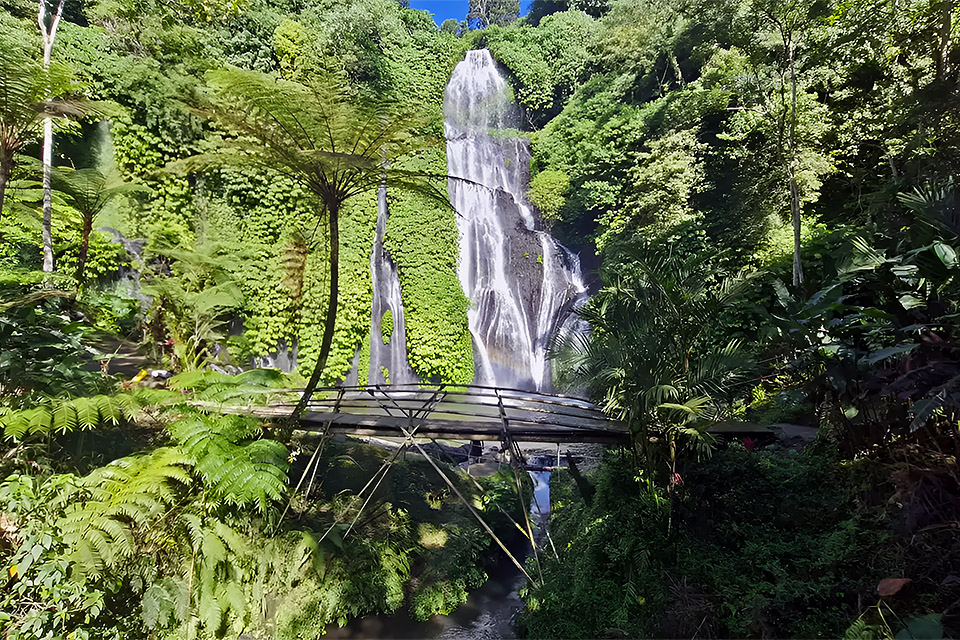
The trail begins at the ticket booth and descends immediately into a canopy of tropical forest. Bamboo groves give way to large-leafed rainforest trees, and the path weaves between roots and boulders — shaded almost entirely, even at midday. As you descend, the sound of the waterfalls builds steadily: first a whisper, then a rush, then a full roar you feel as much as hear.
TRAIL DETAIL | |
|---|---|
One-way distance
|
~800 metres
|
Descent time
|
20–35 minutes
|
Return ascent time
|
30–45 minutes
|
Difficulty
|
Moderate
|
Elevation change
|
~80–100 metres descent
|
The trail emerges at the base to a sudden, full view of both falls and the pool. The reveal is genuinely spectacular — flat rocks around the pool edge provide space to sit, rest, and absorb the scene while the mist from the falls keeps the entire area cool.
The return climb is where most visitors are caught off guard. What was a pleasant 25-minute descent becomes a 35–45-minute uphill climb in humid tropical air. Take it slowly, rest as needed, and hydrate before you start.
The trail is well-trodden and clearly marked. After rainfall, sections become muddy and slippery — take care on wet roots and rock faces. There are basic handholds and ropes on the steeper sections. Closed-toe shoes with grip are strongly recommended; flip-flops are a genuine safety risk when the path is wet.
Swimming
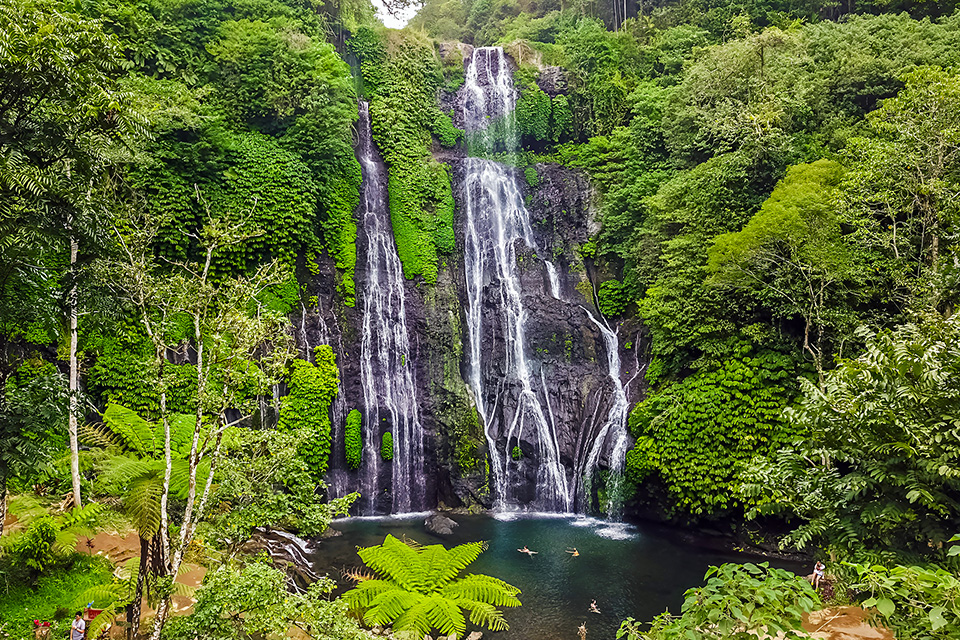
Swimming in the pool beneath Banyumala’s twin falls is, without question, the highlight of the entire experience. The water is extraordinarily clear, fed directly from the mountain and cooled by the elevation — significantly colder than Bali’s coastal waters. The pool is large enough to move freely, calm enough to float in, and powerful enough near the base to be exhilarating.
The pool is generally swimmable year-round under normal conditions. Because Banyumala sits at high elevation, the flow is more stable than lower-altitude falls, and the pool remains clear for much of the year. During the dry season (April–October), the water is at its clearest. After heavy rain or in the wet season, the pool current can become dangerous — when the water is visibly murky or brown, don’t enter. Always ask local staff at the ticket booth if in doubt.
There are no lifeguards on duty. Non-swimmers should stay in the shallower perimeter. Strong swimmers should avoid the direct base of the falls where the impact zone creates a downward current. Children must be within arm’s reach at the water’s edge at all times.
Insider’s Tips — Swimming Tibumana Twin Waterfall
- Bring a waterproof dry bag — you’ll want both hands free and your phone safe.
- Bring a microfibre towel and a change of clothes — driving back in a wet swimsuit is deeply unpleasant.
- Wear water shoes or strapped sandals — the pool edge is rocky and mossy.
- Use biodegradable sunscreen only before entering — the pool feeds natural waterways directly.
Best Time to Visit
TIME OF THE DAY
Early morning (7:00–9:30 AM) is unequivocally the best window. At this time the falls are often entirely yours — or shared with just a handful of others. The light, filtered through the jungle canopy, is soft and atmospheric. From around 10:00 AM onward, visitor numbers increase. By midday the site can feel genuinely busy.
Late afternoon (3:00–5:00 PM) is a reasonable second option — many tour groups leave by 2:00 PM, and the trail quiets again. Begin your return ascent no later than 5:00 PM; the site closes at 6:00 PM and the trail is unlit.
BY SEASON
Dry season (April–October) is optimal for swimming, photography, and trail conditions. The pool is at its clearest, the skies blue, and the access road in best condition. Wet season (November–March) brings dramatically more powerful falls and intensely green jungle, but the pool becomes less safe for swimming and the trail more demanding. The mountain road can also be trickier in heavy rain.
Insider’s Picks — Best Month to Visit Banyumala Waterfall
- May is our top pick: post-wet-season lushness, pre-peak crowds, excellent swimming.
- Early October runs a close second — quiet, green, and great afternoon light into the gorge.
- Avoid late July and August if solitude matters to you — Banyumala stays manageable but is noticeably busier.
What to Bring
Banyumala rewards simple preparation. The essentials are few, but skipping any of them makes the experience noticeably less comfortable.
Non-negotiable: trail shoes or grippy sandals with straps (not flip-flops); swimwear; a microfibre towel; at least 1.5 litres of water per person (there is no reliable water source on the trail); cash in IDR (ticket booth and vendors are cash only); biodegradable sunscreen.
Strongly recommended: a waterproof dry bag for your phone and valuables; a light rain jacket (mountain weather changes fast at 900 metres); insect repellent for the forest trail; energy snacks for the return climb; a change of clothes if you swim.
Leave valuables, extra cash, and irreplaceable items at your accommodation. There are no lockers at the site.
Photography
Banyumala is one of the most photogenic waterfalls in all of Bali. The twin-fall composition, the moss-draped amphitheatre, and the emerald pool offer angles that are genuinely rare across the island.
The falls face roughly north-northeast. The best natural light enters the gorge from mid-morning onward in the dry season — soft and diffused in the early hours, more dramatic as it angles in later. Avoid midday, which creates harsh shadows and blown-out white water.
For a silky water effect, use a shutter speed between 1/4 and 2 seconds on a tripod; an ND filter helps in brighter conditions. For sharp, dramatic water, 1/500 sec or faster freezes individual droplets beautifully. Shoot in RAW to recover shadow detail in the high-contrast scene — bright white water against dark rock and jungle is one of the more demanding exposures in nature photography.
Most Banyumala photos are taken from the same standing angle at the pool’s edge. Wade into the shallows with a waterproof camera and shoot upward — it’s a perspective almost no travel photos show, and it belongs entirely to those who make the effort to get there.
Nearby Attractions
Banyumala’s highland location makes it the natural anchor for a broader exploration of one of Bali’s most beautiful regions. These are the stops most worth combining:
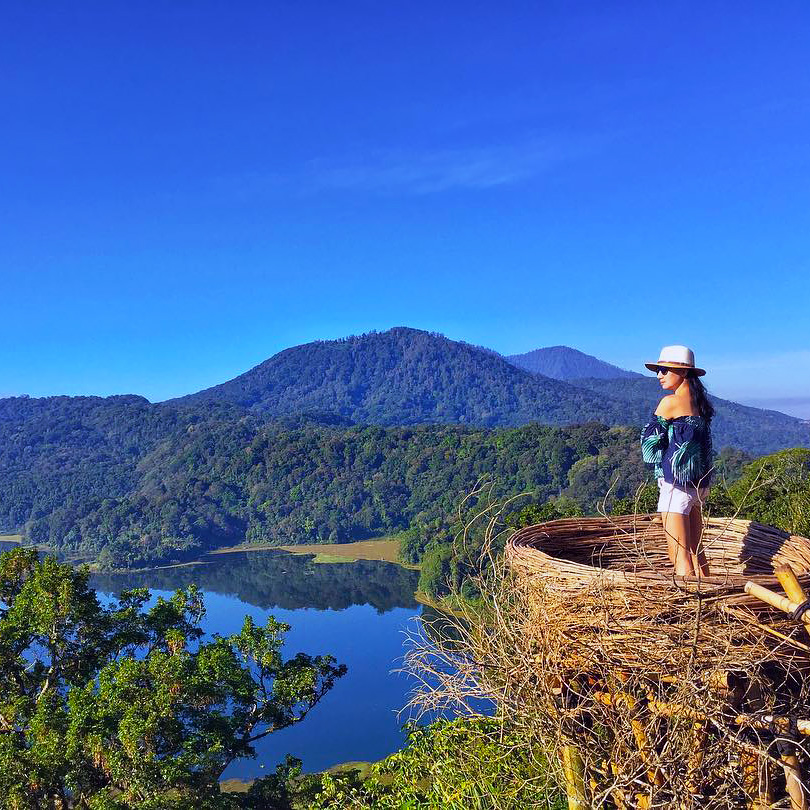
Wanagiri Hidden Hills
(~3 km, 5 min) — famous swing viewpoints perched above Lakes Buyan and Tamblingan. Visit right after your swim while your clothes dry.
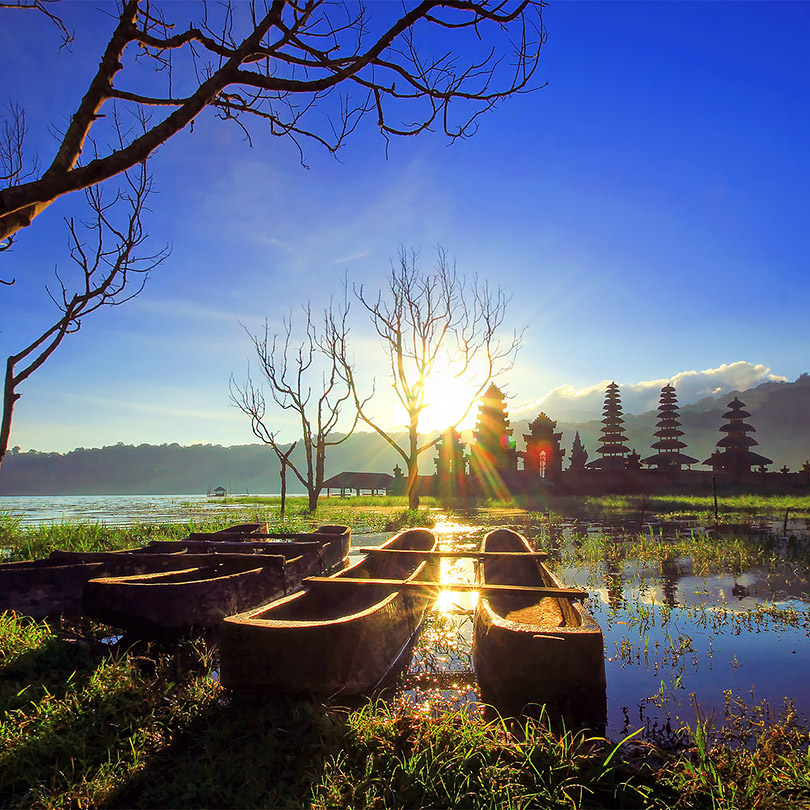
Lake Tamblingan
(~6 km, 15 min) — a sacred crater lake surrounded by ancient forest. A traditional outrigger canoe across the mist-covered water is quietly unforgettable. Canoe hire: IDR 150,000–250,000.
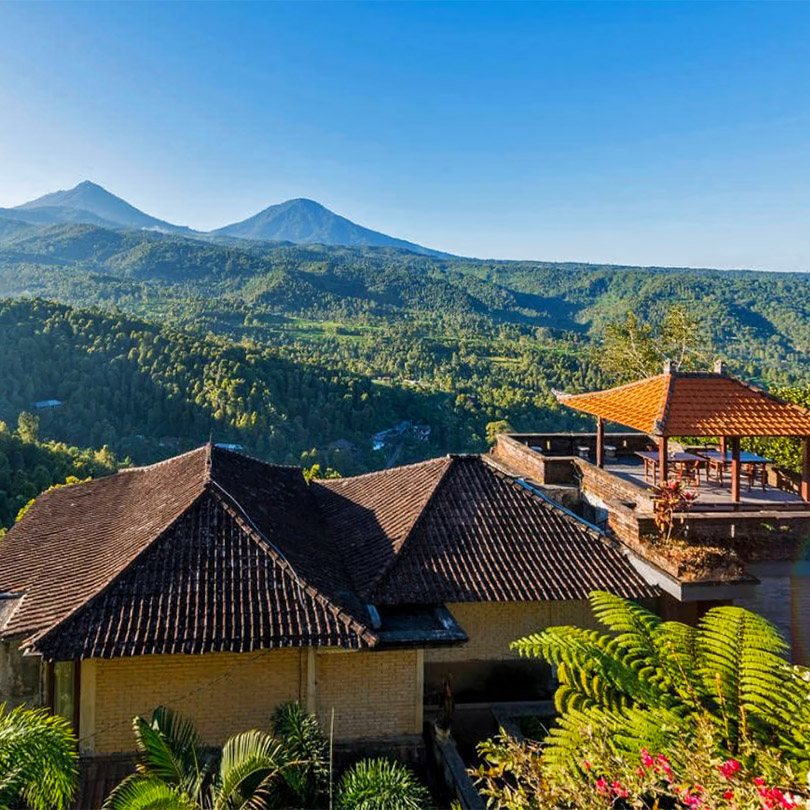
Munduk Village
(~8 km, 20 min) — a highland village among clove, coffee, and vanilla plantations. The best lunch stop in the region, with excellent local warungs and cafés. Plan for the black rice pudding.
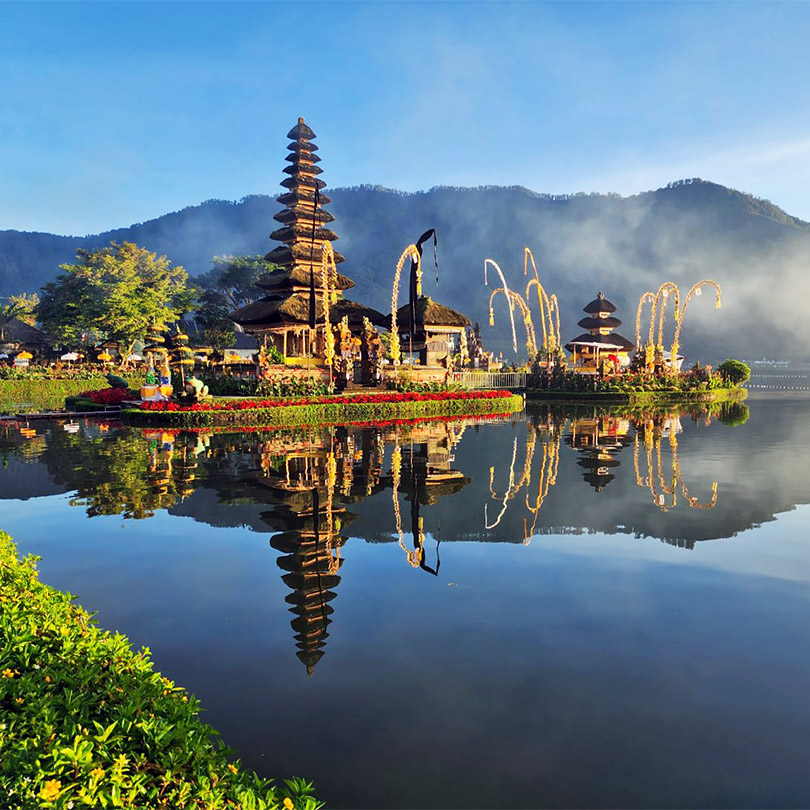
Pura Ulun Danu Bratan
(~25 km south) — Bali’s most iconic lakeside temple, worth combining if you return via Bedugul.
Insider’s Pick —Perfect Day Itinerary
 Insider’s Pick —Perfect Day Itinerary
- 7:00 AM — Depart Ubud
- 9:00 AM — Arrive Banyumala, trek, swim, photograph (~2–2.5 hrs)
- 11:30 AM — Stop at Wanagiri Hidden Hills viewpoint (approx 30 min)
- 12:30 PM — Lunch in Munduk village
- 2:00 PM — Lake Tamblingan, 1.5 hours.
(optional traditional wooden canoe) - 4:30 PM — Begin return journey
- 6:30–7:00 PM — Back at accommodation
Banyumala vs. Other Bali Waterfalls
Banyumala is the only waterfall in Bali that combines twin falls, a swimmable pool, low crowds, and a rewarding trek in one package. Tegenungan wins on ease; Sekumpul wins on sheer drama; Banyumala wins on the overall experience.
Safety & Responsible Travel
Check pool conditions with staff at the ticket booth if it has rained in the past 24 hours. Don’t enter the impact zone at the base of the falls — the downward current is stronger than it looks. Arrange your return transport before descending the trail; mobile signal at the base is poor and you cannot reliably call Grab from there. Begin your ascent no later than 5:00 PM.
Carry out all rubbish — there are no waste facilities on the trail itself. Use biodegradable sunscreen before entering the pool. Banyumala is managed by the local village; treat the ticket staff and any guides with respect. And if other visitors or locals are present during prayer or ceremony, ask before photographing.
Ready to Go?
Banyumala Twin Waterfalls represent something increasingly precious in Bali: a natural experience that remains genuinely wild, modestly visited, and profoundly beautiful. In a tourism landscape where many of the island’s great attractions are now defined as much by the crowd as by the sight itself, Banyumala is different. The effort of reaching it filters out the casual visitor, and what remains is an experience that rewards those who make the journey.
The twin falls, the clear mountain pool, the forest trail, the mist — none of it is curated or packaged. It is simply Bali at its most elemental.
Go early. Swim. Stay longer than you planned. And when you finally climb back to the parking area — slightly tired, still damp, with the sound of the falls fading behind you — you will understand exactly why this waterfall has the reputation it does among those who have made the trip.
💡Related reads:
FAQ
Is Banyumala worth the trip from Ubud?
Absolutely — and for many travellers it ranks as the single best waterfall experience in Bali. The twin falls, the swimmable pool, and the low crowd levels create a combination that is genuinely exceptional. The effort of reaching it makes the experience feel earned in a way that more accessible waterfalls do not.
How difficult is the trek?
Moderate. The descent takes 20–35 minutes and is manageable for most fit adults. The return ascent is more demanding — 30–45 minutes uphill in humid jungle heat. Take your time, rest before starting back, and bring enough water.
Is Banyumala suitable for children?
Yes, for children aged roughly 6 and above who are comfortable on uneven trails. Young children and toddlers would find the terrain challenging. Strollers and prams are not suitable. Close supervision is essential at the pool edge.
Do I need a guide?
No. The trail is single-path and clearly marked. Local guides are occasionally available at the trailhead (IDR 50,000–100,000) and add cultural and natural context, but navigation is straightforward without one.
Are there restaurants near Banyumala?
Not at the waterfall itself. Munduk village, approximately 8 km away, has excellent local warungs and cafés serving Balinese food and good coffee. Plan your lunch there.