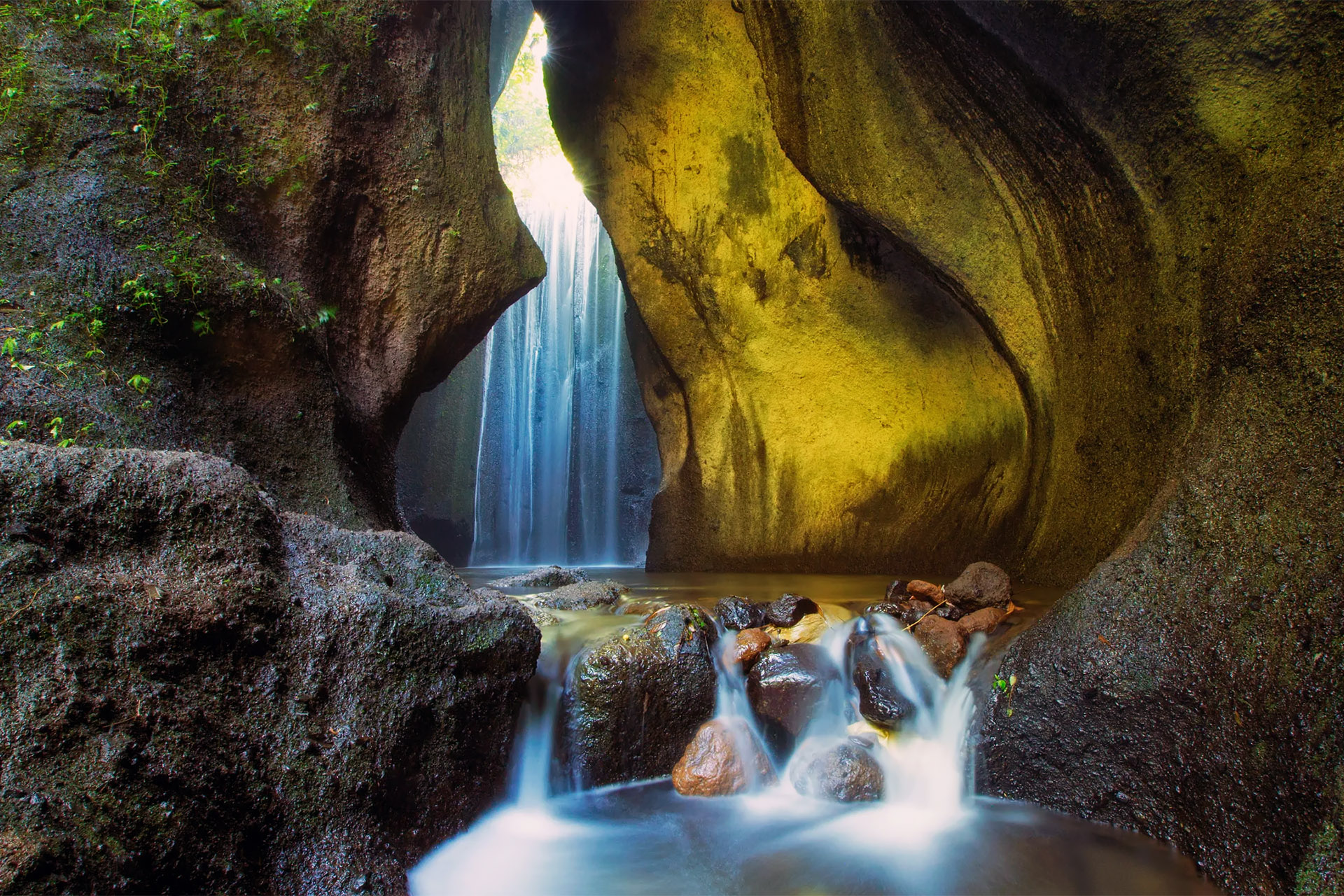
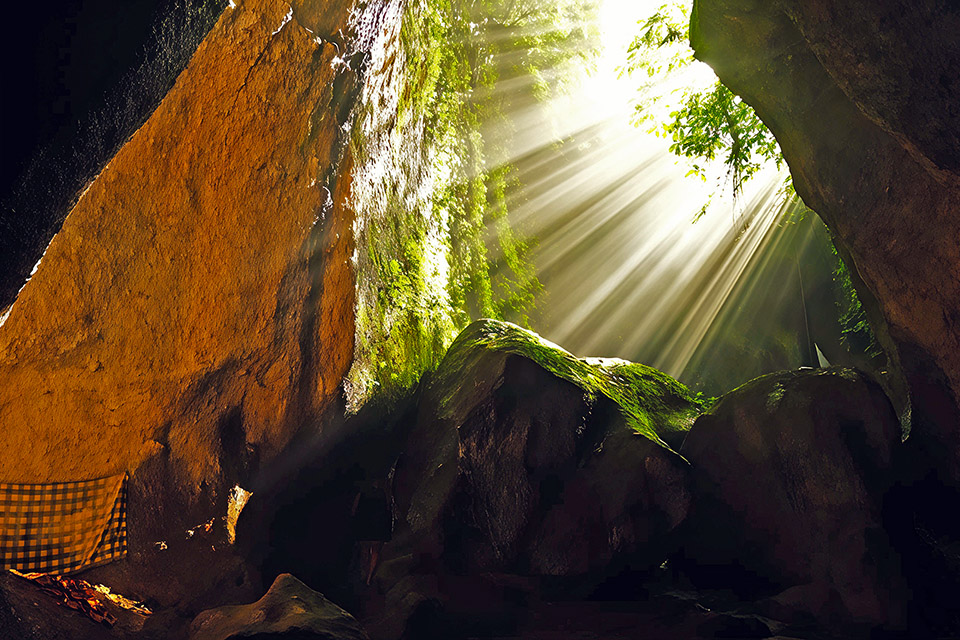
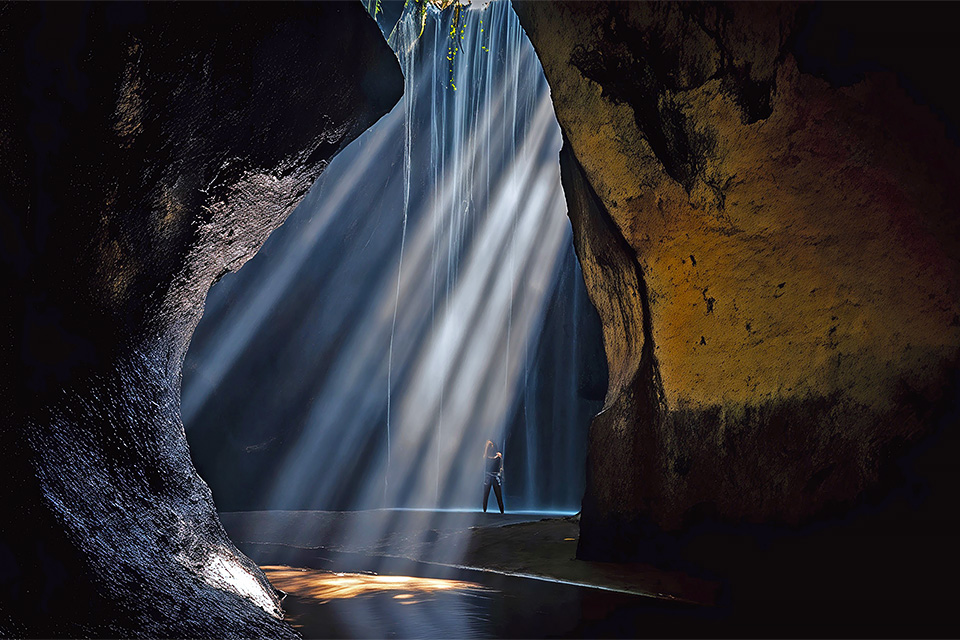
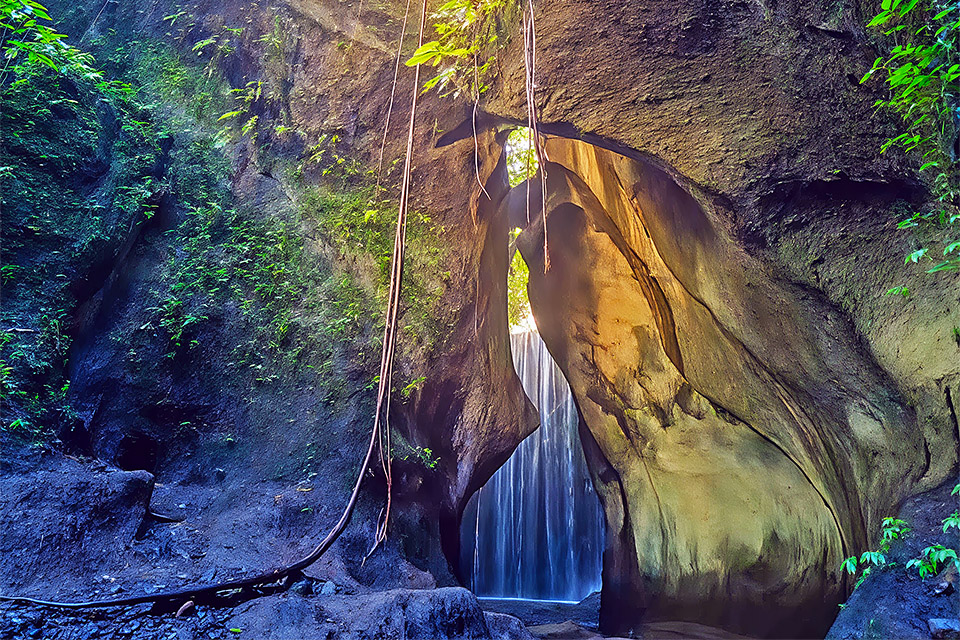
You smell the cave before you see the light. Damp stone, cool river air, a faint mineral note that clings to the canyon walls — and then, if you’ve timed it right, a single column of sunlight drops through a gap in the rock ceiling and lands directly on the falling water, turning the whole chamber into something that looks lit for a film set rather than found in nature.


💡Related reads:
This is Tukad Cepung, tucked into a narrow gorge in the hills above Tembuku, and it has become, deservedly, one of the most photographed waterfalls in Bali. Unlike waterfalls you walk up to, Tukad Cepung is one you walk into — down a stone staircase, along a shallow riverbed, through a curve of rock that hides the falls completely until the very last few steps.
The catch, and there’s always a catch with a waterfall this good-looking, is that the light show only happens on a fairly narrow schedule, and the crowds who’ve seen the same photos you have know it too. Here’s how to get the timing, the logistics, and the experience right.
What Is Tukad Cepung Waterfall?
Tukad Cepung sits inside a slot canyon in Penida Kelod village, Tembuku district, in the hills of Bangli Regency — east Bali’s quieter, less-visited highland region. “Tukad” simply means river in Balinese, and the waterfall is fed by a modest stream that has spent centuries carving a narrow channel through volcanic rock, leaving behind cliffs so close together in places that the canyon feels roofed even where it technically isn’t.
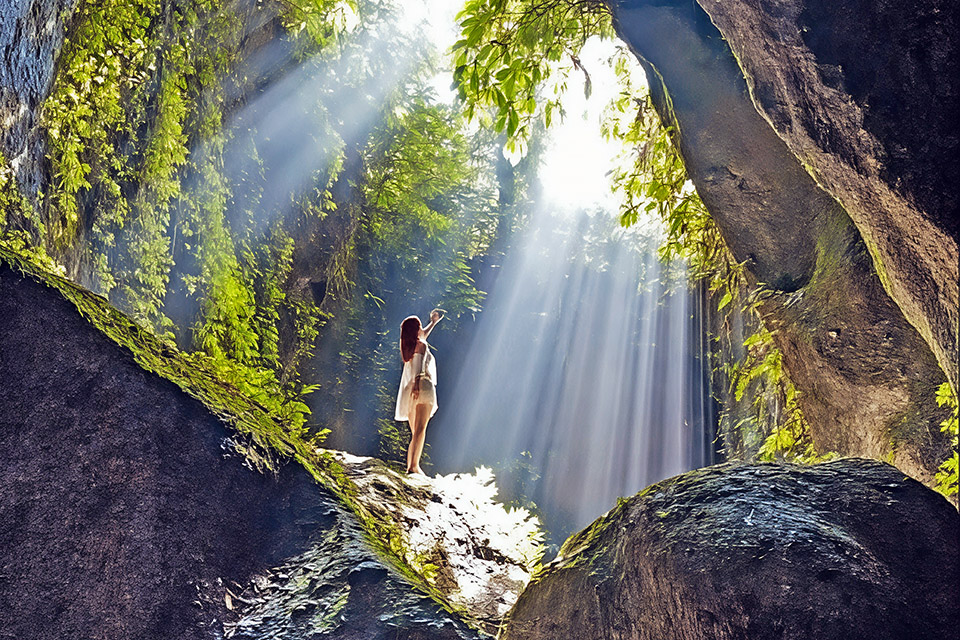
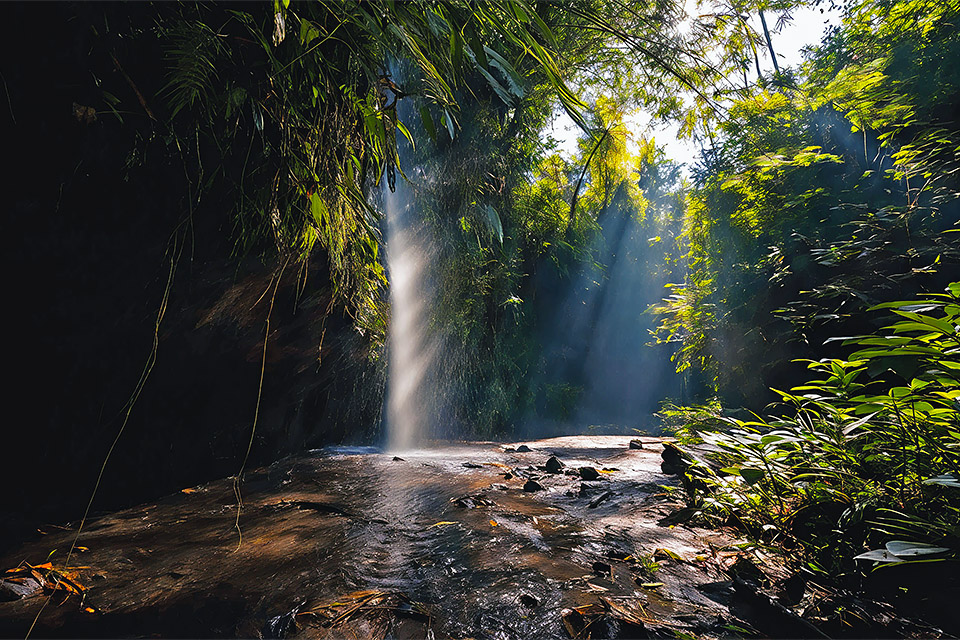
The falls themselves are modest by Bali standards — around 15 metres, a fraction of Nungnung’s fifty — but height was never really the draw here. What makes Tukad Cepung remarkable is the setting: a curtain of falling water inside a rock chamber, lit from above by a gap in the canyon ceiling, with beams of sunlight cutting through the spray at certain hours of the morning. Local folklore calls this phenomenon “heaven’s light,” and describes it as the moment angels are said to descend to bathe in the pool below.
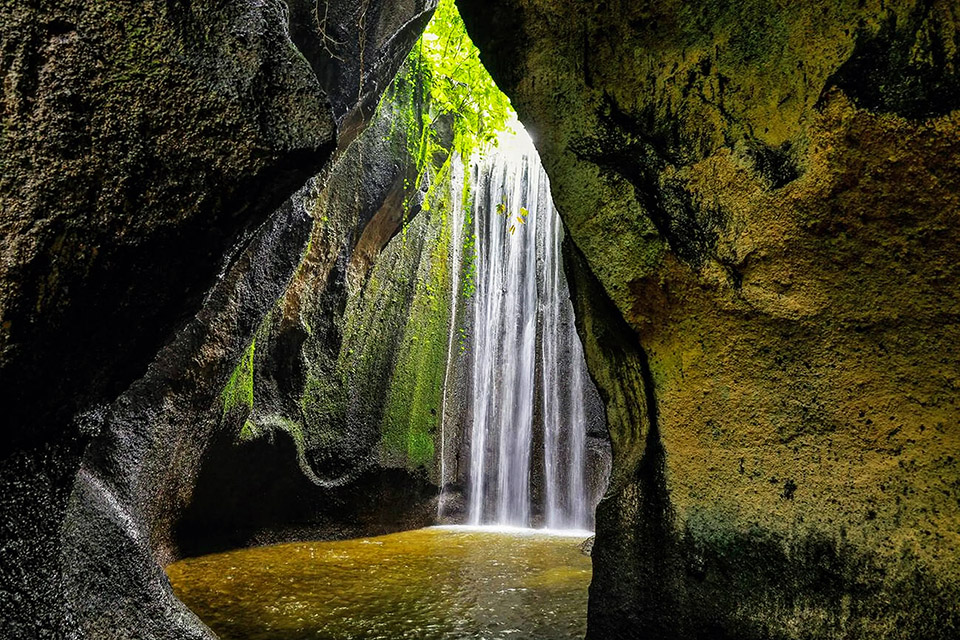
Before it appeared on any tourist map, Tukad Cepung held — and still holds — genuine spiritual significance for the local Balinese Hindu community. The site is used for melukat, a ritual water-cleansing ceremony intended to purify the mind and spirit, and the water flowing from the cave is considered holy. That history is worth remembering as you walk in: this is a working sacred site as much as it is a photo opportunity, and locals still visit to bathe long after the tour groups have moved on for the day.
The waterfall doesn’t announce itself. You round a boulder in a shallow river, and suddenly a wall of light and falling water fills the end of the canyon, as if it had been waiting there the whole time.
Geologically, the canyon is a fairly young formation by Balinese standards — the same volcanic bedrock that underlies most of the island’s dramatic gorges, carved over centuries by a modest but persistent stream rather than a major river system. That’s part of why the waterfall stays relatively gentle even at full flow: there simply isn’t the volume of water here that powers something like Nungnung or Sekumpul further north. What the site lacks in raw force, it makes up for in atmosphere, and atmosphere is exactly what has made it a fixture on every “best waterfalls in Bali” list published in the last several years.
Location & How to Get There
Tukad Cepung sits in Bali’s eastern highlands, close enough to Ubud for a half-day trip and often paired with a visit to Pura Besakih or the rice terraces around Sidemen, both of which lie further east along the same general route.
From Ubud, the drive runs east through Bangli town before turning off onto Jalan Tembuku, a rural road lined with clove trees and small family compounds. There’s no missing the carpark once you arrive — it’s marked by a warung with an oversized gorilla-head entrance, an unmistakable landmark that locals use as a reference point more often than the waterfall’s actual name.
The drive itself is one of the more pleasant approaches to any Bali waterfall, passing through a stretch of highland countryside that sees far less tourist traffic than the Ubud–Tegallalang corridor. Expect terraced rice fields giving way to clove and coffee smallholdings as the road climbs gently toward Tembuku, with Mount Agung occasionally visible on the horizon on a clear morning. If you’re driving yourself, fuel up before leaving Bangli town — options thin out considerably once you’re on the smaller rural roads.
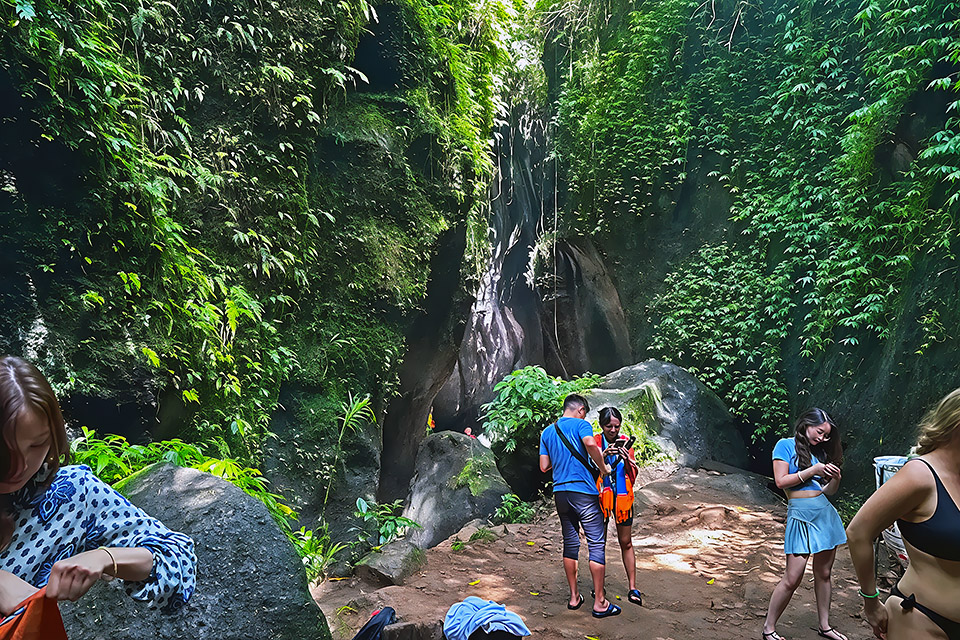
By Scooter
A comfortable, well-signposted ride from Ubud or Sidemen, mostly on decent rural roads. Just be aware that, as with most Bali attractions requiring foreign visitors to drive, you’ll want an International Driving Permit if you’re renting and riding yourself — checkpoints in this part of Bali are not unheard of.
By Private Car and Driver
Given Tukad Cepung’s distance from the main south-Bali tourist belt, a private driver is a popular choice, particularly if you’re combining the waterfall with Besakih Temple or a Sidemen valley loop in the same day. Expect a full-day rate similar to other highland tours — car, driver and fuel bundled together, split easily across a small group.
By Organised Tour
Several operators run combined itineraries pairing Tukad Cepung with Lempuyang Temple, Besakih, or the Tirta Gangga water palace, useful if you want the east-Bali highlights covered in a single day without self-driving.
Entrance Fees & Opening Hours
ITEM |
COST |
|---|---|
Entrance fee (per person)
|
IDR 30,000 (~US$2)
|
Parking
|
Free
|
Opening hours
|
7:00 AM – 6:00 PM daily
|
Payment method
|
Cash only — no cards, no QR
|
The ticket booth sits a short walk from the carpark, before the descent begins. Bring small notes — vendors here, like at most rural Bali attractions, rarely have change for a large bill, and there’s no ATM anywhere nearby. Once you’ve paid, you’ll get a physical ticket that doesn’t need to be shown again, so there’s no need to keep it on hand for the rest of the visit.
 Insider's Tips — Before You Go
 Insider's Tips — Before You Go
- Bring exact change. The ticket booth is cash-only and rarely has change for large notes.
- Wear water shoes, not flip-flops. You’ll be wading through a rocky riverbed for several minutes.
- Pack a dry bag. Your phone and camera will get misted whether you plan for it or not.
- Arrive by 8:30am if the sunbeam photo matters to you — the light window is short and popular.
The Walk In: Stairs, Cave and River
The route to Tukad Cepung starts straightforward and gets more interesting as it goes. From the ticket booth, a set of stone steps — roughly a hundred of them, far gentler than Nungnung’s five hundred — descends into the canyon, passing a scattering of small warungs and cafés tucked into the hillside along the way.
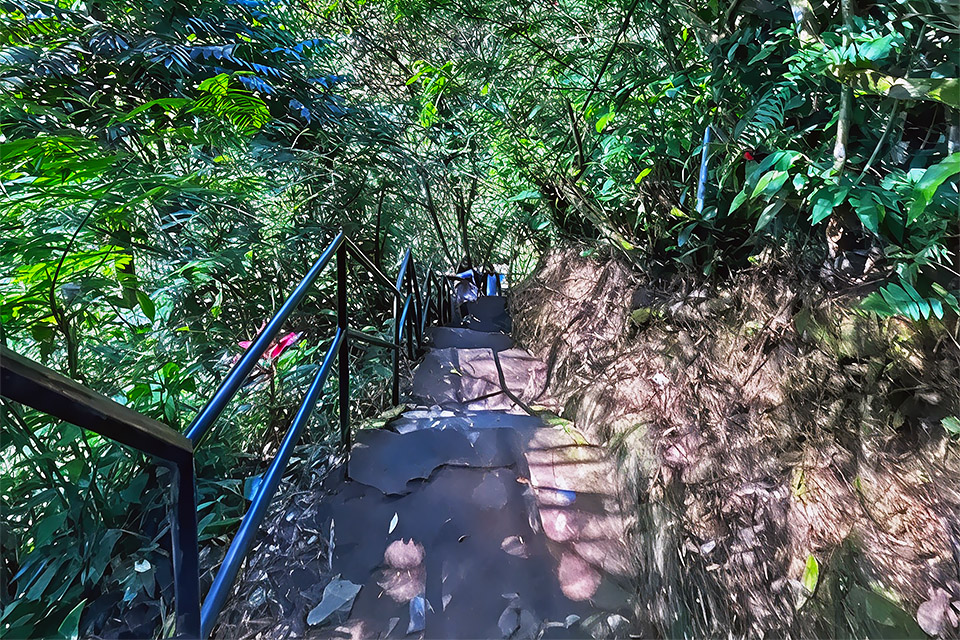
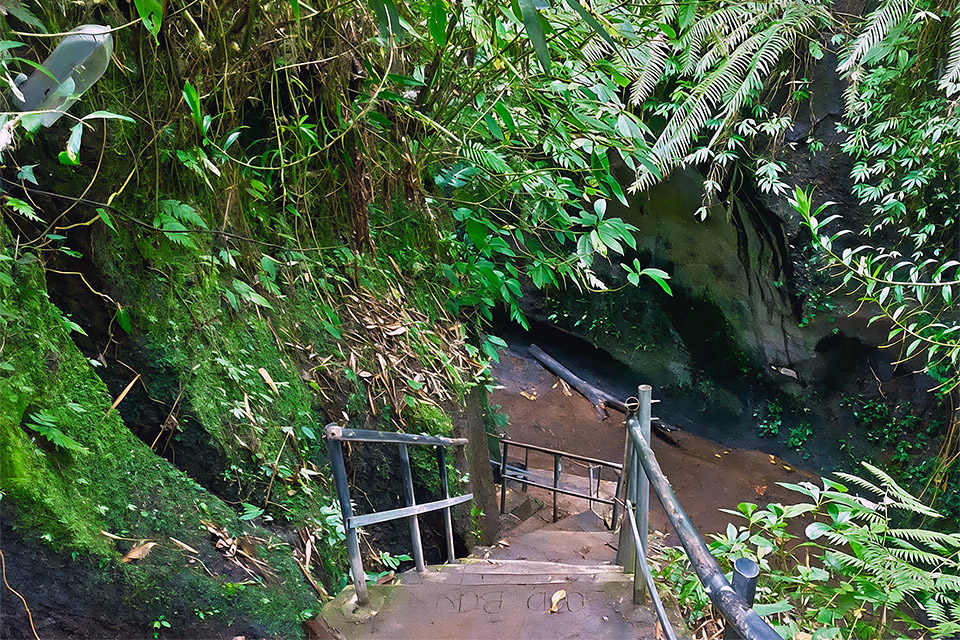
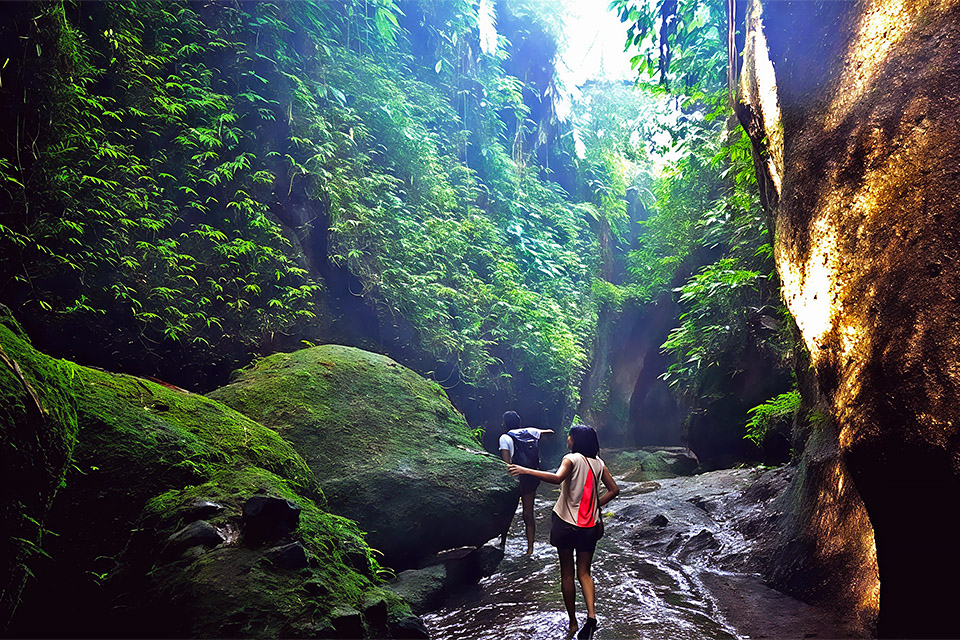
At the bottom, the path meets the riverbed itself. From here, there’s no more staircase — you wade. The water is shallow, generally ankle to knee-deep depending on recent rainfall, over a bed of smooth and occasionally sharp river rock. This is the stretch where proper footwear stops being optional: bare feet or flat sandals make for a genuinely uncomfortable few minutes, and more than one visitor has learned that the hard way.
At the bottom, the path meets the riverbed itself. From here, there’s no more staircase — you wade. The water is shallow, generally ankle to knee-deep depending on recent rainfall, over a bed of smooth and occasionally sharp river rock. This is the stretch where proper footwear stops being optional: bare feet or flat sandals make for a genuinely uncomfortable few minutes, and more than one visitor has learned that the hard way.
The temperature drops noticeably as you move deeper into the gorge, the rock walls holding onto a cool, damp air that never quite dries out even in the middle of the dry season. Moss and small ferns cling to the crevices above the waterline, and the acoustics shift too — every splash and voice bounces slightly off the stone, giving the final approach to the falls a hushed, cathedral-like quality that most visitors mention long after they’ve left.
The canyon walls lean in until the sky becomes a thin blue seam far overhead, and for a few minutes the only sound is your own footsteps in the water.
How Long Does It Take?
Budget 10–20 minutes each way at a relaxed pace, including the wade through the river. It’s a considerably shorter and gentler walk than most of Bali’s waterfall hikes, though the uneven, wet rock underfoot means it’s still not a route for anyone with significant mobility limitations — wheelchair access is not possible, and even confident walkers should move carefully through the river sections.
At the Waterfall: The Light and the Cave
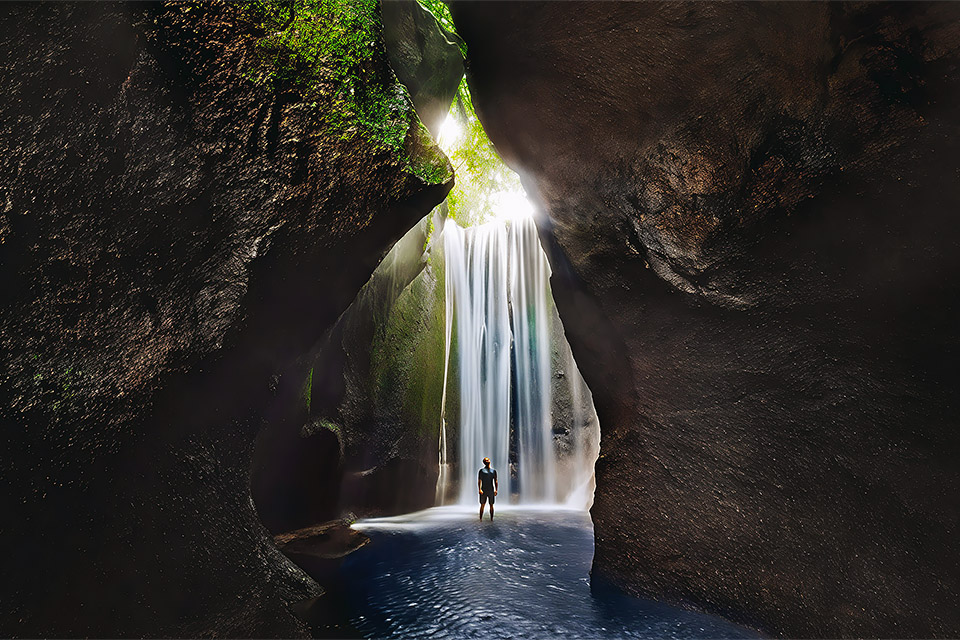
The final turn into the main chamber is the payoff every photo you’ve seen promised. The falls drop about fifteen metres from a gap in the canyon ceiling, spreading into a wide, thin curtain of water rather than a single forceful column — soft enough that standing close doesn’t mean a soaking, though the mist carries further than it looks.
The pool beneath is shallow, generally no more than thigh-deep on an adult, which makes it one of the safer Bali waterfalls for a proper swim without much technical risk. Locals still use the spot for melukat bathing rituals, so if you see a small ceremony taking place, keep a respectful distance and lower your voice rather than treating it as part of the photo backdrop.
The signature moment — the “heaven’s light” effect — depends entirely on the sun’s angle, which means it depends entirely on your timing. On a clear day, direct sunlight begins entering the canyon opening around 8:30 to 9am, intensifying into distinct, visible beams by mid-morning, typically strongest somewhere between 9:30 and 11am. Cloud cover, season, and even the time of year all shift this window slightly, so treat 9–11am as a target rather than a guarantee.
Facilities Along the Way
Unlike some of Bali’s more remote waterfalls, Tukad Cepung’s approach is dotted with small warungs and cafés built into the hillside between the ticket booth and the river. A few, like the well-known Cepung Lounge & Restaurant, have made a small destination of themselves — bean bags and swinging tables positioned to look out over the jungle canopy, worth a stop on the way back up even if you don’t plan to eat. Toilets are available near the ticket booth, though as with most canyon approaches, there’s nothing at the bottom itself, so plan accordingly before you start wading.
Insider's Insight — Chasing the Light
- Dry season (April–October) gives the most consistent light, fewer cloudy mornings to spoil it.
- Arriving before 9am means calmer water and fewer people, even without the full beam effect yet.
- Pack a dry bag. Your phone and camera will get misted whether you plan for it or not.
- Arrive by 8:30am if the sunbeam photo matters to you — the light window is short and popular.
Best Time to Visit
Come on the wrong morning and Tukad Cepung is just a pretty, ordinary waterfall in a cave. Come on the right one, and it’s the closest thing to a spotlight nature has ever built.
Time of Day
There’s a genuine tension at Tukad Cepung between crowds and light. The quietest hour is right at opening, around 7 to 8am, but the sunbeams haven’t fully developed yet at that point. Arrive between 8:30 and 9am and you’ll often catch the light starting to build with the crowd still thin — by 10:30 or 11am, tour groups from the south have typically arrived in force, and the small cave chamber fills up fast for anyone hoping for an uncluttered photo.
Visitors who’ve made the trip more than once tend to agree on a specific strategy: arrive right at opening, use the first quiet hour to explore, swim, and get establishing shots without the beam, then wait it out with a coffee at one of the canyon-side warungs until the light starts to build around 9:30. That way you get both the solitude and the signature shot, rather than choosing one over the other.
Time of Year
Visit during the dry season, roughly April through October, for the most reliable combination of safe river crossing conditions and consistent sunlight. The wet season, November through March, brings a real risk of rapidly rising water levels in the canyon and a much higher chance of overcast mornings that mute or erase the light beams entirely — the exact opposite of what makes this waterfall worth the drive in the first place.
Even within the dry season, microclimates in Bali’s central highlands mean a clear morning in Ubud doesn’t guarantee a clear morning in Tembuku. If the light beam is the whole reason for your visit, check a local weather forecast for Bangli Regency specifically rather than relying on conditions closer to the coast.
Insider's Pick — What to Pack
- Water shoes or strapped sandals. The riverbed is uneven and occasionally sharp underfoot.
- A dry bag or waterproof phone case. You’ll be wading and standing close to spray for photos.
- A full change of clothes. Nearly everyone leaves at least partially wet.
- Small cash. Entrance fee, warung snacks, and any tips are all cash-only, no exceptions.
- A swimsuit, if you plan to get in the shallow pool beneath the falls.
Photography Guide
Most Tukad Cepung photos are shot from the riverbed facing the falls, subject centred beneath the beam of light — a strong, reliable composition, and worth getting even if it’s not original. Once you have it, look for the second, quieter angle: turn back toward the canyon entrance you just walked through, facing away from the falls, and you’ll often catch the same shafts of light filling the river and rock walls behind you, with far fewer people competing for the frame.
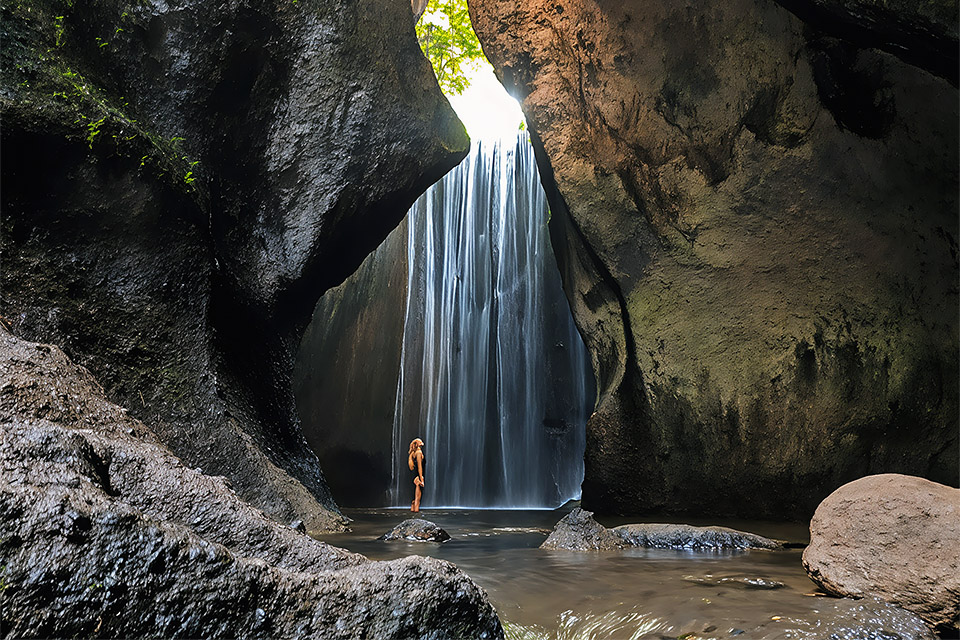
A polarising filter helps considerably here, cutting glare off the wet rock and water to make the light beams read more clearly in-camera rather than relying entirely on post-processing. If you’re shooting on a phone, tap to expose for the highlights in the beam rather than the shadowed rock around it — the dynamic range in that chamber is wider than most phone cameras handle well by default.
If you’re shooting with people in frame, silhouettes work better than lit portraits in this setting — position your subject between the camera and the light source rather than trying to expose their face and the beam evenly. It’s a small adjustment that separates a flat, overexposed snapshot from the kind of image that made this waterfall famous in the first place. Patience matters as much as gear: the beam shifts subtly as the sun moves, so a few extra minutes waiting for the light to align with the falling water is often worth more than any lens upgrade.
Nearby Attractions & Suggested Itinerary
Tukad Cepung’s location in Bali’s eastern highlands puts it within easy reach of some of the island’s most rewarding — and least crowded — attractions.
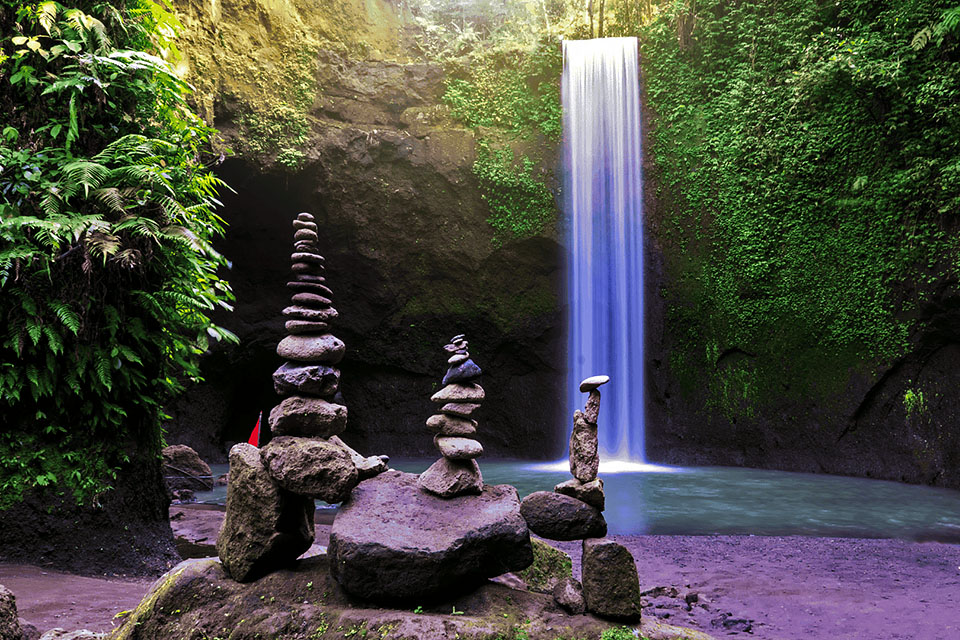
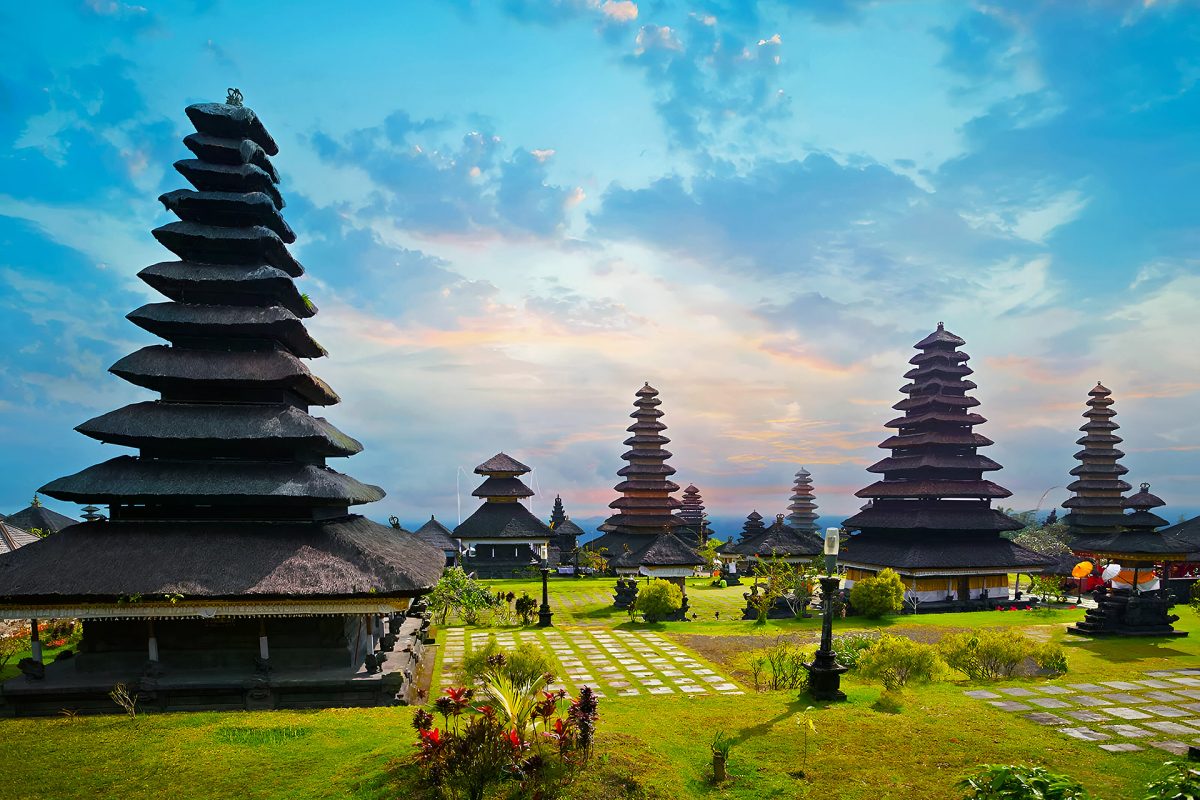
- Tibumana Waterfall: A gentler, more open waterfall about 30–40 minutes away, popular for a relaxed swim without the cave logistics.
- Kanto Lampo Waterfall: A wide, tiered cascade en route back toward Ubud, less crowded than the south’s better-known falls.
- Pura Besakih: Bali’s largest and most important temple complex, about 45–55 minutes further east.
- Penglipuran Village: A traditional Balinese village known for its uniform architecture, a short detour on the way back toward Bangli town.
- Sidemen Valley: Rural rice-terrace country in the shadow of Mount Agung, roughly 35–40 minutes east, worth a slow afternoon.
Insider's Itinerary — An East-Bali Half-Day
- 8:00 AM: Depart Ubud, arrive Tukad Cepung by ~8:45 AM.
- 8:45–10:15 AM: Descend, wade in, catch the light window, swim if you like.
- 10:45 AM: Coffee or lunch at one of the canyon-side warungs on the way back up.
- 11:30 AM: Detour to Tibumana or Kanto Lampo Waterfall for a second, easier swim.
- 1:00 PM: Penglipuran Village or onward toward Sidemen for the afternoon.
- 5:00 PM: Return back to your hotel.
Tukad Cepung vs Other Bali Waterfalls
Tukad Cepung occupies a strange middle ground on this list: it’s not physically demanding the way Nungnung is, but it’s arguably the hardest to time well, since the entire reason people make the trip depends on weather and hour of day rather than effort alone. If your priority is a guaranteed, low-effort swim, Tibumana is the easier choice. If you want the photo everyone’s seen and are willing to plan around the light, Tukad Cepung earns the detour.
WATERFALL |
HEIGHT |
APPROACH |
CROWD LEVEL |
SIGNATURE FEATURE |
|---|---|---|---|---|
Tukad Cepung
|
~15m
|
Stairs + river wade
|
High (mornings)
|
Cave light beams
|
~15m
|
~100 steps
|
High
|
Wide, open riverside
| |
~50m
|
~500 steps
|
Low
|
Scale and solitude
| |
~10m
|
~50 steps
|
Moderate - High
|
Easy, relaxed swim
|
Worth noting, too: because the walk in is short and the physical barrier to entry is low, Tukad Cepung draws a broader range of visitors than Nungnung’s stair-heavy approach filters for — families, older travellers, and first-time visitors to Bali all manage the route comfortably, which is part of why it can feel busier than its modest size would suggest.
Safety & Responsible Travel
The main hazard here isn’t height or exposure — it’s the riverbed itself. Wet, uneven rock underfoot combines with genuinely deep shade in the canyon to make footing trickier than the short walk suggests, and this route is not appropriate for wheelchair users or anyone with significant mobility limitations. Move at a careful pace through the water sections, and give way to others rather than rushing on slick rock to beat a tour group to the light.
Water levels can rise quickly during and after rain, since the canyon funnels runoff from a wider catchment area upstream. If you visit during the wet season, or after any recent heavy rainfall, treat the crossing with real caution and be prepared to turn back if the current feels stronger than expected.
Because Tukad Cepung remains an active site for melukat cleansing rituals, dress and behave with a degree of respect beyond the usual swimwear-and-selfies waterfall etiquette. If a ceremony is in progress, wait quietly at a distance rather than photographing it up close or wading through the ritual area. The same courtesy that applies at any working Balinese temple applies here, even though the setting looks, at first glance, like a purely natural attraction.
On the environmental side, the canyon’s narrow footprint means litter and sunscreen runoff have an outsized impact on a relatively small body of water. Pack out anything you bring in, and consider a reef-safe sunscreen given how much of your visit involves standing in the pool itself.
It’s also worth budgeting your visit with a buffer rather than cutting it fine. Because the site sits down in a canyon with limited signal, plans to “just do a quick fifteen minutes” often stretch longer once you’re standing in front of the light — and rushing the walk back out over wet rock to make up time is exactly the scenario that leads to a slip. Give yourself an hour at the site itself, and treat anything faster as a bonus rather than the plan.
Plan Your Visit NOW!
Tukad Cepung rewards patience more than effort. There’s no five-hundred-step ordeal here, no thigh-burning climb back to the carpark — just a short walk, a wade through cool water, and a bit of luck with the weather that either delivers one of Bali’s most striking natural sights or quietly doesn’t.
Get the timing right, and you’ll understand immediately why this small, easily overlooked corner of Bangli Regency has become one of the island’s most photographed places. The light doesn’t perform on command, and that unpredictability is part of what makes the good mornings feel earned rather than guaranteed.
There’s something fitting about a waterfall that Balinese Hindus have used for spiritual cleansing long before it had a name on Google Maps now drawing travellers for exactly the same reason people have always come — to stand in cool water, look up at a shaft of light, and feel briefly, genuinely small in front of something older than any itinerary.
Go early, go on a clear day if you can choose, and be willing to simply stand in the water and watch for a minute before you reach for your camera. Some of Bali’s best moments don’t photograph as well as they feel.
💡Related reads:
FAQ
How tall is Tukad Cepung Waterfall?
Around 15 metres, considerably shorter than waterfalls like Nungnung, though its setting inside a rock canyon is what makes it distinctive.
What is the entrance fee for Tukad Cepung Waterfall?
IDR 30,000 per person, cash only, with free parking for both scooters and cars.
How long is the walk to Tukad Cepung Waterfall?
About 10–20 minutes each way, combining roughly a hundred stone steps with a short wade through a shallow river.
What is the best time of day to see the light beams at Tukad Cepung?
Generally between 9:30 and 11am on a clear day, though the exact window shifts slightly with the season and cloud cover.
Is Tukad Cepung Waterfall good for swimming?
Yes — the pool is shallow, usually no deeper than thigh height on an adult, making it one of the more approachable Bali waterfalls for a swim.
Do I need special shoes for Tukad Cepung Waterfall?
Strongly recommended. You’ll be wading over uneven river rock, and flip-flops or bare feet make the walk uncomfortable at best.
How far is Tukad Cepung Waterfall from Ubud?
About 28–30 km, roughly 45–55 minutes by scooter or car depending on traffic.
Is Tukad Cepung Waterfall crowded?
It can get busy from mid-morning onward, especially once the light beams appear — arriving before 9am significantly improves your odds of a quieter visit.
Can I visit Tukad Cepung Waterfall during the rainy season?
You can, but expect a lower chance of visible light beams and a higher risk of fast-rising water in the canyon — dry season (April–October) is the more reliable choice.
Is Tukad Cepung Waterfall suitable for children?
The shorter, gentler walk makes it more manageable than Nungnung for families, though the wet, uneven riverbed still calls for close supervision of younger children.
Are there nearby waterfalls I can combine with Tukad Cepung?
Yes — Tibumana and Kanto Lampo Waterfalls both sit within a 30–40 minute drive and pair naturally with a Tukad Cepung visit.
Is a guide necessary to visit Tukad Cepung Waterfall?
No. The path from the carpark to the falls is a single, well-marked route with no branching trails to get lost on.
Last updated JULY 2026. Entrance fees, opening hours and light conditions can change without notice — confirm current details locally before your visit.