West Sumba doesn’t introduce itself loudly. It reveals itself slowly — in layers of landscape, culture, and quiet moments that feel almost untouched.
👉 This is not a place you rush through — it’s a place you arrive into.
From the moment you land in Tambolaka, the rhythm begins to shift.
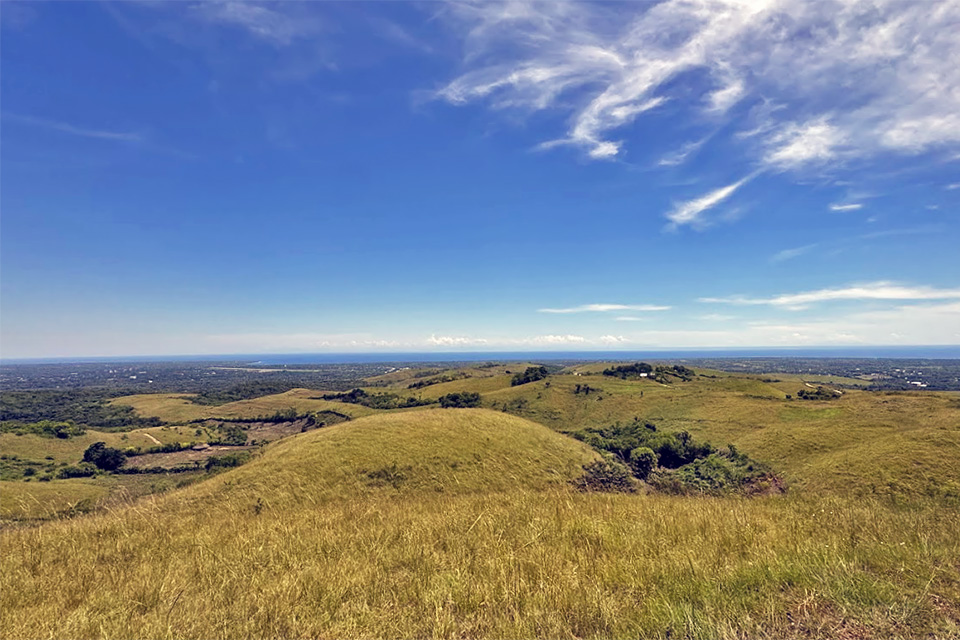
The roads stretch through open savannas.
Villages appear without announcement.
The coastline feels distant — until suddenly, it’s right in front of you.
And when it does, it doesn’t feel curated or polished. It feels real.
 West Sumba doesn’t try to impress — that’s why it stays with you.
 West Sumba doesn’t try to impress — that’s why it stays with you.
- West Sumba is best explored with time and flexibility — distances can feel longer than expected.
- The region is less developed than Bali, offering a more raw and authentic experience.
- Highlights like Waikuri Lagoon and Mandorak Beach are often part of a coastal journey, not standalone stops.
- Expect simple infrastructure, but rewarding landscapes.
💡Related reads:
A Different Kind of Island Experience
West Sumba is often described through its highlights — the still waters of Waikuri Lagoon, the dramatic cliffs of Mandorak Beach, the living traditions of Ratenggaro Village. But these are not separate destinations.
They are expressions of something deeper:
- a landscape shaped by nature, not development,
- a culture that is still lived, not performed,
- a journey defined by movement, contrast, and pause.
What You’ll Find Here
This is not an island of endless beach clubs or curated viewpoints. Instead, West Sumba offers something more grounded:
- Coastal cliffs and hidden coves where the ocean feels close and powerful, untouched.
- Traditional villages where daily life continues as it has for generations, unchanged.
- Natural lagoons and open landscapes that invite you to slow down, quietly.
- A pace that prioritizes experience over itinerary.
Begin Exploring
If you’re looking to understand what makes this part of the island so compelling — where to go, how it flows, and how to experience it without rushing — you’re in the right place.
👉 Let’s explore West Sumba — one layer at a time.
What Makes West Sumba Different
There are destinations that present themselves clearly — maps filled with marked viewpoints, schedules, and places designed to be seen. West Sumba is not one of them.
It’s not a place you check off — it’s a place you gradually understand.
Where the Island Feels Unfiltered
In many parts of Indonesia, travel has been shaped for visitors. Paths are defined. Experiences are packaged. But in West Sumba, the island still feels unfiltered. From the quiet arrival in Tambolaka, there’s a sense that you’ve stepped into a place that continues on its own rhythm — with or without you.
- Roads don’t always lead directly — they wind, adapt, and surprise.
- Landscapes don’t open all at once — they reveal themselves slowly.
- Moments are not scheduled — they happen when you’re present enough to notice.
Not Defined by One Landscape
What makes West Sumba different is not a single attraction — but the way its landscapes shift within a single journey. In just one day, you might move from:
- a traditional setting like Ratenggaro Village,
- to a narrow, dramatic coastline at Mandorak Beach,
- to the calm, reflective waters of Waikuri Lagoon.
Each place feels different — not just visually, but emotionally.
West Sumba is not one landscape — it’s a sequence of contrasts.
Culture That Isn’t Staged
Another layer that defines West Sumba is its sense of continuity. Places like Ratenggaro Village are not preserved for display — they are lived in, maintained, and evolving.
- Homes are part of daily life.
- Traditions are still practiced.
- Visitors are present — but not central.
This creates a different kind of connection.
One that feels quieter, but more genuine.
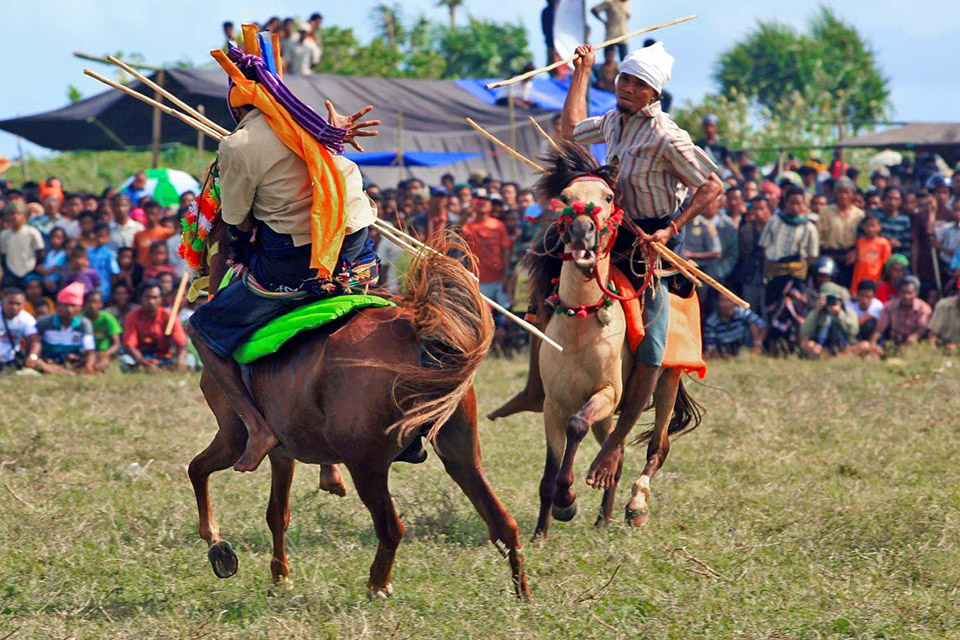
In West Sumba, the journey itself is not separate from the destination — it is the experience that matters the most.
A Journey Shaped by Pace
Perhaps the biggest difference is not what you see — but how you move through it.
Travel here is not about maximizing stops.
It’s about:
- allowing time for distance,
- embracing slower transitions,
- letting each place settle completely into your mind before moving on.
Because the reality is simple:
- distances take time,
- roads require patience,
- and rushing removes what makes the experience meaningful.
Insider's Insight: What Makes West Sumba Worth Exploring
- Sumba in general is less developed than many Indonesian destinations.
- The region rewards travelers who value depth over speed.
- Experiences are shaped more by natural flow than structured tourism.
- Expect variety within short distances — coastline, villages, lagoons.
What makes West Sumba different is not what it offers — but how it allows you to experience it.
From here, understanding the geography becomes essential — because in West Sumba, knowing how the island is laid out changes everything about how you travel through it.
Featured Highlights to Start Your Journey
In a place like West Sumba, it’s tempting to look for a list — the “must-sees,” the highlights, the places everyone goes. But here, the experience isn’t built around ticking boxes. It’s built around how each place feels — and how they connect.
You don’t come to West Sumba for one place — you come for how the journey unfolds between them.
Still, every journey needs a starting point.
The following are some of the most visited highlights in West Sumba — not because they define the island, but because they offer a clear introduction to its character.
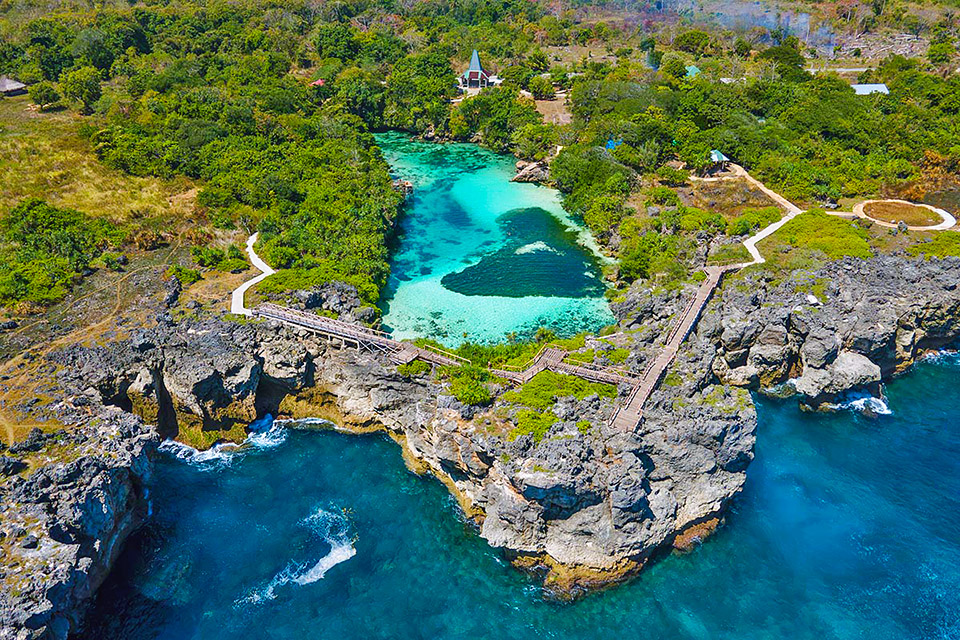
Waikuri Lagoon — Where the Island Slows Down
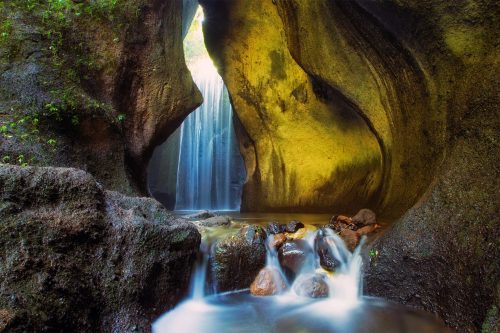
Hidden behind limestone formations, Waikuri feels less like a beach and more like a natural sanctuary, a calm water despite of the ocean.
- Crystal-clear saltwater.
- Calm, swimmable conditions.
- Shades of turquoise and emerald.
It’s often the moment where travelers shift from moving … to simply being.
In Waikuri, time doesn’t stop — it just softens.
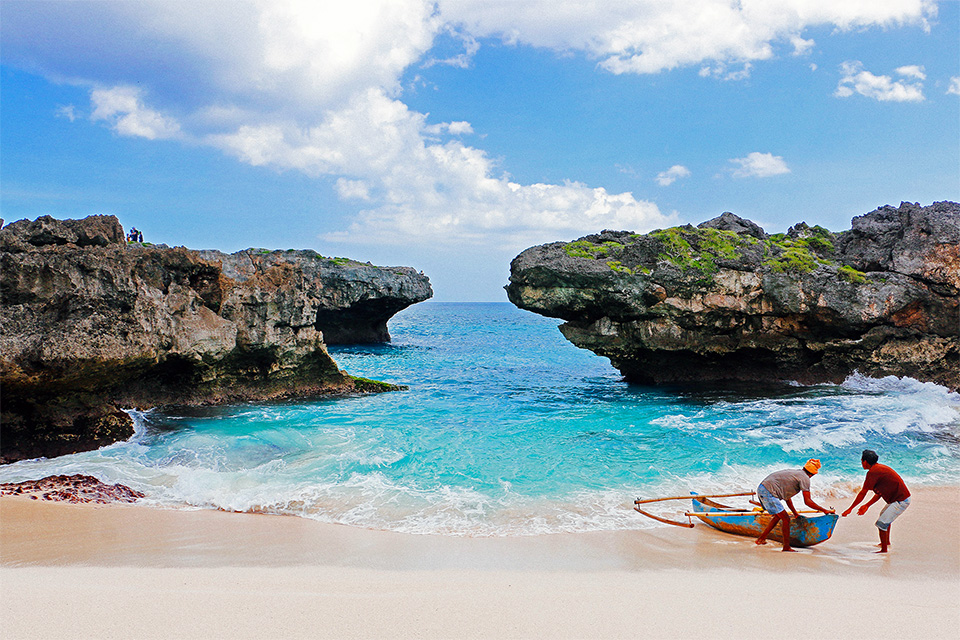
Mandorak Beach — Where the Ocean Feels Close
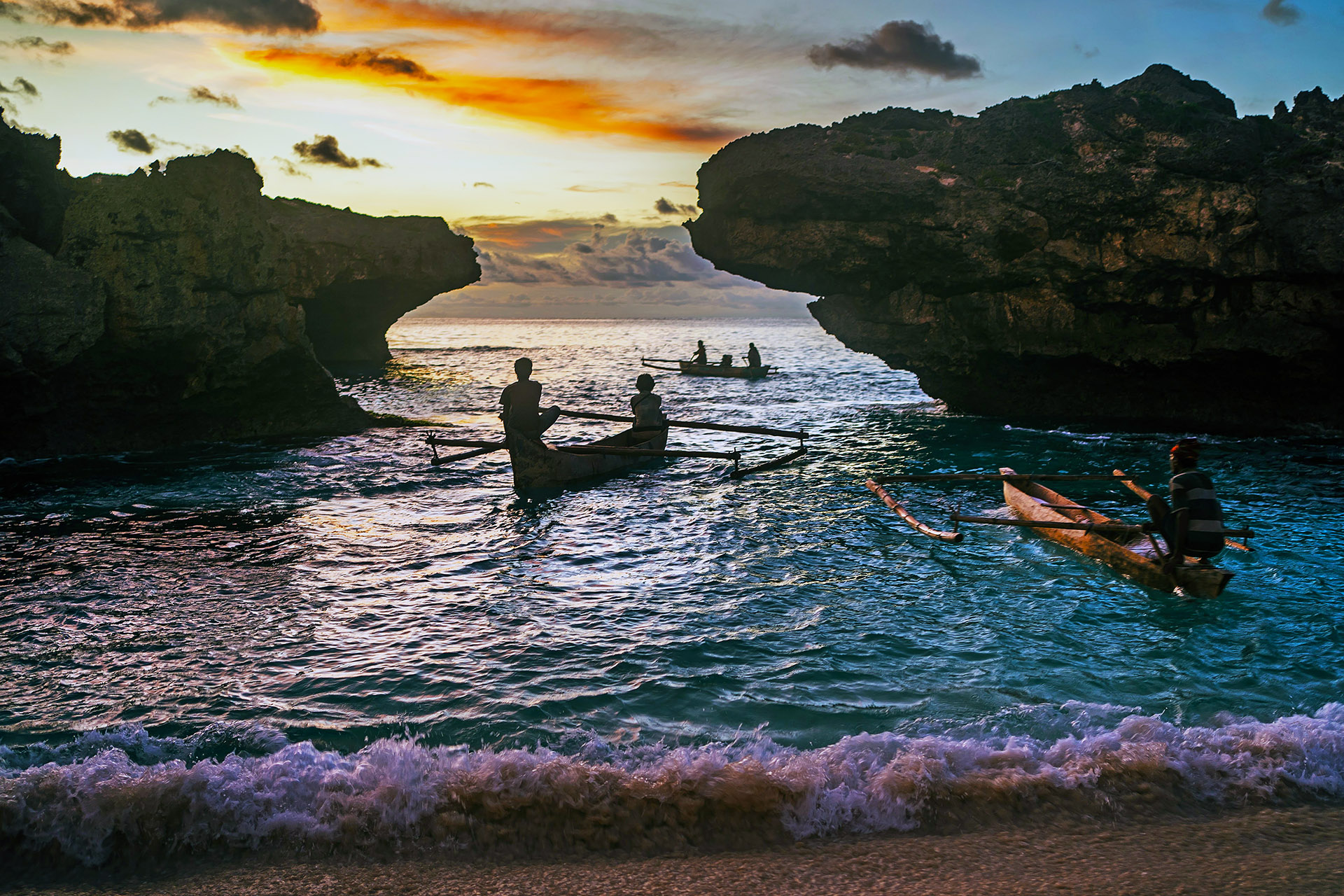
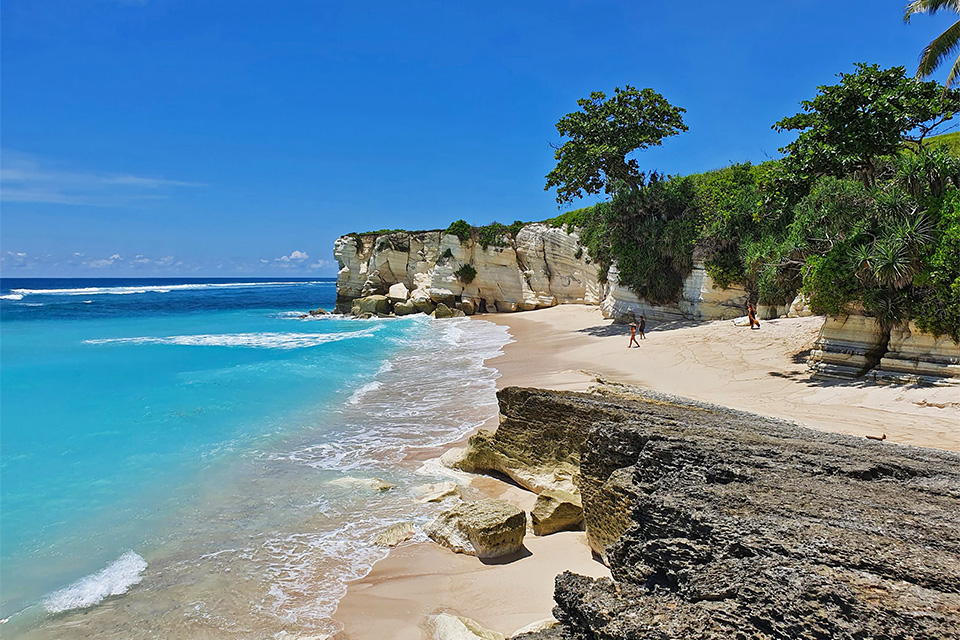
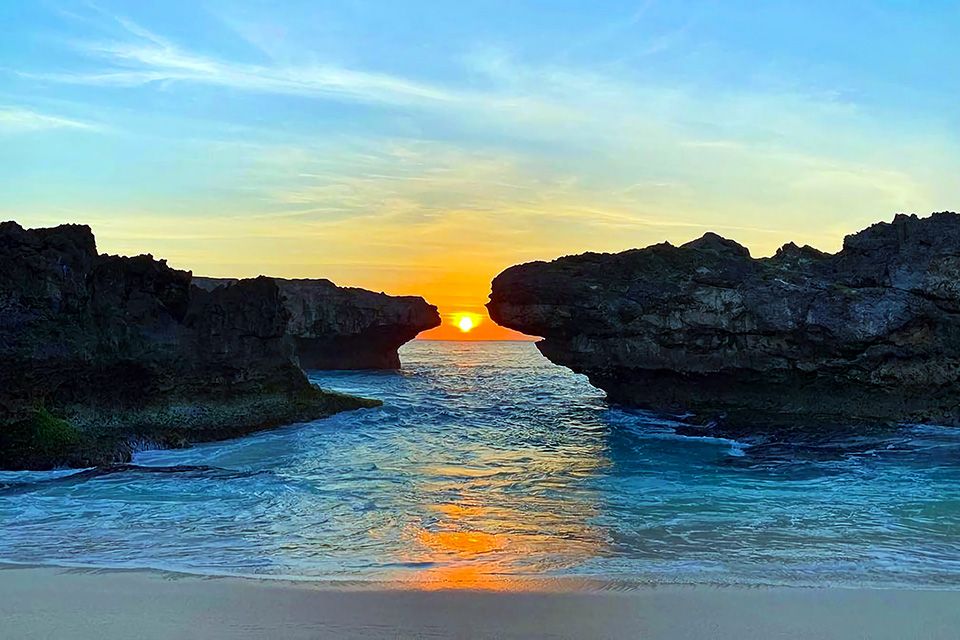
A narrow cove framed by cliffs, Mandorak brings the ocean into focus.
- Powerful waves channeled between rock walls.
- Compact, dramatic landscape.
- Raw, untamed atmosphere.
This is not a place to stay long — but a place that leaves a strong impression.
At Mandorak, the ocean isn’t something you look at — it’s something you feel.
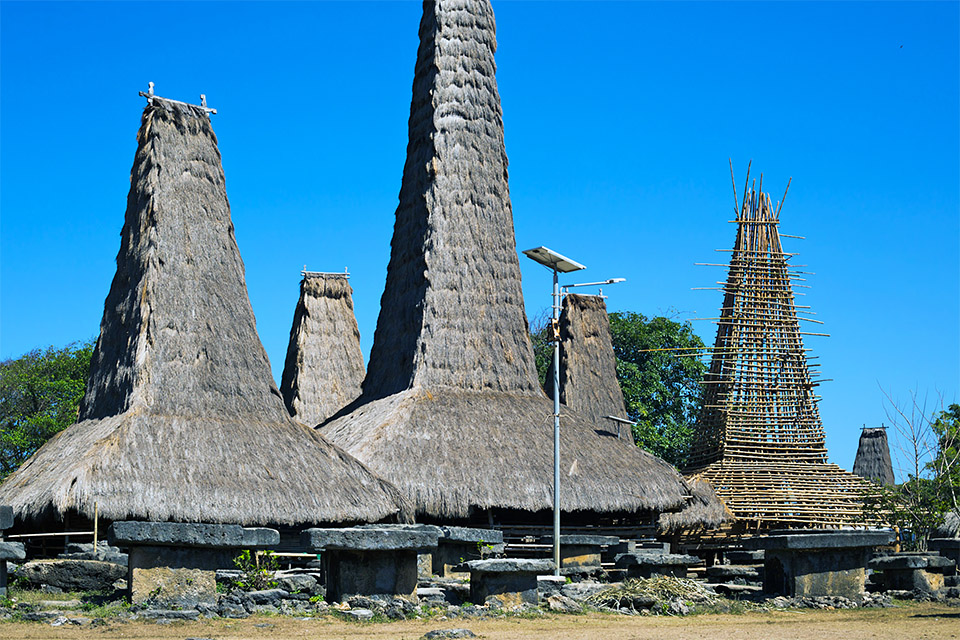
Ratenggaro Village — Where Culture Continues
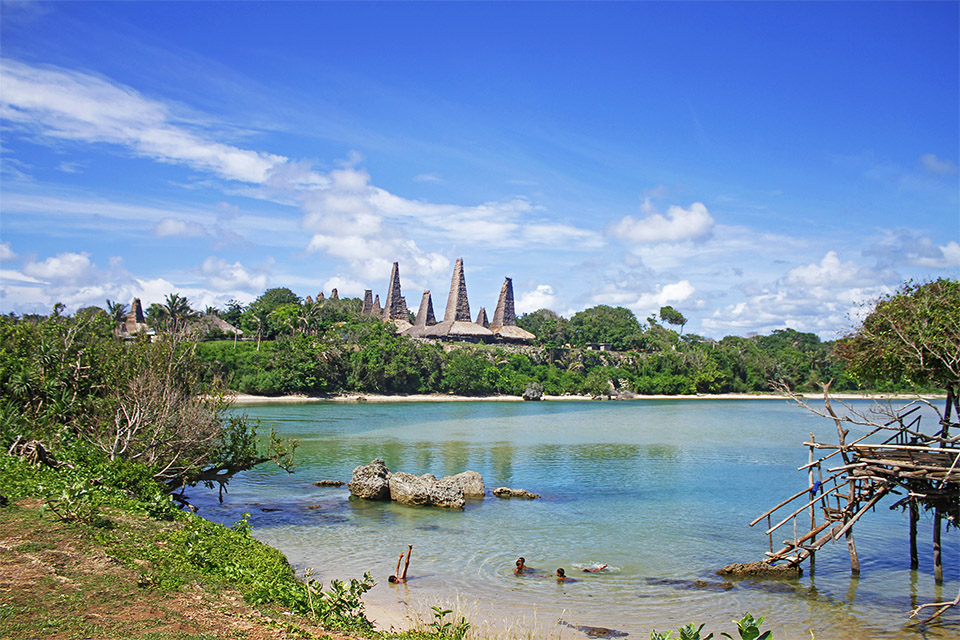
Set near the coastline, Ratenggaro is one of the most iconic traditional villages in Sumba.
- Towering thatched-roof houses.
- Strong connection to ancestral traditions.
- Daily life continues within historic structures.
It’s not staged — it’s lived.
In Ratenggaro, tradition isn’t preserved — it’s present.
Not the Whole Story — Just the Beginning
These places are often part of a first journey through West Sumba.
They are:
- accessible,
- visually distinct,
- naturally connected within a coastal route.
But they are not the entirety of the region. West Sumba has way longer string of amazing natural and cultural attractions.
Beyond them lies:
- quieter villages,
- unnamed coastlines,
- landscapes that don’t appear on maps.
What you see first is only an introduction — not the full picture.
Insiders’ Picks: The First Bite of West Sumba
- Start with Ratenggaro Village in the morning for a quieter cultural experience.
- Visit Mandorak Beach as a short scenic stop — it’s about impact, not duration.
- Allocate more time at Waikuri Lagoon to relax and swim.
- Experience them as part of a connected coastal journey, not isolated stops.
These highlights don’t define West Sumba — they invite you to explore it further.
Next, we move beyond individual places — into the different types of experiences that shape the region.
Suggested Route — How to Explore West Sumba
In West Sumba, the question is rarely “Where should I go?” It’s “How should I move?” Because here, the experience is not defined by individual stops — but by the flow that connects them.
In West Sumba, the route is the experience.
A Journey That Moves With the Landscape
Most journeys begin in Tambolaka — a quiet gateway where the island opens slowly. From here, the natural direction is toward the coast. But not in a straight line.
The route unfolds gradually:
- inland landscapes first,
- then cultural encounters,
- then the coastline revealing itself,
- and finally, moments of stillness by the water.
It’s not a fixed sequence — but there is a rhythm that feels intuitive once you’re on the road.
The Natural Flow of a West Sumba Route
A well-paced journey through West Sumba often follows a coastal progression, where each stop builds on the previous one. You might begin with a cultural encounter at Ratenggaro Village — where the island’s traditions feel grounded and present. From there, the landscape shifts toward the coast. The road narrows, the air changes, and eventually you arrive at a place like Mandorak Beach — where the ocean feels immediate and powerful.
And then, as the journey continues, it softens. At Waikuri Lagoon, the movement slows, the water calms, and the day settles into a quieter rhythm.
From culture, to coastline, to stillness — the route naturally finds its balance.
Not a Loop — But a Sequence
Unlike destinations where everything is clustered together, West Sumba is best experienced as a sequence of connected moments.
- Locations are spread out.
- Access points are distinct.
- The journey flows outward, not in circles.
This is why the route matters.
Without a clear sense of direction, travel can feel fragmented or rushed. But when the route is understood, everything begins to align and shape your experience perfectly.
Timing Matters More Than Distance
In West Sumba, it’s not about how far you travel — but when and how you arrive.
- Cultural sites feel different in the morning.
- Coastal locations change with the light.
- Lagoons are best when you have time to pause.
A well-planned route doesn’t just connect places — it connects them at the right moment.
The same place can feel completely different, depending on when you reach it.
Insiders’ Tips: Planning Route for Maximum Experience
- Start from Tambolaka and move toward the coast progressively.
- Combine Ratenggaro Village, Mandorak Beach, and Waikuri Lagoon in one continuous route. as your first bite to what West Sumba has to offer.
- Avoid backtracking — distances may look short on map but take time in reality.
- Plan for 1–2 key stops per half day, not more.
- Leave space in your schedule — West Sumba rewards flexibility.
When the route flows well, the journey feels effortless — even when the roads are not.
Understanding how to move through West Sumba is the first step. Next comes a more practical question — how much time you actually need to experience it well.
Planning Your Time in West Sumba
One of the most common questions travelers ask is simple: “How many days do I need in West Sumba?” The answer, like much on this island, depends less on distance — and more on how you want to experience it.
In West Sumba, time is not about coverage — it’s about depth.
Why Time Feels Different Here
On a map, West Sumba may not seem large. But once you’re on the road, the experience shifts:
- distances generally take longer than expected,
- each stop invites you to slow down with its charm,
- the journey itself becomes part of the day.
What looks like a short route can easily become a full, layered experience.
A Realistic Time Frame
For most travelers, West Sumba fits into a journey in one of two ways:
1 Day — A Glimpse of the Coast
If you’re short on time, it’s possible to experience the highlights in a single day from Tambolaka. Visiting the most popular spots that represent the first bite that shows you a diverse taste of the island.
This usually includes:
- a cultural stop at Ratenggaro Village,
- a brief visit to Mandorak Beach,
- time to unwind at Waikuri Lagoon.
It’s efficient — but fast.
You’ll see the contrasts, but you won’t fully settle into them.
A one-day journey shows you West Sumba — but doesn’t let you stay with it.
2 Days — A More Natural Pace
Within two days, everything begins to feel different.
- Less pressure to move quickly.
- More time at each location.
- Space to absorb the transitions between places.
You can:
- explore the coast without rushing,
- spend longer at the lagoon,
- experience the journey with more balance.
This is where West Sumba starts to feel complete, rather than compressed.
With just one more day, the journey stops feeling scheduled — and starts feeling natural.
Part of a Larger Sumba Journey
For many travelers, West Sumba is not the entire trip — but an important chapter within a wider exploration of the island. It often forms:
- the starting point of a full Sumba journey,
- the coastal introduction before moving inland or east.
This makes timing even more important.
Spending the right amount of time here sets the tone for everything that follows.
Choosing the Right Pace
Ultimately, planning your time in West Sumba comes down to one decision:
👉 Do you want to see the highlights, or do you want to experience the journey?
There’s no wrong answer — only different rhythms.
Insiders’ Insight: Making the Best Out of Your Time
- Allocate at least 1–2 days for West Sumba within a larger trip.
- A single day is possible, but will feel fast-paced.
- Two days give better timing and less rushing.
- Travel time between locations reduces how much you can realistically see.
- West Sumba works best when approached as a flow, not a checklist.
You don’t need more places — you need the right amount of time to feel them.
Once you understand how much time to give West Sumba, the next step is just as important — understanding the realities of travel on the ground.
Travel Reality — Distance & Terrain
Before anything else, it helps to understand one simple truth: Travel in West Sumba is not fast — and it’s not meant to be.
The distance between places is measured less in kilometers, and more in experience.
When the Map Feels Misleading
Looking at a map, the key highlights of West Sumba seem close together.
- Ratenggaro Village.
- Mandorak Beach.
- Waikuri Lagoon.
They appear almost clustered.
But once you’re on the road, the experience shifts. Routes are not always direct. Roads follow the natural contours of the land. And what looks like a short drive can take far longer than expected.
What Affects Travel Time
Travel in West Sumba is shaped by several factors:
- Road conditions — a mix of paved and uneven surfaces that only getting worse when rain falls.
- Narrow routes — especially incoastal areas.
- Changing terrain — hills, curves, and open stretches.
- Local activity — villages, livestock, and daily life along the road.
All of these slow the pace — naturally and unavoidably.
You don’t move quickly through West Sumba — you move with it.
Realistic Expectations
To set the right expectations:
- Short distances can take 1.5 to 2 hours.
- Visiting multiple locations in a day requires careful pacing and adequate local knowledge.
- Time on the road is a significant part of the experience.
This is why trying to “fit everything in” often leads to a rushed journey.
The Comfort Factor
Travel comfort in West Sumba is not defined by luxury — but by how well your journey is paced.
- Too many stops → fatigue.
- Too much driving → less time to enjoy.
- Poor timing → missed atmosphere,
A well-planned route doesn’t just reduce travel time — it improves the entire experience.
Mandorak rewards those who arrive prepared — and present.
Why This Matters for Your Journey
Understanding distance and terrain changes how you approach everything:
- how many places you visit,
- how long you stop at one place,
- how you structure your day.
It also explains why many travelers choose to experience West Sumba as part of a planned route, rather than navigating it independently.
Insiders’ Tips: On Navigating Sumba's Terrain
 Insiders’ Tips: On Navigating Sumba's Terrain
- Expect 1.5–2 hours between major highlights.
- Avoid planning more than 2–3 key stops per day.
- Focus on quality of experience, not number of locations.
- Start early to make the most of natural light and cooler temperatures.
- Allow buffer time — journeys rarely run exactly on schedule.
Once you accept the pace, the journey becomes easier — and far more rewarding.
With a clear understanding of distance and terrain, the next step is choosing when to visit — and how the seasons shape the experience.
When to Visit West Sumba
In West Sumba, timing doesn’t just change the weather — it changes how the island feels. The same road can feel brighter, softer, or more dramatic depending on the season. The same coastline can shift in color, light, and mood within a single day.
You don’t just visit West Sumba — you experience it through light.
A Destination You Can Visit Year-Round
Unlike some destinations that depend heavily on seasonality, West Sumba can be visited throughout the year.Its landscapes remain accessible, and its core experiences — coastlines, villages, and lagoons — are not restricted to a short window.
What changes is not whether you can visit, but what kind of atmosphere you encounter.
Dry Season (April – October) — Clear, Defined, and Expansive
This is the most popular time to visit West Sumba.
During these months, the island feels:
- brighter,
- more open,
- visually striking.
You’ll experience:
- clear blue skies,
- stronger sunlight and contrast,
- vibrant tones in places like Waikuri Lagoon.
The coastline appears sharper, and landscapes feel more expansive under the sun.
In the dry season, West Sumba reveals its clarity.
Wet Season (November – March) — Softer, Greener, and More Atmospheric
The wet season brings a different kind of beauty.
The island becomes:
- greener,
- more textured,
- quietly dramatic.
Clouds move more frequently across the sky, softening the light and creating shifting moods.
You may encounter:
- intense rain showers,
- changing light conditions,
- fewer visitors.
But also:
- richer landscapes,
- more dynamic skies,
- a more intimate atmosphere.
In the wet season, West Sumba feels less exposed — and more alive.
Time of Day Matters Just as Much
Beyond seasons, the time of day shapes your experience even more.
Morning (8–11 AM)
- Softer light.
- Quieter atmosphere.
- Ideal for cultural visits like Ratenggaro Village.
Midday
- Stronger sun.
- Vigher contrast.
- Best for places where light enhances color, such as Waikuri Lagoon.
Late Afternoon (4–6 PM)
- Warmer tones.
- longer shadows
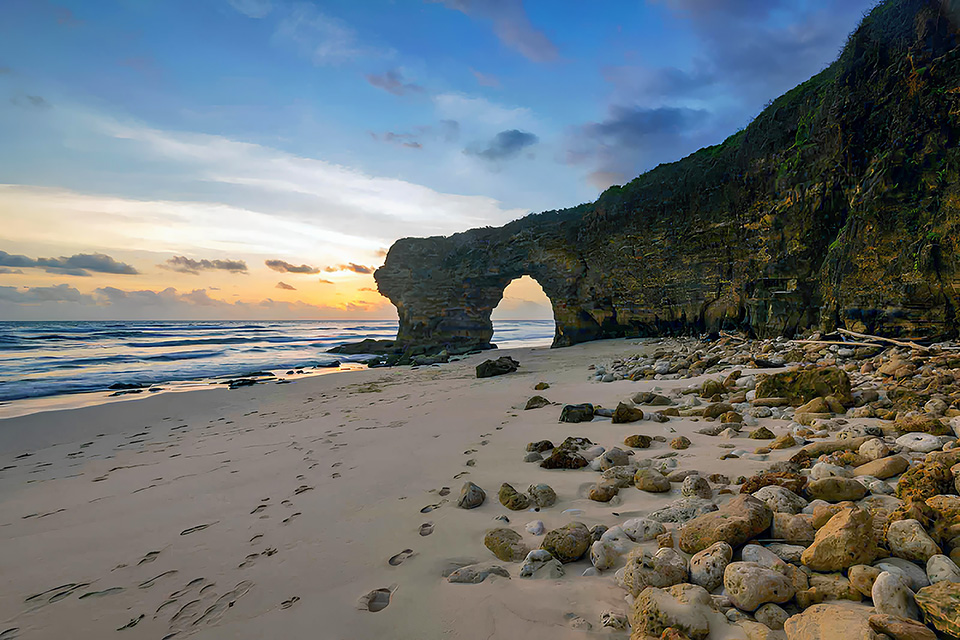
- more dramatic coastal views at Mandorak Beach
In West Sumba, when you arrive can matter more than where you go.
Choosing the Right Moment for You
There is no single “best” time to visit — only the time that aligns with how you want to experience the island.
- Prefer clear skies and vibrant colors? → dry season.
- Prefer mood, texture, and fewer crowds? → wet season.
Both offer something meaningful — just in different ways.
💡Insiders’ Insight: Choosing the Right Time
- West Sumba is a year-round destination, with different seasonal moods.
- The dry season offers clearer skies and more dramatic colors, perfect for photography.
- Flexibility helps, weather and light shift quickly.
- Plan your day around morning and late afternoon light for dramatric colors.
- Wet seasons bring greener landscapes and softer light.
There is no perfect time — only the moment that feels right when you’re there.
With timing in mind, the next piece of the journey becomes practical again — where to stay, and how to position yourself within the region.
Where to Stay in West Sumba
In West Sumba, where you stay doesn’t just determine your comfort — it shapes how your journey flows. Because unlike more compact destinations, you won’t find everything clustered in one place. Your base becomes part of your route.
In West Sumba, where you stay defines how you move.
The Gateway Base: Starting from Tambolaka
For many travelers, Tambolaka is the natural starting point.
It offers:
- proximity to the airport,
- straightforward logistics,
- access to main roads leading toward the coast.
Staying here is practical, especially for:
- early arrivals or late departures,
- short stays (1 day exploration),
- those prioritizing convenience.
But the experience itself still lies beyond — toward the coastline.
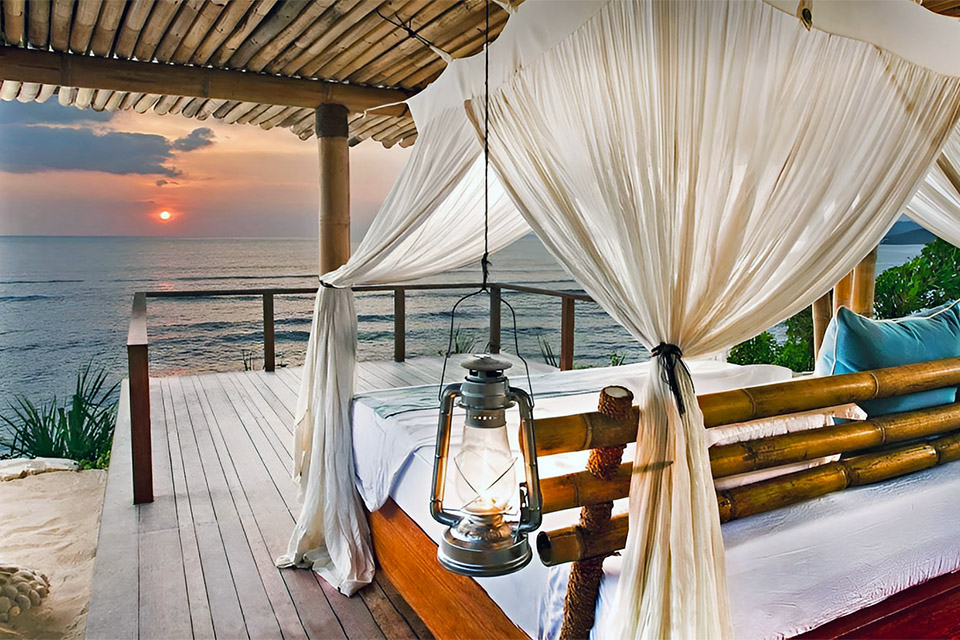
Closer to the Coast: Staying Near the Experience
To feel more connected to West Sumba, many travelers choose to stay closer to the coastal areas. This allows for:
- shorter travel time to key highlights,
- more flexibility with timing,
- the ability to experience places outside peak hours.
You’re no longer just visiting — you’re positioned within the journey.
One Base or Multiple Stops?
This depends on how you want to experience your time.
Single Base (Simpler, More Efficient)
Staying in one location (often Tambolaka or nearby) offers:
- easier logistics,
- less packing and moving,
- a straightforward route structure.
Best for:
- shorter stays,
- travelers who prefer simplicity.
Split Stay (More Immersive, Better Flow)
Dividing your stay between different areas allows for:
- reduced backtracking,
- better pacing across days,
- deeper immersion in each region
This is especially helpful when:
- combining multiple highlights,
- extending your journey beyond a single day.
Sometimes, moving where you sleep is what allows the journey to flow naturally.
Matching Your Stay to Your Route
Because of the distances involved, your accommodation should align with your daily movement.
- If you’re exploring the coast → stay closer to it.
- If you’re passing through → base yourself near Tambolaka.
- If you have more time → consider repositioning between days.
A well-aligned stay reduces:
- unnecessary travel time,
- fatigue,
- rushed experiences.
Insiders’ Tips: Choosing Westr Sumba Accommodation
- Stay in Tambolaka for easy arrival & departure.
- Choose coastal stays to reduce travel time to key highlights as you stay nearby.
- Consider splitting your stay if you have more than one day.
- Align your accommodation with your planned route, not just availability, but also location..
- Prioritize location over luxury — proximity matters more here.
The right place to stay doesn’t just rest you — it positions you for a better journey.
Once your base is set, the picture becomes clearer — not just where you go, but what lies beyond the well-known highlights.
Beyond the Highlights — The Wider West Sumba
By now, you’ve seen the names most travelers recognize — the calm waters of Waikuri Lagoon, the dramatic cove of Mandorak Beach, the living heritage of Ratenggaro Village. They are compelling, memorable, and often the reason a journey begins. But they are not the whole story.
What most people see in West Sumba is only the surface — the island continues far beyond it.
The Spaces Without Names
As you move between destinations, you begin to notice something:
Some of the most striking places don’t have names on maps.
- A stretch of coastline with no signposts.
- A hilltop that opens into an unexpected view.
- A quiet village where daily life unfolds without interruption.
These are not “attractions” in the traditional sense — but they are often the moments that stay with you longest.
A Landscape That Keeps Unfolding
Beyond the popular attractions, familiar stops, West Sumba reveals itself in layers:
- rolling savannas that shift color with the season,
- scattered homes set against wide, open land,
- roads curving through terrain that feels untouched.
There’s no single viewpoint that captures it all. Instead, the island is experienced through movement and accumulation — each scene adding to a broader understanding.
In West Sumba, the most memorable places are often the ones you didn’t plan for.
Life That Continues Quietly
Away from the more visited locations, West Sumba becomes even quieter.
Villages exist without visitors.
Children walk along the roadside.
Fields are tended as they have been for generations.
There’s no clear boundary between what is “for travelers” and what is not — because most of the island simply continues as it always has.
Why This Matters
Understanding that West Sumba extends beyond its highlights changes how you travel.
- You stop trying to “see everything”.
- You become more open to unexpected moments.
- You allow space for the journey to evolve.
And in doing so, the experience becomes less about coverage — and more about connection, between you and the island itself.
Insider's Highlights: West Sumba Beyond its Highlights
- Some of the best moments happen between well-known locations.
- Not every meaningful stop is marked — stay open to spontaneous pauses.
- Travel slower to notice beyond popular attractions.
- West Sumba rewards curiosity more than strict planning. Adaptability is the key.
- Expect the unexpected — it’s part of the experience.
In Sumba, the best journeys don’t feel busy — they feel naturally connected.
With a deeper understanding of the island, the next step becomes clear — how to experience it smoothly, without the friction of planning every detail yourself.
A Different Kind of Island Experience
By the time you leave West Sumba, you may realize something subtle has shifted. Not just in what you’ve seen — but in how you’ve experienced travel itself.
West Sumba doesn’t try to impress you — it changes the way you notice things.
Beyond a Destination
Most journeys are built around places.
You arrive, you see, you move on.
But in West Sumba, the experience feels different.
- Places are not isolated highlights.
- Movement is not just transit.
- Time is not something to optimize.
Instead, everything feels connected — woven together through landscape, culture, and pace.
The Value of Slowing Down
There is a quiet lesson in the way West Sumba unfolds.
You begin to notice:
- How the light changes across the land.
- How distance creates anticipation.
- How stillness becomes part of the experience
And without trying, you start to slow down.
Not because you have to — but because the island naturally invites it.
Here, slowing down is not a choice — it’s a response.
What Stays With You
Long after the journey ends, it’s often not a single place that stays in your memory.
It’s something less defined:
- the feeling of arriving at Waikuri Lagoon and not needing to rush,
- the quiet presence of Ratenggaro Village,
- the sound of waves echoing through Mandorak Beach.
And perhaps even more than that — the moments in between.
The road.
The silence.
The sense of space.
What stays with you is not just what you saw — but how it felt to be there.
A Different Kind of Island
West Sumba is not for everyone.
It doesn’t offer:
- polished experiences,
- instant accessibility,
- predictable comfort.
But for those who are open to it,
it offers something else entirely:
- authenticity,
- depth,
- a connection that feels personal.
Insider's Reflections
- West Sumba is best experienced with patience and openness. Open heart. Open mind.
- The journey is as meaningful as the destinations themselves. Be present.
- Choose time when you can expect fewer crowds — and more space to feel the island.
- The experience rewards those who embrace its natural rhythm.
West Sumba is not a place you visit once — it’s a place that stays with you, long after you’ve left.
Begin Your Journey
If this is the kind of experience you’re looking for — one that moves beyond the surface and into something more meaningful — West Sumba is ready.
👉 Start planning your journey, and experience the island as it was meant to be — unhurried, unfolding, and entirely your own.
FAQ West Sumba Travel Guide
Even after understanding the landscapes, routes, and rhythm of West Sumba, there are always practical questions that shape how the journey comes together. Here are some of the most common — answered with clarity, and grounded in real travel experience.
Is West Sumba worth visiting?
Yes — especially if you’re looking for something beyond typical island destinations.
West Sumba travel guide offers:
- raw, less-developed landscapes,
- meaningful cultural encounters like Ratenggaro Village,
- unique natural environments such as Waikuri Lagoon.
It’s not about convenience or luxury — it’s about authenticity, space, and a slower pace of travel.
West Sumba is not for everyone — but for the right traveler, it’s unforgettable.
How do you get to West Sumba?
The main entry point is via Tambolaka.
Most travelers:
- fly from Bali or other major Indonesian cities,
- arrive at Tambolaka Airport,
- begin their journey from there.
From Tambolaka, all key destinations in West Sumba are accessed by road.
How many days do you need in West Sumba?
Ideally, 1–2 days within a larger Sumba trip.
- 1 day → covers key highlights (faster pace).
- 2 days → more relaxed, better flow, more time to enjoy each stop.
Longer stays allow for deeper exploration beyond the main coastal route.
Can you visit West Sumba independently?
Yes — but it comes with challenges.
- Routes are not always clearly marked.
- Travel times can be unpredictable.
- Planning efficient sequences requires local understanding.
Many travelers underestimate:
- the time needed between locations,
- how important timing is for each stop.
👉 Independent travel is possible, but requires careful planning and flexibility.
What are the must-visit places in West Sumba?
Some of the most visited highlights include:
These are often experienced together as part of a coastal journey, rather than separate visits.
What is the best time to visit West Sumba?
West Sumba is a year-round destination.
- Dry season (Apr–Oct) → clearer skies, stronger colors.
- Wet season (Nov–Mar) → greener landscapes, softer light.
Timing within the day also matters:
- Mornings → quieter, softer light.
- Afternoons → warmer tones, more dramatic views.
Is West Sumba safe for travelers?
Yes — West Sumba is generally considered safe.
The environment is:
- Quiet.
- Less crowded.
- Community-based.
As with any destination:
- Respect local customs,
- Day aware of surroundings,
- Travel with proper planning.
Do you need a guide in West Sumba?
Not strictly — but it can significantly improve your experience.
A guide or structured journey helps with:
- route planning,
- timing,
- local insight.
This is especially valuable given:
- limited signage,
- spread-out locations,
- changing road conditions.
In West Sumba, guidance doesn’t limit the journey — it helps it flow.
Where should you stay in West Sumba?
Most travelers stay in or around Tambolaka, or closer to the coast.
Choosing your base depends on:
- How many days you have.
- How you plan your route.
- How much travel time you want to reduce.
Positioning your stay well can make a big difference in overall comfort.
Insider's Tips: Final Thoughts
- The most common mistake is trying to fit too much into one day.
- Focus on flow and timing, not just locations.
- Allow space for the journey to unfold naturally.
- West Sumba rewards travelers who slow down and adapt.
The more you understand West Sumba before arriving, the more effortless the journey becomes once you’re there.
With your questions answered, what remains is simple — to step into the experience, and let the island reveal itself in its own time. Do not attempt to control, just follow the flow.