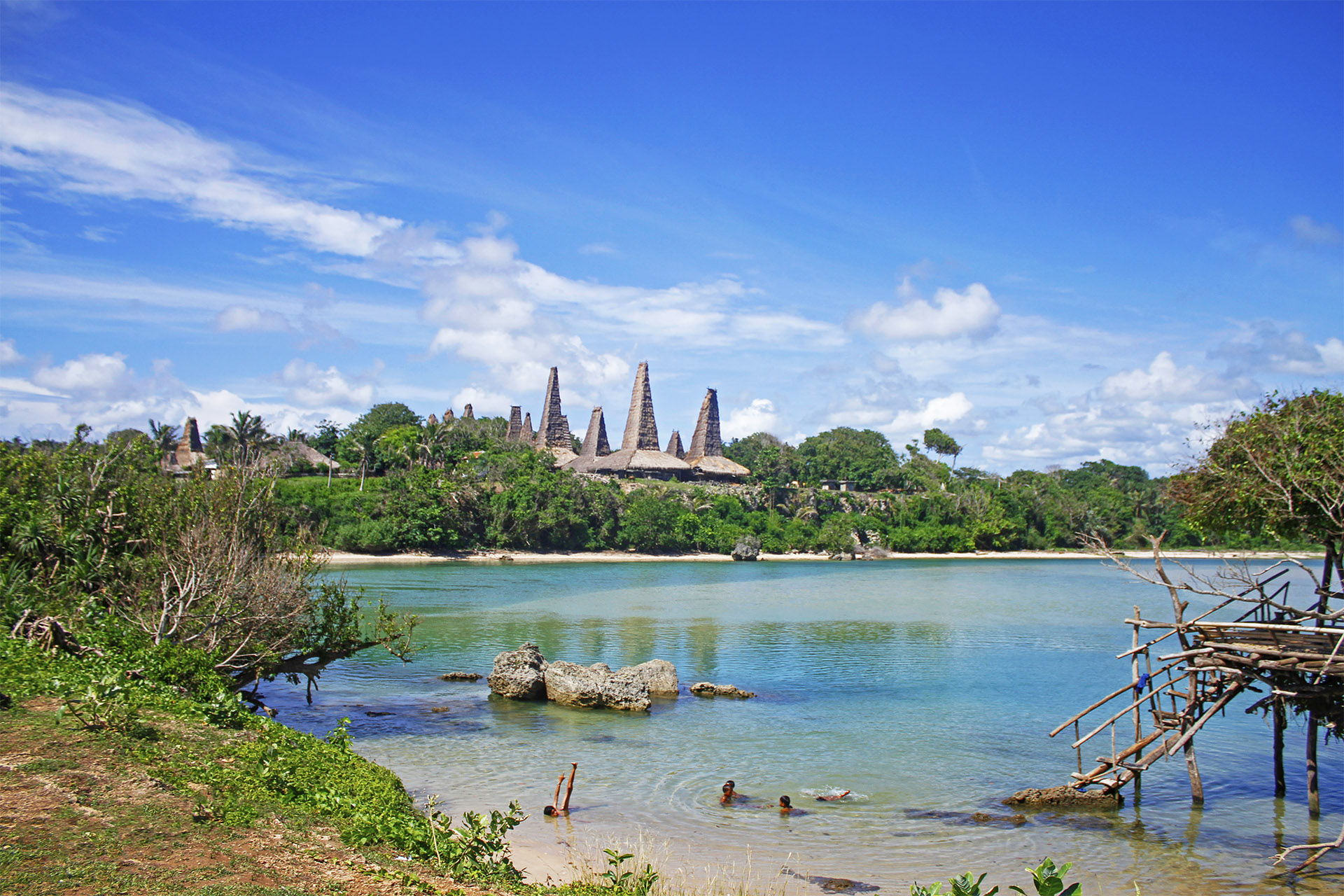
Along the windswept coast of West Sumba, Ratenggaro Village invites you to experience a side of Indonesia where culture is not only preserved—but truly lived. Towering thatched-roof houses rise toward the sky, while ancient stone tombs rest quietly at their feet, reflecting generations of ancestral heritage.
Here, daily life unfolds with quiet authenticity. Children play, elders gather, and traditions continue as they always have—offering visitors a genuine connection to Sumba’s cultural identity. With the Indian Ocean stretching endlessly beyond the village, Ratenggaro becomes a place where living culture meets the rhythm of nature.
Feel the warmth of a community that welcomes you not as a spectator, but as a respectful guest.
For a deeper journey into Ratenggaro Village, including travel insights and cultural guidance, explore the full guide.
 Insider’s Insight — Key Facts About Ratenggaro Village
 Insider’s Insight — Key Facts About Ratenggaro Village
- A destination that embodies living culture, where traditions continue in everyday life.
- Known for its iconic Uma Bokulu houses, rising up to 20 meters high.
- Features megalithic stone tombs, reflecting Sumba’s ancestral heritage.
- Located in West Sumba, around 1.5–2 hours from Tambolaka.
- Often experienced together with Waikuri Lagoon and Mandorak Beach.
- Offers an authentic encounter shaped by local community life and traditions.
- Best visited in the morning or late afternoon for a more immersive atmosphere.
- Visitors are encouraged to respect local customs and embrace the spirit of “Feel the Warmth”.
💡Related reads:
A Living Culture by the Ocean
There are places you visit for their beauty … and there are places you visit to understand a place more deeply. Ratenggaro Village is where Sumba begins to reveal its story. Set dramatically along the coastline of West Sumba, this is not a recreated cultural site or a preserved museum. It is a living village, where traditions are not displayed — they are lived, every single day.
This is not a place built for visitors.
You are the one stepping into something that already exists.
A Skyline You Won’t Forget
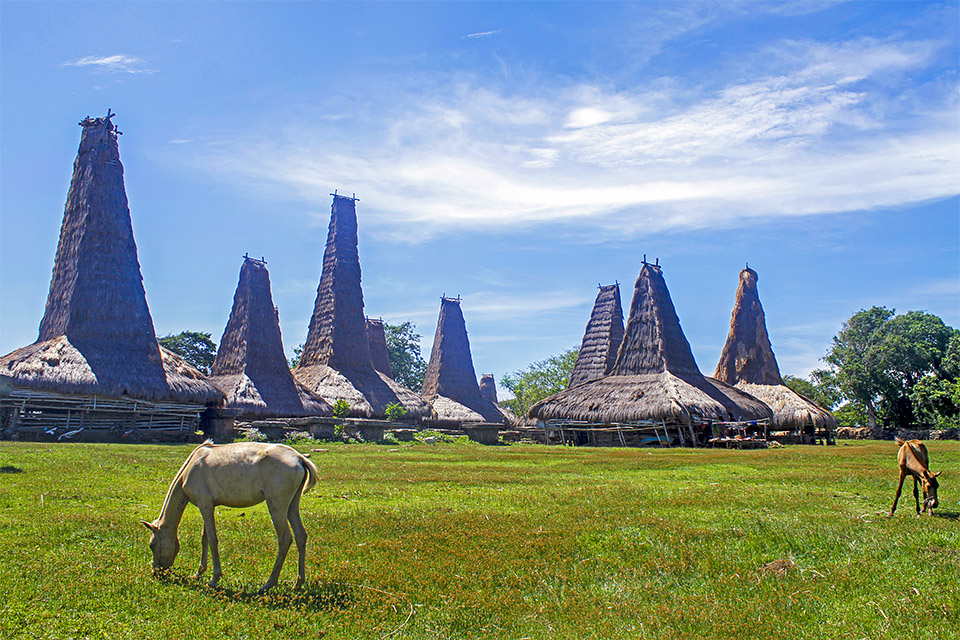
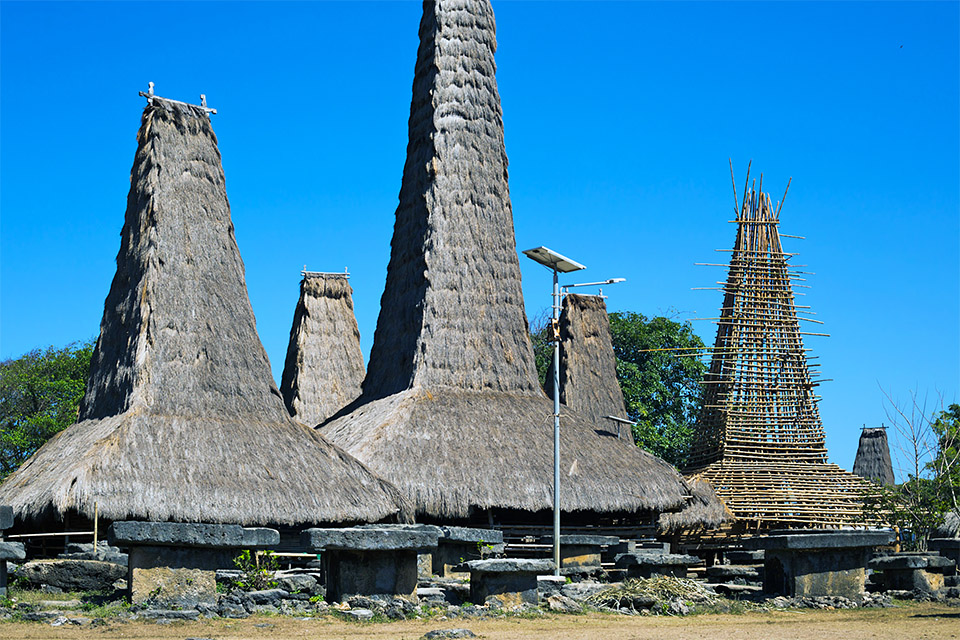
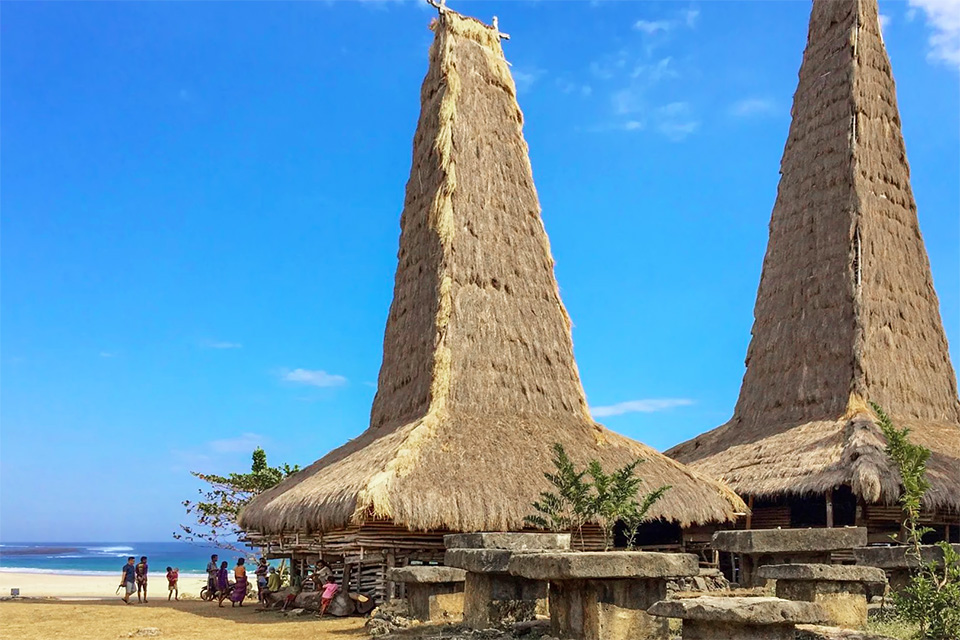
Long before you enter the village, you’ll see it. Towering above the landscape are the iconic Sumba traditional houses, with sharply pointed thatched roofs rising as high as 15–20 meters into the sky. They are not just architectural features — they are deeply symbolic.
- The roof peaks represent a connection between humans and the spiritual world.
- The structure reflects ancestral beliefs and social hierarchy.
- Every house carries generations of history within it.
Against the backdrop of open sky and distant ocean, the entire village forms a silhouette that feels both powerful and timeless.
It looks almost unreal — like a place from another era that never left.
More Than Architecture
What makes Ratenggaro truly special is not just how it looks — but what it represents. This is one of the few places where you can still witness:
- Megalithic tombs standing quietly in the center of the village.
- Daily life unfolding around traditions that have existed for centuries.
- A cultural rhythm that has not been reshaped for tourism.
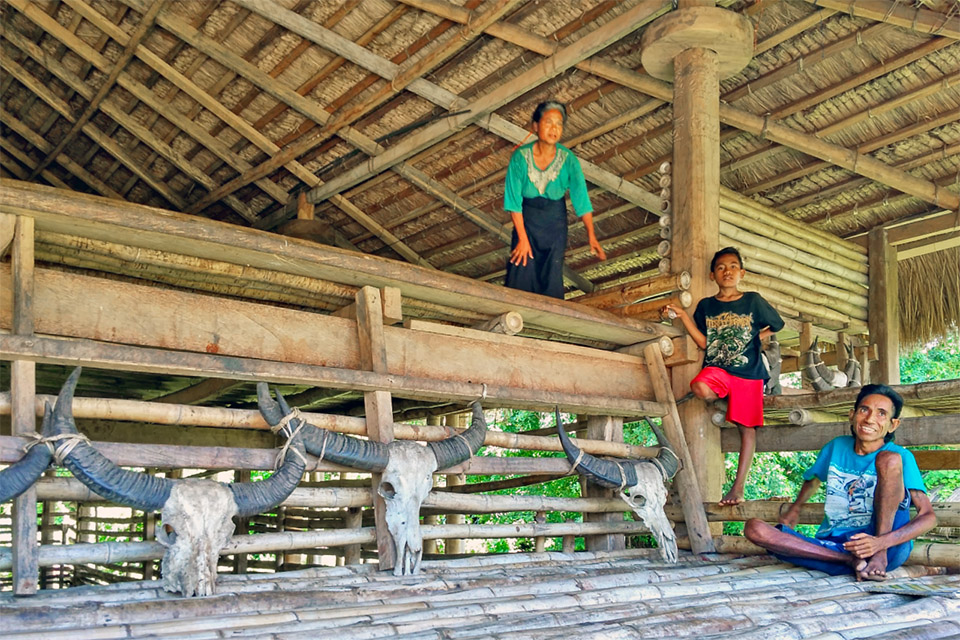
Children run across stone courtyards. Elders sit in the shade of towering roofs. Ceremonies still take place when the time comes.
You don’t walk through Ratenggaro as a spectator — you move through it as a guest.
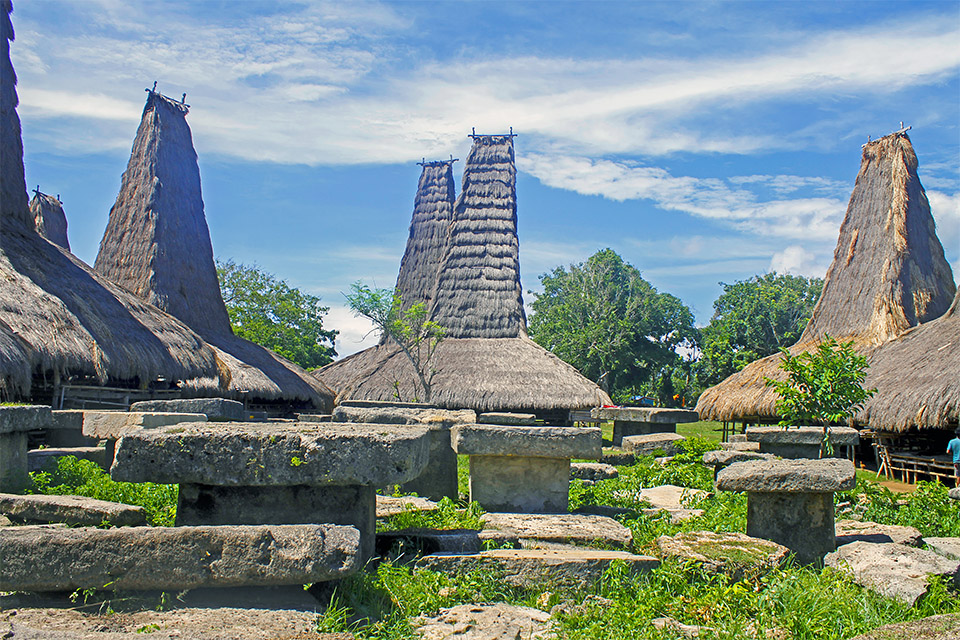
The Setting: Culture Meets Coastline
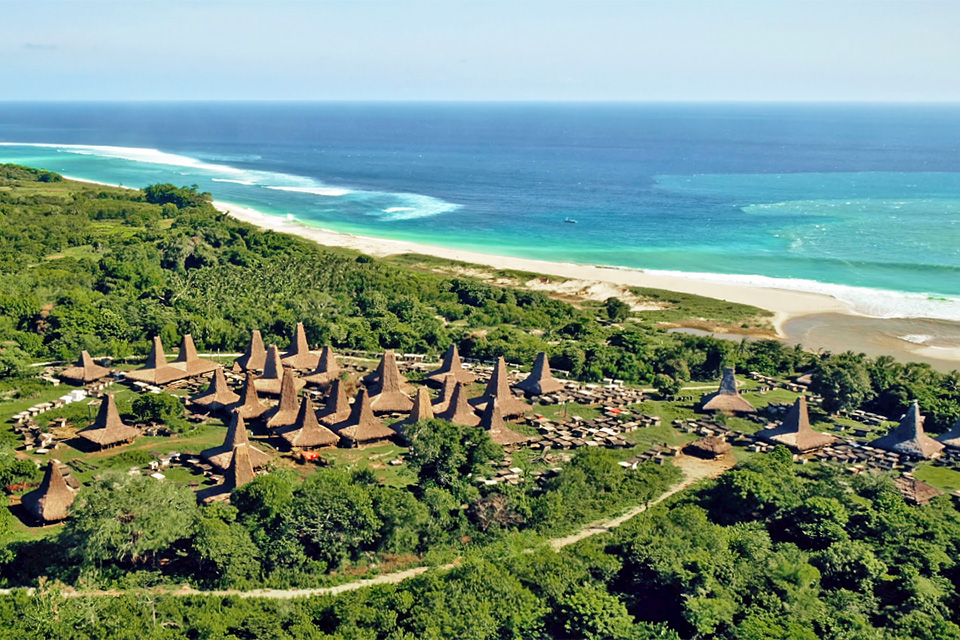
What makes Ratenggaro even more striking is its location. Just beyond the village lies the open ocean — raw, powerful, and constantly in motion. The contrast is immediate:
- Stillness within the village.
- Movement beyond the cliffs.
This meeting of land, culture, and sea creates a setting that feels almost cinematic — but entirely real.
What Makes Ratenggaro Village Special
- Ratenggaro is one of the most authentic traditional villages in Sumba.
- The tall roofs are called “Uma Bokulu”, unique to the region.
- The stone structures you see are ancient burial tombs, not decorations.
- Visitors are welcome, but this is a living community — respectful behavior matters.
If Waikuri shows you Sumba’s beauty, Ratenggaro shows you its soul.
Where Is Ratenggaro Village Located?
Reaching Ratenggaro Village is not just about finding a location on the map — it’s about moving through layers of Sumba that slowly prepare you for what you’re about to see. The village sits along the southwestern coastline of Sumba, facing directly toward the open Indian Ocean, not far from Tambolaka — the main gateway into West Sumba.
From Tambolaka Airport, the journey to Ratenggro Village takes approximately 1.5 to 2 hours by car, depending on road conditions and stops along the way.
The closer you get, the quieter everything becomes — until the village appears almost unexpectedly.
The Journey In
The drive toward Ratenggaro is part of its charm. You leave behind the small bustle of Tambolaka and move into a landscape that feels increasingly open and elemental:
- Rolling savanna hills stretching wide under the sky.
- Scattered traditional homes in the distance.
- Narrow roads that gradually lead toward the coast.
As you approach the village, the terrain flattens — and then, rising above it, you begin to see the unmistakable silhouette of the tall thatched roofs. That’s when you know you’ve arrived somewhere different.
A Coastal Cultural Cluster
Ratenggaro is rarely visited on its own. Its location places it within one of the most iconic West Sumba routes, often explored together with:
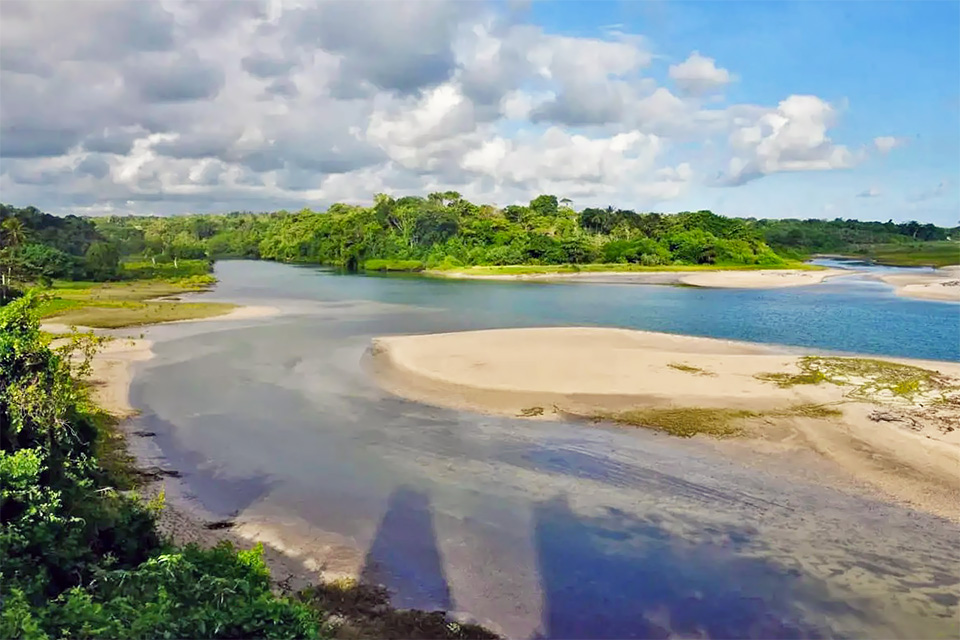
- Waikuri Lagoon — a calm, crystal-clear lagoon just a short drive away.
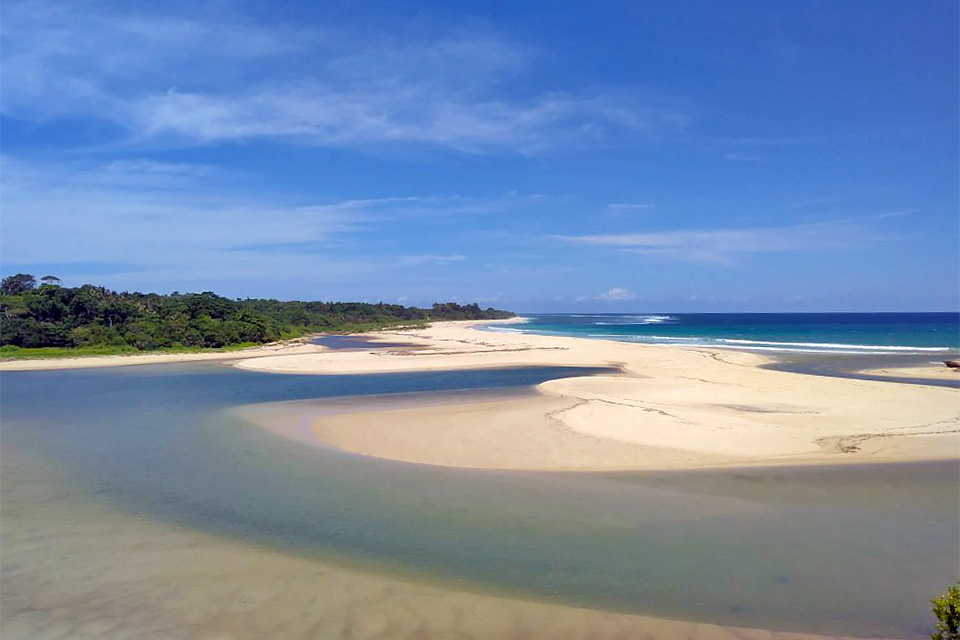
- Mandorak Beach — a dramatic cove where waves crash between cliffs.
Together they create a natural flow of experience. Culture in Ratenggaro, power and coastline at Mandorak, stillness and reflection at Waikuri.
It’s not three separate stops — it’s one story told in three different ways.

Why Location Matters
Ratenggaro’s position is not accidental. The village sits near the coast, historically connected to both land-based traditions and maritime influence. Its placement reflects centuries of adaptation — to environment, belief systems, and community life.
For travelers today, this means:
- Easy integration into a West Sumba route.
- A meaningful contrast between culture and nature.
- A stop that adds depth, not just scenery.
Insiders’ Picks: Best Way to Enjoy Ratenggaro Village
- Visit Ratenggaro in the morning for softer light and a quieter atmosphere.
- Combine with Mandorak Beach before heading to Waikuri Lagoon.
- Roads are generally accessible, but allow flexible travel time.
- Having a local driver or guide helps navigate both route and cultural context.
Ratenggaro is not hidden — but it doesn’t announce itself loudly either. You reach it by moving through Sumba at its own pace … and when you arrive, it feels like you’ve stepped into something that has been there all along.
What to Expect When You Visit
Stepping into Ratenggaro Village doesn’t feel like entering a tourist site. There’s no gate. No defined path. No moment that clearly says, “you’ve arrived.” Instead, the transition is subtle. One moment you’re walking across open ground … the next, you find yourself surrounded by towering roofs, stone structures, and the quiet presence of a living community.
You don’t enter Ratenggaro — you ease into it.
The Village Landscape
The first thing that captures your attention is the verticality. Rising above you are the iconic traditional Sumba houses, their sharply pointed thatched roofs stretching dramatically into the sky.
- Roofs reaching up to 15–20 meters high.
- Thick layers of thatch forming bold, geometric silhouettes.
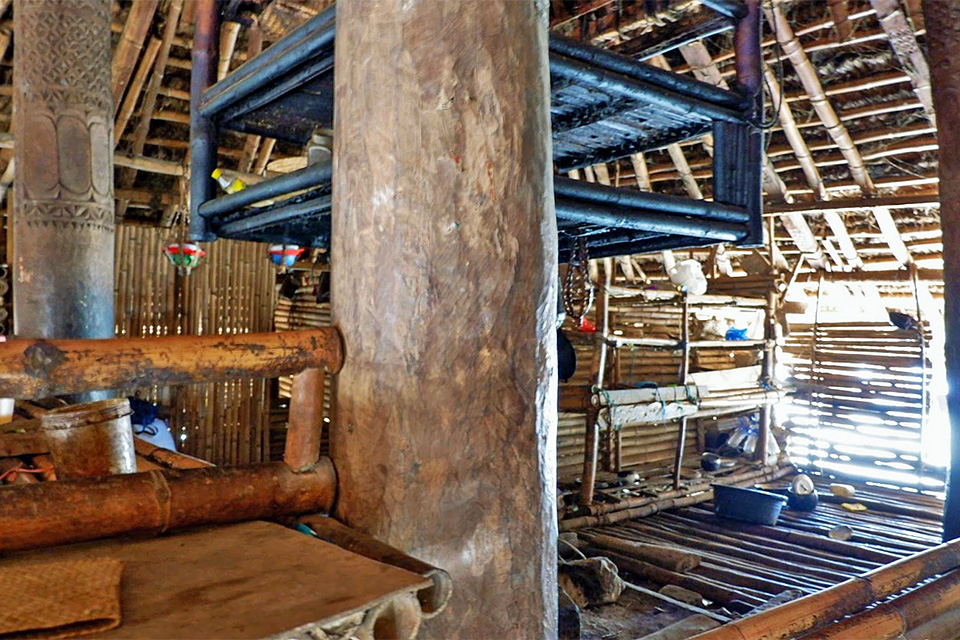
- Wooden structures grounded in simplicity, yet rich in meaning.
Between them, scattered across the village center, are the megalithic tombs — large stone slabs that have stood here for generations.
They are not marked. Not explained. They simply exist.
In Ratenggaro, history is not behind glass — it stands quietly in the open.
The Rhythm of Daily Life
What makes the experience truly powerful is that nothing here is staged. This is not a performance of tradition.
It is daily life continuing as it always has.
You may see:
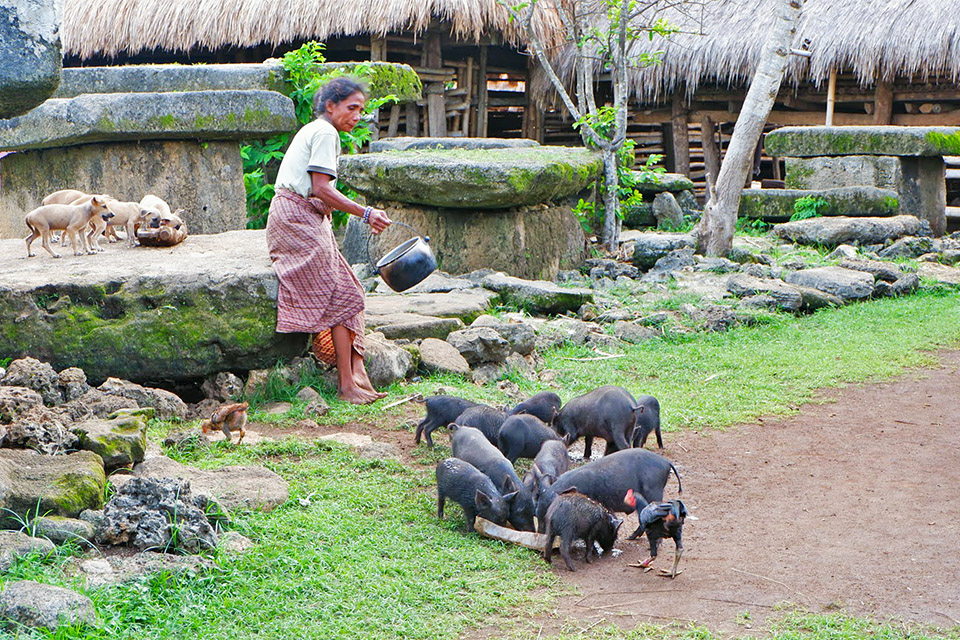
- Children playing, running barefoot across the expansive village grounds.
- Elders sitting in the shade, observing quietly.
- Women weaving traditional textile whilst tending to everyday tasks.
- Livestock moving freely through the space.
There is movement — but it is unhurried.
There is activity — but it is not directed toward you.
You are not the center of the scene — and that’s what makes it real.
The Ocean Just Beyond
Walk a little further, and the village opens toward the coastline. Here, the contrast becomes striking.
Behind you:
- Stillness.
- Structure.
- Tradition.
In front of you:
- The vast Indian Ocean, restless and powerful.
- Waves crashing rhythmically against the shore.
It’s a meeting point between two worlds — one grounded in continuity, the other in constant motion.
Few places let you stand between centuries-old tradition and the raw force of the ocean — all in a single glance.
How It Feels to Be There
Ratenggaro is not overwhelming in the way some landmarks are. It doesn’t try to impress you. Instead, it creates a quiet awareness — that you are standing inside something meaningful, something ongoing.
- You walk more slowly.
- You speak more softly.
- You observe more than you photograph.
And without realizing it, you begin to adjust to the place — not the other way around.
Insiders’ Tips: What to Expect
- Walk gently and be mindful — this is a living village, not a museum.
- Ask before taking close-up photos of people.
- Take time to observe before moving deeper into the village.
- Combine your visit with Weekuri Lagoon for a contrasting experience.
- Visit earlier in the day for a more peaceful atmosphere.
Ratenggaro is not about what you see — it’s about what you begin to understand.
From here, we move into timing — because just like Weekuri, light and time of day shape the experience here in subtle but important ways.
Best Time to Visit Ratenggaro Village
At Ratenggaro Village, timing doesn’t just shape your photos — it shapes how the village feels. Because this is not a place defined by scenery alone. It is defined by light, movement, and daily life unfolding naturally.
Come at the right time, and you don’t just see the village — you sense its rhythm.
Time of Day
There’s no strict rule for visiting Ratenggaro, but certain moments allow the experience to feel more authentic and immersive that fit better to different personal characters.
Morning (8:00 – 10:30 AM)
This is when the village feels most grounded in its daily rhythm, allowing visitors to immerse into their daily life.
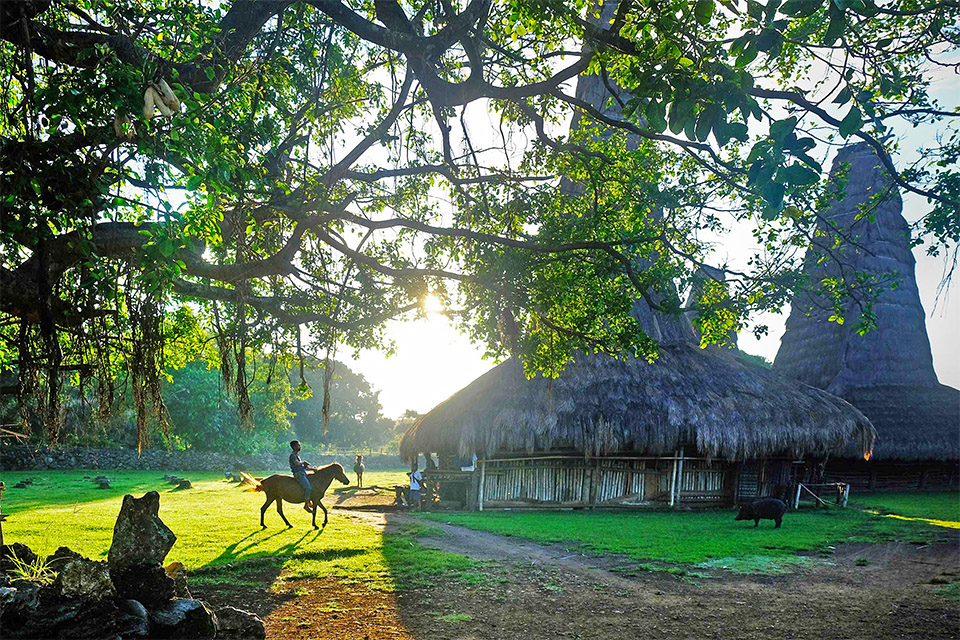
- Soft, angled light highlights the texture of the thatched roofs, make them look more dramatic.
- The air is cooler, making it easier to explore on foot.
- Daily activities are beginning — subtle, unhurried, real.
In the morning, Ratenggaro feels like it belongs entirely to itself — you’re simply witnessing it.
Late Afternoon (4:30 PM onward)
As the sun lowers toward the ocean, the atmosphere shifts.
- Golden light casts long shadows across the village.
- The rooftops glow with deeper tones.
- The nearby coastline becomes more dramatic.
This is also when the village feels quieter again — a natural slowing down before evening.
In the afternoon, everything softens — the light, the pace, even your presence.
Seasonality
Ratenggaro Village can be visited throughout the year, but each season brings a slightly different character to the landscape. Visiting in different season lives up a completely different character.
Dry Season (April – October)
- Clear skies and strong light.
- Golden savanna surroundings.
- Sharper contrast for photography.
Wet Season (November – March)
- Lusher greenery around the village.
- Softer, more diffused lighting.
- A slightly more atmospheric, moody feel.
In the dry season, the village feels bold.
In the wet season, it feels softer — but never less real.
Cultural Timing – Important to Know
Ratenggaro is a living community with its own ceremonies and traditions.
- Certain times of year may include local rituals or events.
- These are not scheduled for tourism — they happen according to cultural calendars.
If you happen to witness one, it can be deeply meaningful — but it’s important to approach with respect and awareness.
Insiders’ Insight: Time at Ratenggaro Village
- Morning gives authentic village atmosphere + softer light.
- Late afternoon is ideal for photography and coastal views.
- Midday can be hot and bright — less comfortable for walking around the village and surroundings.
- If combining with Waikuri Lagoon, visit Ratenggaro earlier in the day.
- Stay flexible — the village is best experienced without rushing.
Ratenggaro doesn’t demand perfect timing — but it rewards those who arrive with patience.
From here, we move into practical awareness — how to visit respectfully and comfortably.
Travel Tips
Visiting Ratenggaro Village is a privilege. This is not a curated attraction — it is a living community, where daily life continues regardless of who comes to observe it. A little awareness goes a long way in making your visit not only smoother, but also respectful and meaningful.
You’re not just visiting a place — you’re stepping into someone’s home.
How to Dress & Present Yourself
Ratenggaro holds strong cultural values, and modesty is part of that expression.
- Wear light, modest clothing (covering shoulders and knees is recommended).
- Avoid overly revealing outfits, especially when walking through the village center.
- Comfortable footwear is important — the ground is uneven in places.
Dressing appropriately is not about rules — it’s about showing respect for the space you are entering.
Photography Etiquette
The village is visually striking — it’s natural to want to capture it. But remember: the people here are not part of a display.
- Always ask before taking close-up photos of individuals.
- Be mindful when photographing private spaces or activities.
- Wide shots of the village and architecture are generally acceptable.
Some moments are better experienced than captured.
Interaction & Behavior
You don’t need to perform or behave differently — just be present with awareness.
- Walk calmly, avoid loud voices.
- Greet locals with a simple smile or nod.
- If invited into conversation, engage respectfully.
Children may approach out of curiosity — this is natural, and part of the experience.
Facilities & Practical Considerations
Ratenggaro remains largely undeveloped for tourism.
- Limited to no formal facilities.
- No restaurants or structured amenities
- Bring your own water and essentials.
Plan your visit as part of a broader route rather than a standalone stop.
Supporting the Local Community
In some cases, visitors may:
- Offer small donations.
- Buysimple handmade items.
These gestures, when done respectfully, help support the community.
Insiders’ Tips: Safety Checks
 Insiders’ Tips: Safety Checks
- Visit with a local driver or guide to better understand cultural context.
- Bring small cash for local contributions or purchases.
- Combine with Waikuri Lagoon and Mandorak Beach for a balanced day.
- Take your time — this is not a place to rush through.
The way you visit matters as much as the place you visit.
With the practical side understood, the experience becomes more natural — you’re no longer just observing, but moving through the village with awareness.
How Ratenggaro Fits Into a Sumba Itinerary
In a well-designed journey, Ratenggaro Village is not just a stop — it’s the cultural anchor that gives meaning to everything around it.
If Weekuri is where you feel Sumba, Ratenggaro is where you begin to understand it.
The West Sumba Flow
Ratenggaro naturally sits within one of the most rewarding routes in West Sumba — a route that balances culture, coastline, and calm water experiences in a single day.
It is most often explored together with:
- Mandorak Beach — where dramatic cliffs and crashing waves introduce the raw side of the island.
- Waikuri Lagoon — where everything slows down into stillness and clarity.
Together, they create a seamless progression:
It’s not three places — it’s three chapters of the same story.
Where It Fits in the Day
Ratenggaro is typically best visited earlier in the day, when the light is softer and village life is more present.
A natural flow might look like:
- Morning: visit Ratenggaro Village.
- Late morning: continue to Mandorak Beach.
- Midday to early afternoon: arrive at Waikuri Lagoon.
This sequence allows the day to unfold with rhythm — from observation, to movement, to rest.
How Long to Spend
Ratenggaro is not about ticking off viewpoints — it’s about absorbing atmosphere. Recommended duration: 45 minutes to 1.5 hours.
The duration gives enough time to:
- Walk through the village.
- Observe daily life.
- Reach the coastline beyond.
Some travelers stay briefly. Others linger longer, drawn into the quiet presence of the place.
Why It Matters in the Bigger Journey
Without Ratenggaro, a West Sumba itinerary can feel visually beautiful — but incomplete. Because what you see in the landscapes begins to make more sense when you’ve experienced the culture behind them.
- The architecture.
- The belief systems.
- The way people live with the land.
Ratenggaro adds that layer.
You don’t need hours here — you just need to be present.
Why It Matters in the Bigger Journey
Without Ratenggaro, a West Sumba itinerary can feel visually beautiful — but incomplete. Because what you see in the landscapes begins to make more sense when you’ve experienced the culture behind them.
- The architecture.
- The belief systems.
- The way people live with the land.
Ratenggaro adds that layer.
💡Insiders’ Insight: Planning Your Visit
- Visit Ratenggaro before Weekuri to fully appreciate the contrast,
- Combine with Mandorak Beach for a complete coastal experience.
- Keep the schedule flexible — cultural sites are best enjoyed without rushing.
- Ideal as part of Day 1 or Day 2 in most West Sumba routes.
Ratenggaro doesn’t compete for attention — it deepens everything around it.
From here, we’ll guide readers into logistics and travel approaches — especially for those considering independent travel.
Can You Visit Ratenggaro Independently?
Yes — you can visit Ratenggaro Village independently. But as with many places in Sumba, the experience is shaped not just by where you go, but by how you get there and how you move once you arrive.
It’s accessible — but it asks for a bit more awareness than most destinations.
What Makes Independent Visits Challenging
Ratenggaro is located in a remote coastal area of West Sumba, where infrastructure remains simple and largely untouched. This is part of what preserves its authenticity — but it also means independent travel requires preparation.
1. Remote Location
- The village sits far from major towns and facilities.
- Limited support if plans change or delays happen.
- Minimal tourism infrastructure.
2. Limited Signage
- Directional signs can be sparse or unclear.
- Some access roads branch off without obvious markers.
- GPS helps, but may not always reflect real-time conditions.
3. Road Conditions
- Expect a mix of paved and uneven rural roads.
- Certain sections closer to the village can be narrow or rough.
- Travel times can vary depending on weather and road conditions.
In Sumba, navigation is not just digital — it’s intuitive.
What Travelers Often Underestimate
This is where independent plans can feel more rushed than expected.
👉 Driving Time
Distances may look short on a map, but can take longer due to terrain.
👉 Route Flow
Ratenggaro is rarely visited alone — it’s best experienced together with Mandorak Beach and Weekuri Lagoon.
Planning the right order and timing is key to avoiding backtracking or fatigue.
Cultural Awareness Matters
Unlike natural attractions, Ratenggaro is a living community. Independent visitors should be mindful of:
- Appropriate behavior.
- Respectful interaction.
- Understanding boundaries.
A lack of context can sometimes lead to unintentional discomfort — both for visitors and locals.
Knowing where to go is one thing — knowing how to be there is another.
Is It Worth Visiting Independently?
If you:
- are comfortable driving in remote areas,
- enjoy flexible, self-paced travel, and
- are attentive to cultural sensitivity.
— then yes, it can be a rewarding experience.
However, many travelers find that visiting with a local driver or guide adds a valuable layer:
- Smoother navigation.
- Better timing across multiple stops.
- Deeper understanding of what you’re seeing.
💡 Insiders’ Tips: Traveling to Ratenggaro Village
- Start early to allow buffer time for the journey.
- Download offline maps before heading out.
- If possible, travel with a local guide for cultural context.
- Combine Ratenggaro with Mandorak Beach and Waikuri Lagoon.
- Keep expectations flexible — part of the experience is the unpredictability.
Independent travel in Sumba is possible — but the difference lies in how smoothly the day unfolds.
From here, we transition into a soft conversion layer — helping readers understand why many choose a structured journey.
Why Many Travelers Visit Ratenggaro With a Structured Tour
A visit to Ratenggaro Village may seem straightforward — but in reality, it sits within a larger, carefully paced West Sumba journey.
It’s not just about reaching the village — it’s about how the entire day flows around it.
What the Day Actually Involves
A visit to Ratenggaro Village is rarely experienced in isolation. Most visits include:
- Long transfers from Tambolaka, 1.5–2 hours each way.
- Coordinating nearby highlights like Mandorak Beach and Waikuri Lagoon.
- Timing arrivals to align with softer light and active village atmosphere.
Each element is simple on its own. Together, they require thoughtful sequencing.
Why Travelers Choose a Structured Journey
Because of these moving parts, many travelers prefer a planned West Sumba route — not just for convenience, but for experience quality.
A structured journey helps you:
- Avoid inefficient routing and unnecessary backtracking.
- Connect cultural and natural highlights seamlessly.
- Travel with local insight — understanding not just where to go, but when and how.
The difference isn’t in the destinations — it’s in the rhythm of the day.
From Observation to Understanding
When Ratenggaro is visited as part of a well-designed journey, it becomes more than a visual stop.
It becomes context.
- You understand the culture before moving into landscapes.
- You experience contrast — from village life to coastline to lagoon.
- You move through Sumba as a story, not a checklist.
A typical flow might be:
- Culture at Ratenggaro Village.
- Coastal power at Mandorak Beach.
- Calm immersion at Waikuri Lagoon.
See It in Context
If you’re looking to experience Ratenggaro without overthinking logistics, this is exactly how we design our routes. See how Ratenggaro Village fits into our 3 Days West Sumba Tour — where culture, coastline, and landscape come together naturally.
💡 Insiders’ Insight: Maximizing Your Experience
- Cultural sites benefit from context and timing, not just access.
- A structured route ensures you arrive when the village feels most authentic.
- Local drivers don’t just navigate roads — they shape the experience flow.
- The goal is simple: less friction, more presence.
In Sumba, the most memorable days aren’t improvised — they’re quietly well-designed.
More Than Just a Village
At a glance, Ratenggaro Village is easy to describe.
Tall thatched roofs.
Stone tombs.
A dramatic coastal setting.
But what stays with you is not just what you see — it’s what you begin to feel and understand.
Some places show you something new. Others remind you how different life can be.
What Ratenggaro Represents
In a world where many destinations have been reshaped for visitors, Ratenggaro remains something else entirely.
- A living culture, not a preserved display.
- A place where traditions are practiced, not performed.
- A community that continues its rhythm, regardless of who is watching.
There is no script here. No design experience. Just continuity.
A Different Travel Moment
Ratenggaro doesn’t overwhelm you with activity. It invites you to slow down — to observe without needing to interpret everything immediately.
- You notice details instead of seeking highlights.
- You listen more than you speak.
- You begin to understand without being told.
You don’t leave Ratenggaro with answers — you leave with a deeper sense of place.
Why It Matters in Your Journey
When you look back on your time in Sumba, Ratenggaro often becomes more than just a stop. It becomes a reference point. Because after standing there — between ancestral homes and the open ocean — everything else on the island starts to connect:
- The landscapes.
- The traditions.
- The quiet pace of life.
More Than a Place You Visit
Ratenggaro is not about checking off a destination.
It’s about stepping, even briefly, into a world that continues on its own terms.
You don’t just visit Ratenggaro — you witness something that has been here long before you arrived.
And that is what makes it more than just a village. It becomes a moment of perspective —one that quietly stays with you long after the journey moves on.
FAQ - Ratenggaro Village
Below are the most common questions travelers ask before visiting Ratenggaro Village — answered in detail to help you plan your visit with clarity and respect.
What is Ratenggaro Village known for?
Ratenggaro is one of the most iconic traditional villages in Sumba, known for:
- its towering thatched-roof houses (among the tallest in Indonesia).
- ancient megalithic stone tombs.
- its location right beside the open ocean.
It offers a rare opportunity to experience a living cultural landscape, where traditions are still practiced in everyday life.
It’s not a reconstruction — it’s a culture that continues.
Is Ratenggaro Village worth visiting?
Yes — especially if you want to understand the cultural side of Sumba, not just its natural beauty. While places like Weekuri Lagoon offer visual impact, Ratenggaro adds depth and meaning to your journey.
It’s often one of the most memorable stops for travelers seeking:
- Authenticity.
- Cultural insight.
- A slower, more reflective experience.
Where is Ratenggaro Village located?
Ratenggaro is located in Southwest Sumba, about:
- 1.5 to 2 hours drive from Tambolaka Airport.
It is typically visited as part of a West Sumba route, often combined with:
Can you visit Ratenggaro Village independently?
Yes, independent visits are possible.
However, you should consider:
- Remote location with limited signage.
- Variable road conditions.
- The need for cultural awareness when interacting with the community.
Many travelers choose to visit with a local driver or guide to:
- Navigate efficiently.
- Understand cultural context.
- Combine nearby attractions smoothly.
What should you wear when visiting Ratenggaro?
Modest and respectful clothing is recommended.
- Covering shoulders and knees is ideal.
- Lightweight, breathable clothing works best in the heat.
- Comfortable footwear is important for uneven ground.
This helps you blend respectfully into the environment.
Can you take photos in Ratenggaro Village?
Yes — but with sensitivity.
- Wide shots of the village and architecture are generally fine.
- Always ask permission before taking close-up photos of people.
- Avoid intrusive or disruptive photography.
Respect creates better experiences — and better photos.
How long should you spend at Ratenggaro Village?
Most visits last 45 minutes to 1.5 hours. This gives enough time to:
- Walk through the village.
- Observe daily life.
- Visit the nearby coastline.
It’s not about how long you stay — but how present you are while you’re there.
Are there facilities at Ratenggaro Village?
Facilities are very limited.
- No formal restaurants or tourist infrastructure.
- Basic conditions only.
- Bring your own water and essentials.
Plan your visit as part of a broader itinerary, not a standalone stop.
Is Ratenggaro Village suitable for families?
Yes, especially for families interested in:
- Culture.
- History.
- Meaningful travel experiences.
However:
- Supervision is important for children.
- Respect for local customs should be maintained.
What makes Ratenggaro different from other villages in Indonesia?
Ratenggaro stands out because of:
- The height and structure of its traditional houses.
- The presence of megalithic tombs within the village.
- Its coastal setting, which is rare for traditional villages.
Combined, these elements create a setting that is both visually striking and culturally significant.
When is the best time to visit Ratenggaro Village?
- Morning (8–10:30 AM) → softer light, active village life.
- Late afternoon → warmer tones, more dramatic atmosphere.
The village can be visited year-round:
- Dry season → clearer skies, stronger contrast.
- Wet season → greener surroundings, softer light.
Why do many travelers visit Ratenggaro as part of a tour?
Because visiting Ratenggaro often involves:
- Long travel distances.
- Coordination with nearby highlights like Mandorak Beach and Waikuri Lagoon.
- Understanding cultural context.
A structured itinerary helps:
- Avoid inefficient routing.
- Improve timing and pacing.
- Create a smoother, more meaningful experience
Do you need a guide when visiting Ratenggaro?
Not required — but highly recommended.
A local guide can:
- Provide cultural insights.
- Help with respectful interaction.
- enhance your understanding beyond what you see.
If you’re planning your journey through Sumba, Ratenggaro Village offers something rare — not just a place to visit, but a perspective to carry with you.