There are beaches you visit—and then there are places like Waikuri Lagoon that change how you experience them altogether. Calm, clear, and almost surreal, this natural lagoon invites you to slow down, float, and take in Sumba at its most peaceful. It’s not about ticking off a destination—it’s about feeling it. And when planned right, it becomes part of a seamless coastal journey through West Sumba’s most iconic landscapes.
For many travellers, this is where the emotional connection to Sumba begins.
It’s not just a place you visit — it’s a place where time slows down, and you simply float
 Insider’s Insight — Why Visit Waikuri Lagoon
 Insider’s Insight — Why Visit Waikuri Lagoon
- Crystal-clear turquoise water that shifts color with the sunlight.
- Swimmable year-round with no strong waves — perfect for floating and relaxing.
- A natural infinity pool formed by the ocean itself.
- Quiet and uncrowded, far from the mass tourism of Bali.
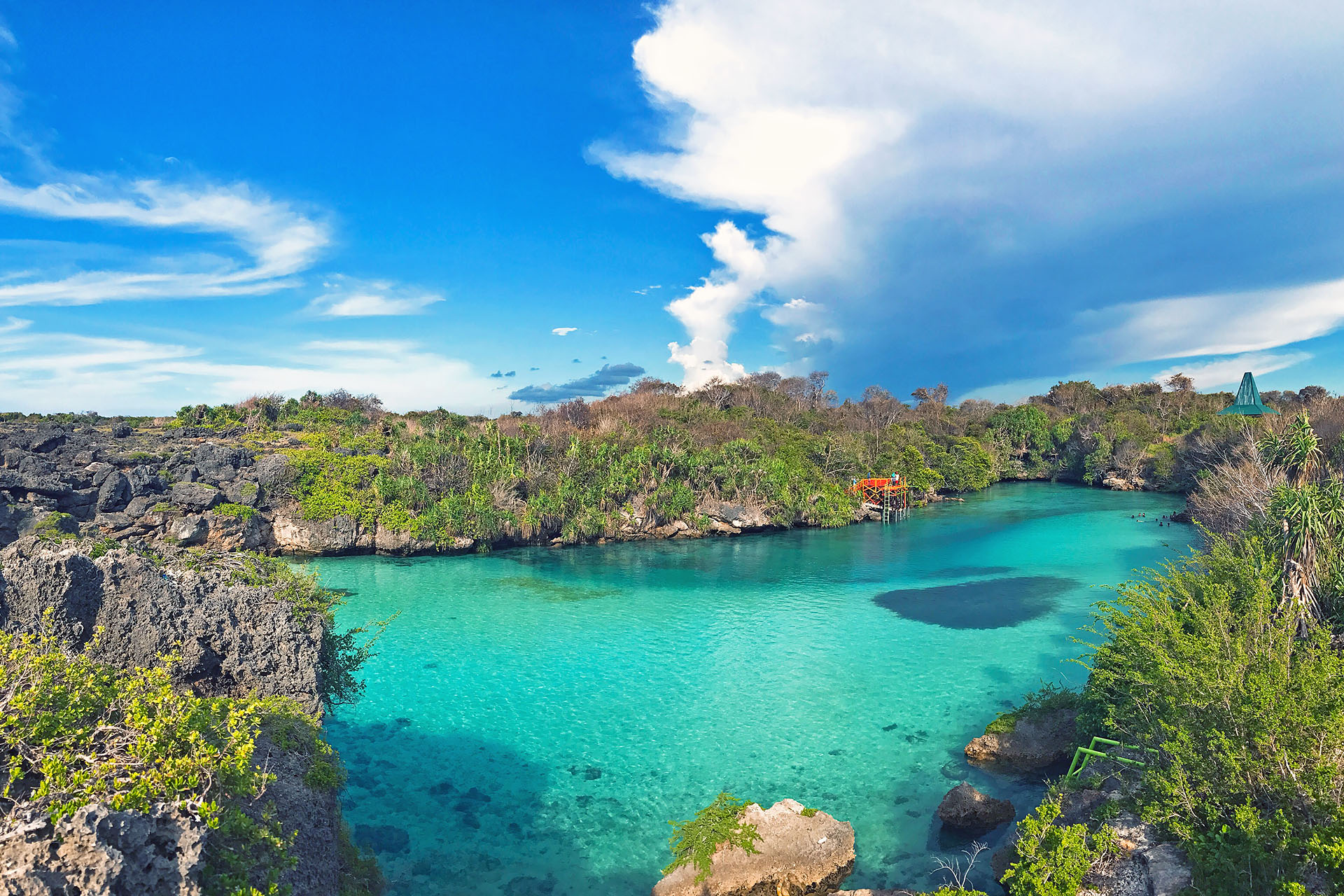
- A natural saltwater lagoon, enclosed by limestone cliffs — calm, clear, and unlike any typical beach.
- Easily combined with nearby highlights like Mandorak Beach and Ratenggaro Village.
- One of the most iconic stops in West Sumba, often described as travelers’ first “wow” moment.
💡Related reads:
What Makes Waikuri Lagoon Special
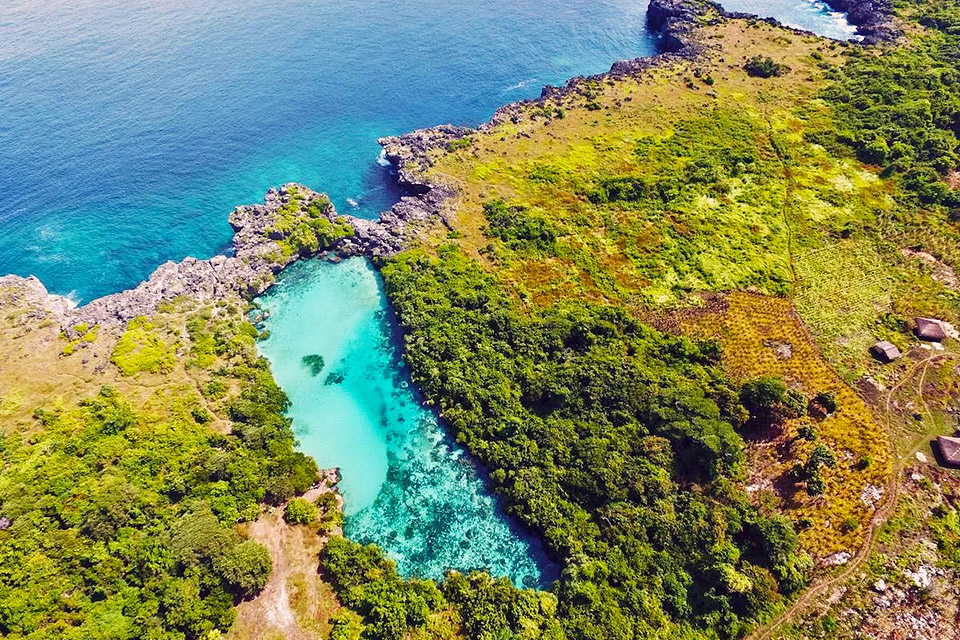
There are places you visit … and then there are places that quietly redefine what you expect from nature. Waikuri Lagoon belongs to the second kind. Hidden along the rugged coastline of West Sumba, this is not your typical beach. There are no crashing waves, no endless horizon of deep blue. Instead, you arrive at something far more unexpected — a still, luminous lagoon, gently held within ancient limestone walls.
It doesn’t feel like the ocean … it feels like the ocean decided to slow down and breathe
The water here is unlike anywhere else on the island. Filtered naturally through porous rock formations, it flows in quietly from the sea — purified, softened, and transformed. The result is a lagoon that feels almost untouched by time:
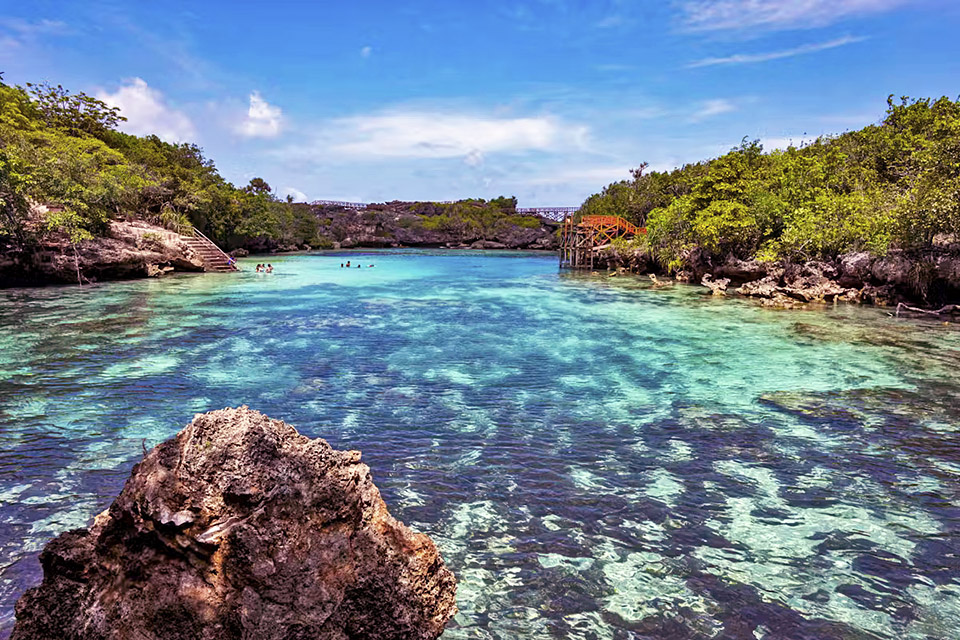
- Crystal-clear visibility, where every ripple catches the light.
- Calm, glass-like surface, perfect for floating without effort.
- Shades of turquoise and emerald, shifting with the sun above.
There is no rush here. No urgency. Just the subtle invitation to step in, lean back, and let the silence carry you.
Some places are meant to be explored. Waikuri is meant to be felt.
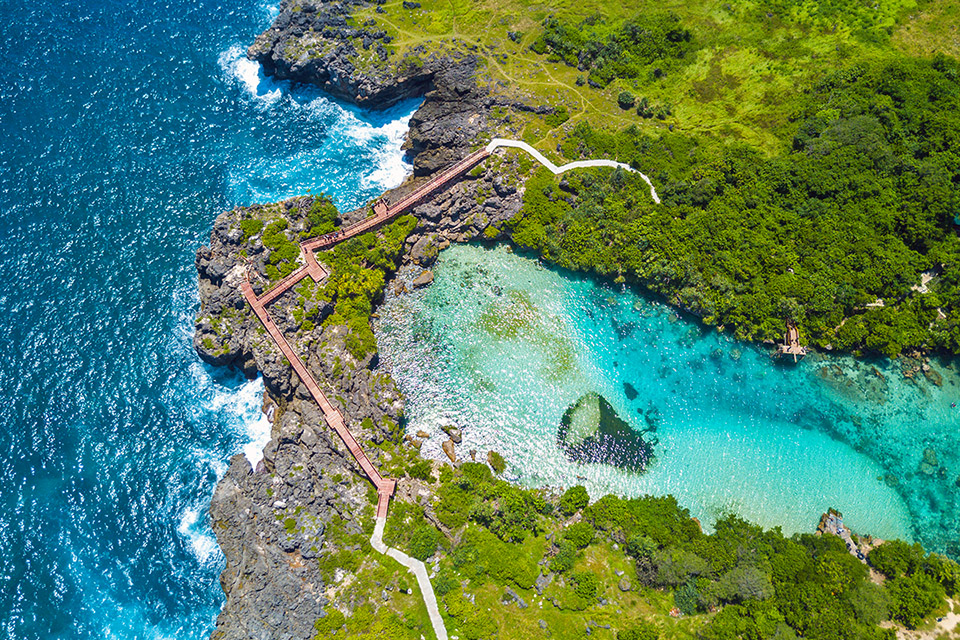
What makes Waikuri Lagoon truly special is not just its beauty — It’s the contrast. Beyond the cliffs, the Indian Ocean moves with power and unpredictability. Inside the lagoon, everything softens. It becomes something else entirely: A natural infinity pool, shaped not by design, but by centuries of quiet geological rhythm.
For many travelers arriving in West Sumba, this is the moment it all begins to make sense.
This is when you realize — Sumba is different.
Insiders’ Insight: Quick Facts about Waikuri Lagoon
- Waikuri Lagoon is saltwater, but gentler than the open sea.
- The calmness makes it safe for swimming in most conditions.
- The clarity is best during midday light when the sun is high.
- You can often find quiet corners away from other visitors if you walk along the edges.
Where Is Waikuri Lagoon Located?
Reaching Waikuri Lagoon is part of the experience — not just a transfer, but a gradual introduction to the rhythm of Sumba itself. The lagoon sits quietly in Southwest Sumba, along a rugged stretch of coastline west of Tambolaka. On a map, it may not look far. But in Sumba, distance is never just about kilometers — it’s about terrain, texture, and the unfolding of landscapes along the way.
In Sumba, the journey doesn’t take you to the destination — it prepares you for it.
From Tambolaka Airport, the drive takes approximately 2 hours, moving through a sequence of jaw-dropping scenes that feel almost cinematic:
- Quiet rural roads.
- Open savanna fields stretching toward the horizon.
- Clusters of traditional houses appearing between hills.
- Glimpses of coastline long before you reach it.
There is a certain anticipation that builds as the air grows saltier, the light sharper, the terrain more dramatic. And then, almost unexpectedly — you arrive.

Waikuri Lagoon is rarely visited in isolation. Its location places it within one of the most rewarding coastal clusters in West Sumba, often explored together in a single, well-paced route.
Just minutes away, you’ll find:
- Mandorak Beach — a secluded cove framed by towering cliffs.
- Ratenggaro Village — an iconic traditional village with dramatic thatched roofs and a deep cultural presence.
Together, these places create a natural flow of experience — from culture, to coastline, to calm water sanctuary.
This part of Sumba isn’t about ticking off places — it’s about how seamlessly they connect.
And that’s exactly why Waikuri Lagoon is not just a stop. It’s a core anchor in any well-designed West Sumba journey — a place where routes naturally lead, and where travelers instinctively slow down.
Insiders’ Picks: Nearby Attractions
- Combine Waikuri Lagoon with Mandorak Beach for a perfect coastal contrast, calm vs waves.
- Visit Ratenggaro Village either before or after the lagoon for a cultural layer in your day.
- Start early from Tambolaka to enjoy a more relaxed, unhurried route.
- Expect limited signage — navigation is easier with a local driver or guide.
From here, we move deeper into the experience itself — what it actually feels like to be there.
What to Expect When You Visit
Arriving at Waikuri Lagoon is not dramatic in the usual sense. There’s no grand entrance, no built-up reveal. Instead, it unfolds quietly. You step out, walk a little … and then the landscape opens — and suddenly, everything shifts.
It’s not the kind of place that overwhelms you. It’s the kind that slowly pulls you in.
The Landscape
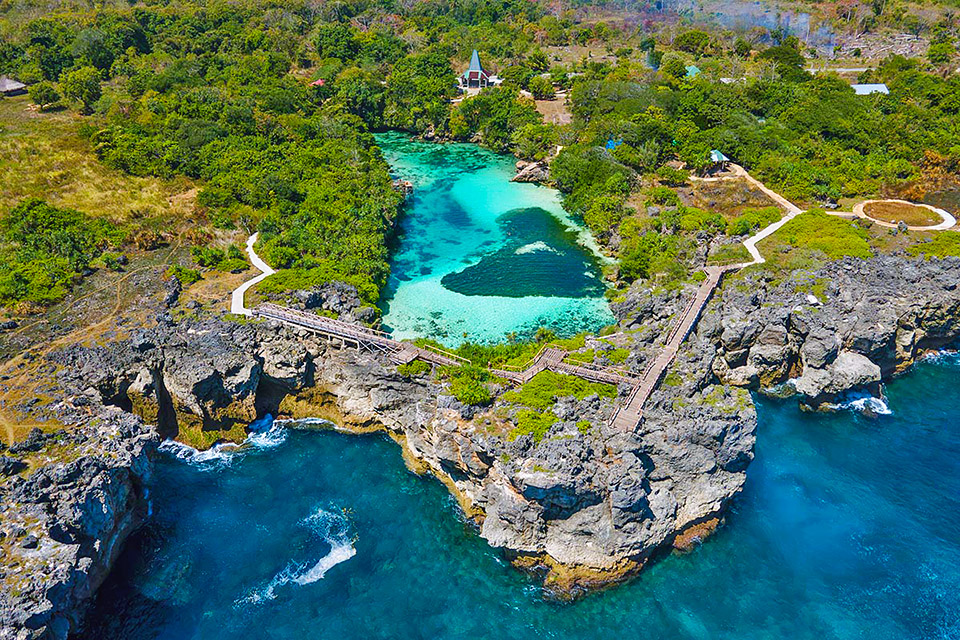
At first glance, the lagoon feels almost hidden — embraced by rugged limestone formations that rise unevenly around it, as if protecting something delicate within.
These natural walls are not just beautiful — they shape the entire experience.
- Jagged rock formations frame from all sides.
- Small, almost secret openings in the cliff allow seawater to flow in from the ocean beyond.
- Subtle elevated platform offers panoramic views where you can fully see the lagoon’s color gradients.
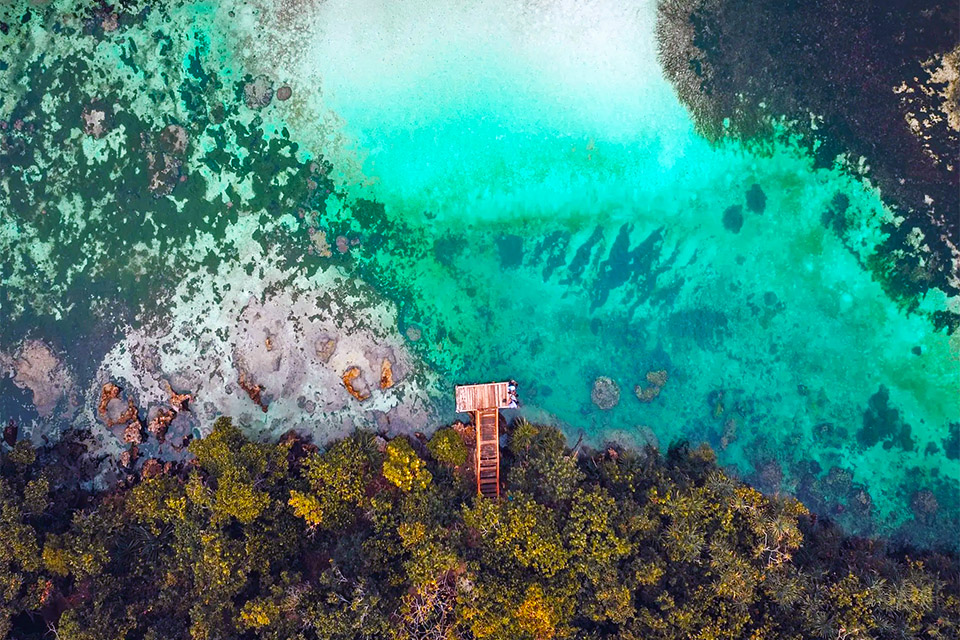
From above, the water reveals its true character — shifting tones of blue and green, depending on how the light touches it.
From the cliffs, it looks like a painting. From the water, it feels like another world.
The Water Experience
And then, of course — there’s the water.
You step in expecting salt and movement.
But what you get is something else entirely.
- No crashing waves, no pull of the tide.
- Just a calm, glass-flat surface.
- Water that gently holds you rather than pushes you.
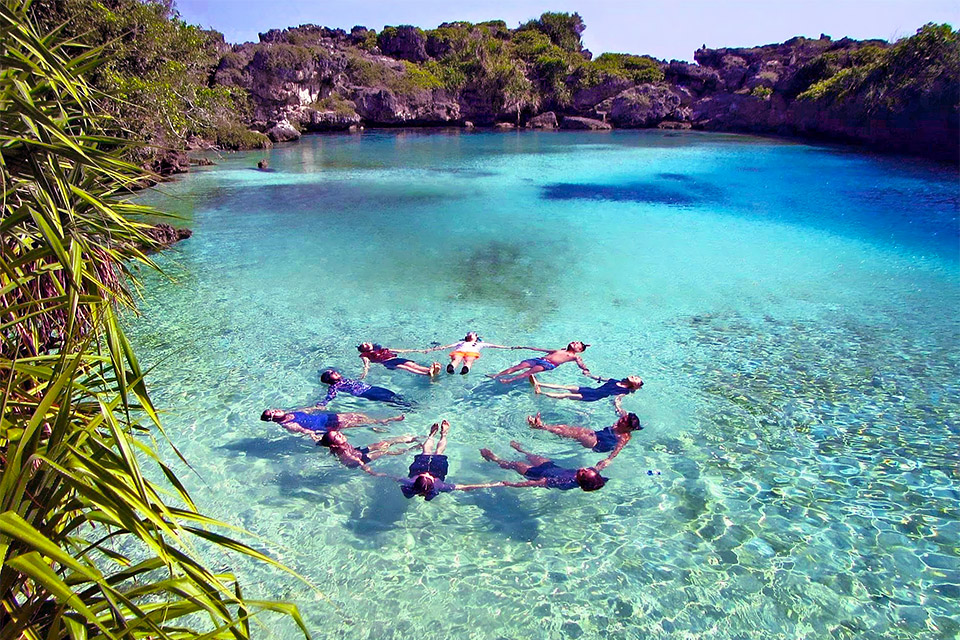
It’s the kind of place where you don’t just swim — you float without effort, suspended in quiet. The salt content is noticeable, but softer than the open ocean — enough to keep you buoyant, never overwhelming.
You don’t fight the water here. You let it carry you.
Time stretches differently in Waikuri. Minutes dissolve. Conversations fade. You find yourself drifting, looking up, doing nothing — and somehow, that becomes everything.
The Atmosphere
If you’ve spent time in places like Bali, this is where the contrast becomes unmistakable.
There are:
- No beach clubs.
- No loud music.
- No dense crowds.
What you get instead is something increasingly rare:
- Space.
- Silence.
- Simplicity.
Waikuri Lagoon remains largely raw and undeveloped, and that is exactly its power.
The luxury here is not in what’s added — but in what’s intentionally left untouched.
This is not a place to rush through for photos. It’s a place to:
- Sit on the rocks.
- Watch the light change.
- Stay longer than you planned.
Because the longer you stay, the more the place reveals itself.
Insiders’ Tips: Enjoying Waikuri Lagoon
- Bring swimwear and a towel — the water is so appealing that you’ll regret not getting in.
- Walk around the edges to find and secure quieter corners for yourself.
- Use the natural platform points for expansive wide-angle photos.
- Avoid rushing — allocate at least 1–2 hours to truly enjoy the lagoon.
From here, we’ll guide readers into timing their visit right — because at Waikuri, light changes everything.
Best Time to Visit Waikuri Lagoon
At Waikuri Lagoon, timing doesn’t just affect your photos — it transforms the entire mood of the place. Because here, the water is still. Reflective. Sensitive to light. Which means: the sky becomes part of the lagoon.
The color you see is not just water — it’s light, depth, and time of day blending together.
Time of Day
There is no “wrong” time to visit Waikuri — but there are moments when it feels especially alive.
Morning (8:00 – 11:00 AM)
This is when the lagoon feels fresh, almost untouched.
- Soft, gentle light enhances the clarity of the water.
- Fewer visitors create a more peaceful atmosphere.
- The surface is often at its calmest — perfect for floating.
The color you see is not just water — it’s light, depth, and time of day blending together.
Late Afternoon (around 4:30 PM onward)
As the sun lowers, the entire landscape begins to shift.
- Warmer tones bring out golden reflections on the rocks.
- Shadows deepen, adding contrast and texture.
- The lagoon takes on a more dramatic, cinematic feel.
In the afternoon, Waikuri doesn’t just glow — it changes character.
Seasonality
Unlike waterfalls or rivers that depend heavily on rainfall, Waikuri Lagoon is remarkably consistent throughout the year.
Dry Season (April – October)
- Clear blue skies.
- Strong sunlight enhances turquoise and emerald tones.
- Ideal for photography and swimming.
Wet Season (November – March)
- Occasional cloud cover softens the colors.
- The landscape feels greener and more atmospheric
- Still fully accessible and enjoyable
Even under clouds, Waikuri doesn’t lose its beauty — it simply becomes more subtle.
What makes Waikuri special is this reliability.
👉 Unlike waterfalls that change dramatically with seasons, Waikuri Lagoon remains a year-round destination. You’re not chasing conditions here. You’re simply choosing the kind of light — and mood — you prefer.
Insiders’ Insight: When to Visit Waikuri Lagoon
- Midday (11 AM – 2 PM) offers the clearest water visibility, though light can be harsher.
- Morning is best for calm, quiet swimming experiences.
- Late afternoon is ideal for dramatic photography and softer tones.
- If visiting multiple spots in one day, plan Waikuri as a midday or final stop.
From here, we move into the practical layer — the small things that make a big difference on the ground.
Travel Tips
Visiting Waikuri Lagoon feels effortless once you’re in the water — but a little preparation makes all the difference. Because this is not a curated beach destination. It remains raw, natural, and lightly developed — and that’s exactly why it’s so special.
The less the place changes for you, the more you adapt to it — and that’s where the magic happens.
What to Wear & Bring
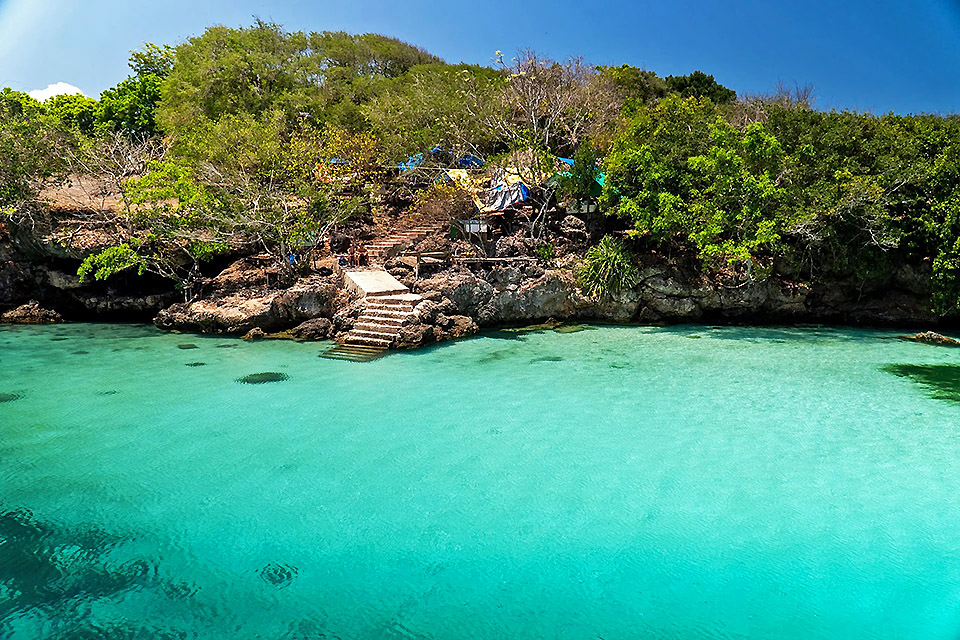
The beauty of Waikuri comes with a bit of texture — quite literally. The lagoon is surrounded by limestone walls that can be uneven and sharp in places, especially near entry points.
- Wear sandals or water shoes for better grip and comfort.
- Bring swimwear — even if you’re unsure, you’ll likely change your mind once you see the water.
- A light towel is enough — you’ll dry quickly in the Sumba sun.
Facilities & Essentials
Waikuri is still relatively simple in terms of infrastructure. You may find small local stalls or basic changing spots, but nothing extensive or guaranteed.
- Bring your own drinking water.
- Carry sun protection (hat, sunscreen).
- Keep valuables minimal and easy to manage.
Think of it less like a beach club visit, and more like stepping into a natural setting that hasn’t been overly shaped for tourism.
The less the place changes for you, the more you adapt to it — and that’s where the magic happens.
Respecting the Environment
Part of what makes Waikuri Lagoon so memorable is how untouched it feels. That experience depends on every visitor treating it with care.
- Take all trash with you — leave nothing behind.
- Avoid stepping on fragile rock formations unnecessarily.
- Be mindful of the quiet atmosphere — keep noise low.
Places like this stay beautiful only if we travel gently through them.
Insiders’ Tips: Safety Checks
- Enter the water slowly — the rock can be slippery in certain spots.
- Walk around a bit before settling — you might find a more private corner.
- Bring a dry bag if you plan to swim and carry essentials.
- If visiting multiple sites, pack a simple change of clothes for comfort.
With the practical side covered, the experience becomes effortless — you arrive, you step in, and you simply let the place do the rest.
How Waikuri Fits Into a Sumba Itinerary
In most well-designed journeys, Waikuri Lagoon is not treated as a standalone destination. It’s part of a natural coastal sequence — one that flows effortlessly through culture, landscape, and sea.
In West Sumba, it’s not about where you go — it’s how each place leads into the next.
The Coastal Flow
Waikuri Lagoon sits within one of the most rewarding clusters in West Sumba, and it’s almost always explored together with:
- Ratenggaro Village — where towering thatched houses and ancient megalithic tombs introduce you to Sumba’s living culture.
- Mandorak Beach — a dramatic cove where waves crash between towering cliffs.
Each stop offers something completely different:
- Culture → in Ratenggaro.
- Power → at Mandorak.
- Calm → at Waikuri.
Together, they create a balanced and immersive half-day to full-day experience.
Typical Timing Within the Day
Waikuri Lagoon is often positioned as a midday pause — and for good reason. After exploring villages and coastal viewpoints in the morning, the lagoon becomes a place to:
- Cool down.
- Slow the pace.
- Reset before continuing the journey.
A typical flow might look like:
- Morning: cultural and coastal exploration.
- Midday: arrive at Waikuri Lagoon.
- Afternoon: continue toward sunset viewpoints.
It’s where the itinerary exhales.
How Long to Spend
While it may look like a quick stop on paper, Waikuri has a way of stretching time. Recommended visit duration is about one to two hours., which is enough to:
- Explore different viewpoints.
- Swim or float in the lagoon.
- Simply sit and take it in.
Some travelers stay longer without realizing it. Others wish they had.
💡 Insiders’ Insight: Coastal Trip Around Waikuri Lagoon
- Visit Waikuri after Mandorak Beach to fully appreciate the contrast between waves and stillness.
- Pair with Ratenggaro Village for a complete West Sumba story in one day.
- Plan it as a flexible stop — this is where you may want extra time.
- Best included in Day 1 or Day 2 of most West Sumba itineraries.
Waikuri Lagoon is not just another stop along the way. It’s the moment where the journey slows down — and where many travelers quietly realize why Sumba feels so different.
Can You Visit Waikuri Lagoon Independently?
Yes — you absolutely can visit Waikuri Lagoon independently. But like many places in Sumba, the experience is not just about getting there — it’s about navigating the journey well.
On the map, it looks simple. On the ground, it asks a bit more of you.
What Makes Independent Travel Challenging
Waikuri Lagoon sits in a remote part of Southwest Sumba, where infrastructure remains intentionally minimal. This is part of its charm — but also where many travelers get caught off guard.
1. Remote Location
- The lagoon is not located near major towns.
- Facilities and clear tourist hubs are limited.
- You won’t find frequent roadside assistance or easy alternatives.
2. Road Conditions
- Expect a mix of paved and uneven roads.
- Certain sections can be narrow, bumpy, or dusty, especially closer to the coast.
- Driving requires patience and confidence, particularly if you’re unfamiliar with the terrain.
3. Limited Signage
- Directional signs can be sparse or inconsistent.
- Some turns are easy to miss without local familiarity.
- GPS works — but not always perfectly in rural stretches.
You don’t just follow the road — you interpret it
What Travelers Often Underestimate
This is where most independent plans start to feel rushed.
👉 Driving Time
Distances in Sumba can be deceptive. What looks short on a map can take significantly longer due to road conditions.
👉 Route Planning
Waikuri is rarely visited alone — it’s best experienced as part of a sequence (like with Mandorak Beach and Ratenggaro Village). Planning the order, timing, and pacing requires local insight.
In Sumba, efficiency isn’t about speed — it’s about knowing the flow.
Is It Worth Going Independently?
If you:
- enjoy self-driving in remote destinations,
- are comfortable with flexible timing,
- don’t mind a bit of unpredictability
— then yes, it can be a rewarding experience.
But for many travelers, especially those on limited time, a well-planned route with a local driver or guide often transforms the day from “logistically challenging” into effortlessly memorable.
💡 Insiders’ Tips: Visiting Waikuri Lagoon Independently
- Download offline maps before heading out.
- Combine Waikuri with Mandorak Beach and Ratenggaro Village to make the journey worthwhile.
- Start early if traveling independently — give yourself buffer time.
- If unsure, consider a driver-guide — not just for navigation, but for pacing the experience
Waikuri Lagoon is accessible — but it rewards those who approach it with the right expectations. And often, the difference between a good visit and a great one … comes down to how smoothly you arrive.
Why Many Travelers Visit Waikuri With a Structured Tour
A visit to Waikuri Lagoon may look simple on paper — but in reality, it sits within a larger, carefully timed journey across West Sumba, and therefore experienced guidance is essential.
The lagoon is just one stop — the experience is how you get there.
What the Day Actually Involves
Reaching Waikuri Lagoon is rarely a short, standalone outing. Most visits include:
- Long transfers from Tambolaka, often around 2 hours each way.
- Coordinating multiple highlights like Mandorak Beach and Ratenggaro Village.
- Timing arrivals to avoid harsh midday heat or catch the lagoon at its most beautiful light.
Individually, each element is manageable. Together, they require thoughtful sequencing.
Why Many Travelers Choose a Structured Journey
Because of these moving parts, many travelers opt for a planned West Sumba route — not for convenience alone, but for flow. A well-designed journey helps you:
- Avoid inefficient routing (no unnecessary backtracking).
- Combine key locations smoothly within a single day.
- Travel with local insight — knowing when to go where, and why.
It’s not about seeing more places — it’s about experiencing them in the right rhythm.
From Stops to Story
When Waikuri is approached as part of a structured journey, something shifts. Instead of isolated stops, the day becomes a coherent narrative:
- Culture in Ratenggaro Village.
- Dramatic coastline at Mandorak Beach.
- Stillness and reflection at Waikuri Lagoon.
Each place enhances the next.
See It in Context
If you’re wondering how to experience this flow without overthinking the logistics, this is exactly how we structure our journeys.
👉 See how Waikuri Lagoon fits into our 3 Days West Sumba Tour — designed to connect these highlights into one seamless experience.
💡 Insiders’ Insight: Why Structured Tour Matters
- The difference isn’t where you go — it’s how the day is paced.
- A structured route helps you avoid the feeling of being rushed or lost.
- Local drivers don’t just navigate roads — they navigate timing.
- The goal is simple: arrive at each place when it feels right.
In Sumba, the most memorable days are rarely improvised. They’re quietly well-designed — so everything feels effortless when you’re in it.
More Than Just a Photo Spot
At first glance, Waikuri Lagoon is easy to define.
Clear water.
Calm surface.
Beautiful colors.
But what stays with you isn’t just how it looks — it’s how it feels.
Some places impress you. Others slow you down. Waikuri does both.
What Waikuri Really Represents
In an island that remains largely untouched, Waikuri is a quiet expression of what makes Sumba different.
- Untouched landscapes that haven’t been overbuilt or overdesigned.
- A sense of space — where you’re not surrounded by crowds.
- Natural beauty that reveals itself slowly, not instantly.
There are no beach clubs here. No curated viewpoints with queues. Just water, rock, sky — and time to experience them at your own pace.
A Different Kind of Travel Moment
Waikuri is not a place you rush through. It’s a place where you:
- Sit a little longer than planned.
- Step into the water without thinking too much.
- Float, quietly, with nothing to interrupt the moment.
You don’t just visit Waikuri — you pause with it.
Why It Stays With You
Long after the journey continues, many travelers remember Waikuri not as the most dramatic stop — but as the most peaceful one. Because in a world of constant movement, this is a place that gently asks you to do the opposite.
To slow down.
To look closer.
To stay present.
And that’s what makes Waikuri Lagoon more than just a photo spot. It becomes a feeling — one that defines the rhythm of Sumba itself.
FAQ - Waikuri Lagoon
Below are the most common questions travelers ask before visiting Waikuri Lagoon — answered in detail to help you plan with confidence.
Is Waikuri Lagoon worth visiting?
Absolutely. Waikuri Lagoon is widely considered one of the most unique natural attractions in Sumba. Unlike typical beaches, it offers:
- Calm, swimmable water.
- Striking clarity with turquoise and emerald tones.
- A peaceful, uncrowded atmosphere.
For many travelers, it becomes a highlight of their West Sumba journey, not just for photos, but for the experience of being there.
It’s one of those rare places that looks unreal — and still feels even better in person.
Can you swim in Waikuri Lagoon?
Yes — and you should. The lagoon is:
- Calm and wave-free, unlike open ocean beaches.
- Naturally enclosed by limestone walls.
- Safe for floating and relaxed swimming.
The water is saltwater (connected to the sea through small rock gaps), but it’s generally gentler than direct ocean exposure. Do note:
- Entry points can be rocky → wear proper footwear.
- Always be mindful of your footing when getting in.
How do you get to Waikuri Lagoon?
Waikuri Lagoon is located in Southwest Sumba and is typically accessed from Tambolaka.
- Approximate travel time: 2 hours by car from Tambolaka Airport.
- Roads: mix of paved and uneven rural roads.
Most travelers reach it by:
- Hiring a private driver.
- Joining a structured West Sumba tour.
It is rarely visited using public transport due to limited availability.
Can you visit Waikuri Lagoon without a tour?
Yes, independent visits are possible — but require planning. Challenges include:
- Limited signage.
- Remote location.
- Variable road conditions.
Many travelers underestimate:
- Travel time.
- how to combine it efficiently with nearby stops like Mandorak Beach and Ratenggaro Village.
If you prefer a smoother experience, a planned itinerary or local driver-guide is highly recommended.
What is the best time to visit Waikuri Lagoon?
Waikuri Lagoon is a year-round destination, but timing affects the experience.
Best time of day:
- Morning (8–11 AM): soft light, fewer visitors.
- Late afternoon: warmer tones, more dramatic scenery.
Best season:
- Dry season (April–October): clearer skies, vibrant colors.
- Wet season: still accessible, but lighting can vary.
Unlike waterfalls, Waikuri doesn’t depend heavily on rainfall — its beauty is consistent throughout the year.
How long should you spend at Waikuri Lagoon?
Most visitors spend 1 to 2 hours at the lagoon. This gives enough time to:
- Explore viewpoints.
- Swim or float.
- Relax and enjoy the surroundings.
However, many travelers end up staying longer — it’s one of those places where time feels less structured.
Are there facilities at Waikuri Lagoon?
Facilities are very basic. You may find:
- Small local stalls.
- Simple changing areas (not always guaranteed).
But you should not expect:
- Restaurants.
- Modern restrooms.
- Organized tourist infrastructure.
It’s best to come prepared:
- Bring water.
- Bring snacks if needed.
- Carry your own essentials.
What should you bring to Waikuri Lagoon?
To make your visit comfortable, bring:
- Swimwear.
- Sandals or water shoes (rocky sharp points).
- Towel.
- Drinking water.
- Sun protection (hat, sunscreen).
Optional:
- Dry bag for valuables.
- Change of clothes.
Is Waikuri Lagoon suitable for families?
Yes, especially for families who enjoy nature-based experiences. The calm water makes it:
- Safer than open beaches.
- Suitable for relaxed swimming.
However:
- Supervision is still important for children.
- Sharp edges require careful movement.
Can you visit Waikuri Lagoon in one day with other places?
Yes — and that’s actually the recommended way. Waikuri Lagoon is usually combined with:
This creates a well-balanced West Sumba day route:
- Culture.
- Dramatic coastline.
- Calm lagoon experience.
Is Waikuri Lagoon crowded?
Compared to destinations like Bali — no. Waikuri remains:
- Relatively quiet.
- Minimally commercialized.
- Far from mass tourism.
You may encounter other visitors, but it rarely feels crowded.
It still feels like a place you discovered — not one that was built for you.
Why is Waikuri Lagoon famous?
Waikuri Lagoon is known for:
- Its crystal-clear saltwater.
- Natural limestone enclosure.
- Calm, swimmable environment.
- Unique “natural pool” feel.
It’s often described as:
A natural infinity pool carved into the edge of the ocean.
If you’re planning your Sumba journey, Waikuri Lagoon is more than just a stop — it’s one of those places that quietly becomes the moment you remember most.