The moment your mask settles into place and the snorkel fills with your first breath, the world shifts. The surface ripples fade behind you, and suddenly Bali reveals a secret realm beneath the waves. Here, time slows, colors intensify, and every flick of a fish’s fin feels like choreography in a liquid ballet. This is where Bali snorkeling and diving adventures truly begin — not in a brochure, but in the hush of the ocean itself.
Few places in the world can rival the sheer diversity and accessibility of snorkeling in Bali. Just meters from shore, reefs pulse with life: gardens of coral that sway like underwater meadows, parrotfish crunching on coral heads, and turtles gliding with unhurried grace. Venture deeper with scuba diving Bali’s legendary sites, and the stage expands — giant manta rays soar overhead at Manta Point, the haunting silhouette of the USAT Liberty shipwreck rests at Tulamben, and the elusive mola mola emerges like a creature from myth.

It is this duality — approachable for beginners, yet endlessly rewarding for experts — that makes Bali’s seas so captivating. Families can float above shallow lagoons in Amed, while seasoned divers chase pelagics in Nusa Penida’s blue channels. For honeymooners, there are intimate moments like drifting hand in hand above a garden of clownfish; for explorers, the thrill of dropping beside a sheer wall where reef meets the abyss.
Bali’s magic isn’t just on land — it lives beneath the surface, where every dive feels like entering another world.
Snorkeling and diving here is not just recreation — it’s immersion in a living, breathing ecosystem that has long defined Bali’s relationship with the sea. The island’s Hindu ceremonies often honor the ocean, and locals speak with quiet reverence about its bounty. By slipping beneath the waves, you’re not just sightseeing; you’re partaking in a tradition of connection and respect.
Insider’s Insight: Why Bali Belongs on Your Underwater Bucket List
- Biodiversity hotspot: From coral gardens to pelagic giants.
- Snorkeling for all: Safe lagoons for beginners, thrilling sites for pros.
- Year-round access: Warm waters, with peak clarity in the dry season.
- Signature encounters: Manta rays, mola mola, turtles, and vibrant reefs.
What Makes Nusa Penida Snorkeling So Special
If Bali is the stage, then Nusa Penida is the spotlight. Just a short boat ride from the mainland, this rugged island rises with towering cliffs and hidden coves, but it’s beneath the waves where its true treasures are revealed. The moment you slip into the water at one of the famed Nusa Penida snorkeling spots, the clarity takes your breath away. The sea is a deep, crystalline blue, often with visibility stretching 20 to 30 meters — a natural window into a world that feels infinite.
Snorkeling in Nusa Penida is less about what you see, and more about how it makes you feel — small, awestruck, and completely alive.
Here, the marine life is not just abundant; it is spectacular. Schools of bannerfish move like ribbons caught in a current, while reef turtles paddle calmly through forests of branching coral. And then there are the manta rays — graceful giants with wingspans wider than a car, gliding effortlessly through the water at sites like Manta Bay. Unlike many places in the world where such encounters are rare, in Nusa Penida, they feel almost within reach.
Compared to the more sheltered lagoons of Bali’s mainland — like Amed’s coral gardens or Padang Bai’s Blue Lagoon — Nusa Penida offers something rawer, wilder, and more exhilarating. The island sits in the path of rich oceanic currents, which nourish vibrant coral ecosystems and draw in large pelagics. This makes snorkeling Bali Nusa Penida a wholly different experience: less about floating in calm shallows, more about being swept into the rhythm of the open sea.
For many travelers, this contrast is exactly why Nusa Penida stands out. It bridges accessibility with adventure — giving you the thrill of drift-like conditions without the need for scuba certification. Here, snorkeling isn’t just about looking down at fish; it’s about feeling the pulse of the ocean itself.
Insider’s Insight: Water Clarity & Best Seasons
- Dry Season (Apr–Oct): Best visibility, calmer seas.
- Manta Rays: Sightings are year-round, but calmer seas in the dry months make snorkeling easier.
- Wet Season (Nov–Mar): Still possible, though waves can be stronger and visibility reduced.
Face to Face with Mantas at Nusa Penida’s Manta Bay
At Manta Bay, you don’t swim after the mantas. You wait, and they come to you — as if the ocean itself decided to share a secret.
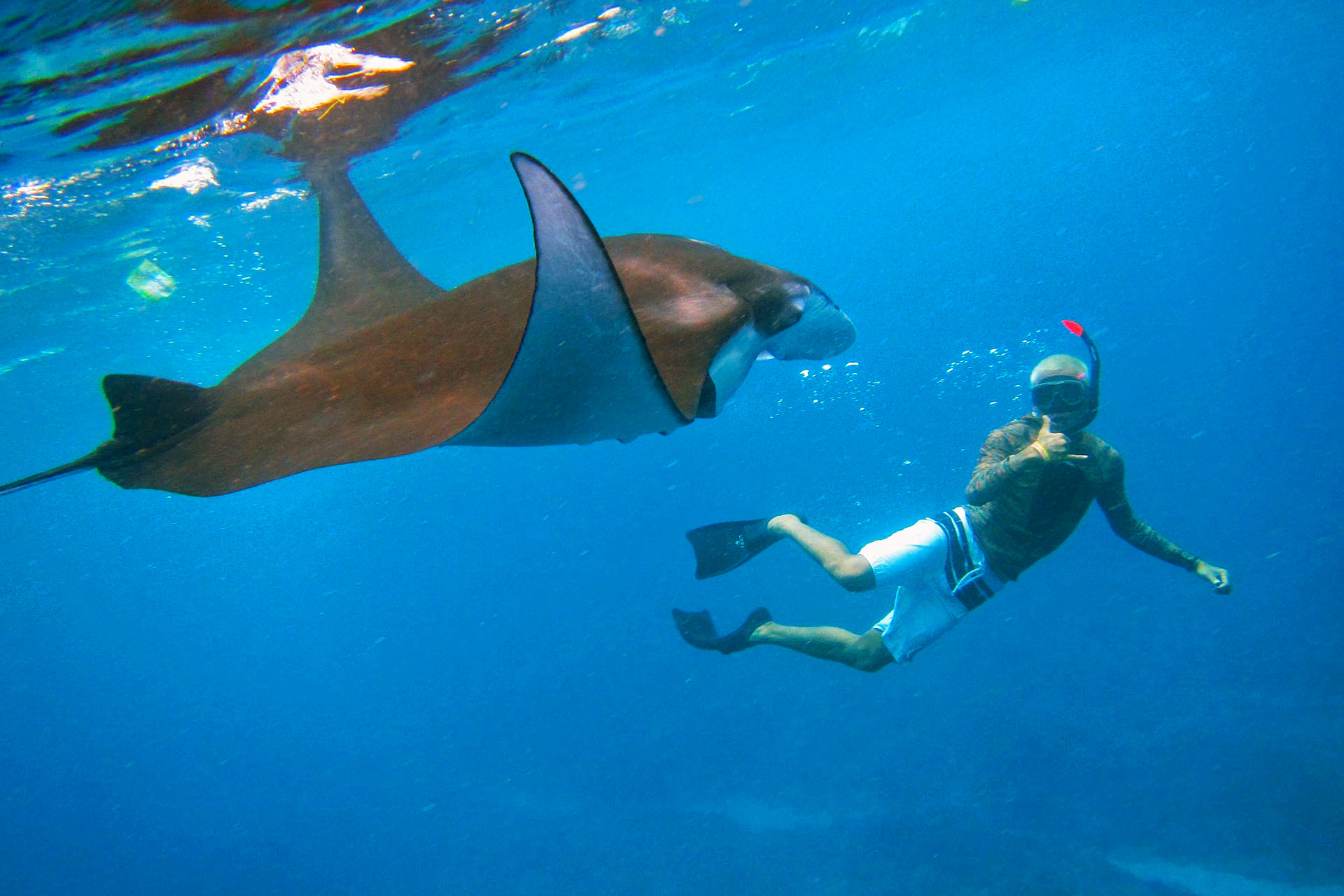
The first time you see a manta ray, you never forget it. At Nusa Penida’s legendary Manta Bay snorkeling site, the water shimmers with light, and then suddenly, a shadow appears. With a slow, graceful beat of its wings, a manta glides past — larger than life, yet utterly gentle. You hover in the water, your heart pounding in your chest, as this ocean giant sweeps beneath you like a dream taking shape.
This is the magic of snorkeling with manta rays in Nusa Penida: it is not just an encounter, it is a communion. The mantas come here not to feed, but to visit natural cleaning stations. Small fish dart around their enormous wings, nibbling parasites in a delicate dance of symbiosis. Watching it feels less like a wildlife sighting and more like being allowed into a secret ritual of the sea.

Yet for all its beauty, Manta Bay is also a site that demands respect. The bay is shallow by manta standards — usually around 10 to 15 meters deep — making it accessible for snorkelers. But it is also open to ocean swells, meaning currents can sometimes be strong. A good guide is invaluable here, not just for safety but for knowing the right moment and tide conditions when manta activity is most likely.
The joy of Manta Bay is that you don’t need to dive deep; mantas often cruise close to the surface, letting snorkelers experience them in their full elegance. Still, patience is key. On some days, mantas sweep in one after another, circling with effortless grace. On others, the sea seems empty until, out of nowhere, a single giant passes by, reminding you that this is nature on its own schedule.
And always, there is the golden rule: never chase, never touch. Mantas are harmless and curious, but they are also vulnerable. A frantic snorkeler flailing too close can disrupt their patterns. The true gift of Manta Bay is not to “get close” but to witness — to float still, breathing slowly through your snorkel, and let the manta choose to glide past you. That is when the connection feels pure, unforgettable.
Insider’s Tips: Best Times to See Mantas at Manta Bay
- Morning (8–11am): Clearer waters, fewer boats, calmer seas.
- Mid–Tide: Mantas often gather at cleaning stations as currents shift.
- Year–Round: Encounters are possible in every season, though calmer dry-season seas make it easier for snorkeling.
Gamat Bay: Snorkeling Off the Beaten Path
Slip into the waters of Gamat Bay, and the first thing you’ll notice is the silence. No crowds, no flotilla of tour boats — just you, the sea, and a sense of discovery that feels rare in Nusa Penida’s popular circuit. Then, as your eyes adjust, the reef reveals itself: a sprawling tapestry of hard and soft corals in near-pristine condition, alive with reef fish that dart and swirl like sparks in a current.
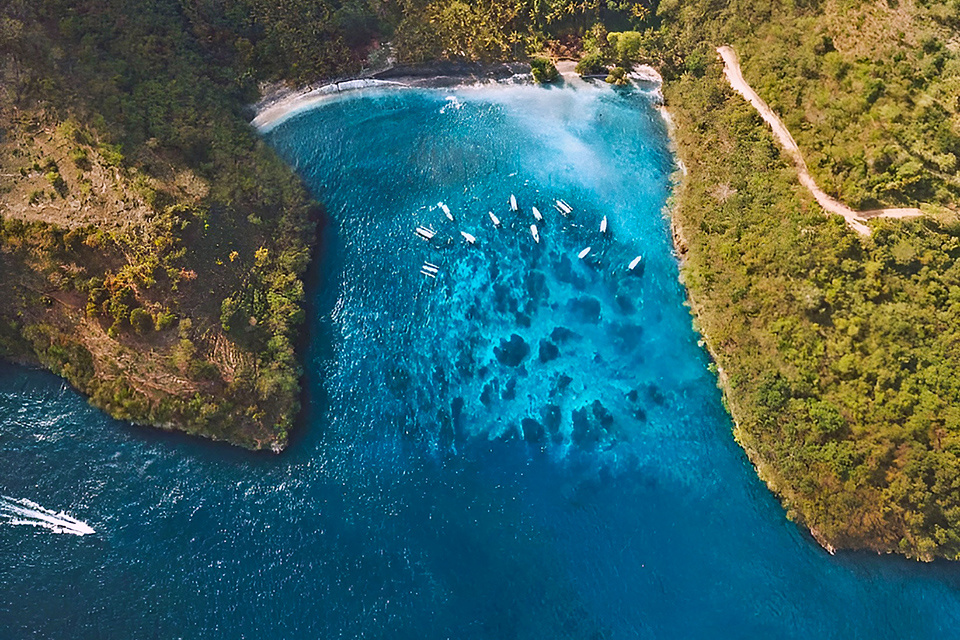
Unlike the postcard calm of Crystal Bay, Gamat Bay snorkeling carries an edge of adventure. This is not the easiest spot to reach — tucked between steep cliffs on the island’s northwest coast, it requires a bit more effort and sometimes a bumpy ride to access. But it is precisely this remoteness that keeps it wild and unspoiled. The reward? Some of the best snorkeling in Nusa Penida for those who crave something more raw and authentic.
Here, the reef slopes down quickly, offering dramatic topography rarely found in sheltered bays. Coral bommies rise like underwater towers, channels weave between gardens of staghorn coral, and every crevice seems to hide life — from lionfish fanning their spines to moray eels peeking from rocky dens. The currents, while manageable for confident swimmers, bring in nutrients that feed the reef and attract larger visitors: trevallies flashing silver, turtles gliding in from the deep, and sometimes even reef sharks patrolling the edges.
Gamat Bay isn’t just another snorkeling stop — it’s a frontier, where the reef still breathes wild and free.
There’s a palpable thrill here. You feel it when a sudden surge sweeps past, reminding you that you’re in the open ocean. You feel it when you kick out toward the deeper drop-offs and glimpse the blue abyss yawning below. It’s the kind of place that blurs the line between snorkeling and diving — shallow enough to explore from the surface, yet dynamic enough to make you feel like an explorer pushing into untamed waters.
And while it might not be for everyone, for those who venture here, Gamat Bay often becomes the highlight of their trip. It’s where snorkeling transforms from a casual swim into an adventure — unpredictable, exhilarating, and unforgettable.
Insider’s Tips: Who Gamat Bay is Best For
- Confident Swimmers: Currents can be strong, especially at the edges.
- Adventurous Travelers: Ideal if you prefer fewer crowds and wilder reefs.
- Snorkeling Enthusiasts: A must if you’ve already tried the easier bays and want more.
Wall Point: Snorkeling Along the Edge of Bali’s Blue
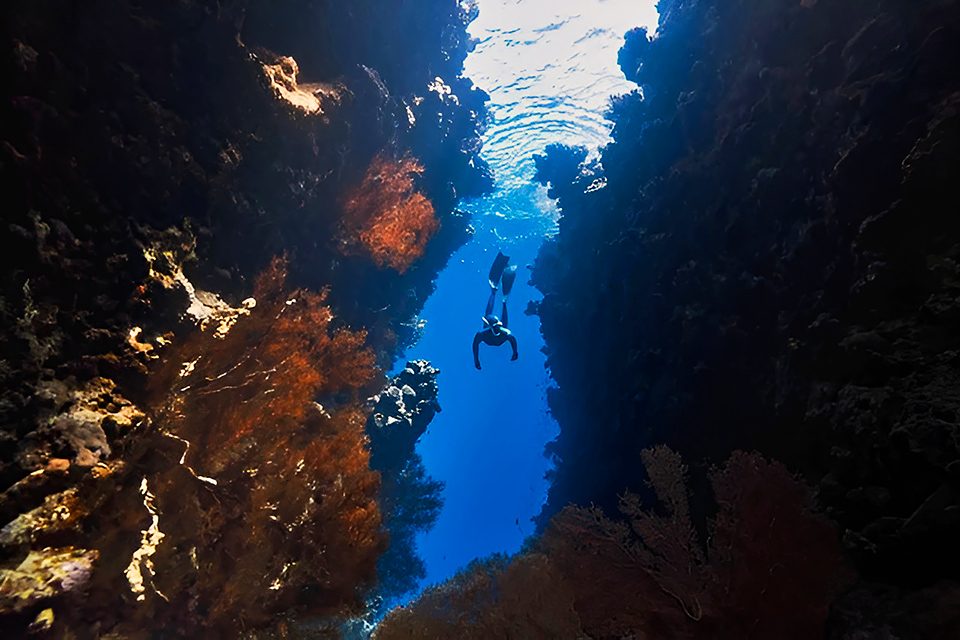
There’s a moment at Wall Point snorkeling where you float above the reef, and suddenly, the world just falls away. One fin stroke and the shallow coral shelf drops into a vertical cliff that plunges into the endless blue. It’s like drifting beside an underwater canyon wall, the kind of scene that reminds you just how vast and mysterious the ocean truly is.
Snorkeling Wall Point is like gliding along the balcony of the deep — a view so humbling, it stays with you long after you’ve surfaced.
The reef itself clings to the edge of this wall — vivid fans of gorgonian coral, soft corals swaying gently in the current, and sponges that look as though they’ve been sculpted by centuries of ocean breath. Schools of fusiliers and bannerfish parade along the ledges, while parrotfish graze across the shallows. Occasionally, the deeper blue teases with flashes of larger pelagic life: jackfish on the hunt, or if luck is on your side, a turtle surfacing from the depths.
Wall Point is one of those Nusa Penida snorkeling spots that feels meditative. The drama of the drop-off contrasts with the quiet rhythm of marine life, giving snorkelers a front-row seat to the edge of two worlds — the reef and the deep sea. It’s the kind of place where time seems to dissolve, and you find yourself mesmerized by the interplay of light and shadow along the vertical reef.
That said, caution is part of the experience. Currents here can be strong, especially near the drop-off, and this site is best enjoyed when conditions are calm. Snorkelers should stay close to guides and avoid drifting too far into the blue, where the current can quickly sweep you off course. With proper guidance, however, Wall Point becomes less intimidating and more of an awe-inspiring reminder of the ocean’s scale.
Floating here, beside cliffs that disappear into infinity, you can’t help but feel small — but also deeply connected to the sea’s mystery and beauty.
Everything You Need to Know Before Snorkeling in Nusa Penida
By now, the turquoise bays and manta-filled waters of Nusa Penida probably feel irresistible. But before you slip on your fins, it’s worth knowing how to plan your Nusa Penida snorkeling tour so the experience is as smooth as the currents are wild.
Getting There: The Gateway to Adventure
Nusa Penida sits just a short boat ride from Bali’s mainland, yet the difference in atmosphere is striking. Most travelers leave from Sanur Harbor, where speedboats whisk you across the Badung Strait in about 40–50 minutes. You’ll arrive at Toya Pakeh or Sampalan Harbor — both excellent starting points for Nusa Penida boat tours that fan out toward Manta Bay, Crystal Bay, and beyond.
Choosing Your Ride: Tours vs. Private Boats
Most visitors book a snorkeling trip from Bali that includes round-trip transfers, a boat with a licensed captain, snorkeling gear, and a guide who knows the currents. These tours can be shared — a fun option for meeting other travelers — or private, if you want to linger longer at certain spots. Private charters give flexibility (and fewer crowds), but shared tours are cost-effective and still deliver spectacular experiences.
Gear & Safety Essentials
Good operators provide life jackets, fins, and masks, but it’s always smart to double-check. If you bring your own mask, you’ll know it fits perfectly — a small comfort that makes a big difference when you’re face-to-face with a manta. Sunscreen is essential, but choose reef-safe formulas that protect fragile corals from harmful chemicals. And don’t underestimate fins: they’re not just for speed, but also for safety, helping you maneuver through changing currents.
The Code of the Ocean: Snorkeling Etiquette
Snorkeling in Nusa Penida is breathtaking, but it comes with responsibility. Corals are living organisms — avoid touching or standing on them. Resist the urge to chase fish or reach for manta rays; they approach naturally if you’re calm and patient. Remember: the ocean isn’t an aquarium, and every movement should respect the fragile ecosystems you’ve come to admire.
Environmental Awareness & Local Wisdom
Many tours now contribute a small marine park fee, used to support reef conservation and local community projects. Supporting responsible operators ensures your adventure doesn’t just thrill you, but also helps protect the underwater treasures for future generations.
Floating above Nusa Penida’s reefs, every choice you make — from the sunscreen on your skin to the operator you book with — leaves a ripple. Make it a good one.
Insider’s Tips: Quick Snorkeling Checklist
- Reef-safe sunscreen
- Waterproof camera or GoPro
- Dry bag for valuables
- Rash guard for extra sun protection
- Early booking (tours often fill up fast)
Insider’s Guide to Booking Nusa Penida Snorkeling Tours
The reefs of Nusa Penida are dazzling, but not all snorkeling trips are created equal. Choosing the right operator can mean the difference between a safe, inspiring encounter and a rushed, crowded day at sea. If you’re planning to book a Nusa Penida snorkeling tour, here’s what really matters.
Safety First, Always
The waters around Nusa Penida are famous for their beauty — and their currents. A good operator will brief you clearly, provide life jackets and fins, and always keep a close eye on sea conditions. Group size matters, too: smaller groups mean guides can give more attention and ensure everyone feels confident in the water.
The right guide doesn’t just take you to the water — they reveal the ocean’s hidden wonders.
Guided Trips vs. DIY
It’s technically possible to hire a local boat and head out on your own, but Nusa Penida isn’t the place to experiment. The best snorkeling spots — from Manta Bay to Crystal Bay — demand local knowledge of tides and currents. A guided trip ensures you see the highlights safely, without worrying about logistics. Plus, professional guides know where manta rays are most likely to appear, or where to drift along coral gardens without missing a thing.
Eco-Friendly & Responsible Choices
A growing number of operators are eco-conscious, using reef-safe practices, limiting boat numbers, and supporting local conservation projects. Booking with them not only protects the fragile ecosystem but also enriches your experience — you’ll feel part of something bigger than yourself.
Why Book With HalloBALI?
As insiders, we carefully curate snorkeling packages in Nusa Penida that balance safety, comfort, and authentic local connection. Our trusted partners operate with small groups, high safety standards, and a deep respect for the marine environment. That way, you spend your time snorkeling with manta rays, not worrying about whether your gear will hold up or if the boat will get too crowded.
When the ocean calls, the right guide makes all the difference. With an expert-curated operator, you’ll not only see Nusa Penida’s marine wonders — you’ll truly experience them.
Snorkeling in Nusa Penida: The Adventure You’ll Never Forget
Imagine slipping into turquoise waters as the sun rises over the cliffs of Nusa Penida. A school of reef fish scatters in flashes of yellow and blue, corals glow in shifting light, and then — out of the deep — a manta ray appears, gliding effortlessly like a shadow with wings.
This is why snorkeling in Nusa Penida isn’t just another activity in Bali. It’s an experience that lingers in your memory long after you’ve dried off. Each bay tells its own story: the dazzling clarity of Crystal Bay, the untouched beauty of Gamat, the vertiginous drop-offs at Wall Point. And always, there’s the possibility of that manta encounter at Manta Bay — a moment many travelers describe as the highlight of their Bali journey.
Snorkeling here blends accessibility with awe. Whether you’re a first-timer floating above a coral garden or a seasoned adventurer chasing drift currents, the island offers a spectrum of underwater experiences. Add in the thrill of a boat ride along towering limestone cliffs and the warmth of the local guides, and you begin to see why snorkeling Bali Nusa Penida belongs on every traveler’s list.
At HalloBALI, we believe the best adventures combine safety, sustainability, and soul. That’s why we work with trusted local partners to offer curated tours that bring you closer to the island’s marine magic — responsibly.
Book your Nusa Penida Snorkeling Tour with HalloBALI.
Nusa Penida is waiting, its reefs alive and its manta rays gliding silently below the surface. The only question is: when will you dive in?
FAQ: Snorkeling in Nusa Penida
Is snorkeling in Nusa Penida safe for beginners?
Yes — but it depends on the site and sea conditions. Calm spots like Crystal Bay are beginner-friendly, while Gamat Bay or Wall Point are better suited for confident swimmers. Always book with a trusted guide and use a life jacket if you’re unsure.
Do I need to bring my own gear?
Not necessarily. Most Nusa Penida snorkeling tours include masks, snorkels, fins, and life jackets. Still, if you have a mask you love, bring it for comfort. Always pack reef-safe sunscreen.
What’s the best time of year for snorkeling in Nusa Penida?
Snorkeling is possible year-round, but April to October offers the clearest waters and calmer seas. Early mornings often mean fewer crowds and better visibility.
Can I snorkel with manta rays every time at Manta Bay?
Encounters are frequent but never guaranteed. Mantas are wild animals, and sightings depend on tides, plankton levels, and luck. The unpredictability makes each sighting even more magical.
How long is the trip from Bali mainland?
The boat ride from Sanur to Nusa Penida takes about 40–50 minutes by speedboat, making it an easy day trip.
Do I need to be a strong swimmer to snorkel?
Not always. With life jackets and calm conditions, beginners can still enjoy snorkeling. For more current-heavy sites like Gamat or Wall Point, stronger swimming skills are recommended.
How deep are the snorkeling spots?
Most snorkeling reefs are shallow — 2 to 6 meters deep — which allows you to see corals and fish clearly from the surface. Some drop-offs, like at Wall Point, lead into the deep blue but remain safe as long as you stay near your guide.
Are there age restrictions for snorkeling tours?
Most operators welcome children as long as they are comfortable in the water and wear life jackets. Elderly travelers can also join, provided they are in good health. Always check with the tour operator first.
Can I combine snorkeling with other activities in Nusa Penida?
Yes! Many tours combine snorkeling with a land trip to famous spots like Kelingking Beach or Angel’s Billabong, making it a full-day adventure. For more information about Nusa Penida and all it has to offer to visiting tourists, go to our Travel Guide to Nusa Penida.
What should I bring on a snorkeling trip?
Essentials include a swimsuit, towel, change of clothes, waterproof camera, dry bag, reef-safe sunscreen, hat, and some cash for snacks or tips.
Our Nusa Penida Snorkeling Tour

Snorkeling with Manta Rays in Nusa Penida – Swim Among Gentle Giants of the Ocean
Swim alongside gentle manta rays in Nusa Penida on this all-inclusive day tour from Bali. Starting with a fast boat from Sanur, you’ll snorkel at the island’s top sites: Manta Bay, Crystal Bay, Gamat Bay, and Wall Point. With professional guides, high-quality gear, and a freshly prepared lunch, everything is arranged for your comfort and safety. Whether it’s your first snorkeling trip or a seasoned adventure, this is Bali’s ultimate marine experience—thrilling, breathtaking, and unforgettable.