The road bends sharply, the asphalt thinning into gravel, and suddenly the horizon opens into something vast and untamed. You’ve left the familiar bustle of Bali behind, and even the iconic western cliffs of Nusa Penida feel like a memory. Here in the East Nusa Penida attractions, the island’s wilder, quieter heart reveals itself — a land of jagged limestone cliffs, white-sand coves untouched by footprints, and sweeping vistas where ocean and sky blur into infinity.
Unlike the west coast, where places like Kelingking Beach or Broken Beach draw endless streams of visitors, the east has remained a realm of hidden treasures. This is the side of the island where you can stand alone on a cliff edge, listening only to the wind and the waves below. If the west is the postcard, the east is the story behind it — rugged, authentic, and deeply rewarding.
Where Bali Ends and the Wild Begins
Step by step, the journey east feels like stepping back in time. The villages here are quieter, the pace slower. Locals wave as you pass on winding roads shaded by palm trees, and suddenly a small temple appears carved into the rock, as if it had always belonged there. The hidden gems of Nusa Penida don’t shout for your attention; they reveal themselves in layers, asking you to linger, to breathe, and to notice.
And then there are the landscapes. Think cliffs so sheer you feel your pulse quicken just looking down. Beaches that demand effort — a long descent, a steep climb — but reward you with turquoise waters that seem borrowed from another world. Natural arches and rock formations sculpted by time, caves where offerings are placed in quiet devotion, and viewpoints where sunrise paints the ocean gold. These are not simply stops on a tour; they are moments of awe stitched together into a journey of discovery.
The beauty of Nusa Penida’s natural wonders is not just in what you see but in how they make you feel.
Standing at Diamond Beach as the surf rolls in, you understand scale differently. Gazing down at Atuh Beach from the cliffs, you feel small but deeply alive. Hiking to the Thousand Islands Viewpoint, you realize this is not simply sightseeing — it’s a reminder that the world is vast, raw, and breathtaking when left untouched.
As more travelers flock to Nusa Penida, the east remains its secret sanctuary. But secrets like this don’t stay hidden forever. For those who venture, the east offers something beyond beauty — it offers perspective. It asks you to trade crowded photo spots for quiet moments of wonder. It gives you not just destinations, but experiences that stay long after the trip ends.
If West Nusa Penida is where the crowds gather, the East is where the island still whispers its secrets.
That said, the east does make you work a little harder. Roads can be rough, and many of the best spots require steep walks or early starts to catch the sunrise. Hiring a scooter is possible but best suited for confident riders, while private cars or guided tours make exploring smoother. These practical challenges are part of what has kept the east so pristine — and why those who reach it often feel like true explorers.
In the following sections, we’ll explore each of these treasures in detail — from dramatic cliffs and iconic beaches to sacred temples and local villages. Whether you’re an adventurer, a seeker of peace, or simply curious about Bali’s wilder side, East Nusa Penida is waiting.
The Allure of East Nusa Penida
Ask most travelers about Nusa Penida and they’ll immediately picture the west: the dinosaur-shaped cliffs of Kelingking Beach, the surreal arch of Broken Beach, or Angel’s Billabong where waves crash into a rocky lagoon. These icons have made the island famous, but they also come with queues, crowded viewpoints, and selfie sticks at every turn. The west is dramatic, but it is no longer a secret.
Head east, however, and the story changes. This is where Nusa Penida slows down, where the landscape feels more like an unfolding adventure than a photo checklist. The cliffs are no less dramatic, but the silence between waves is louder. The beaches demand more effort, and that effort becomes part of the reward. This is where you find Nusa Penida hidden gems that feel like they’ve been waiting just for you.
So, why visit East Nusa Penida? Because it’s the side of the island that still feels raw and unfiltered.
While the west thrives on spectacle, the east invites you into a more intimate connection with nature. Imagine starting your day at Atuh Beach, watching the sunrise set the cliffs aglow in hues of gold and rose. Then climbing back up to the Thousand Islands viewpoint, where the ocean stretches endlessly, dotted with tiny islets that seem plucked from a dream.
Beyond the landscapes, the east offers cultural touchpoints often missed in the rush westward. Carved cliffside temples like Goa Giri Putri reveal the island’s spiritual depth. Villages move at their own rhythm, untouched by the hustle of mass tourism. Farmers lead their cows along the road, while children wave shyly as you pass — small moments that stitch authenticity into the bigger picture.
For photographers, the east is a treasure chest of angles and light.
Diamond Beach, with its chalk-white cliffs and towering rock stacks, could easily claim a spot on the cover of any travel magazine. Yet, at the right time of day, you might share it with only a handful of others. The reward for effort here is solitude — and the kind of photographs that feel personal, not borrowed.
Most importantly, the east is for travelers who crave space: space to breathe, to wander, to feel the island’s pulse without the crowd. It’s not always comfortable — the roads are bumpy, the climbs steep, and amenities sparse — but that’s exactly what makes it so alluring.
Insider’s Insight: Wesst vs. East Nusa Penida
- Crowds: West = heavy, East = light
- Roads: West = more accessible, East = rougher but rewarding
- Vibe: West = iconic & busy, East = authentic & serene
- Highlights: West = Kelingking, Broken Beach, Angel’s Billabong.
East = Diamond Beach, Atuh Beach, Thousand Islands Viewpoint, Goa Giri Putri.
In short, East Nusa Penida isn’t about ticking boxes; it’s about slowing down and letting the island surprise you. If you’re seeking a journey that feels both wild and soulful, the east is where you’ll find it.
Diamond Beach: A Stairway to Paradise
From the moment you catch your first glimpse of Diamond Beach Nusa Penida, it feels like stepping into a living postcard. The descent begins at the top of towering limestone cliffs, where the view stretches endlessly — chalky-white stone walls plunging into a turquoise sea, palm trees dotting the sand below, and those iconic jagged rock formations rising like diamonds from the water. It’s both daunting and irresistible, a scene that calls you downwards.

The way down is part of the adventure. Carved steps zigzag along the cliffside, sometimes narrow, sometimes steep, and always thrilling. A rope railing offers support, but the drop on one side can send your heart racing. Every pause along the way rewards you with a fresh angle — the sea sparkling like glass, the cliff shadows shifting with the sun, the diamonds below growing larger as you near the sand. By the time your feet finally touch the beach, it feels less like an arrival and more like a triumph.
The beach itself is stunning in its rawness. The sand is soft and pale, almost blinding in the midday sun, and the sea shifts in shades from aquamarine to deep sapphire. Towering palm trees frame the shoreline like guardians of this paradise. And then there are the formations — tall limestone stacks standing sentinel offshore, sculpted by the ocean into jagged, jewel-like shapes that give the beach its name.
Yet beauty here comes with caution. Diamond Beach is not always safe for swimming. The currents are strong, the waves unpredictable, and the drop-off sudden.
At low tide, it’s possible to wade in shallow pools or dip your toes in the water, but full-on swimming is best avoided unless the sea is exceptionally calm. Still, the magic of Diamond Beach is not about floating in the water but about being enveloped in its atmosphere — one part exhilaration, one part serenity.
For photographers, this is a dream location. Early morning offers softer light and fewer crowds, ideal for those golden sunrise shots as the first rays touch the cliffs. Late afternoon, just before sunset, is equally enchanting when the rocks glow warm and the shadows lengthen dramatically across the sand. Midday, though popular, can be harsh both in light and in heat — making the climb back up feel twice as long.
Diamond Beach has quickly become one of the most photographed East Nusa Penida attractions, and for good reason. But despite its popularity, it still holds a sense of reward. The effort to descend — and then ascend — means it never feels overrun the way west-side icons sometimes do. There’s a rhythm to the visit: the anticipation at the top, the adrenaline of the climb down, the awe at the bottom, and the final sense of accomplishment when you’ve conquered the stairs once again.
Diamond Beach isn’t just a view — it’s a reward for the brave who climb down to it.
Diamond Beach is not for the hurried traveler. It’s for those willing to sweat a little, to climb and descend, to lean into the effort for the sake of beauty. And once you’ve been there, once you’ve looked up at the cliffs towering behind you and the diamonds glittering before you, you understand why every step is worth it.
Atuh Beach: Where the Cliffs Embrace the Sea
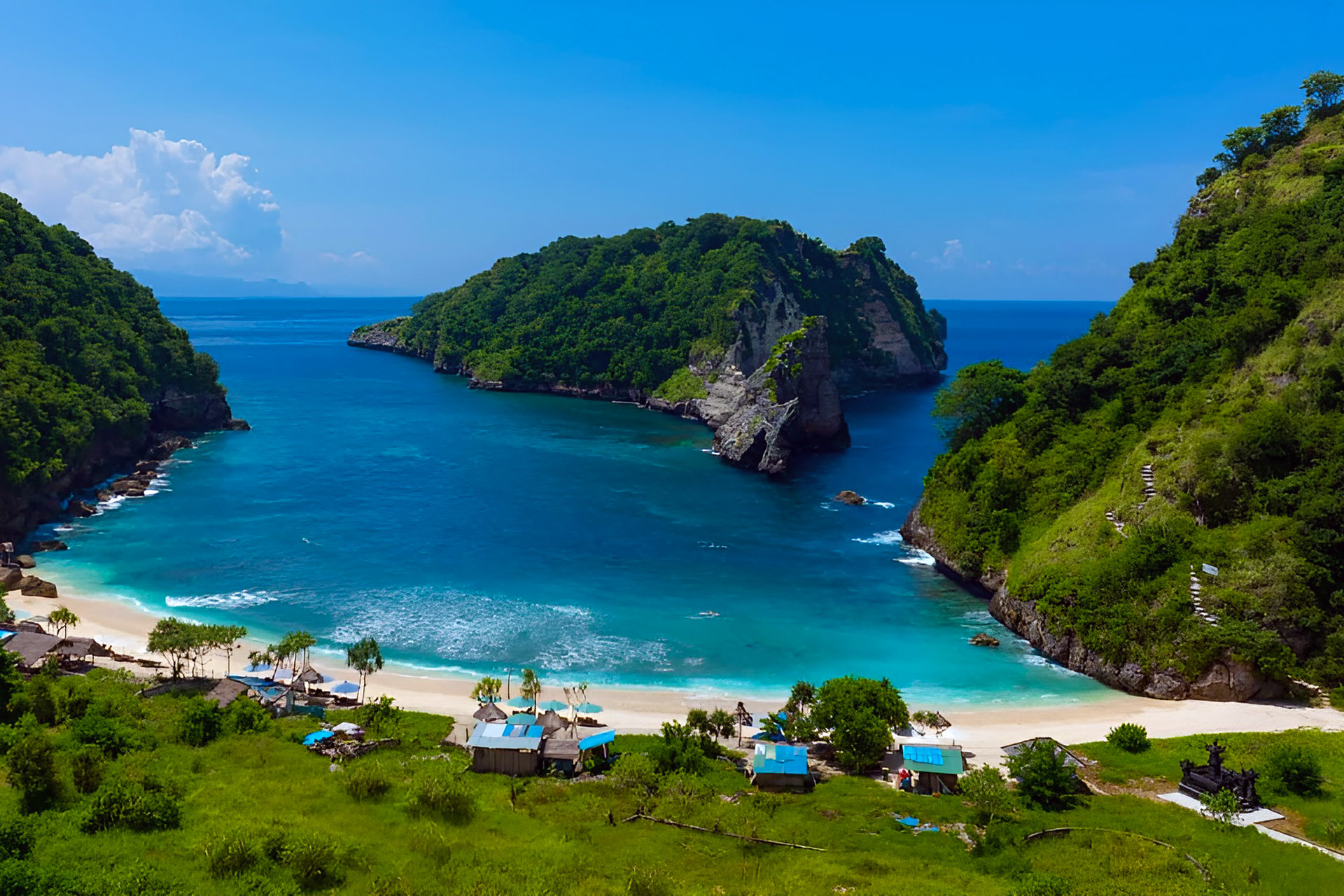
If Diamond Beach feels like an adventure earned through a steep descent, Atuh Beach Nusa Penida is its gentler neighbor — calmer, more inviting, and often described as a little slice of paradise where families linger and mornings glow with color. Just a short walk from Diamond, the two beaches share the same dramatic coastline yet offer completely different personalities.

Atuh is a sweeping crescent of soft white sand, hugged tightly by towering cliffs on both sides. Offshore, jagged rock arches rise from the sea, carved over centuries by wind and waves, forming natural gateways where the tide rolls in and out. It’s a scene of both strength and serenity: the cliffs stand proud and immovable, while the ocean moves gracefully around them.
Unlike Diamond Beach, where currents make swimming risky, Atuh is far more swimmable and family-friendly. At low tide, shallow pools form along the sand, creating natural playgrounds for children to splash and explore.
The water is calmest in the early morning, when the tide is gentle and the beach is bathed in golden light — which is also why Atuh is one of the island’s most spectacular sunrise spots. Watching the first sun climb over the horizon, painting the ocean in shades of pink and gold, is a memory that stays with you long after you’ve left.
Practicality is part of Atuh’s charm. A small parking area makes access straightforward, and while you still need to descend steps, they’re much easier and less intimidating than Diamond’s cliff-carved stairs. Down on the sand, a handful of warungs (local food stalls) line the beach, offering fresh coconuts, nasi goreng, and shade under simple umbrellas. It’s the kind of place where you can spend hours without noticing time pass — swimming, lounging, and snacking between dips.
For photographers, Atuh’s wide arc of beach framed by cliffs is best captured at dawn, though mid-morning also works well when the water is at its clearest. For travelers, the beach is best enjoyed slowly: wade in the water, sip a coconut, watch the fishing boats bob offshore, and let the rhythms of East Nusa Penida slow you down.
Where Diamond Beach dazzles with drama, Atuh offers balance — a sense of peace and comfort, a place where the ocean feels like a companion rather than a challenge. Together, they form a pair: two neighbors telling different sides of Nusa Penida’s east coast story.
Thousand Islands & the Famous Tree House
Stand at the edge of East Nusa Penida’s cliffs, and it feels as if the island suddenly splits into fragments — rugged outcrops rising from the turquoise sea, each one a tiny “island” of its own. This is the Thousand Islands Viewpoint Nusa Penida, a vantage point so dramatic it looks like something carved straight out of a postcard. The panorama stretches wide: jagged limestone islets crowned with green, rolling waves breaking at their base, and beyond them, the endless blue of the open ocean.

It’s a view that doesn’t just impress; it overwhelms. Many travelers say this is the moment East Nusa Penida reveals its raw power, a place where you truly understand how untamed the island still is. The early morning sun casts golden light over the cliffs, creating shadows and depth that make the scene even more surreal.
Tucked into this landscape is one of the island’s most photographed treasures: the Rumah Pohon tree house. Perched precariously on a cliffside tree, its wooden balcony overlooks the ocean and the Thousand Islands below. For many visitors, it’s less about the tree house itself and more about the view it frames — the perfect backdrop for that once-in-a-lifetime photo.
Today, the Rumah Pohon tree house has become Instagram-famous, and with fame comes a little practicality to consider. There’s a small fee if you want to take pictures here, and you may need to wait your turn during busy hours.
Some travelers choose to stay overnight (basic accommodation with shared facilities), which rewards them with the luxury of having sunrise all to themselves, long before day-trippers arrive.
Getting here isn’t just a simple stroll. From the parking area, a steep dirt path and rough steps lead down to the viewpoint and tree house. It’s manageable for most visitors, but good shoes and a cautious pace are recommended, especially if you’re making the trek in the dim pre-dawn light for sunrise. The payoff, however, is spectacular — and unforgettable.
For photographers, this is one of East Nusa Penida’s best sunrise spots. The rising sun paints the cliffs and water with shifting shades of orange and pink, turning every frame into something magical.
Even without a camera, the view leaves you with the kind of memory that feels etched into your soul.
The Thousand Islands Viewpoint and Rumah Pohon are more than just attractions; they’re symbols of what makes East Nusa Penida so unique — a blend of raw, natural grandeur and intimate, human-scale encounters. Here, at the cliff’s edge, you don’t just see the island’s beauty; you feel its wild heart beating beneath the waves.
Insider’s Picks: Best Sunrise Photo Spots on East Nusa Penida
- Thousand Islands Viewpoint – for sweeping panoramas of offshore islets.
- Rumah Pohon tree house – for the iconic cliffside shot.
- Atuh Beach – where the sun peeks over the horizon, lighting up the bay.
Teletubbies Hill: Bali’s Unexpected Pastoral Scene
Not every corner of East Nusa Penida is about cliffs plunging into wild seas. Sometimes, the island surprises you with something gentler, even whimsical. That’s the feeling you get at Teletubbies Hill Nusa Penida, a landscape so soft and round it almost looks cartoonish — as if the earth itself decided to play.

Here, the hills roll in waves of green, their smooth domes dotted with grasses and shrubs. During the rainy season, the entire area glows with fresh color, creating an almost surreal backdrop that feels more like a dream than real geography. It’s no wonder locals nicknamed it after the cheerful children’s TV show — the resemblance is uncanny.
Wander a little further, and you’ll notice how different the atmosphere is compared to East Nusa Penida’s dramatic cliffs and beaches.
There’s no roar of waves, no dizzying drop-offs. Instead, it’s quiet and pastoral, with gentle breezes brushing over the hills and the occasional farmer tending to the land. The aesthetic is calm, rounded, and friendly — a different kind of beauty that adds depth to your journey across the island.
For photographers, Teletubbies Hill is best visited in the early morning or late afternoon when soft light casts long shadows, accentuating the curves of the hills. Sunrise, in particular, paints the landscape gold, making it look even more enchanting. Unlike some of Penida’s cliffside attractions, there’s no strenuous climb required here — just a simple walk from the parking area.
Though not as famous as Diamond or Atuh Beach, Teletubbies Hill stands out as one of Nusa Penida’s hidden gems — a reminder that beauty can be gentle as well as dramatic.
It’s a place where families can let children run free, where couples can sit hand in hand watching the sun paint the sky, and where travelers can simply stop, breathe, and enjoy a playful pause in their adventure.
So, after cliffs and oceans, let Teletubbies Hill be your moment of levity — a scene straight out of a fairytale, proving that East Nusa Penida has more than one way to steal your heart.
Inside the Heart of the Island: Goa Giri Putri Temple
At first glance, Goa Giri Putri doesn’t seem like much. On the winding eastern road of Nusa Penida, you’ll spot a small shrine and a narrow opening in the limestone cliffside. But once you crouch down and slip through the tiny entrance, the world changes. Suddenly, you’re standing inside a vast cavern, the roof arching high above like the ribs of the earth itself. Dim light flickers against the rock walls, incense fills the air, and chants echo softly in the distance. You’ve entered Goa Giri Putri Temple Nusa Penida, one of the island’s most profound cultural attractions.
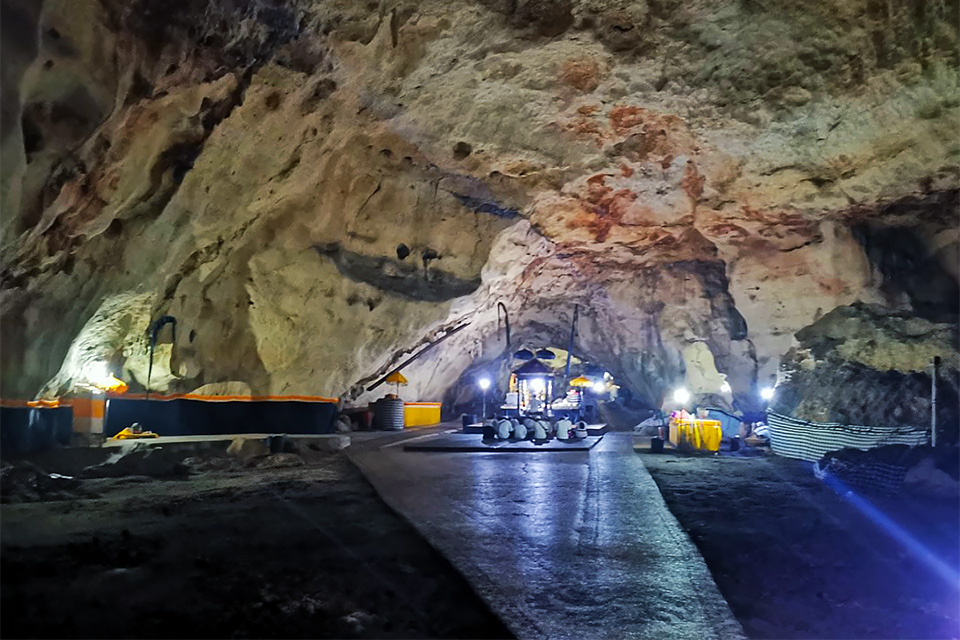
This cave temple isn’t just a curiosity — it’s a spiritual hub where the local Balinese community gathers for important Hindu ceremonies. What makes it unique is its blend of traditions. Inside, you’ll find shrines that honor Hindu deities alongside influences from Buddhist practices, reflecting centuries of spiritual interconnection across the archipelago. Pilgrims come here to seek blessings, purification, and guidance, making the temple a living, breathing part of Nusa Penida’s cultural fabric.
The sheer size of the cave is awe-inspiring. It can accommodate hundreds of worshippers during major ceremonies, yet when you visit at quieter times, the echo of your footsteps and the scent of incense create an atmosphere that feels intimate and deeply moving.
It’s a place where the island whispers its history, not through cliffs and beaches, but through prayer and ritual.
Practical details are important here. A sarong and sash are required to enter, and you can rent them at the temple entrance for a small fee. There’s also a modest donation expected, which goes toward temple upkeep. As with all sacred spaces in Bali, respectful behavior is essential: keep your voice low, move gently, and avoid disturbing ceremonies in progress. Photography is allowed in some areas, but always ask first — and remember that this isn’t a tourist attraction in the casual sense, but a working temple.
What sets Goa Giri Putri apart is how unexpected it feels. On an island known for its dramatic seascapes, here is a doorway into its spiritual heart — literally carved inside the earth. Visiting connects you not only with Nusa Penida’s landscapes but also with its people, their beliefs, and their traditions.
To enter Goa Giri Putri is to step not just into a cave, but into centuries of faith and ritual.
Suwehan Beach: The Hidden Crescent of Blue
Some places in Nusa Penida make you work a little harder — and Suwehan Beach is one of them. Tucked beneath towering cliffs on the island’s southeast coast, this is not the beach you stumble upon by accident. It’s the beach you earn. After winding through narrow village roads, you’ll reach a trailhead that quickly turns into a steep descent of stone steps, shaded by wild greenery. Every step downward builds anticipation until, at last, the view opens: a perfect crescent of white sand framed by dramatic cliffs, with the turquoise ocean stretching endlessly beyond.
The beach feels like a secret, even though more travelers are beginning to discover it. Unlike Diamond or Atuh, Suwehan is often empty enough that you might share it with just a handful of others — or with no one at all.
The signature landmark here is a striking triangular rock formation rising from the water, a natural monument that seems to slice the waves in two. At sunrise, the entire scene glows in shades of gold and pink, turning Suwehan into a natural theater of light and shadow.
Swimming at Suwehan can be tricky — currents are strong, and waves sometimes unforgiving — but when conditions are calm, the water is inviting. Even if you don’t step in, just standing barefoot on the soft sand, gazing at the cliffs and listening to the roar of the ocean, is enough to make the hike worth it. This is a place to disconnect, to let the wildness of East Penida remind you how small and lucky you are.
Insider’s Tips: Practicality Notes
- The descent takes about 20–30 minutes, and the climb back up can be strenuous, so bring water and wear proper shoes.
- There are no warungs on the beach itself, so pack snacks if you plan to linger.
- Early morning is the best time to visit, both for softer light and fewer visitors.
Suwehan is more than just another stop on the East Nusa Penida attractions trail. It’s one of the island’s hidden gems, a raw and untouched corner where cliffs, waves, and sky converge in perfect harmony. If Diamond Beach is the postcard and Atuh the family photo album, Suwehan is the secret journal entry — personal, wild, unforgettable.
At Suwehan, you don’t just find a beach. You find a piece of the island that still belongs only to the brave.
Tanglad Village: Threads of Tradition in East Nusa Penida
After beaches and cliffs, East Nusa Penida has another side that often surprises travelers: its living traditions. Nestled inland among rolling hills lies Tanglad Village, the island’s weaving heart. Here, the art of tenun ikat — handwoven cloth — is not just a craft but a heritage passed down through generations.
Visiting Tanglad is like stepping into a rhythm untouched by time.
Women sit on wooden looms, their hands moving quickly yet gracefully, guiding threads of cotton dyed in deep reds, earthy browns, and indigos. Each motif tells a story: about fertility, nature, or the spirits believed to watch over the island. Unlike mass-produced souvenirs found in Bali’s tourist hubs, the textiles here carry meaning — a cultural narrative woven into every strand.
What makes Tanglad so special is its authenticity. The village is not a tourist showpiece. Families here still rely on weaving for income, and buying directly from them helps sustain both the craft and the community. A scarf or sarong purchased here is more than just a keepsake — it’s a link to Nusa Penida’s soul.
For travelers seeking Nusa Penida hidden gems, Tanglad offers a different kind of treasure. Instead of turquoise bays, you find human connection; instead of a photo op, you gain a story to carry home. Photographers, too, will find beauty here: the vibrant threads stretched on looms, the concentration etched on a weaver’s face, and the rustic charm of the village backdrop.
Insider’s Tips: Quick Tips to Visiting Tanglad
- Tanglad is about a 30–40 minute drive from the east coast beaches, so it’s best combined with a day of inland exploration.
- There is no set entrance fee, but visitors are encouraged to support the weavers by purchasing textiles.
- Be respectful — ask before photographing, and remember these are working families, not a staged performance.
Cultural attractions like Tanglad are what make East Nusa Penida more than just dramatic landscapes. They add depth to the journey, grounding travelers in the island’s traditions. After witnessing the cliffs and waves, sitting in Tanglad’s quiet rhythm feels like finding the heartbeat of Penida itself.
Everything You Need to Know Before Exploring East Nusa Penida
Visiting East Nusa Penida attractions is equal parts adventure and reward — but unlike the west, exploring the east requires a little extra planning. Rugged cliffs, longer drives, and remote beaches mean you’ll spend more time on the road, yet the payoff is landscapes and cultural encounters that feel worlds away from Bali’s crowds. Here’s what to know before setting off.
Getting There from Bali
Most travelers begin their journey with a speedboat from Sanur, Kusamba, or Padang Bai to Toya Pakeh Harbor on Nusa Penida’s northwest coast. From there, it’s about 45–60 minutes by car or scooter to reach the eastern highlights like Diamond Beach or Atuh Beach. The ride is scenic but can be bumpy, especially once you veer inland or climb toward viewpoints.
Roads & Travel Time
Be prepared: the roads in East Penida are rougher than on the west. Expect narrow lanes, potholes, and steep inclines. If you’re confident, renting a scooter gives flexibility, but most visitors prefer hiring a car with driver for comfort and safety. Drives take longer than they look on the map — a 15 km journey can easily take 40 minutes.
Tour Options: Day Trip or Overnight?
You can experience the east in a Nusa Penida day trip from Bali, but it will be a long day with several hours on boats and roads. To fully enjoy the slower vibe, consider an overnight stay. This gives you time to catch sunrise at Atuh Beach or Thousand Islands Viewpoint without rushing.
- Private tours: Best for flexibility, comfort, and photography stops.
- Group tours: More affordable, but with fixed itineraries and limited time at each spot.
Safety & Comfort
- Stairs & paths: Many sites like Diamond Beach or Thousand Islands Viewpoint involve steep descents. Wear sturdy shoes, not flip-flops.
- Sun exposure: East Penida can be scorching, with little shade. Bring sunscreen, hats, and plenty of water.
- Sea conditions: Beaches here are often rough and not safe for casual swimming. Check tides and ask locals before entering the water.
- Connectivity: Expect patchy signal in parts of the east — download maps offline.
Preparation Matters
Exploring East Penida isn’t difficult, but it’s less forgiving than the west. Good shoes, patience on the road, and realistic expectations will make the difference between a tiring day and a memorable adventure. With the right mindset, the journey feels like stepping into a wilder, more authentic side of Bali’s neighboring island.
Need detailed info to lead your way? Check our comprehensive guide to Nusa Penida.
Insider’s Tips: Checklist for Exploring East Nusa Penida
- Plenty of water
- Sturdy shoes
- Reef-safe sunscreen
- Drone or camera for cliff panoramas
- Snacks for long drives
- Light jacket (for sunrise/sunset breezes)
Suggested Itineraries for East Nusa Penida
One-Day Highlights Tour
If you only have a single day, focus on the icons:
- Morning: Catch the earliest boat from Sanur and head straight to Diamond Beach. Arrive before the crowds for dramatic stairway photos.
- Late Morning: Walk to Atuh Beach, just around the corner. Enjoy a relaxed swim or a coconut at a local warung.
- Afternoon: Continue to Thousand Islands Viewpoint & Rumah Pohon Tree House. Snap that bucket-list shot with the rugged islets behind you.
- Late Afternoon: Finish at Teletubbies Hill for wide green landscapes before heading back west for your return boat.
This route is packed but doable with a private driver.
Two-Day Immersive Trip
For travelers who prefer a slower rhythm, two days give you breathing space:
Day 1:
- Explore Diamond Beach and Atuh Beach without rushing.
- Stay overnight at a cliffside bungalow near Atuh or closer to the harbor for convenience.
Day 2:
- Wake early for sunrise at Thousand Islands Viewpoint.
- Visit Goa Giri Putri Temple for a cultural immersion.
- Wrap up at Teletubbies Hill before returning to the west for your boat back to Bali.
This itinerary balances the dramatic natural wonders with a touch of spirituality.
Sunrise-to-Sunset Photography Plan
For photographers chasing the best light:
- Sunrise: Begin at Thousand Islands Viewpoint — it’s one of the best sunrise spots in all of Bali.
- Morning: Catch the golden light on Diamond Beach’s cliffs.
- Midday: Retreat to Atuh Beach for shade and seaside shots of warungs and boats.
- Afternoon: Explore Goa Giri Putri Temple when shafts of light enter the cave.
- Sunset: End at Teletubbies Hill with rolling green silhouettes against a glowing sky.
This plan requires stamina, but the photos will be unforgettable.
Insider’sTip: Travel Times in East Nusa Penida
Because roads in the east are rougher and distances longer, hiring a local driver or guided East Nusa Penida tour is highly recommended. Getting around East Nusa Penida takes longer than you think. Here’s a quick guide:
- Harbor (Toya Pakeh) → Diamond Beach: ~1.5–2 hours by car/scooter
- Diamond Beach → Atuh Beach: 5–10 minutes walk (they share the same parking area)
- Atuh Beach → Thousand Islands Viewpoint & Rumah Pohon: ~15 minutes drive
- Thousand Islands → Goa Giri Putri Temple: ~40 minutes drive
- Goa Giri Putri → Teletubbies Hill: ~30 minutes drive
- Teletubbies Hill → Harbor (Toya Pakeh): ~1 hour 15 minutes
Snorkeling in Nusa Penida: The Adventure You’ll Never Forget
East Nusa Penida doesn’t just add another destination to your Bali itinerary — it reshapes how you think of the island entirely. Here, mornings begin with golden light breaking over Diamond and Atuh Beaches, cliffs catching fire in the dawn. By midday, you’re standing at the Thousand Islands Viewpoint, the sea scattered with islets like emeralds on blue silk. Later, you wander barefoot over the rolling green of Teletubbies Hill, or bow your head through the narrow entrance of Goa Giri Putri Temple, stepping into a vast cavern alive with incense and prayer.
What sets East Penida apart is its duality: wild, raw landscapes paired with moments of deep serenity. You’ll find fewer crowds, slower rhythms, and a sense of discovery that makes every turn in the road feel like a secret shared only with you. For the traveler who seeks both beauty and meaning, the east offers both in abundance.
If West Nusa Penida is where the island dazzles, East Penida is where it whispers.
And those whispers stay with you — in the crash of waves against cliffs, the hush of dawn over quiet beaches, the echo of devotion in sacred caves. Long after you’ve returned home, it’s the textures of East Penida that endure: raw cliffs, soft hills, sacred stone, and endless horizons.
When you’re ready to explore this side of Bali, let HalloBALI help you get there safely and meaningfully. Our curated tours balance adventure with comfort, weaving hidden gems and natural wonders into one seamless journey. Because East Nusa Penida isn’t just another stop — it’s a story you’ll carry forever.
Insider’s Picks: Where to Stay in East Nusa Penida
- Simple cliff-top bungalows → Wake up with endless ocean views.
- Eco-lodges near Atuh Beach → Stay close to sunrise spots.
- Guesthouses in the hills → Quiet evenings with local hospitality.
Insider’s Tip: Sunrise & Sunset Magic in the East
- Sunrise → Best at Atuh or Diamond Beach.
- Sunset → Gentle glow over Teletubbies Hill or high cliff viewpoints. Carry a camera — but don’t forget to pause and simply breathe it in.
Our Nusa Penida East Tours
Immerse into the Untamed Beauty of Nusa Penida – East Day Tour
The Nusa Penida East Day Tour takes you to the island’s most dramatic and unspoiled landscapes. From the sparkling white sands of Diamond Beach to the sweeping panoramas of Thousand Islands Viewpoint, every stop immerses you in Bali’s raw, untamed beauty. You’ll also visit Atuh Beach, marvel at the cliffside Tree House, and soak in the rolling green Teletubbies Hills. Perfect for explorers seeking a less-crowded alternative to the west coast, this day trip blends breathtaking views with authentic island charm.

The Best of Nusa Penida in a Day – West & East Combo Tour
Experience the best of Nusa Penida in just one day with this all-inclusive combo tour. From the dramatic cliffs of Kelingking Beach and the natural arches of Broken Beach to the dreamy turquoise waters of Diamond Beach and the sweeping views of Thousand Island, this journey captures the island’s most iconic sights. With fast boat transfers, private transport, guide, and lunch included, you can simply enjoy the adventure and soak in the unforgettable beauty of Bali’s favorite island escape.