Step into the wild heart of West Sumba and discover Lapopu Waterfall—where water doesn’t just fall, it flows across layered rock terraces in a living, moving landscape. From its forest approach inside Manupeu Tanah Daru National Park to its serene lower pools, every step reveals a new perspective. Learn the best seasons for photography, swimming tips, nearby attractions like Weekuri Lagoon, and insider advice to explore safely and meaningfully.
This is more than a destination—it’s a sensory journey through one of Indonesia’s most underrated natural masterpieces.
The Sound Before the Sight
You don’t see Lapopu Waterfall first. You hear it.
A low, steady roar—soft at the edges, almost like wind moving through trees—begins to follow you as you step deeper into the forest. At first, it feels distant, easy to ignore. But with every step, it grows—layered, textured, alive. Not a single crashing sound, but many, overlapping. Like water folding over itself again and again.
This is how Lapopu begins.
Hidden within the dense greenery of Manupeu Tanah Daru National Park, the journey toward the waterfall feels less like approaching a destination and more like entering a different rhythm altogether. The air thickens. The light softens. The path narrows just enough to make you aware of every movement—your footsteps, your breath, the quiet anticipation building without asking for permission.
And then, without ceremony, the forest opens. Not dramatically. Not all at once. Just enough.
Through a break in the trees, you catch your first glimpse—not of the entire waterfall, but a fragment of it. A stretch of white water slipping over dark rock. Then another, higher up. Then another. Your eyes try to piece it together, but Lapopu resists being understood in a single glance.
You take a few more steps forward. And suddenly, it’s there.
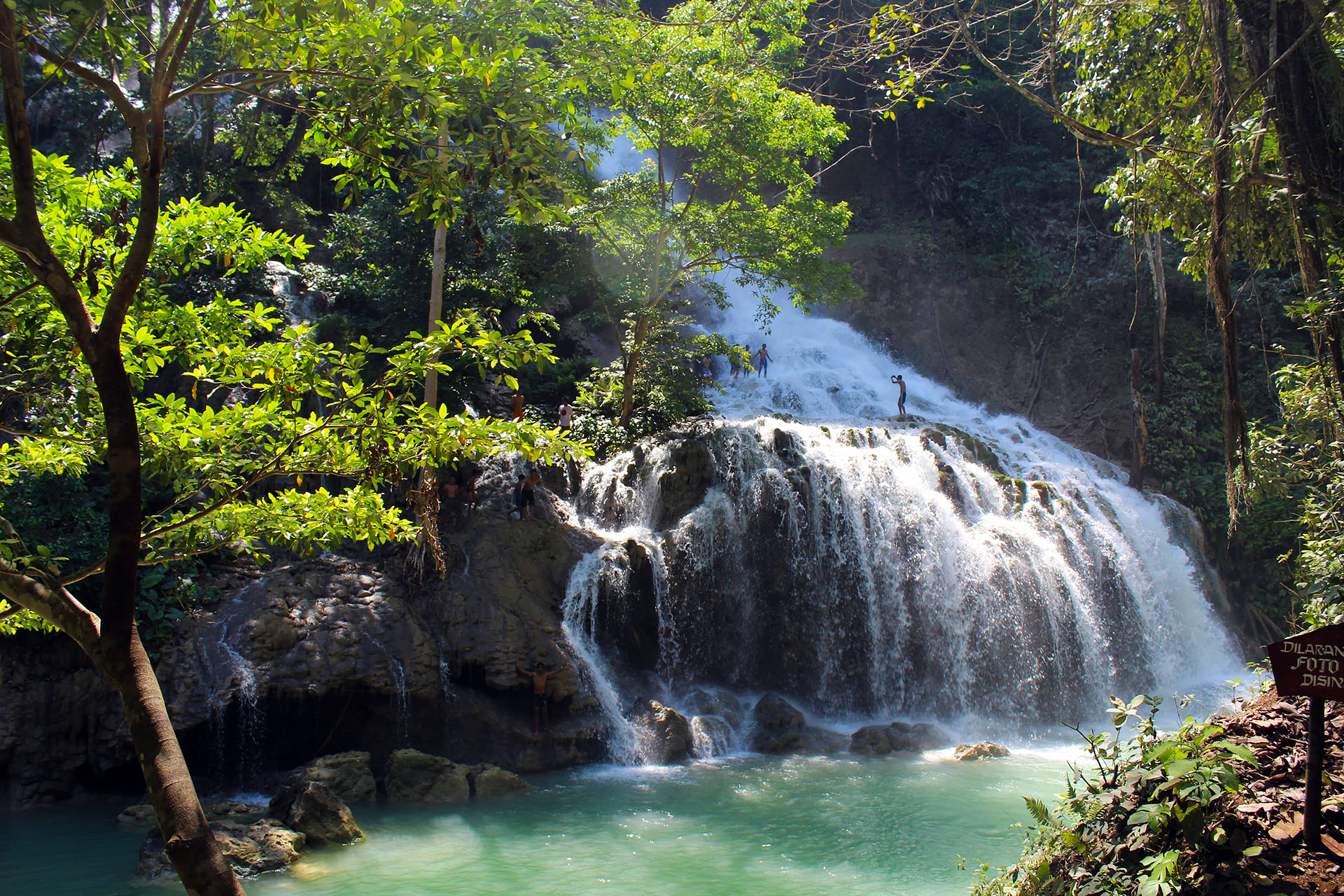
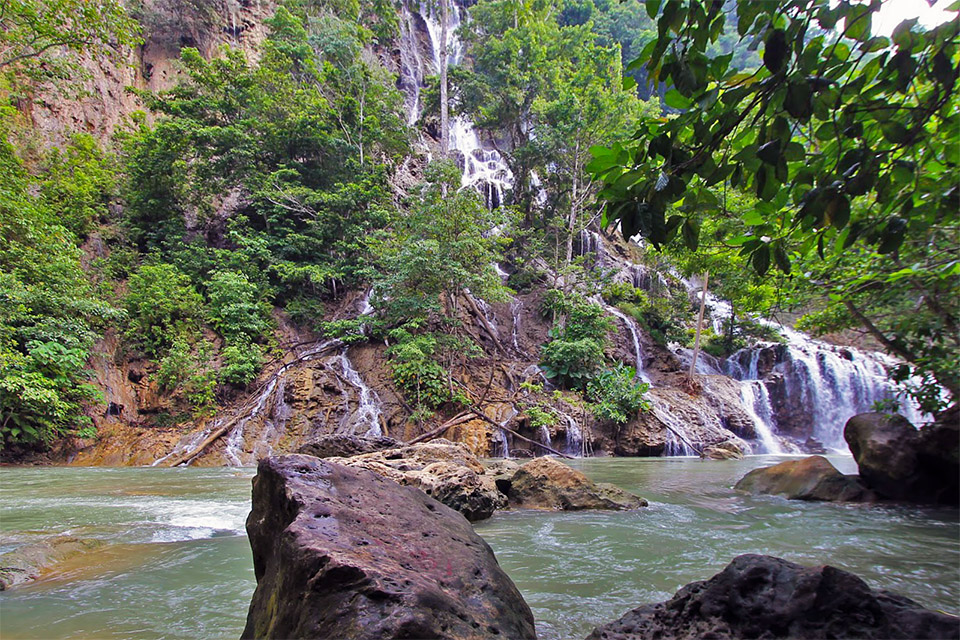
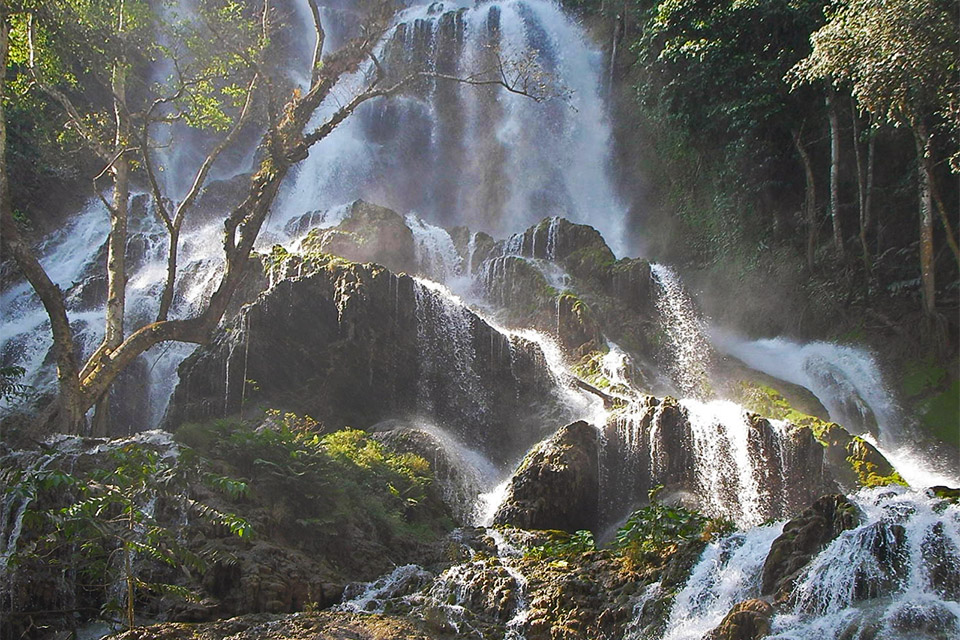
Wide. Layered. Unfolding across the landscape like a living staircase of water. Unlike the vertical drops you might expect from waterfalls, Lapopu spreads itself horizontally—tier upon tier, each level carrying its own character, its own pace. Some sections rush forward with urgency. Others drift gently, almost lazily, before slipping into the next descent.
It doesn’t overwhelm you. It draws you in.
There is something unexpectedly calming about its scale. Not because it is small—it isn’t—but because it reveals itself slowly, allowing you to absorb it piece by piece. The sound you heard earlier now makes sense. It isn’t a single roar. It’s a conversation between levels, a continuous movement that never quite repeats itself.
Mist rises lightly from the lower pools, catching the sunlight as it filters through the trees. The surrounding forest frames the waterfall without competing for attention, as if everything here understands its role in the composition.
And for a moment, you stop moving. Not because you have to—but because continuing forward feels unnecessary.
Lapopu doesn’t reveal itself all at once—it builds anticipation, layer by layer, just like the waterfall itself.
This is not the kind of place you rush through for a quick photo.
This is where you arrive, slowly—and stay longer than you planned.
Where Is Lapopu Waterfall? — Deep Inside Sumba’s Wild Heart
To understand where Lapopu Waterfall is, you have to let go of the idea of pinpoint destinations. Because Lapopu isn’t just a location you drive to—it’s something you enter.
Tucked deep within the protected wilderness of Manupeu Tanah Daru National Park, Lapopu sits in one of the most untouched regions of West Sumba. This is not coastal Sumba with its cinematic beaches and open horizons. This is the island’s inland soul—dense, green, and quietly powerful.
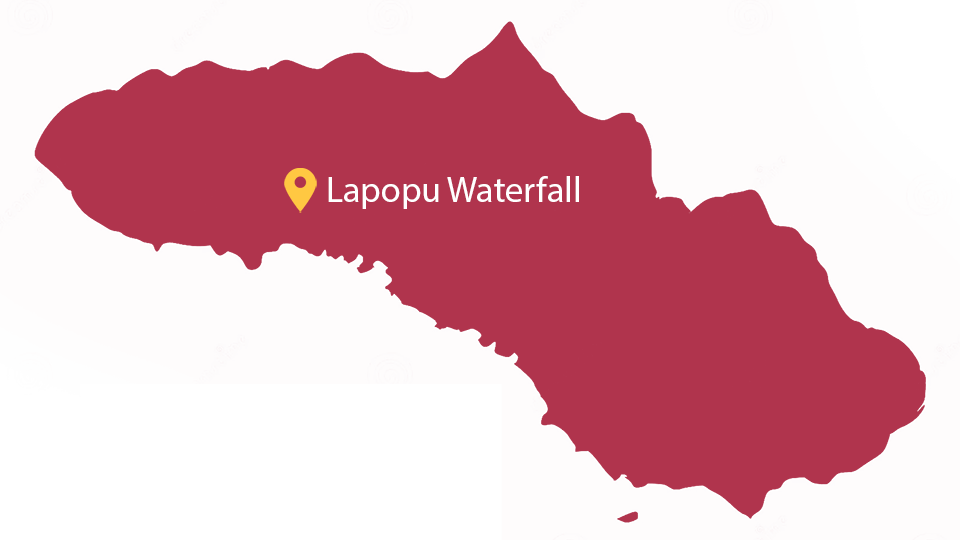
The journey begins in towns like Waikabubak or Tambolaka, where the roads slowly transition from paved certainty to something more unpredictable. Asphalt gives way to narrower paths. Villages appear and disappear. Traditional houses rise briefly on hilltops before dissolving back into the landscape. You pass grazing horses, children waving without hesitation, and stretches of silence that feel almost deliberate.
And then, without realizing it, you’re no longer just traveling through Sumba. You’re moving into it.
The final approach to Lapopu carries a different kind of energy. The air cools slightly as elevation shifts. The greenery thickens. The openness of Sumba’s savanna-like terrain begins to close in, replaced by forest that feels layered and alive. It’s here, somewhere between the last village and the first steps of the trail, that the sense of remoteness settles in—not as isolation, but as clarity.
There are no crowds pulling you forward. No obvious signs demanding attention. Just a quiet understanding that what lies ahead is worth the effort.
 Insider’s Insights: Location Snapshot
 Insider’s Insights: Location Snapshot
- Region: West Sumba, Indonesia.
- Setting: Inside a protected national park (lush forest, river valleys).
- Distance from Waikabubak: ~2–3 hours by car.
- Road condition: Mixed—paved roads transitioning into rural terrain.
- Last access point: Parking area near the park entrance, followed by a short trek.
For many, the idea of “remote” can feel inconvenient. Here, it feels essential.
Lapopu’s location is exactly what protects it from becoming just another stop on a crowded itinerary. It exists slightly out of reach—far enough to filter out casual visits, yet accessible enough for those willing to commit to the journey.
And that balance changes everything.
You don’t just go to Mbawana Beach. You journey into it.
By the time you arrive, the waterfall is no longer just something you came to see. It’s something you’ve already started to feel.
First Impressions — A Waterfall Unlike Any Other in Indonesia
There’s a brief moment—right after the forest opens—when your mind tries to categorize what you’re looking at. A waterfall, of course. But something feels … different.
Your eyes search for the usual cues: a dramatic vertical drop, a single powerful plunge, that familiar cinematic moment where water falls from height to basin in one uninterrupted line. But Lapopu resists that expectation. It doesn’t fall—it unfolds.
Instead of a single drop, the water spreads itself across a wide, terraced landscape. Tier after tier reveals itself not in competition, but in quiet continuity. Each level flows into the next with a rhythm that feels almost deliberate—as if the waterfall is pacing your experience, not rushing it.
You don’t just look at Lapopu. You begin to look along it. And that shift changes everything.
Compared to the sculpted canyon drama of Tanggedu Waterfall or the sacred, vertical intensity of Matayangu Waterfall, Lapopu feels expansive—less like a single focal point and more like a living landscape. It stretches horizontally, inviting your gaze to wander rather than settle.
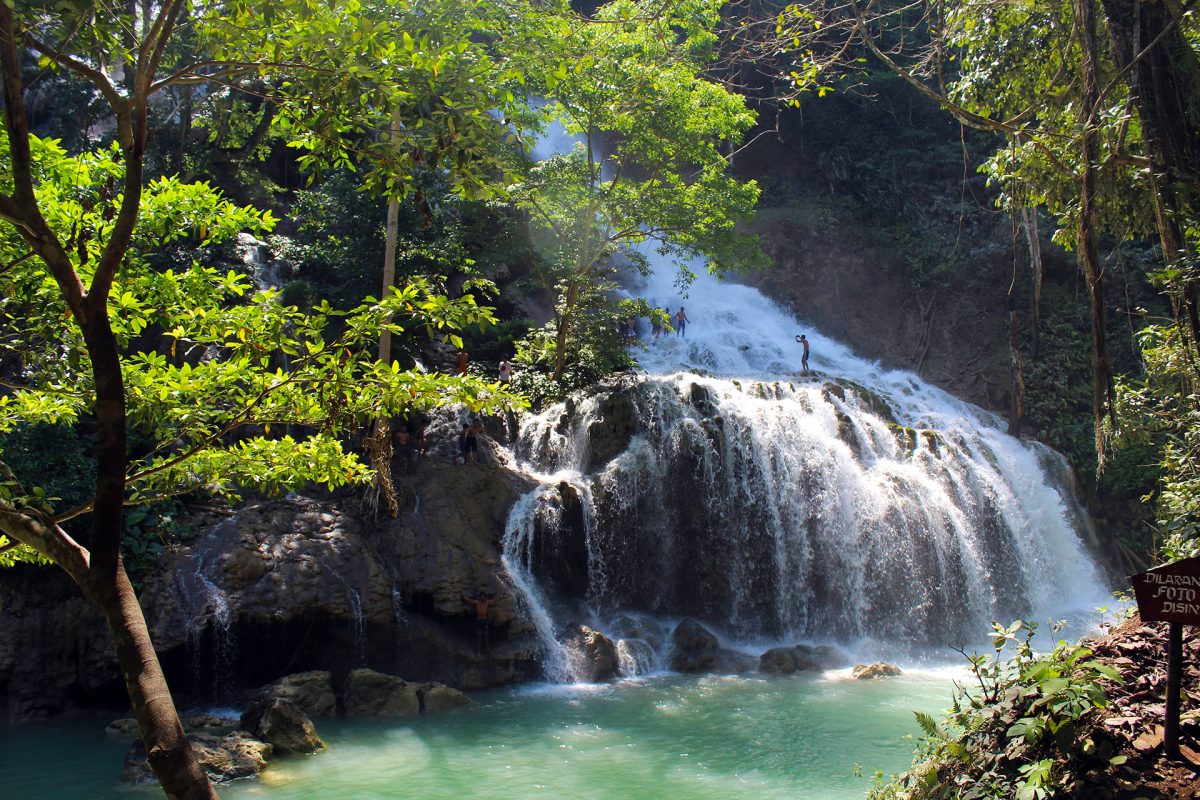
The water itself carries different personalities as it moves.
At the upper tiers, it appears gentle, almost hesitant—gliding over rock surfaces in thin, glassy sheets. As it descends, it gathers energy, breaking into textured streams that ripple, collide, and reform. By the time it reaches the lower levels, it softens again, pooling into calmer, reflective surfaces that mirror the surrounding forest.
It’s not dramatic in the way you expect. It’s layered in a way you don’t forget.
Sound behaves differently here, too. Instead of one dominant crash, you hear a composition—multiple flows interacting, echoing softly against rock and vegetation. It fills the space without overwhelming it, creating an atmosphere that feels immersive rather than imposing.
And then there’s the scale.
Not towering in a single vertical line, but wide enough to command presence without demanding attention. You can take it in from a distance, appreciating its full form—or move closer, discovering details that only reveal themselves step by step: the way light catches on moving water, the subtle shifts in color between wet stone and moss, the almost invisible mist rising from where water meets itself again.
You start to slow down. Not intentionally—but because Lapopu gives you no reason to rush.
Lapopu feels less like a waterfall you visit, and more like a landscape you step into.
And in that moment, standing somewhere between observation and immersion, you realize something quietly unexpected: You didn’t just arrive at Lapopu.
The Journey In — A Walk Through Sumba’s Living Forest
Before Lapopu fully reveals itself, it asks for something simple in return: your attention.
The walk from the entrance is not long—on paper, it’s an easy 15 to 30 minutes. But measuring it in time misses the point entirely. Because this is not a transition. It’s a slow recalibration.
The first few steps feel ordinary enough. A marked path, a gentle descent, the quiet sense that you’re heading somewhere defined. But almost immediately, the environment begins to shift. The air grows heavier with moisture. The light, once open and direct, filters into soft, scattered fragments through layers of leaves above.
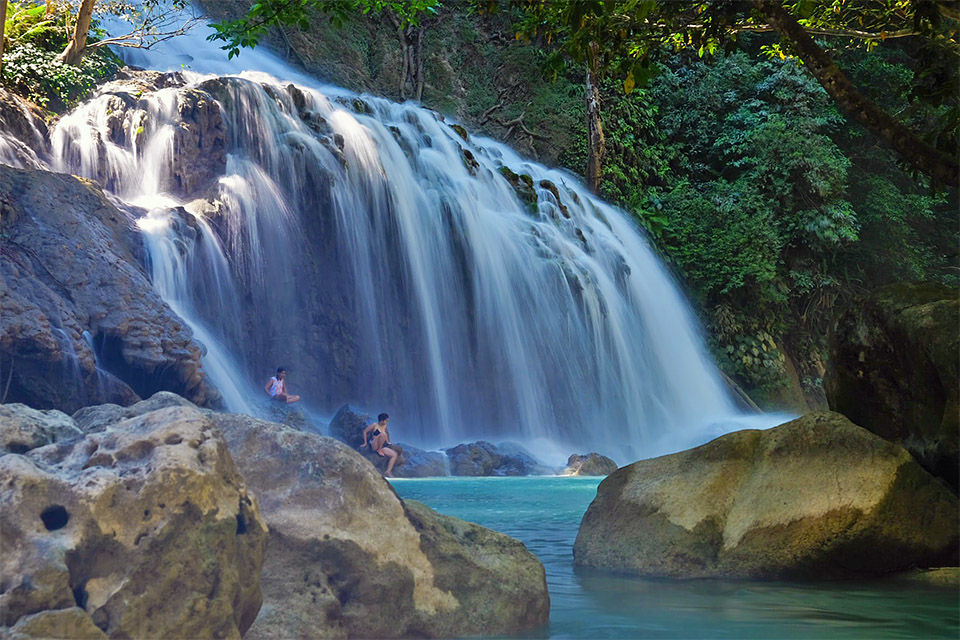
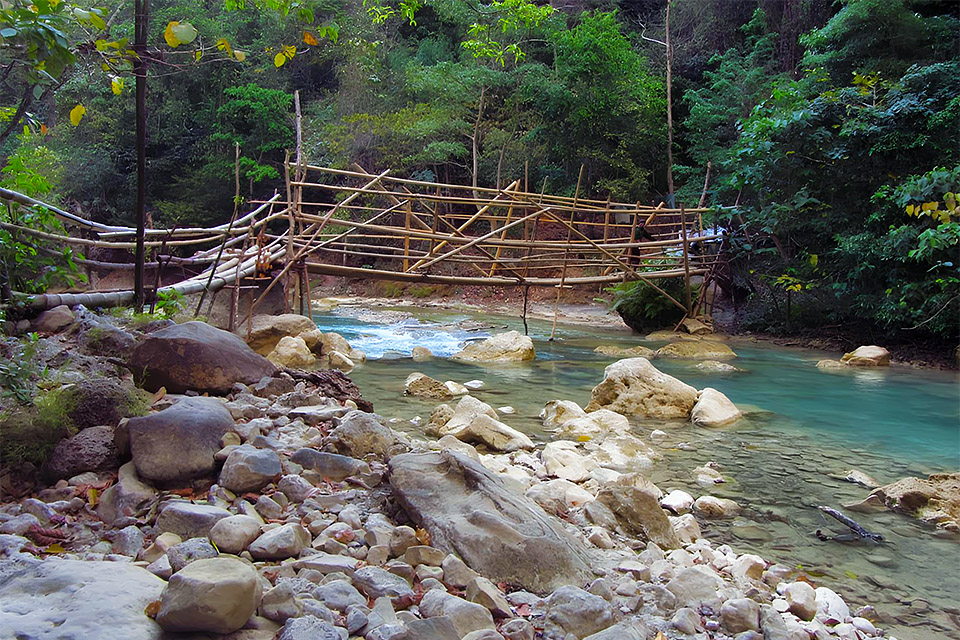
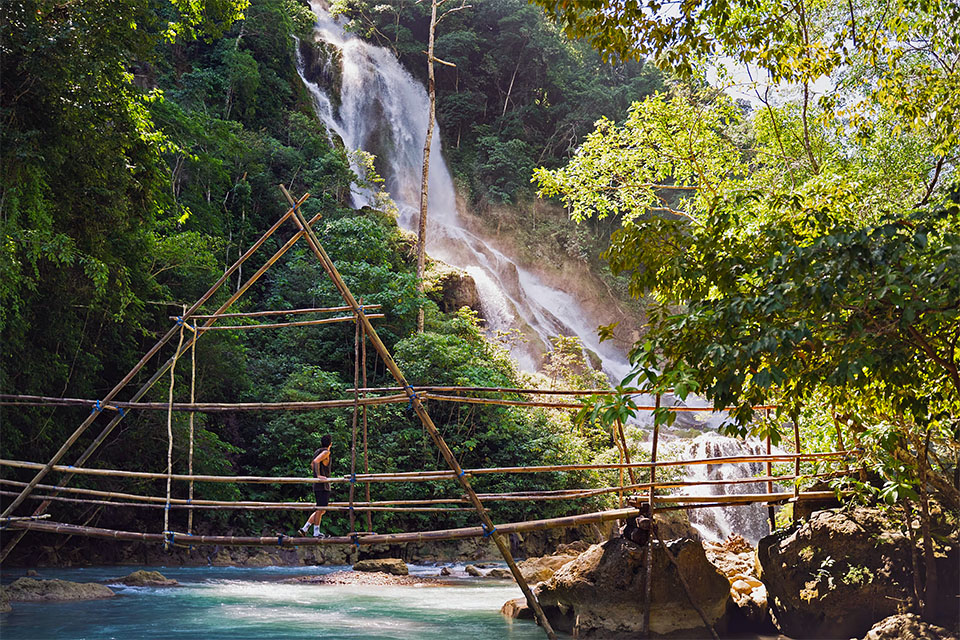
You begin to notice details you might otherwise ignore. The texture of the soil underfoot—slightly damp, slightly uneven. The way tree roots cross the path like natural steps. The occasional wooden bridge, simple and functional, guiding you over narrow streams that seem to appear without warning. Nothing here feels constructed for spectacle. Everything feels integrated.
And then the forest begins to speak. Not loudly. Not in a way that demands attention. But consistently. A distant bird call that echoes longer than expected. The rhythmic hum of insects that fades in and out like breath. Leaves shifting overhead—not from wind, but from something moving just out of sight. It’s not silence you walk through—it’s a living soundscape, layered and continuous.
Insider’s Tips: What to Expect on the Walk
- Trek difficulty: Easy to moderate, depending on weather conditions.
- Duration: ~15–30 minutes from the entrance.
- Footwear: Grip matters—paths can be damp and slightly slippery.
- Hydration: The humidity is real—bring water even for a short walk.
- Be ready early: First glimpses happen before the main viewpoint.
Somewhere along the path, you’ll hear it again. That sound. The waterfall.
Still unseen, but closer now. Fuller. More textured. No longer something you imagine—but something you follow.
It changes the way you move.
Without realizing it, your pace adjusts. Steps become quieter, more deliberate. Conversations disappear completely. There’s an unspoken instinct to listen—as if the forest is guiding you not just physically, but rhythmically. Just when the anticipation settles into something familiar, the path shifts again.
A slight opening. A subtle change in light. The faintest hint of mist carried in the air.
You’re close. But Lapopu doesn’t rush this moment. It holds it—just long enough for you to feel the build-up, to recognize the transition from approach to arrival.
There’s nothing extreme about this walk. No steep climbs. No technical challenges. And yet, it does something far more important—it prepares you. It slows you down just enough. Clears just enough noise. Aligns your senses in a way that makes the arrival feel not sudden, but earned.
The forest doesn’t just lead you to Lapopu—it prepares you for it.
By the time the waterfall finally comes into full view, you’re no longer arriving as an observer. You’re arriving as part of the rhythm that’s been building all along.
The Journey In — A Walk Through Sumba’s Living Forest
As the trail deepens, something subtle begins to shift—not in the landscape, but in you. The outside world loosens its grip.
There’s no signal pulling your attention away. No notifications. No background noise beyond what the forest chooses to offer. Even the concept of distance starts to blur. You’re no longer counting how far you’ve come or how far you have left—you’re simply moving forward, step by step, guided by instinct more than intention.
And that’s when the details sharpen. You notice how the light behaves differently with every turn. In some sections, it slips through the canopy in thin, golden lines, illuminating particles of moisture suspended in the air. In others, it disappears almost completely, replaced by a cool, shaded calm that feels like stepping into a different time of day.
The trail becomes more expressive. A gentle slope here. A slightly steeper descent there. Wooden steps appear where the earth softens, each one worn just enough to remind you how many have passed before—but not so many that it feels crowded or overused. This is a place that belongs more to nature than to tourism.
Occasionally, the forest opens just enough to let you catch fragments of what lies ahead. Not the waterfall itself—not yet. But clues. A sudden brightness through the trees. A stronger current in the small streams you cross. The air cools just slightly, carrying a freshness that feels almost like a preview. It’s subtle, but unmistakable.
The environment begins to reorganize itself around something larger. And then, the sound shifts again. Closer now. No longer layered into the background, but stepping forward—clearer, fuller, impossible to ignore. It no longer feels like something you’re following. It feels like something that’s pulling you in.
You round a final bend. The trees begin to thin.
And for a brief second, everything pauses—not physically, but perceptually. The kind of pause where your senses catch up with your movement. This is the threshold. Not marked by signs or gates, but by a feeling—a quiet recognition that you’re about to step out of the forest, and into something that has been building toward this exact moment.
The closer you get to Lapopu, the less it feels like you’re discovering it—and the more it feels like it’s been waiting for you.
You take a few final steps forward. And just like that, the journey through the forest becomes something else entirely: an arrival you’ve already begun to understand—before even seeing it in full.
The Waterfall Experience — Layer by Layer Wonder
Standing in front of Lapopu, the first instinct is to take it all in at once. And almost immediately, you realize you can’t. Not because it’s overwhelming—but because it isn’t designed to be understood in a single glance. Lapopu doesn’t present itself as one complete picture. It reveals itself in layers, each one asking for its own moment of attention.
You begin at the top—at least, with your eyes.
The upper tiers feel distant, almost delicate. Water glides over rock in thin, silvery sheets, spreading wide rather than falling fast. There’s a quietness to this section, a kind of restraint. It doesn’t announce itself. It simply exists, steady and continuous, like the beginning of a story that hasn’t decided where it’s going yet.
As your gaze moves downward, the energy shifts.
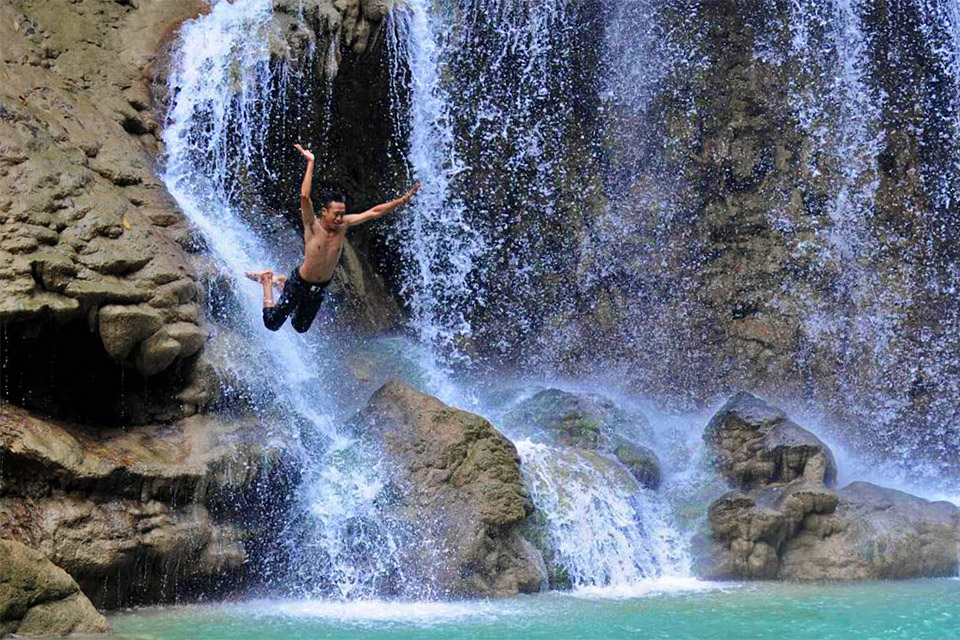
The middle layers carry more movement, more texture. Here, the water gathers momentum—splitting into multiple streams, colliding softly against uneven rock, creating patterns that change from one second to the next. It’s no longer just flowing—it’s interacting. With the landscape. With itself.
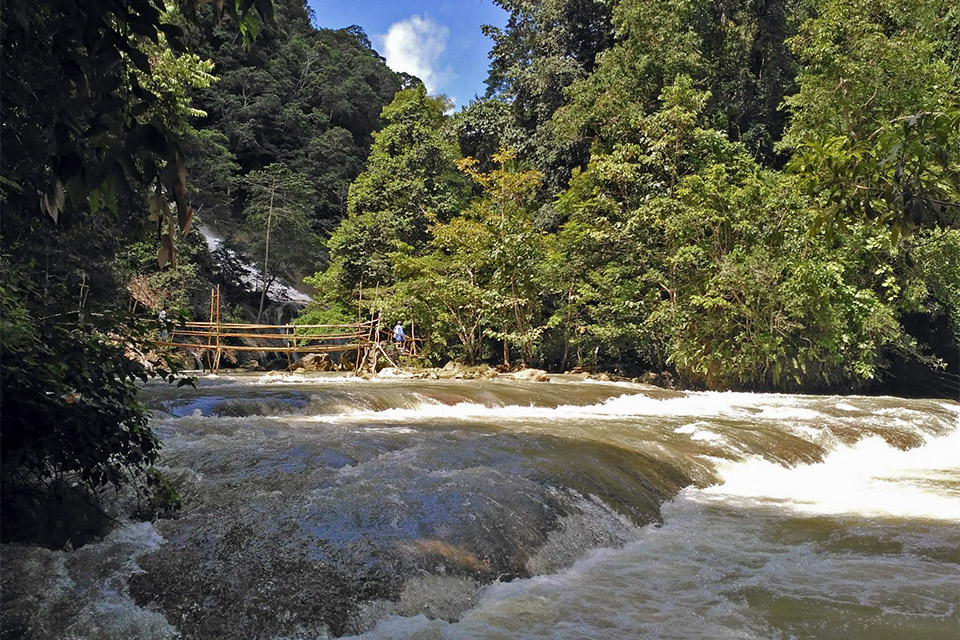
This is where Lapopu feels most alive.
Not chaotic. Not aggressive. But expressive.
And then, at the base, everything softens again.
The water settles into calmer pools, spreading out into surfaces that reflect the surrounding forest in subtle, shifting fragments. Light dances here differently—less about motion, more about stillness. If the upper tiers are the beginning and the middle of the conversation, the lower levels feel like a quiet resolution.
You start to understand the rhythm. Not linear. Not predictable. But cyclical. Movement → energy → calm. Again and again. It’s this repetition—this quiet looping—that makes Lapopu feel less like a spectacle and more like a presence. Something ongoing. Something that doesn’t begin or end with your visit.
You take a few steps closer. The sound changes again—not louder, but more detailed. You begin to distinguish individual flows, separate layers of water interacting in real time. The mist becomes more tangible, settling lightly on your skin. The air cools just enough to make you aware of it.
And suddenly, you’re no longer observing from a distance. You’re inside the experience.
There’s no single “best viewpoint” here. No one perfect angle defines Lapopu. Move slightly to the left, and the composition changes. Step closer, and details replace scale. Step back, and the full structure returns—but differently than before. Every position reveals a new version of the same waterfall.
Lapopu is not a single moment—it’s a sequence, unfolding slowly as you move.
You begin to notice smaller details you missed at first: The way water splits around a rock and reunites seconds later. The subtle color shifts between wet stone, moss, and flowing current. The almost invisible spray that catches light at just the right angle before disappearing again.
Time stretches here. Not dramatically—but enough that minutes feel less defined. You stop checking. Stop measuring. Stop thinking about what comes next. Because Lapopu doesn’t push you forward. It holds you exactly where you are. And for a place that is constantly moving, that might be the most surprising thing of all: It makes you want to stay still.
Can You Swim at Lapopu? — What to Know Before You Dive In
After standing still for so long—watching, listening, absorbing—the urge comes naturally: to step in. Not dramatically. Not with a dive or a splash. But slowly, almost cautiously, as if entering Lapopu requires the same quiet respect as approaching it. The lower pools are where this instinct finds its place. Here, the water gathers itself after its layered descent—calmer, clearer, and more inviting than the tiers above.
On a warm Sumba day, the contrast is immediate. The air remains humid, but the water carries a refreshing coolness that feels earned after the walk through the forest.
Yes—you can swim at Lapopu.
But like everything here, it comes with an understanding: this is not a resort pool, and it doesn’t behave like one. The surface may appear still, but underneath, the terrain is shaped by nature—uneven rock formations, shifting depths, and currents that change subtly depending on the season. Some areas are shallow and perfect for wading. Others deepen more quickly than expected.
It’s less about jumping in—and more about feeling your way in. Step by step. Testing each surface before committing your weight. Letting your body adjust gradually to the temperature, to the texture, to the quiet unpredictability of a natural setting that hasn’t been designed for convenience.
And that’s exactly what makes it special.
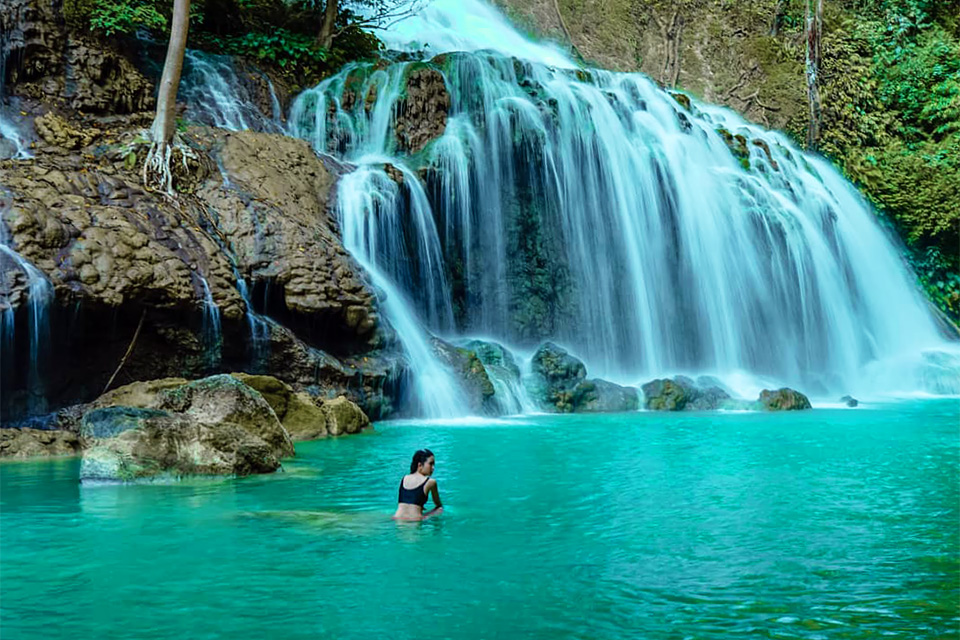
There are no boundaries marked with ropes. No signs telling you where to stand or how far to go. Just your own awareness, sharpened by the environment itself.
💡Insider’s Tips: Swimming Smart
- Best area: Lower pools where the water is calmer.
- Watch your step: Rocks are slippery and uneven.
- Flow awareness: Avoid areas where water is actively descending.
- After rain: Currents can strengthen—observe before entering.
- What to wear: Lightweight swimwear + water-friendly footwear.
The experience of being in the water is different from what you might expect. There’s no loud energy. No crowd-driven excitement. Just the quiet sensation of cool water moving gently around you, the distant sound of cascading tiers above, and the feeling of being fully present in a place that asks nothing from you except awareness.
You don’t swim here for adrenaline. You enter the water to be part of the rhythm you’ve been watching all along.
Lapopu invites you in—but only if you respect its rhythm.
And if you do—if you move carefully, observe patiently, and let the environment guide your decisions—you’ll find that the experience of Lapopu doesn’t end at the water’s edge. It deepens within it.
Best Time to Visit — When Lapopu Is at Its Most Magical
Lapopu is not a place that looks the same twice. It shifts—quietly, continuously—with the seasons, the light, even the time of day. And while it never loses its presence, how you experience it can change in ways that feel almost personal.
The first layer of this transformation comes with the seasons.
During the rainy months, Lapopu becomes fuller, louder, more assertive. The tiers blur slightly as water volume increases, turning the entire formation into a more continuous cascade. The surrounding forest deepens in color—greens becoming richer, the air heavier with moisture.
It feels alive in a more immediate, almost primal way.
In contrast, the dry season reveals structure. With less water flowing, each tier becomes more defined. You begin to see the architecture of Lapopu more clearly—the way the rock shapes the water, the subtle separations between levels, the negative spaces that are hidden during peak flow.
It’s quieter, more detailed, and in many ways, more contemplative.
Neither is better. They are simply different expressions of the same place. And then there is the matter of light.
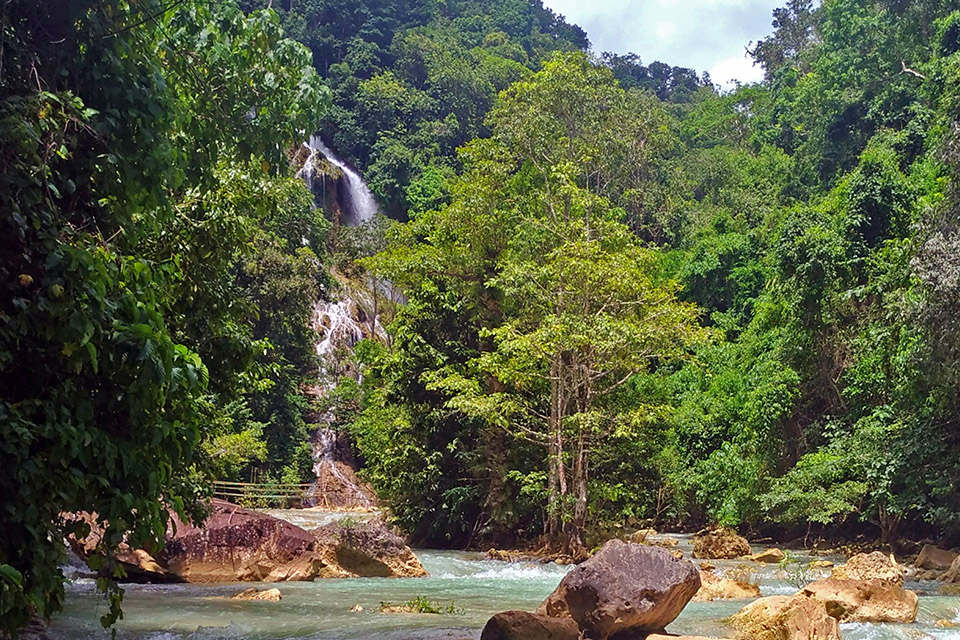
Arriving early in the morning changes everything.
The forest is still waking up. The air feels cooler, lighter. Sunlight filters gently through the canopy, diffused and soft, wrapping the waterfall rather than striking it directly.
The mist becomes visible in a way it doesn’t later in the day—catching light in fleeting, almost invisible patterns.
By midday, the light sharpens. Shadows shorten. Details become more pronounced, but the softness fades. The experience becomes clearer, more defined—but slightly less atmospheric. Late afternoon brings warmth, but not always clarity. Depending on the season and surrounding terrain, the light can become uneven—beautiful in moments, but less predictable.
So if there is a “best” time, it’s not about perfection. It’s about alignment.
Insider’s Insights: Timing Your Visit
 Insider’s Insights: Timing Your Visit
- Best time of day: Early morning (around 7–10 AM) for soft light and fewer visitors.
- Best season: End of rainy season (water is strong, but still defined).
- Dry season: Clearer tier and easier footing.
- Photography: Diffused light enhances depth, texture, and mood.
- Atmosphere: Earlier = quieter, more immersive.
What matters most is not choosing the “right” time—but understanding what kind of experience you want. Do you want to feel the power of Lapopu at its fullest? Or do you want to study its details, layer by layer? Either way, the waterfall meets you there.
Lapopu changes with the seasons—but its magic is constant.
And perhaps that’s the most important thing to remember: You’re not chasing the perfect moment. You’re stepping into one that’s already waiting.
Photography Guide — Capturing Lapopu’s Scale and Soul
Photographing Lapopu is not about finding the shot. It’s about understanding that there isn’t one. From the moment you raise your camera—or your phone—you’ll notice something unusual: every step you take changes the story entirely.
Move a few meters to the side, and the tiers realign. Step closer, and the sense of scale dissolves into texture. Step back, and the composition widens again—but never quite the same way twice. Lapopu doesn’t offer a fixed frame. It offers possibilities.
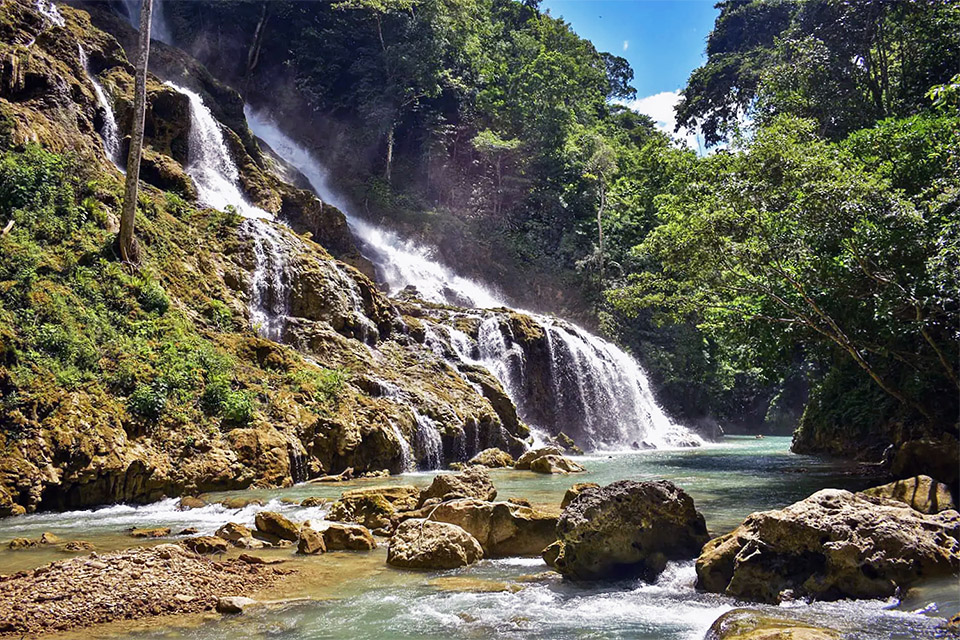
Start wide.
Let the full cascade fill your frame—not just vertically, but horizontally. This is where Lapopu’s uniqueness lives. Unlike towering waterfalls that demand height, Lapopu asks you to think in layers.
A wide-angle lens (or panorama mode on your phone) helps capture that spread—the way water travels across the landscape rather than simply falling through it.
Then, move in.
Closer to the middle tiers, the scene becomes more dynamic. Water splits, overlaps, and reconnects in constantly shifting patterns. This is where motion becomes your subject. Use a slower shutter speed if you can—the flowing water transforms into soft, silky ribbons that emphasize movement over detail. Or go the opposite direction: freeze the action with a faster shutter, capturing droplets suspended in time.
Insider’s Picks: Best Photo Spots
- Front viewpoint: Classic full view of Lapopu’s layered cascade.
- Side angles: Adds depth and dimension to the tiers.
- Lower pools: Perfect for reflections and foreground framing.
- Mid-level approach: Captures movement and texture up close.
There’s no right choice. Only different interpretations. And then, slow down even further. Look for details most people walk past. The thin line of water tracing a rock edge. The subtle green of moss deepening where moisture lingers. The moment light touches the surface just enough to create contrast—then disappears again.
These are not dramatic images. But they are the ones that stay with you.
Light, once again, becomes your collaborator. In the morning, it softens everything—ideal for capturing mood and atmosphere. Mist becomes visible. Shadows are gentle. The entire scene feels cohesive, almost painted. Later in the day, contrast increases. Highlights sharpen. Details pop—but at the cost of subtlety. It’s a different kind of image—more graphic, less immersive.
Insider’s Tip: Best Angle for Jaw-Dropping Shots
- Shoot slightly from a lower perspective, looking upward across the tiers to emphasize scale and layering.
And then there’s patience. Because sometimes, the best shot at Lapopu isn’t about where you stand—but when you wait. A passing cloud softens the light. A brief opening in the canopy illuminates a single tier. The water shifts just enough to create a new pattern.
It happens quickly. And then it’s gone.
Lapopu isn’t about one perfect photo—it’s about capturing movement.
In the end, the most compelling images from Lapopu won’t just show what it looks like. They’ll carry a trace of how it felt to stand there—surrounded by motion, grounded in stillness, and aware that no single frame can ever fully contain it.
Facilities & Entry Info — What to Expect on Arrival
After the long drive through West Sumba’s shifting landscapes and the quiet immersion of the forest walk, arriving at Lapopu feels refreshingly uncomplicated. There is no grand entrance. No dramatic gates or polished visitor centers announcing your arrival.
Instead, you’ll find something far more aligned with the spirit of Sumba itself—simple, functional, and quietly welcoming. A modest entrance area marks the beginning of the trail, often with a small post or shelter where local caretakers manage access. It’s easy to miss if you’re not paying attention, and that’s part of its charm.
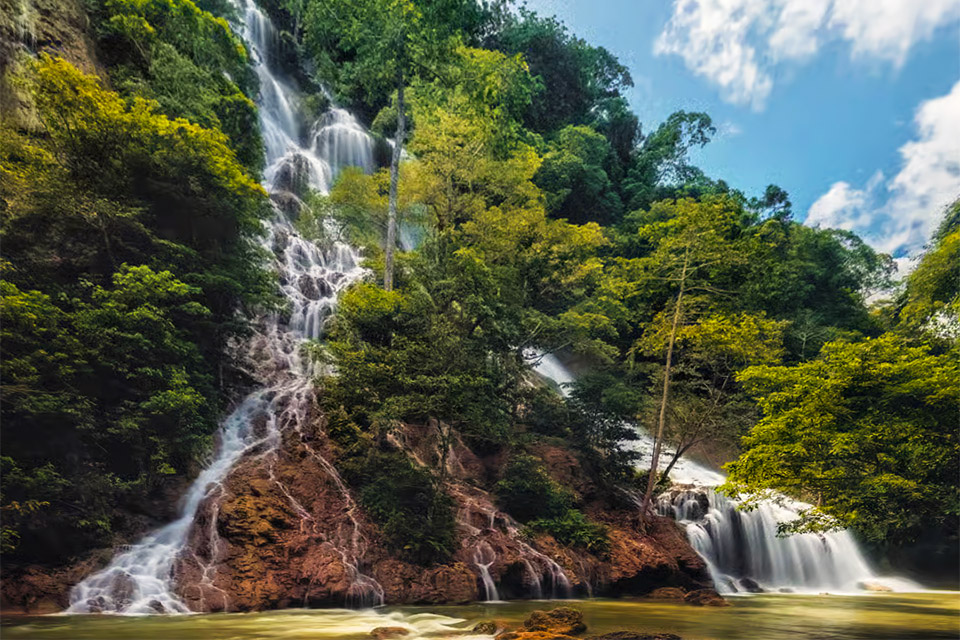
This is not a place built for crowds. It’s a place that has learned to accommodate visitors without losing its identity. The parking area is basic but sufficient—usually an open space where vehicles gather without strict structure. From here, everything transitions quickly from vehicle to foot, from movement to presence.
Entry fees are typically modest, paid directly on-site. There’s no online booking system, no timed entry slots—just a straightforward, local interaction that feels more human than transactional. It’s worth having small cash ready, not just for convenience, but as a sign of respect for the local system that maintains access to the area.
Facilities, as expected, are minimal. You may find simple rest areas or shelters near the entrance—places to pause, adjust your gear, or take a moment before beginning the walk. Basic toilets are sometimes available, but standards can vary, and it’s best to come prepared rather than rely on them.
And beyond that—there’s very little. No cafes. No souvenir shops. No structured amenities designed to extend your stay artificially. Because once you pass the entrance, the experience is no longer about facilities. It’s about the environment.
Insider’s Tips: What to Bring
- Water & snacks: No vendors inside the park.
- Cash for entrance fees and local contributions.
- Insect repellent: Forest can attract bugs.
- Essentials: Facilities are limited—come prepared.
- Light protection: Hat or cover for sun exposure before/after the trek.
There’s a certain clarity that comes with places like this. Without distractions, your focus sharpens. You prepare differently. You carry only what matters. And in doing so, the experience becomes more intentional—from the moment you arrive to the moment you leave.
Lapopu doesn’t offer comfort in the conventional sense—it offers something far more valuable: authenticity.
And once you step past the entrance, even that quiet infrastructure fades away. Leaving you with nothing but the path ahead—and everything it leads to.
Where to Stay — Best Bases Near Lapopu Waterfall
Lapopu is not a place you stay next to. It’s a place you travel into—and that distinction shapes how you plan your base. Unlike destinations where accommodation clusters around a single attraction, Lapopu sits quietly within the wilderness of Manupeu Tanah Daru National Park.
There are no resorts at its edge, no villas overlooking its tiers. And that’s exactly what preserves its atmosphere. So instead of asking “Where can I stay near Lapopu?”, the better question becomes: “Where do I want to experience West Sumba from?” Two main bases naturally emerge—each offering a different rhythm to your journey.
Waikabubak — The Cultural Heart of West Sumba
Closer to Lapopu and surrounded by traditional villages, Waikabubak feels grounded, authentic, and connected to Sumba’s deeper identity. Staying here means shorter travel time to the waterfall and easier access to inland experiences—megalithic villages, rolling hills, and daily life that unfolds without performance.
Accommodations tend to be:
- Comfortable but understated.
- Locally run or boutique in scale.
- Focused on function over luxury.
This is the choice for travelers who want immersion over indulgence.
In Waikabubak, you don’t just visit Sumba—you begin to understand it.
Tambolaka — The Gateway with Convenience
Further west, Tambolaka serves as the island’s main entry point, home to the airport and a wider range of accommodations.
Staying here offers:
- Easier logistics (especially for shorter trips).
- More hotel options across price ranges.
- Better infrastructure and accessibility.
The trade-off? A longer drive to Lapopu—but one that can be turned into part of the experience, passing through shifting landscapes that reveal Sumba’s diversity.
This is the choice for efficiency and flexibility.
Tambolaka makes Sumba easier—but never less beautiful.
Insider’s Picks: Best Hotels Near Lapopu Waterfall
- Boutique stays in Waikabubak: Ideal for proximity and cultural immersion.
- Eco-lodges in nature: Blends comfort with Sumba’s landscape.
- Mid-range hotels in Tambolaka: Reliable, practical, and accessible.
- Local guesthouses: Simple, authentic, and often warmly personal.
Wherever you choose to stay, one thing becomes clear quickly: In Sumba, accommodation is not just a place to sleep. It’s part of the narrative. The early morning departure toward Lapopu. The quiet return after hours spent in the forest The conversations, the stillness, the space to process what you’ve seen. All of it begins—and ends—where you stay.
In Sumba, where you stay shapes how you experience everything.
And when the journey to a waterfall becomes as meaningful as the waterfall itself, your base is no longer just a logistical choice. It becomes part of the story you carry with you.
Pairing Lapopu — What Else to Explore Nearby
Lapopu rarely stands alone in a well-planned journey. Not because it needs companions—but because West Sumba naturally unfolds in clusters of experiences, each one revealing a different side of the island’s personality.
After spending time in the layered silence of Lapopu, the instinct is not to rush back—but to continue outward. From forest to coastline. From water in motion to water at rest. From shaded canopy to open horizon. And within a few hours’ drive, the landscape shifts dramatically again.
Waikuri Lagoon — The Stillness After the Fall
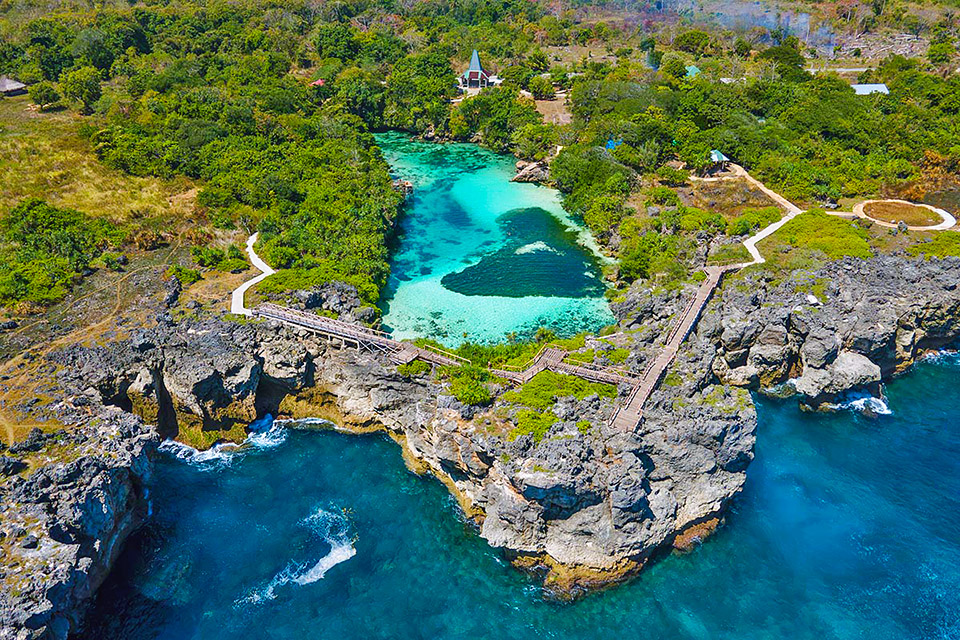
If Lapopu is a movement, Waikuri Lagoon is a pause.
A saltwater lagoon hidden between limestone edges, its surface stays almost unnaturally calm—like the island decided to hold its breath for a moment. The contrast is immediate. After Lapopu’s layered soundscape, Waikuri greets you with silence broken only by soft ripples.
You don’t arrive at Waikuri so much as you settle into it.
After Lapopu teaches you movement, Weekuri teaches you stillness.
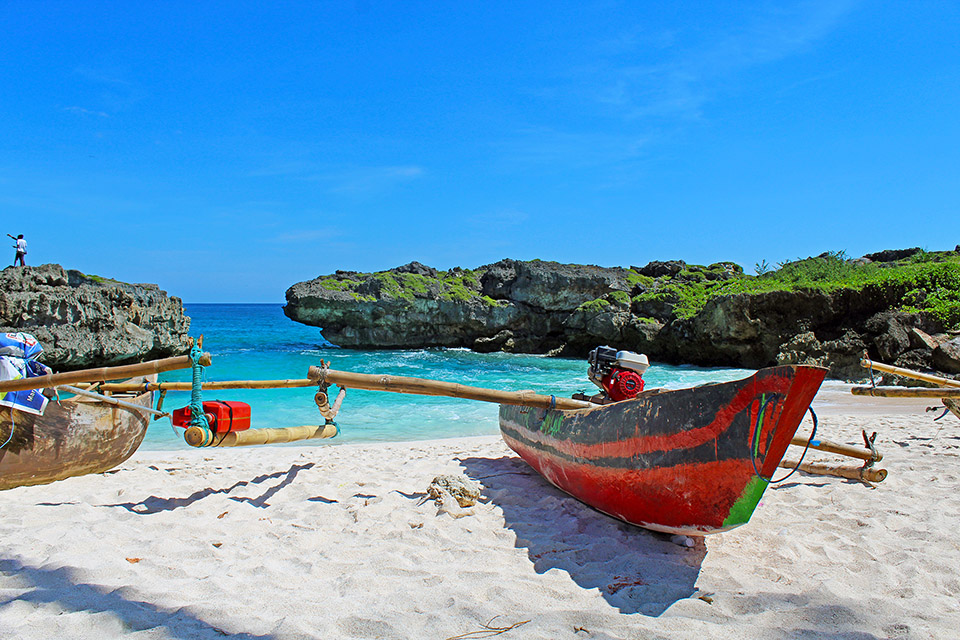
Mandorak Beach — Where the Ocean Meets Drama
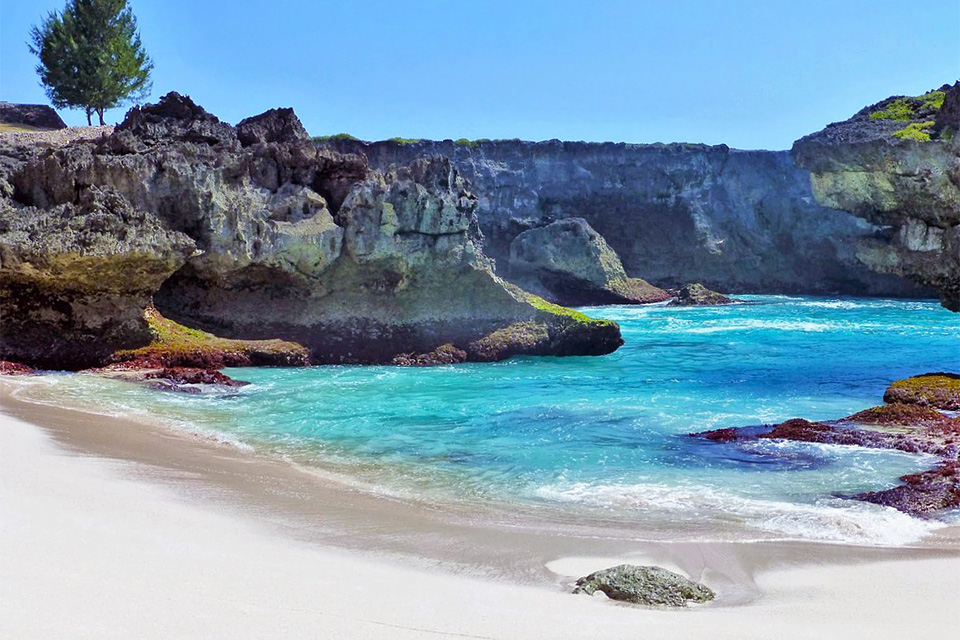
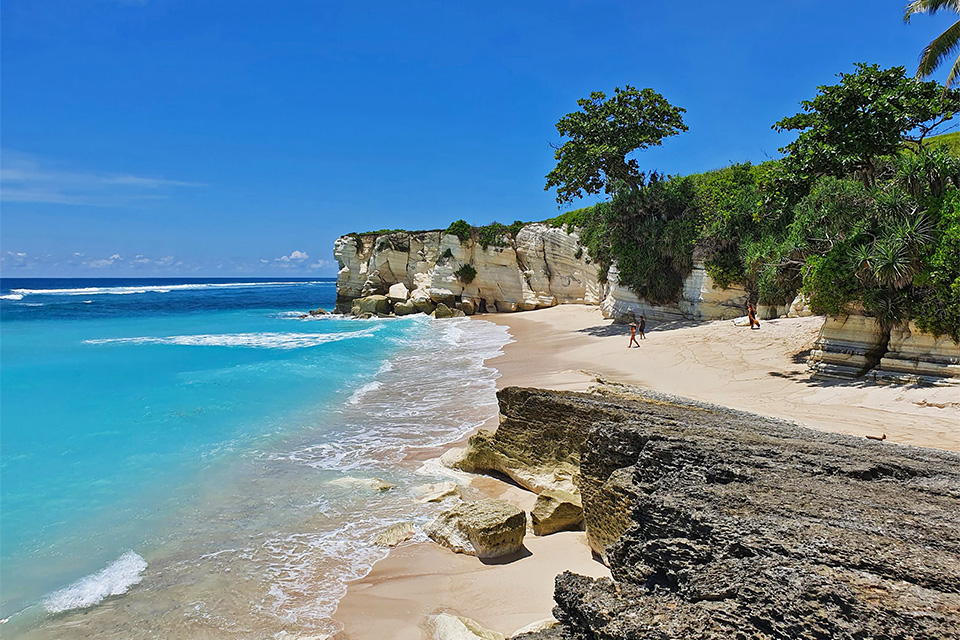
Just a short drive away, Mandorak Beach feels like the coastline exhaling after centuries of pressure. White sand sits between two towering limestone cliffs, forming a natural frame for the open sea beyond.
The energy here is different from Lapopu’s forest enclosure. Everything expands outward—wind, waves, space, light. It’s a place that feels designed for contrast photography and slow walking rather than long stays. You don’t do much at Mandorak. You just look.
And that is enough.
If Lapopu pulls you inward, Mandorak pushes you back into the horizon.
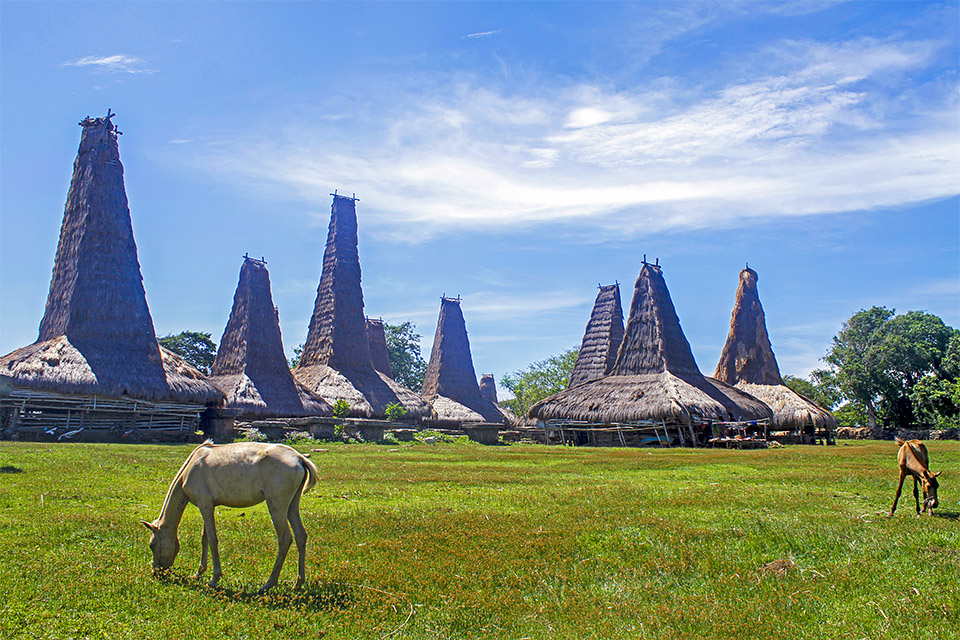
Ratenggaro Village — Time Standing Still
It is where Sumba’s cultural memory becomes visible.
Traditional thatched houses rise high into the sky, their sharp roofs and ancient megalithic stones telling stories that predate modern travel entirely. Life here feels uninterrupted by urgency. Children play near stone graves. Horses move freely through open spaces.
Visiting after Lapopu creates an interesting shift in perception—you begin to see the island not as separate attractions, but as a continuous narrative of nature and culture intertwined.
Lapopu shows you Sumba’s power; Ratenggaro shows you its memory.
Insider’s Itinerary: 2-Day West Sumba Flow
Day 1: Inland immersion
- Morning: Lapopu Waterfall
- Afternoon: Return via countryside villages
- Evening: Stay in Waikabubak
Day 2: Coastal contrast
- Morning: Weekuri Lagoon
- Midday: Mandorak Beach
- Afternoon: Ratenggaro Village
What makes this combination powerful is not just convenience—but contrast.
Lapopu is a layered movement.
Weekuri is a still reflection.
Mandorak is an open space.
Ratenggaro is rooted in history.
Together, they form a complete emotional arc of West Sumba. And suddenly, your journey stops feeling like a checklist. It starts feeling like a progression.
Lapopu is a highlight—but never the whole story of Sumba.
Because the island doesn’t reveal itself in single moments.
It reveals itself in sequences—each one quietly expanding the last.
Travel Tips — Making the Most of Your Visit
Lapopu is not difficult to reach in the conventional sense—but it does reward a certain mindset. Not speed. Not efficient. Not a checklist approach. Instead, it rewards travelers who move with awareness, flexibility, and a willingness to let the island set the pace.
Because in West Sumba, plans are useful—but adaptation is essential.
Insider’s Tips: Practical Travel Advice
- Fuel up early and often
Petrol stations are not evenly distributed across West Sumba. Always refill when you can, especially before heading inland toward Lapopu. - Expect limited connectivity
Mobile signal weakens significantly near Manupeu Tanah Daru National Park. Download maps offline and don’t rely on real-time navigation. - Respect the natural rhythm of the site
Lapopu is part of a protected ecosystem. Stay on marked paths, avoid disturbing vegetation, and follow guidance from local caretakers.
- Hire a local driver when possible
Roads between sites can be long, winding, and unfamiliar. A local driver doesn’t just navigate—they interpret the landscape, villages, and timing in ways GPS cannot. - Start early, always
Morning departures are not just about lighting—they are about control. The earlier you go, the more time you have to absorb, adjust, and return safely before dusk travel.
What Most Travelers Underestimate
Sumba is not “hard” to travel. But it is slow to reveal itself. Distances that look short on a map often feel longer on the road. Stops that seem optional often become essential. And waterfalls like Lapopu are not isolated attractions—they are embedded within a broader rhythm of terrain, weather, and village life.
This is why flexibility matters more than precision. You may plan to visit Lapopu for one hour, but stay longer—not because it demands it, but because leaving quickly feels wrong.
Packing Mindset, Not Just a Bag
Visiting a place where facilities are limited, eyond physical preparation, there is something less obvious that improves your experience:
- Patience when travel takes longer than expected
- Curiosity when routes change or detour
- Calm acceptance when conditions shift
- Attention to small, unplanned moments
Because in Sumba, those moments often become memories.
Sumba rewards those who travel slowly—and punishes those who rush.
And Lapopu, more than most places on the island, makes that lesson feel natural. You don’t force your way through it. You align with it. And in doing so, the journey stops feeling like logistics—and starts feeling like discovery.
Why Lapopu Stays With You
Long after you leave Lapopu, something unusual happens. It doesn’t fade in the way most destinations do. Instead, it returns—quietly, unexpectedly—in moments that have nothing to do with waterfalls.
You might be sitting in traffic somewhere. Or scrolling without intention. Or standing in a completely different landscape that should have no connection to West Sumba at all. And then, briefly, you hear it again. That layered sound. That overlapping rhythm of water moving across stone. That soft, continuous presence that never demanded attention—but somehow earned it.
Lapopu doesn’t stay with you as an image. It stays with you as a feeling of structure.
A sense that beauty doesn’t always arrive in dramatic singular moments, but sometimes in sequences—layered, unfolding, patient. That realization is subtle at first. But it grows over time. Because Lapopu teaches something quietly counterintuitive: It is not the peak that defines the experience. It is the progression toward it.
From forest approach to first glimpse.
From partial view to full revelation.
From observation to immersion.
From distance to participation.
Each stage matters. Each shift changes your perception slightly. And by the time you understand the whole, you realize there was never a single “whole” to begin with—only perspectives that continue to evolve as you move.
That is why Lapopu lingers. Not because it is the most dramatic waterfall in Indonesia. Not because it is the largest or loudest or most famous. But because it is composed like a memory.
Layered. Fragmented. Reassembled differently every time you recall it. And perhaps that is why returning mentally to Lapopu feels so natural. It doesn’t demand nostalgia. It simply reappears—whenever you encounter something that moves slowly, flows in stages, or reveals itself over time.
A river seen from a bridge. Rain on a window. Even the sound of distant water you cannot locate. Suddenly, you are back there. Standing at the edge of a forest clearing. Watching a waterfall that refuses to be consumed in a single glance. Feeling the strange stillness that comes from being fully present in something larger than yourself.
You don’t just visit Lapopu—you carry it with you long after you leave.
And in that quiet return, you understand something simple: Lapopu was never only a destination.
FAQ - Lapopu Waterfall
This FAQ is designed not only for practical planning, but also to strengthen your understanding of Lapopu as an experience—so visitors arrive prepared, present, and fully aware of what makes it different from other waterfalls in Indonesia.
1. Where is Lapopu Waterfall located exactly?
Lapopu Waterfall is located inside Manupeu Tanah Daru National Park in West Sumba, part of Indonesia’s East Nusa Tenggara province.
It sits inland, away from coastal tourist hubs, surrounded by dense forest, rivers, and protected biodiversity zones. The nearest major town is Waikabubak, which serves as the most common base for visiting the waterfall.
Unlike more commercial attractions, Lapopu is embedded deep within a natural conservation area, which is why the surrounding environment remains so intact and undeveloped.
2. How do I get to Lapopu Waterfall?
The journey typically involves three stages:
- Step 1: Drive from Tambolaka or Waikabubak
Most travelers start from Tambolaka Airport or Waikabubak town. The drive takes approximately 2–3 hours depending on road conditions. - Step 2: Rural road travel
Roads transition from paved to narrower village and forest roads as you approach the park area. - Step 3: Short forest walk
From the entrance point, a 15–30 minute walk leads through shaded forest paths, wooden bridges, and streams before reaching the waterfall.
A private car with a local driver is strongly recommended due to limited signage and connectivity.
3. Is Lapopu Waterfall worth visiting?
Yes—especially if you are looking for something beyond typical “single-drop” waterfalls.
Lapopu is unique because it is a multi-tiered waterfall system, where water flows across layered rock formations instead of falling in one vertical drop. This creates a rare visual and sensory experience in Indonesia.
It is not just a viewpoint—it is an immersive environment where forest, sound, and water combine into a continuous landscape.
If you are exploring West Sumba, Lapopu is considered one of the essential inland highlights.
4. Can you swim at Lapopu Waterfall?
Yes, swimming is possible in designated lower pool areas.
However, conditions vary depending on season and water flow. The upper and middle tiers are not suitable for swimming due to currents and rock formations.
Visitors should:
- Stick to calmer lower pools.
- Avoid swimming during or after heavy rain.
- Be cautious of slippery rocks and uneven surfaces.
Swimming here is more about gentle immersion than recreation.
5. How difficult is the trek to Lapopu Waterfall?
The trek is relatively easy to moderate:
- Duration: 15–30 minutes one way.
- Terrain: Forest paths, steps, and light slopes.
- Difficulty: Suitable for most fitness levels.
While not physically demanding, the path can be slippery during wet conditions, so proper footwear is important.
The trek is part of the experience—it gradually transitions you from rural Sumba into a fully natural rainforest environment.
6. What is the best time to visit Lapopu Waterfall?
The best time depends on what kind of experience you want:
- Morning (7–10 AM): Best lighting, cooler air, fewer visitors.
- End of rainy season: Strong water flow with defined tiers.
- Dry season: Clearer structure and easier trekking conditions.
For photography and atmosphere, early morning is highly recommended due to soft light and natural mist effects.
7. How long should I spend at Lapopu Waterfall?
Most visitors spend: 1.5 to 3 hours total. Including trek, viewing, swimming, and photography.
However, time perception changes once you arrive. Many travelers stay longer than planned because the environment encourages slow observation rather than quick visits.
Lapopu is best experienced without rushing.
8. Is Lapopu Waterfall crowded?
Compared to Bali or other mainstream destinations, Lapopu is generally quiet.
However, visitor numbers can increase during weekends or holiday seasons. Even then, the experience rarely feels overcrowded due to the waterfall’s wide, layered structure.
The forest setting naturally disperses visitors across different viewpoints and tiers.
Early morning visits are the best way to ensure a more private experience.
9. What should I bring to Lapopu Waterfall?
Essential items include:
- Water and light snacks.
- Non-slip walking shoes or sandals.
- Insect repellent.
- Cash for entrance fees.
- Light clothing suitable for humidity and water spray.
- Fully charged camera/phone (no charging facilities on-site).
Optional but useful:
- Waterproof bag for electronics.
- Extra clothes if you plan to swim.
10. Are there facilities at Lapopu Waterfall?
Facilities are basic and minimal.
At the entrance area, you may find:
- Simple parking space.
- Small ticket/registration post.
- Basic resting shelter.
Inside the waterfall area:
- No shops or restaurants.
- No structured tourist facilities.
- Limited or no mobile signal.
This simplicity is intentional—it preserves the natural environment and keeps the experience authentic.
11. Is Lapopu suitable for children or elderly visitors?
It can be, with caution.
- Children: Suitable under supervision, especially near water areas
- Elderly visitors: Possible, but depends on mobility due to uneven paths
The short trek is manageable, but surfaces can be slippery and humid conditions may be tiring.
Families often enjoy Lapopu most when pacing is slow and safety awareness is high.
12. Do I need a guide to visit Lapopu?
A guide is not strictly required, but highly recommended for first-time visitors to West Sumba.
A local guide or driver can help with:
- Navigation through rural roads.
- Cultural context of the region.
- Timing and safety awareness during seasonal changes.
While the trail itself is straightforward, the journey to the site can be confusing without local knowledge.
13. What makes Lapopu different from other waterfalls in Sumba?
Sumba has several notable waterfalls, but Lapopu stands out because:
- It is multi-tiered rather than single-drop.
- It spans a wide horizontal landscape instead of a vertical cliff.
- It sits inside a protected national park ecosystem.
- It offers a layered viewing experience rather than one main viewpoint.
Compared to dramatic canyon waterfalls like Tanggedu or sacred vertical falls like Matayangu, Lapopu feels more like a flowing landscape than a single feature.
14. Is there mobile signal or internet at Lapopu?
Signal is very limited or completely unavailable near the waterfall and within parts of the forest.
It is best to:
- Download maps offline.
- Inform someone of your itinerary beforehand.
- Not rely on real-time communication during the visit.
This lack of connectivity often becomes part of the experience—encouraging full presence in the environment.
15. What is the main takeaway from visiting Lapopu Waterfall?
Lapopu is not just a destination—it is a progression.
From forest approach to layered cascades, it teaches a different way of experiencing nature: not through instant impact, but through gradual unfolding.
👉 Lapopu is not a place you simply see—it is a place you move through, layer by layer, until it becomes part of your memory.
For many travelers, it becomes one of the most quietly unforgettable experiences in West Sumba—not because it demands attention, but because it earns it slowly.