Embarking on a Bali culinary adventure is an exquisite journey that invites travelers to explore the rich tapestry of local flavors this Indonesian paradise has to offer. Renowned for its breathtaking landscapes, vibrant culture, and serene beaches, Bali is equally celebrated for its diverse and delectable cuisine. This article delves into the heart of Bali’s culinary scene, guiding you through an unforgettable epicurean experience.
The Essence of Bali Culinary Adventure
Bali’s culinary landscape is a reflection of its diverse cultural influences and natural abundance. The island’s fertile soil and tropical climate yield an array of fresh produce, spices, and seafood, which form the foundation of its cuisine. A Bali culinary adventure promises a feast of flavors, from the spicy and aromatic to the sweet and savory, ensuring a sensory delight for food enthusiasts.
Traditional Balinese Cuisine
At the core of any Bali culinary adventure lies traditional Balinese cuisine. Rooted in ancient traditions, Balinese food is characterized by its bold flavors and the use of indigenous ingredients. Here are some quintessential dishes that define Bali’s gastronomic identity:
1. Nasi Campur
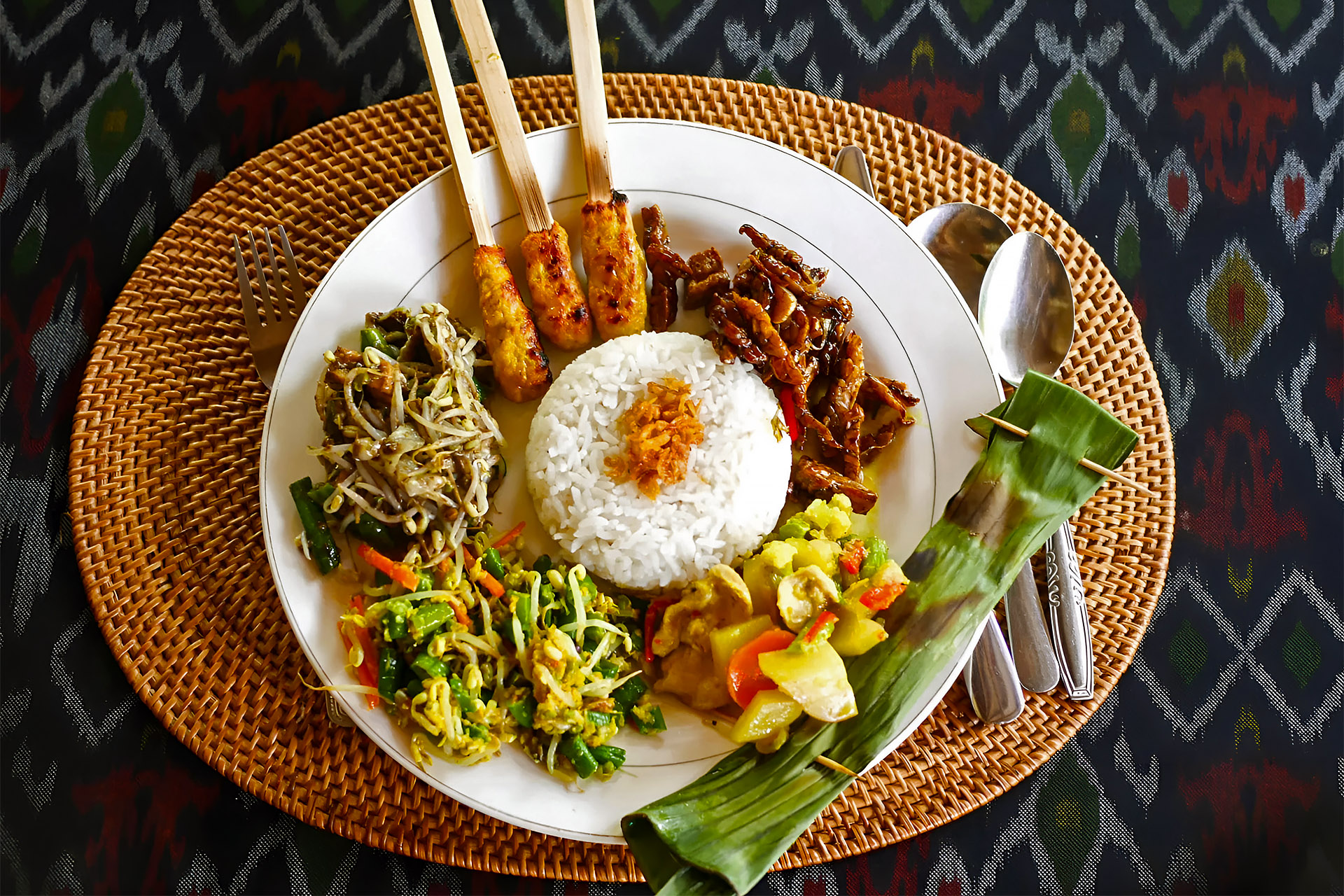
Nasi Campur, meaning “mixed rice,” is a staple in Balinese cuisine. This dish is a delightful medley of steamed rice accompanied by a variety of side dishes, including meats, vegetables, peanuts, eggs, and fried-shrimp krupuk (crackers). The combination of textures and flavors in Nasi Campur provides a comprehensive introduction to Balinese culinary diversity.
2. Babi Guling
Babi Guling, or roasted suckling pig, is a festive dish often served at ceremonies and special occasions. The pig is marinated with a blend of spices including turmeric, coriander, lemongrass, and garlic, then slow-roasted to achieve a crispy skin and tender meat. This dish is a must-try for meat lovers on a Bali culinary adventure.
3. Bebek Betutu
Bebek Betutu is a traditional Balinese dish where a duck is seasoned with a rich mix of spices, wrapped in banana leaves, and slow-cooked until tender. The meticulous preparation results in a deeply flavorful dish that is both aromatic and succulent.
4. Sate Lilit
Sate Lilit offers a unique twist on traditional satay. This Balinese version uses minced meat, often fish or chicken, mixed with grated coconut, lime leaves, and spices. The mixture is wrapped around bamboo sticks and grilled, offering a fragrant and flavorful experience.
Street Food: The Heartbeat of Bali’s Culinary Adventure
For a truly immersive Bali culinary adventure, exploring the island’s street food scene is essential. Street food in Bali is vibrant, affordable, and bursting with flavor, providing a window into the daily lives and tastes of the locals.
1. Bakso
Bakso, Indonesian meatball soup, is a popular street food in Bali. The soup is made with beef or chicken meatballs, noodles, tofu, and vegetables, served in a savory broth. Often enjoyed as a quick snack or a light meal, Bakso is beloved for its comforting warmth and rich flavors.
2. Martabak
Martabak is an indulgent street food that comes in both savory and sweet varieties. Savory martabak is a stuffed pancake filled with eggs, meat, and spices, while sweet martabak, or Martabak Manis, is a thick, sweet pancake filled with chocolate, cheese, or peanuts. Both versions are delicious and offer a perfect blend of textures and tastes.
3. Nasi Jinggo
Nasi Jinggo is a popular Balinese street food consisting of small portions of rice wrapped in banana leaves, accompanied by various side dishes such as fried chicken, tempeh, and sambal (spicy chili paste). This convenient and flavorful meal is perfect for on-the-go dining.
Modern Gastronomy: Fusion and Innovation
While traditional dishes form the backbone of Bali’s culinary identity, the island is also home to a burgeoning modern gastronomy scene. Innovative chefs and restaurateurs are blending traditional Balinese flavors with international techniques, creating fusion dishes that delight and surprise.
1. Locavore
Locavore, one of Bali’s most acclaimed restaurants, epitomizes this fusion trend. The restaurant focuses on locally sourced ingredients and combines them with modern culinary techniques to create a unique dining experience. Each dish at Locavore is a work of art, showcasing the best of Balinese produce in inventive ways.
2. Merah Putih
Merah Putih offers a sophisticated take on Indonesian cuisine, blending traditional recipes with contemporary presentation. The restaurant’s stunning architecture and elegant ambiance make it a perfect spot for a special evening out. Dishes like their rendang and gado-gado are reimagined with a modern twist, providing a fresh perspective on beloved classics.
Cooking Classes: Learn the Art of Balinese Cooking
A Bali culinary adventure wouldn’t be complete without the opportunity to learn the art of Balinese cooking. Several cooking schools on the island offer immersive workshops where you can learn to prepare traditional dishes from scratch.
1. Paon Bali Cooking Class
Paon Bali Cooking Class, located in Ubud, is a popular choice for those eager to delve into Balinese cuisine. The class begins with a visit to a local market to source fresh ingredients, followed by a hands-on cooking session where you’ll learn to prepare a multi-course Balinese meal. This experience provides not only a deeper understanding of Balinese flavors but also a chance to connect with the island’s culture and traditions.
2. Bumbu Bali Cooking School
Bumbu Bali Cooking School, founded by renowned chef Heinz von Holzen, offers comprehensive cooking classes that cover a wide range of Balinese dishes. Participants gain insights into the history and techniques of Balinese cooking, making it an enriching experience for both novice and experienced cooks.
Local Markets: The Heart of Bali Culinary Adventure
Visiting local markets is an integral part of a Bali culinary adventure. These bustling markets are where locals shop for fresh produce, spices, and other culinary essentials. Exploring these markets provides a sensory overload of sights, sounds, and smells, and offers a glimpse into the everyday life of Balinese people.
1. Ubud Traditional Market
Ubud Traditional Market is a must-visit for food lovers. The market is divided into two sections: one for traditional crafts and souvenirs, and the other for fresh produce and food items. Early in the morning, the market is brimming with vendors selling fresh fruits, vegetables, spices, and Balinese delicacies.
2. Badung Market
Badung Market in Denpasar is Bali’s largest traditional market and operates 24 hours a day. It offers a vast array of goods, including fresh seafood, meats, fruits, and vegetables. Wandering through the market’s bustling aisles is an adventure in itself, providing an authentic taste of local life.
Must-Try Desserts and Sweets
No Bali culinary adventure is complete without indulging in the island’s desserts and sweets. Balinese desserts are often made with coconut, palm sugar, and rice, resulting in delightful treats that are both satisfying and unique.
1. Dadar Gulung
Dadar Gulung is a traditional Balinese dessert that consists of green pandan crepes filled with sweet coconut and palm sugar. The crepes are soft and fragrant, while the filling is rich and caramel-like, making it a favorite among locals and visitors alike.
2. Klepon
Klepon are green rice cake balls filled with liquid palm sugar and coated in grated coconut. These bite-sized treats burst with flavor upon each bite, offering a perfect balance of sweetness and chewiness.
Beverage Delights
In addition to its food, Bali offers a variety of beverages that are perfect accompaniments to your culinary journey. From traditional drinks to innovative cocktails, there’s something to quench every thirst.
1. Arak
Arak is a traditional Balinese spirit made from distilled rice or palm sap. It is often consumed during ceremonies and celebrations. For a modern twist, many bars and restaurants now offer Arak-based cocktails that blend the spirit with local fruits and spices.
2. Jamu
Jamu is a traditional Indonesian herbal drink made from natural ingredients like turmeric, ginger, and tamarind. It is known for its health benefits and refreshing taste. Jamu is commonly sold in local markets and by street vendors, providing a rejuvenating drink option during your culinary adventure.
3. Exotic Cocktails
Bali’s vibrant nightlife scene is home to numerous bars and lounges that offer exotic cocktails crafted with local ingredients. Try a cocktail made with fresh tropical fruits, Balinese spices, and locally produced spirits for a refreshing and innovative drinking experience.
Conclusion
A Bali culinary adventure is more than just a gastronomic journey; it’s an exploration of culture, tradition, and innovation. From savoring traditional dishes like Nasi Campur and Babi Guling to exploring bustling local markets and learning the art of Balinese cooking, every aspect of Bali’s food scene offers something unique and memorable. Whether you’re indulging in street food, dining at high-end fusion restaurants, or participating in a cooking workshop, the flavors of Bali are sure to leave a lasting impression.
So pack your bags and prepare your palate for an extraordinary culinary adventure in the heart of Indonesia’s most enchanting island.