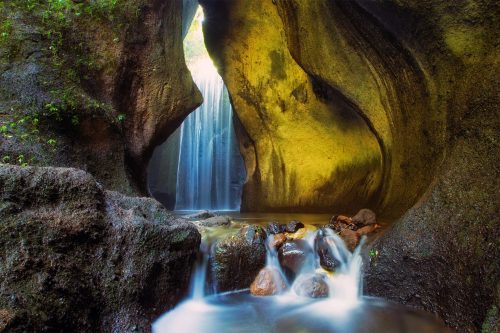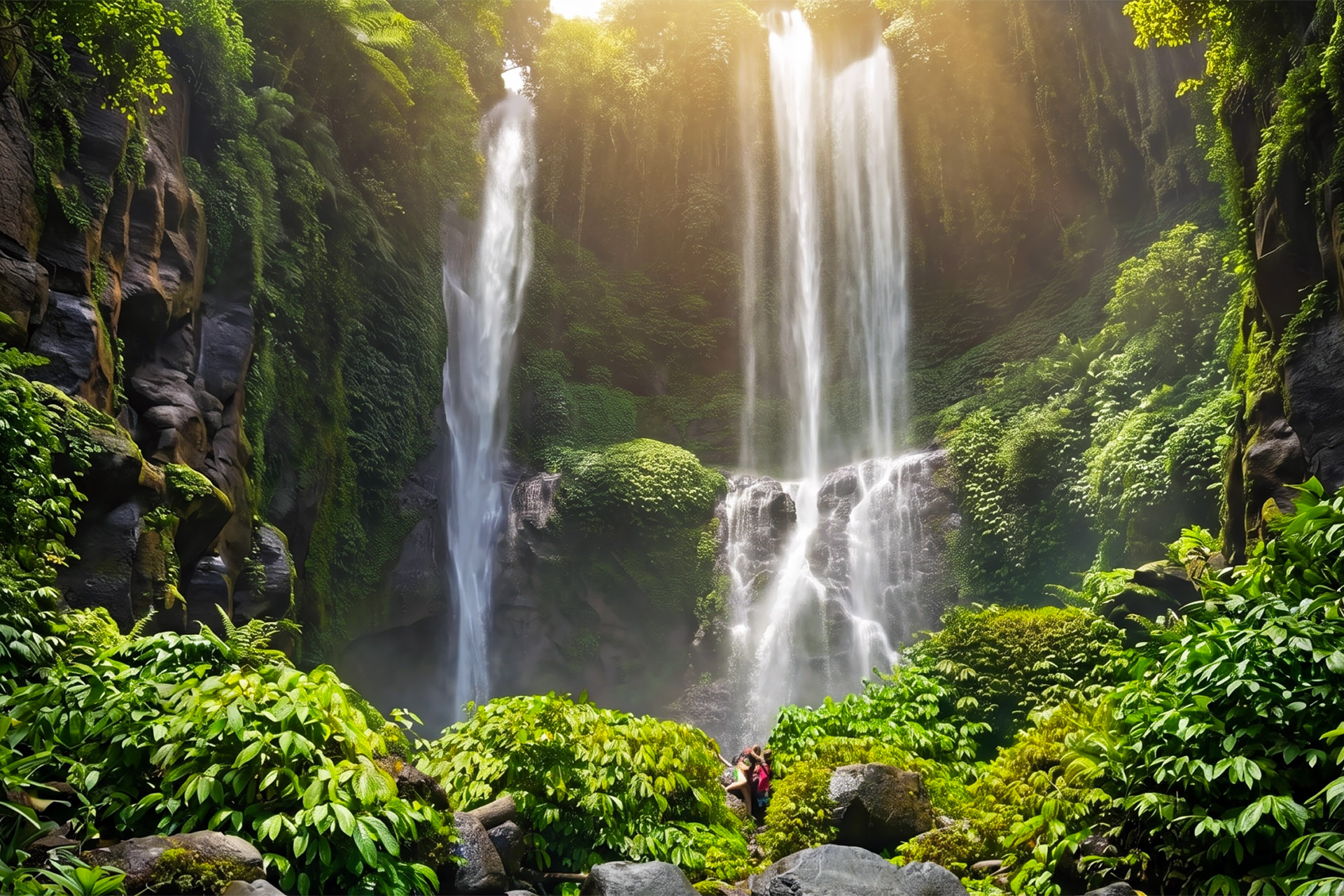
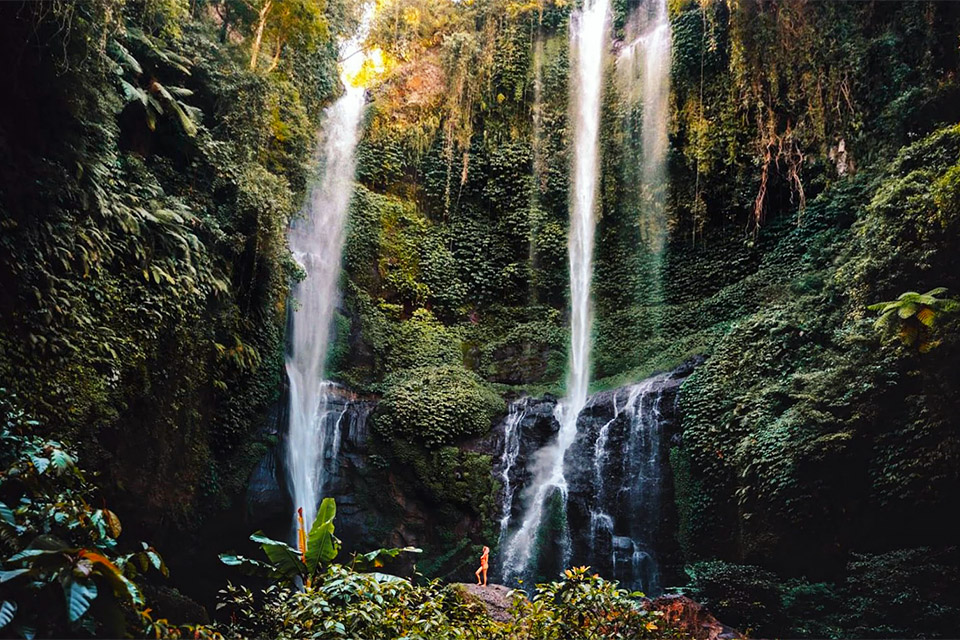
Guide to Sekumpul Waterfall Bali – The sound reaches you before the waterfall does. It starts as a low hum somewhere beneath the clove trees, builds through the last switchback of the trail, and by the time you step out onto the wet boulders at the bottom of the gorge, it has become something closer to weather than noise. Seven separate streams drop into the same green amphitheatre, some in thin silver threads, others in wide curtains that punch the surface of the pool below hard enough to send up a fine, cold mist that drifts across the rocks even on the driest afternoon.
Seven waterfalls, one valley, and the trek that makes Bali’s most photographed cascade feel earned.
This is Sekumpul, and it is not a waterfall you simply pull over and photograph from a viewing platform. Getting here costs something — forty-five minutes of steps, slopes, and a knee-deep river crossing — and that cost is precisely why it remains one of the few “famous” waterfalls in Bali that hasn’t been flattened into a queue-and-selfie operation. Locals in the village of Sekumpul still walk this gorge to harvest cloves and check on their durian trees. You’re a guest in their valley, not a customer at an attraction.
This guide covers everything you need: how to get there from Ubud, Seminyak, or Lovina, what the trek actually involves (including the part nobody mentions), entrance fees, the best time of day to go, and how Sekumpul compares to Bali’s other big-name falls. By the end, you’ll know whether this is the right waterfall for your trip — and exactly how to make the most of it if it is.


💡Related reads:
What Is Sekumpul Waterfall?
Sekumpul isn’t a single waterfall — the name refers to a cluster of seven cascades that drop from the forested cliffs of a single valley near the village of Sekumpul, in the Sambangan area of Buleleng regency, North Bali. The Balinese word “sekumpul” translates roughly to “a gathering” or “a cluster,” which is about as literal a name as you’ll find anywhere on the island.
The tallest of the seven, often called the main Sekumpul fall, drops an estimated 80 metres in a near-vertical sheet. On either side of it, smaller falls emerge from cracks in the rock face, some visible only after rain, others running steady year-round. From the main viewing rocks at the base, you can typically see three to five of the seven at once, depending on the season and how far along the riverbed you’re willing to wade.
What sets Sekumpul apart from Bali’s more accessible falls — Tegenungan or Tegunungan near Ubud, for instance — is the setting. There’s no concrete path, no row of warung stalls at the entrance, no constant churn of tour buses. The valley is genuinely wild: clove plantations climb the slopes above, kingfishers work the river, and the only sounds besides the water are birds, insects, and the occasional distant chop of a farmer’s machete.
Sekumpul isn’t one waterfall pretending to be special. It’s seven waterfalls that genuinely are, and the valley makes you work to see them.
[link: Tegenungan Waterfall Bali — Complete Visitor’s Guide] is a useful comparison if you’re trying to decide which fits your itinerary better — we’ll return to that comparison later in this guide.
Location and How Far is Sekumpul Waterfall from Major Areas
Bali takes the honeymoon dinner seriously, and the island’s resorts have turned it into something close to an art form. The classic setup — a private table on the sand, lanterns, a dedicated waiter who appears only when needed — is everywhere along the southwest coast, but the settings vary enormously.
STARTING POINT |
DISTANCE |
DRIVING TIME |
|---|---|---|
Lovina
|
~17 km
|
40–50 minutes
|
Ubud
|
~55 km
|
2–2.5 minutes
|
Seminyak / Kuta
|
~85 km
|
2.5–3 hours
|
Munduk
|
~15 km
|
35–45 minutes
|
Singaraja
|
~22 km
|
45–55 minutes
|
GPS coordinates for the main parking and ticket area: -8.1357, 115.1842. Search “Sekumpul Waterfall Parking” rather than just “Sekumpul Waterfall” — several map pins drop you at the wrong trailhead, which adds an unnecessary 20-minute detour on foot before you’ve even started the real walk.
How to Get to Sekumpul Waterfall
There’s really only one practical way to reach Sekumpul independently, and it isn’t public transport — Bali’s north simply doesn’t have a bus network that serves villages like this. Your realistic options are a private driver, a rented scooter (for confident riders only), or as part of an organised North Bali day trip.
By Private Driver
This is the option most visitors choose, and for good reason. A full-day driver from South Bali or Ubud will typically combine Sekumpul with one or two other North Bali stops — Banyumala Twin Waterfalls, the Twin Lakes viewpoint near Wanagiri, or Lovina’s dolphin-watching boats. Expect to pay IDR 600,000–900,000 for a full-day private car and driver from the Ubud/Canggu area, more from South Bali resort zones given the longer drive.
By Scooter
The roads up to Sekumpul are sealed but narrow, steep in places, and shared with trucks hauling produce down from the highlands. If you’re an experienced rider and comfortable with mountain switchbacks, it’s doable — but factor in the return trip after a tiring trek, often in the heat of midday. Not recommended for first-time scooter riders in Bali.
As Part of a North Bali Tour
Several operators run full-day North Bali waterfall circuits that include Sekumpul alongside Banyumala and sometimes Aling-Aling. This is often the most efficient option if you’re staying in Lovina or Munduk, since it removes the logistics of arranging a guide on arrival (more on why you’ll want one below).
 Insider's Tips — Getting There
 Insider's Tips — Getting There
- Search “parking,” not the waterfall name. The correct map pin is the ticket booth and parking lot, not the falls themselves.
- Leave by 7am from South Bali. The drive alone eats half your morning — early starts protect your trekking window.
- Pair it with Banyumala. The two are roughly 30 minutes apart and make a natural combination for one long day.
- Avoid Sunday afternoons. Local families use the lower pools for weekend swimming, which can mean a busier riverbed.
Entrance Fees and Opening Hours
Sekumpul is managed by the local village cooperative rather than a government park authority, which means fees are collected at the parking area and go toward trail maintenance, guide coordination, and the upkeep of the steps cut into the hillside. Prices are modest by international standards but have crept up in recent years as the trail infrastructure has improved.
ITEM |
PRICE (IDR) |
NOTES |
|---|---|---|
Entrance fee (foreign visitor)
|
20,000–25,000
|
Paid at the ticket booth near parking.
|
Local guide fee
|
100,000–150,000
|
Effectively mandatory — see below.
|
Parking (car)
|
10,000
|
Per vehicle.
|
Parking (motorbike)
|
5,000
|
Per vehicle.
|
Opening hours run roughly 7am to 5pm daily, though there’s no gate that locks you out — the practical limit is daylight, since the trail is unlit and the final descent involves uneven, often wet, stone steps. Most guides won’t take visitors down after about 3:30pm, since the return climb in fading light is genuinely hazardous.
On the guide fee: while it isn’t strictly enforced by law, the trail to Sekumpul crosses private agricultural land at several points, the path forks more than once in ways that aren’t obvious, and the river crossing at the bottom has a current that varies with rainfall. Almost every visitor takes a guide, and almost every guide is a local from the village — your fee is a direct, meaningful contribution to the community that maintains the only access route to this place.
The Trek: What to Actually Expect
This is the section that matters most, because Sekumpul’s reputation as “the most beautiful waterfall in Bali” sits right alongside its reputation as “the hardest one to reach” — and most articles undersell the second half of that sentence.
The Descent
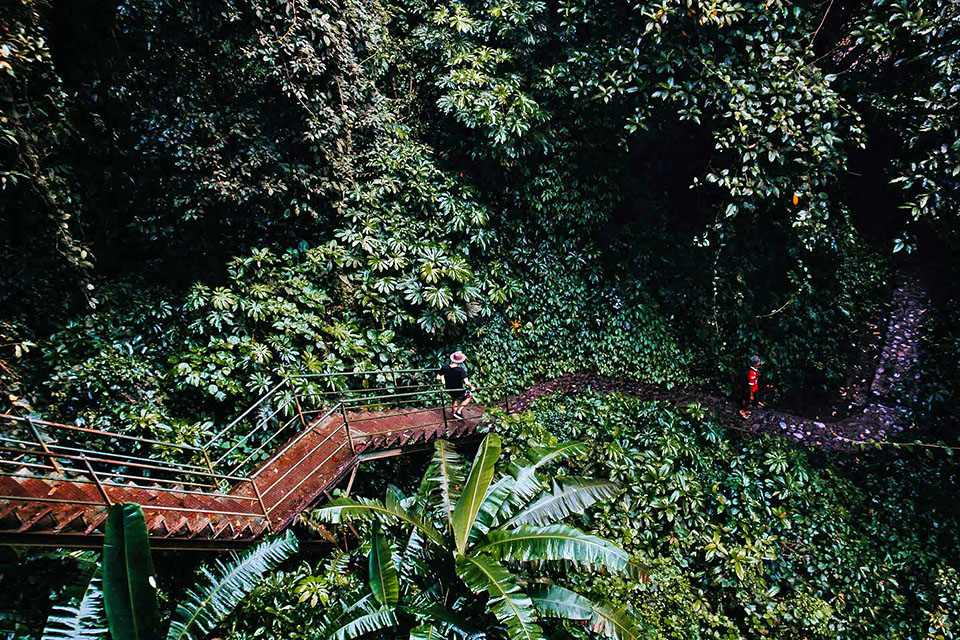
From the parking area, the trail begins with a long flight of concrete and stone steps cut into the hillside, dropping through terraced rice fields and clove plantations. This section is well-maintained, shaded for much of the way, and takes most people 20–25 minutes. The gradient is steep but the footing is good. You’ll pass small shrines, working farm plots, and — depending on the season — locals carrying clove harvests up the same path you’re walking down.
About two-thirds of the way down, the trail transitions from formal steps to a rougher dirt and rock path that follows the contour of the gorge wall. This section is narrower, can be slippery after rain, and includes a few sections where a handrail or rope has been installed at the steeper drops. It’s here that the sound of the falls starts to dominate, and the temperature drops noticeably as you enter the gorge’s microclimate.
The River Crossing
The final approach to the main viewing area requires crossing the river at least once, sometimes twice depending on water levels and which falls you want to see up close. The crossing is typically knee-to-thigh deep, over a bed of smooth but uneven rocks. Your guide will usually go first, picking the line, and offer a hand across the deeper sections.
The descent is a pleasant 30-minute walk through farmland. The river crossing is the moment most visitors realise they should have worn different shoes.
The Return Climb
Here’s the part that catches people out: the walk back up is not the same experience as the walk down, even though it’s the same path. What took 30 minutes downhill, much of it shaded and easy, becomes 45–60 minutes of sustained uphill climbing in humid air, often with wet shoes and tired legs after swimming. There’s no shortcut and no vehicle access — the only way out is the way you came in, on foot, uphill.
This isn’t meant to discourage you. Thousands of people of varying fitness levels make this trek successfully every month. But it is a genuine trek, not a stroll, and you should plan your visit — and your footwear, water supply, and timing — accordingly.
SEGMENT |
DISTANCE |
TIME (UP) |
TIME (UP) |
|---|---|---|---|
Parking to steps end
|
~600m
|
20–25 min
|
30–40 min
|
Steps end to river
|
~300m
|
10–15 min
|
15–20 min
|
River crossing & approach
|
~150m
|
5–10 min
|
5–10 min
|
~1km
|
35–50 min
|
50–70 min
|
The Experience at the Falls
The valley opens out gradually rather than all at once — you’ll hear the roar growing for a good five minutes before the trees finally clear and the full amphitheatre comes into view. The main fall drops from a notch high in the cliff face, breaking into spray well before it reaches the pool, while two or three smaller falls run down adjacent rock faces depending on recent rainfall.
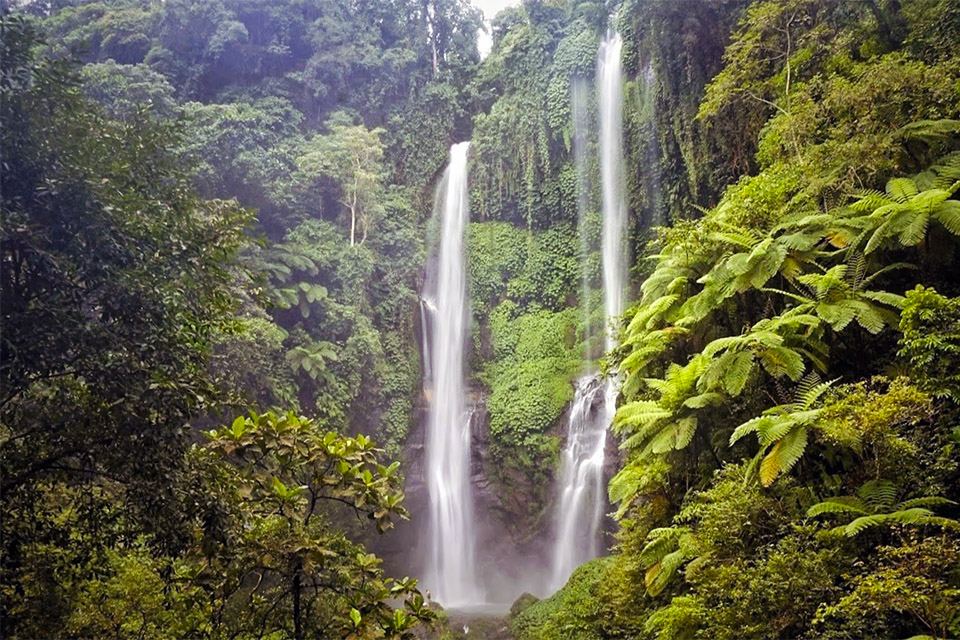
The pool at the base is swimmable, though “swimmable” undersells how cold the water is — runoff straight from the highland forest keeps it noticeably colder than the sea-fed pools you’ll find at lower-altitude waterfalls. Most visitors wade in up to their waist or chest rather than submerging fully, and the cold is part of the appeal after the sweaty descent.
Depending on the water level and your guide’s route, you can often walk along the riverbed to a second viewing point that brings you closer to two of the smaller falls — a worthwhile detour if you have the energy, since it’s where most of the genuinely uncrowded photo opportunities are.
Insider's Finds — Beyond the Main Viewpoint
- Ask your guide for the second crossing. A short wade upstream reveals two more falls most day-trippers never see.
- The mist zone has its own microclimate. Standing in it for even a minute will soak light clothing — pack accordingly.
- Early light hits the main fall first. Arrive before 10am for direct sun on the water rather than flat shade.
- Locals harvest cloves along the trail. If you see drying mats of cloves on the steps, walk around them, not over.
Best Time to Visit Sekumpul Waterfall
Time of Day
Aim to start the descent between 8:30am and 9:30am. This gets you to the base around the time the sun clears the eastern ridge of the gorge, lighting up the main fall and pool — by early afternoon, the gorge falls into shade and photos lose their punch. Starting early also means you’re climbing back out before the midday heat peaks, and before any afternoon cloud build-up turns to rain.
Time of Year
Bali’s dry season, roughly April to October, offers the most reliable trail conditions — the steps and river-crossing rocks are far less slippery, and the river level is generally manageable. The wet season (November to March) brings more dramatic water volume — all seven falls running at full force is a genuinely different sight — but the trail becomes significantly more hazardous, with slick rocks and a faster, deeper river crossing that can occasionally be called off entirely by guides after heavy rain.
If your trip falls in wet season and you’re set on visiting, build in a buffer day. Guides will simply tell you the crossing is unsafe on a given morning, and there’s no negotiating with a swollen river.
What to Bring
Sekumpul punishes underpreparation more than most Bali attractions, mostly because once you’re at the bottom of the gorge, there’s nothing down there — no stalls, no shelter, no shortcuts back.
ITEM |
WHY IT MATTERS |
|---|---|
Closed-toe water shoes or trail sandals.
|
Flip-flops fail on wet rocks and the river crossing.
|
Quick-dry clothing.
|
You will get wet from mist even if you don't swim.
|
Dry bag or waterproof phone pouch.
|
For the river crossing and the spray zone.
|
1.5L+ of water per person.
|
No vendors on the trail; the climb out is dehydrating.
|
Cash (small denominations).
|
Entrance and guide fees are cash-only.
|
Light rain jacket (wet season).
|
Highland weather shifts fast in the afternoon.
|
The lower trail and riverbank attract mosquitoes.
|
Pack as if you’re going for a short, wet hike — because that’s exactly what this is, however the photos make it look.
Photography Guide
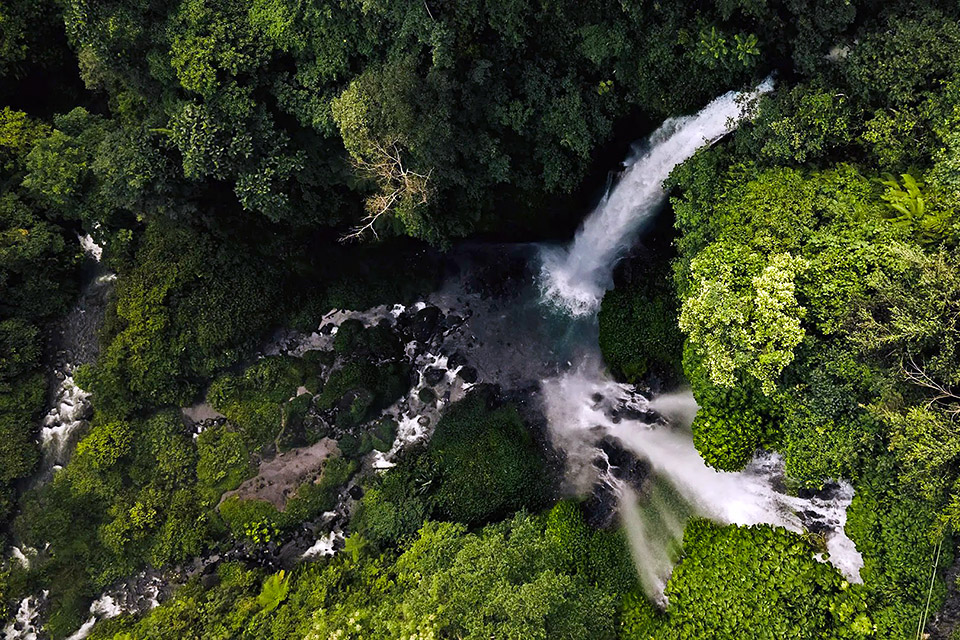
Sekumpul’s seven-fall layout means the classic shot — wide-angle, all falls visible, pool in foreground — is harder to get than at single-drop waterfalls, since the falls aren’t all visible from one fixed standing point. Most published photos are composites of the main fall shot from the central viewing rocks plus one or two of the side falls shot separately.
For the main fall, a position on the boulders roughly 20–30 metres back from the pool’s edge gives the cleanest framing, with enough distance to capture the full drop without spray fogging your lens. Early morning side-light (rather than the flat overhead light of midday) brings out the texture of the rock face and the separation between the falling water and the misted air around it.
If you’re shooting video, a short clip with audio does more justice to Sekumpul than a dozen stills — the sound is a huge part of what makes this place feel different from smaller falls. A waterproof action camera handles the spray zone and river crossing far better than a phone, even in a pouch.
Nearby Attractions and Suggested Itinerary
Sekumpul’s location in the Sambangan highlands puts it within reach of several other North Bali highlights, making it the natural centrepiece of a full-day loop rather than a standalone half-day stop.
ATTRACTION |
DISTANCE FROM SEKUMPUL |
SUGGESTED TIME |
|---|---|---|
~25–30 min drive
|
1–1.5 hours
| |
Aling-Aling Waterfall & cliff jumps
|
~30 min drive
|
1.5–2 hours
|
Lovina beach & dolphin tours
|
~45–50 min drive
|
2–3 hours (early morning)
|
~30–40 min drive
|
2–3 hours
|
Insider's Itinerary - North Bali Waterfall Day
- 7:00am: Depart from Ubud or South Bali toward Sambangan.
- 9:00am: Begin the Sekumpul descent — cooler temperatures, better light.
- 11:30am: Complete the climb out, change into dry clothes at the parking area.
- 12:30pm: Lunch at a local warung en route to Banyumala.
- 2:00pm: Banyumala Twin Waterfalls — a shorter, easier trek to close the day.
Sekumpul vs. Other Bali Waterfalls
If you’re trying to decide between Sekumpul and Bali’s other well-known falls, the honest answer depends almost entirely on how much effort and time you’re willing to trade for scale and atmosphere.
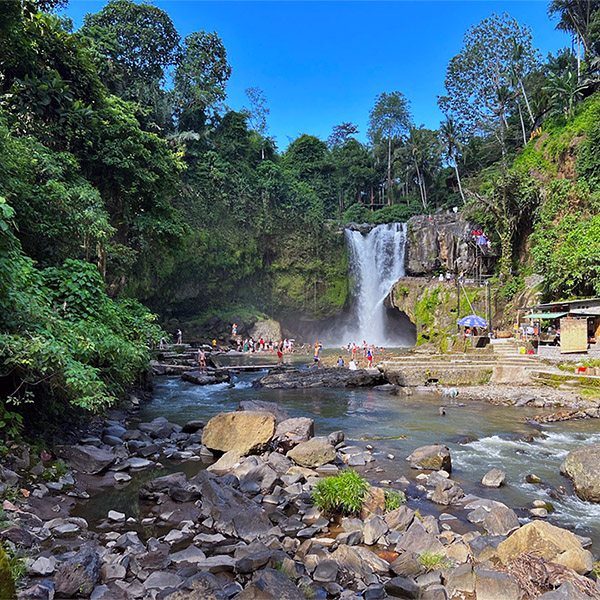
Tegenungan Waterfall
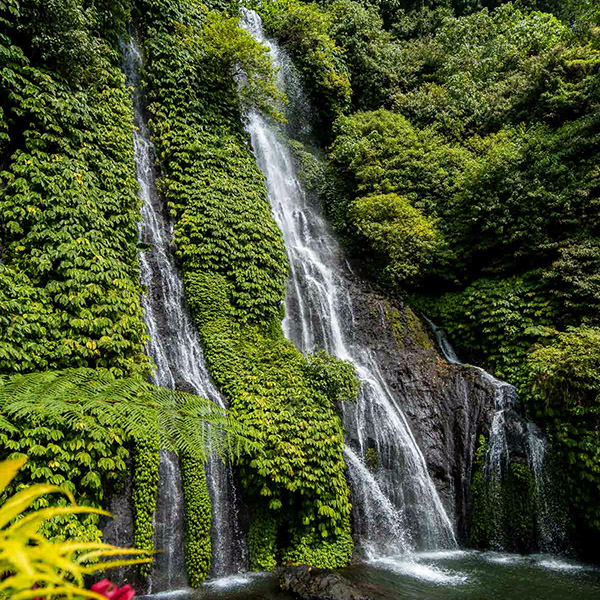
Banyumala Twin Waterfall
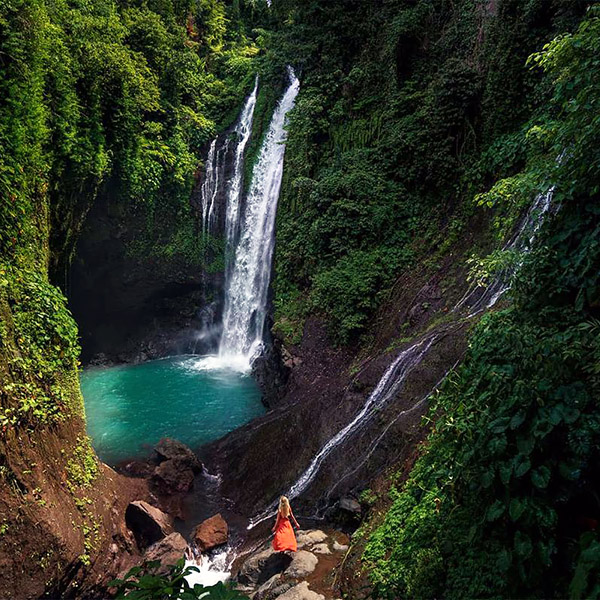
Aling Aling Waterfall
WATERFALL |
TREK DIFFICULTY |
TREK TIME |
BEST FOR |
|---|---|---|---|
Hard
|
~35–50 min each way
|
Scale, sound, and a genuine wilderness feel.
| |
Banyumala Twin Falls
|
Easy–Moderate
|
~10–15 min each way
|
Easier swim stop, twin-fall composition.
|
Tegenungan
|
Easy
|
~5–10 min each way
|
Convenience, accessibility, quick visits.
|
Moderate
|
~15–20 min each way
|
Cliff-jumping and a multi-fall complex.
|
If your trip includes only one “big” waterfall and you’re reasonably fit, Sekumpul earns its reputation. If you’re travelling with young children, anyone with knee or mobility concerns, or you simply want a swim stop without the full trek commitment, [Banyumala Twin Waterfalls Bali Travel Guide] or [Insider’s Guide to Tegenungan Waterfall Bali] are better matches for your day.
Safety and Responsible Travel
The single biggest safety factor at Sekumpul is footing — on the steps, on the dirt trail, and especially on the river-crossing rocks, which are coated in a thin algae layer that becomes slick when wet. Take your guide’s offered hand at crossings even if you feel steady; a slip here means a soaked bag and bruised pride at best, and a sprained ankle an hour’s climb from the road at worst.
On responsible travel: the trail passes through working agricultural land, not a managed park. Stay on the marked path, don’t pick fruit or cloves from trees along the way, and pack out everything you bring in — there are no bins in the gorge. The guide fee structure exists specifically because this valley is a working community, not a tourist facility, and your visit is only sustainable if it continues to feel that way to the people who live here.
You’re not visiting a park. You’re walking through someone’s working land to see something they’ve quietly shared with the rest of the world.
Plan Your Visit NOW!
Sekumpul rewards exactly the kind of traveller who reads guides like this one before they go — someone willing to trade an easy half-hour for a real one, and a parking-lot view for a front-row seat to seven waterfalls falling into the same pool. It’s not a place you stumble into on the way to somewhere else. It’s a place you plan for, sweat for, and remember for the right reasons.
The climb out will be harder than you expect. The water will be colder than you expect. And the moment the trees part and the full gorge opens up in front of you, all of that will make perfect sense.
Sekumpul rewards exactly the kind of traveller who reads guides like this one before they go — someone willing to trade an easy half-hour for a real one, and a parking-lot view for a front-row seat to seven waterfalls falling into the same pool. It’s not a place you stumble into on the way to somewhere else. It’s a place you plan for, sweat for, and remember for the right reasons.
💡Related reads:
FAQ
Is Sekumpul Waterfall worth the trek?
For most travellers, yes — it’s widely considered one of Bali’s most impressive waterfalls precisely because the effort required keeps it from feeling overrun. If you’re reasonably fit and prepared for a 35–50 minute descent and a longer climb back out, the scale and sound of seven falls in one valley delivers on the reputation.
How difficult is the Sekumpul Waterfall hike?
It’s a moderate-to-hard trek by Bali waterfall standards — well-maintained steps for the first portion, followed by a rougher dirt trail and a river crossing. The return climb is the hardest part and takes 50–70 minutes for most people.
Do I need a guide for Sekumpul Waterfall?
While not legally mandatory, a local guide is standard practice and effectively expected. The trail crosses private land, forks in non-obvious places, and the river crossing point varies with water levels — a guide handles all of this and the fee directly supports the village.
How much does it cost to visit Sekumpul Waterfall?
Budget roughly IDR 130,000–175,000 per person total, covering the entrance fee, guide fee, and parking — among the higher costs for a Bali waterfall, reflecting the trail maintenance and guide service involved.
Can you swim at Sekumpul Waterfall?
Yes — the main pool at the base is swimmable, though the water is noticeably cold due to highland runoff. Most visitors wade in rather than fully submerge, especially right after the descent.
What should I wear to Sekumpul Waterfall?
Closed-toe water shoes or sturdy sandals with grip, quick-dry clothing, and a swimsuit underneath if you plan to enter the pool. Flip-flops are genuinely unsafe on the river-crossing rocks.
How long does the whole visit take?
Plan for 2–2.5 hours total at the site itself: roughly 40–50 minutes down, 30–45 minutes at the falls, and 50–70 minutes back up. Add driving time on either end.
Is Sekumpul Waterfall suitable for children or elderly visitors?
Bali’s tourist areas, especially Ubud and Canggu, are well set up for vegetarian, vegan, and most dietary restrictions, with many restaurants offering dedicated menus.
What's the best time of day and year to visit?
Aim to start the descent between 8:30am and 9:30am for the best light and cooler temperatures. Dry season (April–October) offers safer trail and crossing conditions; wet season brings more dramatic water volume but riskier footing.
Can Sekumpul be combined with other waterfalls in one day?
Yes — Banyumala Twin Waterfalls is roughly 25–30 minutes away and pairs naturally as a shorter, easier second stop, making for a well-balanced full North Bali waterfall day.
It’s a challenging trek even for fit adults, with steep steps, a river crossing, and a demanding climb out. Young children, anyone with mobility limitations, or those uncomfortable with uneven terrain may find easier alternatives like Banyumala or Tegenungan more suitable.