7-Day Bali Honeymoon Itinerary – The first morning you wake up in Bali as a married couple, something shifts. The light through the shutters is different — or maybe you are. The smell of frangipani drifts in from the courtyard, a gecko calls from somewhere in the rafters, and beyond the wall of your villa, rice terraces fall away in slow green steps toward a river you can hear but can’t yet see. There is nowhere you need to be. There is nothing you need to do. That is exactly the point.
Bali has been drawing honeymooners for decades, and with good reason: it combines natural theatre — volcanoes, ocean cliffs, jungle river valleys — with a culture built around ceremony, offering, and the quiet beauty of daily ritual. It moves at a pace that encourages couples to slow down together. A seven-day Bali honeymoon itinerary is long enough to feel genuinely immersed, short enough that every day still feels like a discovery.
What follows is not a rigid schedule. It is a framework — a tested sequence of experiences and places that works beautifully for couples who want romance, culture, some adventure, and long unhurried evenings. Adjust it freely. This itinerary is yours to make your own.
A day-by-day guide for couples who want romance, not a schedule


💡Related reads:
Before You Arrive: The Decisions That Shape Your Trip
A 7-day Bali honeymoon itinerary succeeds or fails before you land. Two choices define everything that follows: where you base yourself, and how you move around the island.
Ubud or South Bali — or Both?
Most couples divide their honeymoon between two zones. Ubud, in the cool highlands an hour inland, offers jungle, temples, rice terraces, and a cultural intensity that nowhere else on the island matches. The south — Seminyak, Canggu, and the Bukit Peninsula — offers coastline, sunset beach bars, world-class restaurants, and the kind of long evenings that a honeymoon should contain several of. The classic structure is three to four nights in Ubud, three to four nights in the south. This itinerary follows that split: four nights in Ubud, three in Seminyak.

If you only have seven days and want one base, choose Ubud. It is more visually extraordinary, more culturally alive, and — for most couples — the more memorable half of the trip. Seminyak is easier to return to. Ubud is not something you should rush.
Your Private Driver
Book a private driver before you arrive. Not through your hotel’s concierge on the morning of Day 1, but in advance — ideally through your DMC or a trusted recommendation. A good driver in Bali is not a taxi service. He is a guide, a cultural interpreter, a logistics coordinator, and occasionally the person who saves your afternoon when the plan falls apart. For a honeymoon, a full-day driver costs between IDR 600,000 and IDR 800,000 (roughly USD 38–50). It is the best money you will spend on this trip.
 Insider’s Tips — Pre-Arrival Checklist
 Insider’s Tips — Pre-Arrival Checklist
- Book your driver 48+ hours before arrival. Request the same driver for the full trip — familiarity makes every day smoother.
- Pre-arrange airport pickup. Ngurah Rai arrivals can be chaotic; a name board at the exit eliminates the stress.
- Confirm villa check-in time. Many Bali villas offer early check-in for honeymooners — ask in advance, not on arrival.
- Download Maps.me offline for your destination areas. Signal in Ubud’s rice terrace roads is unreliable.
- Carry small IDR notes. Temple offerings, warung meals, and market purchases almost always involve cash.
Day 1: Arrival and the Slow Landing
Your flight lands at Ngurah Rai International Airport in the south of Bali. If you are heading straight to Ubud, the drive takes 60 to 90 minutes depending on traffic — longer on weekends and public holidays. The road climbs steadily from the airport’s coastal flatlands through Denpasar’s sprawl, then suddenly narrows into rice field lanes as Ubud announces itself not with a sign but with a change in the air: cooler, greener, quieter.
Day 1 belongs to arrival. Do not schedule anything. Check into your villa, order room service or walk to the nearest warung for nasi campur, and go to bed early. Jet lag is real, and a honeymoon that begins with exhaustion is already behind. Save the temples for tomorrow.
Where to stay in Ubud
For a honeymoon, the villa should be your first indulgence. Ubud has private pool villas at every price point — from quiet family-run properties tucked into rice fields to architect-designed retreats above the Ayung River gorge. The non-negotiables for a honeymoon villa: a private pool (not shared), an outdoor bathroom or outdoor shower, and a position that offers morning light without direct road noise. The Tjampuhan Ridge area and the Penestanan neighbourhood both deliver this combination. Book direct with the property when possible — hotels will often add honeymoon touches (flower petals, sparkling wine, canang sari offerings) if you mention it at booking.
The villa should be the experience, not just the accommodation.
On a honeymoon, the difference between a room with a view and a private pool facing a rice terrace is the difference between a good trip and an unforgettable one.
Day 2: Ubud's Sacred Landscape
The morning of Day 2 begins the way most Ubud mornings should: slowly. Most villas serve breakfast until 10am. Take it outside by the pool if yours allows. Then, by mid-morning, let your driver take you into Ubud’s cultural heart.
Morning: Tirta Empul and the road north
Tirta Empul, roughly 20 minutes north of central Ubud, is one of Bali’s most sacred water temples — a complex of spring-fed ritual bathing pools where Balinese Hindus come to purify. Arrive before 9am to experience the ceremony with some quiet; by 10am tour buses begin arriving and the atmosphere shifts. You are welcome to observe, and some visitors choose to participate in the purification ritual with appropriate guidance and a sarong.
This is not a tourist attraction performing itself for visitors — it is a living place of worship, and that authenticity is what makes it worth seeing early in your trip.
From Tirta Empul, continue north toward Kintamani for a view of Gunung Batur, Bali’s most dramatic volcano, and Lake Batur below it. The panorama from the crater rim villages is one of those views that stops conversation. Have your driver stop at a viewpoint warung for coffee overlooking the caldera before heading back south.
Afternoon: Tegalalang Rice Terrace
Tegalalang is one of the most photographed landscapes in Southeast Asia, and it earns the attention. The UNESCO-listed subak irrigation system creates a layered green geometry that changes character with the light — flat and luminous at midday, gold and theatrical in the late afternoon. Visit around 3:30–4pm to catch the best light, which lands on the western-facing terraces from about 4pm until sunset.
For a honeymoon, skip the Instagram swing operations and instead walk the lower terrace path together — a quiet 20-minute loop through the paddies that most visitors miss entirely. For a related cultural perspective on Ubud’s wider landscape, [link: Ubud cultural day trip guide].
Evening: Dinner in Ubud
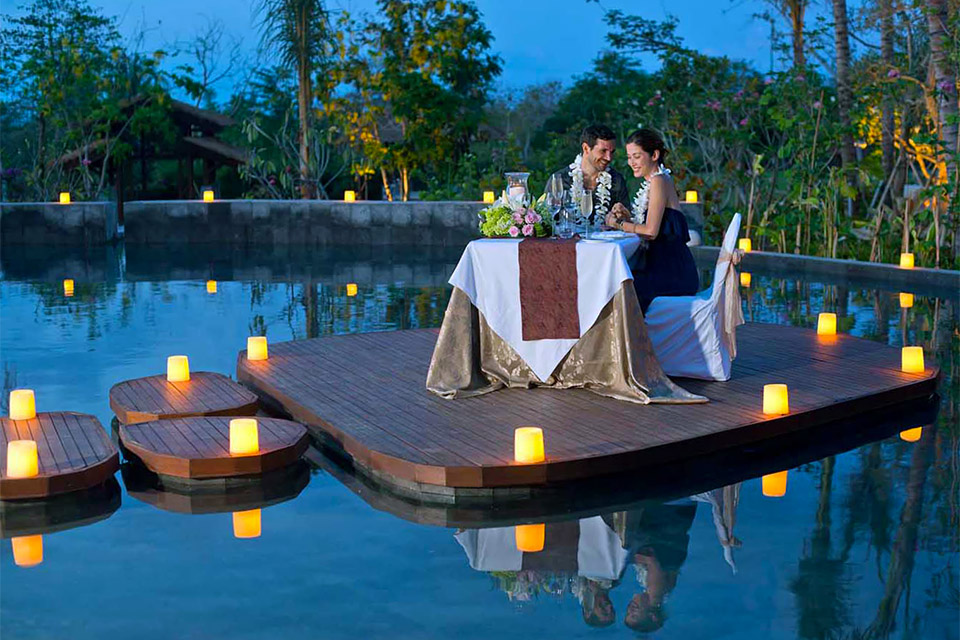
Return to central Ubud for dinner. Locavore — one of Southeast Asia’s most celebrated farm-to-table restaurants — requires a reservation made weeks in advance, but is worth every effort for a honeymoon dinner. Alternatively, Swept Away at Alaya Resort offers an outdoor riverside setting with a menu that combines Indonesian and international cuisine. Both deliver the kind of dinner you will describe to people for years.
Day 3: The Jungle, the River, and the Art Towns
Bali reveals itself differently depending on how you move through it. Day 3 is for moving slowly — through jungle footpaths, sacred springs, and the art villages south of Ubud where entire communities have organised themselves around a single craft for generations.
Morning: Campuhan Ridge Walk
The Campuhan Ridge Walk begins at the Pura Gunung Lebah temple on the western edge of Ubud town and follows a narrow grassy ridge between two river valleys for roughly 2km before ending near the village of Bangkiang Sidem. Leave by 7:30am — the walk takes 40 to 60 minutes at a relaxed pace, and the early morning light across the valley is something specific to this hour, a pale gold that dissolves by 9am into ordinary brightness. Wear trainers you don’t mind getting muddy after rain. Bring water. Bring a camera.
Insider’s Tips — Campuhan Ridge Walk
- Start at the temple, not the road. Google Maps routes some visitors to a less scenic entry point on Jalan Raya Campuhan — ignore it.
- Walk north to south (toward Bangkiang Sidem) to have the morning sun behind you rather than in your eyes.
- Ask your driver to meet you at the north end of the walk — it avoids doubling back and adds 30 minutes of fresh terrain.
- Kafe Campuhan at the walk’s southern start serves good coffee with a valley view — a natural finish point.
Afternoon: The Art Villages
The road south from Ubud toward Denpasar passes through a string of villages that have specialised in Balinese crafts for centuries. Celuk is the silver and gold smithing village; Mas is known for intricate woodcarving; Batuan for traditional painting. An afternoon stopping through two or three of these — with your driver’s guidance on which workshops are genuine versus those selling mass imports — gives the trip a texture that a beach resort simply cannot. If you want something made to take home, Mas woodcarvers can produce custom pieces in 24 to 48 hours.
Evening: A Rice Field Dinner
Return to your villa via the back roads — longer, quieter, and more beautiful than the main road. Ask your driver to take the route through Sayan. Tonight, eat at Sari Organik, a simple open-air warung set directly in a rice field north of Ubud. The menu is modest Indonesian organic cooking. The setting is extraordinary — dinner surrounded by paddies in the last of the evening light, with the sound of water running through the irrigation channels. Reservations are not taken; arrive by 5:30pm before tables fill.
Day 4: Water, Fire, and Silence
Day 4 is the one most couples say they remember most vividly. It begins before dawn.
Pre-dawn: Mount Batur Sunrise Hike
Gunung Batur is an active volcano on Bali’s northeastern highland. The sunrise trek begins at 4am and takes two hours to reach the crater rim — a moderate climb on volcanic scree and dirt path, guided in the dark by headlamp and the line of other hikers ahead. The summit at dawn delivers something that cannot be photographed adequately: a caldera lake reflecting the first orange light, distant Gunung Agung rising through the cloud layer to the east, and a stillness interrupted only by the smell of sulphur from the vents below your feet. A guide is mandatory by law and costs IDR 350,000–450,000 per person. Breakfast is cooked at the summit using the volcanic steam. For the full preparation guide, see [link: Mount Batur sunrise hike guide].
At the summit, before the light fully arrives, there is a moment of complete silence. Not absence of sound — birds, wind, the distant creak of the trail behind you — but a silence that comes from being somewhere genuinely extraordinary together. That moment is the reason for the 3am alarm.
Afternoon: Toya Devasya Hot Springs
After descending Batur, most couples feel two things: elated and exhausted. couples feel two things: elated and exhausted. Toya Devasya Natural Hot Springs, on the shore of Lake Batur at the volcano’s base, is the correct prescription for both. The complex has several geothermal pools at different temperatures — ranging from pleasantly warm to genuinely hot — with views directly across the lake to the volcano you just descended. Entry costs around IDR 150,000 per person. Spend two hours here, then return to your villa for a late afternoon rest before the evening.
Evening: Rest
Day 4 will have begun at 3am. Do not plan a late dinner. Eat early at a nearby warung, or order to your villa if the property allows it. The Campuhan area has several excellent warungs within walking distance. Sleep well — Day 5 moves south.

Day 5: Transition — Ubud to the South
Checkout from your Ubud villa and head south. The drive to Seminyak takes 60 to 90 minutes. This is not a wasted day — it is a deliberate transition, and the route south offers some of the trip’s most underrated stops.
En route: Pura Taman Saraswati and Central Ubud
Before leaving, spend the morning in central Ubud. The Pura Taman Saraswati lotus temple, in the heart of town on Jalan Raya Ubud, is most beautiful at 8am before the day’s visitors arrive. The lotus pond reflects the stone candi bentar and ornamental gates in the morning calm. Admission is free; a sarong wrap is required at the gate. Immediately east, the Ubud Palace (Puri Saren Agung) is still an active royal residence and hosts Kecak and Legong dance performances most evenings — book ahead if you want to return for this.
En route: Tanah Lot
Tanah Lot, a sea temple perched on a black rock formation just offshore from Bali’s southwest coast, sits directly on the route between Ubud and Seminyak. Arrive around 3pm — the crowds are thinner than at sunset, the light is beautiful, and you can walk the coastal paths without fighting for space. By 5:30pm, every tour bus on the island converges on Tanah Lot for sunset, and the experience degrades accordingly. See it early, then continue to your Seminyak villa before the evening.
Insider’s Tips — Tanah Lot Timing
- Arrive 3–4pm for the ideal balance of good light and manageable crowds.
- The lower rock walk (toward the ocean, away from the main temple viewpoint) is less visited and offers closer water access at low tide.
- Entrance fee is IDR 60,000 per person (subject to change — confirm at the gate).
- The clifftop warungs immediately north of the temple area offer identical views at a fraction of the commercial food court prices.
Arrival: Seminyak
Your southern base is Seminyak — the most refined of Bali’s coastal strips, with a concentration of boutique hotels, international restaurants, and beach clubs that the island’s other resort zones don’t quite match. For a honeymoon, the ideal accommodation here is a boutique villa property with a plunge pool, within walking distance of the beach. Petitenget Street and the streets just north of it offer several excellent options. You will not need your driver as much here — evening walks along the beach, through the lanes, and between restaurants are entirely on foot.Day 6: Coast, Cliffs, and Uluwatu
Day 6 is for the Bukit Peninsula — Bali’s southern headland, where limestone cliffs drop directly into the Indian Ocean and the water turns from green to deep blue at the reef edge. This is a different Bali from Ubud: elemental, exposed, and in places almost savage in its beauty.
Morning: Padang Padang and the Bukit Beaches
Padang Padang Beach requires you to descend a narrow staircase cut through a cliff face to reach it — a passage so tight that you carry your bag sideways. What waits at the bottom is a small curved bay of white sand, clear turquoise water, and limestone walls that shield it from the wind. Arrive before 9am for near-solitude. By 11am it fills with surfers and day visitors. If your honeymoon partner surfs, or wants to learn, this is the correct morning — see our guide to [link: beginner surfing lessons in Bali].
From Padang Padang, the cliff road north and south of the Bukit passes a series of beach access points: Bingin, with its stacked warungs on a terraced cliff face above a surf break; Balangan, wider and quieter, with a long flat beach at low tide; and Dreamland, more developed but rewarding at low season when the crowds thin. Have your driver take you south along the coast road, stopping where the view arrests you.
Afternoon: Uluwatu Temple
Pura Luhur Uluwatu sits at the edge of a 70-metre cliff on the southwestern tip of the Bukit, one of Bali’s six directional temples believed to protect the island from evil spirits. The temple itself is accessible to non-Hindu visitors only to a point — the inner sanctum requires a ceremonial reason for entry — but the clifftop setting and the dramatic ocean views more than justify the visit. Monkeys are everywhere and will steal sunglasses, hats, and anything loose in an open bag with impressive speed. A sarong is provided at entry; a donation to the sarong-keeper is appropriate.
If you time your arrival at Uluwatu for around 5:30pm, you can watch the famous Kecak fire dance performed on an open-air clifftop stage above the ocean at sunset. Tickets cost around IDR 150,000 per person. The performance begins at 6pm and runs for one hour. It is one of the most theatrical experiences available on the island — Balinese epic narrative told through 50 voices, firelight, and an ocean backdrop going orange behind the performers. Book through your DMC or arrive 45 minutes early for good seats.
The Kecak chant — that rolling, interlocking vocal percussion of fifty men — is one of the sounds of Bali. Hear it once at sunset above the ocean and it stays in your memory permanently.
Dinner: Jimbaran Bay
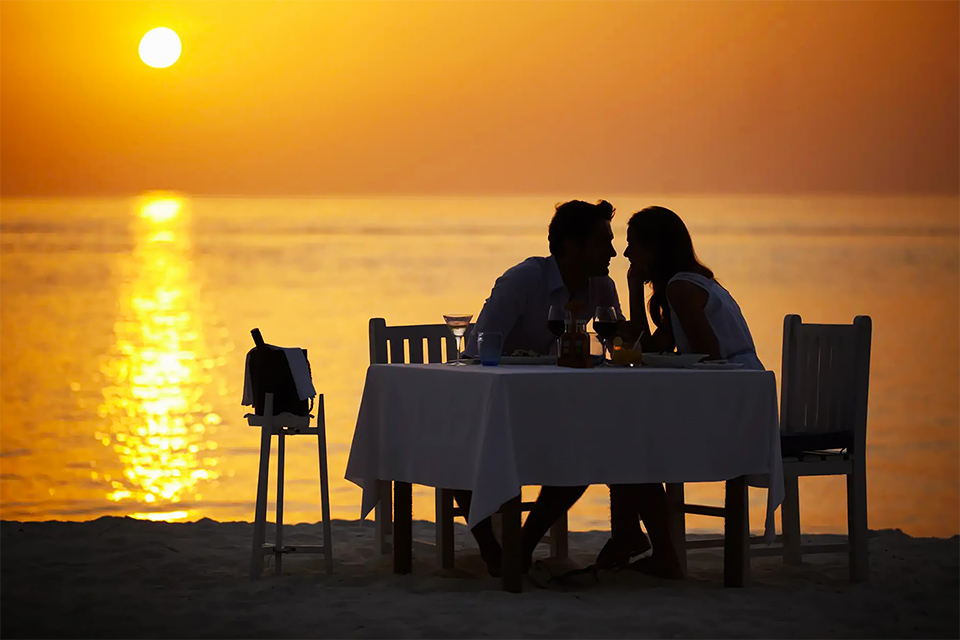
From Uluwatu, your driver takes you north to Jimbaran Bay, where a row of seafood restaurants occupies the beach itself — tables on the sand, lanterns overhead, the bay curving gently toward the airport lights to the north. The experience here is deliberately romantic: you choose your seafood fresh from the ice display, it is grilled over coconut husks, and it arrives at your table with rice, sambal, and a view of the stars that the city back home can never offer. Most Jimbaran beach restaurants price by weight; a satisfying dinner for two with fresh fish, prawns, and beer runs IDR 300,000–500,000.
Day 7: The Last Day, Done Right
The last day of a honeymoon is a particular kind of day. You are already partly somewhere else — flight times, bags, the ordinary life waiting at the other end. The instinct is to fill it, to squeeze in the thing you missed. Resist this. A good last day is generous with time and light on agenda.
Morning: Seminyak Beach at Sunrise
Walk to the beach before 7am. Seminyak’s beach at first light is a different place from the afternoon version: the sand still cool, the vendors not yet arrived, the light moving across the water in long horizontal lines. Many mornings you will have it nearly to yourselves. Walk south as far as you want. The Petitenget area, accessible along the shore, has good coffee at Revolver Espresso when you’re ready.
Late morning: A Cooking Class or a Treatment
If your flight is in the evening, a late morning is still available to you. Two options suit a last day well. A Balinese cooking class — there are excellent ones in Seminyak as well as in Ubud — takes two to three hours, produces a four-course lunch you eat together, and sends you home with recipes you will actually use. Alternatively, book a couples’ massage at one of Seminyak’s better spas; Bodyworks and Jari Menari are both longstanding and genuinely skilled. A one-hour traditional Balinese massage costs IDR 200,000–350,000 depending on the establishment.
Afternoon: Lunch, Packing, and Departure
Eat lunch at Sisterfields on Petitenget Street — Australian-Balinese café food executed with care, consistently full of long tables of couples. Then return to your villa, pack without rushing, and have your driver collect you with time to spare. The drive to the airport from Seminyak takes 20 to 40 minutes depending on traffic. Allow 90 minutes before international departure. Board your flight full, sun-warm, and in possession of seven days that will not leave you quickly.
Your 7-Day Bali Honeymoon: At a Glance
DAY |
BASE |
FOCUS |
HIGHLIGHT |
|---|---|---|---|
Day 1
|
Ubud
|
Arrival
|
Villa check-in, rest, first Ubud evening.
|
Day 2
|
Ubud
|
Temples & Terraces
|
Tirta Empul, Kintamani, Tegalalang at golden hour.
|
Day 3
|
Ubud
|
Jungle & Villages
|
Campuhan Ridge Walk, art village tour, rice field dinner.
|
Day 4
|
Ubud
| ||
Day 5
|
Transit → Seminyak
|
Transition Day
|
Ubud town morning, Tanah Lot en-route.
|
Day 6
|
Seminyak
|
Coast & Cliffs
|
Padang Padang, Uluwatu Kecak, Jimbaran dinner.
|
Day 7
|
Seminyak → Departure
|
Slow Last Morning
|
Sunrise beach walk, cooking class or spa, departure.
|
Budgeting Your 7-Day Bali Honeymoon
Bali can accommodate an enormous range of budgets, but a honeymoon typically involves some deliberate splurging. Below is a realistic guide for couples looking for a high-quality trip without staying exclusively at five-star properties.
CATEGORY |
BUDGET (USD/NIGHT OR PER ITEM) |
NOTES |
|---|---|---|
Villa accommodation
|
USD 80–250/night
|
Private pool villa in Ubud or Seminyak.
|
Private driver
|
USD 38–50/day
|
Full-day, same driver recommended throughout.
|
Dining
|
USD 15–60/couple per meal
|
Warungs ~$15, mid-range ~$30, Locavore-tier ~$120.
|
Temple/entry fees
|
USD 2–5 per site
|
Budget ~USD 50 total for both across 7 days
|
Mount Batur hike
|
USD 45–60/person
|
Includes guide fee.
|
Kecak dance (Uluwatu)
|
USD 10/person
|
Book early for good seats.
|
Spa / massage
|
USD 15–35/person/hour
|
Seminyak spas are generally higher quality.
|
Total (estimated)
|
USD 2,500–4,500/couple
|
Excluding flights and visa.
|
Plan Your Honeymoon NOW!
A seven-day Bali honeymoon itinerary, done well, is not a checklist of sites visited. It is a sequence of mornings and evenings that accumulate into something the two of you carry together from then on — the mist on the Campuhan ridge, the darkness before the Batur summit light, the sound of the Kecak chant above the ocean at dusk. These things happen whether or not the itinerary goes precisely to plan. In Bali, it rarely does, and the detours are often the best part.
Come with a rough plan, a good driver, and a genuine willingness to let the island set the pace. The temples will be there. The rice terraces will be there. What will surprise you is how completely Bali meets you where you are — which is, on a honeymoon, exactly where you want to be.
The sarong is already tied. The frangipani is already in the courtyard. The only thing left is to arrive.
💡Related reads:
FAQ
When is the best time for a 7-day Bali honeymoon?
The dry season runs from May to September, with July and August being the most reliably rain-free but also the most crowded and expensive. April, May, and early June offer excellent weather with fewer tourists and lower villa prices. October and November are shoulder months — occasional rain, significantly better value, and surprisingly uncrowded. Avoid late December to mid-January if budget is a consideration; high season pricing peaks sharply.
Is 7 days enough for a Bali honeymoon?
Seven days is a genuinely satisfying length for a first Bali honeymoon if you structure it well. You have time for both Ubud and the south coast, the major cultural sites, one adventure activity, and enough slow days to feel like you’ve actually been somewhere rather than just moved through it. Couples who can extend to 10 days gain the ability to add slower travel to a third area — Nusa Penida, East Bali, or even a night in Lombok.
Should I book a customized Bali tour package or plan independently?
For a honeymoon specifically, a customized Bali tour package through a trusted DMC is worth the investment. A good operator pre-vets villa options, secures the right driver, handles logistics around temple dress codes and ceremony schedules, and has contingency plans when things change — which they do in Bali. The alternative — booking everything independently on arrival or through aggregator platforms — works fine for flexible backpacking but introduces unnecessary stress on a trip designed to be effortless.
Do I need to hire a private driver for my honeymoon?
Yes — particularly for the Ubud days. Bali’s most beautiful places are rarely reachable by walking or scooter from the main hotel strips, and Grab/Gojek drivers (Bali’s ride-hailing services) are inconsistent for multi-stop days in rural areas. A private driver who knows you, knows your itinerary, and can adjust in real time is the operational backbone of a great Bali trip. See our [link: private driver for Bali honeymoon] guide for what to look for and what to pay.
Is the Mount Batur sunrise hike safe for all fitness levels?
The Mount Batur hike is classified as moderate — it is achievable for most reasonably healthy adults without specific hiking experience, but it is not a walk. The ascent covers approximately 700 metres of elevation gain over 2km on loose volcanic trail, entirely in the dark, at 4am. Fitness level matters less than footwear (proper trainers or hiking boots, not sandals) and a willingness to take it slowly. Your guide sets the pace. If either of you has a knee issue or significant cardiovascular concern, discuss it with your doctor before booking.
What should couples wear at Balinese temples?
Temples require a sarong (a wraparound cloth) and sash for both men and women; these are provided or rented at most major temple gates for a small donation. Shoulders should be covered — bring a light scarf or shirt. Avoid wearing all-white clothing at temples, as white in Balinese culture is the colour worn during funeral and cremation ceremonies. Menstruating women are traditionally asked not to enter the inner sanctums of active temples; signage at the gate will indicate this.
How much should I budget for a 7-day Bali honeymoon?
A comfortable honeymoon with private pool villa accommodation, daily private driver, a mix of mid-range and occasional splurge dinners, activities, and entry fees costs roughly USD 2,500 to USD 4,500 per couple, excluding international flights. This range assumes you are staying in boutique private villas (not five-star resort properties) and eating a mix of warung meals and nicer restaurants. At the upper end of this range, you can include the Mount Batur hike, a Jimbaran dinner, the Uluwatu Kecak dance, a couples’ spa treatment, and still eat exceptionally well every evening.
What is the ideal split between Ubud and the south for a honeymoon?
For a 7-night trip, four nights in Ubud and three in Seminyak works well for couples who want cultural immersion combined with a coastal finish. If one partner is more drawn to the ocean and beach clubs, shift to three and four. If you want to go deeper into Ubud — more cooking classes, a yoga or spa retreat, slower cultural exploration — five nights there and two in the south is perfectly viable. The one combination to avoid is rushing both — two nights each means neither place reveals itself fully.
Do I need travel insurance for Bali?
Yes, without reservation. Medical care in Bali for serious incidents requires evacuation to Singapore or Australia; the cost without insurance runs to tens of thousands of dollars. Comprehensive travel insurance that includes medical evacuation, trip interruption, and luggage cover is non-negotiable for international travel to Indonesia. Purchase it the day you book your flights — not the week before departure.
Can I visit Bali for a honeymoon without speaking Indonesian?
Entirely. English is widely spoken in Ubud, Seminyak, Canggu, and the main tourist areas of Bali. Restaurant menus, villa staff, drivers, and tour operators all communicate comfortably in English. In village markets or very rural areas, a few words of Bahasa Indonesia (the national language) go a long way — your driver will happily teach you the essentials. A few phrases in Balinese (“Om Swastyastu” — a Hindu greeting, and “Suksma” — thank you) will earn you visible warmth from locals.