
4–5 Days Sumba Island Tour – Grand West to East Journey
This 4 and 5 Days Sumba Tour Packages are the complete cross-island journey — designed with intelligent routing from Tambolaka Airport in West Sumba to Waingapu Airport in East Sumba. Coastal cliffs, traditional villages, inland highlands, and East Sumba’s golden savannas unfold in a single forward-moving arc. No backtracking. No rushed roundtrip transfers. With strategic split stays and realistic drive pacing, this itinerary balances efficiency with immersion.
Choose 4 days for a well-paced overview, or 5 days for expanded East Sumba depth and sunrise flexibility.
Prices
Travel logistics in Sumba can vary depending on season, flight schedules, accommodation availability, and road conditions. For this reason, pricing is finalized after confirming your preferred dates and pace.
Price includes: Experienced driver. Local English-speaking guide. Air-conditioned passenger van. Attraction tickets and parking fees. Daily housekeeping & villa staff. 24h on-call ground assistance. Cold towel and mineral water.
Discover Sumba from Coast to Savanna in One Seamless Journey
A thoughtfully designed cross-island experience that connects West Sumba’s dramatic coastline with East Sumba’s rolling savannas — without backtracking, rushing, or wasted travel time. Why this journey works:
Linear routing: Tambolaka → Waingapu (no return drive). Split stay: Overnight in both West & East Sumba. Coastal icons + Savanna landscapes in one itinerary.
Efficient cross-island transfer designed as a scenic experience. Available in 4 or 5 days — choose efficient or relaxed pacing.
Whether you have limited time or prefer a slower rhythm, this itinerary balances movement and immersion — giving you a complete cross-island perspective of Sumba.
The Full Arc of Sumba
Sumba is not a destination best understood in fragments. West and East Sumba carry different textures, landscapes, and rhythms — and experiencing both in a single journey reveals the island’s true character. The western coast is defined by dramatic cliffs, turquoise lagoons, and megalithic villages rooted in ancestral traditions. The eastern region opens into vast savannas, rolling hills, and iconic sunrise and sunset horizons that feel almost cinematic. Together, they form a complete narrative.
One-direction cross-island journey – Tambolaka → Waingapu. West coastal icons: Ratenggaro, Mandorak, Weekuri Lagoon. East Sumba savannas and Wairinding Hill sunrise option. Tanggedu Waterfall and Waingapu cultural villages. Smart split stay strategy – exploring both West and East Sumba. No backtracking or rushed roundtrip transfers. Choice of 4 days efficient or 5 days expanded pacing options. Classic and premium accommodation tiers available. Private vehicle with experienced local driver. Ideal balance of coast, culture, and highland landscapes.
This is why our 4–5 Days Sumba Island Tour – Grand West to East Journey is designed as a cross-island experience rather than a return-based itinerary. Instead of exploring one region and doubling back, the route flows naturally from Tambolaka in the west to Waingapu in the east. The journey itself becomes part of the experience — not a logistical inconvenience.
Unlike a shorter 3-day West Sumba trip, which focuses primarily on coastal highlights and nearby cultural sites, this itinerary expands the perspective. It allows time for transition — geographically and emotionally. The landscapes gradually shift from limestone cliffs and hidden beaches to open grasslands and traditional villages shaped by eastern Sumba’s distinct heritage. You don’t just visit different locations; you feel the island transform.
The routing is intentionally linear. There is no backtracking, no unnecessary return drive, and no repetition of roads. Each day moves forward, building toward a new visual and cultural identity. This one-direction flow reduces travel fatigue and enhances immersion, ensuring that the cross-island transfer feels purposeful rather than compressed.
By connecting West and East in a single arc, the journey reflects Sumba as a whole — not as isolated highlights, but as an unfolding story across landscapes, traditions, and horizons.
 Related products and information:
→ West Sumba Tours: Beaches, Lagoons & Waterfall Adventures
→ Sumba Travel Guide & Tours Indonesia’s Last Untouched Paradise
→ Book Sumba Tours Online Curated Journeys Across West & East
Who This Journey Is For
This cross-island experience is designed for travelers who want more than a regional snapshot of Sumba. It suits those who:
Want to see both West and East Sumba in one seamless trip. Prefer forward-moving travel instead of returning the same way. Have 4–5 days available and want a balanced island overview. Appreciate landscape diversity — from coastal cliffs to open savannas. Value structured pacing with minimal logistical friction.
It is ideal for couples, photographers, first-time visitors, and curious explorers who want to understand Sumba beyond a single region — without committing to a longer 6–7 day immersion. If the 3-day journey offers a focused West Sumba experience, this itinerary delivers a broader narrative — connecting coast, culture, and savanna into one continuous arc across the island.
It is ideal for couples, photographers, first-time visitors, and curious explorers who want to understand Sumba beyond a single region — without committing to a longer 6–7 day immersion. If the 3-day journey offers a focused West Sumba experience, this itinerary delivers a broader narrative — connecting coast, culture, and savanna into one continuous arc across the island.
Route Logic & Split Stay Strategy
A cross-island journey only works when the routing is intentional. Without careful planning, 4–5 days across Sumba can easily feel compressed or dominated by long transfer hours. This itinerary is designed to prevent exactly that.
Designed as a One-Direction Flow
The journey begins with arrival at Tambolaka Airport in West Sumba and ends with departure from Waingapu Airport in East Sumba. This linear structure eliminates the need to return to the original arrival point. Instead of spending valuable time retracing the same road, each day progresses forward — geographically and experientially.
West Sumba introduces dramatic coastlines, traditional villages, and lagoon landscapes. As the route moves inland toward Central Sumba, the terrain begins to shift. By the time you reach East Sumba, the scenery opens into rolling savannas and wide horizons. The transfer itself becomes part of the narrative rather than a logistical burden.
This forward-moving design minimizes fatigue and maximizes exploration time.
Why Split Stay Matters
Staying in both West and East Sumba is not just a convenience — it is strategic.
In 4 Days Sumba Island Tour Package, the overnight pattern transitions gradually:
- West Sumba (arrival & coastal highlights).
- Mid-island stop (to break the long drive).
- East Sumba (savannas & cultural sites).
In 5 Days Sumba Island Tour Package, the split stay becomes even more refined:
- Two nights in West Sumba to avoid rushing.
- Scenic cross-island transfer day.
- Two nights in East Sumba for deeper immersion.
This accommodation structure reduces daily packing stress, shortens early-morning departures, and allows sunrise or sunset moments to be experienced properly — not squeezed between long drives.
Turning Transfer Into Experience
Sumba’s cross-island drive is visually rewarding but geographically long. Instead of treating it as a simple relocation, the itinerary transforms it into an experiential corridor:
- Scenic highland stops.
- Savanna viewpoints.
- Cultural detours when appropriate.
- Flexible photo breaks.
This pacing strategy prevents the journey from feeling transitional. Movement becomes exploration.
The Strategic Outcome
The split stay and one-direction routing achieve three important results:
1️⃣ No backtracking.
2️⃣ Reduced travel fatigue.
3️⃣ Clear regional identity shifts from West to East.
The experience unfolds logically — coast to highland to savanna — allowing travelers to feel the island evolve around them rather than jumping between disconnected highlights.
Choose Your Pace — Efficient or Expanded?
Both versions follow the same cross-island philosophy: linear routing from Tambolaka to Waingapu, split stays for comfort, and a gradual landscape transition from coast to savanna. The difference lies in pacing — particularly how much time you dedicate to East Sumba.
If you are deciding between 4 Days and 5 Days, here is how they compare clearly.
Efficient Cross-Island
4 Days Sumba Island Tour
Designed for travelers with tighter schedules who still want to experience both West and East Sumba in one seamless arc.
- Full West coastal highlights on arrival.
- Scenic inland transition toward Central Sumba.
- Introduction to East savannas and cultural sites.
- 1 night in East Sumba.
- Slightly shorter East exploration window.
- Ideal for efficient travelers who prefer momentum.
This version prioritizes flow and coverage while maintaining comfort through smart routing and split accommodation.
Expanded East Experience
5 Days Sumba Island Tour
Designed for those who prefer deeper immersion and a more relaxed rhythm — especially in East Sumba.
- Two nights in the West to avoid rushing.
- Gradual cross-island transfer is treated as exploration.
- 2 nights in East Sumba.
- Optional Wairinding Hill sunrise experience.
- More time for Tanggedu Waterfall exploration.
- Greater flexibility for cultural stops and photography.
This version allows East Sumba’s identity — its open savannas and wide horizons — to breathe fully.
Side-by-Side Comparison
Feature |
4 Days Sumba Island Tour |
5 Days Sumba Island Tour |
|---|---|---|
Total Duration
|
4 Days / 3 Nights
|
5 Days / 4 Nights
|
Routing
|
Tambolaka → Waingapu
|
Tambolaka → Waingapu
|
West Sumba Stay
|
1–2 nights (including transition)
|
2 nights
|
East Sumba Stay
|
1 night
|
2 nights
|
Wairinding Sunrise
|
Not included
|
Optional sunrise session
|
Tanggedu Exploration
|
Time-dependent, shorter visit
|
Extended exploration window
|
Travel Style
|
Efficient & well-paced
|
Relaxed & immersive
|
Limited time travelers
|
Photographers & slow explorers
|
Which One Should You Choose?
Choose 4 Days if:
- Your schedule is limited.
- You want a complete overview in minimal time.
- You are comfortable with a slightly faster rhythm.
Choose 5 Days if:
- You want sunrise flexibility in East Sumba.
- You prefer a slower, more immersive pace.
- You want savannas to be more than a brief stop.
Both options maintain the same linear cross-island structure. The decision comes down to pacing — not quality.
→ View Detailed Itinerary & Request Availability
Itinerary
4 Days Sumba Island Tour
Day #1
Arrival + Coastal West Introduction
- Airport pickup in Tambolaka.
- Ratenggaro Traditional Village.
- Mandorak Beach.
- Waikuri Lagoon.
- Sunset at Lendongara Hill.
- Overnight in West Sumba.
Day #2
Savanna + Transition West → Central
- Waikelo Sawah.
- Tana Daru Savannah.
- Scenic inland drive to Central Sumba.
- Optional traditional village detour.
- Sunset hill stop.
- Overnight mid-island.
Day #3
Central Highlands → East Sumba
- Morning highland landscapes.
- Wairinding Hill.
- Prailiu Traditional Village.
- Walakiri Beach sunset.
- Overnight in East Sumba.
Day #4
East Sumba + Departure
- Tanggedu Waterfall or savanna viewpoint.
- Optional short coastal stop.
- Transfer to Waingapu Airport.
5 Days Sumba Island Tour
Day #1
West Coastal Cluster
- Tambolaka arrival.
- Ratenggaro Village.
- Mandorak Beach.
- Waikuri Lagoon.
- Sunset viewpoint.
- Overnight West Sumba.
Day #2
West Landscapes + Cultural Depth
- Waikelo Sawah.
- Pero Beach.
- Additional traditional village immersion.
- Sunset savanna stops.
- Overnight West Sumba.
Day #3
Cross-Island Scenic Transfer
- Gradual inland drive.
- Central Sumba photo stops.
- Picnic-style scenic break.
- Arrival in East Sumba by afternoon.
- Relaxed sunset at Walakiri.
- Overnight East Sumba.
Day #4
East Cultural + Nature Focus
- Optional Wairinding Hill sunrise.
- Tanggedu Waterfall exploration.
- Prailiu Village.
- East coastal exploration.
- Overnight East Sumba.
Day #5
Soft Morning + Departure Waingapu
- Light morning activity or rest.
- Airport transfer.
What You Will Visit
West Sumba Highlight
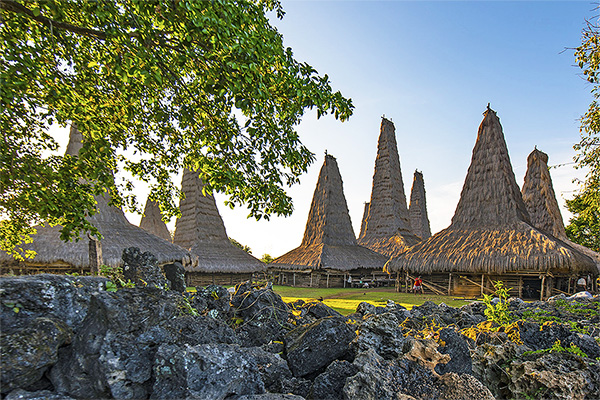
1. Ratenggaro Village
One of the most iconic traditional villages in West Sumba, Ratenggaro is known for its towering marapu houses with dramatically high thatched roofs. Located right beside the ocean, the village offers both cultural insight and coastal scenery — making it one of the island’s most photographed heritage sites.
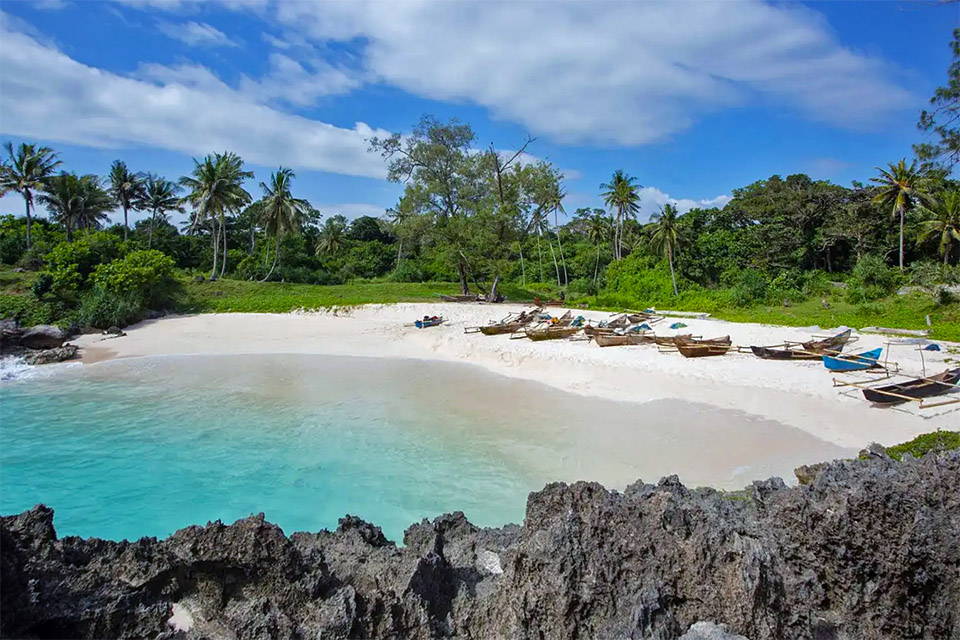
2. Mandorak Beach
A hidden cove framed by limestone cliffs, Mandorak Beach feels intimate and secluded. Its turquoise water and dramatic rock formations create a striking contrast against the dry Sumba landscape. Depending on tide conditions, the beach is ideal for quiet exploration and scenic photography.
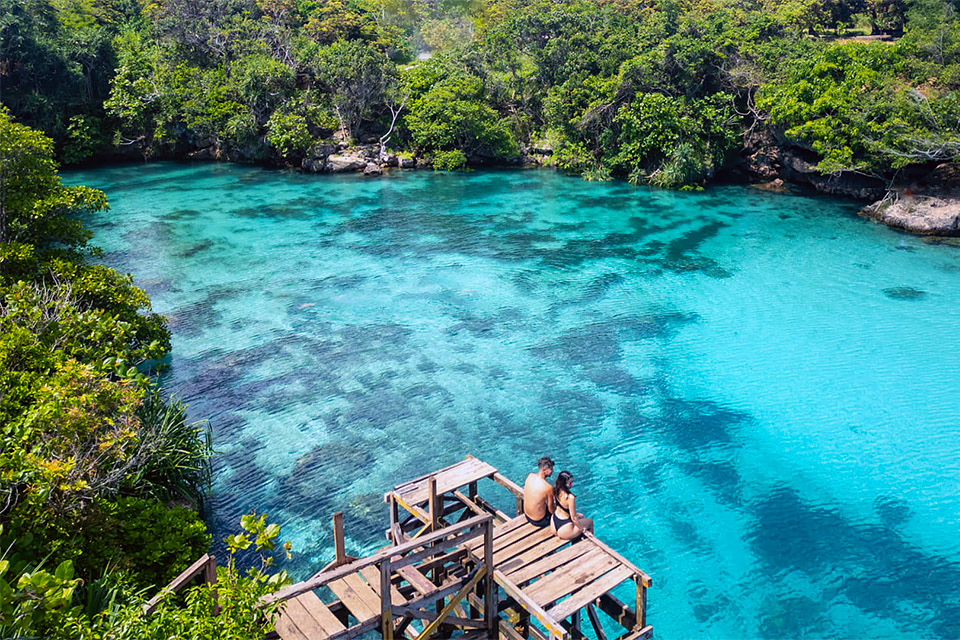
3. Waikuri Lagoon
Waikuri Lagoon is a saltwater lagoon enclosed by coral and limestone walls. Known for its clear, calm water, it offers a natural infinity-edge effect overlooking the open ocean. It’s one of West Sumba’s most distinctive coastal landscapes and a highlight for swimming and relaxation.
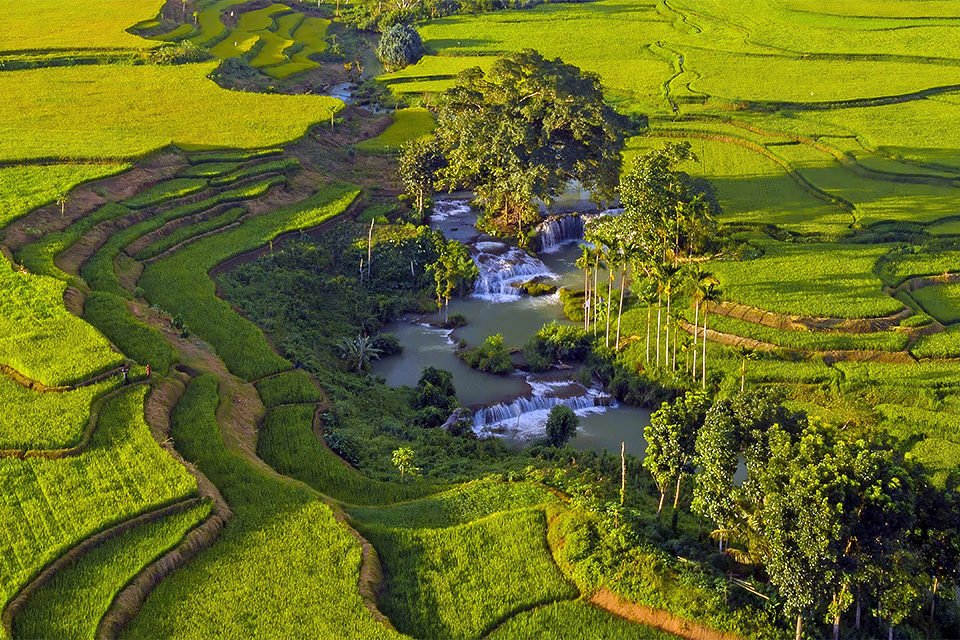
4. Waikelo Sawah
A unique freshwater spring emerging directly from a cave, Waikelo Sawah forms small rice paddies and irrigation channels nearby. It is not a large waterfall, but rather a serene, geological curiosity that adds diversity to West Sumba’s predominantly dry terrain.
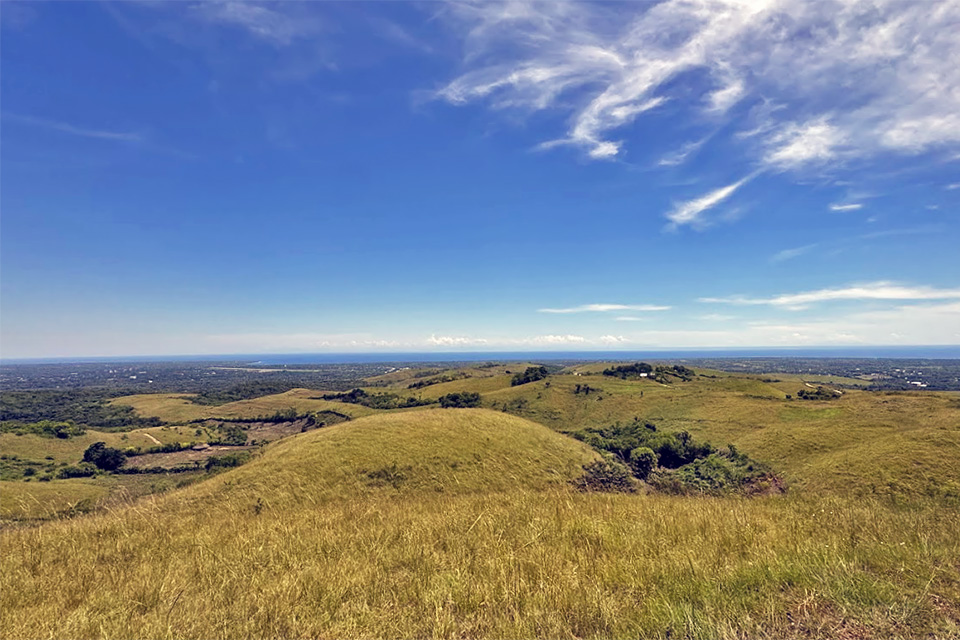
5. Lendongara Hill
Often visited during golden hour, Lendongara Hill offers panoramic views over rolling savannas and distant coastline. The layered hills turn warm and golden toward sunset, making it one of the most photogenic elevated viewpoints in West Sumba.
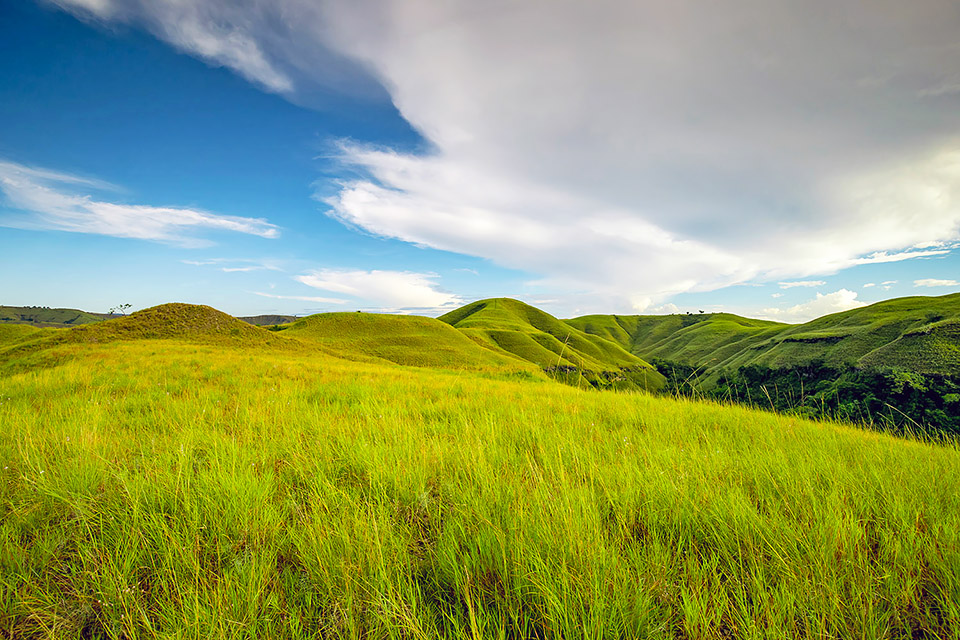
6. Tana Daru Savannah
Tana Daru showcases West Sumba’s wide-open savanna landscape. During the dry season, the hills glow golden; in the greener months, they become lush and softly layered. It is one of the best places to understand the island’s expansive, almost cinematic terrain.
Central Sumba Transition Landscapes through Highland Scenic Drives
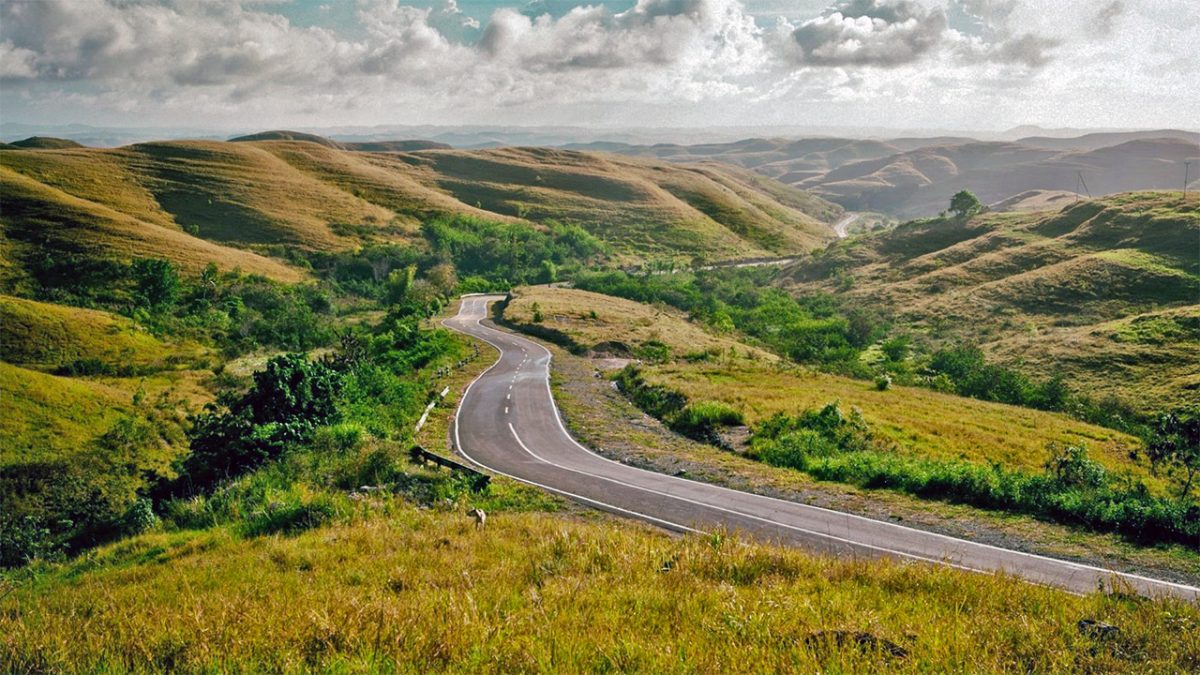
The inland route across Central Sumba reveals undulating hills, scattered villages, and open pastoral landscapes. This segment transforms the long drive into a visual progression rather than a transfer. Optional traditional village stops may be included depending on timing and pacing.
East Sumba Highlight
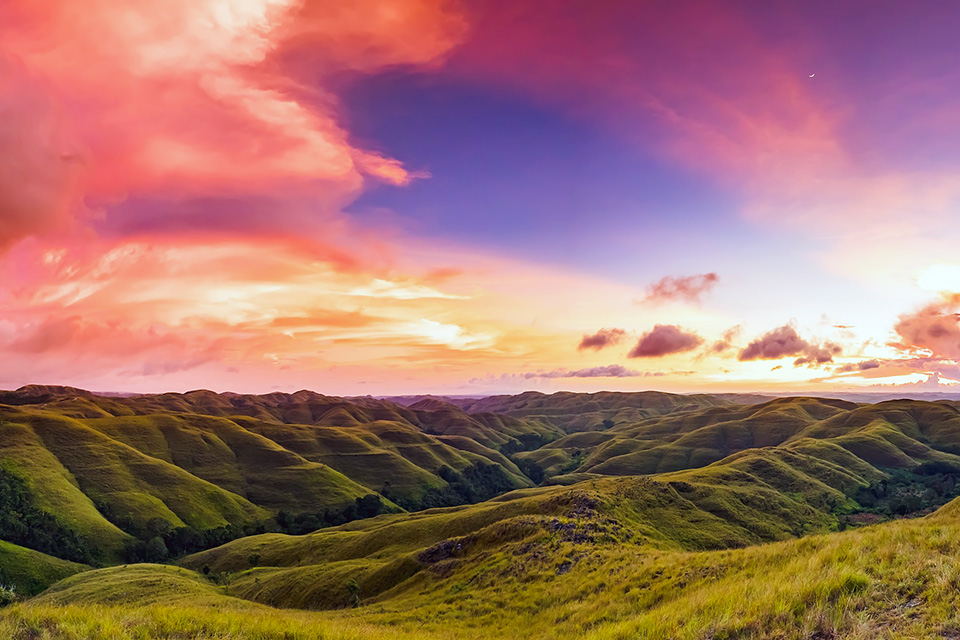
7. Wairinding Hill
One of East Sumba’s most iconic landscapes. Wide, layered hills stretch into the distance, creating dramatic sunrise and sunset silhouettes — especially striking during the dry season.
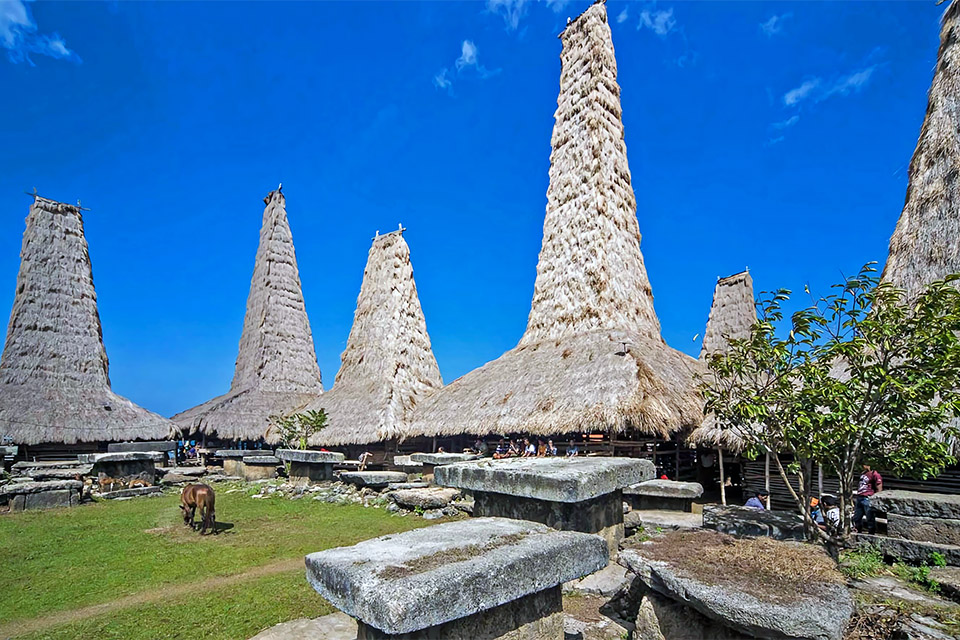
8. Prailiu Traditional Village
Located near Waingapu, Prailiu showcases East Sumba’s distinct architectural style and ikat weaving heritage. It offers a cultural contrast to West Sumba’s coastal villages.
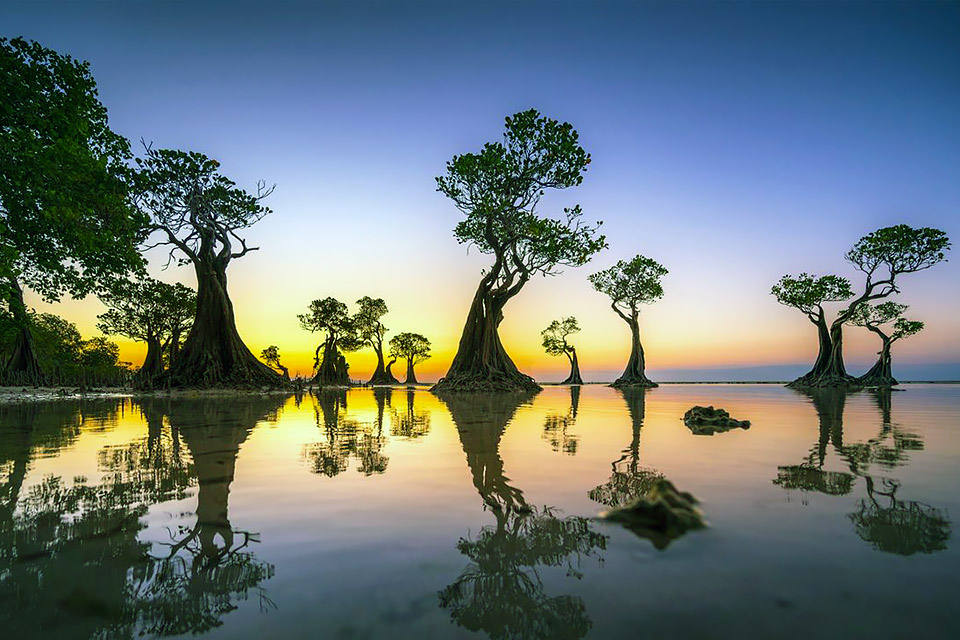
9. Walakiri Beach
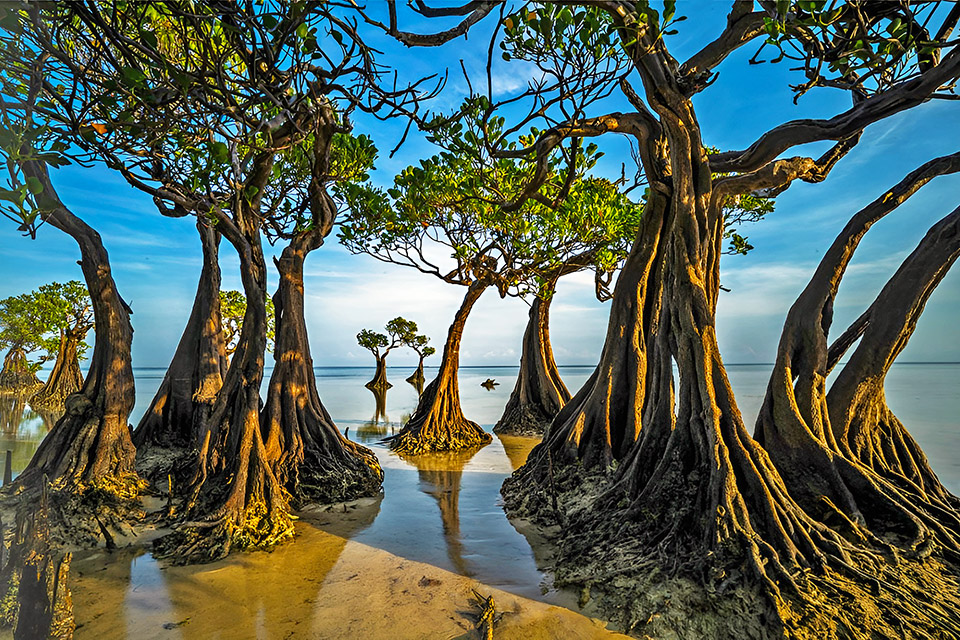
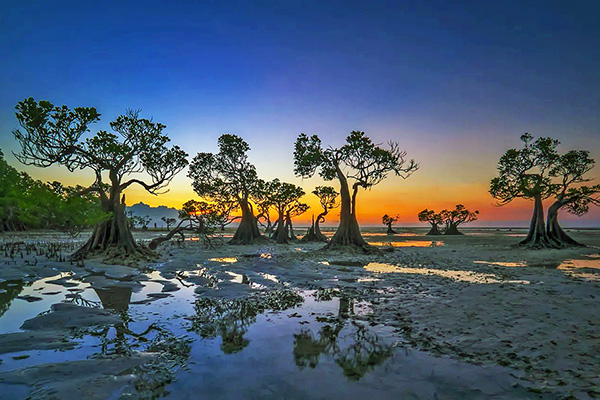
Known for its small mangrove trees that form elegant silhouettes during low tide. A peaceful coastal setting ideal for sunset photography.
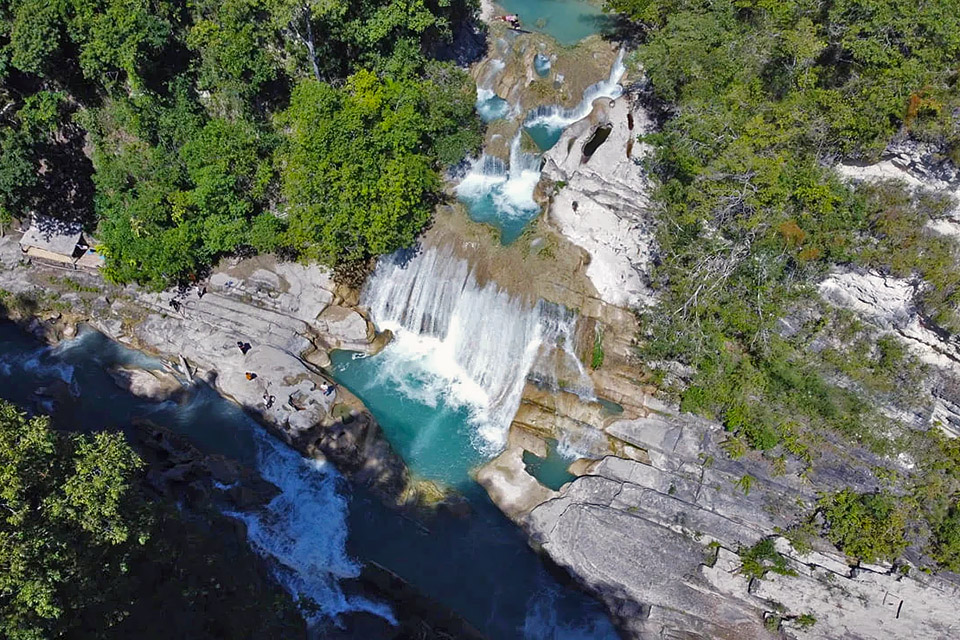
10. Tanggedu Waterfall
Often described as Sumba’s “mini Grand Canyon,” Tanggedu features layered rock formations and natural pools surrounded by dry-season savanna terrain. Access involves light trekking.
Detailed Itinerary
This cross-island journey is designed with a one-direction flow: Arrival at Tambolaka Airport in West Sumba and departure from Waingapu Airport in East Sumba. Continuous flow, no backtracking. No wasted return drive. Each day moves forward geographically and experientially. If you prefer to stay entirely in West Sumba without crossing the island, Explore our 3 Days West Sumba Tour if you prefer a regional focus.
Below, choose between the efficient 4-day arc or the expanded 5-day immersion.
4 Days / 3 Nights – Efficient Grand Sumba
A well-paced cross-island overview for travelers with limited time.
Day 1 – Arrival Tambolaka | Coastal West Introduction
- Airport pickup in Tambolaka.
- Ratenggaro Traditional Village.
- Mandorak Beach.
- Waikuri Lagoon.
- Sunset at Lendongara Hill.
- Overnight in West Sumba.
Purpose: Cluster West Sumba’s icons while energy is high after arrival. Dramatic cliffs, turquoise water, and megalithic heritage set the tone for the journey.
Day 2 – Savanna & Transition West → Central
- Waikelo Sawah.
- Tana Daru Savannah.
- Scenic inland drive toward Central Sumba.
- Optional traditional village detour.
- Sunset hill stop (location-dependent).
- Overnight mid-island (Waikabubak area).
Purpose: Break the long cross-island drive intelligently. Instead of pushing directly east, the route transitions gradually, turning relocation into exploration.
Day 3 – Central Highlands → East Sumba
- Morning highland landscapes.
- Wairinding Hill (iconic East savanna).
- Prailiu Traditional Village (Waingapu).
- Walakiri Beach sunset (mangrove silhouettes).
- Overnight in East Sumba.
Purpose: The identity shift begins. Landscapes widen. Horizons stretch. East Sumba’s open savanna character becomes unmistakable.
Day 4 – East Sumba Highlights | Departure Waingapu
- Tanggedu Waterfall or savanna viewpoint (time-dependent).
- Optional short coastal stop.
- Transfer to Waingapu Airport.
Purpose: Conclude the journey in East Sumba without a rushed return across the island.
5 Days / 4 Nights – Expanded Grand Sumba
The 5-day version reduces compression and allows deeper immersion, particularly in East Sumba.
Day 1 – West Coastal Cluster
- Tambolaka arrival.
- Ratenggaro Village.
- Mandorak Beach.
- Waikuri Lagoon.
- Sunset viewpoint.
- Overnight West Sumba.
Purpose: Identical strong coastal opening, without time pressure.
Day 2 – West Landscapes & Cultural Depth
- Waikelo Sawah.
- Pero Beach.
- Sunset savana stop.
- Additional traditional village immersion.
- Overnight West Sumba.
Purpose: Avoid rushing West highlights. Add depth rather than stacking stops.
Day 3 – Cross-Island Scenic Transfer
- Gradual inland drive.
- Central Sumba photo stops.
- Picnic-style scenic break.
- Arrive in East Sumba by afternoon.
- Relaxed sunset at Walakiri.
- Overnight East Sumba.
Purpose: Make the transfer experiential, not transitional. The journey becomes part of the story.
Day 4 – East Cultural & Nature Focus
- Optional Wairinding Hill sunrise.
- Tanggedu Waterfall exploration.
- Prailiu Village.
- East coastal exploration.
- Overnight East Sumba.
Purpose: East Sumba receives proper breathing room — for photography, culture, and landscape immersion.
Day 5 – Soft Morning | Departure Waingapu
- Light morning activity or rest.
- Airport transfer.
Purpose: A calm finish that respects travel rhythm — not a compressed checkout day.
The Strategic Difference
The 4-day version prioritizes efficiency and flow.
The 5-day version prioritizes depth and flexibility.
Both maintain:
- Linear routing.
- Split stay logic.
- Balanced regional representation.
- No backtracking.
This is not simply an extended 3-day tour.
It is a cross-island narrative — built on movement, transition, and contrast.
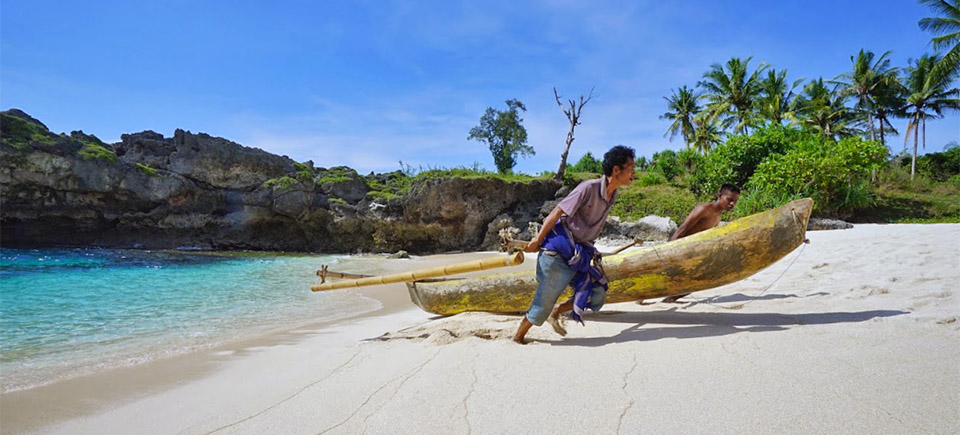
Logistical Notes – Travel Rhythm & Practical Considerations
Sumba is geographically expansive, and cross-island journeys require thoughtful pacing.
This itinerary is structured to balance exploration with realistic travel time expectations.
Drive Times & Distance Awareness
- West Sumba coastal cluster (Day 1) involves short scenic drives between stops.
- The cross-island movement from West toward East is the longest travel segment, typically 4–6 hours total driving time, depending on road conditions and stops.
- The 4-day version breaks this with a mid-island overnight to prevent fatigue.
- The 5-day version distributes the drive across two lighter segments.
Travel time in Sumba is influenced more by road conditions than distance alone. The journey is part of the experience — but it is paced intentionally.
Road Conditions
Road quality varies across regions:
- Main connecting roads between major towns are generally paved.
- Rural access roads to waterfalls, savannas, and traditional villages may be uneven or partially unsealed.
- Some attractions require short off-road access or light trekking.
Vehicles are selected accordingly, and drivers are experienced with local terrain. Travel is comfortable but not urban-smooth — which is part of Sumba’s raw charm.
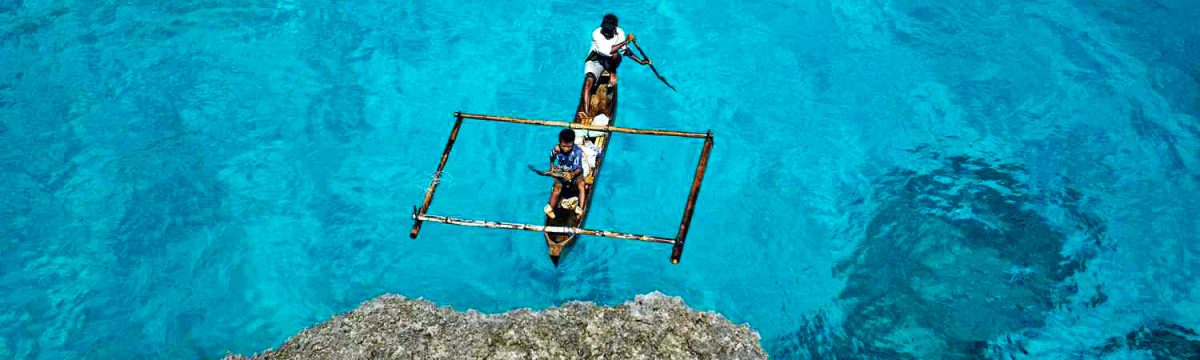
Luggage Flow & Split Stay Efficiency
Because this is a one-direction journey (Tambolaka → Waingapu), luggage moves forward with you — never backward.
4 Days Sumba Tour Version:
- Two accommodation shifts (West → Mid-Island → East).
5 Days Sumba Tour Version:
- One shift in West, one shift to East.
- Longer stays reduce repeated packing.
We recommend:
- Medium-sized luggage or soft bags for easier vehicle handling.
- A small daypack for daily essentials (water, sunscreen, camera).
The split stay strategy reduces early departures and allows sunrise or sunset sessions without long pre-dawn transfers.
Energy & Travel Rhythm
This is not a stationary resort stay. It is a moving landscape journey.
- Early departures may occur for sunrise viewpoints (optional in 5-day version).
- Midday breaks are incorporated when possible.
- Driving days are structured with scenic or cultural pauses.
The overall pacing is balanced — not rushed — but travelers should be comfortable with moderate daily movement.
Sumba may look compact on a map, but terrain and infrastructure make it feel expansive. This itinerary has been designed to:
- Eliminate backtracking.
- Avoid unnecessary return drives.
- Turn long transfers into experiential segments.
Logistics are not an afterthought — they are the backbone of this cross-island design.
Accommodation Options — Classic & Premium
Both the 4-Day and 5-Day versions of this cross-island journey are available in two carefully selected accommodation tiers. The routing, guiding, and core experience remain the same. The difference lies in comfort level, design atmosphere, and service refinement.
This allows you to choose your travel style — without choosing a different itinerary.
Classic Tier — Comfortable & Character-Focused
Designed for travelers who prioritize location and experience over luxury styling without sacrificing adequate comfort.
What to Expect:
- Well-rated local hotels or boutique guesthouses.
- Private air-conditioned rooms with en-suite bathrooms.
- Strategic location near main exploration areas.
- Daily breakfast included.
- Clean, comfortable, and functional amenities.
Classic accommodation ensures restful nights while keeping the journey cost-efficient. It is ideal for active travelers who spend most of their day exploring landscapes and villages.
Best for:
- Adventure-focused couples.
- Friends traveling together.
- Value-conscious explorers.
Premium Tier — Elevated Comfort & Scenic Ambience
Designed for travelers who want the same cross-island adventure with enhanced atmosphere and relaxation.
What to Expect:
- High-end boutique resorts or scenic-view properties.
- Larger rooms with refined interior design.
- Stronger emphasis on landscape setting (coastal or hill views).
- Enhanced service standards.
- Restaurant and on-site facilities with higher comfort level.
Premium tier provides a more immersive sense of place during downtime — especially meaningful on split stays in both West and East Sumba.
Best for:
- Couples seeking romantic ambiance.
- Honeymoon travelers.
- Photographers who value scenic property settings.
- Travelers combine exploration with comfort.
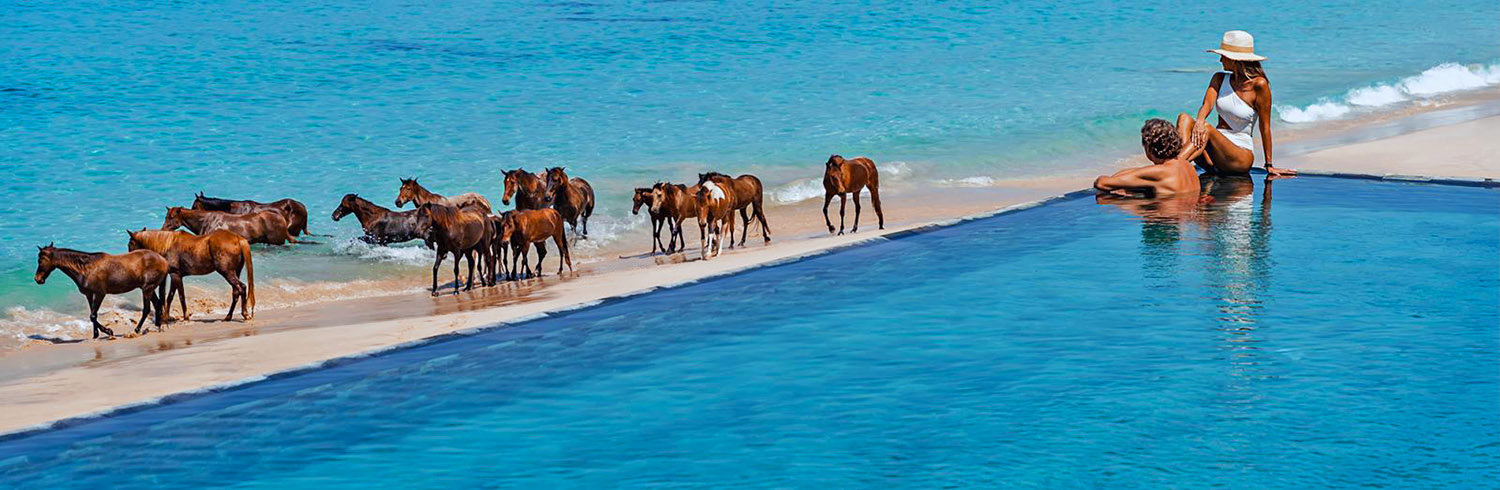
What Remains Identical Across Both Tiers
- Linear Tambolaka → Waingapu routing.
- Private vehicle & experienced driver.
- Guided exploration as per itinerary.
- Split stay strategy (West + East).
- Logistical design and pacing.
Your choice of accommodation tier enhances comfort — it does not change the cross-island structure.
Which Tier Should You Choose?
Choose Classic if you:
- Prioritize the landscapes over hotel styling.
- Prefer practical comfort.
- Want to optimize the budget without reducing experiences.
Choose Premium if:
- Value scenic stays and a refined atmosphere.
- Want your downtime to feel indulgent.
- Are celebrating a special occasion.
Both tiers are curated carefully. The difference is not about “basic vs luxury” — it is about travel style preference.
→ View Availability & Request Pricing for Classic or Premium
What Makes This Cross-Island Route Efficient
A well-designed route only works when paired with the right logistics.
Below are the essential operational notes to help you plan your Sumba Highlight Express journey with clarity and confidence.
1. Airports: The Foundation of Efficiency
The essential decision in a cross-island itinerary is not which waterfall to visit — it is which airports you use.
This route is intentionally designed with:
Arrival: Tambolaka (West Sumba)
Departure: Waingapu (East Sumba)
This pairing eliminates the need to return across the island at the end of the journey.
Without proper airport pairing, travelers often lose:
- Half a day backtracking.
- Sunrise opportunities.
- Final-day exploration time.
By arriving west and departing east, the island unfolds naturally in one direction.
2. Linear Routing — No Backtracking
The route follows a forward-moving progression:
→ Coastal West
→ Inland Highlands
→ Eastern Savannas
There is no zig-zag movement between regions.
There is no returning to previous bases.
There is no repetition of the same long highway.
Each day builds upon the last.
This linear logic:
- Reduces fatigue.
- Maintains visual freshness.
- Creates a stronger narrative arc.
Movement becomes discovery — not relocation.
3. Avoiding Zig-Zag Transfers
Many generic cross-island templates are built by copying highlight lists without considering geography. The result often includes:
- Attractions placed on opposite ends of the region on the same day.
- Excessive daily driving.
- Poorly timed sunset positioning.
- Unrealistic arrival assumptions.
This itinerary avoids that by clustering attractions geographically:
- West coastal icons grouped together.
- Central stops used as transition buffers.
- East savannas explored from a proper base.
The design prioritizes proximity and logical sequencing — not checklist density.
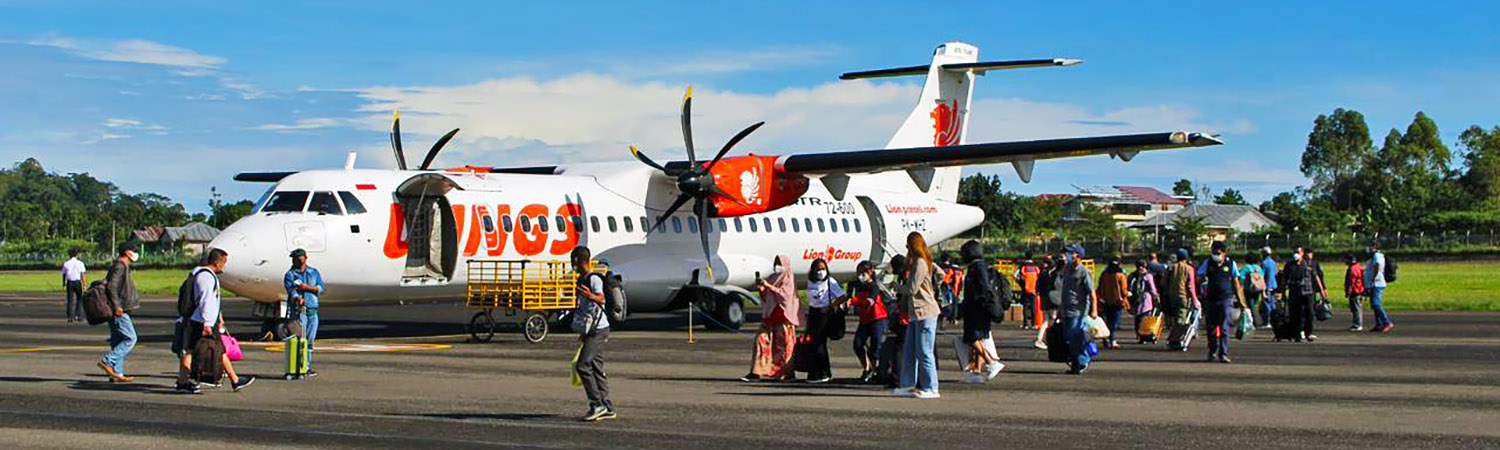
4. Realistic Drive Expectations
Sumba’s road conditions vary. Distances may look short on a map, but terrain and rural access roads require flexibility.
This route acknowledges:
- 4–6 hour cross-island movement when necessary.
- Slower access roads near waterfalls and villages.
- Time buffers for scenic stops.
Rather than promising unrealistic daily coverage, the itinerary balances exploration with comfort.
Efficiency here does not mean speed.
It means intelligent pacing.
5. Designed — Not Template-Based
Many OTA-style itineraries are built for visual appeal rather than logistical practicality. They often:
- Repeat accommodation bases.
- Underestimate drive time.
- Ignore airport strategy.
- Compress cross-island transfers.
This route is structured from operational experience on the ground. Every overnight location, sunrise option, and transfer segment has been evaluated for practicality and traveler energy flow.
The result is not just a list of destinations — but a coherent cross-island journey.
The Outcome
What makes this route efficient is not fewer stops — It is smarter sequencing.
- Correct airport pairing.
- One-direction movement.
- Strategic split stay.
- Realistic drive planning.
Efficiency in Sumba is about design discipline. And that is what allows this journey to feel expansive — without feeling rushed.
Practical Notes — Before You Travel
A cross-island journey in Sumba rewards preparation. The following notes help set clear expectations and ensure your experience runs smoothly from arrival to departure.
Arrival Airport: Tambolaka (West Sumba)
Your journey begins at Tambolaka Airport (TMC) in West Sumba.
We recommend scheduling arrival before early afternoon whenever possible. This allows sufficient time to explore West Sumba’s coastal highlights on Day 1 without rushing sunset viewpoints.
Airport pickup is arranged directly at the arrival gate. Tambolaka is a small regional airport, arrival procedures are typically straightforward and efficient.
Departure Airport: Waingapu (East Sumba)
The tour concludes at Waingapu Airport (WGP) in East Sumba.
Departure from Waingapu eliminates the need to drive back across the island. This is a key part of the itinerary’s efficiency.
Morning departures are manageable in both 4-day and 5-day versions, though we generally recommend mid-morning or later flights to avoid unnecessary compression on the final day.
Drive Time Expectations
Sumba’s scale is often underestimated.
- West coastal exploration days involve shorter scenic transfers.
- The longest transfer occurs during the cross-island movement to East Sumba.
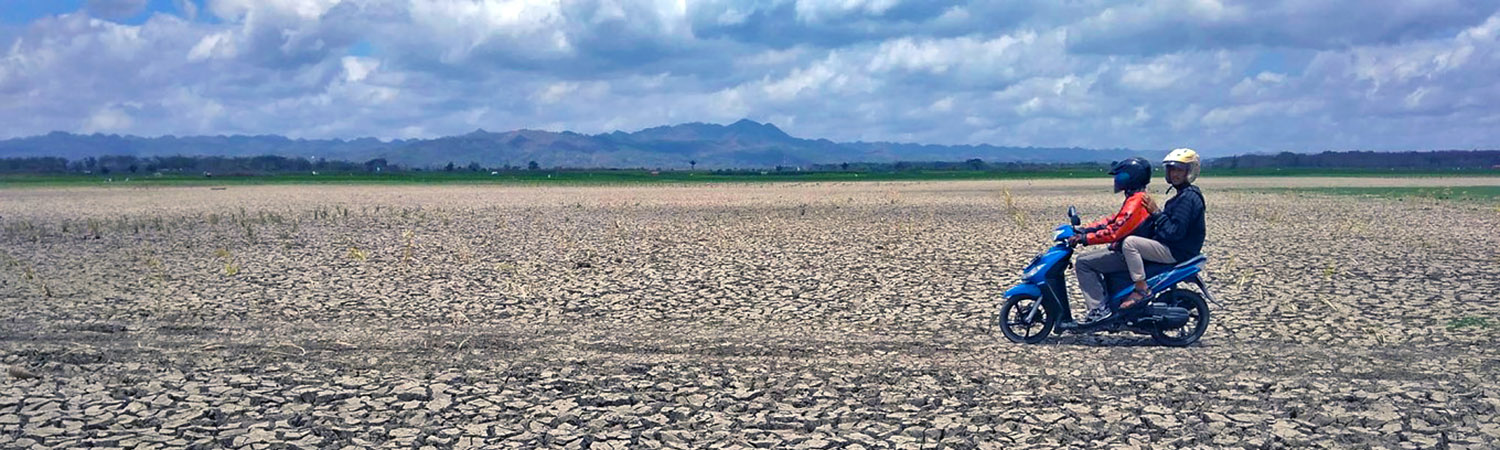
- Total drive time on that transition day may reach approximately 4–6 hours including stops.
Drive time varies depending on:
- Road maintenance conditions.
- Weather.
- Local traffic (usually light).
- Number of scenic or cultural stops.
This itinerary incorporates natural pauses to prevent fatigue. The travel rhythm is deliberate, not rushed.
Seasonal Considerations
Sumba has two primary seasons:
Dry Season (approximately April–October):
- Golden savanna landscapes.
- Strong sunrise and sunset visibility.
- Ideal for photography
- Drier road access to remote viewpoints.
Green Season (approximately November–March):
- Lush rolling hills.
- Fuller waterfalls.
- Occasional heavy rain showers.
- Some rural roads may become muddy.
Both seasons offer distinct beauty. The itinerary remains operational year-round, but flexibility in timing may be required during heavier rainfall periods.
Luggage Planning for Split Stay
Because this is a multi-base journey, thoughtful luggage planning improves comfort.
We recommend:
- Medium-sized suitcase or soft luggage.
- A compact daypack for daily essentials.
- Comfortable footwear for light trekking.
- Quick-dry clothing during rainy months.
In the 4-day version, there are two accommodation transitions. In the 5-day version, transitions are more relaxed due to longer regional stays.
All luggage moves forward with you — never backward — as part of the linear route design.
Travel Comfort & Expectations
Sumba is not a high-infrastructure destination. That is part of its appeal.
You should expect:
- Authentic rural environments.
- Limited urban facilities outside main towns.
- Strong cultural presence in traditional villages.
- Roads that prioritize practicality over polish.
This journey is best suited for travelers who appreciate raw landscapes and genuine regional character.
Why These Practical Notes Matter
Cross-island efficiency is not only about route design — it is about realistic expectations.
Clear airport pairing.
Accurate drive time guidance.
Seasonal awareness.
Thoughtful luggage planning.
These operational details ensure that the experience feels smooth — not improvised.
Optional Extensions — Expand Your Journey
While the 4–5 Days Grand Sumba Tour offers a complete cross-island experience, some travelers prefer a slower rhythm or deeper regional focus. If your schedule allows flexibility, the journey can be extended intelligently.
These extensions are designed to enhance pacing — not simply add more stops.
Add an Extra Night in East Sumba
If you are drawn to wide savannas, sunrise landscapes, and photography opportunities, an additional night in East Sumba provides valuable breathing space.
An extra night allows:
- Flexible sunrise timing at Wairinding Hill.
- Longer exploration at Tanggedu Waterfall.
- Additional village visits without time pressure.
- Slower sunset sessions at Walakiri Beach.
- Reduced early departures.
East Sumba’s beauty is often light-dependent. Extra time increases the chance of optimal conditions.
This option is ideal for photographers and travelers who prefer a more relaxed final segment.
Upgrade to a 6–7 Days Full Sumba Journey
If you prefer a deeper island immersion — with balanced pacing across West, Central, and East — you may consider upgrading to a longer format.
A 6–7 day structure allows:
- Reduced daily drive compression.
- More meaningful village interactions.
- Additional hidden beaches and inland stops.
- Greater flexibility for weather adjustments.
- More relaxed accommodation transitions.
See our 6–7 Days Full Sumba Journey.
This extended version transforms the itinerary from a cross-island overview into a complete island immersion.
Photography-Focused Extension
For travelers prioritizing photography, timing and repetition matter more than coverage.
A photography-focused extension can include:
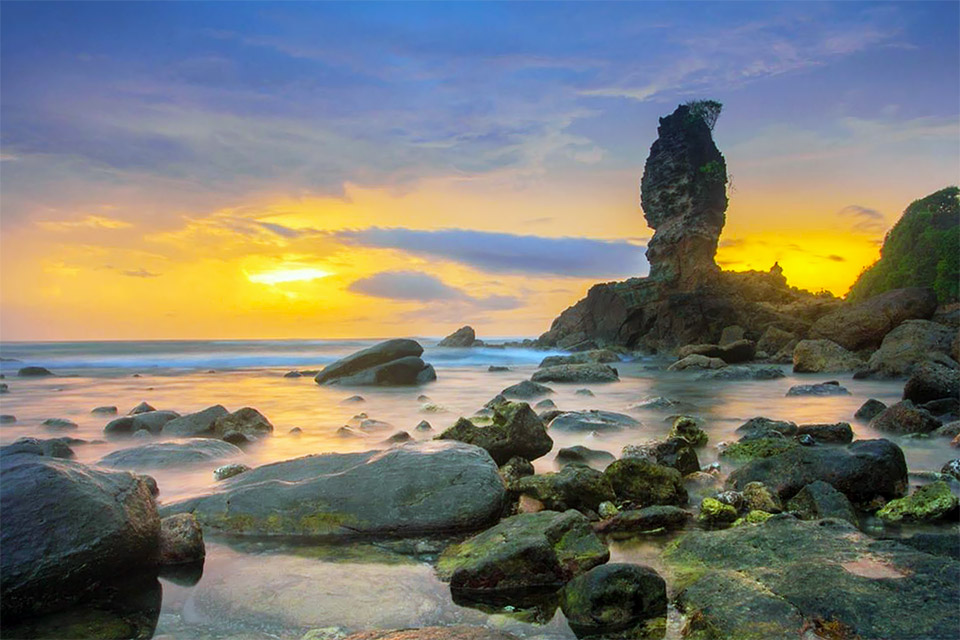
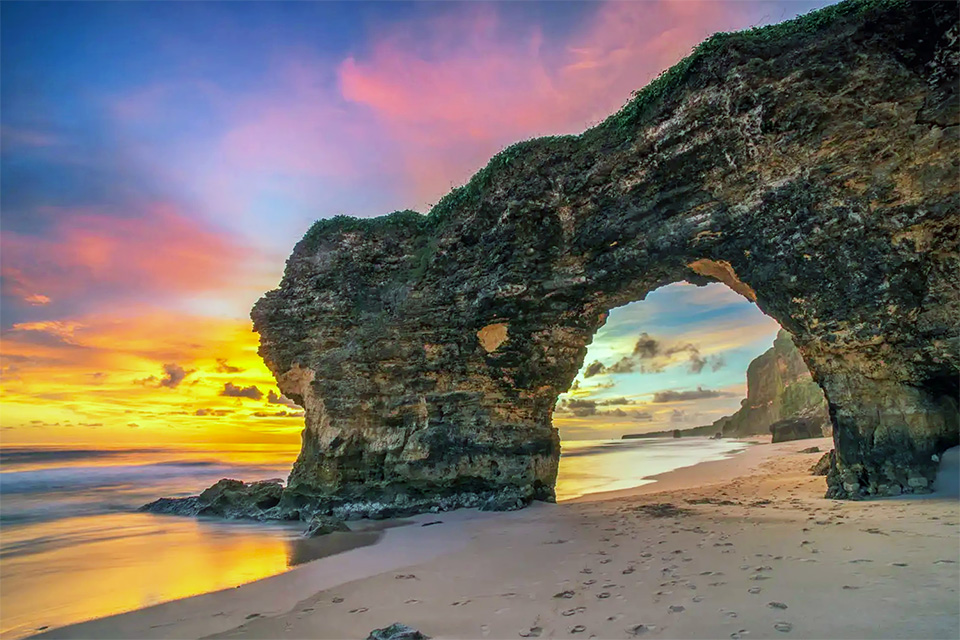
- Dedicated sunrise and sunset windows.
- Repeat visits to highland viewpoints under different light.
- Flexible departure times.
- Reduced daily stop density.
- Scenic picnic-style pauses.
Sumba’s landscapes shift dramatically depending on light angle and season. Allowing room for those variations significantly enhances photographic outcomes.
This option is particularly recommended during dry season when golden savannas and dramatic shadows define the terrain.
Why Extensions Are Designed This Way
Extensions are not random additions. They are rhythm adjustments.
The core cross-island structure remains intact:
- Linear routing.
- No backtracking.
- Regional progression.
Additional nights simply allow that structure to breathe more fully.
The Complete Sumba Arc
Sumba is not an island best understood in fragments.
Its cliffs, villages, savannas, and waterfalls are not isolated highlights — they are parts of a broader geographical and cultural continuum. To experience only West or only East is to glimpse one chapter of a much larger story.
This 4–5 Days Grand Sumba journey is designed as the complete arc.
From the dramatic coastal edges of West Sumba to the open golden horizons of the East, the island unfolds in a single, forward-moving progression. Landscapes shift gradually. Architecture changes subtly. The rhythm of daily life transforms as you move across regions.
Nothing is rushed.
Nothing is repeated.
Nothing is forced into a roundtrip shortcut.
The routing respects the island’s scale.
The split stay respects traveler energy.
The pacing respects the experience.
This is not simply a longer version of a regional tour.
It is a deliberate cross-island design.
And while the structure is defined, the journey remains adaptable — whether you choose 4 days for efficiency or 5 days for deeper immersion.
If you are looking for:
- A coherent introduction to Sumba.
- A well-balanced blend of coast and savanna.
- Intelligent logistics without unnecessary movement.
- A complete perspective without committing to a full week.
This journey offers exactly that.
Plan Thoughtfully, Travel Intentionally
Rather than booking impulsively, we encourage a short consultation.
Sumba’s flight schedules, seasonal light conditions, and accommodation availability can influence pacing and sequencing. A brief discussion allows us to:
- Align arrival and departure flights.
- Recommend the ideal duration for your travel style.
- Advise on Classic vs Premium accommodation.
- Suggest extensions if appropriate.
The goal is not just to confirm dates — but to refine the journey to fit you.
This is the complete Sumba arc —
intelligently designed, logistically considered, and paced with intention.
When you are ready, let’s plan it properly.
Frequently Asked Question
1. What is the difference between this tour and the 3 Days West Sumba tour?
The 3-day itinerary focuses exclusively on West Sumba’s coastal highlights and nearby traditional villages.
The 4–5 Days Grand Sumba Tour connects West and East Sumba in a single cross-island journey. It includes the savanna landscapes of East Sumba, Wairinding Hill, and Waingapu region — which are not covered in a regional-only tour.
If you want a complete island perspective, the cross-island format is recommended.
2. Why does this Sumba tour package start in Tambolaka and end in Waingapu?
This airport pairing eliminates backtracking.
Arriving in Tambolaka (West Sumba) and departing from Waingapu (East Sumba) allows the itinerary to move forward across the island without repeating the same long highway. This improves efficiency, reduces fatigue, and maximizes exploration time.
Roundtrip routing is possible — but not recommended for cross-island exploration.
3. How long is the drive from West to East Sumba?
The cross-island transfer typically takes 4–6 hours including scenic stops, depending on road conditions and detours.
In the 4-day version, the drive is broken with a mid-island overnight to reduce fatigue.
In the 5-day version, the transfer is paced more gradually and treated as a scenic exploration day.
Drive time is managed intentionally — not compressed.
4. Is 4 days enough to explore Sumba?
Four days is sufficient for a structured cross-island overview if your schedule is limited. You will experience West coastal highlights and East savannas efficiently.
However, five days allows for deeper immersion — particularly in East Sumba — and provides more flexibility for sunrise sessions and photography.
If you have flexibility, 5 days is generally recommended.
5. What is the best time of year for this tour?
Sumba has two main seasons:
Dry Season (April–October):
- Golden savannas.
- Strong sunrise and sunset visibility.
- Ideal for landscape photography.
Green Season (November–March):
- Lush hills.
- Fuller waterfalls.
- Occasional heavy rain showers.
Both seasons are suitable. The visual character of the island changes significantly between them.
6. Is the road condition comfortable?
Main roads between major towns are paved. However, access to beaches, waterfalls, and traditional villages may involve uneven or partially unsealed roads.
Vehicles are selected accordingly, and drivers are experienced with local terrain. Travel is comfortable but rural — not urban-smooth.
This is part of Sumba’s authentic character.
7. Why is a split stay necessary?
Because West and East Sumba are geographically distant.
Attempting to explore both regions from a single base would require repeated long return drives and reduce sunrise/sunset flexibility. The split stay ensures each region is explored properly without unnecessary fatigue.
It is a structural necessity for cross-island efficiency.
8. Can this tour be customized?
Yes.
Possible adjustments include:
- Adding an extra night in East Sumba.
- Upgrading to a 6–7 day full island journey.
- Photography-focused pacing.
- Accommodation tier upgrades (Classic or Premium).
We recommend a short consultation to align flight timing and travel preferences before confirming.
9. Is this tour suitable for children or elderly travelers?
The tour involves moderate daily driving and some light walking at viewpoints and waterfalls.
It is suitable for:
- Active families.
- Couples.
- Small private groups.
However, travelers should be comfortable with rural conditions and longer scenic drives.
10. What should we pack?
We recommend:
- Comfortable walking shoes.
- Sun protection (hat, sunscreen).
- Lightweight breathable clothing.
- Light jacket for sunrise sessions.
- Compact daypack.
If traveling during the rainy season, quick-dry clothing and sandals are helpful.
11. Is this a private tour?
Yes. The 4–5 Days Grand Sumba Tour is operated as a private journey with a dedicated vehicle and driver for your group. This ensures flexible pacing and a more personalized experience.
12. How far in advance should we book?
Sumba has limited quality accommodation inventory, especially in East Sumba. For peak months (June–September), we recommend booking at least 4–8 weeks in advance.
Flight schedules should also be reviewed early to secure optimal airport pairing.
Still Considering Your Options?
Choosing the right duration and accommodation tier depends on your travel style, schedule, and expectations.
Rather than booking instantly, we recommend a short discussion to ensure the itinerary flows smoothly with your flight timing and seasonal conditions.
When designed properly, this cross-island journey becomes more than a tour — it becomes the complete Sumba arc.