Hidden in the emerald hills just inland from Candidasa, Tenganan Village feels like a secret whispered through time. As you step past the stone entrance gates, the pulse of modern Bali seems to fall away. No thumping beach clubs. No flashy surf shops. Just cobbled paths, timeworn homes, and the soft rhythm of daily rituals carried out the way they have been for over a thousand years.
This is Tenganan Pegringsingan, one of the few remaining Bali Aga villages — the island’s original pre-Hindu communities that have preserved a unique way of life untouched by centuries of change. Here, tradition isn’t performed for tourists; it’s lived. From sacred dances and calendrical rituals to the intricate weaving of double ikat cloth, everything has purpose, meaning, and connection to the ancestors.
You might arrive curious. You’ll leave deeply moved.
The villagers of Tenganan are not just keepers of heritage — they are its living embodiment. The layout of the village itself reflects ancient cosmology. The houses are aligned with the mountains and sea, while temples and communal halls anchor the spiritual life of the community. You’ll see elders in ceremonial garb, children playing age-old games, and artisans quietly working under the shade of their pavilions.
Whether you’re a culture enthusiast, a slow traveler in search of authenticity, or simply someone curious about the traditional villages in East Bali, Tenganan offers a profound connection to Bali’s roots — far removed from the crowds, yet infinitely rich in experience.
For those seeking an off-the-beaten-path Bali destination that tells the island’s story beyond the beaches and temples, Tenganan Village isn’t just worth visiting — it’s essential.
One of Bali’s Oldest Villages with Unbroken Traditions
Long before Bali became a global travel dream, before the island was shaped by Hindu Javanese influence and kingdoms rose and fell, there were the Bali Aga — the original Balinese. Their customs, architecture, language, and beliefs are distinct, ancient, and incredibly rare today. And among the few places where their culture still lives and breathes, Tenganan Pegringsingan is the most renowned.
Unlike other villages in Bali where modernity creeps in through every smartphone and scooter, Tenganan has held firm to a way of life that predates the Majapahit Empire. The Bali Aga, or “mountain Balinese,” live by strict community rules, ancestral laws known as awig-awig, and a deep spiritual connection to nature and time. Every ceremony, every weaving, every festival here is not just tradition — it’s law.
A Village Built on Cosmic Harmony
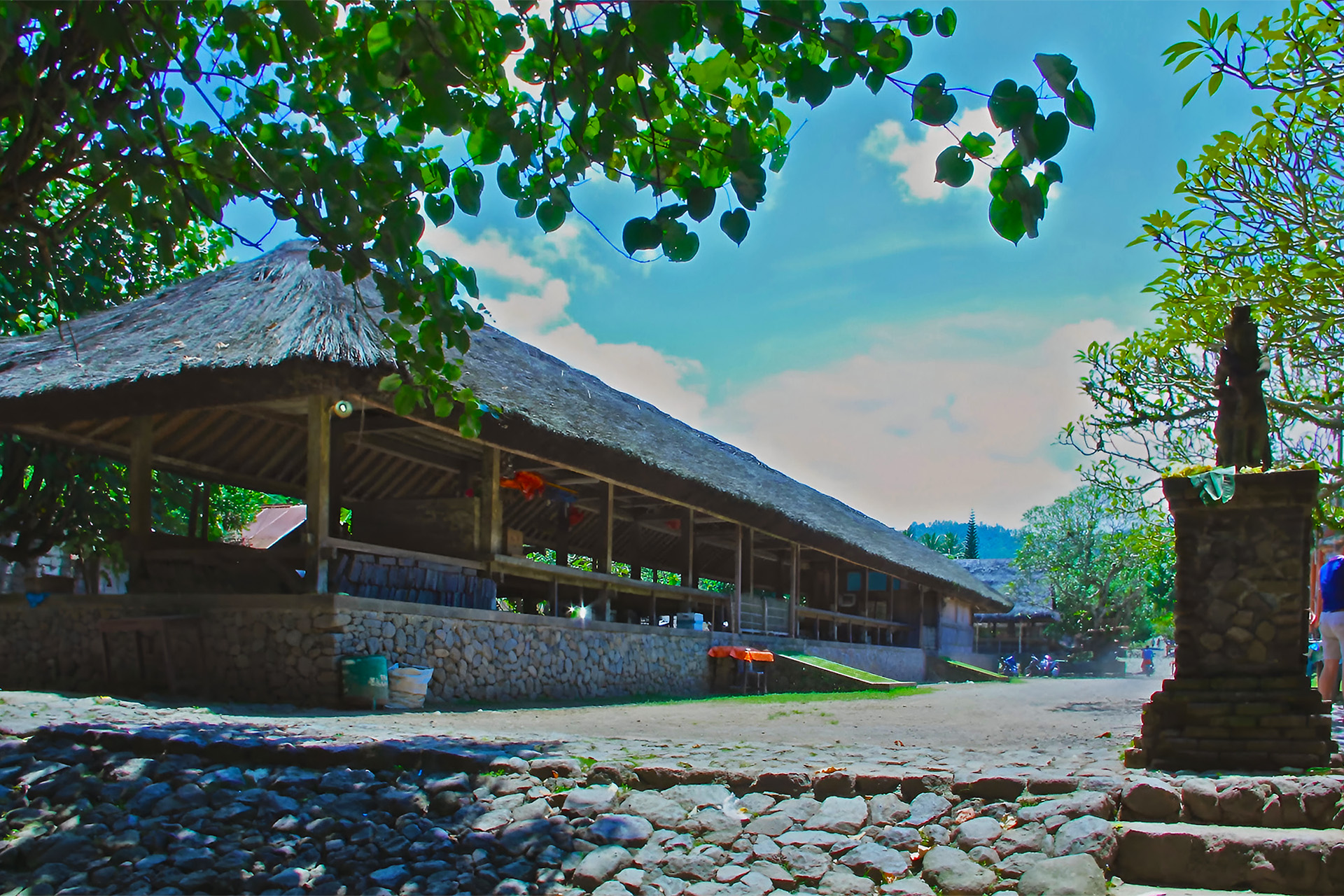
Step inside the gates of Tenganan Pegringsingan, and you’ll notice something different right away. The village is symmetrically laid out, with broad stone pathways, raised communal pavilions, and homes built from stone and timber in a design that has remained unchanged for centuries. The layout reflects Balinese cosmology, aligning the village with sacred directions — mountains for the gods, the sea for purification, and the village center for balance.
Life in Tenganan is cooperative and ritualistic. Villagers rarely marry outside the community, and communal decisions are made in village councils. Even the timing of festivals is governed by the Pawukon calendar, a unique 210-day cycle used only in Bali Aga communities.
Spirituality Woven into Every Thread
One of Tenganan’s greatest cultural treasures is its preservation of the double ikat weaving technique, known locally as geringsing. This sacred cloth is made nowhere else in Indonesia and only in a handful of places in the world. What makes it special? Both the warp and weft threads are dyed before weaving — a painstaking process that can take years to complete a single textile.
But geringsing is more than beautiful cloth; it’s believed to have protective and healing powers. The patterns are geometric and symbolic, representing cosmic balance. These textiles are worn in rites of passage, festivals, and sacred rituals — a wearable embodiment of Tenganan’s cultural DNA.
Living Heritage, Not a Museum
While visitors are welcome to explore the village, Tenganan is not a performance space. There are no ticketed shows, no staged dances. What you see — elders weaving, children learning songs, villagers preparing for festivals — is all real. This is why respectful tourism is vital here.
If you’re looking for a Bali cultural village that goes beyond surface-level attractions, if you want to understand what makes Balinese identity so rich and layered, Tenganan Village is a living classroom. A place where history hasn’t faded into the past — it’s still unfolding, every day, in the quiet, sacred rhythm of daily life.
Getting There: Tenganan is Closer Than You Think
Tucked behind gentle hills and framed by lush rice fields, Tenganan Village may feel like a world apart — but reaching it is easier than you might think. This East Bali cultural gem is located just 5 km from the coastal town of Candidasa, making it a perfect stop for those exploring beyond Bali’s southern crowds.
From Candidasa: A Short Scenic Drive
If you’re staying in Candidasa, you’re practically next door. A 15-minute drive through winding roads lined with coconut palms and traditional compounds will bring you directly to the village’s entrance. You don’t need a guide — just follow the small road inland from the main Candidasa stretch. Locals will kindly point the way if you’re unsure.
This close proximity makes Tenganan one of the top Candidasa attractions, perfect for a half-day cultural escape before returning to the beach for sunset.
From Ubud: A Cultural Day Trip
Travelers coming from Ubud, Bali’s artistic heart, will enjoy a scenic route southeast through the island’s green core. The journey takes about 1.5 to 2 hours by car or scooter, depending on traffic. Along the way, you’ll pass charming villages, terraced landscapes, and sacred temples. It’s an ideal day trip if you’re curious about Bali’s lesser-known east.
Hiring a private driver is recommended from Ubud for comfort and flexibility, especially if you want to combine Tenganan with a stop at Tirta Gangga or Taman Ujung.
From Denpasar or South Bali: Plan a Full-Day Escape
Coming from Denpasar, Sanur, or Kuta? Set out early for a 2.5 to 3-hour drive. The road hugs Bali’s southeast coast before turning inland near Candidasa. Though longer, the trip offers a chance to leave the tourist-heavy south and explore Bali’s tranquil, timeless east.
Renting a car with a driver is the most convenient option, especially if you’re not used to Bali’s narrow, unpredictable roads. If you’re feeling adventurous, a scooter is doable — just be cautious and avoid night travel.
Whether you’re staying nearby or coming from afar, Tenganan Village is closer than you think — and infinitely rewarding once you arrive. The moment you pass through its gates, you’ll feel the shift: time slows down, and something deeply ancient begins to unfold.
Plan Your Visit: What to Know Before You Go
As you step through the stone gateway of Tenganan Village, you’re not entering a tourist attraction — you’re entering a living, breathing community that has proudly preserved its way of life for centuries. Respect and curiosity go hand in hand here, and knowing a few details before you arrive ensures a meaningful, respectful experience.
Tenganan Entrance Fee: A Small Contribution with Big Purpose
There’s no formal entrance fee, but visitors are kindly encouraged to leave a voluntary donation (usually IDR 10,000–20,000 per person) at the registration post near the entrance. This small contribution supports village upkeep and cultural preservation efforts, including temple maintenance and traditional ceremonies. It’s a simple way to say thank you for the warm welcome.
Some local villagers may also offer guided walks or weaving demonstrations for a small tip or fee — feel free to engage if you’re interested, but there’s no obligation.
Opening Hours: Come When the Village is Alive
Tenganan Village is open daily from around 8:00 AM to 6:00 PM, though there are no official gates or ticket booths. Mornings are particularly peaceful, with fewer visitors and a golden light that filters beautifully through the village’s ancient architecture.
If you’re lucky to visit during a ceremonial day or during the famous Mekaré-kare (Pandan War) festival (held in June or July), you’ll witness an even deeper layer of Tenganan’s spiritual life — though expect larger crowds and a more festive atmosphere.
Bali Village Etiquette: Respect Comes First
Tenganan villagers are friendly and welcoming, but they also take pride in their traditions — and appreciate visitors who treat their home with care. Here are a few key etiquette tips:
- Dress modestly: Cover your shoulders and knees. You don’t need a sarong, but loose, respectful clothing is appreciated.
- Ask before photographing people, especially elders or weavers at work. They’re often happy to pose if asked politely.
- Stay on the footpaths and avoid entering homes or temples unless invited.
- Don’t touch the offerings or ceremonial objects, which may seem small but are deeply sacred.
- Speak softly and avoid loud or disruptive behavior — remember, this isn’t a performance, it’s everyday life.
Visiting Tenganan Village isn’t just a sightseeing stop — it’s a privilege. Come with an open heart, tread lightly, and you’ll leave with memories deeper than any photo could capture.
Explore, Learn, and Experience Living Tradition
Time slows down in Tenganan, and that’s exactly how the locals like it. This isn’t a place where traditions are put on display for tourists — they are simply lived, every day, by the people who call this Bali Aga village home. If you’re wondering about the best things to do in Tenganan, the answer is: walk, watch, listen, and feel.
Walk the Preserved Stone Pathways
The first thing you’ll notice is the layout. Tenganan is one of the few villages in Bali that still follows its original symmetrical stone design — a concept rooted in ancient cosmology. A central avenue stretches between two temple complexes, lined with rows of family compounds with red-brick gates and stone steps. It’s not just scenic — it’s symbolic.
Walking here feels like stepping into a living museum. The stone-paved paths, shaded by jackfruit and banyan trees, guide you through a village that’s almost frozen in time.
Watch Traditional Double Ikat Weaving in Action
One of the most awe-inspiring sights is the Tenganan double ikat weaving process — a labor of love that can take up to five years to complete a single textile. Known as Geringsing, this cloth is considered sacred and believed to hold protective powers.
If you’re lucky, you’ll meet a woman sitting under the shade, hand-dyeing threads or weaving on a backstrap loom. The technique is incredibly complex, involving tying and dyeing both the warp and weft threads before weaving — something practiced in only a few places in the world. Don’t hesitate to ask questions. Most weavers are happy to explain their process (and proud to do so).
Explore Unique Architecture and Village Layout
Each household compound in Tenganan is a microcosm of tradition. Homes are constructed using local wood, thatch, bamboo, and stone, and follow specific rules of orientation and hierarchy. You’ll spot pavilions for offerings, sleeping quarters, and even buildings designated for crafting or rituals.
Notice the open-air halls used for community meetings, and the Bale Agung (great hall), where village elders still gather to make decisions through consensus — just as their ancestors did.
Visit Ancient Temples Within the Village
Tenganan is home to several small but spiritually powerful temples. You’ll pass Pura Puseh and Pura Bale Agung — both central to the village’s religious and social life. These temples may not be as grand as Besakih or Lempuyang, but their simplicity adds to their sacred aura.
You may even see ceremonial preparations under way, with women weaving leaf offerings or men carving wood for upcoming rituals.
Buy Handmade Crafts Directly from Artisans
Skip the souvenir shops and support the local artisans directly. Tenganan is known for more than just Geringsing textiles — here, you can find handmade lontar leaf books, palm-fiber baskets, wood carvings, and traditional calendars etched with detailed iconography.
Everything sold in Tenganan is made with care and authenticity. Buying from the makers means your money goes straight into the community — and you leave with a piece of history.
Tenganan isn’t about big thrills or flashy attractions. It’s about quiet awe, meaningful connections, and the joy of discovering a place where tradition hasn’t faded — it’s still flourishing.
The World-Renowned Weaving Art Found Only Here
Among the rustling trees, sun-dappled courtyards, and quiet stone paths of Tenganan Village, there exists a craft so rare and revered that it draws textile scholars and collectors from around the globe. This is the home of Tenganan double ikat — a weaving technique practiced in only three places worldwide, and perfected here over centuries.
Known locally as kain Pegringsingan, this fabric is not just cloth — it is culture, protection, and identity woven into one.
What Is Double Ikat?
While many parts of Bali produce ikat fabrics, Tenganan is the only village where the double ikat technique is still preserved in its ritual form. In this process, both the warp (vertical threads) and the weft (horizontal threads) are painstakingly tie-dyed before weaving. This requires extraordinary skill, vision, and patience, as the artisan must precisely align the dyed patterns to form intricate, symmetrical designs.
Each piece can take months — even years — to complete.
The process involves natural dyes, often derived from local plants and minerals, and uses hand-spun cotton. The result is a textile with deep, earthy tones and complex geometrical motifs that are rich in symbolism.
Why Is It Sacred?
To the people of Tenganan, Pegringsingan cloth is more than beautiful — it is spiritually protective. These textiles are used in ceremonies, rites of passage, and temple rituals. Some patterns are so sacred that they may only be worn by village elders or during specific festivals.
It is said that the cloth protects its wearer from harm and misfortune, serving as a shield of both heritage and spirit.
In fact, the word “Gringsing” (from gering meaning “sickness” and sing meaning “no”) literally translates to “no sickness” — emphasizing its protective qualities.
Witness the Process, Meet the Weavers
As you explore the village, you’ll often find women sitting under shaded verandas, weaving silently yet skillfully. If you stop to observe, you may be invited to learn about the tools, dyes, and stories behind each motif. Many weavers are proud to explain their heritage — and they should be. Their work continues a lineage passed down over 1,000 years.
Buying a piece of Tenganan double ikat directly from the weaver is not only a way to support the community — it’s a chance to bring home a piece of living history.
Visit During the Festivals for an Even Deeper Experience
Tenganan Village is timeless — but some moments are more magical than others. If you’re wondering about the best time to visit Tenganan, your experience will depend on what you seek: peaceful exploration or an immersion into Bali’s rarest cultural traditions.
Everyday Peace or Festival Vibrance?
For quiet village walks, meeting artisans, and watching the weaving process at your own pace, the dry season from April to October is ideal. During this time, East Bali weather is pleasant, with less rainfall and clear skies, making it easier to appreciate the stone-paved lanes, terraced houses, and surrounding hills.
But if you’re yearning for something deeper — an experience that will stay etched in your memory — time your visit with Tenganan’s festivals, especially Usaba Sambah.
Usaba Sambah: A Festival Like No Other
Held annually in June or July (dates vary according to the Balinese calendar), Usaba Sambah is the most important ritual of the year. This month-long festival celebrates fertility, cosmic balance, and ancestral connection through a blend of ceremonial rites, traditional dances, and unique rituals.
The highlight? The thrilling mekare-kare or Perang Pandan, where young men engage in friendly combat using pandan leaf clubs and woven shields — a rite of passage, courage, and honor. Blood may be drawn, but spirits are lifted, and laughter often follows the ceremony.
During the festival, the village is adorned with woven decorations, and the air is filled with the sound of gamelan music, chanting, and the scent of incense. It’s a rare window into Bali Aga spirituality — something few travelers get to witness.
A Word on Timing and Respect
If you plan to visit during a festival, arrive early and dress respectfully. While visitors are welcome, the rituals are sacred. Always observe from a respectful distance unless invited to participate.
Whether you come for the quiet or the celebrations, Tenganan reveals a different side of Bali — one that speaks in whispers and ceremonial chants, not commercial slogans.
Traditional Flavors Just Minutes Away
After wandering through the ancient pathways of Tenganan, your senses will be alive — and so will your appetite. While the village itself doesn’t have restaurants, you’re only minutes away from Candidasa, a relaxed coastal town offering delicious options for every kind of traveler. Whether you crave traditional Balinese flavors, ocean views, or healthy tropical eats, East Bali’s food scene won’t disappoint.
1. Warung Lu Putu – Home-Cooked Balinese Goodness
Located just 10 minutes from Tenganan, this humble family-run warung serves some of the best home-style Balinese dishes in the area. Try their ayam betutu (spiced chicken) or lawar (vegetable and minced meat salad) — flavorful, authentic, and prepared with love. With friendly hosts and affordable prices, it’s a favorite among travelers seeking genuine Bali food travel experiences.
2. Vincent’s Restaurant – A Touch of Class with Garden Vibes
If you’re looking to unwind after your cultural journey with a touch of comfort, Vincent’s in Candidasa is a gem. Known for its Balinese fusion cuisine, romantic garden setting, and occasional live jazz, this spot offers everything from grilled mahi-mahi to vegetarian curry. A great place to sit back, reflect, and savor the taste of East Bali.
3. La Rouge – Casual Dining with a Coastal Twist
Just a short drive away, La Rouge delivers on ambiance and flavor. Think fresh seafood, nasi campur, and coconut-infused desserts, all served in a cozy, bamboo-filled setting. Perfect for families or couples looking for variety and comfort without straying far.
A Bite of Culture with Every Meal
Eating near Tenganan is more than just filling your stomach — it’s a continuation of your cultural journey. Whether it’s the smoky spice of grilled satay or the quiet hum of ocean waves nearby, the culinary delights of East Bali reflect the island’s deep-rooted traditions and laid-back soul.
Peaceful Retreats Near Bali’s Cultural Heart
Staying near Tenganan Village offers more than just a place to rest — it’s an opportunity to fully immerse yourself in the tranquil rhythm of East Bali. Just a short drive from the village lies Candidasa, a quiet coastal town that blends scenic beauty with cultural proximity. Whether you’re looking for a cozy guesthouse, a boutique hideaway, or a budget-friendly base, you’ll find accommodations that reflect the region’s authenticity and charm.
1. Alam Asmara Dive Resort – Artistic Comfort by the Sea
Just 15 minutes from Tenganan, Alam Asmara is a boutique resort perfect for travelers seeking a peaceful retreat with character. Surrounded by tropical gardens and Balinese artistry, each bungalow is designed for comfort and serenity. After a day exploring the Bali Aga village, unwind by the pool or dine in the open-air restaurant with ocean views. Ideal for couples and cultural explorers alike.
2. Pondok Bambu Seaside Bungalows – Beachside Affordability
For those who want oceanfront access without a luxury price tag, Pondok Bambu in central Candidasa is a solid choice. It offers clean, comfortable rooms, a beachfront restaurant, and friendly local service. It’s a great mid-range option that places you just 20 minutes from Tenganan and steps away from cafes and quiet snorkeling spots.
3. Dasa Wana Resort – Hidden Tranquility and Value
Tucked in a lush garden setting, Dasa Wana offers a quiet, budget-friendly haven with warm hospitality. Rooms are spacious, with private terraces and a peaceful vibe that makes it easy to relax after a day of cultural discovery. It’s just far enough from the main road to feel like a true escape, yet close enough for easy day trips.
Choosing where to stay in East Bali is about more than convenience — it’s about complementing your journey into the island’s soul. Each of these accommodations places you within easy reach of Tenganan’s timeless traditions, while giving you a restful space to reflect on all you’ve experienced.
Make the Most of Your East Bali Journey
Woven into the hills above Candidasa, Tenganan Village makes a perfect anchor for a deeper East Bali itinerary — whether you’re planning a single-day cultural outing or a slower, more immersive escape into the island’s quieter side.
Option 1: One-Day Cultural Loop from Candidasa
Morning
Start your day early in Candidasa, enjoying breakfast by the sea. Head straight to Tenganan Village (just 15 minutes away) before the day heats up. Spend a few hours walking its stone paths, watching the weavers at work, and chatting with artisans. Don’t forget to buy a piece of Pegringsingan cloth as a special souvenir.
Midday
After Tenganan, make your way to Taman Ujung Water Palace (about 30 minutes east). Wander the dreamy gardens and admire the ocean-facing Balinese architecture.
Afternoon
Wrap up with a relaxed lunch in a seaside café in Amed or Seraya, or return to Candidasa for a swim and sunset dinner.
This route offers a well-balanced Candidasa day trip filled with culture, history, and coastal beauty.
Option 2: Two-Day Immersion into East Bali
Day 1
Follow the same cultural loop as above, ending your day in Candidasa. Stay overnight in one of the nearby peaceful resorts or eco-retreats, giving yourself time to slow down and soak in the natural serenity.
Day 2
Dedicate your morning to Lempuyang Temple, the famous “Gate of Heaven,” best visited early to avoid crowds. Then, swing by Tirta Gangga Water Palace before lunch. If time allows, explore lesser-known temples or take a scenic coastal drive back toward southern Bali.
With its rich heritage and ideal location, Tenganan fits seamlessly into any Bali cultural tour, offering a rare look at a way of life that has remained unchanged for centuries. Whether it’s a quick visit or a slow discovery, your journey into East Bali will leave you with stories — and photos — to treasure.
Quick Answers for Curious Travelers
Before making your way to this timeless Bali Aga village, you might have a few lingering questions. That’s perfectly natural — Tenganan is unlike most other villages in Bali, and that’s exactly what makes it worth the visit. Below are some of the most frequently asked questions travelers have, along with practical answers to help you plan with confidence.
Is Tenganan Village worth visiting?
Absolutely. Tenganan is one of the few remaining Bali Aga villages, known for its preserved traditions, double ikat weaving, and ancient way of life. If you’re seeking authentic cultural experiences in East Bali, this village is a must-see. It’s calm, uncrowded, and offers a rare glimpse into Bali’s pre-Hindu roots — something you won’t find in the island’s busier tourist centers.
Can you take photos in the village?
Yes, photography is allowed in most areas of the village. Visitors are welcome to capture the traditional houses, daily life, and scenic surroundings. However, it’s important to be respectful. Always ask before taking close-up portraits of villagers, especially elders or children. During religious ceremonies, photography might be restricted — when in doubt, observe quietly or ask politely.
How old is Tenganan Village?
Tenganan is considered one of Bali’s oldest continuously inhabited villages, with roots stretching back more than 1,000 years. It predates the Majapahit era and has preserved much of its original village layout, customs, and rituals. Walking through its cobbled streets feels like stepping into a living museum — only this one is vibrantly alive with tradition.
Are tours or guides required?
No, a guide is not required, but having one can enrich your experience. Many visitors choose to explore at their own pace, following posted signs and chatting with locals. However, hiring a knowledgeable guide (available on-site or via local travel agencies) can offer deeper insights into Bali Aga beliefs, architecture, and rituals, especially if you’re short on time.
Whether you’re a curious traveler, a culture enthusiast, or a photographer in search of unique subjects, Tenganan Pegringsingan offers answers not just to questions, but to the longing for deeper, more meaningful travel.
Slow Travel, Deep Culture, and Timeless Beauty
There are places in Bali that take your breath away with their dramatic cliffs and crashing waves — and then there are places like Tenganan Village, which capture your soul in quiet, enduring ways. Tucked in the verdant hills just inland from Candidasa, this traditional village in East Bali isn’t about thrills or selfies. It’s about something far more powerful: connection — to the land, to history, and to a way of life preserved against time’s relentless current.
In Tenganan, the air is filled with stories — told not with words, but through the rustle of Pegringsingan cloth on a loom, the barefoot shuffle of ritual dances, and the gentle smiles of elders who have seen the world change around them, yet remain rooted in ancient ways. It’s a place that invites slow travel and rewards curious minds.
If you’re looking to go beyond beaches and brunches, and crave an experience that reveals Bali’s hidden gems, Tenganan is your gateway. It’s more than a stop on your map — it’s a memory in the making.
So take the detour. Walk the stone paths. Ask questions. Linger longer. And when you leave, carry with you not just souvenirs, but a piece of Bali’s most enduring soul.