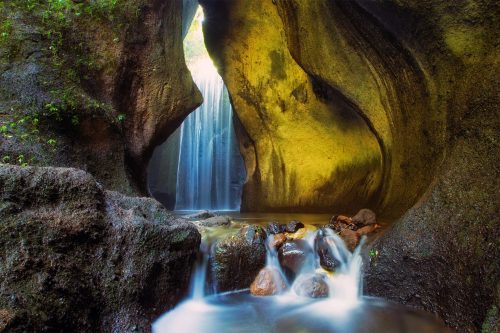
The first step into the Ubud Monkey Forest feels like crossing into another realm. The air changes—dense with the earthy scent of moss, damp soil, and faint wafts of incense drifting from nearby shrines. Towering banyan and nutmeg trees form a canopy above, filtering the sunlight into golden shafts that dance on moss-covered stones. From the shadows, macaques leap from branch to branch with playful agility, their chatter blending into the hum of the jungle. This is not just another stop on a Bali itinerary; this is the Sacred Monkey Forest Sanctuary, a living space where nature and spirituality coexist in perfect balance.
For the Balinese, the forest is more than home to hundreds of long-tailed macaques. It is a sacred ground, a spiritual guardian of Ubud’s cultural heart. To step inside is to experience a philosophy woven deeply into Balinese life: the harmony between humans, nature, and the divine. Unlike many attractions where nature is tamed or altered, here the forest remains alive, thriving side by side with Ubud’s bustling cafés, boutiques, and hotels—yet never losing its sacred essence. This sacredness is not symbolic alone; it is a living truth, preserved through rituals, shrines, and the reverence of generations.
Ubud Monkey Forest: Where Culture Meets Nature
The Ubud Monkey Forest is one of the most cherished and iconic sanctuaries in Bali, drawing visitors from around the world who come to witness its unique blend of nature, spirituality, and culture. Officially known as the Sacred Monkey Forest Sanctuary, this lush jungle spans approximately 12.5 hectares in the very heart of Ubud Bali, making it one of the most easily accessible Bali attractions. Just steps away from boutique hotels, lively markets, and world-class restaurants, the forest feels like a hidden world that contrasts sharply with the buzz of central Ubud.
Despite being surrounded by modern comforts, the sanctuary itself is a realm of tranquility, where towering trees, sacred temples, and natural streams create a setting untouched by the chaos of tourism. It is home to over 1,200 long-tailed macaques, a thriving population that makes the sanctuary one of the most fascinating wildlife encounters in Bali. These monkeys, often seen grooming each other, playing along temple walls, or boldly interacting with visitors, embody the spirit of the forest’s lively ecosystem.
Beyond its wildlife, the Ubud Monkey Forest is revered as a sacred space where conservation, spirituality, and community traditions intertwine. Its accessibility and profound cultural significance have made it one of the top attractions in Bali, offering a sanctuary of peace in the midst of Ubud’s vibrant tourism hub.
Cultural Significance: The Balinese Philosophy of Harmony
The soul of the Ubud Monkey Forest lies not only in its natural beauty but also in its deep connection to Balinese culture. At the heart of this connection is Tri Hita Karana, the guiding philosophy of the Balinese people, which emphasizes the importance of maintaining harmony among three elements: humans, nature, and the divine. This principle is visible throughout Bali, but it is perhaps most vividly experienced within the forest, where spiritual reverence and natural preservation exist side by side.
Walking through the sanctuary, visitors quickly sense this balance. Despite being located just a few steps from Ubud’s bustling shops, cafés, and yoga studios, the Monkey Forest remains a tranquil refuge. Here, towering banyan trees shade moss-covered temples, while streams weave through the undergrowth. The monkeys live freely, moving gracefully between temple courtyards and jungle canopies, reminding visitors that humans and wildlife can share a space without disturbing one another’s essence.
There’s also a poetic quality to the atmosphere. As you wander, you may hear the distant rhythm of gamelan instruments drifting from nearby temple ceremonies. The metallic chime of Balinese music mingles with the playful chatter of monkeys and the rustle of leaves overhead, creating an almost otherworldly soundtrack to your walk. This blending of natural and cultural soundscapes reflects the harmony that the Balinese hold sacred.
The Ubud Monkey Forest is more than a tourist site—it is a living expression of Tri Hita Karana. It shows how a sacred space can thrive in the heart of Ubud Bali, honoring the gods, protecting the forest, and nurturing a respectful coexistence between people and animals. For many visitors, this harmony is what makes the forest an unforgettable experience.
The Sacred Temples Within the Forest
Amidst the dense canopy and lively presence of long-tailed macaques, the Ubud Monkey Forest holds treasures far deeper than its natural beauty. Hidden within its verdant embrace are three ancient temples of Ubud, each carrying profound spiritual meaning that continues to shape the life of the local community. These sacred shrines are not mere ruins for sightseeing but are living temples, still active in daily rituals and major ceremonies, reflecting the deep roots of Bali temple culture.
The most prominent is Pura Dalem Agung Padangtegal, often called the “Great Temple of Death.” Dedicated to Lord Shiva, the deity of destruction and transformation, this temple is believed to govern the cycle of life, death, and rebirth. Walking toward it, you’ll pass moss-covered stone guardians whose expressions are both fierce and protective, while the thick roots of ancient banyan trees weave into its walls, as though nature itself is safeguarding the sacred space.
Nearby lies Pura Beji, a temple of purification. Traditionally, this site is linked to cleansing rituals, where holy water plays a central role in purifying the body and spirit. Its tranquil setting by a stream, with stone steps leading to the water, reflects the Balinese reverence for rivers and springs as sources of life and healing.
Completing the triad is Pura Prajapati, associated with funerary rites and cremation rituals. This temple underscores the Balinese view of death not as an end but as a passage — a sacred transition to the next stage of existence.
As incense curls upward and mingles with the forest air, the temples remind visitors that the Monkey Forest is not only a natural haven but also a spiritual heart — where gods, humans, and nature remain in harmony.
Why It’s Called the “Sacred Monkey Forest”
The name Sacred Monkey Forest Ubud carries a meaning that goes far beyond being a catchy title for a popular Bali attraction. To the Balinese, the word sacred is deeply rooted in their worldview, where nature, animals, and humans all share spiritual connections. The forest is not only home to centuries-old temples but also to hundreds of long-tailed macaques, who are regarded as more than just residents of the jungle. In Balinese Hinduism, these monkeys are often seen as guardians of the temples, playful yet powerful beings believed to carry spiritual energy that protects the sanctity of the shrines.
For visitors, it is easy to focus on the lively behavior of the macaques—swinging from banyan trees, splashing in streams, or curiously approaching humans. Yet within spiritual Bali, the presence of these animals is woven into rituals, myths, and storytelling traditions. Monkeys appear in Hindu epics like the Ramayana, where Hanuman, the monkey god, symbolizes loyalty and protection. This spiritual symbolism strengthens the belief that the macaques are not merely wildlife but part of a sacred lineage that guards the temple grounds.
By calling it the “Sacred Monkey Forest,” the community also affirms its identity as more than a tourist destination. The name reminds both locals and visitors that the sanctuary is a holy site where offerings are laid daily, ceremonies continue to be held, and harmony with nature is preserved. It is a place where spirituality lives in both stone and spirit—within moss-covered shrines and in the bright, curious eyes of the monkeys themselves.
The Monkeys: Playful Spirits of the Forest
The heart of the Ubud Monkey Forest beats in rhythm with its most famous residents—the long-tailed macaques Ubud is known for. With more than a thousand monkeys roaming freely through the sanctuary, these creatures embody both the playful energy and spiritual essence of the forest.
Their behavior is endlessly fascinating. At one moment, a group might be chasing each other through the canopy with bursts of chatter, while at another, you may find a mother gently cradling her baby beneath the roots of a sacred banyan tree. Visitors are often entertained by their cheeky curiosity. It is not uncommon for an Ubud Monkey Forest monkey to snatch a banana from an unsuspecting traveler’s hand or gently tug at a dangling bag strap. Yet just as often, you’ll see one perched calmly on a centuries-old statue, its expression almost meditative, as if mirroring the serenity of the temple grounds.
These encounters create moments that linger in memory. Imagine standing before a moss-covered guardian statue when a macaque suddenly climbs atop it, sitting still as if it were part of the shrine itself. In such a moment, the line between the wild and the sacred feels blurred, and you understand why the monkeys are seen as playful spirits who keep the forest alive.
Beyond their antics, the macaques carry symbolic weight in Balinese culture. They are regarded as living embodiments of the forest’s energy—reminders of harmony, balance, and the interconnectedness of all beings. Their presence turns the sanctuary into more than just a place to watch wildlife; it becomes a living temple where nature, culture, and spirit meet in perfect rhythm.
Walking Through the Enchanted Pathways
An Ubud forest walk is an experience that feels like stepping into another realm—one where nature, history, and spirituality coexist in harmony. As you enter the shaded pathways, the towering banyan and nutmeg trees create a natural cathedral above you, their roots hanging like curtains that brush against the earth. The air is alive with the rustle of leaves, the distant chatter of monkeys, and the soft trickle of streams, each sound enhancing the sense that you are part of something sacred.
Along the way, moss-covered stone bridges invite you to pause. Their graceful arches span over small ravines and creeks, leading to temple gates and ancient statues cloaked in green. These bridges are not just passageways but symbols of transition—guiding you deeper into the forest’s mystical embrace. Each step on the winding trail offers a reminder that this is more than just a stroll; it is a Bali nature experience where every corner reveals another layer of beauty and meaning.
Even without focusing on the monkeys, the forest captivates with its tranquil yet powerful atmosphere. The interplay of light filtering through leaves, the scent of damp earth, and the quiet presence of sacred shrines create an ambiance that is both grounding and uplifting. It is a journey that allows you to slow down, breathe deeply, and feel the spiritual pulse of Ubud itself.
The Ubud forest walk is not just about sightseeing; it is about connecting—with nature, with Bali’s cultural heritage, and with yourself. It is this blend of natural splendor and cultural depth that makes the sanctuary a destination worthy of reverence, even beyond its playful inhabitants.
Ubud Monkey Forest: A Living Example of Harmony
Among all the places that define Ubud, few capture the essence of balance quite like the Sacred Monkey Forest. As an Ubud cultural attraction, it is more than a tourist stop—it is a living representation of how people, nature, and spirituality can coexist in seamless harmony. The forest is at once a sanctuary for wildlife, a sacred temple ground, and a gathering place where visitors from around the world connect with Bali’s deeper truths.
What makes this space remarkable is not only its natural beauty but the way it embodies a philosophy of balance. The ancient temples remind you of Bali’s spiritual devotion, the monkeys reflect the untamed vitality of nature, and the visitors wandering the shaded paths show how humanity can walk respectfully within it all. Together, they form a delicate equilibrium that has endured for centuries.
Step just outside the gates and you are back on the bustling streets of Ubud—alive with motorbikes, markets, and cafés. Yet, within minutes, you can retreat into the forest’s stillness, where banyan trees and stone guardians whisper of another time. This striking contrast reinforces the idea that Bali’s magic lies in its ability to preserve harmony between the modern and the sacred.
For travelers on a Bali spiritual journey, the Ubud Monkey Forest is an invitation to reflect, slow down, and witness a world where balance is not just a concept but a lived reality. Imagine yourself there: breathing in the damp forest air, feeling the calm energy of the temples, and realizing that harmony is not found by escaping life’s chaos but by moving gracefully within it.
Visitor Experience & Practical Tips
Planning your visit to the Sacred Monkey Forest requires both curiosity and respect, as this site is one of the most memorable Bali attractions. To make the most of your journey, here are a few Ubud Monkey Forest tips to keep in mind when visiting Ubud Bali.
The best time to visit is in the early morning, when the forest is still quiet and the paths less crowded, allowing you to fully absorb the serene atmosphere. If you prefer a more dramatic experience, late afternoon offers beautiful golden light filtering through the ancient banyan trees, perfect for capturing the forest’s enchanting essence in photos.
Respectful behavior is essential. Do not feed the monkeys—while friendly, they can become aggressive if encouraged with food. Keep your belongings secure, as the monkeys are curious and quick to snatch anything left unattended. Around the temples, dress modestly out of respect for local customs, as these spaces remain active sites of worship.
There is a small entry fee to Ubud Monkey Forest, which contributes to conservation efforts and the upkeep of temple grounds. The pathways are well-maintained and relatively accessible, though some uneven stone steps may require extra care.
Above all, remember that the Ubud Monkey Forest is not just a park but a sacred sanctuary. Come not just for the monkeys, but for the soul of Bali—an experience that will stay with you long after you leave.
The Sacred Call of the Forest
As the day softens into twilight, the Sacred Monkey Forest Ubud reveals its most poetic side. The last rays of sunlight filter through the canopy of ancient banyan trees, casting golden patterns on moss-covered stones. Monkeys retreat quietly into their leafy shelters, while the faint curl of incense smoke drifts upward from temple shrines, carrying prayers into the evening sky. It is in these moments that the forest feels less like a tourist site and more like a living meditation, where nature and spirituality breathe as one.
Beyond being a sanctuary for wildlife, the forest embodies Bali’s timeless essence—its harmony between humans, gods, and the natural world. For many, a walk here is more than sightseeing; it becomes part of an Ubud Bali spiritual journey, inviting reflection and reverence.
When you step beneath the towering banyans and listen to the forest’s quiet rhythm, you are reminded that this is not only a place to observe, but also to feel. The Monkey Forest calls gently—come, not just as a visitor, but as a seeker of balance. The sacred spirit of Ubud awaits.
Tours that Visit Ubud Monkey Forest

Ubud Cultural Day Tour with Authentic Balinese Feast
Discover Ubud’s cultural heartbeat in one unforgettable day. Wander through the sacred Monkey Forest, where harmony between humans and nature comes alive. Admire the graceful architecture of Pura Taman Saraswati, then savor a traditional Balinese feast of slow-cooked bebek betutu at a beloved local eatery. Marvel at the emerald beauty of Tegallalang’s rice terraces before ending the journey at Ubud Art Market, where local artisans keep traditions alive. This Ubud Cultural Day Tour blends iconic highlights with authentic flavors for a deeper Bali experience.