Pura Lempuyang Luhur, famously known as “The Gate of Heaven,” is one of Bali’s most iconic and spiritually significant temples. Perched on the slopes of Mount Lempuyang in East Bali, this revered site offers a captivating blend of cultural heritage, spiritual depth, and breathtaking natural beauty. The temple complex is a popular destination for travelers seeking a deeper connection with Bali’s rich traditions, as well as those looking to capture stunning photographs of its picturesque vistas. In this Travel Guide to Pura Lempuyang Luhur we’ll explore the attractions, history, cultural significance, and practical tips for visiting this iconic landmark, along with nearby attractions that enhance the experience of a journey to this sacred place.
Location and Distance
Pura Lempuyang Luhur is situated on the eastern slopes of Mount Lempuyang, approximately 1,175 meters above sea level. It is located in the Karangasem regency, about 90 kilometers (56 miles) from the popular tourist enclave of Kuta and around 70 kilometers (43 miles) from Ubud. The drive from Kuta typically takes around 2.5 to 3 hours, while the journey from Ubud takes approximately 1.5 to 2 hours, depending on traffic and road conditions. The route to the temple offers a scenic drive through Bali’s rural landscapes, terraced rice fields, and traditional villages, providing a picturesque and immersive experience as you approach this sacred site.
The Journey to Pura Lempuyang Luhur
The Trekking Experience
Reaching Pura Lempuyang Luhur is an adventure in itself. The temple complex is situated at an altitude of about 1,175 meters above sea level, and visitors must undertake a challenging trek to reach the main temple. The journey involves climbing approximately 1,700 steps, which can take around 1.5 to 2 hours, depending on one’s pace and fitness level. The trek offers a unique opportunity to immerse oneself in Bali’s lush natural surroundings. As you ascend, you’ll encounter several smaller temples, each with its own charm and spiritual significance.
The Sacred Temple Complex
Pura Lempuyang Luhur is one of the Sad Kahyangan Jagad, the six holiest temples in Bali. It is also part of the Pura Lempuyang complex, which includes seven temples located at different elevations on Mount Lempuyang. The main temple, Pura Lempuyang Luhur, is the highest and most significant. It is dedicated to Ida Batara Hyang Iswara, a manifestation of the supreme god in Balinese Hinduism. The temple is considered a place of divine energy and spiritual purification, attracting both locals and tourists seeking blessings and spiritual rejuvenation.
The Iconic Split Gate
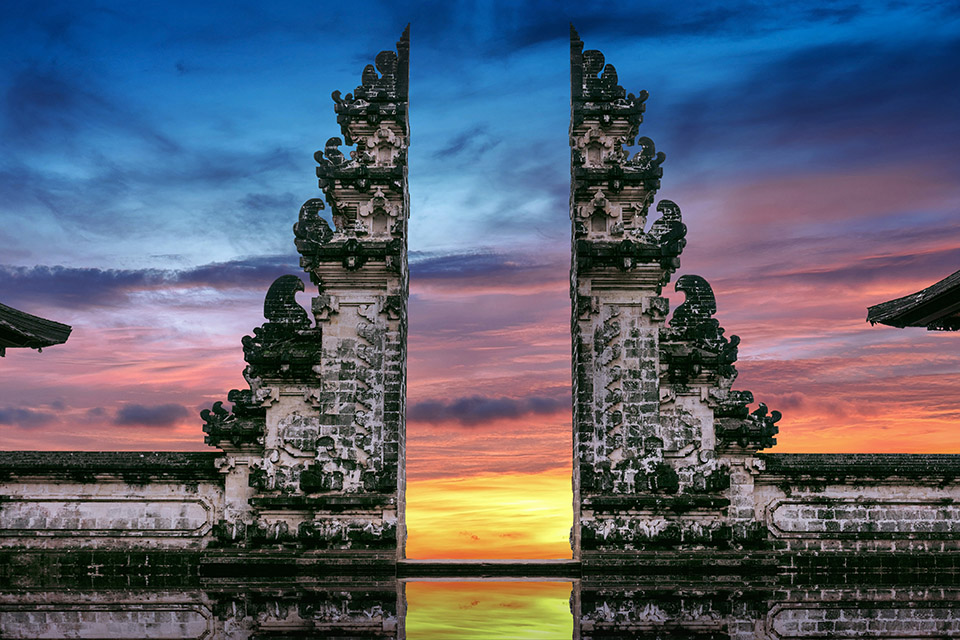
The most famous feature of Pura Lempuyang Luhur is its majestic split gate, known as “Candi Bentar.” This gate has become a symbol of the temple and is often featured in travel photos and social media posts. The gate frames Mount Agung, Bali’s highest volcano, creating a stunning visual that has earned it the nickname “The Gate of Heaven.” The view from this spot is particularly breathtaking at sunrise, when the first rays of light illuminate the landscape, casting a mystical glow over the entire scene. Many visitors come specifically to capture this iconic image, making it one of the most photographed locations in Bali.
Spiritual and Cultural Significance
Pura Lempuyang Luhur holds deep spiritual and cultural significance for the Balinese people. The temple is believed to be a powerful place of prayer and meditation, where one can connect with divine energies and seek spiritual cleansing. The journey to the temple is considered a form of pilgrimage, and many Balinese Hindus visit to pray for guidance, protection, and blessings. The temple’s rituals and ceremonies are an integral part of Balinese Hindu culture, and visitors are encouraged to respect these practices by dressing modestly and observing local customs.
What to See and Experience
The Seven Temples of Lempuyang
As you make your way up the mountain, you’ll encounter seven temples that make up the Pura Lempuyang complex. Each temple offers a unique experience and is dedicated to different deities and aspects of Balinese spirituality. The first temple, Pura Penataran Agung, is located at the base and serves as the entry point to the complex. It is adorned with intricate carvings and statues that depict various mythological figures and deities. As you ascend, you’ll pass through smaller temples, each offering a quiet space for prayer and reflection.
The final destination, Pura Lempuyang Luhur, is a serene and sacred site where visitors can offer prayers and enjoy panoramic views of the surrounding landscape.
Natural Beauty and Scenic Views
The trek to Pura Lempuyang Luhur is not only a spiritual journey but also a visual feast. The path winds through lush forests, offering glimpses of Bali’s diverse flora and fauna. As you ascend, the air becomes cooler and fresher, providing a refreshing escape from the tropical heat. The higher you climb, the more expansive the views become, with vistas stretching over verdant hills, terraced rice fields, and the distant coastline.
The sight of Mount Agung rising majestically in the distance adds to the awe-inspiring experience. The combination of natural beauty and spiritual atmosphere makes Pura Lempuyang Luhur a truly unique destination.
The Cultural Experience
Visiting Pura Lempuyang Luhur offers a deep dive into Balinese culture and spirituality. The temple complex is a living embodiment of Balinese Hindu beliefs, where visitors can observe traditional rituals and ceremonies. The temple priests, known as “pemangku,” conduct daily prayers and offerings, maintaining the sanctity of the site. Visitors are often struck by the tranquility and reverence that permeate the temple grounds.
The experience is further enriched by interactions with local devotees, who are often happy to share their knowledge and stories about the temple’s significance and history.
Practical Tips for Visiting Pura Lempuyang Luhur
- Dress Code and Etiquette – As Pura Lempuyang Luhur is a sacred site, visitors are required to dress modestly. Men and women should wear long pants or sarongs, and shoulders should be covered. Sarongs are usually available for rent or purchase at the entrance. It is also important to be respectful of local customs and practices. Visitors should speak quietly, avoid pointing their feet at shrines or statues, and refrain from taking photos during prayer or ceremonies.
- Best Time to Visit – The best time to visit Pura Lempuyang Luhur is early in the morning, ideally at sunrise. This not only allows you to avoid the midday heat but also offers the best lighting for photography. The temple can get crowded later in the day, so arriving early ensures a more peaceful and serene experience. Additionally, the weather in the morning is generally clearer, providing better views of Mount Agung and the surrounding landscape.
- Preparing for the Trek – The trek to the main temple is physically demanding, so it is important to come prepared. Comfortable walking shoes, plenty of water, and a good level of fitness are essential. The trail is well-maintained, but it can be steep and uneven in places. Taking breaks along the way is recommended, both to rest and to take in the beautiful surroundings. It is also advisable to bring some snacks, as there are limited food options along the trail.
Nearby Attractions and Stopovers
Tirta Gangga Water Palace
Located just a short drive from Pura Lempuyang Luhur, Tirta Gangga is a former royal water palace renowned for its beautiful gardens, water features, and unique architecture. The palace was built by the Karangasem royal family in the 1940s and is named after the sacred Ganges River in India. The main attraction is the large bathing pool surrounded by stepping stones and fountains. Visitors can enjoy a leisurely stroll through the gardens, take a dip in the freshwater pools, or dine at the on-site restaurant while enjoying the serene ambiance.
Taman Ujung Water Palace
Another nearby attraction is Taman Ujung, also known as the Ujung Water Palace. This grand palace was built by the same Karangasem royal family and offers stunning views of the surrounding ocean and mountains. The palace grounds feature a mix of Balinese and European architectural styles, with large ponds, bridges, and pavilions adding to the picturesque setting. It is a great place for a peaceful walk and photography.
Virgin Beach
For a relaxing beach experience, head to Virgin Beach, also known as Pantai Bias Putih. This hidden gem is known for its soft white sand and crystal-clear waters, making it an ideal spot for swimming, snorkeling, and sunbathing. The beach is relatively quiet and less commercialized than other popular beaches in Bali, offering a more tranquil and laid-back atmosphere. Several local warungs (small eateries) serve delicious fresh seafood and other local dishes.
Sidemen Valley
On your way to Pura Lempuyang Luhur from popular tourist areas like Kuta or Seminyak, consider making a stop at the Sidemen Valley. This scenic valley is known for its terraced rice fields, traditional Balinese villages, and stunning views of Mount Agung. It is a great place to experience the rural charm of Bali and enjoy activities such as trekking, cycling, and visiting local craft workshops. The Sidemen Valley offers a glimpse into the traditional way of life in Bali and is a perfect stopover for those looking to explore the island’s natural beauty and cultural heritage.
Ready to Go?
Pura Lempuyang Luhur, with its iconic “Gate of Heaven,” is a destination that offers more than just stunning views. It is a place of deep spiritual significance, cultural heritage, and natural beauty. Whether you’re seeking a spiritual journey, an adventure in nature, or a cultural exploration, this sacred temple complex has something to offer. The nearby attractions of Tirta Gangga, Taman Ujung, Virgin Beach, and the Sidemen Valley further enhance the experience, providing a comprehensive and enriching exploration of East Bali.
A visit to Pura Lempuyang Luhur is not just a sightseeing experience; it is an opportunity to connect with the island’s rich spiritual traditions and natural wonders. Let our Travel Guide to Pura Lempuyang Luhur leads your way.