
6–7 Days Sumba Island Tour – The Complete Journey Across Sumba
A 6–7 day journey across Sumba offers the most complete introduction to the island’s landscapes and culture. Beginning in Tambolaka, the route moves gradually east through coastal cliffs, forest valleys, and wide savanna hills before concluding near Waingapu.
Rather than rushing between highlights, this itinerary is designed around regional exploration, forward-moving travel, and balanced pacing — allowing travelers to experience Sumba as a connected landscape that unfolds one region at a time.
Prices
Travel logistics in Sumba can vary depending on season, flight schedules, accommodation availability, and road conditions. For this reason, pricing is finalized after confirming your preferred dates and pace.
Price includes: Experienced driver. Local English-speaking guide. Air-conditioned passenger van. Attraction tickets and parking fees. Daily housekeeping & villa staff. 24h on-call ground assistance. Cold towel and mineral water.
Cross the island from Tambolaka to Waingapu without backtracking. Discover coastal lagoons, waterfalls, and dramatic landscapes. Visit traditional Sumba villages and cultural landmarks.
Experience West, Central, and East Sumba in one journey Balanced pacing and regional stays for comfortable travel. Ideal for travelers seeking a complete introduction to Sumba.
Travel across the full breadth of Sumba on a carefully designed journey that reveals the island’s many landscapes and cultures. Beginning in Tambolaka and ending in Waingapu, this itinerary follows a natural west-to-east route, allowing the character of the island to unfold gradually rather than rushing between distant highlights.
Over six or seven days, the journey moves from the dramatic coastlines and hidden lagoons of West Sumba into the quiet highlands of the island’s interior, before reaching the wide savannas and cultural villages of East Sumba. Along the way, you experience Sumba’s defining landscapes — turquoise coastal pools, canyon waterfalls, rolling grasslands, and traditional settlements shaped by centuries of living culture.
By using a split-stay approach across multiple regions, the itinerary keeps daily travel balanced and immersive. Instead of returning along the same road, each day introduces a new landscape as the journey progresses across the island.
Linear route: Tambolaka → Waingapu. Complete exploration of West, Central, and East Sumba. Visit coastal lagoons, canyon waterfalls, savanna hills, and traditional villages. Split stays across multiple regions for comfortable pacing. Available as a 6-day or 7-day journey.
The Complete Sumba Journey
Sumba is an island best understood as a journey rather than a checklist of attractions. While shorter itineraries often concentrate on a single region, this 6–7 days Sumba island tour is designed to reveal the island as a continuous landscape — gradually unfolding from the dramatic western coast to the wide savannas of the east.
The journey begins in Tambolaka, where towering traditional houses overlook the sea and hidden lagoons shimmer between limestone cliffs. From here, the route moves inland toward the quieter highlands of Central Sumba, where rolling hills and rural villages reveal a slower rhythm of life rarely seen on shorter visits. The final chapter unfolds in East Sumba around Waingapu, a region known for expansive savannas, canyon waterfalls, and cultural traditions that remain deeply rooted in local communities.
What distinguishes this journey from the shorter 3-day or 4–5 day cross-island tours is not only the distance covered, but also the pace of exploration. Instead of moving quickly between highlights, the itinerary allows time to absorb the changing landscapes of the island — from coastal lagoons and fishing villages to forested valleys and windswept grasslands.
Equally important is the forward-moving route across Sumba. Rather than returning along the same roads, the journey follows a natural west-to-east progression. This approach transforms travel between regions into part of the experience itself, revealing new scenery each day while maintaining a balanced rhythm of exploration.
The result is a journey that feels complete and immersive — one that connects West, Central, and East Sumba into a single narrative of landscapes, culture, and discovery.
 Related products and information:
→ West Sumba Tours: Beaches, Lagoons & Waterfall Adventures
→ Sumba Travel Guide & Tours Indonesia’s Last Untouched Paradise
→ Book Sumba Tours Online Curated Journeys Across West & East
Who This Journey Is For
A journey across Sumba reveals an island that changes character from region to region. This itinerary is designed for travelers who want to experience that diversity rather than focusing on a single destination.
Because the route moves from the western coastline through the central highlands and onward to the eastern savannas, the journey offers a broader perspective of Sumba’s landscapes and culture. It is therefore best suited for travelers who appreciate discovery unfolding gradually across several days.
Ideal for Travelers Who …
 Want to experience the full island.
 Want to experience the full island.
Many shorter visits focus only on West Sumba. This journey extends further, connecting the coastal landscapes of the west with the rolling savannas and cultural villages around Waingapu, allowing travelers to experience multiple sides of the island in a single trip.
Enjoy photography and changing landscapes.
Sumba’s scenery shifts dramatically across the island — from turquoise lagoons and limestone cliffs to expansive savanna hills and canyon waterfalls. Travelers interested in landscape photography often appreciate the variety of environments encountered along the route.
Are curious about traditional culture.
Villages such as Ratenggaro Traditional Village and Prailiu Village offer glimpses into Sumba’s living traditions, including megalithic burial sites and the island’s distinctive ikat weaving heritage.
Prefer slower, immersive travel.
Rather than compressing many locations into a short timeframe, this journey allows time to appreciate the rhythm of the island — pausing for sunsets over savanna hills, quiet coastal viewpoints, and village visits along the way.
Not Ideal for Travelers Who …
 Have only a very short time in Sumba.

If your schedule allows only two or three days, a focused regional itinerary — such as a West Sumba highlights tour — will usually provide a more comfortable experience.
Prefer a resort-based holiday.
This journey is designed around exploration rather than staying primarily within one resort. While comfortable accommodations are included, the emphasis is on discovering Sumba’s landscapes and communities across different parts of the island.
Route Logic & Split Stay Strategy
Exploring Sumba effectively requires thoughtful planning. Distances between regions are greater than many travelers expect, and each part of the island has its own landscapes and cultural character. For this reason, the journey is designed around a west-to-east route, beginning in Tambolaka and ending in Waingapu.
Starting in Tambolaka places travelers close to the coastal highlights of West Sumba, including lagoons, dramatic cliffs, and traditional villages. From there, the route naturally continues across the island’s interior before reaching the savannas and cultural centers of East Sumba near Waingapu. By following this direction, the itinerary avoids unnecessary backtracking and allows the scenery to change gradually as the journey unfolds.
Why a West → East Route Works Best
Sumba stretches over several hundred kilometers, and traveling from one side of the island to the other involves crossing mountainous terrain and rural landscapes. A linear route from west to east allows each day to introduce new environments — coastal villages, inland hills, and eventually the open savannas of the east — without repeating the same roads.
This forward-moving structure turns the journey itself into part of the experience. Rather than returning to the same base every evening, travelers continue deeper into the island with each day of exploration.
Why Cross-Island Travel Requires Multiple Bases
Because of the distances involved, staying in a single location for the entire trip would result in long daily drives. Instead, the itinerary follows a split-stay strategy, positioning accommodations closer to the regions being explored.
A typical journey may include:
West Sumba — the starting point, close to coastal landmarks such as lagoons and traditional villages.
Central Highlands — a quieter interior region where rolling hills and rural communities offer a different perspective of the island.
East Sumba — the final stage of the journey, known for expansive savannas, cultural villages, and dramatic landscapes.
This approach keeps travel times balanced while allowing deeper exploration in each region. More importantly, it reflects how the island is actually experienced — not as a single destination, but as a sequence of landscapes and communities connected across the breadth of Sumba.
Choose Your Pace — 6 Days or 7 Days
One of the advantages of this journey is its flexibility. While both itineraries follow the same west-to-east route across Sumba, the choice between six or seven days allows travelers to decide how quickly they would like the island to unfold.
Both options begin in Tambolaka and conclude in Waingapu, connecting the island’s major landscapes along a forward-moving route. The difference lies in the pace of exploration and how much time is spent in the island’s central and eastern regions.
The 6-day journey keeps the itinerary efficient while still crossing the entire island. It allows travelers to experience the key highlights of West, Central, and East Sumba within a balanced timeframe.
The 7-day version slows the rhythm slightly, providing additional time in the eastern part of the island and a deeper exploration of the central highlands. This version is often preferred by travelers who enjoy photography, cultural encounters, and quieter moments between destinations.
Feature |
6 Days |
7 Days |
|---|---|---|
Pacing
|
Efficient
|
Relaxed
|
Central Highlands
|
Brief exploration
|
Deeper exploration
|
East Sumba
|
2 nights
|
3 nights
|
Best For
|
Balanced cross-island trip
|
Slow, immersive journey
|
Wairinding Sunrise
|
Not included
|
Optional sunrise session
|
Both itineraries follow the same carefully designed route and include the island’s defining landscapes — coastal lagoons, traditional villages, savanna hills, and canyon waterfalls. The decision ultimately depends on how much time you would like to spend absorbing the rhythm of the island as the journey moves steadily from west to east.
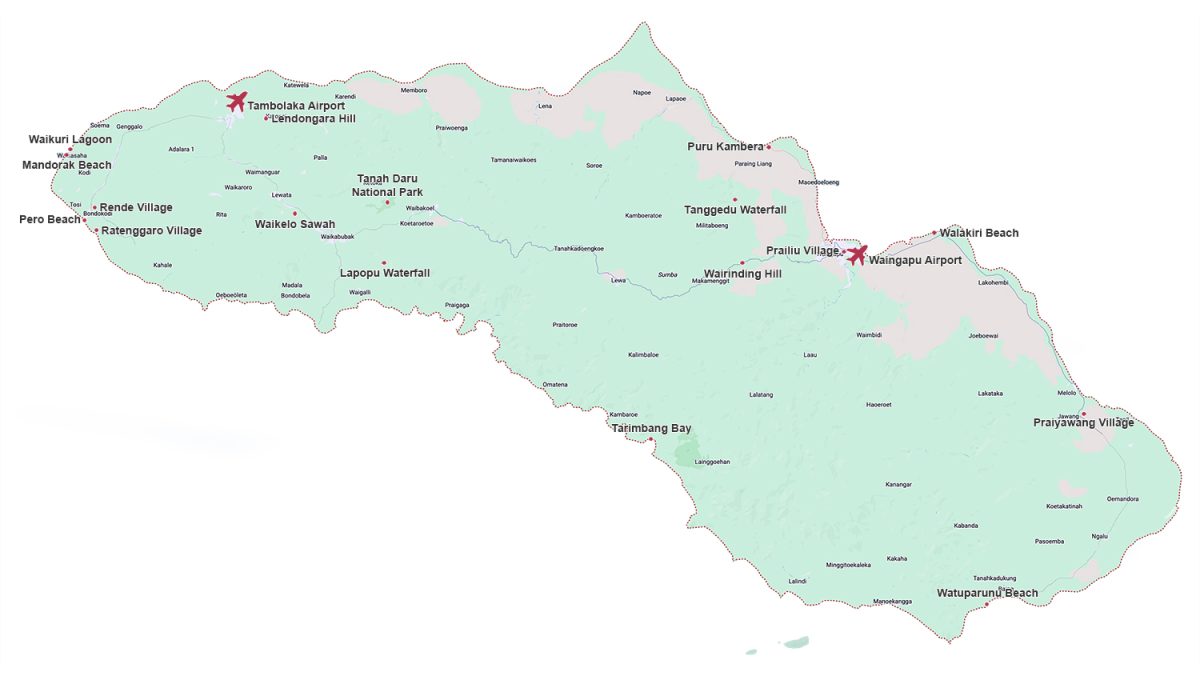
Journey Map - Crossing Sumba
Understanding the geography of Sumba helps travelers appreciate how the journey unfolds across the island. Rather than concentrating all activities in one region, this itinerary follows a natural west-to-east progression, allowing the landscapes to change gradually as you travel.
The journey begins in Tambolaka, the main gateway to West Sumba. From there, the route moves inland through the quieter central highlands before reaching the open savannas and cultural villages of the east. The journey concludes in Waingapu, the largest town in East Sumba and the island’s eastern travel hub.
This forward-moving route helps travelers experience Sumba as a connected landscape rather than isolated destinations.
Route Overview
Tambolaka → West Sumba Coast → Central Highlands → East Sumba Savannas → Waingapu
Each segment of the island offers its own character and scenery, creating a journey that gradually evolves as you travel across Sumba.
West Coast Landscapes
The journey begins along the west coast of Sumba, where limestone cliffs, hidden lagoons, and traditional villages overlook the Indian Ocean. This region introduces many of the island’s most iconic coastal scenes.
Highlights often include:
- Waikuri Lagoon.
- Mandorak Beach.
- Ratenggaro Traditional Village.
These landscapes combine natural beauty with the strong cultural identity of Sumba’s western communities.
Central Highlands
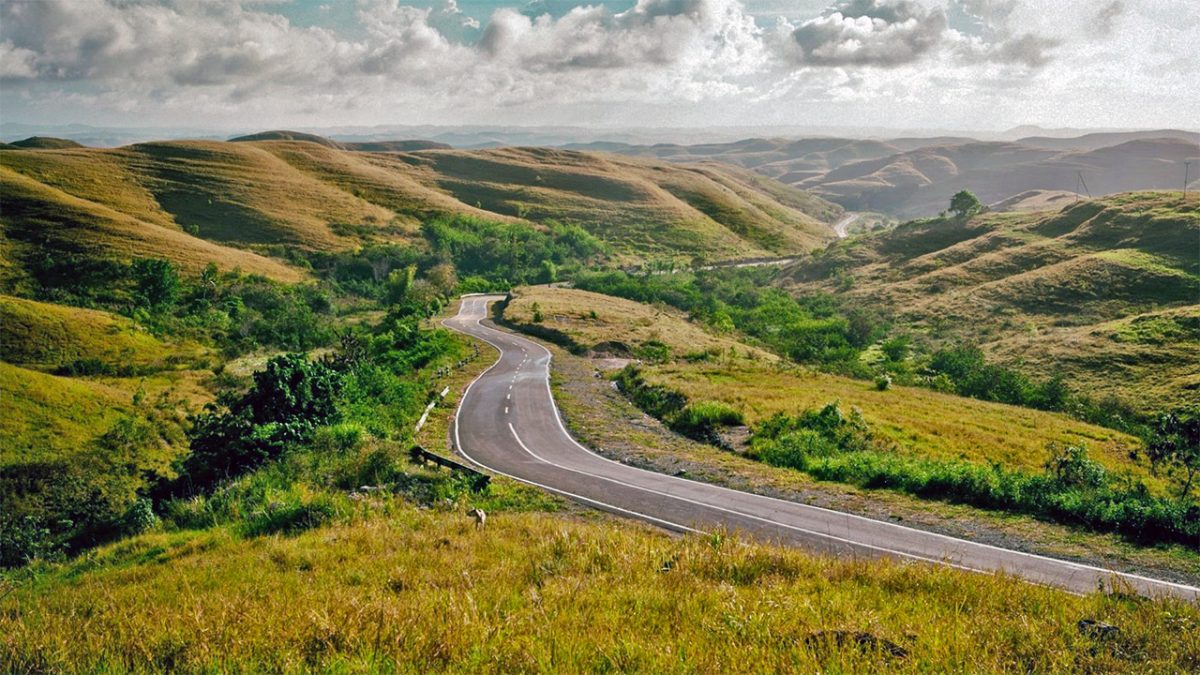
As the route moves inland, the scenery changes to the quieter central highlands. Rolling hills, rural settlements, and scenic roads dominate this part of the island.
Travelers often find this region to be one of the most peaceful sections of the journey. The slower rhythm of village life and wide landscapes offer a different perspective of Sumba beyond the coast.
Eastern Savannas
The final stage of the journey unfolds across the wide savannas of East Sumba, where the landscape becomes more open and dramatic.
Key locations in this region include:
- Wairinding Hill.
- Tanggedu Waterfall.
- Walakiri Beach.
These expansive hills and coastal viewpoints form a striking contrast to the cliffs and lagoons of the west, bringing the journey across Sumba to a memorable close.
By presenting the island in three distinct landscape clusters — west coast, central highlands, and eastern savannas — the itinerary becomes easier to visualize. Travelers can see how each region connects naturally to the next, reducing uncertainty and helping them understand how the journey progresses across the island.
Itinerary
6 Days / 5 Nights
Efficient Full Sumba
This version keeps the itinerary balanced while still crossing the entire island.
Day 1 — Arrival & West Sumba Coast
Flow: Airport arrival → coastal exploration.
Locations:
- Ratenggaro Traditional Village.
- Mandorak Beach.
- Waikuri Lagoon.
Terrain: limestone cliffs, coastal lagoons, ocean viewpoints.
Overnight in West Sumba.
Day 2 — West Sumba Landscapes
Flow: inland landscapes → rural villages → coastal viewpoints.
Locations:
- Waikelo Sawah.
- Savanna hills and countryside roads.
Terrain: rice terraces, springs, rolling savanna hills.
Overnight in West Sumba.
Day 3 — West → Central Highlands
Flow: cross-island drive → highland landscapes → waterfall region.
Locations:
- Lapopu Waterfall.
- Rural villages in Central Sumba.
Terrain: forest valleys, hill roads, waterfall landscapes.
Overnight in the Central Highlands.
Day 4 — Central Highlands → East Sumba
Flow: scenic drive east → savanna landscapes → cultural village
Locations:
- Wairinding Hill.
- Prailiu Village.
Terrain: rolling savannas, hilltop viewpoints.
Overnight in East Sumba.
Day 5 — East Sumba Nature
Flow: canyon waterfall exploration → coastal sunset
Locations:
- Tanggedu Waterfall.
- Walakiri Beach.
Terrain: canyon rock formations, coastal mangrove shoreline.
Overnight in East Sumba.
Day 6 — Departure Waingapu
Flow: relaxed morning → airport transfer
Departure from Waingapu Airport.
7 Days / 6 Nights
Expanded Full Sumba
The 7-day version introduces a slower rhythm, allowing deeper exploration in Central and East Sumba.
Day 1 — Arrival & West Coast Introduction
Flow: arrival → coastal landmarks
Locations:
- Ratenggaro Traditional Village.
- Mandorak Beach.
- Waikuri Lagoon.
Terrain: coastal cliffs, lagoon waters, savanna hills.
Overnight in West Sumba.
Day 2 — West Sumba Exploration
Flow: countryside drive → village visits → savanna viewpoints
Locations:
- Waikelo Sawah.
- Rural Sumba villages.
Terrain: rice terraces, countryside hills.
Overnight in West Sumba.
Day 3 — Highlands & Waterfalls
Flow: inland journey → waterfall landscapes
Locations:
Lapopu Waterfall.
Terrain: forest valleys, hillside trails, river valleys.
Overnight in the Central Highlands.
Day 4 — Central → East Sumba Transition
Flow: scenic cross-island drive → savanna hills
Locations:
Wairinding Hill.
Terrain: rolling golden savannas and panoramic hilltops.
Overnight in East Sumba.
Day 5 — East Sumba Canyon Landscape
Flow: waterfall exploration → savanna viewpoints
Locations:
Tanggedu Waterfall.
Terrain: canyon rock formations and turquoise pools.
Overnight in East Sumba.
Day 6 — Culture & Coast
Flow: cultural village → coastal sunset
Locations:
- Prailiu Village.
- Walakiri Beach.
Terrain: traditional village landscapes and mangrove coastline.
Overnight in East Sumba.
Day 7 — Departure Waingapu
Flow: relaxed morning → airport transfer
Departure from Waingapu Airport, completing the journey across Sumba from west to east.
What You Will Visit
West Sumba Highlight
1. Waikuri Lagoon
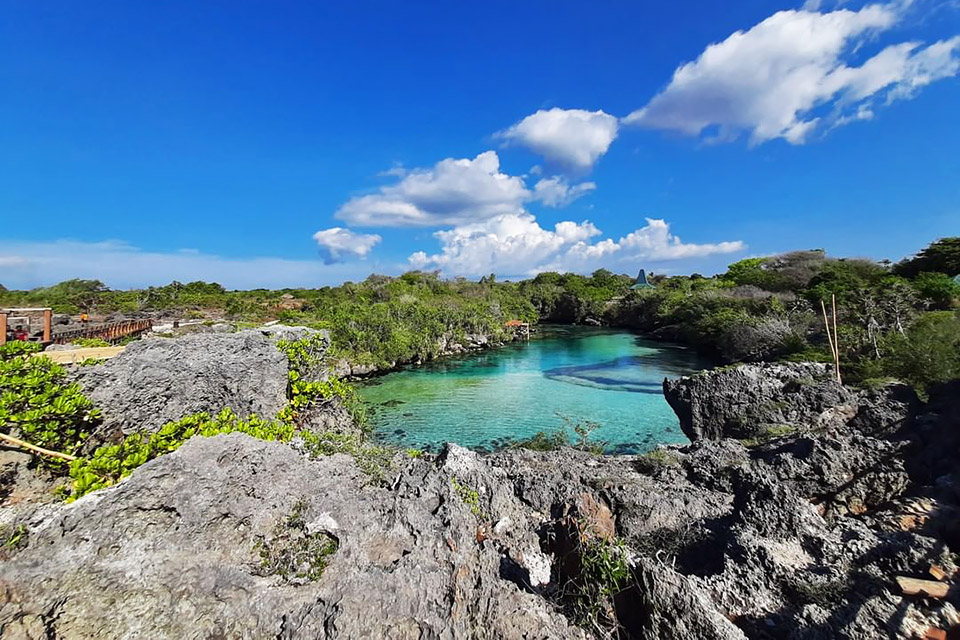
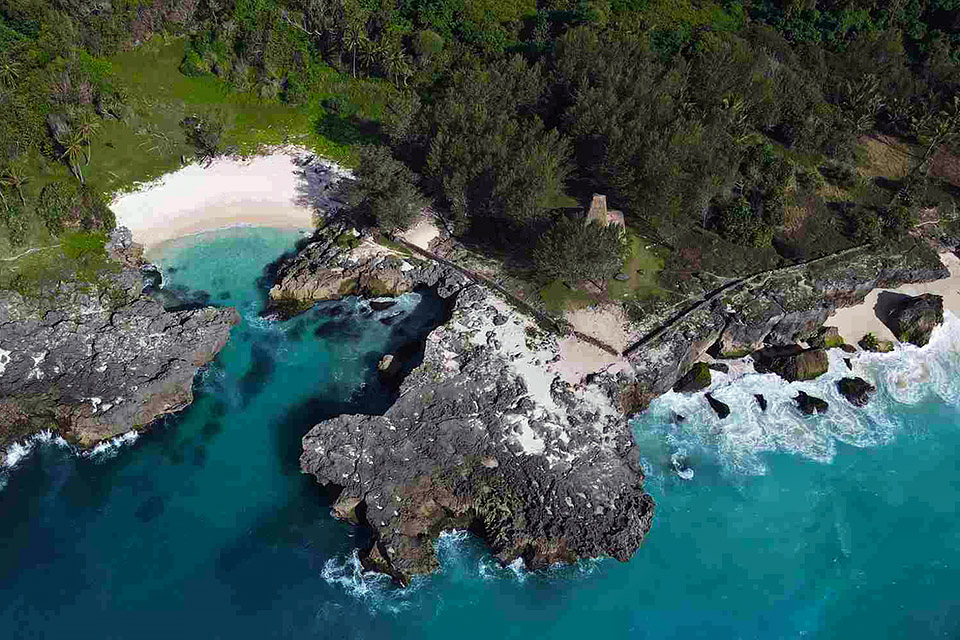
One of the most iconic natural wonders in Sumba, Waikuri Lagoon is a crystal-clear saltwater lagoon enclosed by rugged limestone walls. Ocean water enters through small openings in the rocks, creating a calm turquoise pool perfect for swimming and relaxing. Elevated viewpoints around the lagoon provide sweeping views of the surrounding coastline.
2. Mandorak Beach
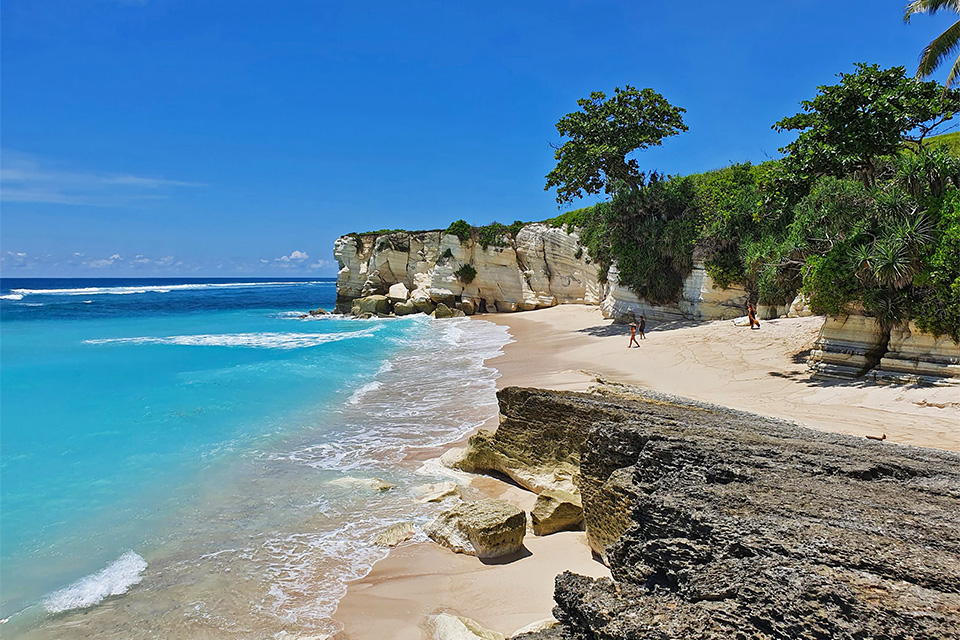
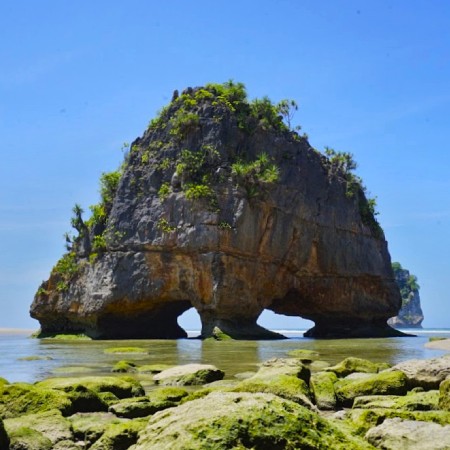
Tucked between towering limestone cliffs, Mandorak Beach feels like a hidden cove. The small bay contrasts dramatic rock formations with bright white sand and turquoise water. Waves crash against the cliffs outside the cove while the sheltered beach remains calm, making it one of the most photogenic coastal locations in West Sumba.
3. Pero Beach
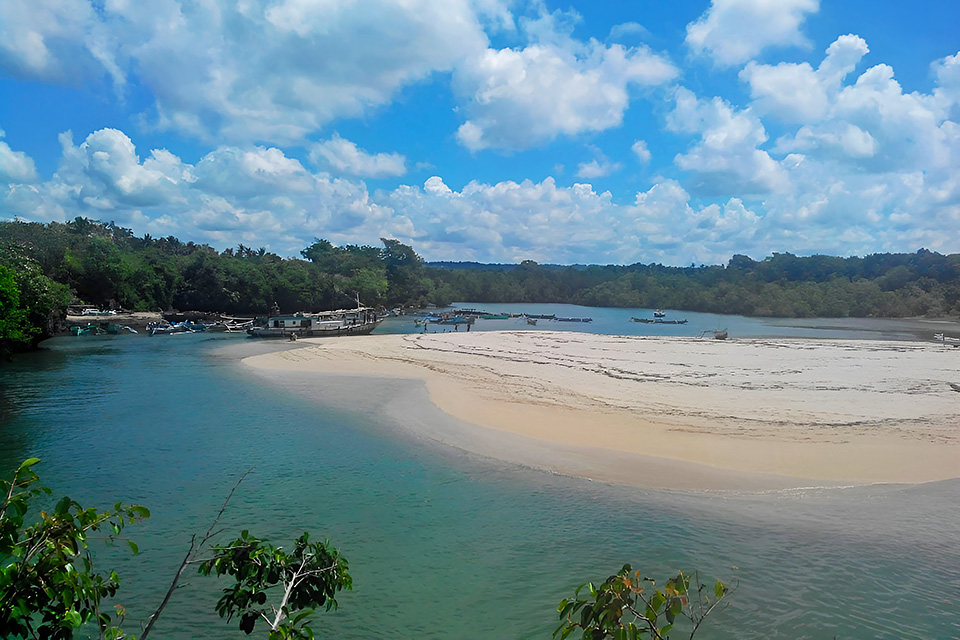
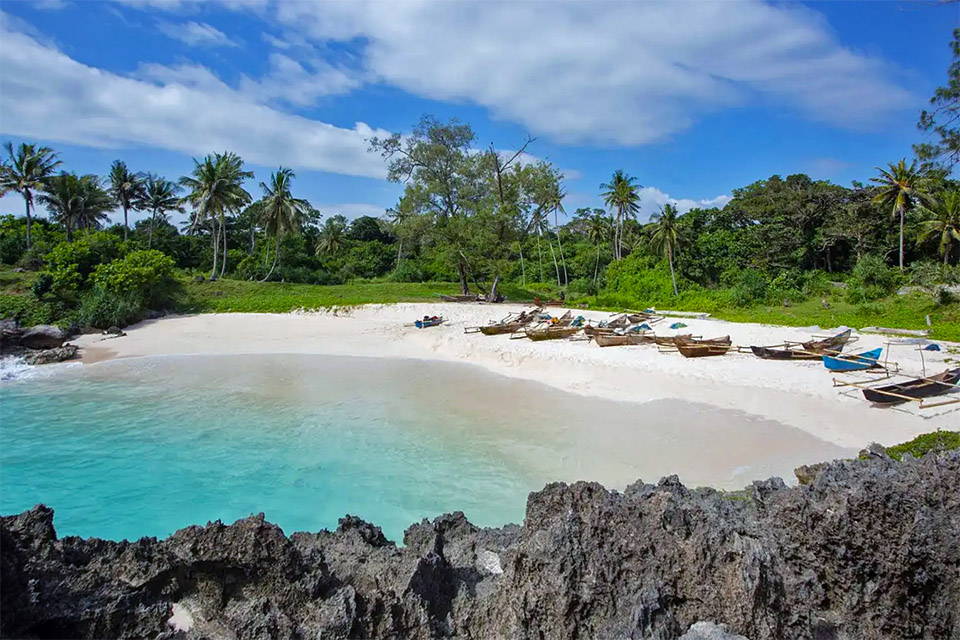
A traditional fishing village beach where colorful boats rest along the shoreline. The wide sandy coast and open ocean views provide a glimpse into daily coastal life in Sumba. Sunsets here can be particularly beautiful as fishing boats return to shore.
4. Ratenggaro Village
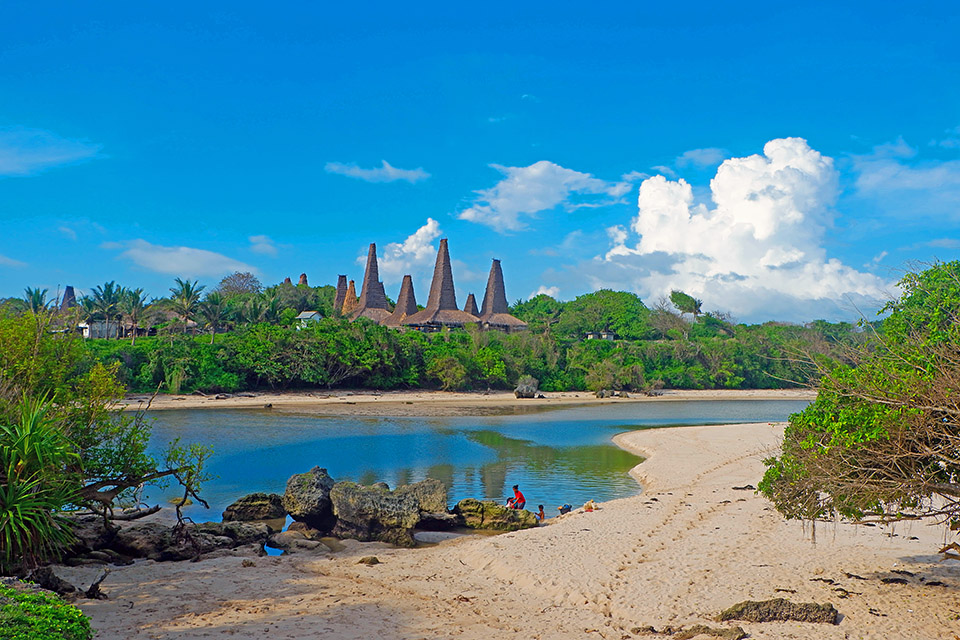
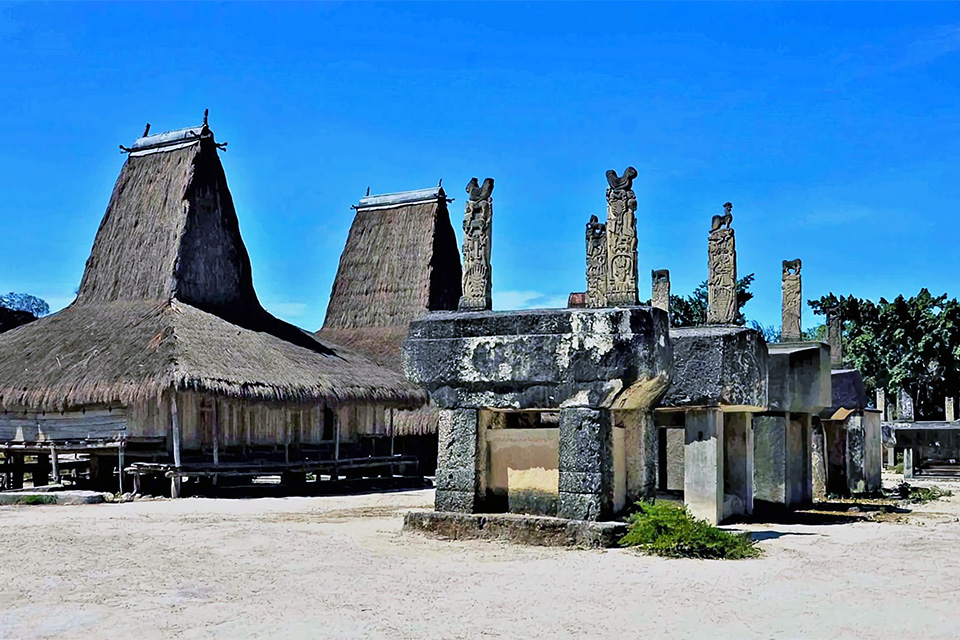
Ratenggaro is one of the most well-known traditional villages in Sumba, famous for its towering thatched houses with dramatically tall roofs. The village also features ancient stone tombs scattered across the landscape, reflecting the island’s enduring megalithic burial traditions. Its location overlooking the ocean adds to the striking scenery.
5. Prai Ijing Village
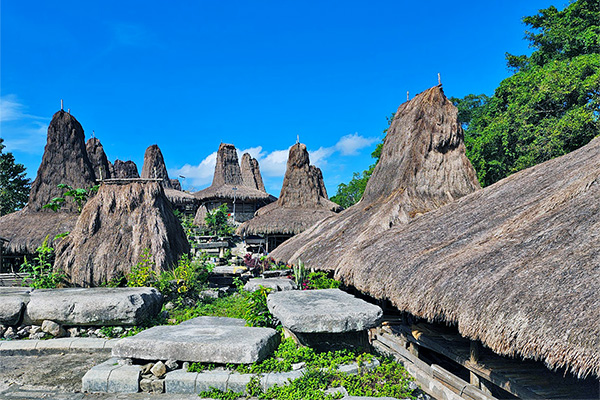
Located on a hillside overlooking rice fields and valleys, Prai Ijing Village offers a beautiful example of traditional Sumbanese architecture. The village layout centers around large stone tombs surrounded by tall peaked houses, while panoramic viewpoints reveal the surrounding rural landscape.
Central Sumba Highlands
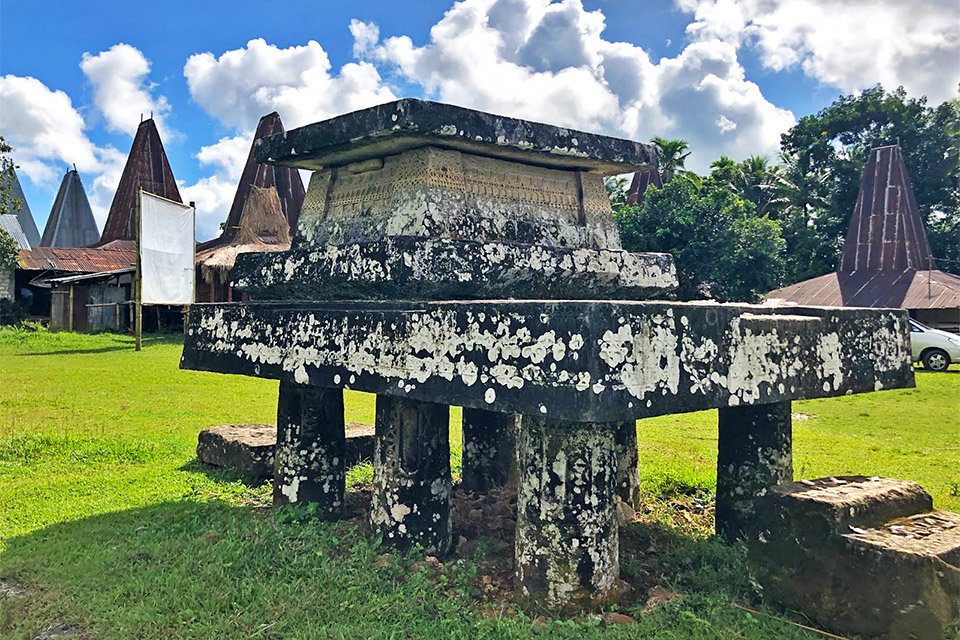
6. Pasunga Village
Pasunga Village is known for its impressive megalithic stone tombs, some of which weigh several tons. These elaborate burial structures are central to Sumbanese ancestral traditions and provide insight into the island’s unique cultural heritage.
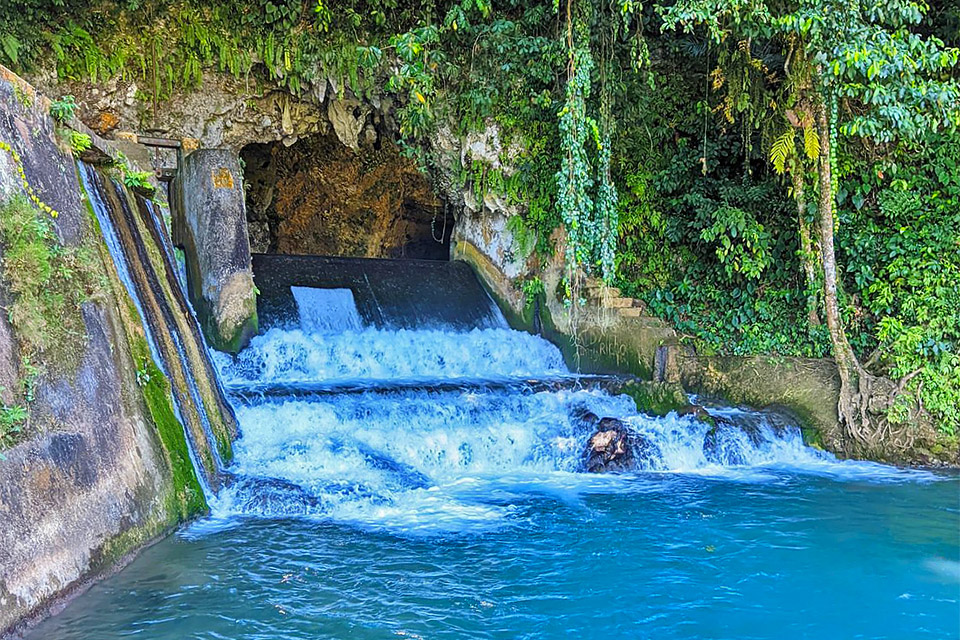
7. Waikelo Sawah Dam
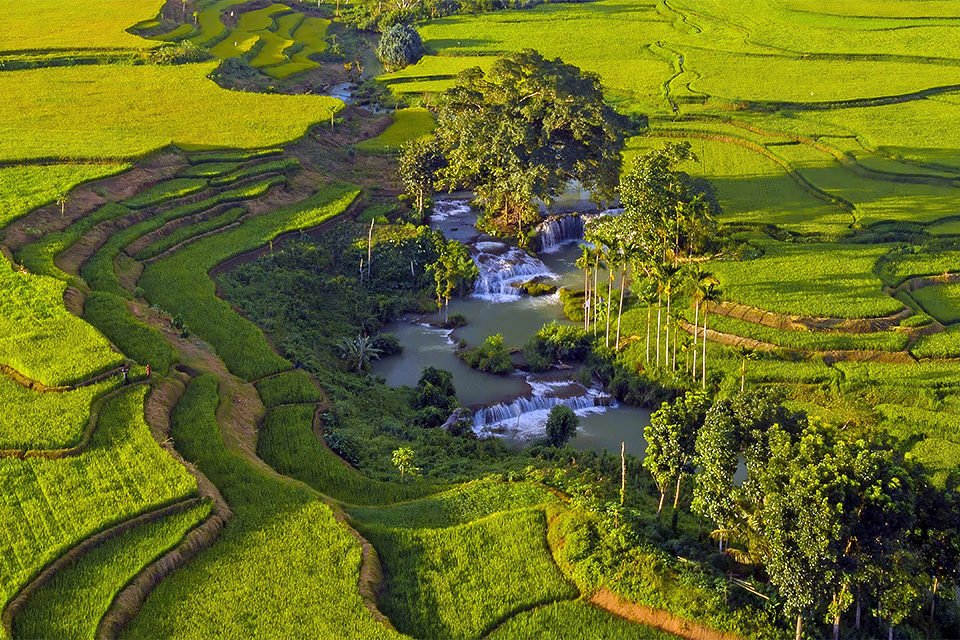
A fascinating blend of engineering and landscape, this irrigation system channels water from an underground spring into a network of rice fields. The surrounding rural scenery and flowing water make it a peaceful stop along the route.
East Sumba Highlight
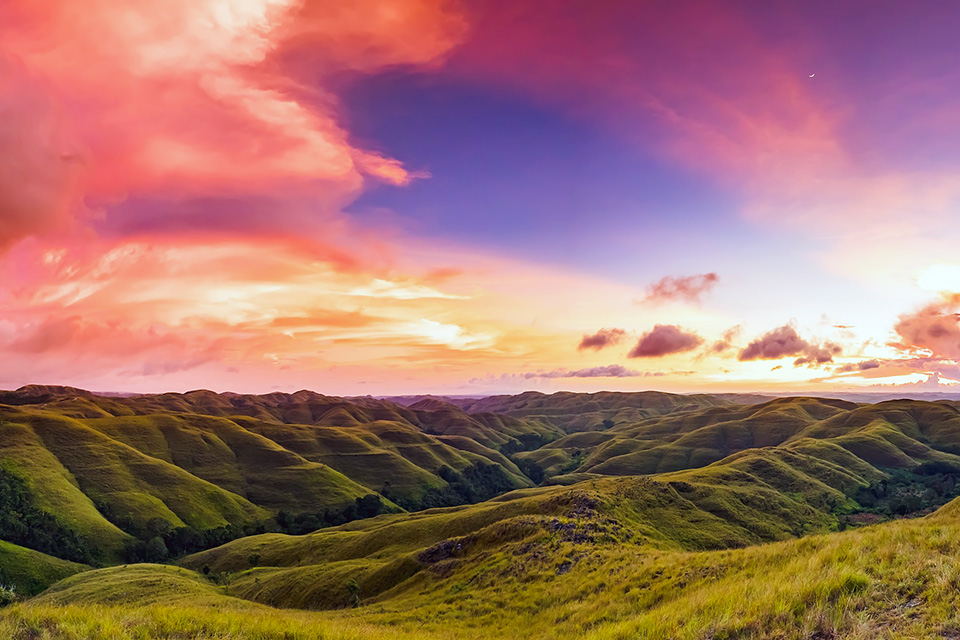
8. Wairinding Hill
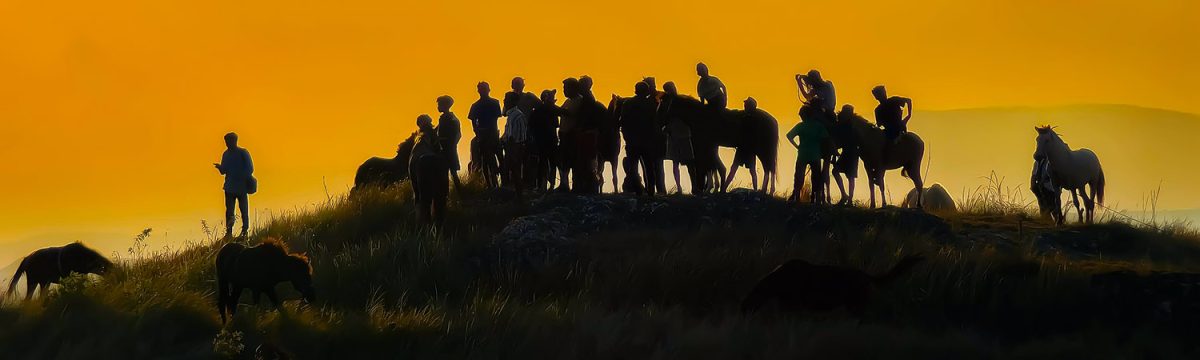
Perhaps the most famous landscape in East Sumba, Wairinding Hills feature rolling grassy hills stretching across the horizon. During the rainy season they turn bright green, while the dry season transforms them into golden savanna landscapes. Sunrise and sunset are particularly spectacular here.
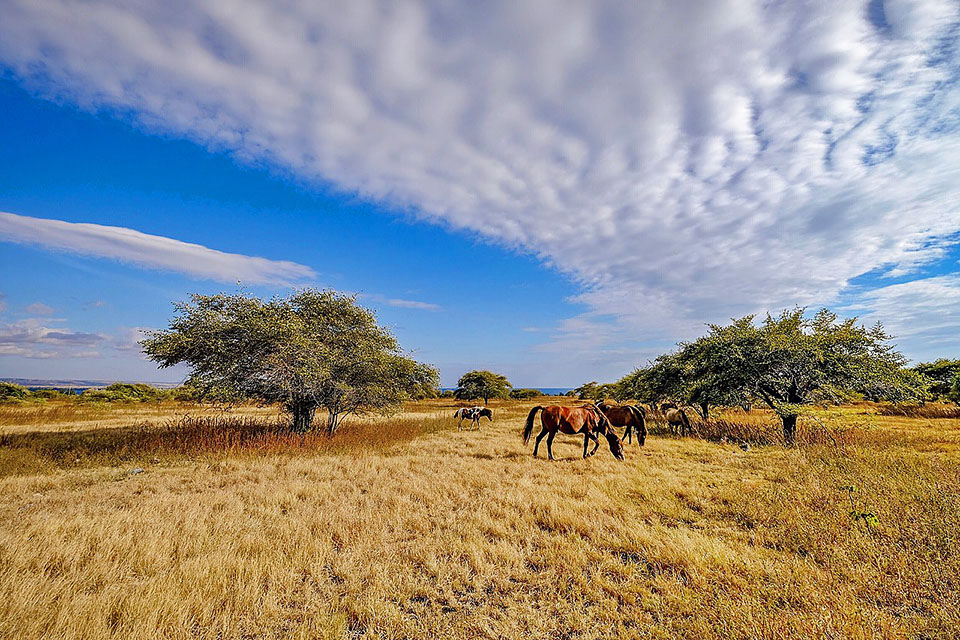
9. Puru Kambera Savanna
A vast open landscape where grasslands meet the ocean. Wild horses are sometimes seen grazing across the plains, reinforcing the sense of Sumba’s wide and untamed scenery.
10. Tanggedu Waterfall
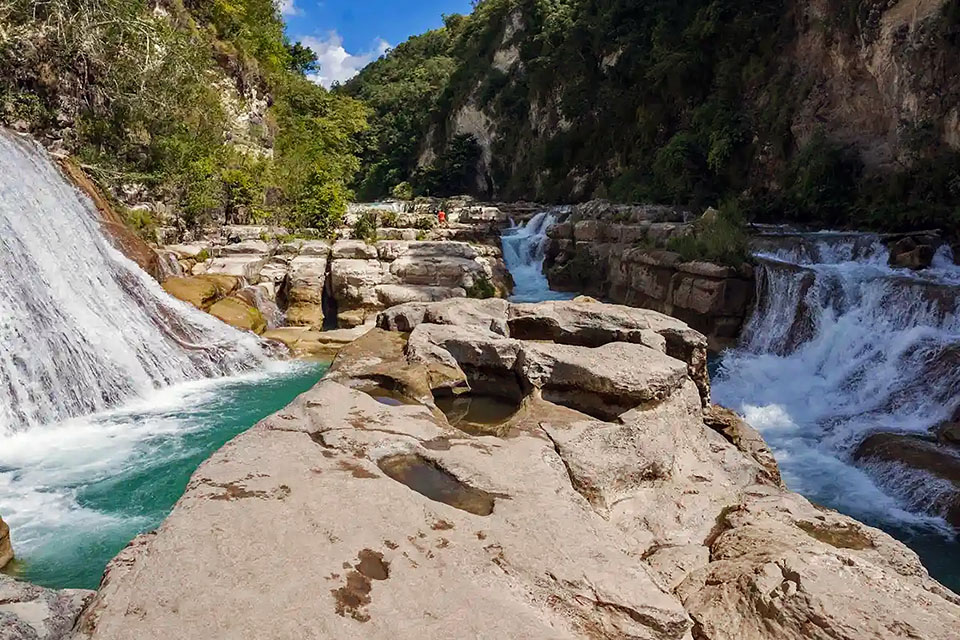
Often described as a “hidden canyon waterfall,” Tanggedu flows through sculpted rock formations that resemble a miniature canyon landscape. The layered rock walls and clear pools create a unique environment that feels very different from the island’s other waterfalls.
11. Praiyawang Village
Located near Waingapu, this traditional village preserves Sumba’s distinctive house architecture and ancestral tombs. Visitors can observe daily village life and learn about weaving traditions that remain an important part of local culture.
12. Walakiri Beach
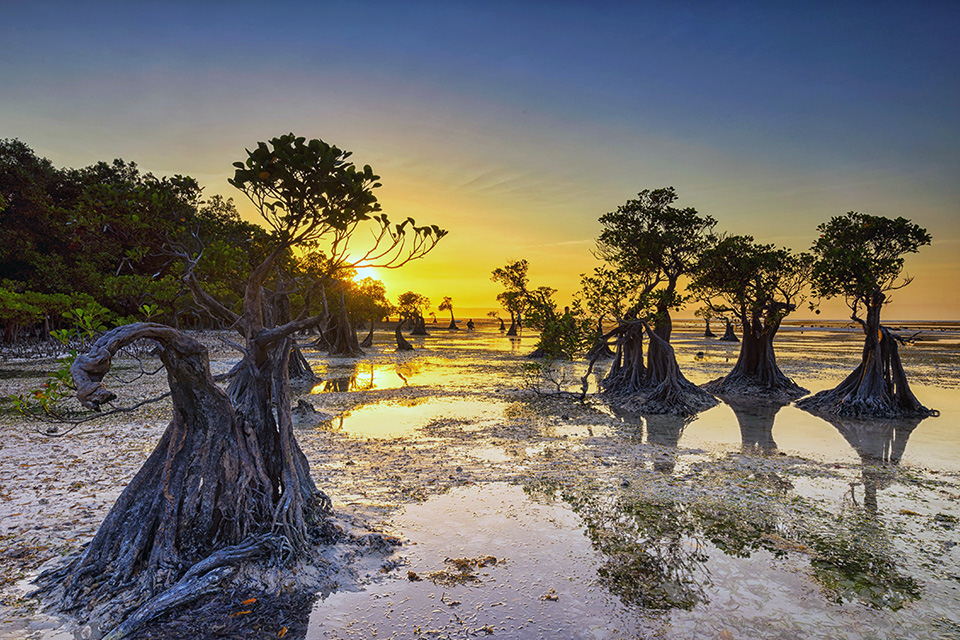
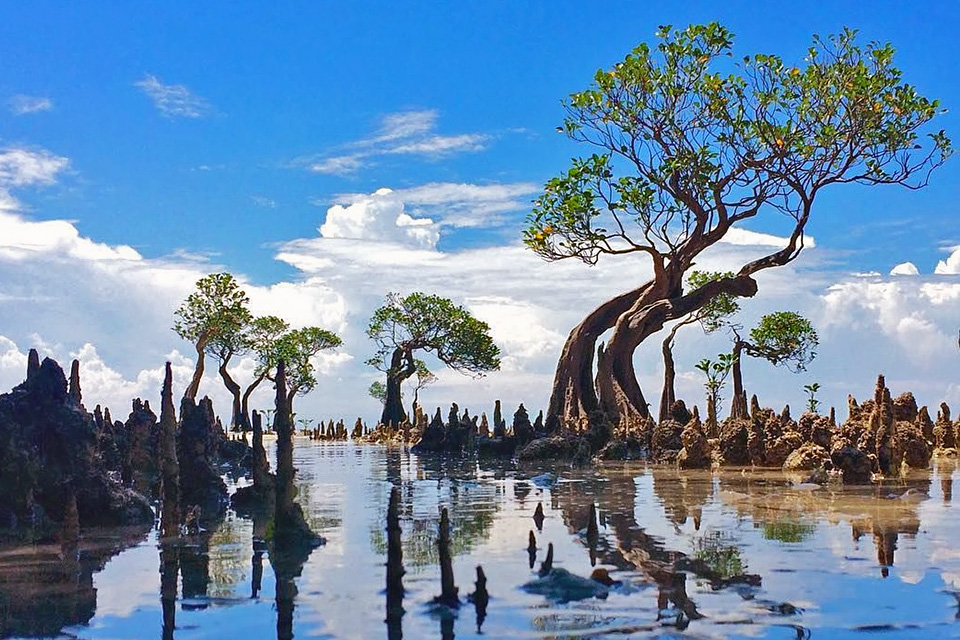
Walakiri Beach is famous for its small mangrove trees that form elegant silhouettes against the evening sky. During low tide, reflections in the shallow water create a dreamlike setting that attracts photographers from around the world.
A Journey Across the Landscapes of Sumba
Together, these locations form a complete cross-island exploration of Sumba, connecting dramatic coastlines, sacred villages, waterfalls hidden in tropical forests, and vast savanna hills. By traveling gradually from Tambolaka to Waingapu, the journey reveals the island’s landscapes one region at a time — making the 6–7 day itinerary one of the most comprehensive ways to experience Sumba.
Landscape Guide — Understanding Sumba
One of the reasons Sumba feels so distinctive is the diversity of its landscapes. Within a single journey across the island, travelers encounter dramatically different environments — from coastal cliffs and turquoise lagoons to forested valleys and vast savanna hills.
For travelers planning a longer trip, it helps to understand that Sumba can be loosely divided into three landscape zones. Each region offers its own scenery, culture, and rhythm of life, which is why a cross-island journey reveals far more of the island than a short regional visit.
West Sumba — Coastal Cliffs & Lagoons
The western coast of Sumba is defined by rugged limestone cliffs, hidden coves, and some of the island’s most famous coastal landscapes. This region is where many travelers first encounter the dramatic meeting of sea and savanna that characterizes the island.
Notable locations include:
- Waikuri Lagoon — a natural saltwater lagoon with calm turquoise water enclosed by rock formations.
- Mandorak Beach — a small, secluded bay framed by steep limestone cliffs.
- Ratenggaro Traditional Village — one of the island’s most iconic cultural sites, known for its tall traditional houses and megalithic tombs overlooking the ocean.
Together, these locations create the striking coastal scenery that often defines travelers’ first impressions of Sumba.
Central Sumba — Highlands & Waterfalls
Moving inland, the landscape gradually shifts to the greener highlands of Central Sumba. Rolling hills give way to forested valleys, and natural springs feed rivers and waterfalls hidden among the hills.
Important highlights include:
- Waikelo Sawah — a spring-fed irrigation system where clear water flows into rice terraces.
- Lapopu Waterfall — the tallest waterfall in Sumba, cascading down multiple rock tiers surrounded by forest.
- Forest valleys and rural landscapes — quieter parts of the island where traditional farming communities maintain a slower rhythm of life.
This region offers a different perspective of Sumba — one defined less by the sea and more by rivers, forests, and highland scenery.
East Sumba — Savannas & Cultural Villages
As the journey continues eastward, the landscape opens into wide savanna hills that stretch toward the horizon. This region is known for its expansive views, strong cultural traditions, and dramatic natural formations. Key locations include:
- Wairinding Hill — one of the island’s most iconic viewpoints, where rolling grasslands extend across the horizon.
- Prailiu Village — a cultural center known for traditional houses and the art of Sumbanese ikat weaving.
- Tanggedu Waterfall — a canyon-like waterfall with turquoise pools carved into layered rock formations.
- Walakiri Beach — famous for its small mangrove trees silhouetted against colorful sunset skies.
The openness of the eastern savannas provides a striking contrast to the cliffs of the west and the valleys of the central highlands, completing the full landscape story of Sumba.
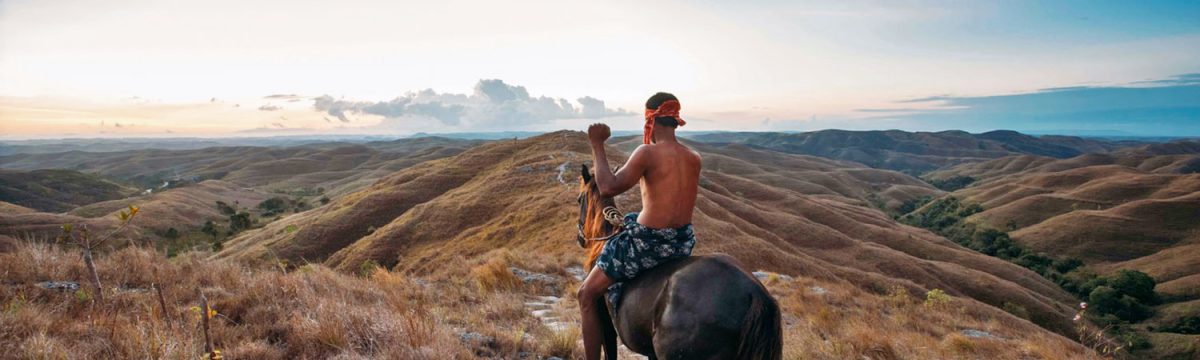
By crossing all three landscape zones — coastal west, highland interior, and savanna east — travelers gain a deeper understanding of the island’s natural diversity. This progression is one of the reasons a longer journey across Sumba feels less like a simple tour and more like a gradual discovery of the island itself.
Detailed Itinerary
6 Days / 5 Nights – Full Sumba Exploration
Day 1 – Arrival Tambolaka | West Sumba Coastal Icons
Arrival at Tambolaka Airport, gateway to West Sumba.
Your introduction to the island begins with the coastal landscapes that have become iconic across Indonesian travel photography.
Visits include:
- Ratenggaro Traditional Village — towering megalithic tombs and traditional houses set dramatically above the ocean.
- Mandorak Beach — a small hidden bay framed by limestone cliffs.
- Waikuri Lagoon — a crystal-clear saltwater lagoon where calm waters contrast with the nearby open sea.
- Lendongara Hill — a sweeping savanna hill perfect for sunset.
Overnight in West Sumba.
Purpose: cluster West Sumba’s coastal highlights efficiently on the first day.
Day 2 – West Sumba Landscapes & Culture
Today explores the landscapes and culture behind the coastline.
Stops may include:
- Waikelo Sawah — a natural spring irrigation system flowing through rice terraces.
- Pero Beach — a traditional fishing village where life remains deeply connected to the sea.
- Savanna hill landscapes — the golden grasslands that give Sumba its distinctive character.
- Optional traditional villages for cultural immersion.
Overnight in West Sumba.
Purpose: deepen the experience before beginning the island crossing.
Day 3 – West → Central Sumba Scenic Transition
Today begins the cross-island journey, moving gradually from West Sumba toward the island’s central highlands.
Highlights include:
- Inland savanna landscapes.
- Rural villages rarely visited by travelers.
- Scenic road stops across rolling hills.
Because Sumba’s distances are large, this day is intentionally designed as a slow scenic transfer rather than a rushed drive.
Overnight in Central Sumba (Waikabubak or nearby).
Purpose: break the cross-island distance intelligently.
Day 4 – Central Highlands → East Sumba
The landscape gradually transforms as you approach East Sumba, where vast open savannas dominate the scenery.
Stops may include:
- Wairinding Hill — one of Sumba’s most photogenic landscapes.
- Prailiu Traditional Village — known for its ikat weaving heritage and traditional houses.
By afternoon, you reach Waingapu, the main town of East Sumba.
Overnight in East Sumba.
Purpose: transition into the cultural identity of East Sumba.
Day 5 – East Sumba Nature & Coastal Landscapes
The 5th day focuses on the dramatic nature landscapes that make East Sumba unique.
Highlights may include:
- Tanggedu Waterfall — a canyon-like waterfall often compared to a miniature Grand Canyon.
- Savanna viewpoints across East Sumba’s rolling hills.
- Walakiri Beach — famous for its mangrove trees silhouetted against the sunset.
Overnight in East Sumba.
Purpose: explore East Sumba without time pressure.
Day 6 – Departure Waingapu
After breakfast, enjoy a relaxed morning before transfer to Waingapu Airport for your departure.
The journey concludes having crossed the island from west to east, revealing Sumba’s landscapes, villages, and culture in a single continuous arc.
7 Days / 6 Nights – The Complete Sumba Journey
Arrival: Tambolaka (West Sumba); Departure: Waingapu (East Sumba)
Split stay structure:
2 Nights West Sumba → 1 Night Central Sumba → 3 Nights East Sumba
This gives every region space to breathe.
Day 1 — Arrival Tambolaka | West Sumba Coastal Icons
Arrival at Tambolaka Airport, the main gateway to West Sumba. Your first day introduces Sumba’s dramatic coastal scenery.
Highlights include:
- Ratenggaro Traditional Village — famous for its towering megalithic tombs and traditional Sumbanese houses overlooking the sea.
- Mandorak Beach — a hidden cove framed by limestone cliffs.
- Waikuri Lagoon — a crystal-clear saltwater lagoon ideal for swimming.
- Lendongara Hill — sunset over rolling savanna hills.
Overnight in West Sumba.
Purpose: introduce the island’s coastal landscapes while travel energy is still high.
Day 2 — West Sumba Landscapes & Culture
Today explores the cultural and rural landscapes behind the coast.
Visits include:
- Waikelo Sawah — a unique spring-fed irrigation system flowing through rice fields.
- Pero Beach — a traditional fishing village rarely visited by travelers.
- Savanna hill viewpoints — the iconic rolling grasslands of Sumba.
- Optional traditional village visit for deeper cultural context.
Overnight in West Sumba.
Purpose: give West Sumba proper depth before crossing the island.
Day 3 — West → Central Sumba Scenic Transfer
The journey now begins moving inland toward Central Sumba. Rather than a long direct drive, the route includes scenic stops across Sumba’s rural interior.
Expect:
- Rolling savanna landscapes.
- Quiet villages rarely seen by visitors.
- Photo stops across hilltop viewpoints.
Purpose: break the island crossing into a comfortable and scenic progression.
Day 4 — Central Highlands → East Sumba
As you move toward East Sumba, the scenery becomes wider and more open.
Key highlights include:
- Wairinding Hill — one of the most iconic landscapes in East Sumba.
- Prailiu Traditional Village — known for its ikat weaving tradition and preserved architecture.
Arrival in Waingapu, the cultural center of East Sumba.
Overnight in East Sumba.
Purpose: begin the East Sumba chapter of the journey.
Day 5 — Tanggedu Canyon Adventure
This day focuses on one of Sumba’s most dramatic natural landscapes.
Visit: Tanggedu Waterfall
Often compared to a miniature canyon landscape, Tanggedu features turquoise pools surrounded by sculpted rock formations. Reaching the waterfall requires a short walk, but the scenery is one of the most spectacular in East Sumba.
Afternoon at leisure or optional savanna viewpoints at Puru Kambera.
Overnight in East Sumba.
Purpose: dedicate a full day to East Sumba nature.
Day 6 — East Sumba Culture & Walakiri Sunset
The final exploration day blends culture, landscape, and coastal beauty.
Activities may include:
- Savanna viewpoints around Waingapu.
- Local villages and ikat weaving communities.
- Coastal drives along East Sumba’s quiet shoreline.
In the evening: Sunset at Walakiri Beach, famous for its small mangrove trees silhouetted against colorful skies.
Overnight in East Sumba.
Purpose: close the journey with one of Sumba’s most atmospheric landscapes.
Day 7 — Departure Waingapu
After breakfast, enjoy a relaxed morning before your transfer to Waingapu Airport.
Expanded In 7 Days Journey
The 7-day version adds breathing room and deeper exploration, especially in Central and East Sumba. Additional elements may include:
Extra West Sumba Depth
- Longer exploration of coastal areas.
- Additional traditional village visits.
Central Sumba Exploration
- Highland villages.
- Rural markets.
- Scenic savanna. photography stops.
Expanded East Sumba
- Sunrise at Wairinding Hill.
- Deeper exploration of Tanggedu Canyon.
- Additional coastal viewpoints.
Overnight Distribution
- 2 nights West Sumba.
- 1 night Central Sumba.
- 3 nights East Sumba.
This pacing turns the itinerary into a complete island exploration rather than a compressed crossing.
Logistical Notes
Sumba is geographically expansive, and cross-island journeys require thoughtful pacing.
This itinerary is structured to balance exploration with realistic travel time expectations.
Drive Times Across the Island
Sumba is larger than many travelers expect, and traveling between regions naturally involves scenic drives. The journey begins in Tambolaka and gradually moves eastward toward Waingapu, with travel distributed across several days.
Typical drive segments include:
- West Sumba coastal routes: 1–2 hours between locations.
- West → Central Highlands: approximately 3–4 hours.
- Central → East Sumba: approximately 3–4 hours.
Rather than completing these distances in a single day, the itinerary spreads the travel across multiple stages, with scenic stops along the way.
Luggage Flow During Split Stays
Because the journey includes multiple overnight bases, luggage simply travels with you between regions. Transfers between accommodations are integrated into the daily route, meaning you do not need to return to previous hotels.
Typical accommodation flow may look like:
- West Sumba – first stage of the journey
- Central Highlands – inland exploration
- East Sumba – final landscapes and cultural visits
This split-stay approach keeps daily travel times manageable while allowing deeper exploration in each region.
Terrain & Road Reality
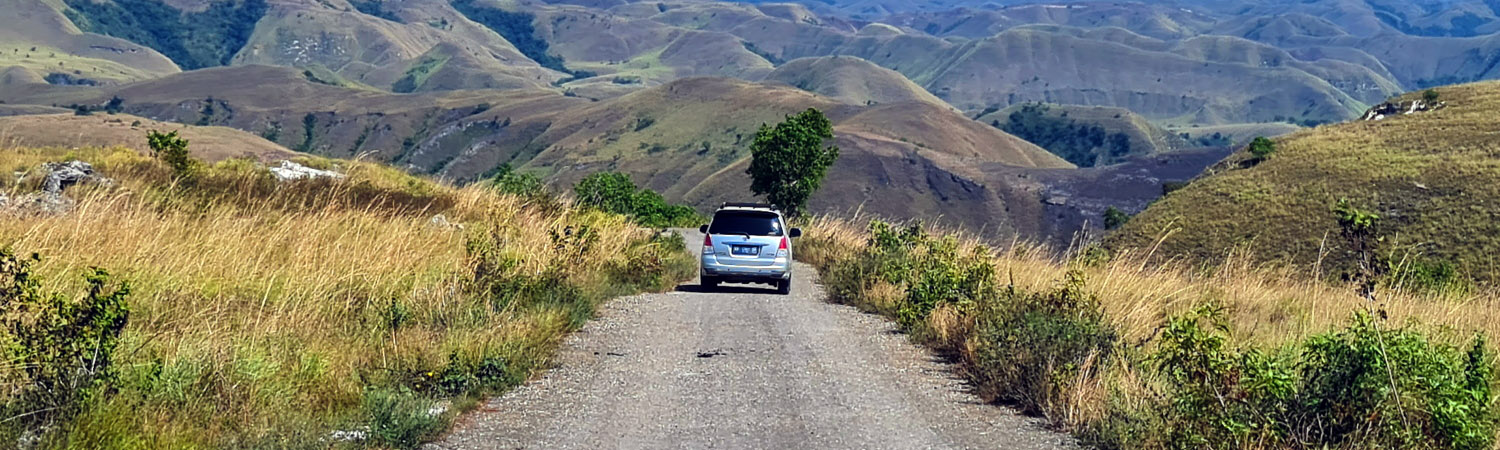
Sumba’s roads pass through a wide variety of landscapes — coastal plains, rolling savannas, forest valleys, and mountainous terrain. While the main cross-island road is generally paved, smaller roads leading to waterfalls or villages can be narrower and occasionally uneven.
For this reason, travel days are designed with a balanced rhythm, combining scenic drives with exploration stops rather than long uninterrupted transfers.
Travel Comfort Expectations
Travel in Sumba is part of the adventure. Roads wind through rural landscapes, villages appear unexpectedly between hills, and dramatic scenery often emerges between destinations.
Most journeys are conducted in air-conditioned private vehicles, allowing travelers to move comfortably between regions while enjoying the changing landscapes outside the window. However, these basic comfort are all you can get.
By balancing travel distances with scenic stops and multiple overnight bases, the itinerary maintains a steady rhythm that makes exploring the full island both achievable and enjoyable.
Accommodation Strategy
Exploring Sumba comfortably requires more than choosing good hotels —
it requires choosing the right locations to stay along the route.
Because the island stretches across several distinct regions, the journey is designed around regional stays that follow the natural west-to-east progression of the itinerary. Instead of returning to the same base every night, accommodations are positioned strategically along the route. This allows travelers to remain closer to the landscapes and cultural sites being explored each day.
West Sumba
The journey begins in the western part of the island near Tambolaka. Staying in West Sumba places travelers close to the region’s coastal landmarks — including lagoons, cliffs, and traditional villages overlooking the sea.
This first base allows unhurried exploration of the island’s dramatic western coastline before the journey moves inland.
Central Sumba (Highland Region)
Depending on the itinerary version, the journey may include a stay in the central highlands. This inland region offers a quieter landscape of forest valleys, rivers, and rural communities.
Spending a night here breaks up the longer cross-island drive and introduces a completely different environment from the coast. It also creates a more natural rhythm for the journey as it transitions toward the eastern part of the island.
East Sumba
The final stage of the journey takes place in East Sumba near Waingapu. This region is known for expansive savannas, traditional villages, and some of the island’s most distinctive landscapes.
Staying in East Sumba allows travelers to explore these locations without long return drives, while also placing them conveniently close to the departure airport at the end of the journey.
Why a Split-Stay Approach Improves the Experience
This regional accommodation strategy improves the journey in several ways:
- Shorter daily travel times by staying closer to each region’s attractions
- A natural west-to-east progression without backtracking
- More time for exploration instead of long transfers
- A deeper sense of place as each region reveals its own character
By aligning accommodations with the geography of the island, the itinerary transforms travel days into a gradual discovery of Sumba rather than a series of long drives between distant destinations.
Travel Time Reality Check
Sumba is often described as a small island, but distances between its regions can be greater than many travelers expect. Understanding how travel works across the island helps set realistic expectations and ensures the journey feels comfortable.
Distances Across Sumba
The island stretches several hundred kilometers from west to east. Traveling from the western gateway of Tambolaka to the eastern hub of Waingapu involves crossing savannas, hill ranges, rural villages, and forested valleys. Because of the terrain, journeys between regions naturally take time. However, the changing scenery — from coastal cliffs to rolling grasslands — makes these drives an important part of experiencing the island.
Realistic Drive Times
Travel times vary depending on the specific route and road conditions, but typical segments across the island include:
West Sumba: 1–2 hours between sites.
West Sumba → Central Highlands: 3–4 hours.
Central Highlands → East Sumba: around 3–4 hours.
Rather than attempting to cover these distances all at once, the itinerary spreads the travel across multiple days with scenic stops along the way.
Why Itinerary Pacing Matters
Careful pacing is essential when designing a cross-island journey. Compressing too many regions into a short timeframe can lead to long drives and limited time at each destination.
For this reason, the itinerary follows a gradual west-to-east progression, with overnight stays positioned along the route. This structure keeps daily travel manageable while allowing travelers to fully enjoy the landscapes and cultural sites encountered along the journey.
By planning the route realistically, the trip becomes less about rushing between destinations and more about experiencing Sumba as a connected landscape that reveals itself one region at a time.
Why This Journey Works
Designing a journey across Sumba requires more than simply listing attractions on a map. Because the island’s landscapes are spread across distant regions, the experience depends heavily on how the route is structured. This itinerary is therefore built around three principles that make the journey both practical and immersive.
Regional Clustering
Rather than moving back and forth across the island, the itinerary groups locations by region. Coastal landmarks near Tambolaka are explored together at the beginning of the trip, while savanna viewpoints and cultural villages around Waingapu are visited during the final stage.
This regional clustering minimizes unnecessary travel and allows each area of the island to be experienced more fully before moving on to the next.
Forward-Moving Route
Another important element is the west-to-east flow of the journey. Instead of returning to the same base every night or repeating the same roads, the itinerary moves gradually across the island.
Each day introduces a new landscape — from coastal lagoons and limestone cliffs to highland valleys and expansive savannas. This forward-moving structure transforms the journey itself into part of the experience, as travelers see the island change region by region.
Balanced Pacing
Equally important is the rhythm of the itinerary.
Time is balanced between exploration and travel so that long drives do not dominate the experience. Scenic stops, village visits, and landscape viewpoints break up travel segments, keeping each day varied and engaging.
Together, these elements create a journey that feels intentional and cohesive. Instead of a collection of disconnected stops, the route becomes a well-paced exploration of Sumba, where each region naturally leads to the next as the island gradually unfolds from west to east.
Optional Extensions
For travelers with additional time or specific interests, the journey across Sumba can easily be extended or adapted. Because the itinerary already spans the island from Tambolaka to Waingapu, several natural extensions can deepen the experience without altering the overall route.
These options allow the journey to evolve from a cross-island exploration into a more personalized travel experience.
Private Beach Extensions
After several days of exploration, some travelers choose to extend their stay along Sumba’s quieter coastlines. Adding extra nights near the western coast allows time to slow down and enjoy the island’s remote beaches, ocean sunsets, and relaxed atmosphere after the active portion of the journey.
This extension works particularly well for travelers who want to combine exploration with restorative downtime.
Extended East Sumba Exploration
East Sumba offers vast landscapes that many travelers wish they had more time to explore. Extending the itinerary by one or two nights near Waingapu allows additional time for sunrise and sunset photography across the savanna hills, as well as visits to lesser-known villages and coastal viewpoints.
This option often transforms the journey into an even more relaxed 8–9 day exploration of Sumba.
Photography-Focused Itinerary
Sumba’s landscapes change dramatically depending on the time of day and season. For photographers, an extended itinerary allows more flexibility to revisit key viewpoints at sunrise or sunset.
Additional time may be dedicated to locations such as savanna hill landscapes, traditional villages, and dramatic coastal cliffs where lighting conditions play an important role in capturing the scenery.
Extending the Journey
Many travelers who begin with a 6–7 day itinerary eventually decide to extend their trip into a longer 8–9 day journey. Adding just one or two extra days can significantly slow the pace, allowing more time to appreciate the landscapes and communities encountered along the way.
This flexibility is one of the strengths of a cross-island route — once the journey framework is established, additional experiences can be added naturally without disrupting the flow of travel across Sumba.
Cultural Immersion Experiences
Travelers interested in Sumba’s cultural traditions may also choose to add more time in village regions. Extended stays allow deeper interactions with local communities, including opportunities to observe traditional weaving practices and daily village life.
These slower cultural encounters often reveal aspects of Sumba that are difficult to appreciate during a shorter visit.
Frequently Asked Questions
Planning a journey across Sumba often raises practical questions about distances, travel comfort, and itinerary flexibility. Below are answers to some of the most common questions travelers ask when considering a 6–7 day journey across the island.
Is 6–7 days enough to explore Sumba?
Yes. Six to seven days allows travelers to experience the three main regions of the island — West, Central, and East Sumba — without rushing.
This timeframe makes it possible to begin in Tambolaka, explore coastal landmarks and inland waterfalls, and continue across the island toward Waingapu, where the landscape opens into wide savannas and cultural villages.
While longer trips allow deeper exploration, 6–7 days is considered the ideal duration for a full cross-island introduction.
What is the difference between the 6-day and 7-day itinerary?
Both itineraries follow the same west-to-east route across Sumba and include the island’s key landscapes.
The difference is the pace of travel:
- 6 days offers an efficient cross-island journey while still covering major highlights.
- 7 days adds additional time in Central or East Sumba, creating a more relaxed rhythm and allowing deeper exploration.
Travelers who enjoy photography, village visits, or slower travel often prefer the 7-day option.
Do we stay in multiple hotels during the trip?
Yes. Because the journey crosses the island, accommodations are positioned in different regions along the route.
Typical overnight areas include:
- West Sumba near Tambolaka.
- Central Highlands (depending on itinerary version).
- East Sumba near Waingapu.
This split-stay approach keeps travel times manageable and allows more time exploring each region.
How long are the daily drives?
Drive times vary depending on the region being explored.
Typical travel segments include:
- Local exploration days: 1–2 hours of driving.
- Cross-region drives: 3–4 hours.
These drives are usually broken up with scenic stops, village visits, or waterfalls so the journey remains comfortable and engaging.
What type of vehicle is used during the tour?
Most journeys are conducted in private air-conditioned vehicles with a local driver who is familiar with the island’s roads and landscapes.
This setup allows flexibility to stop at viewpoints, villages, or photography locations along the route.
When is the best time to visit Sumba?
Sumba can be visited year-round, but the landscape changes with the seasons:
- April – October: dry season with golden savannas and dramatic sunsets.
- November – March: greener landscapes and fuller waterfalls.
Both seasons offer beautiful scenery, though photographers often enjoy the golden savanna landscapes of the dry season.
Is this tour suitable for families?
Yes, the journey can be suitable for families who enjoy nature and cultural exploration. The itinerary can also be adjusted to include shorter walking routes or additional rest stops depending on travel preferences.
However, families with very young children may prefer the 7-day itinerary, which allows a more relaxed pace.
Can the itinerary be customized?
Yes. The itinerary is designed as a framework that can be adapted depending on traveler interests and available time.
Common adjustments include:
- adding extra nights in East Sumba.
- including private beach stays in West Sumba.
- creating photography-focused travel days.
- extending the journey into an 8–9 day itinerary.
Customization allows the journey to better match each traveler’s preferred pace and interests.
Where does the tour start and end?
The journey typically starts in Tambolaka and ends in Waingapu.
This linear route allows travelers to cross the island without backtracking, experiencing new landscapes each day as the journey progresses from west to east.
If you have additional questions about planning your Sumba journey, our team can help design the itinerary that best fits your travel timeframe and interests.
The Complete Way to Experience Sumba
Sumba is an island that reveals itself gradually. Coastal cliffs give way to inland valleys, and wide savanna hills stretch toward the horizon as the journey moves eastward. Experiencing these landscapes together — rather than in isolation — is what makes a cross-island journey so memorable.
A 6–7 day itinerary offers one of the most complete ways to discover the island. Beginning in Tambolaka and ending in Waingapu, the route connects the defining landscapes of Sumba — from coastal lagoons and limestone cliffs to forest valleys, waterfalls, and open savannas.
More importantly, the journey reveals the changing character of the island itself. Each region introduces a different rhythm of life, different scenery, and different cultural expressions. By moving steadily across the island rather than returning to the same base, travelers experience Sumba as a continuous story rather than a collection of separate stops.
For many travelers, this is the moment when Sumba becomes more than a destination — it becomes a journey that unfolds landscape by landscape.
If you are considering a trip across the island, the next step is not necessarily booking immediately, but designing the journey that fits your travel style, pace, and interests. Every traveler approaches Sumba differently, and the best itineraries are shaped through conversation.